Vue normale

Il y a de nouveaux articles disponibles, cliquez pour rafraîchir la page.
À partir d’avant-hierFlux principal

5 ans de prison pour avoir codé un portefeuille Bitcoin un peu trop respectueux de la vie privée

Par : Korben
21 décembre 2025 à 08:35

Keonne Rodriguez, le développeur derrière Samourai Wallet, vient de se prendre 5 ans de taule pour avoir créé un portefeuille Bitcoin qui protégeait un peu trop bien l'anonymat de ses utilisateurs.

Samourai Wallet, c'était un portefeuille Bitcoin open source lancé en 2015 avec comme promesse de permettre aux gens d'utiliser leurs bitcoins sans que le monde entier puisse tracer chacune de leurs transactions. Le truc utilisait une technique appelée le "coin mixing" qui, pour faire simple, mélange les transactions de plusieurs personnes pour brouiller les pistes et rendre le traçage quasi impossible.

Grave erreur car ça les États n'aiment pas !

Et voilà pourquoi en avril 2024, le FBI a débarqué chez Rodriguez à 6h du matin, arme au poing, devant sa femme et ses enfants. L'accusation ? Blanchiment d'argent et exploitation d'une entreprise de transmission monétaire non autorisée. Le Département de la Justice américain affirme que plus de 237 millions de dollars de "produits criminels" seraient passés par Samourai, provenant selon eux du trafic de drogue, de marchés du darknet, de fraudes diverses et même d'un site pédopornographique.

Rodriguez maintient qu'il a juste créé un logiciel, point. Dans l'interview ci-dessous accordée à Reason Magazine juste avant son incarcération ce 19 décembre, il explique qu'il n'a jamais eu accès aux fonds des utilisateurs et qu'il ne savait pas qui utilisait son outil ni pourquoi.

Sauf que le gouvernement américain voit pas les choses comme ça et pour eux, proposer un service qui rend les transactions Bitcoin intraçables, c'est forcément faciliter le crime. Peu importe que la plupart des gens voulaient juste protéger leur vie financière des regards indiscrets. Comme le dit Rodriguez : "Si vous dites que la vie privée financière est un crime, alors vous dites que la liberté est un crime."

Aussi, le dossier d'accusation contient des éléments qui vont au-delà du simple "j'ai codé un logiciel". D'abord, Samourai n'était pas qu'un bout de code open source tournant en local puisque l'équipe opérait des serveurs centralisés indispensables au fonctionnement du mixing et collectait des frais sur chaque transaction (environ 4,5 millions de dollars au total). Ensuite, certaines communications publiques des fondateurs étaient... comment dire... pas très smart. Par exemple, en juin 2022, après l'invasion de l'Ukraine et les sanctions internationales, le compte Twitter de Samourai (géré par Rodriguez) postait un message accueillant explicitement les oligarques russes cherchant à contourner les sanctions. Et quand Europol a identifié Samourai comme une "top threat", Hill a répondu de manière provocante en mode "venez nous chercher". Des documents marketing internes destinés aux investisseurs ciblaient même explicitement les "Dark/Grey Market participants".

Bref, la défense "j'ai juste écrit du code innocent" est un peu plus compliquée à tenir quand on tweete qu'on accueille les fraudeurs fiscaux russes à bras ouverts.

Ce qui pose quand même question, c'est le précédent. Où trace-t-on la ligne entre un outil de privacy légitime et une infrastructure criminelle ? Rodriguez n'a pas volé d'argent directement, mais il a opéré un service qui facilitait sciemment le blanchiment, tout en étant rémunéré pour ça. C'est différent de Tor ou Signal, dont les créateurs ne collectent pas de frais sur chaque utilisation et ne font pas de com' pour attirer les criminels.

Son avocat a bien évidemment tenté de négocier une peine plus légère en invoquant l'absence d'antécédents criminels et le fait qu'il soit père de famille, mais le juge a choisi d'appliquer le maximum prévu. William Hill, le cofondateur et CTO de Samourai, a lui aussi écopé de 4 ans pour les mêmes charges.

Après y'a quand même une lueur d'espoir pour lui car Trump a récemment laissé entendre qu'il pourrait examiner le dossier pour une éventuelle grâce présidentielle. Rodriguez reste optimiste là-dessus, même s'il sait que ça peut prendre du temps...

Bref, l'affaire Samourai Wallet n'est probablement pas le meilleur étendard pour défendre la vie privée financière car même si les outils de privacy sont légitimes et nécessaires, quand on opère une infrastructure centralisée, qu'on collecte des millions en frais, et qu'on fait ouvertement de la pub pour attirer les criminels... faut pas s'étonner que ça finisse mal...

Article mis à jour le 21 décembre pour y intégrer le dossier d'accusation à côté duquel j'étais totalement passé. Toutes mes excuses pour ça et merci au gentil lecteur qui m'a averti par mail de son existence.

This Bizarre Wallet + Whiteboard Might Just Be the Most Creative EDC Ever Made

Par : Sarang Sheth
6 octobre 2025 à 01:45

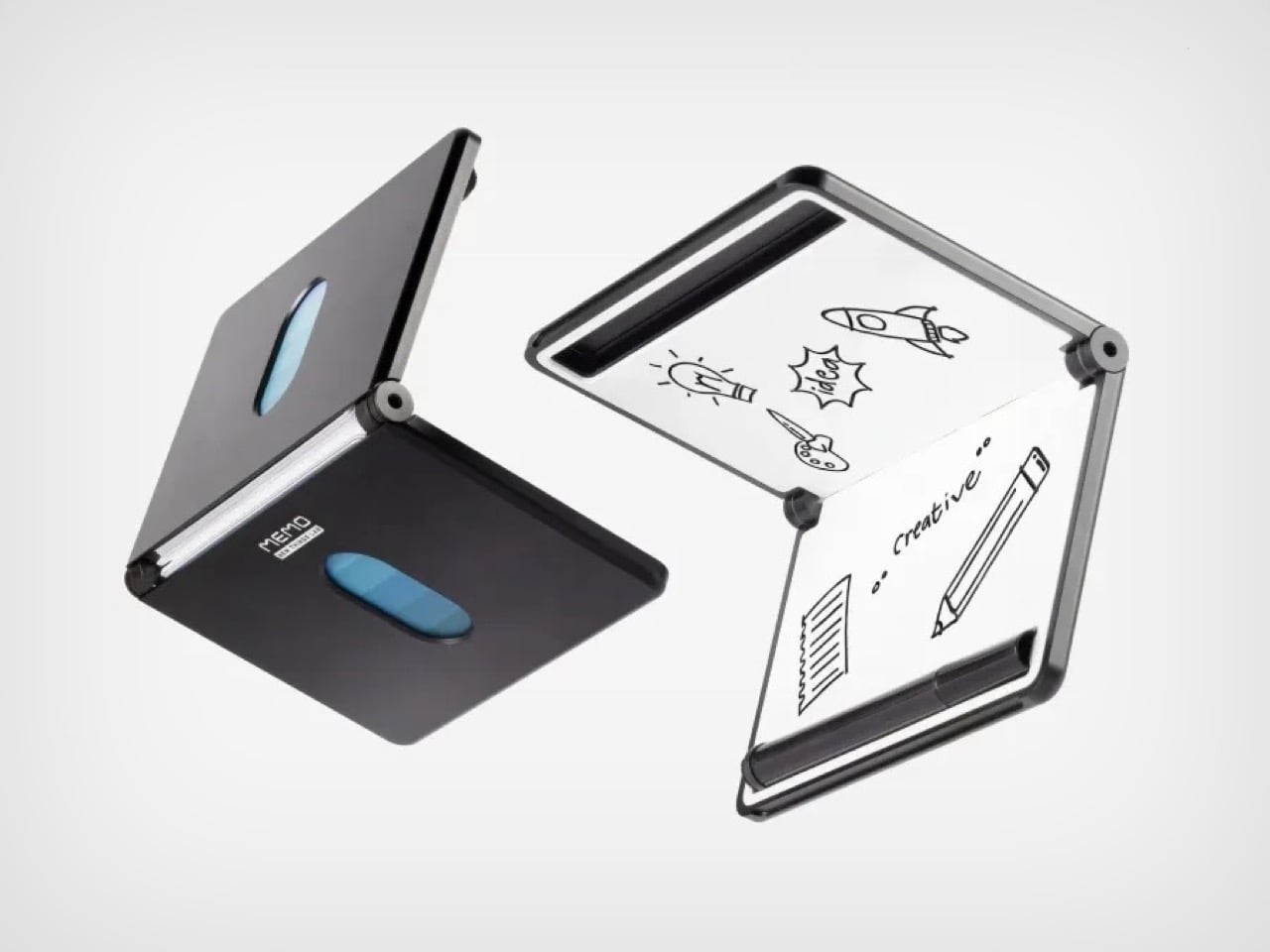
You remember that scene in the first Avengers movie? Captain standing in front of Tony Stark, asking him what he is without the suit? Tony replies without a blink – Genius, billionaire, playboy, philanthropist. I imagine that if this same conversation were to happen in the EDC realm, most wallets are essentially just sheets of leather that hold cash, cards, and currency. Strip the valuables away, and you’ve got nothing but carcass left. The MEMO wallet from New Things Lab, however, has a fairly essential feature even when it isn’t holding anything – it’s a dry-erase whiteboard that also parades as a wallet. Yes, you read that right. A whiteboard. In your wallet.

The concept sounds absurd until you actually think about it. When was the last time you saw someone pull out a notepad to jot something down? Probably never, because nobody carries those anymore. But ideas still hit at random moments, phone numbers still need to be scribbled down, and sometimes you just need to sketch something out quickly. The MEMO wallet acknowledges this reality by making the notepad part of something you’re already carrying anyway.

Designer: New Things Lab

Click Here to Buy Now

The wallet’s design is deceptively simple. Imagine a bifold wallet, but instead of opening the bifold to reveal your cards and cash, you open it to reveal a two-panel dry-erase whiteboard along with a built-in removable marker. Imagine a tiny notebook – that’s essentially what you get. The panels themselves are whiteboards on the inside, but on the outside, you’ll see a slot that lets you store up to 6 cards. Each panel has enough space for 3 cards, covering most use-cases. I, for example have 3 payment cards, 2 ID cards, and 1 access card for my coworking space. That’s pretty much all I need to carry on a daily basis.

The dry-erase whiteboard is an extra feature that my creative brain personally loves. It feels intuitive, allowing me to quickly take notes without using my phone. There’s no screen-time, the ideas aren’t stored on a device that has internet access, and you can do everything from taking notes to making doodles – analog, baby. The marker docks right inside the wallet (although I wish it were slightly thinner), and when closed, your notes stay hidden and not at risk of accidentally getting wiped away inside your pocket. The marker itself has a built-in eraser just in case you want a fresh slate.

New Things Lab built this thing from precision-milled 6063 aluminum, the same stuff used in window frames, so it can handle daily abuse without showing wear. The CNC machining gives it clean lines and tight tolerances that feel premium in hand. Three anodized finishes are available: Charcoal Black, Slate Grey, and Gilded Rose, though the darker options might disappear in the depths of your bag if you’re not careful.

The whiteboard surface works exactly as advertised. Write on it, erase it, repeat. No paper waste, no running out of pages, no ink bleeding through. Whether you’re sketching out a floor plan, writing down WiFi passwords, or just doodling during a boring meeting, the surface handles it all. The magnetic closure keeps everything secure, and the compact 108 x 74 x 11mm dimensions slip into any pocket without bulk.

RFID blocking comes standard, protecting your cards from digital pickpocketing attempts. The aluminum construction naturally shields electromagnetic signals, so this isn’t some afterthought feature tacked on for marketing purposes.

The trade-offs are real though. Six card slots won’t accommodate everyone’s plastic collection, and the aluminum construction makes it heavier than typical wallets. The pen, while clever, could easily get lost if you’re not careful about clipping it back in place. Some people might find the dry-erase format awkward after years of paper and digital notes.

But for minimalists who actually use their EDC gear, the MEMO wallet makes a compelling case. It’s genuinely innovative without being gimmicky, practical without sacrificing style. In a world of identical carbon fiber and leather wallets, something this different deserves attention. At around $90, it’s not cheap, but the build quality and unique functionality justify the premium. Sometimes the best ideas are the ones that seem completely obvious once someone finally does them.

The post This Bizarre Wallet + Whiteboard Might Just Be the Most Creative EDC Ever Made first appeared on Yanko Design.

❌
❌