
Vue normale

Il y a de nouveaux articles disponibles, cliquez pour rafraîchir la page.
À partir d’avant-hierTechs Design

Inside the Log-and-Glass Home Olson Kundig Built for a Builder on Salt Spring Island

10 mai 2026 à 13:20

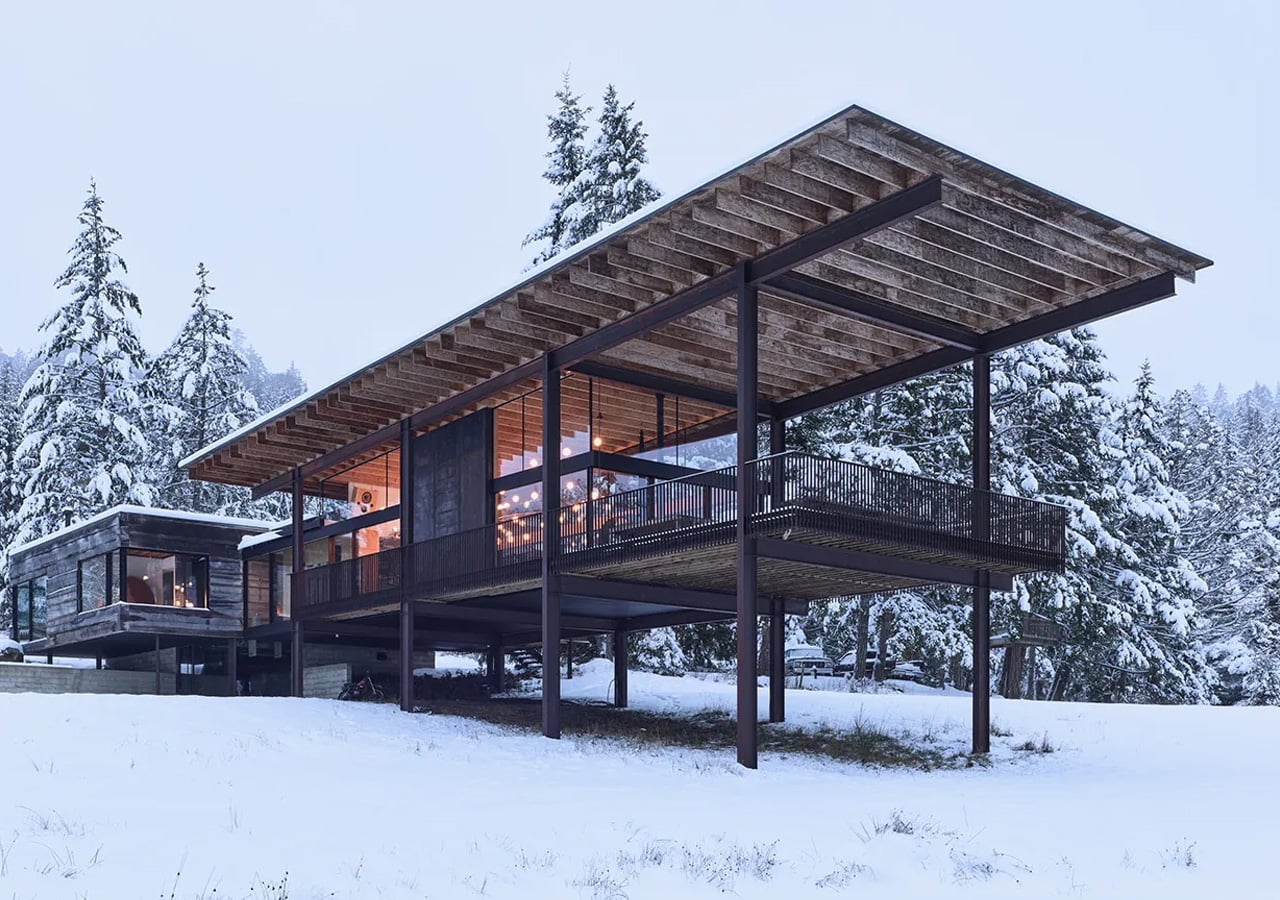
Salt Spring Island doesn’t need much convincing — it already has the cliffs, the meadows, and the trees. The name sounds more like a childhood storybook setting than an architectural statement — and that tension is exactly the point. Nestled amidst the trees and rugged cliffs of Salt Spring Island, BC, the Daisy Ranch is Olson Kundig’s most recent residential project, led by design principal Tom Kundig. It’s casual. It’s rugged. And it’s entirely, unapologetically itself.

The house sits at the edge of a sweeping meadow, anchored by a log structure that feels like it could have always been there. The primary move is a rugged glass box paired with a long, cantilevered roof that stretches over a generous deck — a roof that earns its keep through BC’s shifting seasons, offering shelter without closing anything off. What makes it work visually is the layering: large square-cut logs and glass soften the rust-colored patina of weathered steel cladding, giving the exterior a palette that feels earned rather than designed.

Designer: Olsun Kundig

The plan is organized along a clean linear axis, with two distinct volumes bisected by an eastern entry stairway. The front door is tucked under a generous overhang — a small but considered gesture that grounds the arrival sequence without dramatizing it. The northern volume, clad in wood and steel, handles the private program: a primary suite and additional bedrooms, with framed view corridors that offer deliberate glimpses of the landscape rather than full exposure. Privacy and connection, calibrated carefully.

Inside, the bathroom is where the project gets most personal. Widespread use of wood infuses the space with warmth, while a clawfoot tub set before corner windows underscores the home’s persistent connection to the landscape outside. It’s the kind of detail that feels borrowed from an older, more tactile way of building — which is precisely the intention.

The project was designed in close collaboration with the client, Patrick Powers, a builder and fabricator who also served as general contractor. That relationship left its mark. The house doesn’t feel like it was delivered to a site; it feels like it was made with the site, material decision by material decision.

As Kundig put it: “There’s a lineage at play in this project, a quiet innovation that comes from the shared DNA of materials and relationships.” The Daisy Ranch is the kind of project that doesn’t need to announce itself. It sits lightly on its land, opens wide to its meadow, and gets on with the business of being lived in.

The post Inside the Log-and-Glass Home Olson Kundig Built for a Builder on Salt Spring Island first appeared on Yanko Design.
Studioninedots’ Light House Is a Vertical Amsterdam Home Built From Playfully Stacked Boxes

7 avril 2026 à 22:30

What does a home look like when you throw out the floor plan entirely? For Amsterdam-based firm Studioninedots, the answer is a tower of playfully stacked boxes, each one dedicated to a single moment in life, that rises above one of the Dutch capital’s newest neighborhoods. Completed in 2025, Light House sits on Centrumeiland, a newly developed artificial island district defined by its self-build culture and strong sustainability ambitions.

The project began with a simple brief from a couple with two children who wanted a home that would genuinely bring them together. Rather than anchoring daily life to the ground floor the way most houses do, Studioninedots dedicated each of the family’s key activities — eating, gathering, cooking, relaxing — to its own distinct volume, then arranged those volumes vertically into a single, tightly considered composition. The result is a 257-square-meter residence that feels less like a stacked building and more like a small vertical neighborhood.

Designer: Studioninedots

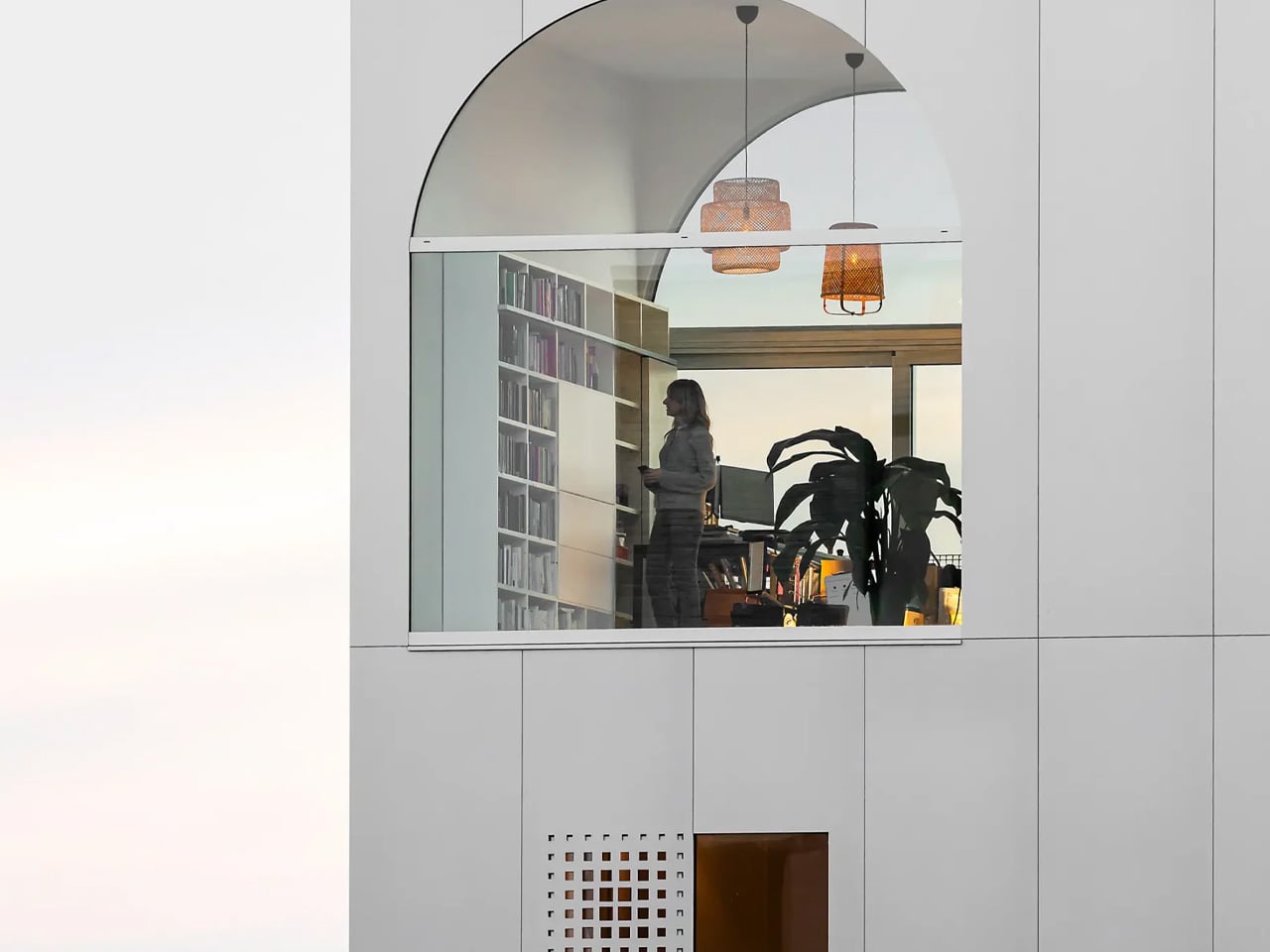
Movement through the home unfolds through a sequence of open passages and compressed zones, where shifts in scale produce entirely different spatial moods. Smaller, enclosed areas carve out space for focused, quieter activities, while larger voids open up visual connections across levels, dissolving any conventional sense of what is above and what is below. Hovering above the kitchen is a sheltered, secluded volume ideal for yoga or film watching, while the journey through the house culminates at the top in what the architects describe as a “holiday home” within the city. Flanked by arched ceiling-height glass openings, this 14-metre-high gathering room commands panoramic views across the IJmeer lake.

The facade does a lot of the design’s heavy lifting. A wall of square glass blocks wraps the front of the building, filtering natural light into the interior while abstracting the life inside, offering privacy without sacrificing the warmth of daylight. At night, the facade glows from within, giving the house an almost lantern-like presence on the street.

Sustainability is baked into the structure itself. Light House is built as a lightweight system using prefabricated timber components inside a steel frame, a circular and modular method that allows for flexibility, long-term adaptability, and ease of disassembly. The layout is not fixed either, as children grow and priorities shift, the home can be reconfigured to meet whatever the family needs next. Light House is a rare thing: a home that feels entirely personal yet completely considered, one where architecture quietly gets out of the way and lets life fill the space.

The post Studioninedots’ Light House Is a Vertical Amsterdam Home Built From Playfully Stacked Boxes first appeared on Yanko Design.

OFIS Rebuilt This 122sq.m. Post-War Home Without Losing Its Soul

19 février 2026 à 00:30

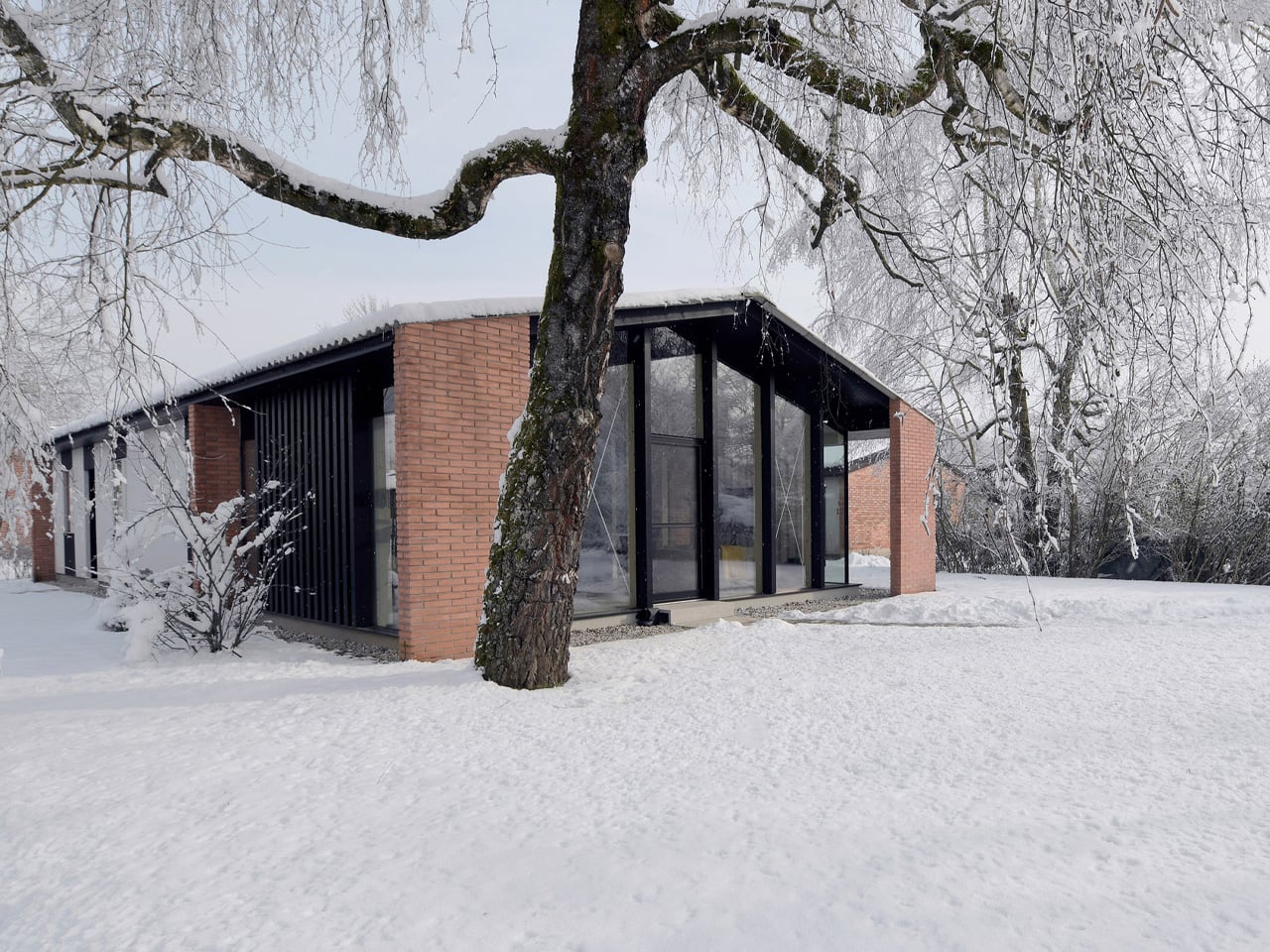
Settled quietly within Naselje Murgle, one of Ljubljana’s most thoughtfully conceived residential neighborhoods, the House Under the Poplars is a 122-square-meter reconstruction and extension that speaks softly and means it. Completed in 2025 by OFIS Arhitekti, the project reads less as a statement of ambition and more as an act of architectural respect, a house that earns its place not by standing out but by understanding exactly where it stands.

Murgle was never meant to be remarkable in a conventional sense. Designed by Slovenian architects France and Marta Ivanšek and built through self-construction phases between 1965 and 1982, the settlement became a quietly radical model of ecological, human-scaled living long before sustainability entered the architectural vocabulary. Its distinctly Scandinavian character, shaped in part by the Ivanšeks’ time in Sweden, gave the neighborhood a collective identity rooted not in signature gestures but in shared, low-tech intelligence.

Designer: OFIS Arhitekti

Led by Rok Oman and Špela Videčnik, OFIS Arhitekti approached the project with the kind of cultural sensitivity that most renovations only gesture toward. The intent was never to impose a new architectural language onto an existing one but to refine and carefully elevate what was already there. The studio leaned into Murgle’s founding principles, treating them not as limitations but as the clearest possible brief for what this house needed to become.

The new glazed façade opens generously toward the garden, framing a mature birch tree with an ease that feels entirely uncontrived. Vertical timber slats line the side glazing, offering privacy to the main living space without cutting it off from the broader landscape. The covered atrium connects the primary bedroom and its ensuite bathroom to the rest of the house, creating a sequence of spaces that feel considered without ever feeling overcalculated.

Inside, timber cladding runs across the walls and ceiling in a move that unifies the interior and gives the whole house its warmth. A wine cellar sits beneath a glass floor panel in the living room, one of the project’s more unexpected gestures, and all the better for it. The rest of the program stays deliberately modest: a single additional bedroom suite and a small study, a reminder that restraint, when properly applied, is its own kind of luxury.

The House Under the Poplars does not try to reinvent Murgle. It tries to honor it, and in doing so, quietly sets a standard for what thoughtful, sensitive reconstruction can look like in a neighborhood that has always asked its residents to think beyond themselves. As a project, it resists easy categorization. It is not a restoration, not a reimagining, but something far more useful: a considered continuation of an idea that was already worth keeping.

The post OFIS Rebuilt This 122sq.m. Post-War Home Without Losing Its Soul first appeared on Yanko Design.

❌
❌