❌

Vue normale

  • ✇Yanko Design
  • Mattel’s 1:1 brick-built Xbox is a 3,509-piece tribute to gaming’s early 2000s era
    The original Xbox is turning 25, and Mattel is marking the occasion with a collector’s piece that transforms Microsoft’s first gaming console into a 1:1-scale building set. Created under the premium Mattel Brick Shop, the Microsoft Xbox Building Toy Kit recreates the chunky 2001 console from 3,509 pieces, complete with its oversized Duke controller and a surprisingly elaborate interior. At first glance, the model is designed to look remarkably close to the original hardware. The familiar black
     

Mattel’s 1:1 brick-built Xbox is a 3,509-piece tribute to gaming’s early 2000s era

23 août 2026 à 15:15

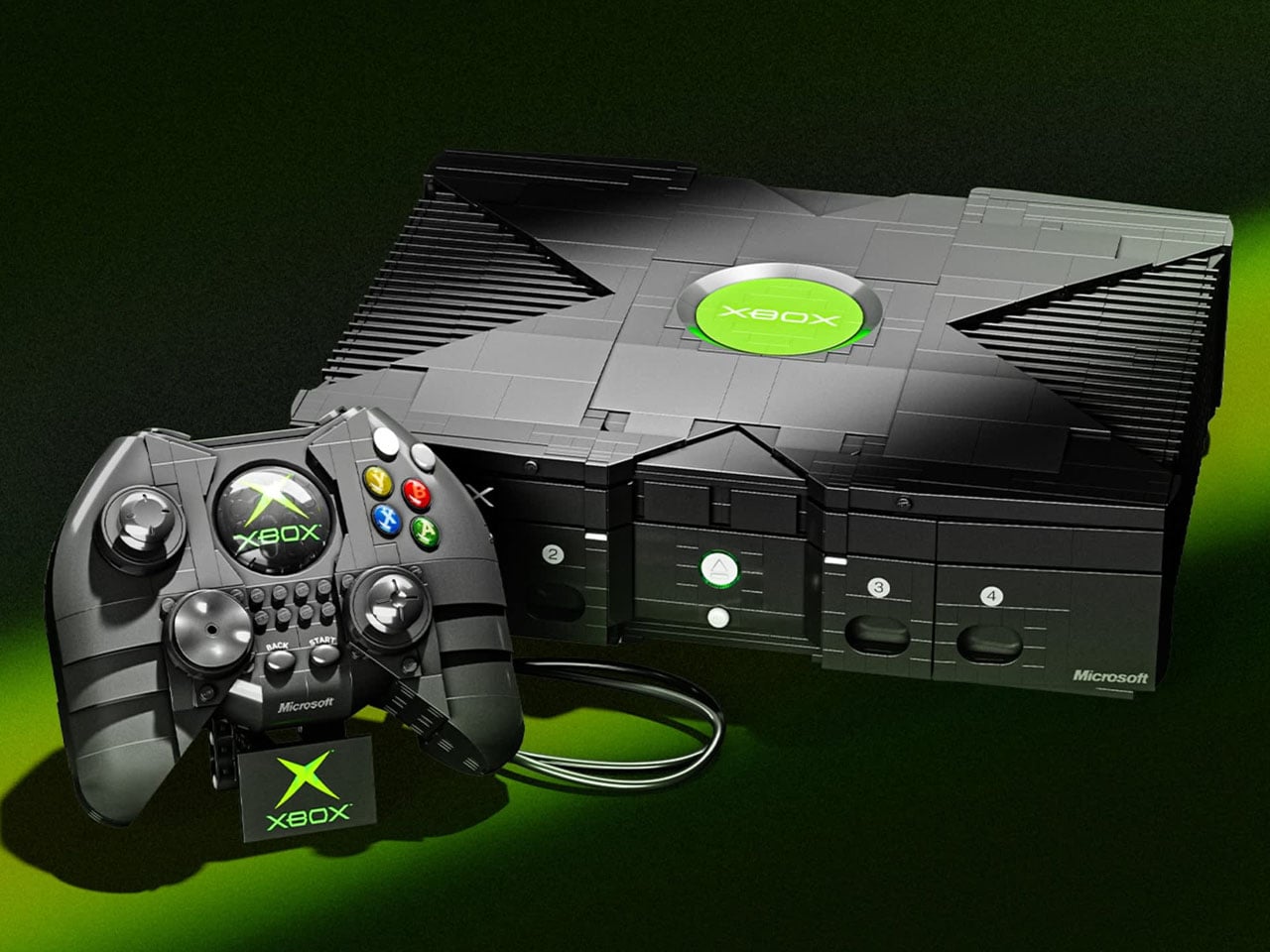
The original Xbox is turning 25, and Mattel is marking the occasion with a collector’s piece that transforms Microsoft’s first gaming console into a 1:1-scale building set. Created under the premium Mattel Brick Shop, the Microsoft Xbox Building Toy Kit recreates the chunky 2001 console from 3,509 pieces, complete with its oversized Duke controller and a surprisingly elaborate interior.

At first glance, the model is designed to look remarkably close to the original hardware. The familiar black rectangular body, recessed side grilles, front controller ports, X-shaped top panel, and central green Xbox logo are all recreated in brick form. The accompanying Duke controller is also buildable and connects to the console, with working buttons, a D-pad, and movable analog sticks. It is a display model rather than a functional gaming machine, but the physical interaction is part of what makes the set more than a static replica.

Designer: Mattel

The set also follows a growing interest in turning gaming hardware into physical building objects. A few years ago, we covered a LEGO Xbox Series S concept that treated the console itself as a customizable canvas for brick-built artwork. Mattel’s new creation takes a detour from the conventional brick-building approach, though, as it employs bricks to personalize a console, using thousands of them to recreate an entire piece of gaming history.

The more interesting details are hidden inside the console. Opening the model reveals three removable dioramas inspired by some of the original Xbox’s most recognizable games: Halo: Combat Evolved, The Elder Scrolls III: Morrowind, and Psychonauts. Each scene comes with small NanoWorld figures representing characters from the games, with 12 figures included across the set. The dioramas can also be removed and displayed independently, giving the enormous console a modular quality rather than making its interior purely decorative.

Mattel has also given the model a modest interactive layer. Pressing buttons on the connected Duke controller activates four different light-and-sound sequences, including the original Xbox opening sequence and effects associated with the three game-inspired scenes. A concealed button combination triggers an additional lighting sequence, adding a small Easter egg for builders who spend time exploring the finished model.

The choice of games is particularly evocative. Halo helped define Xbox as a gaming platform, while Morrowind and Psychonauts represent different sides of the console’s early library. Rather than simply reproducing the hardware, Mattel has effectively turned the console into a compact museum of its formative years, with the games physically embedded into the machine they helped make memorable.

For anyone who remembers the original Xbox as a piece of hardware rather than simply a platform, that distinction is significant. The finished model is essentially a life-size nostalgia object, one that preserves the proportions and visual language of Microsoft’s first console while hiding miniature worlds from its games inside.

The set is intended for builders aged 17 and above and is positioned firmly as a premium collector display rather than a conventional toy. It is currently available for preorder through select retailers, with a US price of $324.

The post Mattel’s 1:1 brick-built Xbox is a 3,509-piece tribute to gaming’s early 2000s era first appeared on Yanko Design.

  • ✇Yanko Design
  • Heart Aerospace X1 takes flight as the world’s largest battery-electric aircraft
    Electric aviation has reached a milestone that once seemed reserved for much smaller aircraft. Heart Aerospace’s X1 demonstrator has completed its first flight, becoming the largest battery-electric aircraft ever to take to the skies. The aircraft flew from Plattsburgh International Airport in upstate New York on August 12, marking a significant step toward bringing electric propulsion to the scale of regional air travel. The X1 is not intended to become a passenger aircraft itself. Instead, it
     

Heart Aerospace X1 takes flight as the world’s largest battery-electric aircraft

17 août 2026 à 15:15

Electric aviation has reached a milestone that once seemed reserved for much smaller aircraft. Heart Aerospace’s X1 demonstrator has completed its first flight, becoming the largest battery-electric aircraft ever to take to the skies. The aircraft flew from Plattsburgh International Airport in upstate New York on August 12, marking a significant step toward bringing electric propulsion to the scale of regional air travel.

The X1 is not intended to become a passenger aircraft itself. Instead, it is a full-scale technology demonstrator for Heart Aerospace’s ES-30, a 30-seat hybrid-electric regional aircraft currently under development. Its purpose is to validate the propulsion system, aerodynamics, flight performance, and other technologies that will eventually be carried into the production aircraft.

Designer: Heart Aerospace

For a prototype, the X1 is quite substantial. It has a 106-foot wingspan, measures 76 feet from nose to tail, and weighs more than 25,000 pounds at takeoff. Four electric motors provide propulsion, drawing their energy entirely from onboard batteries during the test flight. The maiden flight lasted 27 minutes and included taxiing, takeoff, climb, maneuvering, and landing. The aircraft reached 1,100 feet above ground while its electric propulsion system delivered more than one megawatt of power. The test was conducted under an FAA Special Airworthiness Certificate in the Experimental Category, with the flight kept within a controlled test envelope.

Perhaps the most striking detail is the reported energy cost. Heart Aerospace says the flight used approximately $5 worth of electricity. That figure covers the battery-powered flight operation, while some reporting notes that electricity consumed during ground taxiing would need to be considered separately. Even with that distinction, the demonstration offers a tangible illustration of the potential operating-cost advantage of electric propulsion over conventional aircraft fuel.

The limitations, though, have still to be kept in mind, as batteries still cannot provide the energy density required for longer regional flights. That is why the production ES-30 will use a hybrid-electric architecture rather than relying entirely on batteries. Heart Aerospace is targeting an all-electric range of about 124–125 miles, while hybrid operation is expected to extend the range to roughly 497–500 miles. The aircraft is designed to carry 30 passengers and has a battery recharge time of around 30 minutes.

Heart expects the ES-30 to reduce operating costs by more than 40 percent compared with legacy regional aircraft, combining lower energy costs with simpler electric propulsion, reduced maintenance requirements, and potentially greater reliability and aircraft availability. Airlines including United Airlines and Air Canada have committed to the program, with total customer commitments reported at $9.4 billion.

The first pre-production ES-30 is already being developed at Heart Aerospace’s Los Angeles pilot manufacturing plant, with flight testing scheduled for 2028 and entry into service targeted for 2031. The X1’s 27-minute flight does not make electric commercial aviation a finished proposition, but it unearths something more fundamental. Battery-powered propulsion can now lift an aircraft approaching regional-airliner scale off a runway and enable a controlled flight. That is a feat in itself!


The post Heart Aerospace X1 takes flight as the world’s largest battery-electric aircraft first appeared on Yanko Design.

  • ✇Yanko Design
  • Ruka Studio’s TD-1 Vertical Turntable Turns Your Vinyl Collection Into Stunning Part of Your Room
    For a very long time, the world was fixated on horizontal vinyl players that took up a premium space on a table. Just recently, the tide has started shifting in favor of vertical record players that are designed to stand out instead of blending in. The new entrant in the category already explored by designer Fatih Demirci, CoolGeek, and Dutch Hi-Fi maker Miniot, is Ruka Studio – a Los Angeles-based company that was founded in 2024. Relatively new in its existence, Ruka makes its presence felt w
     

Ruka Studio’s TD-1 Vertical Turntable Turns Your Vinyl Collection Into Stunning Part of Your Room

17 août 2026 à 11:20

For a very long time, the world was fixated on horizontal vinyl players that took up a premium space on a table. Just recently, the tide has started shifting in favor of vertical record players that are designed to stand out instead of blending in. The new entrant in the category already explored by designer Fatih Demirci, CoolGeek, and Dutch Hi-Fi maker Miniot, is Ruka Studio – a Los Angeles-based company that was founded in 2024.

Relatively new in its existence, Ruka makes its presence felt with the wealth of experience that forms the DNA of the brand. Reportedly, Ruka Studio was founded by a group of former Apple engineers and designers, so a high-end turntable with a premium finish would be a given. But that’s not where it’s stopping; the company has launched its first vertical turntable called the TD-1.

Designer: Ruka Studio

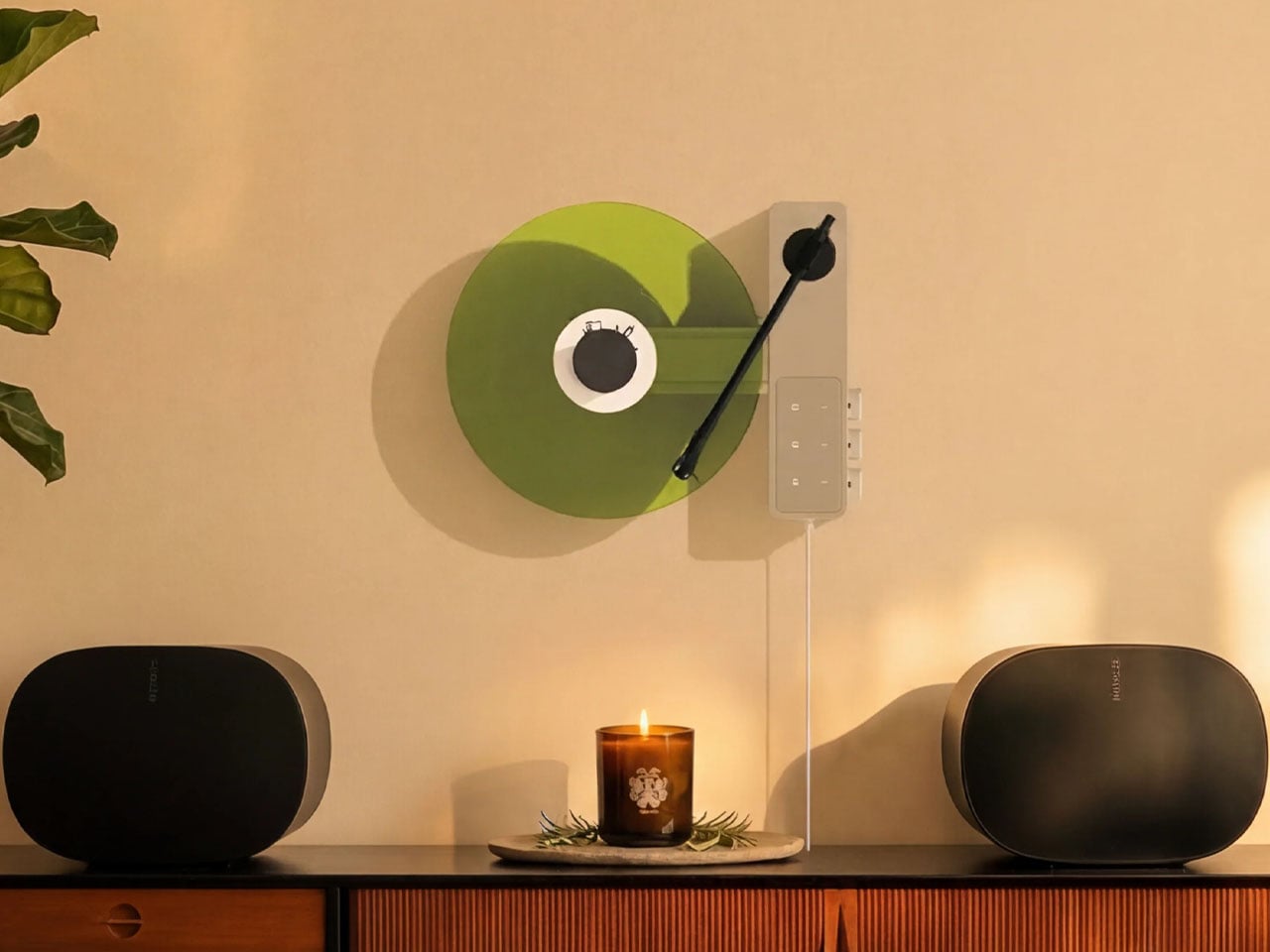
Designed as a turntable that mounts vertically on the wall, or stands upright on a floor stand, it becomes part of the room instead of taking over a table. The TD-1 can spin a vinyl record vertically, which is a treat to the eye and food for thought for your mind. The design is pretty seamless, and you’re left wondering how the giant disk is actually spinning without gravity acting upon it.

If you’re someone who holds your record collection dear and as a reflection of who you are. The TD-1 is conceived with the idea of enhancing that experience like no other has done before. Yes, there have been vertical record players we have seen in our time, but the Ruka’s model is a standout, thanks to its aluminum body and visibly enticing mechanical switches and knobs that turn and click to control playback, adjust the record’s rotational speed, and also to pair the device with a speaker system over Bluetooth. It also comes with wired output to connect with a hi-fi system.

When everyone is trying to integrate AI and convenient remote control via dedicated apps, the TD-1 remains as analog as the record playing was meant to be. The most it gets away from the analog commitment is to stream your vinyl records to a wireless Bluetooth speaker or compatible earbuds.

To make how it looks placed vertically more exciting, the TD-1 arrives with a rubber-coated magnetic plate that holds the record against the wall to appear as if it were floating in mid-air. To ensure you are not hassled with getting the placement straight, it comes with a built-in spirit level. The player features a swappable moving-magnet cartridge, which the company says should allow users to select the cartridge they want, of course for an additional cost from the device itself. The TD-1 turntable itself is belt-drive. The motor has been de-coupled from the acrylic platter to minimize vibration, ensuring smoother and quieter playback.

Ruka Studio TD-1 is available to preorder now starting at a reserve price of $100 on the company’s website. It is priced at $1,399, and preordered models are expected to ship in 2027. The $100 credit is fully refundable or will be adjusted in the final price when a device is shipped.

The post Ruka Studio’s TD-1 Vertical Turntable Turns Your Vinyl Collection Into Stunning Part of Your Room first appeared on Yanko Design.

  • ✇Yanko Design
  • JCB Hydromax sets a new hydrogen land speed record at 406.320 mph
    A pair of hydrogen-powered engines developed for construction machinery has just been pushed into territory normally reserved for purpose-built speed machines. JCB’s Hydromax has reached an astonishing 406.320 mph (653.6 km/h) at Utah’s Bonneville Salt Flats, becoming the fastest hydrogen-powered vehicle of any kind and setting a new world land speed record for a hydrogen internal-combustion car. The 32-foot-long streamliner is powered by two production-based JCB hydrogen combustion engines, ea
     

JCB Hydromax sets a new hydrogen land speed record at 406.320 mph

12 août 2026 à 16:30

A pair of hydrogen-powered engines developed for construction machinery has just been pushed into territory normally reserved for purpose-built speed machines. JCB’s Hydromax has reached an astonishing 406.320 mph (653.6 km/h) at Utah’s Bonneville Salt Flats, becoming the fastest hydrogen-powered vehicle of any kind and setting a new world land speed record for a hydrogen internal-combustion car.

The 32-foot-long streamliner is powered by two production-based JCB hydrogen combustion engines, each tuned to produce 800 horsepower for a combined 1,600 bhp. Rather than using hydrogen in a fuel cell to generate electricity, Hydromax burns hydrogen directly in its internal-combustion engines. The engines are manufactured at JCB’s factory in Foston, Derbyshire, and are based on the same production engines powering JCB machines in the UK.

Designer: JCB

Its record-setting run was completed under FIA rules, requiring two passes in opposite directions within an hour. Driven by Wing Commander Andy Green OBE, Hydromax recorded 400.623 mph on its first run and 412.135 mph on the return, producing the official average of 406.320 mph. The result comfortably surpassed the previous FIA-officiated hydrogen internal-combustion record of 185.5 mph, set by the BMW H2R in 2004. It also moved beyond the 303 mph hydrogen fuel-cell record, making Hydromax the fastest hydrogen-powered vehicle in history. The record remains subject to formal FIA ratification.

According to project lead, JCB Engineering Director Ryan Ballard, “This record belongs to the engineering team which took a hydrogen digger engine and made it the fastest of its kind on earth. This has been an amazing challenge from the outset, with it being set in February last year. We came here fully prepared, and the car delivered.”

The achievement follows an earlier milestone at the 2026 Bonneville Speed Week, where Hydromax averaged 368.347 mph over two runs to establish an SCTA record in the Blown Gas Streamliner class. Its first run reached 367.141 mph, followed by 369.554 mph on the return. That result surpassed the previous 348.342 mph class benchmark, while giving JCB an important test of the car before its FIA attempt.

Much of the car’s engineering focuses on making extreme speed controllable. Hydromax drives all four wheels through twin transmissions and clutches, while its body was shaped around aerodynamic efficiency and stability. JCB says the suspension, traction control, aerodynamics and camera placement were all stress- and simulation-tested before the attempt. Prodrive handled the car build, Ricardo worked on engine tuning and Xtrac supplied the transmission expertise.

The record also carries a strong sense of continuity for JCB. Exactly 20 years after Andy Green drove the JCB Dieselmax to a 350.092 mph diesel land speed record at Bonneville, he has returned to the same salt flats to establish an even faster mark using hydrogen. The Hydromax project was conceived in 2025 as a demonstration of JCB’s hydrogen combustion technology, turning engines developed for working machines into a record-breaking powertrain.


The post JCB Hydromax sets a new hydrogen land speed record at 406.320 mph first appeared on Yanko Design.

  • ✇Yanko Design
  • Casio upgrades the classic F-91W watch with smart functions, and it’s already sold out in Japan
    Without a doubt, the Casio F-91W is a legendary timepiece that is still available to buy for $20. While the digital watch has retained its nostalgic charm all these years, it is indeed a little left behind when it comes to smart functionality. Casio is set to change that now with the F-B100W timepiece, which adapts the modern functions expected in a smart timekeeper. The classic 1980s digital watch in the rectangular silhouette, upgraded with the goodness of step counting – I’ll take that any d
     

Casio upgrades the classic F-91W watch with smart functions, and it’s already sold out in Japan

12 août 2026 à 11:20

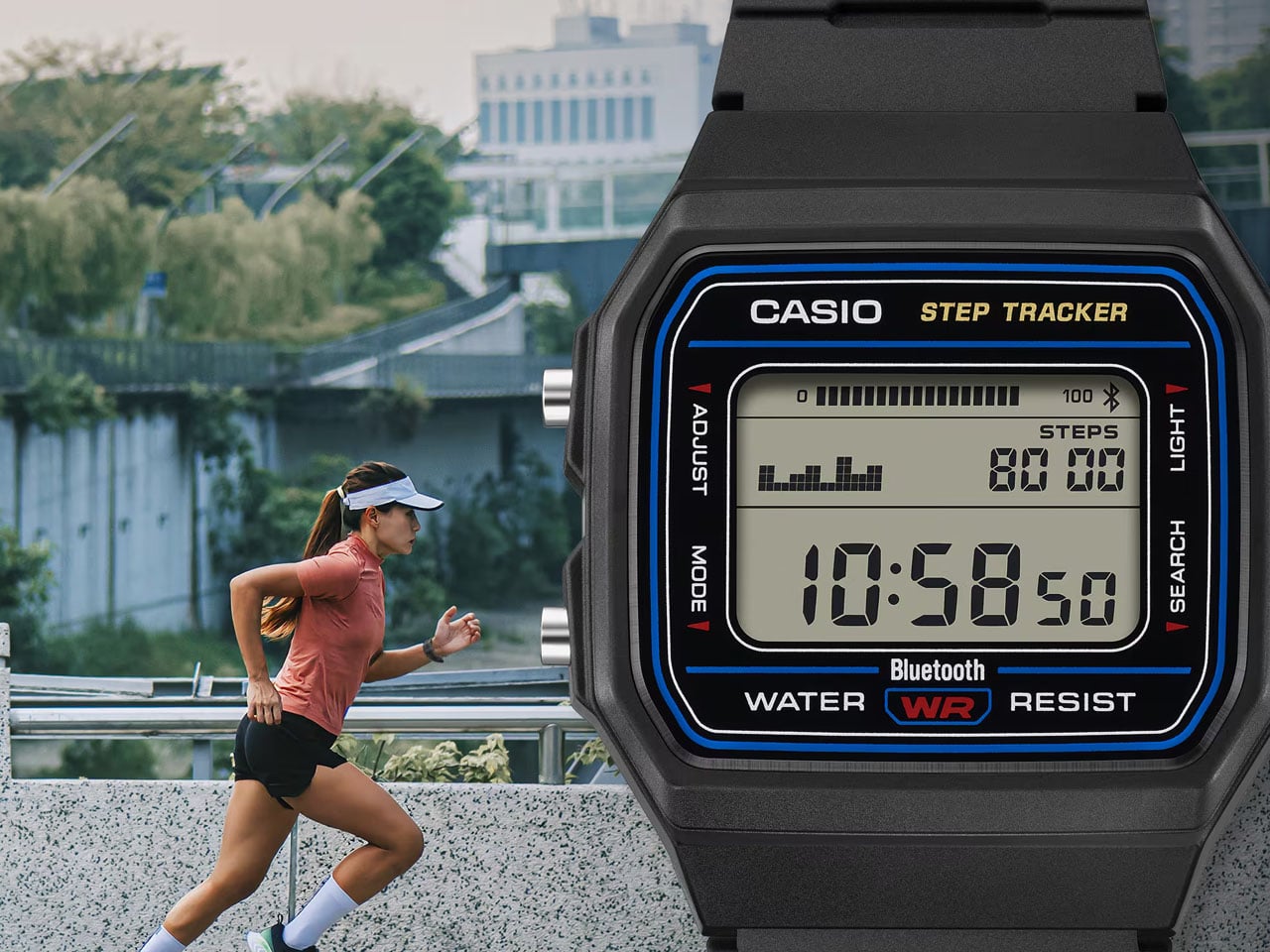
Without a doubt, the Casio F-91W is a legendary timepiece that is still available to buy for $20. While the digital watch has retained its nostalgic charm all these years, it is indeed a little left behind when it comes to smart functionality. Casio is set to change that now with the F-B100W timepiece, which adapts the modern functions expected in a smart timekeeper. The classic 1980s digital watch in the rectangular silhouette, upgraded with the goodness of step counting – I’ll take that any day!

On the outside, this Casio timepiece looks like the trusted F-91W, but inside it has more to offer, making it a sweet deal. For now, the watch is available in Japan for ¥8,800 (around $55), and it’s not surprising it has already been sold out, at least for now. That’s almost double the price tag of the original, which is still up for $22, but you’ll also have to factor in the generational leap in smart features this new model touts.

Designer: Casio

Most of the F-B100W’s functions are fairly straightforward, and the specifications are also very close to the original, measuring 41.9 × 38.1 × 8.8 mm and weighing 26 grams. The timepiece retains features including an amber LED backlight with adjustable glow, water resistance, an hourly time signal, and five daily alarm options. For improved comfort during long hours, the bio-based plastic strap now has improved ventilation slits. Major changes come in the form of a watch battery (as opposed to a rechargeable cell), which lasts for almost two years.

What’s making this Casio timepiece a big buzz already is the inclusion of Bluetooth, which automatically syncs time or toggles the alarms or dual time display. In the mix is the phone finder feature, which can be a really useful addition without all the unwanted nuances. What I’m most excited about is the addition of the step counter and lap split time function, which can be directly synced to your phone with the companion app. You can set goals, record up to 200 laps, and monitor the progress on the watch screen as well. For times when you get too engrossed in work, the F-B100W also sends an inactivity alert via a beep and on-screen prompt. Of course, that is an optional feature that can be turned off as well.

It doesn’t have any other smartwatch features like a heart rate monitor, sleep diagnosis, or even BP monitoring, but that’s the point. The retro-modern Casio watch has all the timekeeping functions, and the most essential smart features without making the wearer too finicky about the vitals. F-B100W comes in three color variants: 1AJF, 1BJF, and 3AJF, which have a black case with a positive LCD and retro blue, red, and yellow dial accents, and all black with a negative display and gray text, respectively.

The post Casio upgrades the classic F-91W watch with smart functions, and it’s already sold out in Japan first appeared on Yanko Design.

❌