Vue normale

Il y a de nouveaux articles disponibles, cliquez pour rafraîchir la page.
À partir d’avant-hierFlux principal

La montre Pebble est de retour - Mais ça part en vrille

Par : Korben
29 novembre 2025 à 06:06

Je ne suis pas très montre. Je n’en porte pas, je n’en possède pas… Ce temps qui passe c’est l’angoisse mais je me souviens très bien des montres Pebble qui avec leur écran e-ink tenaient des semaines sur une charge et qui ont carrément démocratisé le concept de smartwatch grand public dès 2012.

Hé bien good news, le fondateur Eric Migicovsky a décidé de les ressusciter sauf que c’est en train de tourner au vinaigre avec les bénévoles qui ont maintenu l’écosystème durant 9 ans.

Pour ceux qui ont raté tout le feuilleton, après la faillite de Pebble en 2016 et le rachat par Fitbit (puis Google), une communauté de passionnés appelée Rebble s’est formée pour sauver les meubles. Ils ont récupéré les données de l’App Store, monté une infrastructure de serveurs, financé des développements… Bref, ils ont maintenu en vie un écosystème que tout le monde avait abandonné.

Puis en janvier 2025, Google a ouvert le code source de PebbleOS et Migicovsky a sauté sur l’occasion et a lancé sa boîte Core Devices en mars pour vendre de nouvelles montres Pebble : La Pebble 2 Duo à 149$ et la Pebble Time 2 à 225$. D’ailleurs, 70% des premières unités ont déjà été livrées. Bref, jusque là, tout va bien.

Sauf que Rebble accuse maintenant Core Devices de piller leur travail sans compensation. Selon ce qu’ils racontent leur blog , Migicovsky aurait “scrapé leurs serveurs” le jour même où il devait les rencontrer pour discuter partenariat. Rebble affirme avoir investi des centaines de milliers de dollars pour maintenir l’App Store et les services backend… et Core voudrait un accès illimité à tout ça pour potentiellement créer un App Store concurrent propriétaire.

La bibliothèque mobile libpebble3 utilisée par l’app Core Devices s’appuie notamment sur du code que Rebble a financé via son programme de subventions. Et c’est pareil pour le portage Bluetooth open source vers PebbleOS puisque c’est Rebble qui a payé les devs. Et bien sûr quand ils demandent un engagement écrit que Core ne créera pas un store concurrent… C’est silence radio.

Migicovsky a ensuite répondu sur son blog perso histoire de se justifier. Il nie tout vol et affirme que 90% du code de libpebble3 a été écrit par Core Devices, et pas par la communauté. Et pour le scraping, il explique qu’il construisait juste une petite webapp pour afficher ses watchfaces préférées et que ça n’a rien téléchargé de substantiel.

Et il contre-attaque en accusant Rebble de vouloir créer un pré-carré bien verrouillé emprisonnant les 13 000 et quelques applications que des développeurs indépendants ont créées. Rebble revendiquerait 100% des données de l’App Store alors qu’ils ne sont que l’hébergeur…

Alors qui croire ? Difficile à dire mais la bonne nouvelle c’est que Core Devices a ouvert les schémas électriques et mécaniques de la Pebble 2 Duo sur GitHub et bientôt, l’installation d’apps se fera via un système de feeds multiples, un peu comme les gestionnaires de paquets open source. Chacun pourra alors choisir son store.

Reste à savoir si les deux camps arriveront à s’entendre puisque Rebble a apparemment fait marche arrière sur certaines revendications, notamment sur la propriété du contenu hébergé. Mais le climat de confiance est sérieusement entamé et pour la communauté qui a bossé durement et gratos pendant 9 ans pour sauver tout écosystème… c’est sûr que ça fait mal de voir le fondateur original débarquer et se servir OKLM.

Après pour ceux d’entre vous qui ont une Pebble ou qui lorgnent sur les nouvelles, surveillez le subreddit r/pebble et le Discord Rebble car c’est là que tout ça se passe.

Source

Forget Minute Hands: This Watch Only Tells Time in Half-Hours

Par : Ida Torres
1 décembre 2025 à 11:07

When was the last time a watch made you do a double-take? If you’re like most of us, probably never. We’ve seen countless variations of circles with numbers, hands pointing at things, and digital displays that all basically do the same job. But Ion Lucin’s ARROWatch isn’t just another pretty timepiece. It’s a design that fundamentally rethinks what a watch actually does.

Here’s the thing: we’ve been telling time for centuries, and watches have evolved from ornate pocket pieces to sleek smartwatches. So when a designer sits down to create something genuinely new, they’re facing a pretty daunting challenge. How do you innovate on an object that’s been perfected over hundreds of years?

Designer: Ion Lucin

Lucin, tackling his first watch design, didn’t try to reinvent the wheel (or the circle, as it were). Instead, he went back to basics and asked a deceptively simple question: what does a watch actually do? Strip away all the aesthetics, the luxury materials, the complications, and what you’re left with is this: a watch tells us where to look at a specific moment in time. That insight is brilliant in its simplicity. Sure, we can dress up that information with different colors, shapes, and forms. We can make it digital or analog, minimalist or maximalist. But what if, instead of just changing how the information looks, you changed how people interact with it? What if you could create an unexpected way of directing someone’s gaze?

Enter the arrow. It’s possibly the most universal symbol we have for directing attention. You see arrows everywhere, from road signs to user interfaces, all doing the same basic job: pointing you somewhere. Lucin took this ubiquitous symbol and made it the entire concept of his watch. The ARROWatch face is divided into eight segments. Three of those segments are colored in a striking orange-red, forming an arrow shape. Five segments are left transparent. The rest of the watch face is black. This creates a kind of window effect where only certain portions of the time dial are visible at any given moment. The colored arrow literally guides your eye to the information you need.

What makes this particularly bold is what Lucin left out. The ARROWatch only displays hours and half-hours. No minute hand, no second hand, no fussy complications. We’re living in a time where we’re obsessed with precision (down to the millisecond on our smartphones) but this watch is telling you to chill out a bit. Do you really need to know it’s 3:47 and 32 seconds? Or is “about 3:30” good enough? This minimalist approach feels almost rebellious. We’re so accustomed to information overload that a watch that gives you less feels like a statement. It’s pushing back against the idea that more data equals better design. Sometimes, clarity comes from subtraction, not addition.

The aesthetic is unapologetically graphic. The black circle with its bold arrow in white and orange looks more like a wayfinding sign or a piece of modern art than a traditional timepiece. Paired with a sleek black leather strap, it’s the kind of thing that works equally well in a gallery, a coffee shop, or a design studio. It’s a conversation starter, which is exactly what good design should be. What’s particularly impressive is that this is Lucin’s debut watch design. There’s a fearlessness here that you don’t always see from first-time designers. He could have played it safe, creating something conventionally beautiful that would appeal to traditional watch collectors. Instead, he took a risk and created something that challenges our expectations.

Will everyone want to wear a watch that only tells time in half-hour increments? Probably not. But that’s not really the point. The ARROWatch exists to make us question our assumptions about everyday objects. It reminds us that innovation doesn’t always mean adding more features or making things more complex. Sometimes, the most radical thing you can do is simplify, focus, and ask people to look at something familiar in an entirely new way. And honestly? That’s exactly what good design is supposed to do.

The post Forget Minute Hands: This Watch Only Tells Time in Half-Hours first appeared on Yanko Design.

10 Best Smartwatches To Consider In October 2025: Find The Perfect Wearable For You

11 octobre 2025 à 11:40

Smartwatches aren’t just wrist accessories anymore; they’re powerful, purpose-driven extensions of your lifestyle. Whether you’re an athlete, a gamer, a style enthusiast, or simply someone who wants to stay connected, the right wearable can elevate your daily routines. As October 2025 brings fresh innovation and daring new designs, the world of smartwatches is more diverse and exciting than ever.

From minimalist e-paper displays to rugged adventure companions and even a gaming PC for your wrist, this year’s lineup is packed with options that speak to every need and personality. Our list explores the best smartwatches available now, highlighting their unique strengths, standout features, and potential drawbacks. Dive in to find the perfect wearable for your wrist and your world.

1. MSI Gaming PC Watch: A Gaming Rig For Your Wrist

The MSI Gaming PC Watch is a spectacle for anyone who lives and breathes gaming. With its MSI dragon-red theme, transparent façade, and visible hardware, it’s an unmistakable tribute to high-performance rigs. This wearable doesn’t just tell time—it showcases your passion, sparking conversations and envy alike. While it might look like a traditional watch at first glance, its true identity is a full-fledged mini PC strapped to your wrist.

Analog watch hands are visible but understated, hinting at its timekeeping function. Four side pushers let you toggle features, and the construction feels robust with a metal alloy case. Not everyone will need or want a wearable computer on their wrist, but for those who do, nothing else comes close to this level of commitment and flair.

What we like

  • Visually striking design that turns your wrist into a gaming showcase.
  • Unique concept that marries PC hardware and wearable tech in an unprecedented way.

What we dislike

  • Timekeeping is a secondary feature, not the main focus.
  • Likely to be bulkier and less comfortable for daily wear.

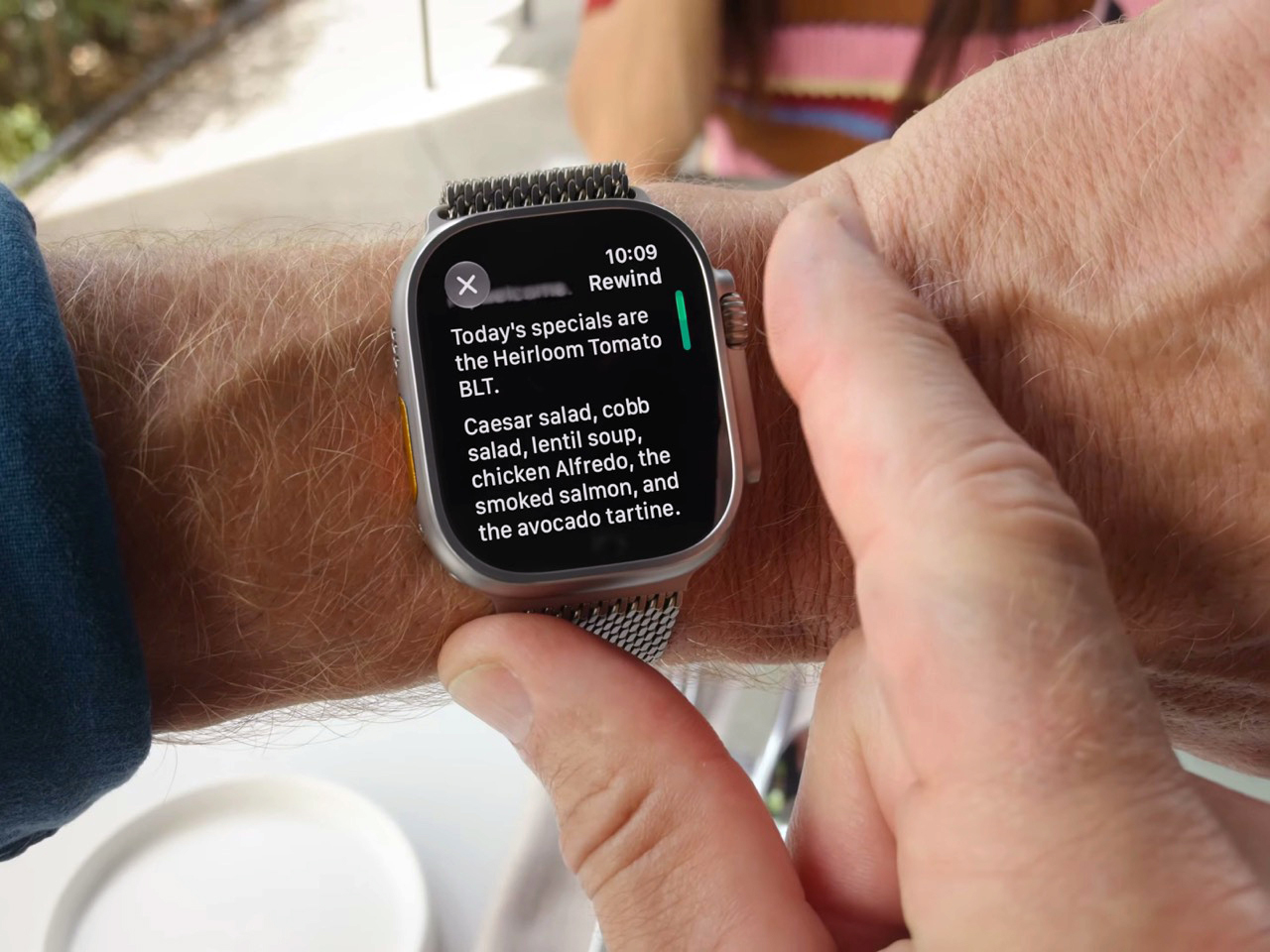
2. Apple Watch Ultra 3: The Pinnacle Of Display Technology

Apple’s Ultra 3 brings a new dimension to smartwatch displays, boasting the largest and most advanced screen ever fitted to an Apple Watch. With wide-angle OLEDs and LTPO3 technology, it’s readable at any angle—even in direct sunlight or underwater. Apple’s design team has maximized the display space by shrinking the borders, so you get a bigger, better canvas without a larger watch.

Always-on features are smarter and more efficient, staying visible without draining the battery. Real-time seconds and instant stats make it a must for athletes and adventure seekers. If clarity, screen quality, and high-tech durability are priorities, the Ultra 3 is at the head of the pack.

What we like

  • Expansive display with best-in-class readability in all conditions.
  • Always-on screen with high refresh and low power use.

What we dislike

  • Premium price puts it out of reach for some buyers.
  • Large size may not suit those with slimmer wrists.

3. Pebble Time 2: E-Paper Simplicity, Modern Craft

Pebble’s comeback is all about maturity and minimalism. The Time 2 features a stainless steel case and integrated lugs that create a seamless, intentional flow from the case to the strap. The nearly edge-to-edge 1.7-inch color e-paper display sits flush with the glass, inviting you to run your finger along its perfectly smooth edges. This is a smartwatch for those who crave simplicity and customization without sacrificing style.

Available in Silver, Black, and Champagne Gold, the Time 2 lets you swap out standard 22mm bands, making it adaptable for any look. It’s a refined, user-first foundation that feels both nostalgic and modern. The e-paper display also means longer battery life and easy outdoor readability.

What we like

  • Minimalist, sophisticated design with customizable bands.
  • E-paper display is gentle on the eyes and extends battery life.

What we dislike

  • Lacks the premium sensors and apps found on flagship smartwatches.
  • Refresh rate is slower than traditional OLED or LCD screens.

4. WearPods Hybrid Smartwatch: Earbuds On Your Wrist

WearPods is a clever hybrid, hiding a pair of true-wireless earbuds within the body of a smartwatch. It’s designed for the forgetful and the futuristic, merging two essential devices into one. The 1.93-inch display and smart features are impressive, but the real magic happens when you pop out the earbuds with a satisfying click, ready for calls or your favorite playlist.

This all-in-one approach does come with some trade-offs. Packing both a smartwatch and earbuds into such a compact form means battery life isn’t stellar, and the ergonomics for both components might not suit everyone. Still, for tech lovers who want to reduce pocket clutter, it’s a novel solution.

What we like

  • Ingenious all-in-one design keeps your earbuds always accessible.
  • Appeals to gadget lovers and those prone to losing accessories.

What we dislike

  • Reduced battery life compared to single-function wearables.
  • Fit and comfort may not match dedicated smartwatches or earbuds.

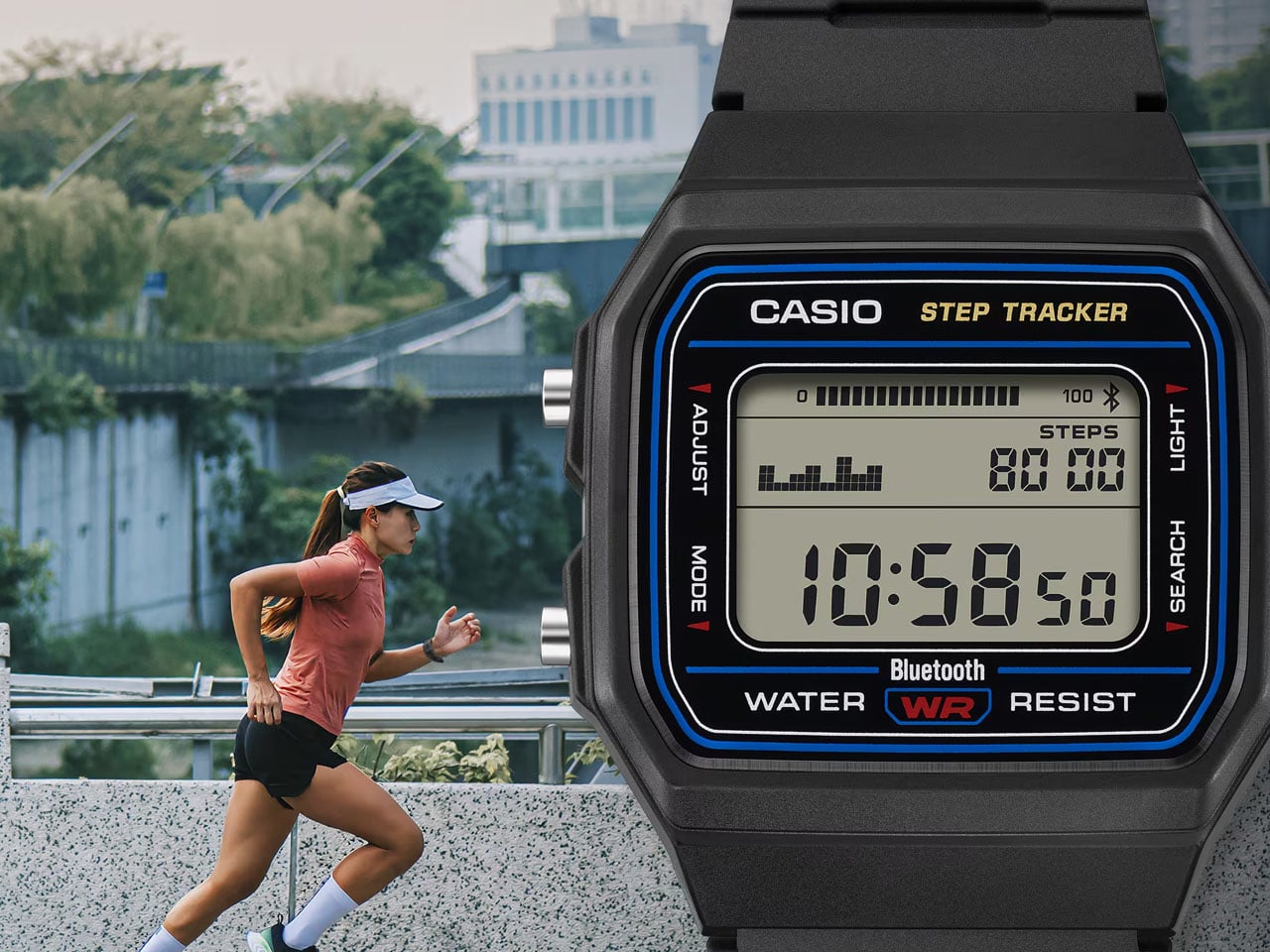
5. Ollee Watch: A Classic Casio, Supercharged

The Ollee Watch turns the classic Casio F-91W into a customizable smartwatch through a mainboard swap. You keep the retro resin case, LCD, and water resistance, while gaining step tracking, notifications, and Bluetooth. It’s a clever, open-source upgrade that bridges nostalgia and modern convenience.

DIY fans will appreciate the upgrade process, which doesn’t require advanced skills. The result is a connected, functional timepiece that feels both familiar and fresh—ideal for those who want to retain the original’s charm while adding new tech.

What we like

  • Maintains the beloved Casio design with modern smart features.
  • Open-source and DIY-friendly for personal customization.

What we dislike

  • Installation requires some technical ability and patience.
  • Not as feature-rich as premium smartwatches.

6. Garmin Instinct 3: AMOLED Or Solar For Every Adventure

Garmin’s Instinct 3 offers versatility with AMOLED and solar-powered variants, each available in two sizes. The AMOLED model delivers vivid visuals for gym goers, while the solar model boasts unlimited battery life in sunlight—ideal for outdoor enthusiasts. Up to 24 days on a single charge sets a new standard for smartwatch endurance.

The Instinct 3 is built tough, with extensive fitness tracking and navigation features. While its rugged look won’t win fashion awards, its performance and battery options make it a reliable companion for any adventure.

What we like

  • Choice between super-bright AMOLED and solar-powered battery.
  • Outstanding battery life and rugged durability.

What we dislike

  • Solar models require regular sunlight for the best results.
  • Functional, utilitarian design isn’t for style seekers.

7. TAG Heuer Connected Calibre E4 45MM x Oracle Red Bull Racing

TAG Heuer’s collaboration with Oracle Red Bull Racing produces a standout luxury smartwatch. The 45mm DLC titanium case, bold racing-themed strap, and dial make it a collector’s item. It’s packed with features for health, fitness, and lifestyle, all wrapped in the prestige of Swiss watchmaking.

This is a watch for motorsport fans and those who appreciate both tradition and cutting-edge tech. While its price and look may not be for everyone, it’s a striking fusion of speed and sophistication.

What we like

  • Luxurious materials and exclusive Red Bull Racing design.
  • Offers comprehensive smart features with top-tier build quality.

What we dislike

  • High price limits its accessibility.
  • Bold styling may not suit everyday wear or all tastes.

8. Apple Watch Series 11: The Ultimate Health Monitoring Device

Apple’s Series 11 sets a new bar for health-focused smartwatches. With advanced sensors, silent killer detection, and always-on ECG, it’s the most feature-packed Apple Watch yet. Hardware upgrades ensure it’s more durable and connected than ever, while seamless integration into the Apple ecosystem makes it a natural choice for iPhone users.

It’s designed for those who want a blend of style, utility, and medical-grade monitoring on their wrist. The only major downside is its battery life, which still requires daily charging.

What we like

  • State-of-the-art health monitoring and medical features.
  • Refined design and perfect compatibility with iPhone.

What we dislike

  • Battery life is only average, requiring daily top-ups.
  • Works best only within the Apple ecosystem.

9. Huawei Watch GT 6 Pro: Built For Endurance

The Huawei Watch GT 6 Pro is built for athletes who need their gear to last. Its sapphire crystal display and titanium case shrug off scratches and impacts, while the 21-day battery life is a game-changer for training camps and expeditions. Peak brightness makes it easy to read outdoors, and pro-grade GPS and tracking features cater to serious runners and cyclists.

While its focus is on endurance and performance, it may not have the app ecosystem or lifestyle features of more mainstream smartwatches.

What we like

  • Ultra-durable with sapphire crystal and titanium construction.
  • Long-lasting battery ideal for extended use and adventures.

What we dislike

  • Limited app selection compared to Apple and Wear OS.
  • More fitness-focused, less suited for general lifestyle use.

10. Ksana Hybrid E-Ink Smartwatch: Essential Information, Always

Ksana’s hybrid smartwatch puts a small E Ink display at the center, overlaying an analog dial with glowing hands. This battery-saving approach means you get only the essential info, without distractions or frequent charging. The analog movement adds classic charm, while the display excels in any lighting.

It’s ideal for anyone who values simplicity and mindfulness over a barrage of notifications. The pared-back approach means you’ll miss out on richer app experiences, but for many, that’s a feature, not a bug.

What we like

  • E Ink display provides superb battery life and readability.
  • Analog-mechanical movement adds timeless appeal and night usability.

What we dislike

  • Limited information display and few smart features.
  • Not for those who want colorful screens or app-rich experiences.

Final Thoughts: Which Smartwatch Fits Your Life?

Choosing the right smartwatch in October 2025 is all about matching your personal style, needs, and habits. This year’s lineup is more diverse than ever, from the boldest gaming wrist rigs to the most subtle hybrid analogs. Whether you crave battery life, health tracking, luxury, or sheer uniqueness, there’s a wearable that aligns with your priorities.

The best smartwatch is the one that disappears into your day and amplifies what you value most, whether that’s adventure, connectivity, or simplicity. As innovation continues to redefine what’s possible on your wrist, you have more freedom than ever to choose a device that feels tailored just for you.

The post 10 Best Smartwatches To Consider In October 2025: Find The Perfect Wearable For You first appeared on Yanko Design.

Huawei Paris Launch: Watch GT 6 Pro and Ultimate 2 add underwater messaging, cycling power, and medical grade health

19 septembre 2025 à 19:15

At Paris’s Vélodrome National, Huawei staged its most ambitious ecosystem showcase to date. The event focused on an interconnected lineup of wearables, smartphones, tablets, audio, and creative software. The strategy challenges Apple’s ecosystem advantage while addressing gaps competitors have not resolved.

Designer: Huawei

Huawei reports 200 million wearable shipments worldwide and cites the number one global position in wrist-worn devices during the first half of 2025. The GT Series alone has shipped 54 million units. These totals frame why Huawei sees itself as a category leader.

Consider a cyclist who needs real-time power data without expensive meters, a diver 40 meters down losing buddy contact, a creator editing 4K footage on location, someone requiring medical-grade blood pressure monitoring, or an artist who wants PC-level tools on mobile. This Paris showcase addresses each scenario with technology that stretches what consumer electronics can do.

Revolutionary Technology Addresses Real-World Problems

This launch connects breakthrough innovations across product categories to solve problems competitors have not addressed. The Watch GT 6 Pro introduces what Huawei describes as an industry-first virtual cycling power system that calculates real-time output without external power meters. According to Huawei, more than 1,000 wind tunnel experiments informed resistance models for varied riding scenarios. Riders enter basic inputs, including bike weight and body weight, then see power data in real time.

The Ultimate 2 debuts what Huawei positions as a sonar-based underwater messaging system. Divers can exchange preset messages at depths up to 30 meters, which addresses a safety gap that traditional dive computers do not solve. The system allows pairing with up to 50 diving buddies before descent, with preset message capability once underwater. During emergencies, pressing the upper left button sends an SOS alert that propagates through nearby watches, creating a multi-point safety network extending coverage beyond the initial 30-meter range through relay capabilities.

The Watch D2 offers 24-hour ambulatory blood pressure monitoring that Huawei says is certified by TÜV Rheinland. The goal is clinical-grade accuracy in a consumer device. Users can set up to 10 separate reminders per day or configure multiple consecutive measurements within custom time periods with 30 or 60-minute intervals. PulseWave Arrhythmia Analysis provides continuous heart health monitoring in the background, while a new emotional well-being indicator adds mental health tracking.

Complete Wearables Portfolio: Four Watches Targeting Every User

Watch GT 6 Pro: Professional Sports Authority

The GT 6 Pro keeps the octagonal design and adds a 3D bezel for dynamic highlights. The 1.47-inch AMOLED reaches 3,000 nits peak brightness, a 150 percent improvement for sunlight visibility. Aerospace-grade titanium with a hard coating improves scratch resistance. IP69 and 5ATM ratings support high-pressure water jets and swimming. Do not use these ratings to imply scuba diving.

Battery life reaches up to 21 days with light use and about 12 days in typical use. High-silicon batteries increase energy density by 37 percent. Trail running mode runs up to 40 hours, a 67 percent increase. Golf integration includes over 17,000 courses worldwide with precise distance measurements between 82 points.

The watch features the new Huawei Sunflower positioning system with 20% enhanced accuracy and introduces the 32G IMU sensor for improved fall detection. Sports capabilities span skiing (three modes including snowboarding and cross-country), running with real-time form analysis, and golf with half-scoring after each ninth hole.

Watch GT 6: Emotional Intelligence for Mainstream Users

The standard GT 6 focuses on comprehensive health monitoring with emotion detection capability. According to Huawei, the watch can intelligently detect and record three different emotional states with upgraded emotional well-being features compared to previous generations. Over 100 animated “PatWatch” faces provide instant mood enhancement, while guided breathing exercises offer relaxation support.

The 41mm model features adjustable loop lugs for smaller wrists, with a rounded bezel and numbered scales creating a sleeker appearance. The purple corrugated strap combines fashion with all-day comfort, available in five color options for personalization. Construction uses 316L stainless steel that balances durability with lightweight comfort for daily wear.

Watch Ultimate 2: Extreme Adventure Technology

The Ultimate 2 represents Huawei’s direct challenge to the Apple Watch Ultra’s adventure positioning. According to Huawei, the octagonal hollow design uses zirconium-based liquid metal construction with enhanced hardness coating that triples case durability compared to previous generations. The 3,500 nit LTPO display ensures visibility in conditions where Apple Watch Ultra users struggle with screen readability.

Huawei describes a re-engineered antenna that uses the case as a booster for NFC payments, eSIM calls, and navigation in weak-signal areas. The company claims improved route precision versus competing outdoor watches. Independent testing will need to confirm this. Battery performance reaches 4.5 days with all features active, extending to 11 days in battery saver mode. For context, Apple Watch Ultra delivers 36 hours with intensive use, making Huawei’s claims significant if validated.

Golf integration spans over 70,000 course maps worldwide with AI caddy functions providing club suggestions and green slope directions. Camera control supports Insta360 and DJI devices with simple double-tap commands, transforming activity stats into dynamic video stickers for sports like hiking, biking, snowboarding, diving, and skiing. This ecosystem integration directly targets adventure content creators who find Apple Watch camera controls limited.

The X-TAP all-in-one sensing system combines ECG, PPG, and tactile sensors positioned on both the side and back of the watch for what Huawei describes as faster, more comprehensive health monitoring than competing devices. At high altitudes, real-time fingertip SpO2 measurement helps guard against altitude sickness risks that traditional wrist-based sensors may miss. AI noise reduction using an NPU earned the highest five-star certification from SGS, ensuring crystal-clear calls in wind and noise conditions where other smartwatches fail. Huawei positions these capabilities as superior to Apple Watch Ultra’s more basic health sensors and communication features.

Smartphone Innovation: Nova 14 Series Redefines Mobile Photography

Nova 14 Pro: Ultra Chroma Camera System Breakthrough

The Nova 14 Pro introduces Huawei’s first Ultra Chroma Camera system with a 50MP RYYB sensor and physical variable aperture. According to the company, color restoration accuracy has increased by 120%, with spatial resolution improvements exceeding 100,000 times compared to traditional smartphones. The XD Portrait Engine uses advanced algorithms to optimize portrait photography across multiple zoom levels.

The front camera system features a 50MP ultra portrait dual camera delivering 5x digital zoom and 2x optical zoom. Huawei’s industry-exclusive zoom technology provides 0.8x to 5x range effortlessly, while the industry’s first front ultra-speed snapshot captures falling objects with remarkable clarity. Three built-in portrait themes – Natural, Delicate, and Stylish – offer immediate customization options.

The ultra-thin 7.78mm body features curved edges in Pure White, Crystal Blue, and Classical Black colors. The 6.78-inch quad-curve display supports 120Hz adaptive refresh rate, powered by a 5,500mAh battery with 100W SuperCharge Turbo. AI capabilities include Best Expression for post-capture facial adjustments and AI Remove for unwanted element elimination.

Advanced AI features extend beyond photography to interactive experiences. Lock screen games include Emoji Cross for bouncing emojis and AirHoop for gesture-controlled basketball shooting. AI messaging hides content when someone peers over shoulders, while exclusive AI gesture control enables touchless operation – scrolling videos while cooking or capturing screenshots by grabbing air.

Nova 14: Mainstream Excellence with Premium Features

The standard Nova 14 achieves even greater thinness at 7.18mm while maintaining the same 5,500mAh battery and 100W fast charging as the Pro model. The 6.7-inch OLED flat-edge display supports 120Hz refresh rates with intelligent adjustment capabilities down to 20Hz for battery optimization.

Camera upgrades include a 50MP RYYB ultra-vision main camera, telephoto lens, and ultra-wide macro camera system. The adaptive multifocal dual flash captures perfect moments in challenging lighting conditions, while maintaining color consistency across zoom ranges from 1x to 10x magnification.

Professional Tablet Computing: MatePad 12X Brings PC-Level Capabilities

The MatePad 12X features a pearlescent finish with seamless all-metal body construction, available in elegant green and pristine white colors. At 5.9mm thickness and 555g weight, it achieves ultra-portable dimensions while maintaining professional capabilities that directly challenge iPad Pro dominance in creative markets.

The upgraded paper matte display uses high-precision nanoscale etching technology, reducing sparkle by 50% compared to previous generations. The 12-inch LCD panel delivers 1000 nits peak brightness with 140Hz refresh rate, featuring an 88% screen-to-body ratio and 3:2 aspect ratio optimized for productivity workflows.

Huawei Notes includes AI handwriting enhancement and note replay functionality, synchronizing written notes with audio recordings for comprehensive meeting capture. PC-level video editing capabilities, developed in partnership with Phil Mora, enable professional content creation on mobile. The new drawing feature allows animation creation directly on video tracks using the M-Pencil Pro.

Performance improvements reach 27% better than previous models through enhanced hardware and more efficient cooling systems. Wi-Fi 7 connectivity provides enhanced stability for gaming and live streaming, while the large battery supports 66W supercharge capability. Live multitask features unlock interactive touch controls for editing and office tasks.

M-Pencil Pro: Professional Creative Tool Revolution

The M-Pencil Pro incorporates over 300 precision components with advanced pressure sensors detecting subtle touch variations. The premium tip features three layers – nickel, gold, and platinum – for premium tactile feedback that rivals professional art tools. Three interchangeable pen tips serve different creative needs.

Gesture control enables pinch-to-open radial menu access, while the embedded micromotor provides subtle vibration feedback confirming commands. The quick button launches preset favorite applications with single presses. Nearlink technology ensures accurate stroke translation, while the innovative rotate gesture automatically aligns brushes with stylus tilt and rotation for authentic artistic expression.

Audio Excellence: FreeBuds 7i Advances Noise Cancellation

The FreeBuds 7i introduces Dynamic ANC 4.0, which Huawei describes as their most advanced noise cancellation technology. The system intelligently adapts to ambient environments, automatically adjusting cancellation levels with faster response times and lower latency than previous generations. Performance enables clear audio immersion in noisy cafes or crowded subway environments.

Bone conduction microphones enable clear calls in environments with noise levels up to 90 decibels. The new six-axis head motion sensor provides 360-degree head tracking for spatial audio experiences with independent sound field calculation capability. This works universally with any phone or tablet, not just Huawei devices.

The circular case design fits naturally into bags or pockets, available in Mirandi Pink, White, and Black colors. Four ear tip sizes ensure proper fit across different users. The new Huawei Audio Connect app, compatible with both Android and iOS devices, launches at the end of September in major application stores.

Creative Ecosystem: GoPaint Community and Tools

The MatePad 12X comes pre-installed with the acclaimed GoPaint app, which now serves over 5 million users across 30+ countries. Intelligent color extraction allows effortless color sampling from any image, while the recently added animation feature enables frame-by-frame animation creation without limits.


The 2025 GoPaint Activity opens with five categories, including an all-new animation category. Last year’s activity received over 6,000 high-quality submissions while partnering with over 20 art schools. This creative ecosystem demonstrates Huawei’s commitment to fostering digital artistry beyond hardware capabilities.

Strategic Positioning: Ecosystem Warfare and Brand Evolution

This launch represents Huawei’s most direct challenge to Apple’s ecosystem integration, addressing specific pain points competitors have ignored. The underwater communication system creates an entirely new product category for adventure sports enthusiasts, while cycling virtual power eliminates cost barriers that neither Garmin nor Apple has solved comprehensively.

The Nova 14 series’ Ultra Chroma camera technology directly challenges Google’s computational photography leadership and Apple’s portrait mode capabilities. According to Huawei, the 120% improvement in color restoration accuracy could reshape smartphone photography expectations among professional users if validated through independent testing. For tablet productivity, the MatePad 12X’s PC-level capabilities with M-Pencil Pro target iPad Pro users who find Apple’s ecosystem limiting for professional creative work. The Phil Mora video editing partnership and animation features suggest deeper understanding of creative professional requirements than previous Android tablet manufacturers. Medical-grade blood pressure monitoring positions Huawei ahead of traditional consumer health tracking, potentially opening healthcare market segments that smartwatch competitors have struggled to penetrate with clinical credibility.

Beyond technical specifications, Huawei positions itself as “a brand for the young at heart,” recognizing that younger users seek to be seen, heard, and understood while focusing on personal growth. This manifests through animated watch faces, gesture controls, creative tools, and community-building initiatives that integrate entertainment elements with lifestyle experiences.

The Huawei Health Multi-Pass provides up to 90 days of free access to partner services for GT 6 and Ultimate 2 purchasers, while regional payment partnerships span Europe, Latin America, and Asia-Pacific markets. The “Enjoy Your Moment” proposition has reached 18 countries with almost 1,000 events and over 6,000 attendees, extending beyond hardware into lifestyle experiences. Aggressive pricing challenges established competitors: Watch GT 6 starts at $249, while the GT 6 Pro begins at €379, offering unique capabilities that Apple Watch and Garmin alternatives lack.

Testing Will Determine Real-World Performance Claims

While Huawei’s specifications and demonstrations appear impressive across all product categories, independent testing will determine whether these devices deliver on their ambitious promises. The cycling virtual power accuracy, underwater communication reliability, medical-grade blood pressure monitoring, Ultra Chroma camera performance, and PC-level tablet productivity require verification under real-world conditions.

The company’s track record provides confidence, but several technologies represent entirely new territory for consumer devices. The Ultimate 2’s underwater communication, the Nova 14’s Ultra Chroma imaging system, the MatePad 12X’s professional creative capabilities, and the Watch D2’s medical certifications need validation against established benchmarks in their respective categories.

Comprehensive testing will evaluate battery life claims under actual usage patterns, camera performance across lighting conditions, tablet productivity workflows, and the practical utility of health monitoring advances. This Paris launch represents significant technological ambition across multiple product categories – now the industry will discover whether execution matches the innovation promises.

Conclusion: Ecosystem Warfare Intensifies

Huawei’s Paris showcase demonstrates that the next phase of consumer electronics competition won’t be won through individual product superiority, but through comprehensive ecosystem experiences that solve real-world problems competitors have ignored. By addressing specific pain points – from cycling power measurement to underwater communication to medical-grade health monitoring – while maintaining ecosystem coherence, Huawei has positioned itself as the most credible challenger to Apple’s integrated approach.

The success of this strategy will depend on execution quality, software ecosystem development, and the company’s ability to maintain innovation momentum across multiple product categories simultaneously. For consumers, this marks the most ambitious expansion of an ecosystem challenger focused on solving specific problems rather than matching existing solutions.

The post Huawei Paris Launch: Watch GT 6 Pro and Ultimate 2 add underwater messaging, cycling power, and medical grade health first appeared on Yanko Design.

Apple’s Liquid Glass Eliminates Interface Chaos Without Clean Design Compromise

15 septembre 2025 à 22:30

Apple’s new Liquid Glass design language refracts light, adapts to context, and, for the first time, makes iPhone, iPad, Mac, Watch, TV, and Vision Pro feel like one family instead of six separate worlds. Today’s announcement of iOS 26, iPadOS 26, macOS Tahoe, watchOS 26, tvOS 26, and visionOS 26 finally addresses the fundamental interface problem that overwhelms users when every app competes for attention simultaneously.

Designer: Apple

Liquid Glass Design Philosophy Transforms How Interfaces Feel

For the first time, Apple has coordinated visual changes across all six platforms simultaneously while preserving what makes each operating system unique. This unified approach eliminates the jarring disconnection between devices that forces users to mentally readjust interfaces constantly.

Liquid Glass works as a translucent material inspired by visionOS that uses real-time specular highlights for depth and reflections while dynamically transforming to prioritize content over interface chrome. The system affects controls, navigation, app icons, widgets, and typography, not just window decoration.

Adaptive numerals shift based on context. Tab bars and sidebars resize intelligently as users scroll. Lock screen text adapts to underlying imagery for optimal readability. When reading articles, controls fade gracefully. During video editing, timeline tools become prominent while other elements recede naturally.

The philosophy demonstrates sophisticated restraint, recognizing that people switch between iPhone, iPad, and Mac throughout their workday constantly. Visual consistency reduces cognitive friction while platform-specific optimizations preserve each device’s core strengths.

However, this beauty comes with trade-offs. The GPU-intensive rendering means older hardware shows simplified effects. More critically, transparency looks gorgeous indoors but reduces contrast in direct sunlight. On iPhone 17 Pro, the translucency feels alive, though outdoors contrast sometimes slips, a fundamental tension between aesthetic appeal and practical usability that runs throughout Apple’s implementation.

Apple Intelligence Live Translation in iOS 26 Tackles Communication Barriers

International conference calls and travel create genuine language barriers that slow down professional work. Apple Intelligence introduces Live Translation across Messages, FaceTime, Phone calls, and AirPods without the awkward delays that plague existing translation tools.

The implementation supports English, French, German, Portuguese, Spanish, Chinese, Japanese, and Korean in beta, with additional language support rolling out throughout 2025. Visual intelligence gains ChatGPT integration for screenshot analysis plus search connections to Google, Etsy, and other supported applications for finding similar images and products.

Genmoji creation lets users combine multiple emoji for more precise expression than settling for approximate matches. Workout Buddy brings personalized spoken motivation to Apple Watch, iPhone, and AirPods during exercise sessions using generative voices built from Apple Fitness+ trainer data.

Developer Integration Expands Intelligence Ecosystem

New developer APIs let third-party apps integrate directly with on-device Apple Intelligence models. Apps like Streaks now intelligently suggest and categorize to-do items, while CARROT Weather provides unlimited conversational weather insights. Detail: AI Video Editor helps creatives by generating teleprompter scripts from outlines or existing text.

The on-device foundation model enables privacy-protected features that work offline, positioning Apple Intelligence as enhancement rather than replacement for human capabilities.

Liquid Glass in iOS 26 Eliminates Daily Phone Frustrations

Robocalls and customer service holds remain unnecessarily stressful despite decades of smartphone evolution. Call Screening automatically handles unknown numbers while Hold Assist waits on line until live agents become available, finally automating the tedious aspects of phone communication.

Lock Screen customization includes adaptive time presentation that adjusts to imagery and delightful 3D spatial scenes that respond to lighting conditions and usage patterns. The adaptive design ensures readability across different wallpapers and times of day.

Enhanced Communication and Media Features

Messages gains screening for unknown senders, poll creation, and conversation backgrounds. Apple Music adds Lyrics Translation and Pronunciation features for select songs across multiple language pairs. Apple Maps introduces Visited Places tracking while Apple Wallet expands order tracking capabilities in beta.

The new Apple Games app creates a personalized gaming destination for discovering and reconnecting with favorite titles. CarPlay users get a compact view for incoming calls, Tapbacks in Messages, plus widgets and Live Activities.

AirPods receive significant updates allowing creators to record high-quality content and remotely control Camera app capture, bridging professional and consumer workflows.

iPadOS 26 Desktop-Class Windowing Maintains Touch Simplicity

Professional iPad users have complained about windowing limitations for years without adequate solutions. iPadOS 26 introduces an entirely new windowing system that organizes and switches between apps while maintaining iPad’s signature simplicity, the biggest iPadOS release ever.

Multiple windows cooperate intelligently without the chaos that plagues traditional desktop environments. A new menu bar appears with a swipe down from the top or cursor movement to the edge, bridging touch and cursor interfaces elegantly without compromising either interaction method.

Home and lock screen widgets plus app icons gain a new “clear look” that integrates seamlessly with Liquid Glass principles. The aesthetic maintains visual hierarchy while reducing interface noise.

Professional Workflow Enhancements

The supercharged Files app offers new organization capabilities and folder customization. Dock folders provide convenient access to downloads and documents from anywhere. The Preview app arrives on iPad with Apple Pencil Markup and AutoFill integration, making document workflows seamless instead of requiring third-party workarounds.

Journal comes to iPad for capturing everyday moments and special events using Apple Pencil or touch. Creative professionals gain Background Tasks, enhanced audio input control, and high-quality local recording capabilities that bring iPad closer to desktop-class content creation.

On iPad M4, the new windowing system finally feels intuitive, but older models show lag when managing multiple windows simultaneously. It shows Apple’s design ambition outpacing its hardware support, a reminder that innovation always moves faster than compatibility.

macOS Tahoe Transparent Menu Bar Transforms Desktop Experience

Desktop search hasn’t fundamentally changed since the 1990s despite massive computing power increases. macOS Tahoe delivers Spotlight’s biggest update ever with new browsing views, enhanced search, and action capabilities for sending emails or creating events through quick keys.

Search transforms from file finding into a command center for everything. Shortcuts integrate with Apple Intelligence models for complex task automation. The updated Control Center offers new personalization options alongside extensive customization choices.

Visual Customization Meets Functional Design

Folder icons can be customized with color, symbols, or emoji. Wallpapers and tints interact directly with Liquid Glass elements, creating cohesive visual experiences that adapt to user preferences. The menu bar becomes completely transparent, expanding visual space without hardware changes.

Live Activities from iPhone now appear directly on Mac for real-time event tracking. Continuity brings iPhone Phone app features including Recents, Favorites, Voicemails, Call Screening, and Hold Assist directly to Mac, dissolving device boundaries.

On MacBook, the transparent menu bar is elegant at night but chaotic against a messy desktop, another example of the aesthetic versus practicality tension running throughout Liquid Glass implementation.

watchOS 26 Predictive Health Monitoring Gains FDA Validation

Fitness tracking has focused on reactive data collection rather than proactive health insights. Apple Watch gains a sleep score feature for understanding sleep quality and taking steps toward more restorative rest.

FDA-cleared hypertension notifications represent a significant medical advancement, alerting users when signs of chronic high blood pressure are detected so they can begin potentially lifesaving behavioral changes or treatment. The feature uses machine learning algorithms validated in large clinical studies but remains limited to Apple Watch Series 9 and later, Apple Watch Ultra 2 and later.

Enhanced Interaction and Productivity

watchOS 26 introduces two new watch faces: Flow and Exactograph. Smart Stack hints offer proactive prompts for actionable suggestions that appear when most relevant. Live Translation in Messages automatically translates texts into preferred languages.

A new wrist flick gesture dismisses notifications, silences alarms, and returns to the watch face on Series 9 and later models. On Apple Watch, wrist flick works instantly, while hypertension alerts inspire trust but raise accuracy questions. It positions Apple as both a lifestyle brand and a quasi-medical provider, which raises trust and liability questions. The Notes app finally arrives on Apple Watch, completing the productivity suite across Apple’s ecosystem.

Workout Buddy provides personalized, motivational audio insights during workouts with dynamic generative voices, while the Workout app debuts its biggest layout update since introduction.

Apple TV Social Features Transform Living Room Entertainment

Apple TV has lacked genuine social capabilities despite being shared household devices. Sing-along sessions reach new levels through Sing in Apple Music, transforming iPhones into wireless microphones for Apple TV with friends joining to queue songs or react with onscreen emoji.

Real-time lyrics and visual effects bring performances to life on the biggest screen in the home, making group entertainment interactive instead of passive consumption. Contact Posters on FaceTime simplify video calling from the living room while profile updates allow users to quickly return to personalized recommendations, playlists, and watchlists.

Vision Pro Persistent Spatial Computing Enables Collaboration

visionOS 26 brings powerful spatial experiences including widgets that integrate seamlessly into users’ spaces and persist across sessions instead of resetting each time. More expressive, realistic Personas and spatial scenes offer lifelike depth for photos.

Spatial browsing transforms Safari articles and lets developers embed 3D objects directly into web pages. Users can share Vision Pro experiences with people in the same room for collaborative movie watching or work sessions. iPhone unlocking while wearing Vision Pro plus hand and eye data saving makes sharing easier than ever.

A new interactive Jupiter environment lets users accelerate time to observe the planet’s massive storms swirling across its surface. Native playback support arrives for 180-degree, 360-degree, and wide field-of-view content from action cameras including Insta360, GoPro, and Canon models.

Comprehensive Accessibility Features Expand User Access

New accessibility features bring comprehensive customization to the Apple ecosystem. Accessibility Nutrition Labels on the App Store inform users of supported accessibility features before downloading apps, improving discoverability for users with disabilities.

The Magnifier app for Mac connects to external cameras for users with low vision to zoom in and interact with surroundings. Accessibility Reader offers systemwide reading mode with extensive font, color, and spacing options plus Spoken Content support.

Braille Access provides powerful interaction methods for braille users with connected displays. Live Listen controls come to Apple Watch with real-time Live Captions for users who are deaf or hard of hearing, ensuring the design revolution includes comprehensive user access.

Historical Context Reveals Design Evolution Strategy

Liquid Glass represents Apple’s most significant design evolution since the iOS 7 transformation from skeuomorphic to flat design in 2013. This latest pivot toward adaptive translucency aims to solve the interface chaos created by decades of feature accumulation across multiple platforms.

The simultaneous rollout across six platforms signals Apple’s confidence in unified design language while acknowledging the performance and usability trade-offs. GPU-intensive rendering limits older devices to simplified effects, and contrast issues in bright environments reveal the ongoing tension between beauty and functionality.

All updates are available today as free software downloads. Apple Intelligence launches in beta with expanding language support throughout 2025. Some features remain region-limited, particularly hypertension notifications which require specific hardware and regulatory approval.

This coordinated approach demonstrates how thoughtful design philosophy can unify technical capabilities across an entire ecosystem while maintaining each platform’s unique identity, a balance that will define Apple’s interface evolution for years to come.

The post Apple’s Liquid Glass Eliminates Interface Chaos Without Clean Design Compromise first appeared on Yanko Design.

Apple’s September Event Reveals 10 Design Breakthroughs That Change Everything

11 septembre 2025 à 17:36

Every September, Apple shows the world what’s possible when design meets engineering. This year’s “Awe Dropping” event delivered innovations that solve problems you didn’t know existed. Your iPhone, watch, and headphones are about to feel ancient.

These changes affect daily life in ways that become obvious once you experience them. Apple redesigned fundamental aspects of how we interact with technology. Here are the ten biggest design insights from Apple’s latest event.

iPhone Air proves ultra-thin phones can be incredibly strong

Apple debuted the all-new iPhone Air, the thinnest iPhone ever made, with pro performance. iPhone Air features a breakthrough titanium design that is elegant and light yet strong. The company solved the biggest challenge in thin phone design.

The back of iPhone Air is now protected with Ceramic Shield, and the front cover uses Ceramic Shield 2, delivering 3x better scratch resistance. This makes iPhone Air more durable than any previous iPhone. Strength and thinness no longer require compromise. Apple reversed years of increasing thickness through engineering breakthroughs.

This creates new possibilities for how phones feel in pockets and hands. The titanium frame provides structural integrity without adding bulk.

Center Stage camera creates perfect selfies automatically

Apple announced iPhone 17, featuring the new Center Stage front camera that takes selfies to the next level. The technology automatically frames selfies and video calls without manual adjustment. Bad selfie angles become impossible with this intelligent system.

The camera tracks faces and adjusts composition in real time. Video calls look professional without any effort from users. Group selfies include everyone perfectly without awkward repositioning.

Machine learning understands photography rules better than most people. The system creates flattering angles and proper framing consistently across all lighting conditions.

Aluminum unibody design revolutionizes Pro model construction

Apple built the iPhone 17 Pro with an Apple-designed vapor chamber that is laser-welded into a strong, light, and thermally conductive aluminum unibody. This delivers Apple’s best-ever performance and an enormous leap in battery life. The design represents a major departure from previous titanium construction.

The vapor chamber enables superior heat management during intensive tasks. Aluminum provides structural strength while remaining lightweight. The unibody construction eliminates weak points found in multi-piece designs.

This design choice prioritizes thermal performance over premium materials. The engineering breakthrough enables sustained high performance without overheating.

ProMotion displays become standard across all iPhone models

The 6.3-inch Super Retina XDR display with ProMotion is bigger and brighter, enabling supersmooth scrolling, immersive gaming, and improved efficiency on the base iPhone 17. Apple removed artificial barriers between product tiers. Smooth scrolling becomes available to everyone who buys an iPhone.

Gaming performance improves dramatically across all price points. The technology that made Pro models special now defines the entire lineup. This democratization of premium features shows Apple’s confidence in its technology leadership.

Users no longer need to choose between affordability and display quality.

Ceramic Shield 2 advances smartphone durability science

The new Ceramic Shield 2 front cover is tougher than any smartphone glass or glass-ceramic, with 3x better scratch resistance than the previous generation and reduced glare. For the first time, Ceramic Shield protects the back of Pro devices, delivering 4x better resistance to cracks than previous back glass.

This creates complete protection against drops and scratches. Users can feel confident using phones without bulky cases. Repair costs decrease significantly over the device lifetime.

Apple pushed material science boundaries to achieve these improvements. The technology makes phones more reliable and longer-lasting for everyday use.

Apple Watch gains hypertension monitoring capabilities

Apple introduced Apple Watch Series 11, offering the most comprehensive set of health features yet, longer battery life, an even more durable cover glass, and 5G cellular capabilities. Apple Watch Series 11 empowers users with notifications for signs of chronic high blood pressure, also known as hypertension.

Healthcare becomes proactive rather than reactive with this technology. Users receive early warnings about potential heart problems. Apple Watch positions itself as essential medical equipment.

FDA clearance for hypertension notifications is expected soon, and the feature will be available in more than 150 countries and regions this month. The feature could prevent heart attacks and strokes through early detection.

Sleep Score feature transforms rest quality understanding

With watchOS 26, Apple Watch can help users understand the quality of their sleep and how to make it more restorative with a new sleep score feature. Sleep is fundamental to a person’s health and critical to daily restoration.

The system analyzes multiple factors including heart rate and temperature. Users get actionable insights for improving sleep quality. The scoring system makes complex sleep data understandable for everyone.

This transforms how people think about rest and recovery. Sleep becomes measurable and improvable rather than mysterious.

AirPods Pro 3 delivers world-class noise cancellation

AirPods Pro 3 deliver unbelievable sound quality and the world’s best in-ear Active Noise Cancellation. They remove up to 2x more noise than the previous-generation AirPods Pro, and 4x more than the original AirPods Pro. This advancement eliminates more environmental distractions than ever before.

The updated design helps AirPods Pro 3 fit even better and provides greater in-ear stability during activities like running, HIIT, yoga, and more. Comfort improves alongside acoustic performance. Active users can trust the earbuds to stay secure during intense movement.

The engineering breakthrough makes quiet spaces possible anywhere. Concentration and focus become achievable in noisy environments.

Live Translation eliminates language barriers instantly

Live Translation comes to AirPods, making face-to-face conversations easier by helping users connect even if they don’t speak the same language. The earbuds become universal communication tools for any situation. Language barriers disappear during face-to-face interactions.

Business meetings across cultures become seamless experiences. Travel to foreign countries feels less intimidating. The technology bridges communication gaps through elegant design innovation.

This transforms how people interact across different languages and cultures. Real-time translation makes global communication effortless.

Crossbody Straps acknowledge changing phone usage patterns

The Crossbody Strap is compatible with iPhone 17 Silicone Case with MagSafe, iPhone 17 Pro cases, iPhone 17 Pro Max cases, iPhone Air Case with MagSafe, and iPhone Air Bumper. Apple officially acknowledges that phones function as primary creative tools.

Photography becomes more stable with hands-free operation. Content creators get professional camera stability from their phones. The design makes phones feel more like professional camera equipment than communication devices.

This accessory represents a fundamental shift in how Apple views phone usage. Mobile photography becomes a serious creative medium worthy of professional accessories.

Apple’s September 2025 event shows how thoughtful design solves real problems people face daily. These innovations prove that premium technology can become accessible while pushing entirely new boundaries. The changes affect how we work, communicate, and create content in meaningful ways that will reshape daily interactions with technology.

The post Apple’s September Event Reveals 10 Design Breakthroughs That Change Everything first appeared on Yanko Design.

When Crisis Becomes Canvas: The Q Timex 1972 Time Machine Reissue Proves Accessible Design Never Goes Out of Style

19 août 2025 à 22:30

When time travel costs less than your phone bill, something interesting happens to our perception of value and design. The Q Timex 1972 Time Machine Reissue carries the DNA of design born from chaos, back when the watchmaking industry faced what historians call the Quartz Crisis , a technological upheaval that threatened to destroy centuries of Swiss mechanical tradition. While European manufacturers scrambled to preserve their heritage, American brand Timex saw opportunity where others saw disaster.

Designer: Timex

This new reissue, priced at $249 for the silver variant and $279 for the gold , represents more than nostalgic throwback marketing. The watch embodies a moment when crisis forced innovation, when accessibility became a design philosophy rather than a compromise. In a world where good design often carries prohibitive price tags, the Time Machine Reissue stands as proof that democratic design principles still matter.

Design Democracy in a 39mm Package

The original 1972 Q Timex emerged during American watchmaking’s most defining period. Swiss manufacturers, comfortable with their mechanical supremacy, initially dismissed quartz technology as a passing fad . Timex took the opposite approach, embracing the precision of quartz while wrapping it in bold, unapologetically American aesthetics. The hexagonal link bracelet wasn’t trying to mimic Swiss elegance. The tonneau case didn’t apologize for its unconventional proportions.

These design choices reflected a different philosophy entirely. Where Swiss watches emphasized exclusivity and tradition, the Q Timex prioritized accessibility and forward-thinking design. The floating hour markers, achieved through applied indices that cast subtle shadows around the dial , created visual depth without requiring expensive manufacturing techniques. Each element served both functional and aesthetic purposes.

The wood-grain dial pattern, available in deep red on the gold-toned case, represented pure design confidence. This wasn’t subtle or understated. The Time Machine demanded attention, celebrating its quartz precision rather than hiding it. For a brand targeting everyday Americans, this boldness made perfect sense.

The coin-operated battery hatch on the caseback tells its own story about user-centered design. In 1972, when the original cost $125 (equivalent to roughly $800 today) , Timex understood that luxury shouldn’t require specialized service. Users could replace their own batteries using a simple coin, eliminating the need for expensive watchmaker visits.

Disruption as Creative Catalyst

Understanding the Quartz Crisis context makes the Time Machine’s design choices even more meaningful. Between 1970 and 1985, Swiss watch industry employment plummeted from 89,450 to just 32,000 workers . Traditional watchmaking faced an existential threat as Japanese companies like Seiko introduced accurate, affordable quartz movements that outperformed mechanical alternatives.

Timex, already positioned as an accessible American brand, adapted faster than established players. The company recognized that quartz technology offered more than just accuracy. It enabled new design possibilities, freed from the size constraints of mechanical movements. The Time Machine’s distinctive case shape, measuring 39mm wide and 43mm long , maximized visual impact while maintaining comfortable wearability.

The acrylic crystal choice reflected both practical and aesthetic considerations. While mineral or sapphire crystals offered superior scratch resistance, acrylic provided the domed profile that defined 1970s watch design . This wasn’t cost-cutting but conscious design decision, preserving the authentic visual character that made the original distinctive.

Modern production techniques allow the reissue to improve on certain aspects while maintaining historical accuracy. The applied hour markers now sit higher above the dial surface, creating more dramatic shadows and enhanced legibility . The quartz movement delivers accuracy within milliseconds per day , far exceeding the precision possible with 1970s technology.

Each design element reflects the original’s democratic philosophy. The 20mm lug width accepts standard straps, ensuring easy customization. Water resistance to 50 meters provides practical everyday protection without unnecessary complexity. The stainless steel construction, now made from recycled materials , demonstrates how responsible manufacturing can coexist with accessible pricing.

The tonneau case shape deserves particular attention for its ergonomic intelligence. Unlike round cases that can feel disconnected from the wrist’s natural curves, the Time Machine’s elongated profile follows the arm’s contours. This creates a more integrated wearing experience, especially important for a watch designed for daily use rather than occasional display.

Sustainability Meets Storytelling

The recycled stainless steel used in both case and bracelet represents thoughtful evolution rather than marketing gimmick . Timex didn’t simply recreate the 1972 original but adapted its principles for contemporary concerns. The steel maintains identical durability and finish quality while reducing environmental impact, proving that sustainable practices can enhance rather than compromise design integrity.

This approach reflects broader shifts in how we understand luxury and value. The original Time Machine succeeded because it delivered premium design elements at accessible prices. The reissue maintains this philosophy while addressing modern sustainability expectations. The result feels both historically authentic and contemporarily relevant.

The gold-tone option, available for $279, demonstrates how surface treatments can dramatically alter a watch’s character without changing fundamental proportions. Against the wood-grain red dial, the warm metal creates a distinctly 1970s aesthetic that feels both retro and timeless. The silver version offers more versatility for contemporary styling while maintaining the same design DNA.

When History Becomes Tomorrow

The Time Machine’s revival coincides with broader renewed interest in 1970s design across multiple industries. Architecture, furniture, and automotive design all show influence from this period’s bold geometric forms and expressive color palettes. The watch industry’s embrace of vintage-inspired designs reflects this cultural shift, but few brands execute it with the Time Machine’s historical authenticity.

Perfect timing meets perfect proportions. The 39mm case size, considered large for 1972, now aligns perfectly with contemporary preferences . This sizing sweet spot works across different wrist sizes, offering substantial presence without overwhelming smaller arms. The proportional relationship between case, dial, and bracelet creates visual harmony that transcends temporal fashion trends. Unlike many modern watches that chase ever-larger dimensions, the Time Machine found its ideal size decades ago.

Modern watch enthusiasts appreciate the Time Machine’s honesty about its quartz movement. Electronic precision takes center stage rather than hiding behind mechanical mimicry. The clean dial layout, punctuated by the date window at 3 o’clock, prioritizes legibility over ornamentation. This functional approach feels refreshingly direct in an era of increasingly complex watch designs. No complications clutter the face, no subdials demand attention.

Those hexagonal bracelet links deserve recognition for their ergonomic sophistication. Each link articulates smoothly around the wrist’s curves while maintaining structural integrity. The polished surfaces catch and reflect light dynamically, creating visual interest without relying on precious metals or gem settings. Thoughtful engineering creates luxury-level aesthetics at accessible price points. The bracelet flows like liquid metal, conforming to your wrist’s natural movement patterns. Even after extended wear, comfort never becomes an issue.

Success comes from understanding that good design should be democratic rather than exclusive. The Q Timex 1972 Time Machine Reissue delivers hand-finished details, quality materials, and distinctive aesthetics typically reserved for watches costing significantly more. At $249, it challenges industry assumptions about pricing and quality relationships. Contemporary design culture increasingly values authenticity over artificial scarcity. The Time Machine demonstrates market appetite for products that prioritize genuine design merit over manufactured exclusivity.

Timex preserved the original’s essential character while adapting it for modern manufacturing and usage patterns. Superficial vintage styling gets replaced by respectful historical translation. The Q Timex 1972 Time Machine Reissue proves that crisis-born design can transcend its origins to become genuinely timeless. Democracy wins over exclusivity. Innovation trumps tradition. For $249, you get wearable proof that good design belongs to everyone.

The post When Crisis Becomes Canvas: The Q Timex 1972 Time Machine Reissue Proves Accessible Design Never Goes Out of Style first appeared on Yanko Design.

Apple Keynote 2024: Unveiling iPhone 16, New AirPods, Apple Intelligence, and More

Par : Megan Crouse
9 septembre 2024 à 20:04
All four variations of iPhone 16 and iPhone 16 Pro will be able to use Apple Intelligence when it arrives with iOS 18.1. Plus, check out new AirPods and Apple Watches.
❌
❌