
Vue normale

Il y a de nouveaux articles disponibles, cliquez pour rafraîchir la page.
Aujourd’hui — 12 mai 2026Flux principal

This Ceramic Vase Is Actually a Phone Speaker That Needs No Power

Par : JC Torres
12 mai 2026 à 16:20

The home has become increasingly cluttered with gadgets that need charging, pairing, and their own dedicated spaces. Even something as simple as playing music from a smartphone often involves a Bluetooth speaker sitting on a shelf, waiting for its battery to drain. There’s been a quiet counter-movement in product design, where objects do their jobs without power and sit in a room the way a vase or a mug would.

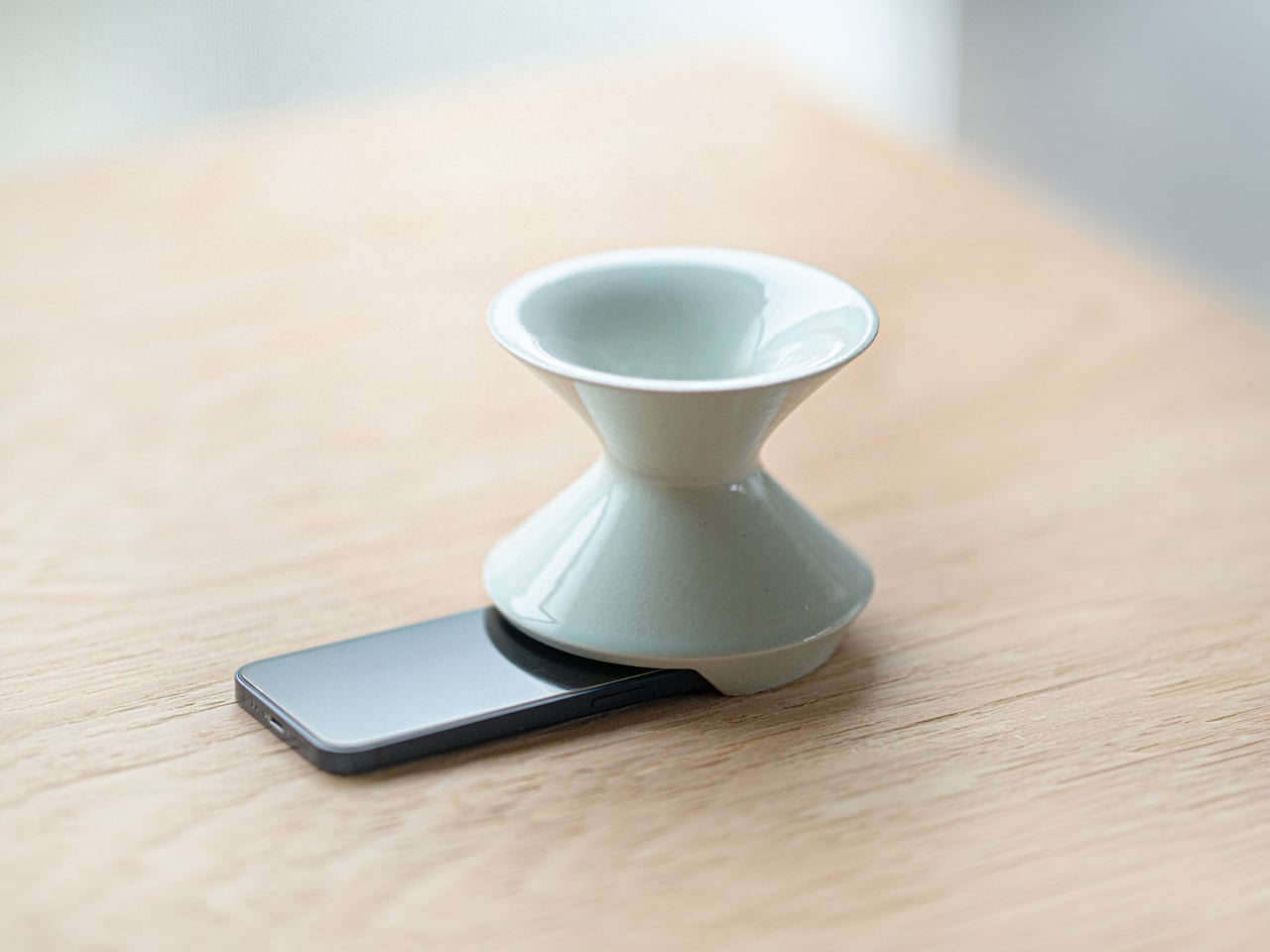
Kenji Abe’s ECHO is exactly that kind of object. It’s an analog speaker that amplifies smartphone audio simply by being set on top of the phone, requiring no power, no pairing, and no setup beyond placing it down. The concept takes its cues from wind instruments and seashells, two forms that have been shaping and projecting sound for centuries without the help of electricity.

Designer: Kenji Abe

The inside of ECHO works like a chamber, built to catch the phone’s audio and carry it outward in soft, diffused waves rather than projecting it directly. The geometry draws from the same logic as a cupped hand, but with more control over how sound travels. The result isn’t a dramatic volume boost so much as a room-filling quality that feels warmer than a powered speaker on a desk.

The choice of material makes as much of a statement as the form. Abe uses glazed ceramic, the same material found in vases, mugs, and tableware, giving ECHO a texture and presence that belongs in a home rather than on a tech shelf. It doesn’t look like an accessory. It looks like something that was always there, something that simply happened to be placed near a phone.

That quality matters when the phone is on the kitchen counter and you want music while cooking, or on a desk where you’d rather not have a speaker taking up permanent residence. ECHO doesn’t need to live next to a charging cable or be put away between uses. It sits on the table and becomes part of the room, as unobtrusive as any other ceramic piece nearby.

A guest walking in wouldn’t necessarily clock it as a tech product. That’s partly the point. The glazed surface catches light the way pottery does, and the form is quiet enough to sit beside books or plants without demanding attention. When a phone is slid underneath it, it starts doing its job. When the phone is gone, it just stays there, still looking like it belongs. The same underlying principle runs through the Battery-free Amplifying iSpeakers, where a Duralumin metal enclosure amplifies a smartphone’s audio without any power.

Abe designed ECHO to exist comfortably in a room even when it isn’t doing anything, a goal most speakers never consider. Most audio accessories announce themselves. This one quietly waits, and when a phone is close enough to fill the cavity with sound, the room gets a little warmer and a little fuller without anyone having to reach for a power button.

The post This Ceramic Vase Is Actually a Phone Speaker That Needs No Power first appeared on Yanko Design.
À partir d’avant-hierFlux principal

Buddy’s Wind-Up Mood Lamp Is the Anti-App We All Need

Par : Ida Torres
18 mars 2026 à 17:20

Think about the last time you had to download an app just to turn on a light. Or pair a Bluetooth device, wait for it to connect, tap through a settings menu, and finally get it to do the one thing you actually wanted: cast a soft glow across your room. At some point, the technology built to make things simpler started adding more steps than it removed.

Chevy Chanpaiboonrat had a different idea. The Bangkok-born, New York-based industrial designer behind Buddy Design created a portable mood lamp with exactly one control: a single mechanical winding key, positioned at the back of the lamp body. No app. No voice commands. No wireless pairing required. Just a key, a twist, and light.

Designer: Chevy Chanpaiboonrat for Buddy Design

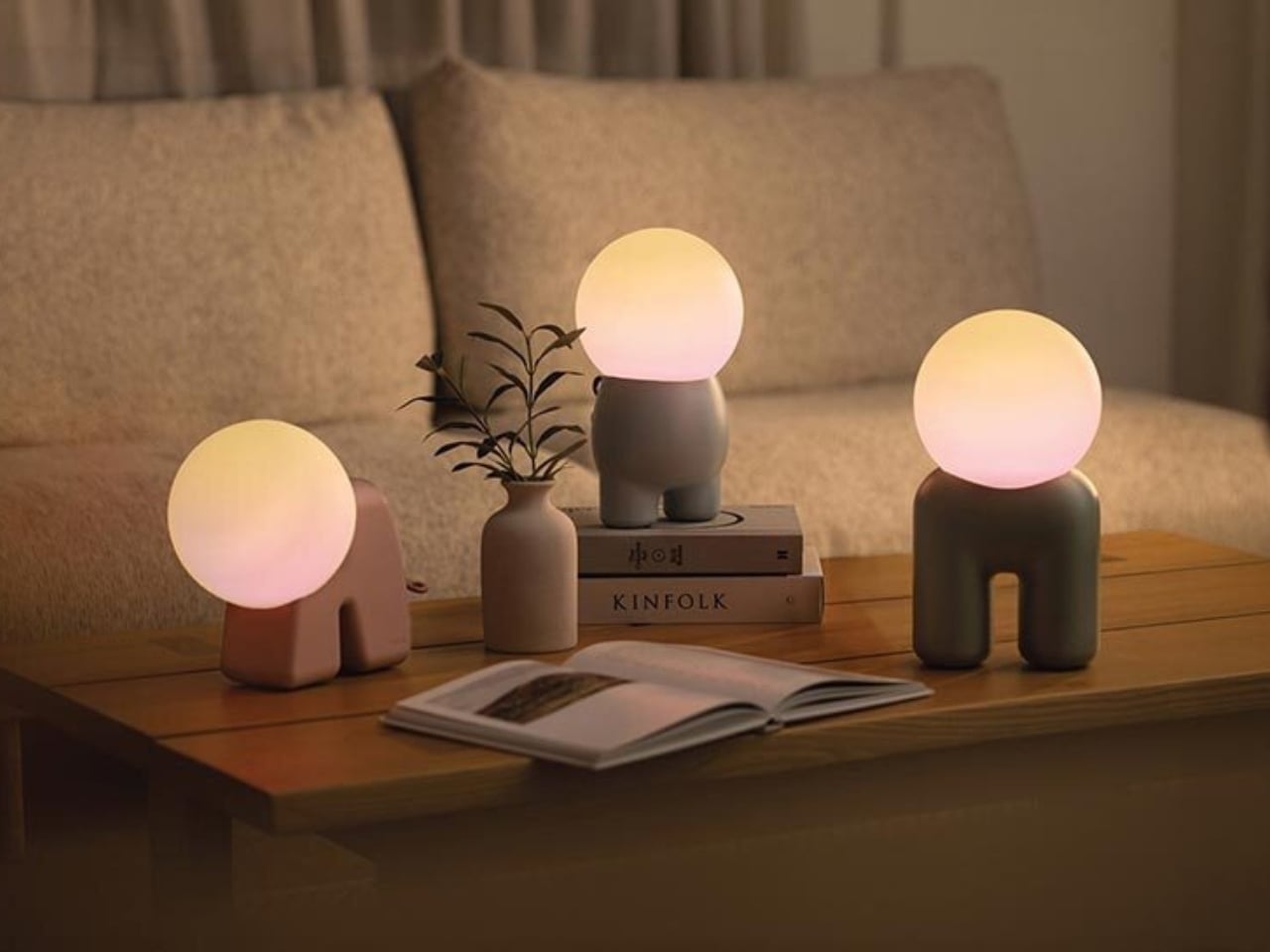
The Buddy lamp collection, which includes soft, animal-like forms named Puppy and Teddy, started as a thesis project at Parsons School of Design, where Chanpaiboonrat graduated with the School of Constructed Environment Honors award in 2023. That origin matters. The concept wasn’t rushed to market; it was worked through carefully, with the tactile interface emerging from the design process itself. The lamps offer eight science-informed gradient light modes, each grounded in color psychology and designed to support calm, focus, or better sleep. And the way you access all of that is the small key placed exactly where a tail would sit on the lamp’s animal-like body, a detail that manages to be both genuinely functional and quietly delightful.

Both Puppy and Teddy share the same core design language: soft, rounded silhouettes, a matte finish, and a compact footprint that sits comfortably on a nightstand or desk without demanding attention. Puppy leans slightly slimmer and more upright, while Teddy carries a rounder, more settled form. The proportions are deliberately drawn from classic wind-up toys, which gives each lamp a familiarity that’s hard to place at first. They don’t look like tech products. They look like objects you’d pick up and hold, and that instinct turns out to be exactly the point.

The interaction follows the form. Pressing and holding the key turns the lamp on. A short press cycles through three brightness levels. Rotating it transitions smoothly between the eight gradient light colors, moving from warm amber and soft pink through to cooler blues and greens. Each lamp runs up to ten hours on a full charge via USB-C, and the whole thing weighs just over a pound, making it genuinely portable rather than portable in name only. The physical proportions, the matte texture, the placement of that key: none of it feels accidental. The design is doing the emotional work that most products outsource to a companion app.

The brand describes itself as a tactile companion for overstimulated minds, which is a phrase that lands a little harder the more you think about it. The lighting is rooted in color psychology and wellness research, but what makes Buddy feel different isn’t the science. It’s the ritual. Winding the key is a small, physical action that no other object in your apartment is likely asking you to do. Every other device in your space wants your engagement through a screen. This one asks for something older and more direct.

Chanpaiboonrat has been running Buddy Design as a solo female founder since graduating from Parsons, and the brand has since earned the iF Design Award 2026, appeared at Wanted Design in New York, and found stockists including Lumens. For a one-person studio built on the premise that a winding key beats a smartphone app as an interface, that kind of traction is meaningful. It suggests the market is responding to the same exhaustion the product was designed around.

Part of what makes this feel timely is that Buddy isn’t trying to lead a revolution. It’s making a small, specific correction. A suggestion that not everything needs to be connected to everything else, and that lighting a room doesn’t require a subscription or a firmware update. Sometimes a winding key is exactly enough, and the fact that that feels like a refreshing thought is probably worth paying attention to.

The post Buddy’s Wind-Up Mood Lamp Is the Anti-App We All Need first appeared on Yanko Design.

❌
❌