❌

Vue normale

  • ✇Korben
  • Meeting Recorder - Vos visios transcrites en local sous Omarchy
    Meeting Recorder , c'est un enregistreur de réunions pensé pour Omarchy, la distribution Linux de DHH basée sur Arch et Hyprland. Et y'a pas besoin d'inviter à bot chelou dans votre visio puisque l'app se contente d'écouter votre micro et ce que joue votre ordinateur. Donc ça fonctionne avec n'importe quel logiciel de réunion, et tout est ensuite transcrit sur votre machine, 100% en local Le micro et le son de l'ordinateur sont ainsi enregistrés sur deux pistes sép
     

Meeting Recorder - Vos visios transcrites en local sous Omarchy

25 septembre 2026 à 04:36

Meeting Recorder , c'est un enregistreur de réunions pensé pour Omarchy, la distribution Linux de DHH basée sur Arch et Hyprland. Et y'a pas besoin d'inviter à bot chelou dans votre visio puisque l'app se contente d'écouter votre micro et ce que joue votre ordinateur. Donc ça fonctionne avec n'importe quel logiciel de réunion, et tout est ensuite transcrit sur votre machine, 100% en local

Le micro et le son de l'ordinateur sont ainsi enregistrés sur deux pistes séparées, et deux jauges vous montrent avant de lancer que les deux arrivent bien. C'est comme ça que l'outil sait qui parle... ce qui passe par le micro, c'est vous, et ce que joue l'ordinateur, ce sont les autres. Et s'il y a plusieurs personnes en face, Nemotron 3 Diarization, un modèle de NVIDIA qui tourne en local, sépare simplement leurs voix en "Remote 1", "Remote 2"...etc, que vous pouvez ensuite renommer.

L'écran de fin, Maya au micro, Tom côté ordinateur, et les deux pistes dans la forme d'onde

À la fin de l'appel, c'est whisper qui transcrit tout ce basar, avec le modèle large-v3-turbo par défaut (environ 1,6 Go à télécharger une seule fois), pendant qu'une animation façon années 90 vous fait patienter. Et pas besoin de carte graphique puisque d'après l'auteur, le processeur d'une machine récente boucle un appel court en quelques secondes. Ah et puis trop cool, le français fait partie des langues proposées, donc vous pouvez l'utiliser si vous avez séché les cours d'anglais.

Vous récupérez ensuite le texte, avec l'heure et l'intervenant sur chaque ligne, et un lecteur audio au-dessus. Cliquez alors sur une ligne et la lecture repartira de là. Et si whisper s'est gourré, vous survolez la ligne pour la corriger, la donner à l'intervenant suivant ou la supprimer. Chaque réunion finissant dans un simple dossier de ~/Documents/Meetings, avec l'audio et un fichier transcript.md, vous pouvez tout récupérer et même glisser sur la fenêtre un vocal ou un appel enregistré ailleurs, et Nemotron pourra y détecter jusqu'à 8 voix sans problème.

Pour les réunions de trois minutes ou plus, il y a aussi du chapitrage et c'est l'agent de code réglé par défaut dans Omarchy (Claude Code, Codex...) qui découpe la transcription une fois que c'est terminé. Donc, si vous ne voulez pas que ça parte dans le cloud, il faut prendre le temps de ne régler aucun agent par défaut sur Omarchy.

Et n'oubliez pas non plus de prévenir les gens en début de réunion, car l'article 226-1 du Code pénal punit l'enregistrement de paroles privées sans leur consentement. Hé ouaiiiis !

Côté installation, l'outil est dans le dépôt de paquets d'Omarchy, pour l'instant uniquement sur le canal edge. Sinon, en attendant la prochaine version d'Omarchy, ce script d'une ligne installera le même paquet.

Bref, c'est l'un ou l'autre :

yay -S omarchy-meeting-recorder
ou
curl -fsSL https://raw.githubusercontent.com/jankeesvw/omarchy-meeting-recorder/main/install.sh | bash

Attention, au moment où j'écris ces lignes, la version 1.1.1 plante dès la première transcription sur les processeurs sans AVX-512, un Ryzen 5 5500 ou un Core Ultra 9 285K par exemple. L'audio est bien enregistré, mais vous n'aurez pas de texte, parce que le binaire publié a hérité des instructions AVX-512 de la machine qui l'a compilé. Heureusement, un contributeur a déjà proposé un correctif, donc, soyez patient. Mais si vous êtes vraiment pressé, il faudra juste compiler vous-même l'appli (cargo build --release, les étapes sont dans le README).

Et si vous n'êtes pas sous Omarchy ? Faut chialer ?

Non, car l'app prendra alors l'apparence standard de libadwaita, mais sans l'agent par défaut d'Omarchy. Donc adieu les chapitres. Sous Windows, l'application Meetily fait le même genre de travail en local, Avec mon application macOS Kassis , on peut faire ça aussi. Il suffit de glisser-déposer l'enregistrement de la réunion sur l'appli. Les interlocuteurs sont reconnus et on obtient un transcript en quelques secondes. Enfin, pour transcrire vos enregistrements directement sur un serveur, il y a Speakr, dont je vous ai déjà parlé .

Voilà, en tout cas, je trouve que son dev a bien bossé ! Meeting Recorder c'est sous licence MIT, et le code est sur GitHub pour ceux qui ont un Omarchy sous la main !

  • ✇Yanko Design
  • Bose Ultra Open 2nd Gen and Sport Open spice-up the clip-on earbuds options
    After almost two years of a lull, Bose has finally released a new version of the Ultra Open Earbuds, along with a new pair of fitness-focused open earbuds. While I’m still a sucker for ANC earbuds that isolate me from the ambient world for deep focus moments, Bose’s new Open earbuds are tempting enough to consider for my walks and outdoor activities. The hardware for the second-generation Open Ultra has been updated for better audio, while the all-new Sports Open Earbuds explore new territory f
     

Bose Ultra Open 2nd Gen and Sport Open spice-up the clip-on earbuds options

18 septembre 2026 à 10:20

After almost two years of a lull, Bose has finally released a new version of the Ultra Open Earbuds, along with a new pair of fitness-focused open earbuds. While I’m still a sucker for ANC earbuds that isolate me from the ambient world for deep focus moments, Bose’s new Open earbuds are tempting enough to consider for my walks and outdoor activities.

The hardware for the second-generation Open Ultra has been updated for better audio, while the all-new Sports Open Earbuds explore new territory for hardcore active individuals who trust the brand with their audio requirements. Both these open-ear audio accessories take on the competition with a strong set of specifications, features, and pricing to keep everyone interested.

Designer: Bose

The timing of this release is perfect, as the open-ear earbuds are trending amongst individuals who need to be aware of the environment and, more importantly, suffer from occlusion triggered by ANC earbuds. Sure, those buds have transparency mode for situations where you need to hear what’s happening around, but the open-ear options are ideal for runners, cyclists, or public transport users. The two of them will support Bluetooth 5.4 multipoint connectivity for two devices and Google Fast Pair. Both these open-ear buds will be available for pre-order from 19 September, and available from October 1 in Black and White Smoke along with other respective limited edition colors.

Ultra Open Earbuds 2nd Gen

The flagship Ultra Open Earbuds arrive in the second generation to create “more listening moments across active pursuits and everyday life.” The buds are reengineered with better drivers to deliver deeper bass and a higher volume compared to the outgoing version. This has been the major complaint of existing users, and Bose has listened to the feedback and delivered the fix. The look and feel of the buds have been upgraded as they get a refined metallic cap with a beveled finish, while the case also benefits from a renewed design that makes them stand upright. As a welcome addition, the case is now wireless charging compatible. On the buds, you’ll now get 9 hours of battery life, with an additional 19.5 hours on the case. The buds support quick charge to deliver two hours of playback with just 10 minutes of quick charge.

High-quality audio is the main USP, as the open-ear buds get the aptX Adaptive codec and Snapdragon Sound support. For a better calling experience, the buds benefit from the Speech Clarity tech to adjust the listening volume automatically based on the environmental noise. Of course, this is AI-driven to smoothly transition the volume step. For those who love to watch movies and shows in surround sound, there is the Cinema mode that employs Bose’ TrueSpatial tech to envelope you in a 3D sound capsule. Ultra Open Earbuds (2nd Gen) will arrive in limited-edition Olive Green, Cherry Chocolate, and Sky Pink colors for $299.

Sport Open Earbuds

The new kid on the block is the Bose Sport Open Earbuds, which are designed for a secure fit and rated IP54 for dust and splash resistance. Compared to the big brother, these clip-on earbuds sport a more roundish hinge to stay in place even with the most rigorous activities like playing sports, running, or working out in the gym. According to Bose, the Sport Open Earbuds stay in place even with headshakes, cartwheels, and other activities.” For these open-ear wireless earbuds, Bose has opted for the tactile physical buttons since fiddling for touch controls is not practical.

For a sportier design, the earbuds get a translucent case lid that is textured for better grip. Each of the buds weighs 10 grams for all-day wearing comfort and touts 7 hours of listening time, with 29 hours total with the case. The Sport Open Earbuds will be available for $199 in limited-edition Eucalyptus Green, along with the aforementioned color options.

The post Bose Ultra Open 2nd Gen and Sport Open spice-up the clip-on earbuds options first appeared on Yanko Design.

PlayStation Pulse vs. Pulse Edge: Sony Reveals 6 Key Differences but Leaves 2 Big Questions Unanswered

18 septembre 2026 à 07:15

Sony has revealed six key differences between PlayStation Pulse and Pulse Edge, while price, battery life, and exact launch dates remain unannounced.

The post PlayStation Pulse vs. Pulse Edge: Sony Reveals 6 Key Differences but Leaves 2 Big Questions Unanswered appeared first on TechRepublic.

  • ✇Korben
  • Shuffle Drummer - FL Studio n'a qu'à bien se tenir
    Mani Deïz m'a écrit il y a quelques mois pour m'annoncer qu'il avait sorti un super truc. Si vous ne connaissez pas Mani, c'est un beatmaker du rap indépendant français, du collectif Kids of Crackling. Et voilà que le monsieur débarque avec Shuffle Drummer , une boîte à rythmes gratuite vraiment géniale qui tourne dans le navigateur. C'est lui qui l'a conçue, et son compère Olivier Kauffman qui l'a programmée. Ils ont été accompagné également de Romain Mithault qui
     

Shuffle Drummer - FL Studio n'a qu'à bien se tenir

16 septembre 2026 à 09:33

Mani Deïz m'a écrit il y a quelques mois pour m'annoncer qu'il avait sorti un super truc. Si vous ne connaissez pas Mani, c'est un beatmaker du rap indépendant français, du collectif Kids of Crackling.

Et voilà que le monsieur débarque avec Shuffle Drummer , une boîte à rythmes gratuite vraiment géniale qui tourne dans le navigateur. C'est lui qui l'a conçue, et son compère Olivier Kauffman qui l'a programmée. Ils ont été accompagné également de Romain Mithault qui l'a designée et de François Frimont qui également filé un gros coup de main au passage.

Le séquenceur après un appui sur la molette : kick, caisse claire et charleys posés sur seize mesure, swing à 58 % et c'est parti pour poser... ^^

Alors certes, des boîtes à rythmes dans le navigateur, je vous en ai déjà montré, à commencer par l'émulateur de la TR-808 et de la TB-303 de Roland. Sauf que celle de Mani ne s'arrête pas aux pads et aux faders, mais dispose de deux petites nouveautés.

La première c'est le timing. Vous avez votre séquenceur seize mesure, le moteur de shuffle et de swing, et surtout un mode TIMING qui vous laisse attraper une mesure allumée et la tirer hors de la grille, au tick près. Caisse claire en retard, charleys bourrés, kick poussé devant... C'est exactement ce qu'un beatmaker passe sa vie à faire à la main pour que ça ne sonne pas trop robotique, trop "quantifié".

La deuxième, c'est le sampler. Vous balancez une boucle dedans, vous la découpez, et il y a un bouton qui retire la batterie du sample pour ne garder que la mélodie et la basse. Du coup, vous pouvez poser vos propres drums par-dessus, ce qui est également l'une des base du métier de beatmaker.

Attention quand même, c'est de la séparation harmonique-percussive à l'ancienne, et pas un gros modèle IA entraîné pour l'occasion. Le bruit se répartit donc entre les deux composantes, et ça embarque souvent les voix au passage. Du coup, sur un morceau un peu chargé, vous risquez donc de retrouver des restes...

Pour le reste, il y a de quoi vous amuser avec 16 effets sur le bus master que vous chaînez par 4, une émulation du magnéto à bande Ampex ATR-102 pour coller du grain sur l'ensemble, et une vraie chaîne de mastering derrière, compresseur, limiteur et mesure LUFS. Le MIDI fonctionne aussi, mode MPC compris, si vous avez un clavier sous la main ( moi j'ai celui-là ) lien affilié.

Et ensuite, quand vous vous serez bien amusé avec, vous aurez peut-être l'envie pressante de cliquer sur le bouton "Save" pour sauvegarder votre beat et l'exporter, soit en wav, soit exporter les stems ou le master. Et pour ça, il faudra donc vous créer un compte avec votre email.

J'ai aussi regardé l'onglet réseau pendant que je chargeais un sample, pour vérifier que tout tournait en local, et je vous confirme donc que c'est le cas.

Bref, allez poser un beat et voyez ce que ça donne.

Bravo à Mani et ses collègues pour ce chouette outil créatif !

  • ✇Yanko Design
  • RHYTHM Is the Walkman the Smartphone Era Forgot to Build
    Smartphones turned music into just another notification competing for attention, a song interrupted by a text, an album broken up by a calendar alert. RHYTHM exists to undo that arrangement entirely, building a dedicated listening device from real audio components instead of borrowing a phone’s guts and bolting on a headphone jack. It’s a from-scratch digital audio player designed around one job: playing music properly, without a screen demanding anything else from you. That commitment starts w
     

RHYTHM Is the Walkman the Smartphone Era Forgot to Build

Par : JC Torres
12 septembre 2026 à 06:30

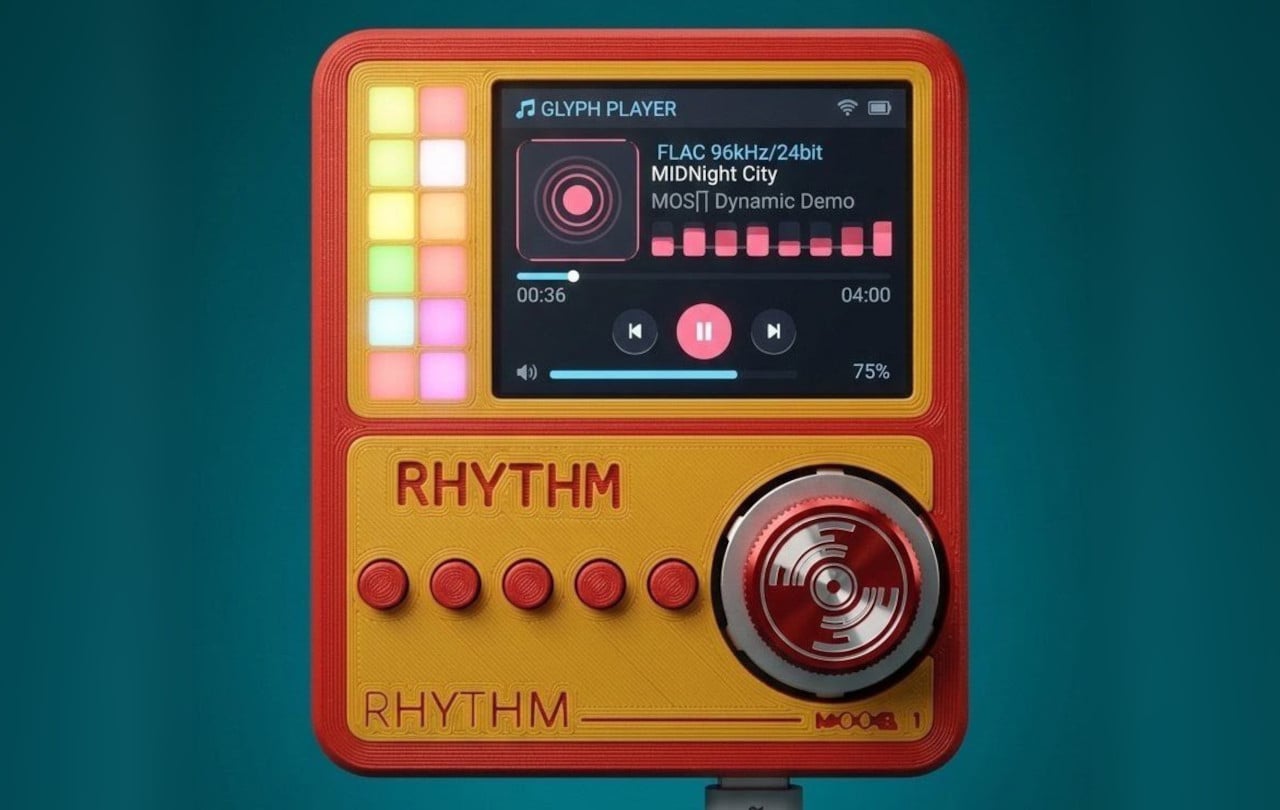
Smartphones turned music into just another notification competing for attention, a song interrupted by a text, an album broken up by a calendar alert. RHYTHM exists to undo that arrangement entirely, building a dedicated listening device from real audio components instead of borrowing a phone’s guts and bolting on a headphone jack. It’s a from-scratch digital audio player designed around one job: playing music properly, without a screen demanding anything else from you.

That commitment starts with what’s actually driving the sound. Rather than leaning on an all-in-one audio codec chip the way most budget players do, RHYTHM routes music through a genuine ESS SABRE DAC, the same category of chip found in dedicated hi-fi gear, paired with a discrete amplifier stage rather than a shortcut solution. An ESP32-S3 handles the file parsing and processing, but the actual sound reproduction runs through hardware built specifically for that job alone.

Designer: Mithilesh Gupta Konda

The headphone output makes the clearest case for why any of this matters. Instead of splitting one internal signal across a single jack, RHYTHM runs two completely independent, actively buffered 3.5mm outputs, each driven by its own dedicated amplifier chip. Two people can plug in two entirely different pairs of headphones, and each gets a full, uncompromised signal, no shared circuit quietly degrading whichever connection came second.

Keeping that signal clean required rethinking the power supply as much as the audio path. RHYTHM physically separates its digital logic and high-frequency switching lines from the analog circuitry that actually shapes the sound, regulating each side through its own dedicated, ultra-low-noise power regulator. It’s an unglamorous decision that never shows up in a spec sheet screenshot, but it’s exactly the kind of choice that determines whether quiet passages in a recording stay quiet.

Physical control gets the same attention. A precision mechanical rotary encoder handles navigation alongside a set of tactile buttons, giving the whole interface a hands-on quality that a touchscreen simply can’t replicate. Paired with a compact 2-inch color display, the device reads less like a shrunken phone and more like a purpose-built instrument, something meant to be operated by feel in a pocket or a bag without needing to look at it.

A microSD slot rounds out the practical side, storing lossless files locally rather than depending on a streaming connection or app ecosystem. That local-first approach extends the project’s entire philosophy: RHYTHM isn’t trying to replace a phone’s convenience. Instead, it’s opting out of that convenience on purpose, trading constant connectivity for a listening experience built around a single, uninterrupted task.

The post RHYTHM Is the Walkman the Smartphone Era Forgot to Build first appeared on Yanko Design.

  • ✇Yanko Design
  • 5 Designs That Prove Vinyl’s Comeback Was Never Just About the Music
    Vinyl has returned to the cultural spotlight, but its comeback is about much more than nostalgia. A new generation is discovering records as objects of design, ritual, and personal expression. For Gen Z, vinyl offers something increasingly rare in a digital-first world: a physical relationship with music. Choosing an album, holding the sleeve, placing the record on a turntable, and listening from beginning to end creates a slower, more intentional experience. The renewed interest in vinyl is al
     

5 Designs That Prove Vinyl’s Comeback Was Never Just About the Music

10 septembre 2026 à 12:20

Vinyl has returned to the cultural spotlight, but its comeback is about much more than nostalgia. A new generation is discovering records as objects of design, ritual, and personal expression. For Gen Z, vinyl offers something increasingly rare in a digital-first world: a physical relationship with music. Choosing an album, holding the sleeve, placing the record on a turntable, and listening from beginning to end creates a slower, more intentional experience.

The renewed interest in vinyl is also influencing interiors and product design. Record players are becoming sculptural objects, album covers are being displayed like artwork, and dedicated listening corners are finding their place inside contemporary homes. Here is how Gen Z is giving an old format a new visual language, transforming the record experience into a lifestyle statement.

1. Vinyl Becomes A Lifestyle

Vinyl has moved beyond the traditional collector’s shelf to become part of a broader lifestyle centered around music, design, and self-expression. Gen Z is attracted to records because they provide something that streaming cannot: a tangible connection to an artist and an album. The large-format sleeve, physical record, and carefully designed packaging create an experience that feels more substantial than tapping a song on a phone.

This shift has also made vinyl increasingly relevant to interiors. Records can sit on open shelving, lean against walls, or become part of carefully arranged listening corners. Collections communicate personality through color, artwork, typography, and genre. Instead of simply storing music, younger listeners are using their collections to shape the atmosphere and identity of their spaces.

The Ripple Turntable transforms sound into a visual language, drawing inspiration from the way audio waves radiate outward from a single source. Its pristine white surface features sculpted ripples that appear to emanate from the center of the platter and the base of the tonearm, intersecting across the surface to create a striking sense of movement. The effect turns an otherwise functional audio device into an expressive sculptural object, giving the act of playing music a distinctly visual dimension.

A sleek gold tonearm introduces a subtle accent against the all-white body, while the black vinyl record provides a strong visual contrast. Its minimalist yet playful character makes it particularly suited to Scandinavian and Japanese-inspired interiors, where sculptural simplicity and thoughtful detailing take center stage.

2. The Ritual Of Listening

Streaming has made listening almost effortless, allowing users to access millions of songs instantly. Vinyl introduces a different rhythm. The listener has to select an album, remove the record from its sleeve, place it carefully on the turntable, and lower the needle. These small actions create a physical ritual that encourages greater attention.

That ritual is particularly relevant to a generation accustomed to constant notifications and rapidly changing digital content. Listening to a record can create a moment of pause, where the album becomes the focus rather than background noise. Turning the record over halfway through also introduces a natural break, making music feel like an activity rather than an endless stream of content.

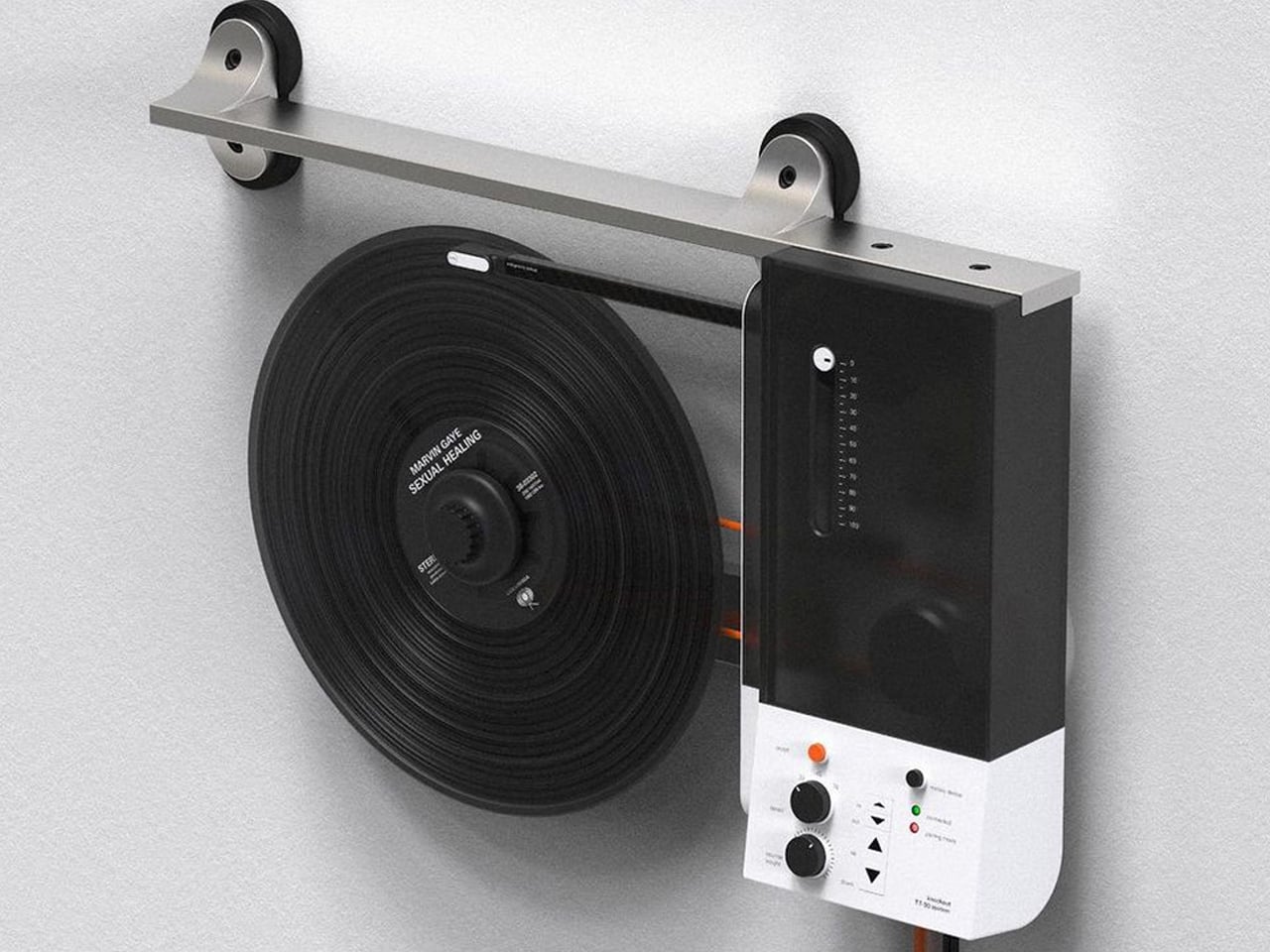
Oscar Olsson’s TT-90 System reimagines the traditional turntable by combining analog listening with contemporary digital functionality. Flipping the record player 90 degrees, the concept mounts the vinyl vertically on the wall, creating the illusion of a record floating in space as it spins beneath the needle. The unconventional format also addresses a common limitation of traditional turntables: their bulky footprint. Instead of occupying valuable furniture space, the TT-90 becomes part of the wall, transforming an everyday audio device into a striking piece of interior design. Available in black, orange, and white, its streamlined silhouette gives the familiar record player a distinctly futuristic character.

Beyond its space-saving approach, the TT-90 System introduces smartphone connectivity, allowing listeners to control playback digitally alongside onboard controls. Rubber components help reduce vibration against the wall, while a threaded knob secures the record during vertical playback. The result is a playful fusion of physical music culture, modern technology, and sculptural design.

3. Record Players Become Design

The turntable is experiencing its own design revival. Contemporary models are increasingly being designed to look at home alongside modern furniture rather than being treated purely as technical equipment. Minimal controls, warm materials, compact forms, transparent components, and sculptural bases are giving turntables a more furniture-like presence.

For Gen Z, this visual quality matters because technology is increasingly expected to contribute to a home’s aesthetic. A record player can become the centerpiece of a listening corner, positioned alongside books, plants, speakers, and carefully selected objects. The result is a more integrated approach to audio design, where performance and appearance work together instead of technology disappearing into a cabinet.

The Symphony headphones by Przemysław Wolnicki explore an intriguing meeting point between vinyl culture and contemporary personal audio. Instead of simply recreating the look of a record player, the concept translates its tactile interaction into a headphone interface. Each earcup features a miniature vinyl-inspired control surface that functions like a tiny turntable. Rotating the record allows listeners to seek forward or rewind, while the stylus controls track selection and playback. The interaction gives digital listening a physical dimension, creating a playful connection between nostalgic analog rituals and modern wireless audio.

Visually, the Symphony headphones take a distinctly premium approach. Brushed stainless steel gives the concept an audiophile-inspired character, while elongated structural elements add a futuristic, almost automotive quality to the earcups. Transparent sections introduce another layer of visual intrigue, allowing parts of the mechanism to remain visible.

4. Album Art Enters Interiors

Vinyl’s physical scale gives album artwork a presence that digital platforms cannot easily reproduce. A record sleeve can be picked up, examined, framed, displayed, or arranged as part of a larger collection. Its typography, photography, illustration, and color palette can influence the character of an entire room.

Gen Z’s interest in personalized interiors has made this particularly relevant. Rather than following perfectly coordinated design schemes, younger homeowners and renters often use meaningful objects to create spaces that feel individual. A stack of favorite records or a carefully arranged shelf can reveal musical taste while adding visual interest. Music therefore becomes part of interior storytelling, with album artwork functioning almost like a rotating gallery.

Building a vinyl collection comes with an important challenge: keeping records in excellent condition. Unlike digital music, physical records require careful storage and handling, with warping being one of the most common problems. Exposure to heat, pressure, or improper storage can distort a record’s shape, potentially causing skips, pops, and uneven playback. Pro-Ject’s Flatten it offers a dedicated solution for collectors who want to preserve their records or restore warped discs. Designed specifically for vinyl maintenance, the machine gently flattens damaged records while aiming to protect the delicate grooves responsible for their sound.

The Flatten it resembles a sophisticated record player, but instead of playing music, it uses heated aluminum plates to distribute warmth evenly across the record. Temperature controls allow users to adjust the process, while low temperature hysteresis helps maintain consistent conditions. Its solid aluminum construction gives the machine a premium, durable feel, while its straightforward operation makes it approachable even for first-time vinyl collectors.

5. A New Generation Collects

Gen Z is approaching collecting differently from previous generations. Owning vinyl does not necessarily mean building an exhaustive collection of an artist’s entire discography. Instead, younger collectors may choose albums because of their emotional significance, artwork, rarity, cultural relevance, or connection to a particular period of their lives.

Social media has further strengthened vinyl’s visual appeal. Record hauls, listening setups, shelves, packaging details, and limited-edition pressings naturally become content for visually driven platforms. Yet the appeal goes deeper than aesthetics. In an economy built around subscriptions and temporary digital access, owning a physical album offers a sense of permanence. Vinyl gives listeners something they can hold, display, revisit, and pass on.

Album artwork has long played an important role in shaping how music is experienced, turning records into visual as well as auditory objects. As streaming has reduced album covers to small digital thumbnails, vinyl has restored the opportunity to create tangible, immersive packaging. OK Go embraces that potential with its album And the Adjacent Possible, featuring an inventive vinyl jacket designed by Yuri Suzuki and Claudio Ripol. The gatefold cover transforms the familiar act of opening a record into an interactive visual experience, extending the album’s creative identity beyond the music itself.

Opening the jacket reveals a three-dimensional pop-up structure featuring geometric red and green domes that rise from the surface. A reflective element beneath them creates an optical illusion, making the partial forms appear like complete spheres. The playful construction recalls the wonder of a pop-up book while maintaining a sophisticated aesthetic. Its precise folds, geometric forms, and restrained palette turn the record sleeve into a sculptural object that connects music, packaging, and interactive design.

Vinyl’s revival reflects a growing desire for tactile, intentional experiences in a digital world. Gen Z is not simply bringing records back; it is redesigning the entire experience around listening, collecting, interiors, and personal expression.

The post 5 Designs That Prove Vinyl’s Comeback Was Never Just About the Music first appeared on Yanko Design.

  • ✇Yanko Design
  • The $300 Sony Headphones Everyone Wanted Are Actually Back
    Anyone who has priced out a decent pair of noise-cancelling headphones this year has felt the sticker shock. Sony’s own flagship, the WH-1000XM6, launches at $449.99, and its wilder sibling, the 1000X The ColleXion, sits even higher. Bose isn’t cheaper. Sennheiser isn’t cheaper. The whole category has quietly drifted toward the idea that “premium” now means “$400 and up,” and a lot of people who just want good ANC for their commute or their next flight have been priced out of the conversation e
     

The $300 Sony Headphones Everyone Wanted Are Actually Back

10 septembre 2026 à 05:15

Anyone who has priced out a decent pair of noise-cancelling headphones this year has felt the sticker shock. Sony’s own flagship, the WH-1000XM6, launches at $449.99, and its wilder sibling, the 1000X The ColleXion, sits even higher. Bose isn’t cheaper. Sennheiser isn’t cheaper. The whole category has quietly drifted toward the idea that “premium” now means “$400 and up,” and a lot of people who just want good ANC for their commute or their next flight have been priced out of the conversation entirely.

That gap is exactly what the Sony WH-1000XM4C is built to fill. Rather than chase another spec bump nobody asked for, Sony reached backward and pulled the WH-1000XM4, arguably the most decorated headphones the company has ever made, back onto shelves. It’s a strange move on paper. It’s a smart one in practice.

Designer: Sony

The original XM4 launched in 2020 at $349.99 and spent the next few years collecting best-of lists like trophies. Then Sony did what companies do: it moved on. The XM5 arrived in 2022 with a slicker profile and a bigger price tag, and the XM4 quietly slid off the roster, even as secondhand units kept trading hands and forum threads kept insisting it was still the smarter buy. That’s a telling signal. Products don’t usually get nostalgic followings this fast unless they actually solved a problem well the first time.

So here comes the WH-1000XM4C, essentially that same beloved design, tuned up and priced down to $299.99, a full fifty dollars less than what the XM4 cost at launch six years ago. Sony isn’t calling it a sequel or a flagship. It’s calling it what it is: the old favorite, finally made available again, minus the frustration of paying more for less.

The changes are modest, and that’s sort of the point. The equalizer jumps from five bands to ten, plus a new gaming EQ, so listeners actually get more control over their sound instead of trusting Sony’s factory tuning blindly. There’s a new Lavender colorway alongside the familiar Black and Platinum Silver, a small but welcome nod to people who don’t want their headphones to look like they were designed for a boardroom. The foldable hinge and rotating ear cups are back too, which matters more than it sounds. The XM5 abandoned that folding design entirely, and the XM6 only brought it back last year. The XM4C proves that some engineering decisions age just fine.

There is one real trade-off. To meet updated battery regulations, the XM4C uses a different cell, and that shaves ANC battery life from 30 hours down to 27. Sony compensates with faster charging, three minutes on the cord for a full hour of playback, which is a fair swap for most people who top up during a commute anyway.

What I appreciate here isn’t the spec sheet. It’s the confidence behind the decision. Bringing back a six-year-old product without dressing it up as something revolutionary takes a certain honesty that most tech companies avoid. Sony isn’t pretending this is groundbreaking. It’s admitting that the formula already worked, and that not every product needs constant reinvention to stay relevant.

There’s a mild irony worth naming. Sony still sells discounted stock of the original XM4 at the same $300 price point, and by most accounts, that older pair edges out the XM4C slightly on raw sound and noise cancellation. So the company is technically competing with itself. But for shoppers, that’s not really a problem. It just means there are now two well-regarded paths into the same trusted design, instead of one shrinking window before flagship prices take over completely.

Headphones don’t usually get second chances like this. Most get replaced, discounted into clearance, and forgotten. The XM4C suggests a different approach is possible, one where a genuinely good product doesn’t have to disappear just because something newer showed up. That’s a quieter kind of innovation, but it might be the one more of the industry could stand to learn from.

The post The $300 Sony Headphones Everyone Wanted Are Actually Back first appeared on Yanko Design.

  • ✇Yanko Design
  • The $179 iPhone Speaker That Never Needs Charging
    You’ve been waiting for your favorite artist to release their latest album, counting down the hours until it finally drops on your streaming service of choice. You open your phone and press play… and you’re a little disappointed. It’s not that the album isn’t great, it’s that your phone’s speaker doesn’t do it justice. You want something to amplify that sound right now, but your external Bluetooth speaker hasn’t been charged in weeks. The Battery-free Amplifying iSpeakers can solve that problem
     

The $179 iPhone Speaker That Never Needs Charging

9 septembre 2026 à 13:20

You’ve been waiting for your favorite artist to release their latest album, counting down the hours until it finally drops on your streaming service of choice. You open your phone and press play… and you’re a little disappointed. It’s not that the album isn’t great, it’s that your phone’s speaker doesn’t do it justice. You want something to amplify that sound right now, but your external Bluetooth speaker hasn’t been charged in weeks.

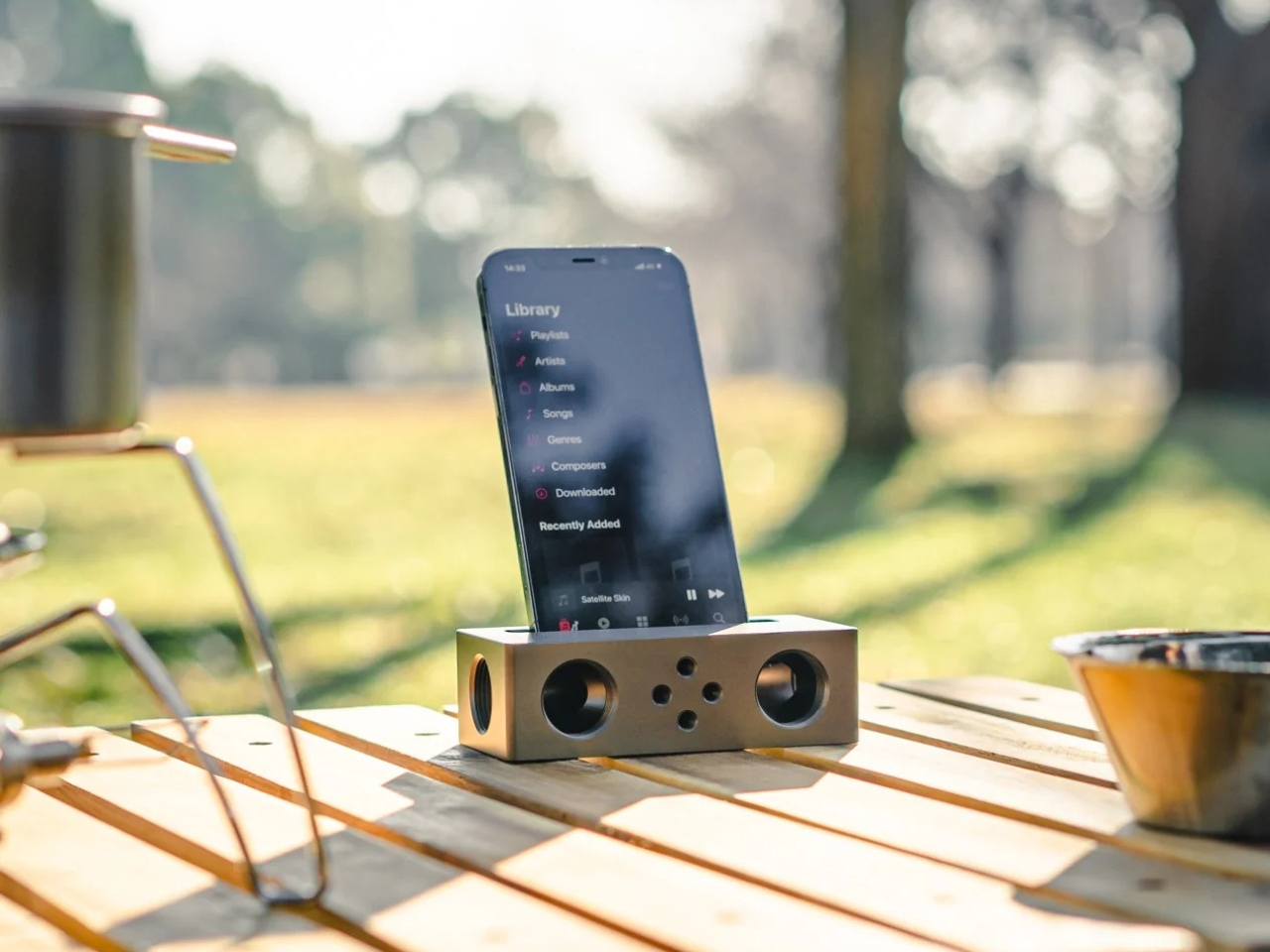
The Battery-free Amplifying iSpeakers can solve that problem for you, and you won’t need a single cable or Bluetooth connection to make it happen. This “dumb” speaker is actually smart enough to rely purely on acoustic engineering, channeling and amplifying the sound waves coming out of your phone so your music, podcast, or call sounds noticeably fuller than it would through your built-in speaker alone.

Click Here to Buy Now: $179.00

Designed by Ooi Masato and made in Japan, this battery-free device lives up to its name: it uses a precision-machined metal slot that cradles whatever phone you own, instantly amplifying whatever you’re playing. There’s no pairing process, no cord to plug in, and no anxious glance at a battery icon wondering if your speaker will cut out mid-song. You set your phone down, and it just works.

Design-wise, the iSpeakers follow a clean, minimalist aesthetic that looks just as at home on a cluttered work desk as it does on a nightstand or a bookshelf. The body is shaped around the golden ratio, giving it a visual balance that feels intentional rather than accidental (the kind of object you’d leave out on display rather than tuck into a drawer). It’s compact enough to toss in a bag, so you can bring your amplified sound with you to a picnic, a hotel room, or a friend’s backyard without hunting for an outlet. And because there’s no port, connector, or wireless protocol involved, it works with virtually any phone you own, including Apple’s freshly announced iPhone 18 Pro lineup and its first ever foldable, the iPhone Ultra, unveiled at today’s “Surprise and Shine” event. All you have to do is let the speaker slot cradle your phone’s speaker grille; there’s no compatibility chart to check and no software update to wait on.

The speaker itself is milled from Duralumin, the same lightweight, vibration resistant alloy used in aircraft construction. That means you’re getting a premium feel along with genuine durability. This isn’t a flimsy accessory that’ll crack after a few drops in your bag. The Japanese craftsmanship and golden ratio proportions give it a quiet sophistication that fits in seamlessly next to your laptop or coffee mug. If you want to get more out of it, you can also pick up the +Bloom and +Jet attachments, which let you customize how the sound projects, whether that means directing it upward for a fuller room fill or downward for a more intimate listening experience.

So how does this stack up against the Bluetooth speakers already crowding your shelf? Take a brand like JBL, whose Flip series has become a go-to for portable audio. Those speakers sound great and pump out serious volume, but they still ask you to charge them, remember to pair them, and eventually deal with a battery that won’t hold a charge like it used to. The iSpeakers skip all of that by design. You’re trading a bit of raw volume and bass depth for something Bluetooth speakers simply can’t offer: a device that will sound exactly the same in ten years as it does today, with zero maintenance and zero electronic waste. At $179, it’s priced closer to a premium Bluetooth speaker than a budget one, but you’re paying for a very different kind of value: permanence, craftsmanship, and simplicity over specs and app connectivity.

At the end of the day, the Battery-free Amplifying iSpeakers isn’t trying to replace your Bluetooth speaker for a backyard party. It’s solving a much smaller, more common frustration: the moment when you just want your phone to sound better, right now, without any setup. For anyone tired of charging cords, pairing screens, and speakers that die at the worst possible moment, this is a refreshingly simple fix, and a genuinely beautiful object to boot. Sometimes the smartest tech is the kind that doesn’t need power at all.

The post The $179 iPhone Speaker That Never Needs Charging first appeared on Yanko Design.

  • ✇Yanko Design
  • Plaud One Hands-On at IFA 2026: AI Earbuds That Transcribe Meetings, Then Draft Emails And Decks For You
    For three years, Plaud made very good tape recorders with a PhD. You pressed a button, it captured a meeting, and mere minutes later a summary showed up. The Plaud One, launched at IFA 2026 for €249.90, reverses that arrow. Its charging case now holds four beamforming mics, a speaker, an agent button and a built in eSIM, so it stays online without a phone nearby. Hold the agent button and the AI talks back, asks what you meant, then builds the deck or drafts the email while you get on with your
     

Plaud One Hands-On at IFA 2026: AI Earbuds That Transcribe Meetings, Then Draft Emails And Decks For You

3 septembre 2026 à 20:28

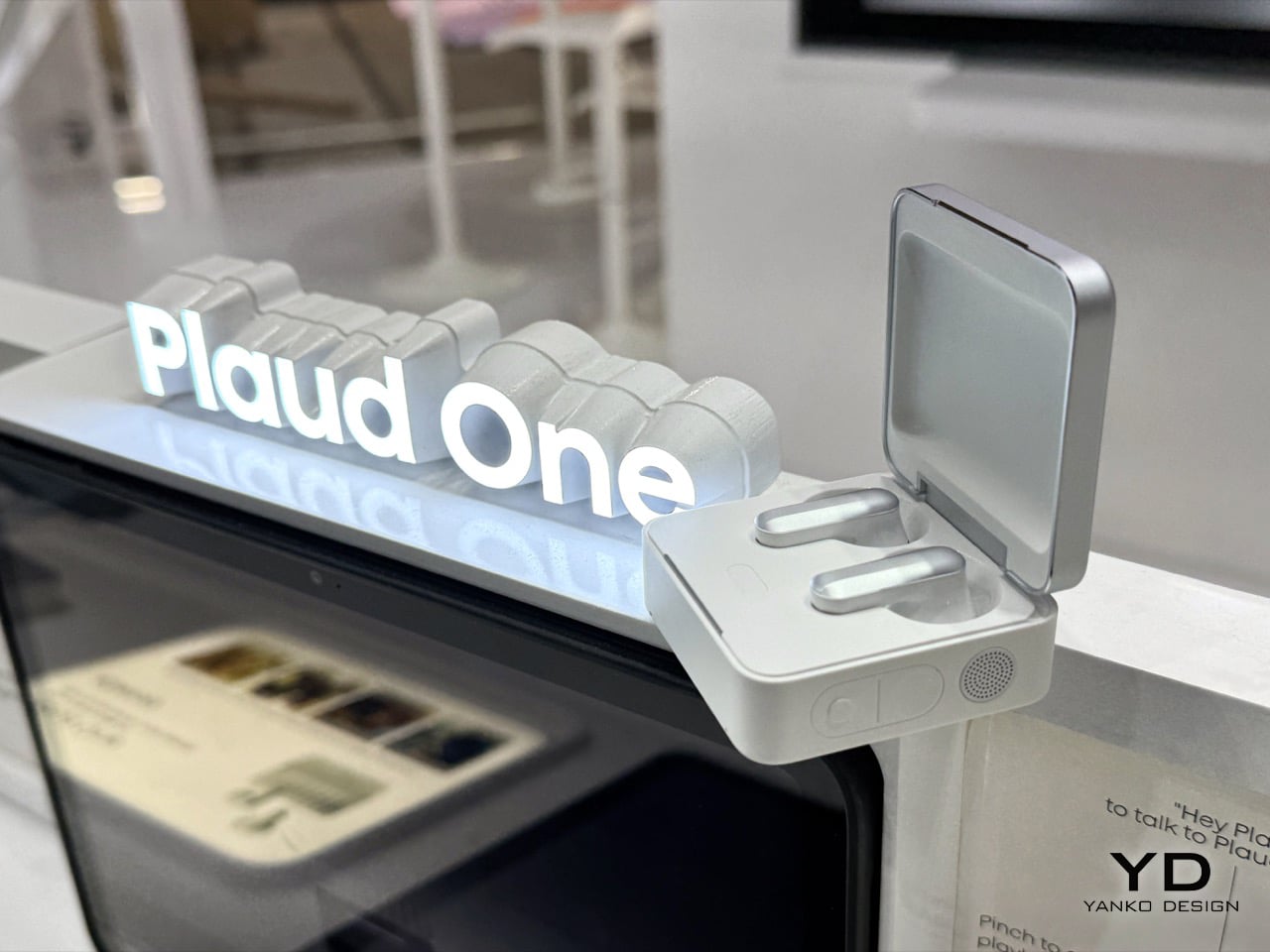
For three years, Plaud made very good tape recorders with a PhD. You pressed a button, it captured a meeting, and mere minutes later a summary showed up. The Plaud One, launched at IFA 2026 for €249.90, reverses that arrow. Its charging case now holds four beamforming mics, a speaker, an agent button and a built in eSIM, so it stays online without a phone nearby. Hold the agent button and the AI talks back, asks what you meant, then builds the deck or drafts the email while you get on with your day.

That flip from recording to doing needed hardware nobody had built yet. Not a pendant, not a pin, not another app crammed onto a phone you were already staring at. Plaud built a palm sized aluminum box with a fluted lid that looks like a Rimowa suitcase went through a shrink ray, sitting on a table, listening across a room, and talking back like a colleague who never needs coffee. The Explorer Edition opens for pre order now, capped at 2,000 units worldwide, with deliveries landing in Q4. A public version follows in 2027, once Plaud has watched two thousand early adopters put the thing through its paces.

Designer: Plaud

The original Plaud Note clipped onto a phone and did one job, listen to a meeting and hand back a transcript once it ended. The Note Pro added a screen and better mics. The NotePin S shrank the format onto a lanyard clip. Every generation stayed reactive by design, a smart recorder waiting for you to press stop before it did anything useful. That business built Plaud’s 2.5 million user base and reportedly crossed $100 million in annual software revenue by June, which is exactly the kind of runway that lets a company gamble on reinventing its own hardware category from scratch.

Vertical fluting runs down the case’s aluminum lid, the same visual trick Rimowa has stamped into cabin luggage since the 1950s, giving a 62 gram object a sense of density it has no right to carry. Flip it open and the earbuds sit half in ear, silver capped, in a tray that reads closer to a jewelry box than a charging dock. A speaker grille, a record button and a separate agent button line the case’s edge, the three controls that turn a charger into a device you actually talk to. None of it apes a phone. It reads like furniture for a desk, not gear for a pocket.

Earlier Plaud devices leaned on your phone for both processing and connectivity, so the intelligence always sat one hop away from the microphone. Plaud One’s case carries its own 4G LTE connection through a built in eSIM, closing that gap entirely. Capture, transcription and agent response now run in one box, independent of any other screen in your life. Leave your phone in a bag, walk into a cafe, and the case still records the table’s conversation, answers a question out loud through its speaker, or fires off a follow up email on command. Every pendant and pin that came before this quietly depended on a phone doing the real work behind the scenes. Plaud One is the first in the category that genuinely does not.

Plaud Agent drafts a follow up email the moment a client call ends. Feed it a meeting and it builds a slide deck while you sit through your next call, then drops the finished file straight into Notion with zero copy pasting. The platform connects to Gmail, Google Workspace, Microsoft Teams, Slack and Notion today, with more integrations promised as the software matures. Set it loose on a standing task, a monthly competitor scan for instance, and it runs quietly in the background, waiting with a finished report the next time you check. This is the actual bet Plaud is making, that an assistant worth having has to act, not just remember.

Pre orders for the Explorer Edition are open now at €249.90, with the first 2,000 units shipping in Q4. Buyers get $200 in Plaud Credits toward the heavier agent features on top of a starter transcription plan, so the price buys a running start on the software as much as the hardware. Calling this an Explorer Edition rather than a finished release is the honest move, an open beta wearing genuinely sharp industrial design. Plaud spent three years building the best possible way to listen. Plaud One is its first real attempt at building something worth talking to.

The post Plaud One Hands-On at IFA 2026: AI Earbuds That Transcribe Meetings, Then Draft Emails And Decks For You first appeared on Yanko Design.

  • ✇Yanko Design
  • This CD Player Doesn’t Hide Its Mechanism, It Puts It on Display
    If you think compact discs are a thing of the past, you probably haven’t been around a K-pop fan or a hoarder who still has their CDs from decades ago. Then there are people like me who have a stack of CDs collected over the years but no actual CD player to enjoy them on, since options that are strong on both quality and design are hard to come by. The ClearFrame Speaker CD Player is a solid choice for anyone looking for a visually stunning player that won’t let a CD’s album art go to waste. It
     

This CD Player Doesn’t Hide Its Mechanism, It Puts It on Display

2 septembre 2026 à 19:30

If you think compact discs are a thing of the past, you probably haven’t been around a K-pop fan or a hoarder who still has their CDs from decades ago. Then there are people like me who have a stack of CDs collected over the years but no actual CD player to enjoy them on, since options that are strong on both quality and design are hard to come by.

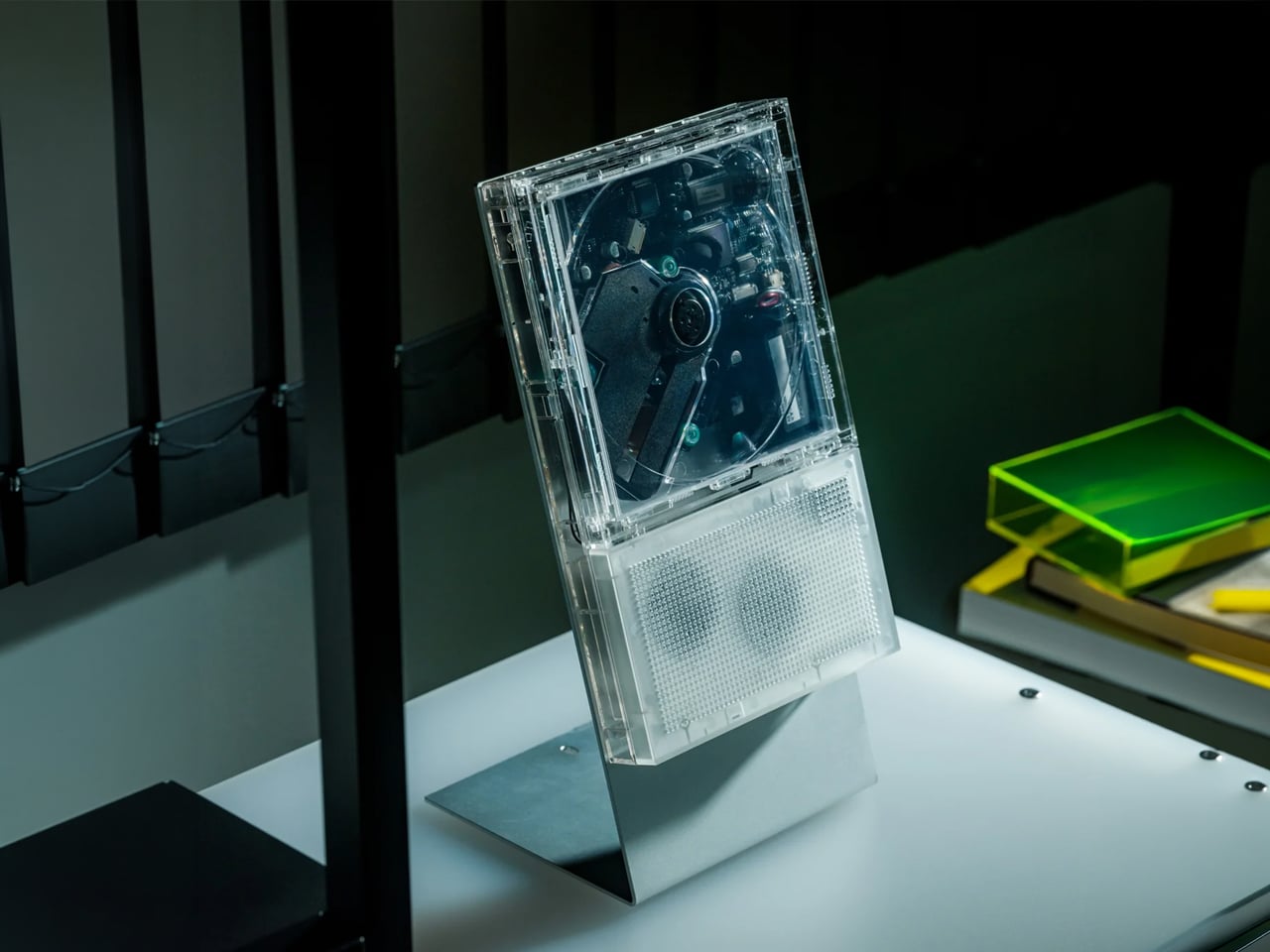
The ClearFrame Speaker CD Player is a solid choice for anyone looking for a visually stunning player that won’t let a CD’s album art go to waste. It lets you slot the jacket art onto the front of the player so it becomes a rotating piece of wall or shelf art. Or, if you’d rather show off the mechanics, you can leave the artwork out and display the transparent body itself, watching your CD spin with all its moving (and non-moving) parts in full view.

Click Here to Buy Now: $240.00

Whenever I come across beautiful album art, I can’t help but think it’s wasted if it only ever gets seen as a tiny digital thumbnail on a streaming app. A player like the ClearFrame Speaker CD Player lets you put that kind of artwork on full display while you’re enjoying the music in your room. Seeing something that the artist, and the album art designer, worked hard on come to life while it spins gives it the justice it deserves. And if you’d rather see the clear, polycarbonate-style body become a piece of art in its own right, just take out the album cover and let it shine in all its transparent glory.

This is also an upgraded version of the original, and already popular, ClearFrame CD Player, since it now comes with a built-in speaker. That means you no longer need to hook it up to an external Bluetooth speaker or wired setup, which makes it even more flexible to display anywhere in your home. You actually have three ways to listen to your favorite CDs: through the built-in 40mm speaker, with wired headphones through the 3.5mm jack, or over Bluetooth 5.3 to external speakers or headphones if you already have a better setup you’d like to use.

Beyond the listening options, the ClearFrame Speaker CD Player was clearly designed with portability in mind. At just 454 grams (about a pound) and roughly the size of a hardcover book, it’s light enough to carry from your bedroom to your living room without a second thought. Its 1,800mAh battery gives you around six to seven hours of playback through the built-in speaker, or seven to eight hours if you’re streaming over Bluetooth, so you can enjoy a few albums back-to-back before needing to recharge via USB-C. There’s even a retro-style LED Nixie tube display that adds a warm, nostalgic touch to the whole experience, plus a 2MB SDRAM anti-shock buffer so accidental bumps won’t make your music skip.

For collectors, this player also solves a real problem: what to do with all the CDs sitting untouched in a drawer somewhere. Instead of treating them like outdated clutter, the ClearFrame gives them a reason to come back out, whether that’s a K-pop photocard-era album, a mix your best friend burned for you in high school, or a boxed set you’ve been meaning to revisit. It turns “old technology” into a genuine decor piece you’d be proud to leave out on a shelf.

If you’re looking to gift this to someone (or, let’s be honest, treat yourself), the ClearFrame Speaker CD Player comes in a few configurations depending on how you plan to display it. You can pick it up on its own, or add a wall mount, book case, or display stand, so it fits neatly into whatever corner of your home you have in mind. It isn’t the cheapest CD player on the market, but if you have a stack of CDs with nowhere to go and album art too good to keep hidden, this one earns its price tag by turning something you already own into something worth looking at every single day.

The post This CD Player Doesn’t Hide Its Mechanism, It Puts It on Display first appeared on Yanko Design.

  • ✇Yanko Design
  • Ruka Studio’s TD-1 Vertical Turntable Turns Your Vinyl Collection Into Stunning Part of Your Room
    For a very long time, the world was fixated on horizontal vinyl players that took up a premium space on a table. Just recently, the tide has started shifting in favor of vertical record players that are designed to stand out instead of blending in. The new entrant in the category already explored by designer Fatih Demirci, CoolGeek, and Dutch Hi-Fi maker Miniot, is Ruka Studio – a Los Angeles-based company that was founded in 2024. Relatively new in its existence, Ruka makes its presence felt w
     

Ruka Studio’s TD-1 Vertical Turntable Turns Your Vinyl Collection Into Stunning Part of Your Room

17 août 2026 à 11:20

For a very long time, the world was fixated on horizontal vinyl players that took up a premium space on a table. Just recently, the tide has started shifting in favor of vertical record players that are designed to stand out instead of blending in. The new entrant in the category already explored by designer Fatih Demirci, CoolGeek, and Dutch Hi-Fi maker Miniot, is Ruka Studio – a Los Angeles-based company that was founded in 2024.

Relatively new in its existence, Ruka makes its presence felt with the wealth of experience that forms the DNA of the brand. Reportedly, Ruka Studio was founded by a group of former Apple engineers and designers, so a high-end turntable with a premium finish would be a given. But that’s not where it’s stopping; the company has launched its first vertical turntable called the TD-1.

Designer: Ruka Studio

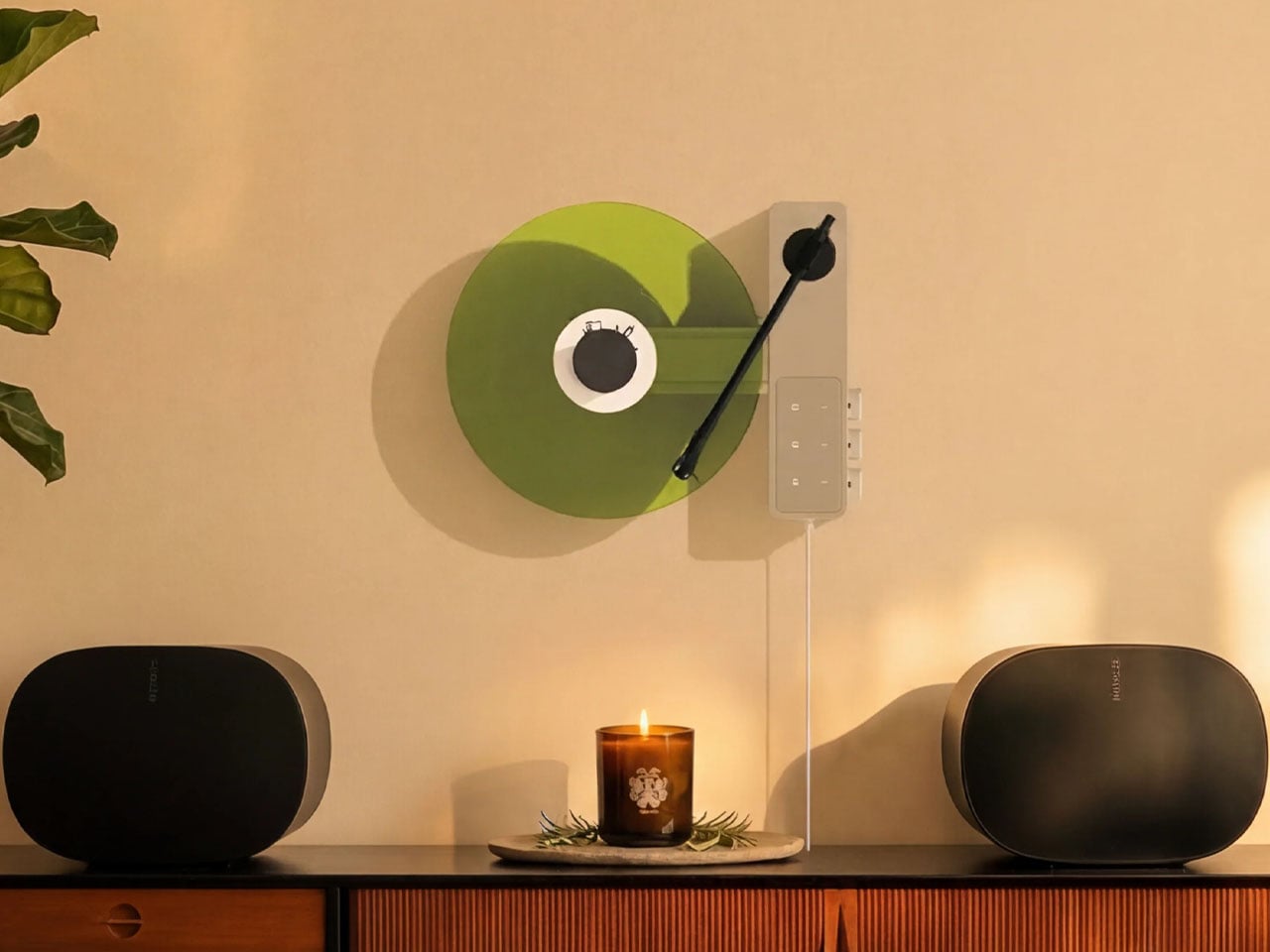
Designed as a turntable that mounts vertically on the wall, or stands upright on a floor stand, it becomes part of the room instead of taking over a table. The TD-1 can spin a vinyl record vertically, which is a treat to the eye and food for thought for your mind. The design is pretty seamless, and you’re left wondering how the giant disk is actually spinning without gravity acting upon it.

If you’re someone who holds your record collection dear and as a reflection of who you are. The TD-1 is conceived with the idea of enhancing that experience like no other has done before. Yes, there have been vertical record players we have seen in our time, but the Ruka’s model is a standout, thanks to its aluminum body and visibly enticing mechanical switches and knobs that turn and click to control playback, adjust the record’s rotational speed, and also to pair the device with a speaker system over Bluetooth. It also comes with wired output to connect with a hi-fi system.

When everyone is trying to integrate AI and convenient remote control via dedicated apps, the TD-1 remains as analog as the record playing was meant to be. The most it gets away from the analog commitment is to stream your vinyl records to a wireless Bluetooth speaker or compatible earbuds.

To make how it looks placed vertically more exciting, the TD-1 arrives with a rubber-coated magnetic plate that holds the record against the wall to appear as if it were floating in mid-air. To ensure you are not hassled with getting the placement straight, it comes with a built-in spirit level. The player features a swappable moving-magnet cartridge, which the company says should allow users to select the cartridge they want, of course for an additional cost from the device itself. The TD-1 turntable itself is belt-drive. The motor has been de-coupled from the acrylic platter to minimize vibration, ensuring smoother and quieter playback.

Ruka Studio TD-1 is available to preorder now starting at a reserve price of $100 on the company’s website. It is priced at $1,399, and preordered models are expected to ship in 2027. The $100 credit is fully refundable or will be adjusted in the final price when a device is shipped.

The post Ruka Studio’s TD-1 Vertical Turntable Turns Your Vinyl Collection Into Stunning Part of Your Room first appeared on Yanko Design.

  • ✇Yanko Design
  • Streaming Took Something From Us. The ENSA T1 Wants It Back
    Do you remember the last time music actually demanded something of you? Not just your attention while you scrolled, but your hands. The deliberate pull of a record from its sleeve. The small, mechanical click of a CD case. The unhurried ritual that came before every song, every mood shift, every late-night session on the floor with the volume just loud enough. Vladimir Dubrovin remembers. The California-based multidisciplinary designer has been quietly building a case for returning physicality
     

Streaming Took Something From Us. The ENSA T1 Wants It Back

12 août 2026 à 10:20

Do you remember the last time music actually demanded something of you? Not just your attention while you scrolled, but your hands. The deliberate pull of a record from its sleeve. The small, mechanical click of a CD case. The unhurried ritual that came before every song, every mood shift, every late-night session on the floor with the volume just loud enough. Vladimir Dubrovin remembers. The California-based multidisciplinary designer has been quietly building a case for returning physicality to the act of listening, and with the ENSA T1, his latest concept design, the argument gets considerably harder to dismiss.

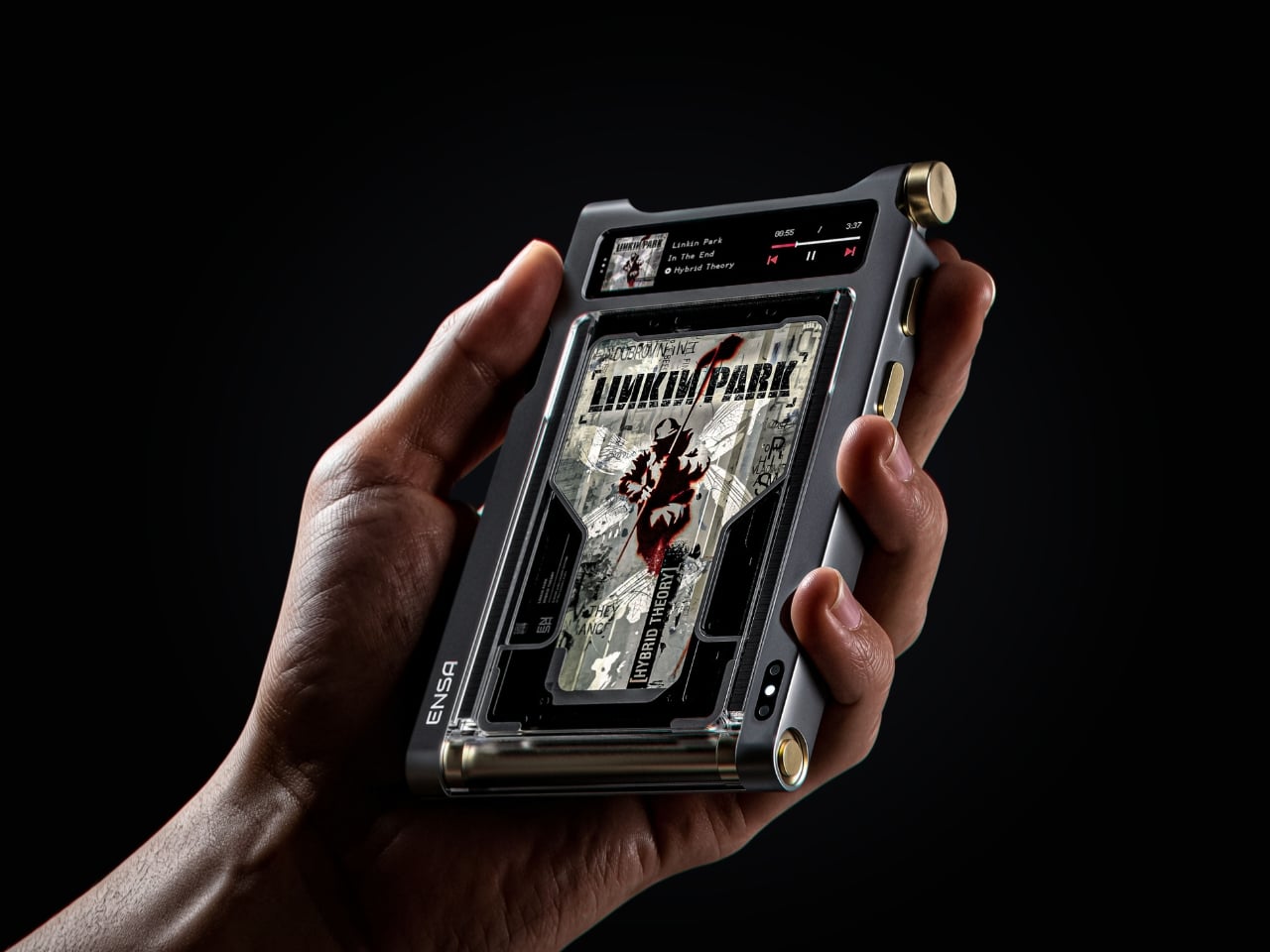
The T1 is the newest addition to Dubrovin’s ENSA line, an evolving design series that began with the ENSA P1, a portable audio player concept that reimagined what a music device could look and feel like in the post-streaming era. The P1 introduced Dubrovin’s concept of C-NAND cartridges: small, disc-shaped, solid-state storage units where each cartridge holds one complete album. There are no moving parts, no spinning mechanisms. They’re fully digital in how they handle audio, but they exist in the physical world the way vinyl does. You pick one up, turn it over, look at it, choose it. The act of choosing your music becomes deliberate again, and that matters more than it sounds.

Designer: Vladimir Dubrovin

Where the P1 was built for portability and kept its design trim and pocketable, the T1 feels like the next chapter. Visually and conceptually, it carries the same DNA: clean, considered industrial design with an aluminum body and restrained detailing. But the T1 reads as something more anchored, a device you set somewhere permanent and return to, rather than slip into a bag. It’s a design that seems to understand the difference between music you consume and music you actually sit down for.

Aesthetically, Dubrovin’s approach has always felt less like tech product design and more like furniture-level thinking. The ENSA devices belong to the same visual conversation as early Braun electronics or a Dieter Rams concept sketch, where every detail either earns its place or gets removed entirely. The T1 continues that restraint. Its form doesn’t shout, which is precisely why it catches your eye. In a market saturated with speakers shaped like pebbles and smart displays with glowing rings, an audio device that looks like it was designed by someone who genuinely thought about what it means to own a piece of music is genuinely refreshing.

The broader question Dubrovin keeps posing with the ENSA project is one worth sitting with: what did we actually lose when music went weightless? Streaming solved convenience so completely that most of us never stopped to notice what the tradeoff cost. We gained access to everything and lost the kind of focus that comes from committing to a single album, from having music you could see, hold, or lend to a friend. The ENSA T1 is not trying to compete with Spotify. It’s asking whether the experience of music could mean something again, even if you have to build an entirely new format to get there.

It’s a concept project, not a product you can buy, and the realist in me knows that’s a significant caveat. Building out a new physical media format in 2026 is an uphill proposition at best. The infrastructure alone, manufacturing cartridges, convincing labels, and getting devices into homes, would require a level of industry commitment that’s difficult to imagine right now. But design concepts don’t have to ship to matter. The best ones articulate a desire most people feel but haven’t named yet, and the ENSA T1 does exactly that. The desire for music that has weight, that takes up space, that gives you something to do with your hands before the first note plays.

That’s why Dubrovin’s work keeps getting attention. The ENSA line isn’t nostalgic in the way that feels defensive or retrograde. It’s just honest about the fact that we traded something real for something convenient, and it’s asking, politely but persistently, if we’d like it back.

The post Streaming Took Something From Us. The ENSA T1 Wants It Back first appeared on Yanko Design.

  • ✇Korben
  • Un disque ressuscite le CD+G, ce format graphique oublié des CD audio
    Sur un disque audio classique, il restait depuis toujours quelques canaux de données inutilisés, glissés juste à côté des informations qui affichent le numéro de piste ou le temps écoulé, et c'est précisément dans ces recoins que Philips et Sony avaient logé en 1985 le CD+G, une extension capable d'afficher des images en 288 sur 192 pixels avec une maigre palette de 16 couleurs. Vous l'avez forcément croisé sans le savoir, puisque ce format a surtout servi à faire défiler les paroles synchronisé
     

Un disque ressuscite le CD+G, ce format graphique oublié des CD audio

26 juin 2026 à 04:28

Sur un disque audio classique, il restait depuis toujours quelques canaux de données inutilisés, glissés juste à côté des informations qui affichent le numéro de piste ou le temps écoulé, et c'est précisément dans ces recoins que Philips et Sony avaient logé en 1985 le CD+G, une extension capable d'afficher des images en 288 sur 192 pixels avec une maigre palette de 16 couleurs.

Vous l'avez forcément croisé sans le savoir, puisque ce format a surtout servi à faire défiler les paroles synchronisées sur les machines de karaoké pendant des décennies, avant de tomber dans l'oubli, à mesure que le CD physique déclinait.

Pour situer l'objet, le tout premier disque commercial à exploiter le CD+G remonte à 1985, avec l'album Eat or Be Eaten de la troupe américaine Firesign Theatre, et depuis, la feature n'a jamais vraiment dépassé le stade du gadget réservé aux bornes de karaoké et quelques rares appareils.

Sauf que voilà, deux artistes, Aizysse Baga et Adelaide, ont décidé de le déterrer pour de bon en pressant un mini-CD baptisé Divacore qui embarque de vraies illustrations à côté de la musique.

Et elles ne se sont pas contentées du strict minimum. Pour caser des visuels à peu près corrects dans seulement 16 couleurs, elles ont misé sur le tramage, cette vieille astuce qui mélange des points de teintes différentes pour donner l'illusion de couleurs qui n'existent pas vraiment dans la palette proposée.

Il faut dire que la marge de manœuvre était franchement limitée, avec à peine 28,8 kilobits par seconde réservés aux graphismes, de quoi peindre l'écran par petites tuiles de 6 sur 12 pixels et pas grand-chose d'autre.

Le plus intéressant dans l'histoire, c'est qu'elles ont poussé le délire jusqu'au CD+EG, une variante étendue qui grimpe à 256 couleurs tout en restant compatible avec les anciens lecteurs, un format tellement confidentiel à l'époque qu'il n'a quasiment jamais été gravé sur un disque commercial et que presque aucun appareil ne savait l'afficher.

Le tout a été fabriqué avec un encodeur maison écrit en Python, de quoi générer les deux versions des images et les glisser proprement dans les fameux sous-codes du disque.

Du coup, si vous lisez Divacore sur une Sega Saturn par exemple, ou sur les très obscurs lecteurs Victor VS-G2 et VS-G3, vous voyez les illustrations en 256 couleurs dans toute leur splendeur. Sur une simple machine de karaoké ou une Amiga CD32, vous récupérez la version en 16 couleurs, et c'est déjà pas mal

Bref, ressusciter un format que même son époque avait snobé, juste pour le plaisir de le voir tourner sur une Saturn. Inutile, et franchement cool non ?

Source : Hackaday

❌