❌

Vue normale

  • ✇Yanko Design
  • Genius ‘Tilted’ Apple Watch Band Makes The Entire Experience 10x More Ergonomic
    Have you noticed tilting always makes things ‘ergonomic’? A laptop stand tilts the keyboard towards you – ergonomic. A vertical mouse tilts your hands into a more natural position – ergonomic. A split keyboard often breaks and tilts the layout in two different directions for your hands – very ergonomic. It’s almost stupidly simple that the human body isn’t designed around perfect right angles. We’re filled with curves, joints, and limitations to how we move – so a simple tilt can often make lif
     

Genius ‘Tilted’ Apple Watch Band Makes The Entire Experience 10x More Ergonomic

28 septembre 2026 à 16:30

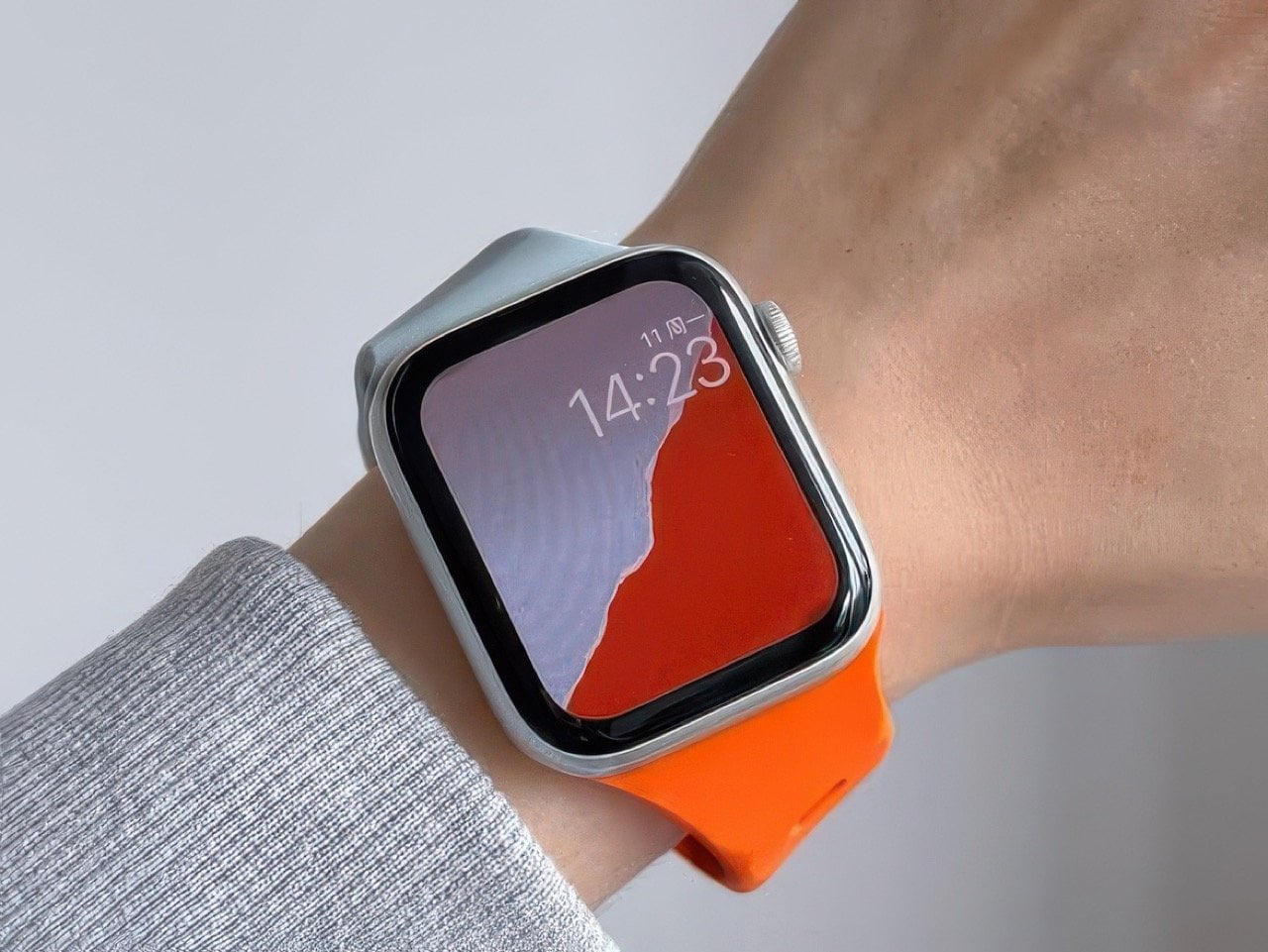
Have you noticed tilting always makes things ‘ergonomic’? A laptop stand tilts the keyboard towards you – ergonomic. A vertical mouse tilts your hands into a more natural position – ergonomic. A split keyboard often breaks and tilts the layout in two different directions for your hands – very ergonomic. It’s almost stupidly simple that the human body isn’t designed around perfect right angles. We’re filled with curves, joints, and limitations to how we move – so a simple tilt can often make life a lot easier. The Apple Watch apparently just got the memo.

Designed around a very clever 30° tilt, this Tilted Watch Band puts the Apple Watch at a slight slant, so it’s facing you even when your wrist isn’t. Normal protocol is to lift your wrist up perfectly horizontal, so the screen faces you in the right orientation. Tilt the band and you don’t have to make your wrist horizontal anymore – just hold it at a comfortable angle and the Watch screen faces you a lot more naturally, letting you read the time without flexing your hand or your neck too much… perfect for joggers or bikers who don’t have the luxury to orient their hands while mid-activity.

Designer: MXU

Click Here to Buy Now

As ergonomically obsessed as Apple is, I’m surprised nobody from Cupertino thought of building a band like this. Does it mess with the symmetry? Absolutely. Could Apple still elegantly work around it? I have no doubt they could. They did such a brilliant job with the iPhone Duo’s folding animation, a tilted screen feels like child’s play.

The band comes in a variety of colors, although the best thing you could do is buy a bunch of them and mix and match pairs to create a dual-tone design. The silicone construction makes the band perfect for any kinds of sports, or for people with hypoallergenic requirements. One caveat, however, is that this watch’s tilt makes it so that it only works on the left hand. The clockwise tilt means if you wore the watch on the right hand, the tilt would work against you, requiring you to crane your neck even further than you originally would. Also, the crown would press into your forearm a lot more, which isn’t particularly fun considering you’d have to deal with constantly awakening Siri every few minutes.

The solution, however, is elegantly simple, and works better for smartwatches than it does for watches. You see, reading an analog watch at any tilt or angle is fairly easy – reading a notification on a screen while it’s tilted can be a chore. That specific detail makes the Tilted Watch Band pretty useful, as it reduces the strain on your wrist and neck while you glance down at your wearable.

The Tilted Watch Band is available online through retailers like Amazon, and works with all Watch series and sizes, even with the Ultra. So you can buy and keep the band even through all your watch upgrades over the years!

Click Here to Buy Now

The post Genius ‘Tilted’ Apple Watch Band Makes The Entire Experience 10x More Ergonomic first appeared on Yanko Design.

Huawei Watch GT 7 Pro Review: Refined, Not Reinvented

Par : Aki Ukita
28 septembre 2026 à 11:20

Verdict 3.8 out of 5 Average of 5 criteria
Aesthetics
4.0 out of 5
Ergonomics
4.0 out of 5
Performance
4.0 out of 5
Sustainability / Repairability
3.0 out of 5
Value for money
4.0 out of 5

What works

  • Distinctive octagonal design with a premium look
  • Strong battery life
  • Bright, sharp AMOLED display
  • Board health and fitness tracking

What doesn't

  • Limited third-party app support
  • Proprietary pinned strap design
The Watch GT 7 Pro 46mm shows Huawei sticking to a proven formula and sharpening it further. It is not a bold leap, but it is a confident and well-rounded one.

Huawei has spent the last few years turning wearables into one of the strongest parts of its consumer business. The company has performed especially well in China, with that momentum also carrying into overseas markets. As a result, Huawei has grown into one of the biggest names in smartwatches, offering a lineup that covers different styles, price points, and user needs.

Within Huawei’s smartwatch lineup, the GT series is the company’s sports-focused range. The new GT 7 series stays true to that identity, building on the formula that has made the lineup popular. The GT 7 Pro is not a major leap over the GT 6 Pro, but it feels like a more polished and refined take on the same core idea.

Designer: Huawei

Aesthetics

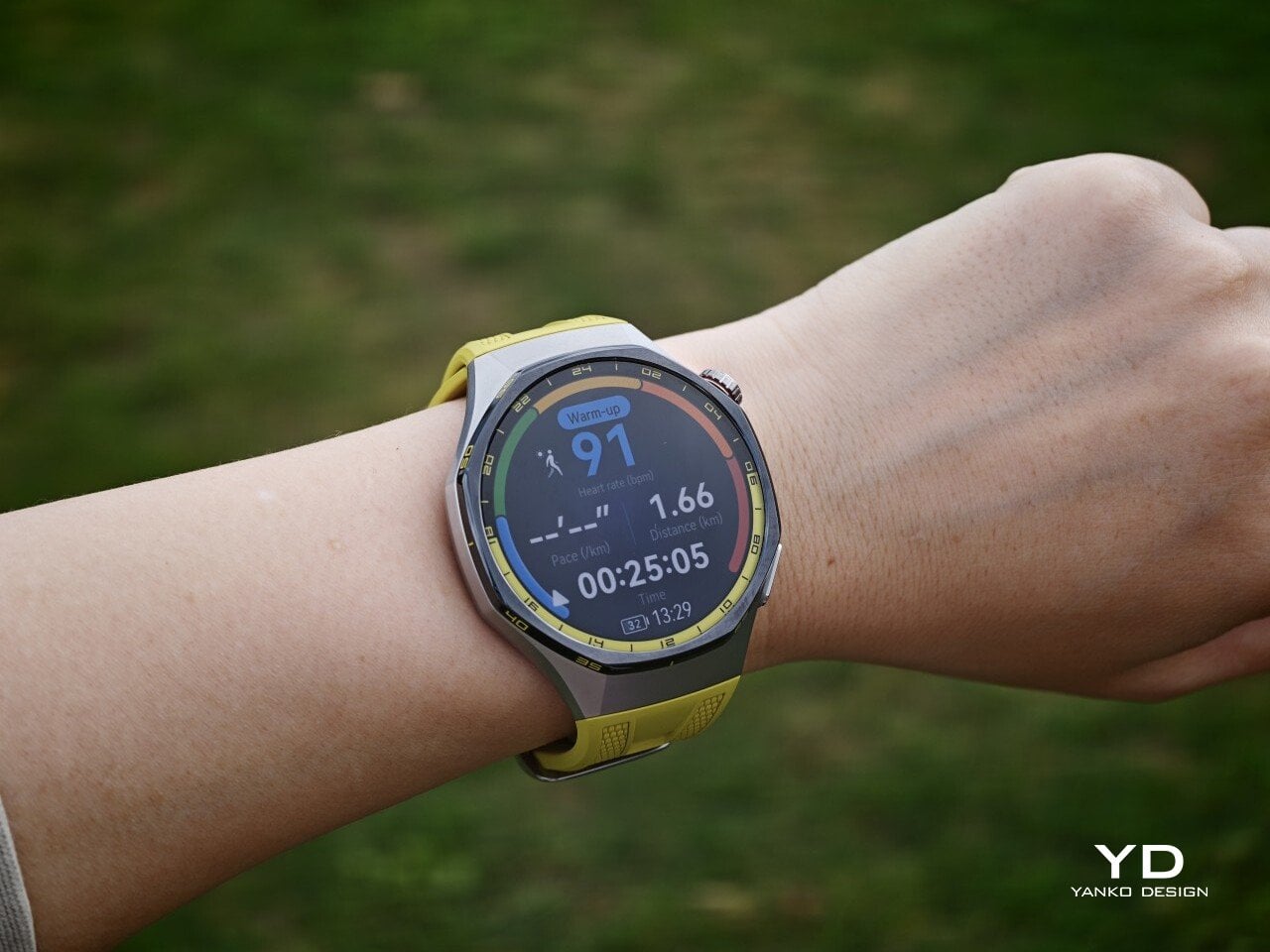
The Watch GT 7 Pro 46mm stays largely in line with the design language of its predecessor, keeping the same sporty character that defined the GT 6 Pro. Its octagonal case continues to give it a distinctive look, helping it stand out from the many conventional round smartwatches on the market. At the same time, Huawei balances that sportier shape with a polished finish, so the watch still feels premium rather than overtly rugged.

The front of the watch keeps that same balance. Its 1.47-inch AMOLED display sits beneath sapphire glass, which adds a more upscale touch while also improving durability for everyday wear. Around the display, Huawei uses 24-hour markings that strengthen the watch’s sporty identity and give the face a more instrument-like look.

Huawei is offering the GT 7 Pro 46mm in yellow, green, and black, and each one gives the watch a distinct personality. The yellow version I received is easily the boldest of the three, pairing a silver case with a black bezel and a bright lime yellow strap. Matching yellow accents around the bezel and on the watch face make it feel the most energetic and overtly sporty of the lineup.

The green version takes a more outdoorsy approach. It keeps the same overall design but swaps in a muted green strap and matching accents, giving the watch a look that feels active without being as loud as the yellow model. The black version, by contrast, is the most understated. With its darker finish and strap combination, it gives the GT 7 Pro a stealthier and more versatile appearance that should appeal to buyers who prefer something cleaner and easier to wear every day.

Ergonomics

Despite its sporty, fairly bold design, the Watch GT 7 Pro 46mm is comfortable to wear for long stretches. At 56g and 11.2mm thick, it has enough presence to feel substantial on the wrist, but it never comes across as overly bulky in daily use. Huawei has also done a good job with weight distribution, which matters more than raw dimensions when you are wearing the watch through workouts, sleep tracking, or a full day out.

The strap has also been revised. Huawei calls it the Easy Cross Strap, and the key change is that the loose end tucks underneath instead of threading through a traditional belt loop. According to Huawei, this makes the watch easier to wear day to day while also creating a snugger fit that can help improve the consistency of health tracking. The elastomer strap feels soft enough for extended wear while still staying secure during exercise. It is detachable and uses a 22mm fitting, but because it is secured with pins, swapping it out is less straightforward than with a standard third-party strap.

Huawei’s control layout is familiar and easy to get used to. The buttons sit within easy reach, and the rotating crown adds a more tactile way to move through menus. That makes the watch feel more natural to use when you are on the move and do not want to rely entirely on touch input. Combined with the curved case and integrated strap design, the GT 7 Pro feels built not just to look sporty, but to wear like it too.

Performance

The Watch GT 7 Pro 46mm features a 1.47-inch AMOLED display, and it is one of the first things that stands out about the watch. Huawei claims a peak brightness of 3,000 nits, and in use the panel looks sharp, bright, and vibrant. Watch faces have plenty of visual punch, while menus and health data remain easy to read at a glance. Huawei has been consistently strong in this area, and that continues here with a screen that feels right at home on a watch in this class.

Out of the box, the GT 7 Pro runs HarmonyOS 6.1 and supports both Android and iOS devices, which immediately makes it more flexible than some ecosystem-bound alternatives. The software itself is easy to navigate, with clean menus, smooth animations, and a layout that does not take long to learn. It is not trying to overwhelm you with complexity, and that works in its favor on a smartwatch that is meant to balance fitness features with everyday usability.

Health and fitness remain at the heart of the experience, which is exactly where the GT series has built much of its appeal. Huawei includes a broad set of tracking features here, covering the usual essentials such as heart rate, sleep, blood oxygen, stress, and workout monitoring, while also adding more unusual tools like the Diabetes Risk Study and Coronary Heart Disease Study. The latter, however, was not available on my test unit during the review period.

On the fitness side, the watch offers more than 100 workout modes, reinforcing its role as a serious sports-focused smartwatch. Huawei has also expanded its support for winter sports, with dedicated indoor and outdoor skiing as well as snowboarding modes. These can track data such as maximum speed, average incline, total descent, and run count, making the watch more useful for users who want something beyond basic activity logging. It also supports downloads for more than 3,000 ski resort maps worldwide, complete with details such as slope names, difficulty ratings, and lift station locations.

Since ski season is still months away where I live, I was not able to test those winter sports features properly. My hands-on time was limited to more routine activities like outdoor walks, yoga, and casual cycling. Even within that narrower scope, the watch performed well. GPS tracking was accurate in my testing, even when I passed under railway bridges and near buildings, where signals can sometimes become less stable.

Battery life is one of the GT 7 Pro’s biggest strengths. Huawei rates it for up to 21 days at the upper end, up to 12 days under typical use, up to 7 days with the always-on display (AOD) enabled, and as much as 51 hours in trail running mode. Those are ambitious figures, but in my time with the watch, its endurance was genuinely impressive.

I took it with me on a nine-day trip after charging it to 100 percent, and by the end of the trip it still had 19 percent battery remaining. During that time, I had all health tracking features on, AOD turned on, and used it for a couple of indoor and outdoor walking sessions as well. That makes the result more impressive, because the watch was not simply sitting idle for most of the trip. In day-to-day use, that kind of endurance makes a real difference, especially on a sports-focused smartwatch where frequent tracking can drain smaller batteries much more quickly.

Charging is handled through a proprietary magnetic wireless charger included in the box, and it is fairly quick. Because of the watch’s shape, though, it does not sit flat on the charger, which can be a mild annoyance in everyday use. It hovers slightly, and I often found myself checking to make sure it was still charging after the initial confirmation screen disappeared. It also feels like time for Huawei to move from USB-A to USB-C, as the included cable already feels a bit dated.

Sustainability

The Watch GT 7 Pro also puts some emphasis on durability. It carries both IP69 and 5ATM ratings, giving it a solid level of protection against dust and water exposure. That makes sense for a watch positioned around sports and outdoor use, where it is more likely to be exposed to sweat, rain, splashes, and more demanding day-to-day conditions.

Huawei also uses sapphire glass over the display, which adds another layer of reassurance. Sapphire is known for its strong scratch resistance, and it also helps the watch feel more premium in the process. Taken together, these details give the GT 7 Pro a tougher, more dependable character without pushing it fully into rugged-watch territory. That said, sustainability is less of a focus, with no clear mention of recycled materials or other environmental measures.

Value

At £379, or roughly $510, the Watch GT 7 Pro is priced like a premium smartwatch, so it has to offer more than just a nice design. For the most part, it does. You are paying for a watch that gets the basics right, with strong battery life, a durable build, a comfortable fit, and a health and fitness feature set that feels broad enough for most users.

The value proposition really comes down to what you want from a smartwatch. If you care most about app support and deeper smart features, there are rivals that make a stronger case. But if your priorities are battery life, fitness tracking, and a watch that looks and feels good on the wrist, the GT 7 Pro makes more sense. It is not a dramatic step up from the GT 6 Pro, so current owners may not feel much pressure to upgrade. Still, for anyone coming from an older device, it feels like a well-rounded package that knows exactly what it is.

Verdict

The Watch GT 7 Pro 46mm is not the kind of upgrade that changes everything, but it does not need to be. Huawei has taken a formula that already worked and polished it further, keeping the GT series focused on the things it has consistently done best. The result is a smartwatch that looks distinctive, wears comfortably, lasts a long time on a charge, and offers more than enough health and fitness features for most users.

It is not without trade-offs. Third-party app support remains limited, and Huawei’s pinned strap design also cuts down your band options compared with a standard 22mm quick-release system. Still, if you want a premium sports-focused watch that feels dependable, lasts well beyond a few days, and fits easily into everyday use, the GT 7 Pro gets a lot right. It is not a radical step forward, but it is a solid and well-rounded one.

The post Huawei Watch GT 7 Pro Review: Refined, Not Reinvented first appeared on Yanko Design.

Huawei Watch D3 Reaches Europe: What Changes With the New Blood Pressure Watch

25 septembre 2026 à 14:54

Huawei Watch D3 reaches the UK and Europe with an inflatable wrist cuff for blood pressure checks, a slimmer design, and guidance on who could benefit.

The post Huawei Watch D3 Reaches Europe: What Changes With the New Blood Pressure Watch appeared first on TechRepublic.

Ray-Ban Meta vs Nuance Audio Plus: Which Smart Glasses Are Better for Hearing?

25 septembre 2026 à 14:40

Compare Ray-Ban Meta Gen 3 and Nuance Audio Plus on hearing support, microphones, battery, price, and smart features to see which fits your needs.

The post Ray-Ban Meta vs Nuance Audio Plus: Which Smart Glasses Are Better for Hearing? appeared first on TechRepublic.

Bose Sport Open vs Ultra Open 2: Is the $100 Upgrade Worth It?

18 septembre 2026 à 08:24

Bose's new open-ear earbuds cost $199 and $299. The extra $100 buys longer single-charge battery life and more audio features, but not better durability.

The post Bose Sport Open vs Ultra Open 2: Is the $100 Upgrade Worth It? appeared first on TechRepublic.

Apple Unveils Apple Watch Series 12: What the $399 Watch Adds This Year

10 septembre 2026 à 13:02

Apple Watch Series 12 adds a new health sensing system, Audio Intelligence, faster charging, longer workout battery life, and ceramic case options too.

The post Apple Unveils Apple Watch Series 12: What the $399 Watch Adds This Year appeared first on TechRepublic.

Moto Watch Ultra Launch: Everything You Need to Know

10 septembre 2026 à 09:52

Motorola’s $349.99 Moto Watch Ultra returns to Wear OS with LTE, Polar health tools, a two-day battery claim, and two promised OS upgrades.

The post Moto Watch Ultra Launch: Everything You Need to Know appeared first on TechRepublic.

  • ✇Articles on TechRepublic
  • 4 Best Wear OS Smartwatches for 2026
    Pixel Watch 5 leads overall, while Galaxy Watch9, OnePlus Watch 3, and Galaxy Watch Ultra2 offer better fits for Samsung users, battery life, or outdoor use. The post 4 Best Wear OS Smartwatches for 2026 appeared first on TechRepublic.
     

4 Best Wear OS Smartwatches for 2026

10 septembre 2026 à 06:49

Pixel Watch 5 leads overall, while Galaxy Watch9, OnePlus Watch 3, and Galaxy Watch Ultra2 offer better fits for Samsung users, battery life, or outdoor use.

The post 4 Best Wear OS Smartwatches for 2026 appeared first on TechRepublic.

  • ✇Yanko Design
  • Apple’s Coolest Watch Feature Has Nothing To Do With Health… It Lets You Rewind Time.
    “Could you come again?” “Pardon?” “Huh?” “Wait, say that one more time?” These are examples of phrases that make you seem dumber than you really are. Nothing destroys aura more than unironically asking someone to repeat something they said because A. you weren’t listening, or B. you were but just didn’t happen to comprehend what they were saying. Apple has a solution for that, and it’s wrapped up in their latest smartwatch. The new Live Rewind feature, powered by Apple’s new S11 chip, allows yo
     

Apple’s Coolest Watch Feature Has Nothing To Do With Health… It Lets You Rewind Time.

9 septembre 2026 à 16:30

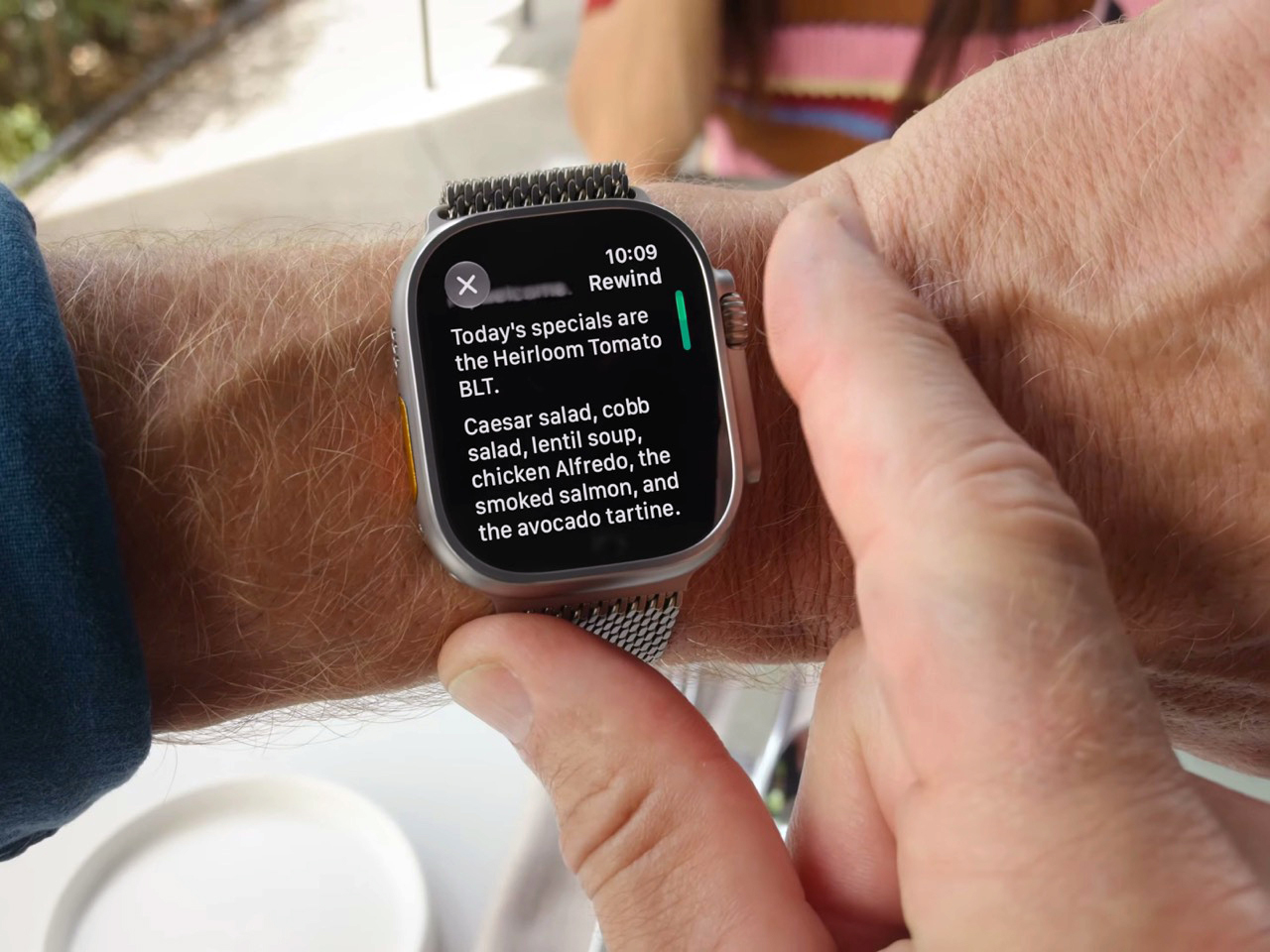
“Could you come again?” “Pardon?” “Huh?” “Wait, say that one more time?” These are examples of phrases that make you seem dumber than you really are. Nothing destroys aura more than unironically asking someone to repeat something they said because A. you weren’t listening, or B. you were but just didn’t happen to comprehend what they were saying. Apple has a solution for that, and it’s wrapped up in their latest smartwatch. The new Live Rewind feature, powered by Apple’s new S11 chip, allows you to instantly transcribe the past 15 seconds of any conversation and read its chat logs. Press the digital crown on the new Watch twice, and you pretty much get ‘subtitles’ for the past 15 seconds, so you don’t have to “excuse me” your way into a repetition.

Your watch, just like your phone, earbuds, smart speaker, and smart home hub, is always listening. It’s waiting for the magic words “Hey Siri” or Alexa, or Google depending on which ecosystem you’re tied into. The point is, it’s always listening, so Apple simply created a way to package that into a feature that feels impressive rather than invasive. Think of how a dashcam can auto-log the past 3 minutes of video AFTER an accident occurs (using a feature called loop recording), Apple just brought that to your watch, packaged as a part of its new Audio Intelligence suite of features. Impressive, no?

Designer: Apple

Once you’ve got the transcript, you can ask Siri about it directly, or save it into the new Siri app to dig up later. Say your coworker rattles off a Wi-Fi password or a colleague mentions a book recommendation mid-hallway chat. Instead of fumbling for your phone, you catch it on your wrist and move on. Apple says none of this gets recorded in the traditional sense. Audio flows into a secure buffer inside the S11’s Secure Exclave, a hardware compartment isolated from the rest of the system, and once the transcript is generated, the raw audio is gone. No file, no clip, nothing to subpoena, because nothing exists.

Sitting next to Live Rewind is Siri Recap, which does the same basic trick but for an entire conversation instead of a 15 second clip. Turn it on before a meeting or a parent teacher conference, and Apple Intelligence quietly builds a title, a summary, and a list of key points you can review afterward in the Siri app. You control the boundaries here more than you’d expect. Leave it running all day, schedule it for work hours only, or flip it off entirely from Control Center whenever the conversation turns private. Summaries auto delete after seven days unless you save them, and saved ones sync end to end encrypted, so not even Apple can read them back.

Audio Intelligence isn’t just built for eavesdropping on your own life. Sound Recognition listens for sirens, alarms, doorbells, and crying babies, then buzzes your wrist even when your phone is nowhere nearby, which makes it a genuinely useful accessibility tool for anyone who is deaf or hard of hearing. Shazam gets folded in too, sitting in the Smart Stack and naming whatever song is playing around you without you having to pull out a phone. Four features, one microphone, and one chip doing the quiet work behind all of them.

Both Live Rewind and Siri Recap need Siri AI to function, and Siri AI is still in beta, so expect this to roll out gradually starting in English before other languages follow. You’ll also need an iPhone 16 or newer paired to the Watch, so the 16e and anything older is out of luck. Apple Watch Series 12 itself starts at $399, is available for preorder today, and ships September 18. The health sensors got a real upgrade this generation too, but for once, that isn’t the headline. The mic is.

The post Apple’s Coolest Watch Feature Has Nothing To Do With Health… It Lets You Rewind Time. first appeared on Yanko Design.

Xiaomi Smart Band 11 vs Smart Band 10: What Actually Changed?

4 septembre 2026 à 09:26

Xiaomi Smart Band 11 keeps the Band 10’s display size and 21-day battery claim but adds more brightness, a thinner design, and new health features.

The post Xiaomi Smart Band 11 vs Smart Band 10: What Actually Changed? appeared first on TechRepublic.

  • ✇Yanko Design
  • Plaud One Hands-On at IFA 2026: AI Earbuds That Transcribe Meetings, Then Draft Emails And Decks For You
    For three years, Plaud made very good tape recorders with a PhD. You pressed a button, it captured a meeting, and mere minutes later a summary showed up. The Plaud One, launched at IFA 2026 for €249.90, reverses that arrow. Its charging case now holds four beamforming mics, a speaker, an agent button and a built in eSIM, so it stays online without a phone nearby. Hold the agent button and the AI talks back, asks what you meant, then builds the deck or drafts the email while you get on with your
     

Plaud One Hands-On at IFA 2026: AI Earbuds That Transcribe Meetings, Then Draft Emails And Decks For You

3 septembre 2026 à 20:28

For three years, Plaud made very good tape recorders with a PhD. You pressed a button, it captured a meeting, and mere minutes later a summary showed up. The Plaud One, launched at IFA 2026 for €249.90, reverses that arrow. Its charging case now holds four beamforming mics, a speaker, an agent button and a built in eSIM, so it stays online without a phone nearby. Hold the agent button and the AI talks back, asks what you meant, then builds the deck or drafts the email while you get on with your day.

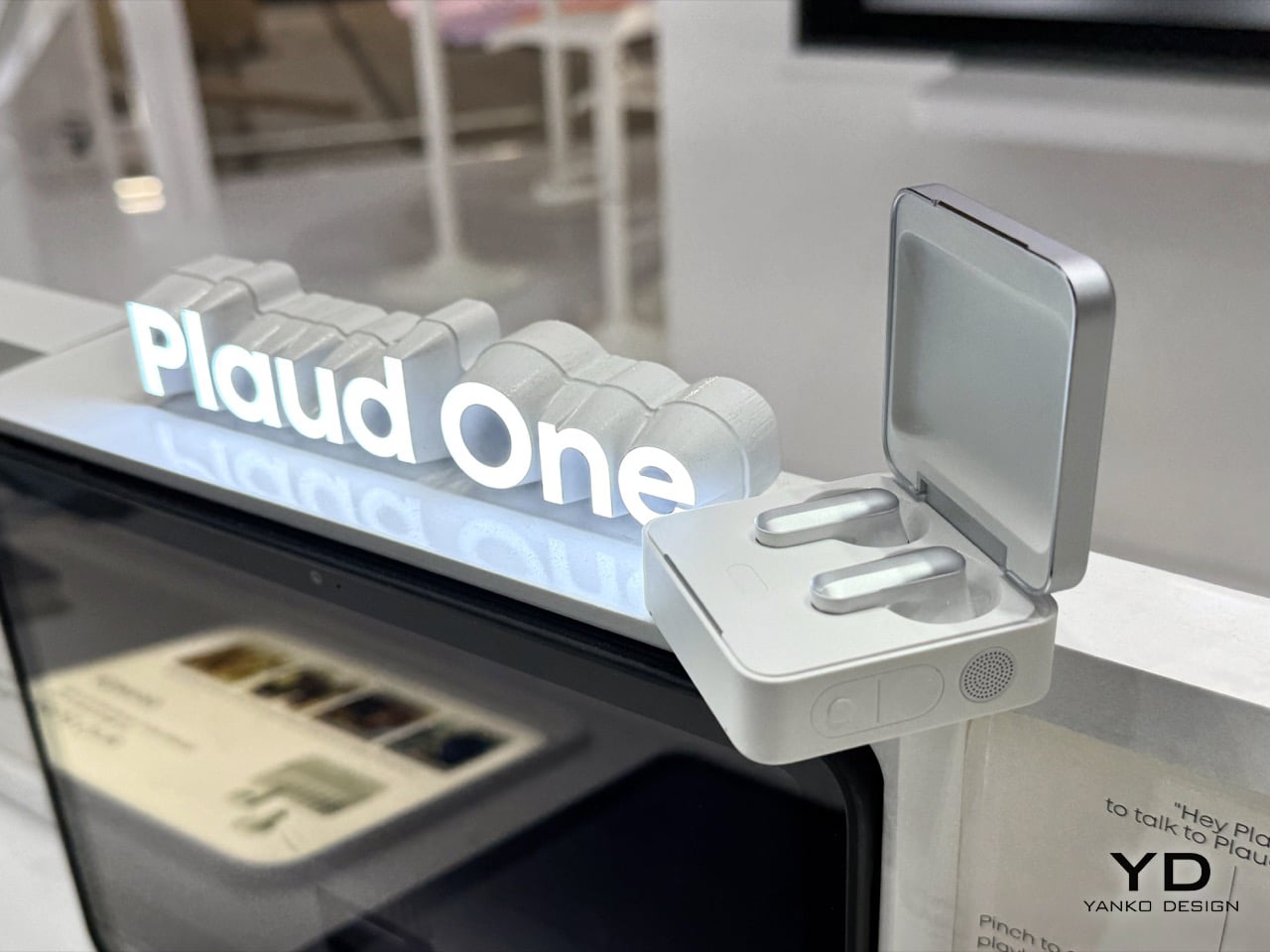
That flip from recording to doing needed hardware nobody had built yet. Not a pendant, not a pin, not another app crammed onto a phone you were already staring at. Plaud built a palm sized aluminum box with a fluted lid that looks like a Rimowa suitcase went through a shrink ray, sitting on a table, listening across a room, and talking back like a colleague who never needs coffee. The Explorer Edition opens for pre order now, capped at 2,000 units worldwide, with deliveries landing in Q4. A public version follows in 2027, once Plaud has watched two thousand early adopters put the thing through its paces.

Designer: Plaud

The original Plaud Note clipped onto a phone and did one job, listen to a meeting and hand back a transcript once it ended. The Note Pro added a screen and better mics. The NotePin S shrank the format onto a lanyard clip. Every generation stayed reactive by design, a smart recorder waiting for you to press stop before it did anything useful. That business built Plaud’s 2.5 million user base and reportedly crossed $100 million in annual software revenue by June, which is exactly the kind of runway that lets a company gamble on reinventing its own hardware category from scratch.

Vertical fluting runs down the case’s aluminum lid, the same visual trick Rimowa has stamped into cabin luggage since the 1950s, giving a 62 gram object a sense of density it has no right to carry. Flip it open and the earbuds sit half in ear, silver capped, in a tray that reads closer to a jewelry box than a charging dock. A speaker grille, a record button and a separate agent button line the case’s edge, the three controls that turn a charger into a device you actually talk to. None of it apes a phone. It reads like furniture for a desk, not gear for a pocket.

Earlier Plaud devices leaned on your phone for both processing and connectivity, so the intelligence always sat one hop away from the microphone. Plaud One’s case carries its own 4G LTE connection through a built in eSIM, closing that gap entirely. Capture, transcription and agent response now run in one box, independent of any other screen in your life. Leave your phone in a bag, walk into a cafe, and the case still records the table’s conversation, answers a question out loud through its speaker, or fires off a follow up email on command. Every pendant and pin that came before this quietly depended on a phone doing the real work behind the scenes. Plaud One is the first in the category that genuinely does not.

Plaud Agent drafts a follow up email the moment a client call ends. Feed it a meeting and it builds a slide deck while you sit through your next call, then drops the finished file straight into Notion with zero copy pasting. The platform connects to Gmail, Google Workspace, Microsoft Teams, Slack and Notion today, with more integrations promised as the software matures. Set it loose on a standing task, a monthly competitor scan for instance, and it runs quietly in the background, waiting with a finished report the next time you check. This is the actual bet Plaud is making, that an assistant worth having has to act, not just remember.

Pre orders for the Explorer Edition are open now at €249.90, with the first 2,000 units shipping in Q4. Buyers get $200 in Plaud Credits toward the heavier agent features on top of a starter transcription plan, so the price buys a running start on the software as much as the hardware. Calling this an Explorer Edition rather than a finished release is the honest move, an open beta wearing genuinely sharp industrial design. Plaud spent three years building the best possible way to listen. Plaud One is its first real attempt at building something worth talking to.

The post Plaud One Hands-On at IFA 2026: AI Earbuds That Transcribe Meetings, Then Draft Emails And Decks For You first appeared on Yanko Design.

Libre Duo 10 Day: The First Wearable to Track Glucose and Ketones

3 septembre 2026 à 10:36

Abbott’s Libre Duo 10 Day continuously tracks glucose and ketones from one sensor, with a US launch planned for later in 2026.

The post Libre Duo 10 Day: The First Wearable to Track Glucose and Ketones appeared first on TechRepublic.

  • ✇Yanko Design
  • This $500 Wearable Tracks Your Brain All Day, Even While You’re Moving
    Our brain is still a mystery, of which only a small part has been completely understood. Every single decision we make, every move in stressful situations, and the ability to plan way ahead of time can be attributed to the grey matter between the ears. While most wearables want to bring the prowess of advanced medical-grade brain monitoring to everyday life, the strings attached nullify the comprehensive level of scanning required for deeper insight. Atlas Mankind, a startup, wants to change th
     

This $500 Wearable Tracks Your Brain All Day, Even While You’re Moving

2 septembre 2026 à 16:30

Our brain is still a mystery, of which only a small part has been completely understood. Every single decision we make, every move in stressful situations, and the ability to plan way ahead of time can be attributed to the grey matter between the ears. While most wearables want to bring the prowess of advanced medical-grade brain monitoring to everyday life, the strings attached nullify the comprehensive level of scanning required for deeper insight.

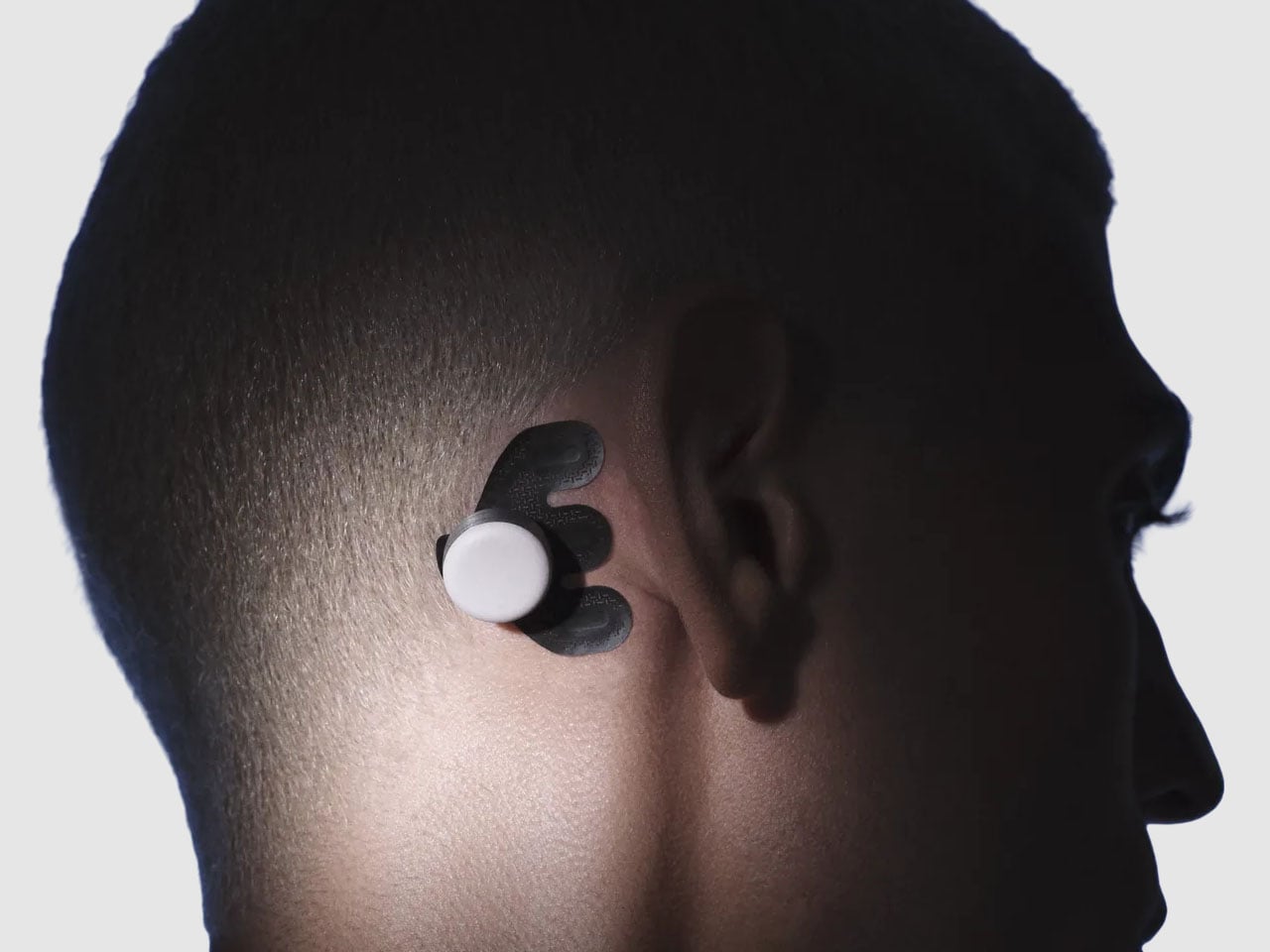
Atlas Mankind, a startup, wants to change that with a $500 wearable that sticks to the back of your ears to function in the background as we go on with our daily lives. That’s a leap from other similar wearable gadgets, which require the wearer to stay still or only function while you are asleep. Dubbed Atlas 1.0, the advanced EEG gadget monitors electrodermal activity, voice patterns, and head movements throughout the day to make precise readings of what your brain is doing.

Designer: Atlas Mankind

According to Atlas Mankind, the compact EEG tracker doesn’t restrict the wearer’s movement or only function in certain situations, thereby making it a more natural and unbiased instrument for understanding the internal state of the wearer. It creates a longitudinal record of the brain’s activity in real-life situations, “which is much more meaningful than a single test or isolated brain scan.” The wearable functions in conjunction with the compatible app to track three metrics, which are Presence, Stress, and Energy Burn. That is much more comprehensive than having the half-baked metrics of your stress levels, heart rate, skin temperature, sleep analysis, and generic brain activity that other advanced wearables tout.

Coming back to the three main metrics on which Atlas 1.0 excels – Presence represents whether your attention is inwards or outwards. For instance, during a conversation with your friend, how engaged you actually were. This is done by analyzing the speech patterns and the hemisphere of the brain that was activated during that time. Then there is the Stress tracking, which keeps a very close tab on your physiological stress in the background. The last one is Energy Burn that identifies the activities that were most taxing during the course of the day.

In conjunction with the app that connects to your calendars, event logs, and schedules, the wearable determines the level of shift in these metrics for an in-depth analysis of the brain state over a period of time. The patterns revealed can help the user identify which habits and activities are worth taking up and which ones are better avoided if possible. Atlas 1.0 sticks to the skin behind the ears on an adhesive pad and records the brain waves, as well as voice patterns (not the actual speech for data safety) and movement 24×7. With a dataset of more than 50,000 brain recordings to power the advanced algorithm, the prospects here are exciting.

According to Ana Montero, co-founder & chief executive officer, “For the first time, some of the most important moments in a human life are becoming measurable.” This is supported by André Marques-Smith, PhD: co-founder & chief technology officer, who says, “commitment to accuracy makes ATLAS a tool for genuine mastery and personal science, not just measurement and vanity metrics.” He adds that the engineering challenge of capturing “research-grade data while in motion” is what makes Atlas 1.0 special.

The company is already taking pre-orders for the non-invasive wearable, and it does come with a $30 monthly subscription to keep going. It’ll be interesting to see how accurate the wearable turns out to be, since it is not cheap and you’ll have to keep paying a monthly subscription to make it relevant.


The post This $500 Wearable Tracks Your Brain All Day, Even While You’re Moving first appeared on Yanko Design.

Garmin Fenix 9 vs Fenix 9 Pro: Is the $100 Upgrade Worth It?

2 septembre 2026 à 13:51

The $100 jump to Garmin’s fēnix 9 Pro buys a titanium case and access to solar and inReach configurations, not a completely different watch platform.

The post Garmin Fenix 9 vs Fenix 9 Pro: Is the $100 Upgrade Worth It? appeared first on TechRepublic.

Sennheiser Momentum True Wireless 5: Key Features and Price

2 septembre 2026 à 10:26

Sennheiser’s $299.95 Momentum True Wireless 5 adds user-replaceable batteries to both the earbuds and charging case, plus longer battery life and Bluetooth 6.0.

The post Sennheiser Momentum True Wireless 5: Key Features and Price appeared first on TechRepublic.

HONOR Watch 6: Everything You Need to Know

2 septembre 2026 à 09:43

HONOR Watch 6 combines long battery life, dual-band GPS, health tracking, and NFC, but some features depend on your phone, bank, and region.

The post HONOR Watch 6: Everything You Need to Know appeared first on TechRepublic.

Oura Ring’s AI Sleep-Tracking Claims Face Legal Scrutiny in Proposed Class Action

24 août 2026 à 13:33

Oura faces a proposed class action challenging its sleep-tracking accuracy claims, raising broader questions about how wearables present estimated health data.

The post Oura Ring’s AI Sleep-Tracking Claims Face Legal Scrutiny in Proposed Class Action appeared first on TechRepublic.

Google Tests Smartphone Photos for Insulin Resistance Risk

20 août 2026 à 15:21

Google tests AI-powered smartphone photos to estimate body composition and insulin-resistance risk, hinting at a new path for blood sugar tracking tools.

The post Google Tests Smartphone Photos for Insulin Resistance Risk appeared first on TechRepublic.

Samsung Galaxy H1 Leak Points to New Over-Ear Headphones: What We Know

17 août 2026 à 07:10

Samsung may be preparing a return to full-size wireless headphones with a device reportedly known as Galaxy H1. App code offers the first clues, but key details remain unconfirmed.

The post Samsung Galaxy H1 Leak Points to New Over-Ear Headphones: What We Know appeared first on TechRepublic.

❌