Reddit is retiring RSS and its remaining public Data API access, giving moderators, app developers, and organizations several migration deadlines.
The post Reddit Is Killing RSS and Public API Access: What Changes and When appeared first on TechRepublic.
See what you missed in Daily Tech Insider from Sept. 28–Oct. 2.
The post AI Agents, Security Crises, and Workforce Upheaval Define This Week in Tech appeared first on TechRepublic.
Anthropic has made Claude for Government generally available with FedRAMP High authorization, spending controls, audit logs and early Microsoft 365 access.
The post Claude for Government Adds Spending Controls, Audit Logs, and FedRAMP High appeared first on TechRepublic.
Anthropic has made Claude for Government generally available with FedRAMP High authorization, spending controls, audit logs and early Microsoft 365 access.
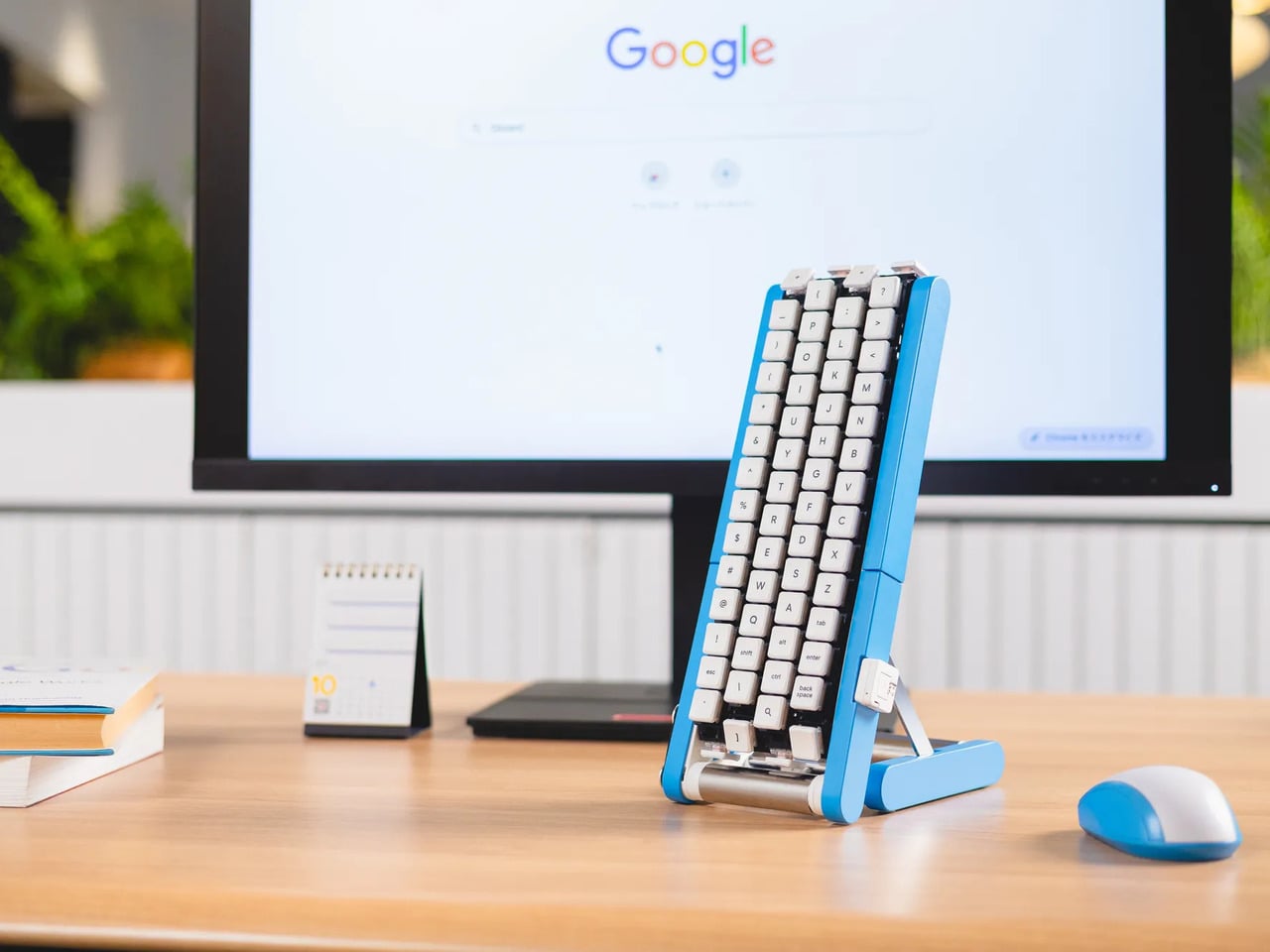
Typing with one hand usually means stretching a finger across a keyboard while the other hand holds a drink or works a mouse. Google’s Gboard team has a wonderfully impractical fix: put the keys on a conveyor belt and let them come to you. Its Rotating Keyboard stands upright on a desk, asking your finger to stay put while the letters keep moving.
Regular keyboards assume your hands will travel between stationary keys, a reasonable arrangement that has survived decades of typing. Google reverse
Typing with one hand usually means stretching a finger across a keyboard while the other hand holds a drink or works a mouse. Google’s Gboard team has a wonderfully impractical fix: put the keys on a conveyor belt and let them come to you. Its Rotating Keyboard stands upright on a desk, asking your finger to stay put while the letters keep moving.
Regular keyboards assume your hands will travel between stationary keys, a reasonable arrangement that has survived decades of typing. Google reverses that relationship by mounting rows of keycaps on loops that travel around rollers. The tall blue frame and angled stand make the moving assembly feel closer to a miniature factory machine than a computer peripheral, which is probably part of the joke.
Instead of looking down for a letter, you watch for the right key to arrive and press it as it passes. Google says each belt carries 29 keys and can input both uppercase and lowercase letters. That might let one hand stay near the same spot, though it also turns typing into a timing exercise, especially when the next letter takes its time coming around.
Imagine answering an email with a cup of tea in your free hand. On a conventional keyboard, you’d either put the cup down or hunt for letters one finger at a time. Here, the moving keys do the traveling while you wait at the front of the machine. Google also suggests using your free hand on a mouse, which sounds suspiciously like extra work.
There’s an oddly earnest design lesson underneath the silliness. Questions about ergonomics often begin with who a familiar object was made for, and Google has taken that thought to a ridiculous extreme. The upright arrangement might use less horizontal desk space than a full keyboard, but it trades that footprint for height, moving parts, and the need to watch every passing key.
Google plays along with its own premise, floating ideas for faster movement, longer belts with more characters, shorter versions for phones, and different colors. None of those variations is a promised product. Even the keyboard itself isn’t headed for stores; the team has released open-source plans for a similar device instead. That keeps the joke open to anyone curious enough to build one.
The date is part of the gag, too. Google chose October 1 as a nod to the familiar 101-key keyboard, rather than waiting for April Fools’ Day. It’s the team’s 15th keyboard proposal, continuing a habit of treating ordinary typing as a problem that needs an absurdly elaborate solution. A conveyor belt is hardly the first thing most people would try.
You’re unlikely to write a novel by chasing letters around this contraption, and that isn’t really the point. Google has built a physical answer to a question no keyboard maker was asking: what if the keys did all the moving? It’s a ridiculous way to type an email, but an effective way to notice how much we expect our fingers to do.
The best network monitoring tools include NinjaOne, FortiMonitor, PRTG, OpManager, and Domotz for monitoring and managing network infrastructure.
The post 5 Best Network Monitoring Tools for 2026 appeared first on TechRepublic.
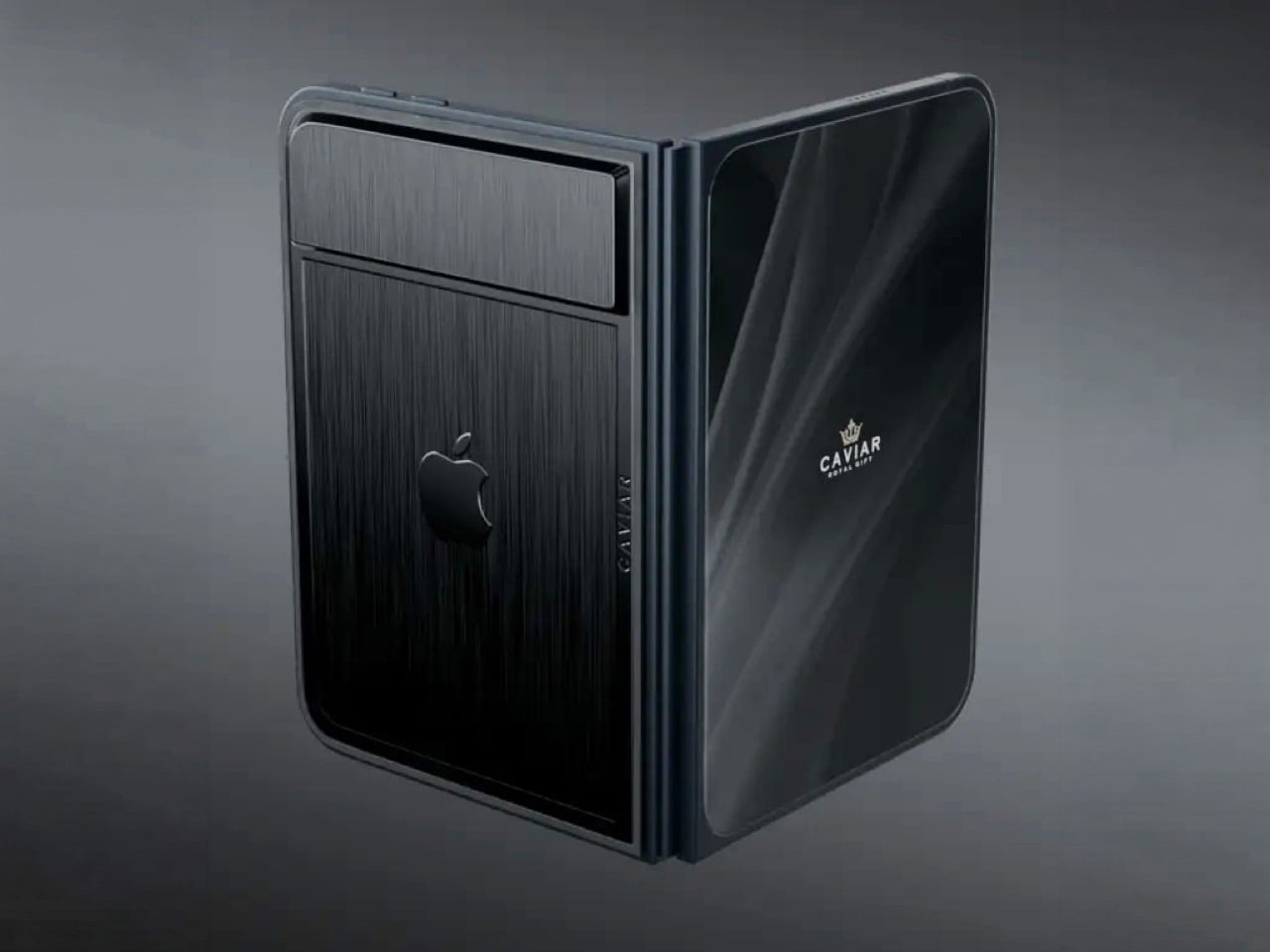
Imagine sitting at a table with friends and whipping your phone out. Your friends see it’s a foldable… then as you unfold it, the animation looks suspiciously like the iPhone Duo. Your friends are impressed, they designate you as the group photo taker… and you tell them regrettably that your iPhone Duo has no cameras. Then you add… not only does it not sport any cameras, it also costs fourteen grand.
To be honest, that scenario is entirely imaginary. Mainly for a bunch of key reasons. Caviar bu
Imagine sitting at a table with friends and whipping your phone out. Your friends see it’s a foldable… then as you unfold it, the animation looks suspiciously like the iPhone Duo. Your friends are impressed, they designate you as the group photo taker… and you tell them regrettably that your iPhone Duo has no cameras. Then you add… not only does it not sport any cameras, it also costs fourteen grand.
To be honest, that scenario is entirely imaginary. Mainly for a bunch of key reasons. Caviar built this version of the iPhone Duo for privacy, championing what they call “Privacy, Minimalism, and a Refined Masculine Style.” Someone who sees truth in that ethos isn’t designated photographer material. And if they were, shelling 14k on a phone means you probably have a few extra grand to hire a photographer wherever you go. The only reason someone buys this hare-brained version of the iPhone Duo is because they can. Plain and simple.
Removing the camera stack from the back of the iPhone Duo does something unexpected: the phone becomes genuinely beautiful. That rear panel, normally dominated by the triple-lens module, turns into a single flat sheet of satin-finished black titanium. No bumps, no rings, no glass circles competing for visual real estate, just one uninterrupted surface that shifts character depending on the light hitting it. Caviar calls the inspiration “supersonic aviation aesthetics,” which sounds like marketing speak until you actually look at the product photos. A blacked-out Apple logo sits flush in the titanium, the Caviar crown marks the opposite panel in a swept fabric-like texture, and the whole thing looks less like a phone and more like a prop from a very expensive spy film.
Apple’s decision to use Touch ID for the iPhone Duo, abandoning Face ID, turns out to be what makes Caviar’s camera-free execution actually hold up. A Face ID phone needs its front camera array to function as a biometric sensor, so pulling that out would mean a very pretty device that cannot unlock. Touch ID lives in the frame rather than behind the screen, so Caviar could strip the entire camera stack, front hole-punch and rear module both, without breaking anything fundamental. Based on product images, the inner display on the Ultimate appears completely clean, no hole-punch interrupting the screen, which makes the inside as seamless as the outside. Two separate design decisions from two separate companies ended up fitting together better than either could have planned.
Caviar made 19 of these total. Each unit ships in a custom lockable black luxury box, presented the way a jeweler presents a watch rather than the way Apple ships a phone. A smaller gold-colored wooden case inside holds what appears to be a gold-plated commemorative coin, the kind of object that exists purely to make the unboxing feel like a ceremony. The side of the phone is engraved with a serial number too, for exclusivity. Caviar knows exactly who they are selling to, and made sure the packaging matches the energy.
Caviar has been doing this for years, taking flagship Apple hardware somewhere Apple would never go, for clients who appreciate the gesture. The formula is consistent: start with the most premium Apple product on the market, make it rarer, make it more dramatic, and let the price be the final statement. We have covered their gold-plated and titanium iPhone builds here before, and none of them committed this hard to stripping features as a form of self-expression. At $13,990 for 19 units (mind you, that’s just the 512GB variant), the Ultimate is the purest version of the Caviar argument: a phone that costs seven times its base price because it does less, and somehow makes that sound like the point.
I’m the kind of person who can set down my keys, turn around, and immediately forget where they went. Wallets, earbuds, and bags have a way of disappearing at the least convenient moment, too. A smart tracker can spare you a frantic search, but only if its battery is working and its location can still be found. That makes battery life and the ability to locate an item beyond your phone’s immediate range just as important as a good-looking design.
Designed by Samsung, the Galaxy SmartTag3 aims t
I’m the kind of person who can set down my keys, turn around, and immediately forget where they went. Wallets, earbuds, and bags have a way of disappearing at the least convenient moment, too. A smart tracker can spare you a frantic search, but only if its battery is working and its location can still be found. That makes battery life and the ability to locate an item beyond your phone’s immediate range just as important as a good-looking design.
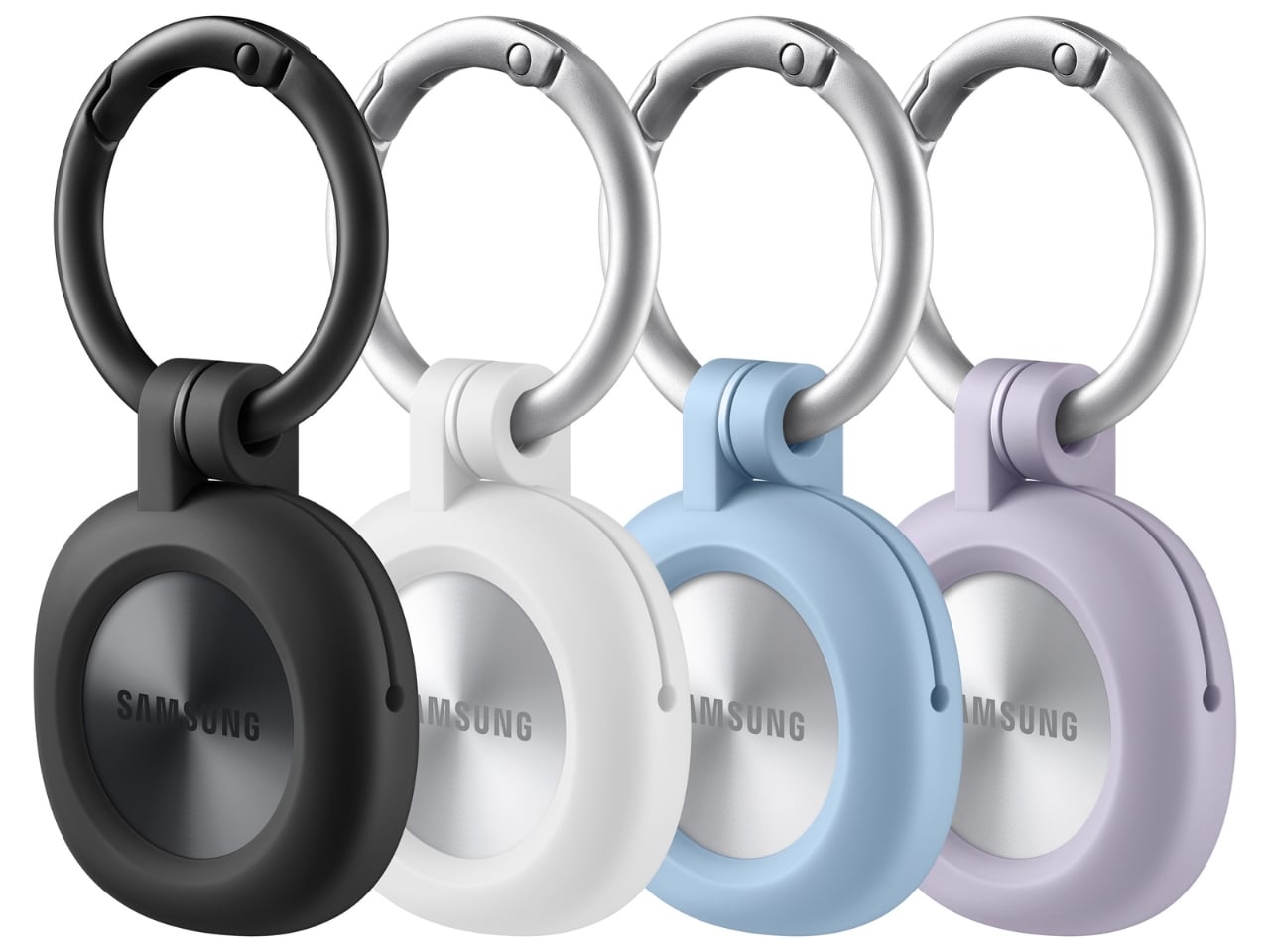
Designed by Samsung, the Galaxy SmartTag3 aims to address those everyday frustrations in a smaller package. Its rounded, nearly square shape gives it a clean look, while its reduced size should make it less noticeable on the things you carry. That matters more than it might seem. A tracker attached to a set of keys needs to be easy to live with every day, not just useful on the rare occasion those keys go missing.
Design: Samsung
The change in shape also raises a practical question: how will you attach it to your belongings? Samsung offers a silicone case with an integrated keyring and a loop case, giving users different ways to secure the tracker to keys or a bag. The smoother outline may look better on its own, but anyone buying one for their keys should consider which attachment will work best.
Samsung says the SmartTag3 is 35% smaller by volume and 33% lighter than its predecessor. It also retains an IP67 rating, indicating resistance to dust and water under specified test conditions. That offers reassurance if the tag gets caught in the rain, though it does not mean the device is waterproof in every situation.
Battery life may be the more meaningful upgrade for anyone who has discovered a dead tracker while looking for a lost item. Samsung says the SmartTag3 can run for up to 550 days under standard usage or up to 790 days in Power Saving Mode. Those figures are based on Samsung’s testing, not a promise that every user will get the same result. Still, a tracker that needs attention less often is less likely to let you down because you forgot to check its battery.
Finding something nearby should be easier, too. Compass View uses Bluetooth 6.0 Channel Sounding to provide distance and directional guidance from up to 60 meters away, about three times farther than on the previous model, according to Samsung. It could help you narrow down where to look before you’re close enough to spot the missing item. Compass View is not available on iOS.
The other finding features are intended to help in different situations. If you leave a tagged bag behind, a Left Behind Alert could prompt you to go back for it, although that feature is also unavailable on iOS. Place Notification is designed to alert you when a tagged item enters or leaves an area you define. Location History and Movement Detection Alert may provide additional clues about where an item has been or whether it has moved. Together, these tools could help you notice a problem sooner and narrow down where to look.
Lost Mode addresses a different problem: helping someone return an item they find. With a compatible phone, a finder can scan the tag using NFC to see the contact information or short message you have registered. That could be useful for a bag left at a café or luggage separated from you during a trip. When an item is beyond your phone’s range, however, location updates depend on nearby participating Galaxy devices. The SmartTag3 should not be treated as a continuous, real-time GPS tracker.
The SmartTag3’s appeal is the combination of a compact design, long claimed battery life, and features that help at several stages of a search. It cannot prevent you from leaving your keys behind, and its alerts will not replace paying attention to your belongings. But if it helps you catch a forgotten bag before you get home, or gives you a useful clue when something disappears, it has done what a well-designed tracker should: made a small, stressful problem easier to manage.
SlopTotal
est un projet qui se présente lui-même comme le "VirusTotal du texte IA", alors faut pas s'étonner que ça m'intéresse ! Vous y collez un texte, un PDF ou une URL, et ensuite 23 détecteurs le passent au crible, en parallèle à l'aide de classifieurs neuronaux, de tests statistiques et autres heuristiques. Ensuite, un score calibré de 0 à 100 résume leurs avis et doit vous dire normalement si tel ou tel texte a été écrit avec de l'IA
J'ai donc installé ça sur ma machine puis passé 36 textes divers et variés (IA et humains) dans mon instance. Parmi eux, 24 ont été écrits par Claude, ChatGPT et Gemini (12 en français, 12 en anglais), avec comme consigne d'avoir un ton neutre, et pour d'autres un ton de "blogueur" ^^. Les 12 autres textes, eux, sont humains. Je lui ai donné 6 de mes articles écrits entre 2018 et 2021 ainsi que 6 billets de blog tech en anglais publiés entre 2020 et 2021.
Voici donc mes résultats...
Sur les 12 textes humains, 4 ont été pris pour de l'IA (verdict "Likely AI-generated" ou pire), ce qui représente 33 %, et ils étaient tous en anglais !! Et sur mes 24 textes écrits par une IA, 9 ont été pris pour une réalisation humaine (verdict "Clean"), ce qui équivaut à 38 %. Ah et ils étaient tous en français.
Le README annonce pourtant mieux comme résultats donc je suis assez étonné (1 texte humain sur 66 classé "Likely AI"), mais sur d'autres genres de textes, comme la presse ou les livres et en 100% english. Alors oui, mon échantillon est petit, mais pour savoir si un texte vient d'une IA, SlopTotal ne me semble pas fiable
Le rapport de SlopTotal pour un article de 455 mots écrit par Claude : 23,6 sur 100, verdict "Clean", 4 moteurs sur 23 en alerte.
Le rapport de SlopTotal pour un billet du blog d'avril 2020 : 56,9 sur 100, "Likely AI-generated", 9 moteurs sur 23 en alerte.
Après c'est pas un nouveau problème car je pense par exemple à OpenAI qui a retiré son propre classifier en juillet 2023 parce que la précision était trop faible (
The Register
). Vanderbilt a débranché également celui de
Turnitin
le mois suivant et
des chercheurs de Stanford
ont testé en 2023, 7 détecteurs en leur faisant analyser 91 rédactions humaines TOEFL de non-anglophones et en moyenne, ils en ont pris 61 % pour de l'IA.
Toutefois, 2 études plus récentes ont également testé des détecteurs commerciaux (pas SlopTotal donc...), et sur du texte humain ancien, elles se rejoignent.
Le NBER
trouve par exemple un taux de faux positifs quasi nul chez Pangram, de 0,1 à 0,3 % chez OriginalityAI et d'environ 0,7 % chez GPTZero, sur 1 992 textes humains d'avant 2020. De son côté, le chercheur
Jonathan Karr et ses collègues
n'ont trouvé aucun positif IA en testant avec Pangram et GPTZero, des tonnes de résumés textes datés de 2013 à 2015.
Par contre, ces études divergent sur l'humanisation. Par exemple, selon le NBER, Pangram tient bon face à l'humanizer StealthGPT alors que moins de 4 % des textes IA passés par Undetectable AI restent signalés chez Karr. Ce dernier note aussi qu'à l'inverse, un résumé écrit par un humain et simplement retouché par une IA est quant à lui, signalé comme IA dans 38 à 80 % des cas. Ça pourrait expliquer pas mal de petits problèmes de "littérature" qu'on a en ce moment, looool.
Bref, installez-le pour vous faire votre propre idée, en commençant par des textes dont vous connaissez l'auteur, mais surtout pas pour "accuser" quelqu'un. Je pense d'ailleurs qu'aucun détecteur ne devrait être la seule preuve d'une accusation... Par exemple, un texte humain qui est passé dans un correcteur orthographique full IA ou alors un texte qui est dicté avec un modèle de speech to text IA peuvent très bien être reconnus comme étant des textes IA alors qu'en fait ce sont juste des textes écrits / dictés par des humains et qui ont été "un peu" modifiés ou "un peu" réorganisés par un LLM. Je dis ça parce que c'est exactement ce que fait mon application de reconnaissance vocale
Kassis
, qui dispose de fonctionnalités de correction et de réécriture... héhé.
La société de sécurité Depthfirst a publié un billet que j'ai trouvé intéressant dans lequel ils expliquent en gros que les conteneurs (Docker et compagnie) ne sont plus une barrière de sécurité suffisamment solide. La thèse du papier, c'est qu'il faut désormais partir du principe qu'un attaquant (hacker ou malware) saura sortir d'un conteneur quand il le veut, sans grande difficulté.
En effet, un conteneur comme ceux que font tourner Docker ou Kubernetes, donne à un programme l'impression d'avo
La société de sécurité Depthfirst a publié un billet que j'ai trouvé intéressant dans lequel ils expliquent en gros que les conteneurs (Docker et compagnie) ne sont plus une barrière de sécurité suffisamment solide. La thèse du papier, c'est qu'il faut désormais partir du principe qu'un attaquant (hacker ou malware) saura sortir d'un conteneur quand il le veut, sans grande difficulté.
En effet, un conteneur comme ceux que font tourner Docker ou Kubernetes, donne à un programme l'impression d'avoir sa propre machine. Sauf qu'en réalité, il n'embarque pas de système d'exploitation. Tous les conteneurs d'un serveur passent par le même noyau Linux qui est celui de l'hôte et dont le rôle est de gérer pour eux la mémoire, le processeur ainsi que le réseau.
Toutefois, beaucoup d'organisateurs de CTF notamment s'y fient les yeux fermés et hébergent plusieurs épreuves sur le même serveur, chacune dans son conteneur, en comptant uniquement sur la sécurité de l'hôte. Mais c'est un faux sentiment de sécurité, j'en veux pour preuve ce
bulletin de sécurité
d'AWS daté de novembre 2025 où il est expliqué que l'entreprise ne considère plus les conteneurs comme une barrière de sécurité et ne s'en sert donc plus pour isoler ses clients les uns des autres.
Ce qui a changé depuis quelques mois, vous le savez, c'est le prix d'entrée de la recherche de failles puisqu'avec les modèles d'IA de pointe, même un attaquant avec des moyens modestes peut fabriquer sans effort, dès la publication d'une faille, un exploit contre des machines qui ne sont pas encore corrigées, alors qu'avant ça demandait de sérieuses compétences.
source : Depthfirst
Et les chiffres publiés par Depthfirst montrent que tout ça s'accélère puisque 249 CVE ont été publiées pour le noyau Linux en janvier, et en août on en a eu 1 650 !
Depthfirst relève également que sur les 36 CVE divulguées via le kernelCTF de Google, 13 sont réalisables via des interfaces ordinaires comme celles qu'un conteneur reçoit par défaut (dont les sockets locaux). En fait, on en croise sans le savoir dès qu'on passe systemd, Docker ou une base de données locale.
Le 24 juillet dernier, Depthfirst a même décroché une place au kernelCTF avec un exploit 0day (donc avant tout correctif) et aujourd'hui, le PoC est en accès libre sur GitHub. Rassurez-vous, côté noyau Linux, le correctif est sorti le 6 août mais malheureusement, côté Ubuntu la mise à jour au 24 septembre, affichait encore que le noyau de la 26.04 était en "Vulnerable, work in progress" et celui de la 24.04 en "Vulnerable". Bref, trouver des vulns ça va vite. Fixer ces vulns sur TOUTES les releases et les machines, ça prend du temps. Alors qu'avant c'était l'inverse. Bref, tout a été chamboulé et c'est un peu la merde maintenant niveau cybersécurité pour patcher rapidement.
Alors comment se protéger de tout ça ?
Hé bien la solution de Depthfirst va vous mettre en PLS car eux proposent carrément de ne plus partager le noyau. Ils recommandent à la place de migrer les charges non fiables vers des microVM, autrement dit des machines virtuelles légères où chaque charge aura son propre noyau.
Le projet Firecracker
en fait partie tout comme Kata Containers comme ça, en théorie, si un attaquant casse l'un de ces noyau, il ne compromet que sa propre instance et pas l'hôte dans son entièreté ni ses voisins.
Reste que Firecracker s'appuie sur KVM, la brique de virtualisation du noyau Linux de l'hôte. Et comme vous le savez, KVM a eu ses propres failles. En effet, cet été,
la faille Januscape
ouvrait en grand la porte de la machine physique à un attaquant pourtant enfermé dans sa VM, à condition bien sûr que l'hôte autorise la virtualisation imbriquée (une VM dans la VM). Alors certes, la surface d'attaque est plus petite mais loin d'être nulle.
Voilà, en attendant, si vous êtes sous Ubuntu 24.04 ou 26.04, surveillez bien la mise à dispo du prochain noyau. Canonical a d'ailleurs annoncé il y a peu, une publication hebdomadaire des noyaux pour tenter de compenser cet emballement.

 Connexion