❌

Vue normale

Apple’s $1,000 Tabletop Robot Could Arrive in 2027

2 novembre 2026 à 17:37

Apple's rumored $1,000 tabletop robot could launch in 2027 with a swiveling display and Siri AI, but software delays may push its release into 2028.

The post Apple’s $1,000 Tabletop Robot Could Arrive in 2027 appeared first on TechRepublic.

  • ✇Yanko Design
  • Voxel the Robot Wants to Tidy Your Home Without Looking Human
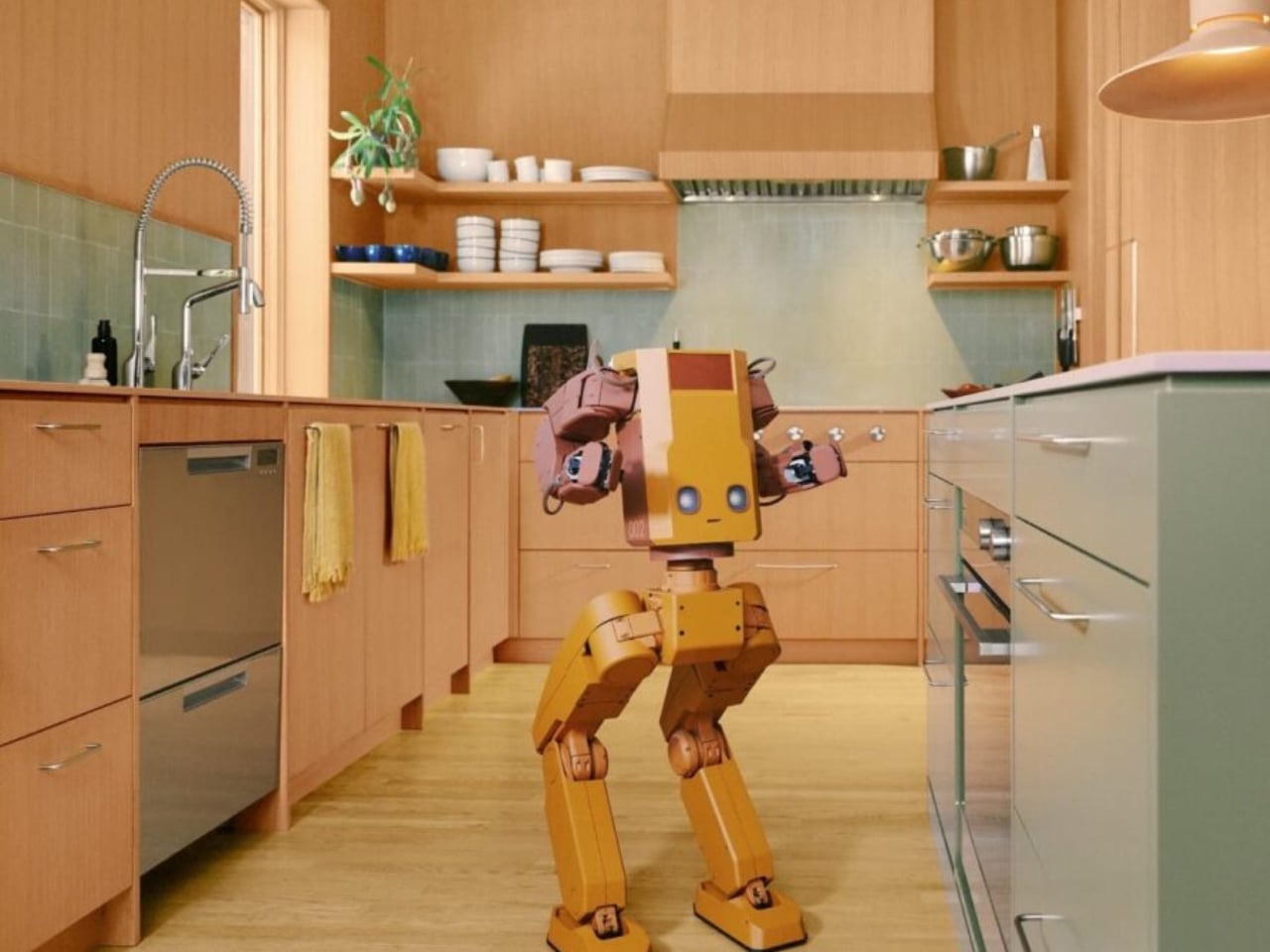
    A mustard-yellow body, rosy arms, and bent legs make this household robot look like it might wander out of an animated movie and ask where you keep the mugs. Its illuminated eyes sit low on a boxy torso, leaving a lot of forehead, if that’s even the right word. I like the awkward proportions. They give it character without trying to pass for a person. Called Voxel, the robot is being developed by New York company Tuesday Labs to tackle the little jobs that keep a home from staying tidy. Put the
     

Voxel the Robot Wants to Tidy Your Home Without Looking Human

2 novembre 2026 à 16:30

A mustard-yellow body, rosy arms, and bent legs make this household robot look like it might wander out of an animated movie and ask where you keep the mugs. Its illuminated eyes sit low on a boxy torso, leaving a lot of forehead, if that’s even the right word. I like the awkward proportions. They give it character without trying to pass for a person.

Called Voxel, the robot is being developed by New York company Tuesday Labs to tackle the little jobs that keep a home from staying tidy. Put the book away. Bring over a drink. Water the plants. Remember where the wallet went. Those are the four roles outlined for the robot: Home Reset, Fetch, Tend, and Find.

Designer: Tuesday Labs

For now, though, Voxel is a development prototype, not a household appliance you can order for next weekend. Tuesday Labs expects to substantially redesign its hardware before delivery, and its reservation agreement says appearance, capabilities, and specifications may change significantly. That distinction matters here because the version we’re admiring is also a design proposal, not a settled promise about what arrives at your door.

Still, I’m glad the proposal has a point of view. The warm colors and exposed joints make Voxel look approachable to me, while the unapologetically mechanical body avoids the strange social expectations of a realistic human face. Tuesday Labs works with illustrators, animators, and character designers on its robots. You can see why that matters: a machine sharing your kitchen has to be tolerable company, even when it isn’t doing anything.

The hardware description is more practical than the cartoon styling suggests. Each arm has seven degrees of freedom and an actuated wrist, intended to help it maneuver around counters, shelves, and doors. The grippers have just one degree of freedom. That’s a relatively simple hand for a complicated environment, and I’d judge it by how consistently it handles everyday objects rather than how convincingly it imitates fingers.

Find is the feature that makes the premise feel especially relatable. Tuesday Labs says Voxel would tell you where it last saw a misplaced object. That’s a modest but useful distinction: remembering the wallet on the counter is different from magically knowing where it is now. I’d take a dependable last sighting over a confident guess, particularly during the familiar scramble to get out the door.

The plant-watering brief also sets a sensible scale for the ambition. I don’t need a robot to perform an elaborate dinner routine to understand the appeal of getting small chores off my list. The harder question is how much setup and supervision those chores would require. A helper that needs constant rescuing would simply create another household responsibility.

That attentive presence raises a less photogenic design issue, too. Voxel’s listed vision system includes stereo RGB cameras and wide-field vision. Before putting one in my living room, I’d want clear answers about what gets recorded, what stays on the robot, and who can access it. The published privacy policy covers the website, purchases, and reservations; it doesn’t establish those operating details for a robot inside the home.

The financial commitment is equally worth slowing down for. Reservations cost $200 and are fully refundable before an order is placed. The estimated purchase price is $20,000, not a fixed final price, and deliveries are expected to begin in 2028, potentially later. A reservation buys an opportunity to purchase, not a finished machine or a guaranteed arrival date.

At that price, charm would get Voxel my attention, but it wouldn’t settle the decision. I’d want to watch it repeat the same ordinary tasks, unassisted, in a room that hadn’t been carefully arranged for it. Keep the odd proportions and the expressive eyes. Just make the useful behavior as convincing as the character. A robot earns its place beside the couch by giving you fewer reasons to get up.

The post Voxel the Robot Wants to Tidy Your Home Without Looking Human first appeared on Yanko Design.

  • ✇Yanko Design
  • Flying Traffic Cone concept transforms into a Drone to auto-assemble itself on roads
    The traffic cone is basically a Rorschach test for the internet generation. Construction workers see a long night shift, college kids see dorm decor, and anyone who’s ever downloaded a movie sees VLC. I mostly see something to swerve around. Xinhao Guo saw a robot. Guo led a student team at the Beijing Institute of Technology that developed SkyCone, a drone concept designed to fly to a highway incident, land in position, and fold itself into a traffic cone. Guo’s teammates were Songyan Pan, Zix
     

Flying Traffic Cone concept transforms into a Drone to auto-assemble itself on roads

2 novembre 2026 à 15:20

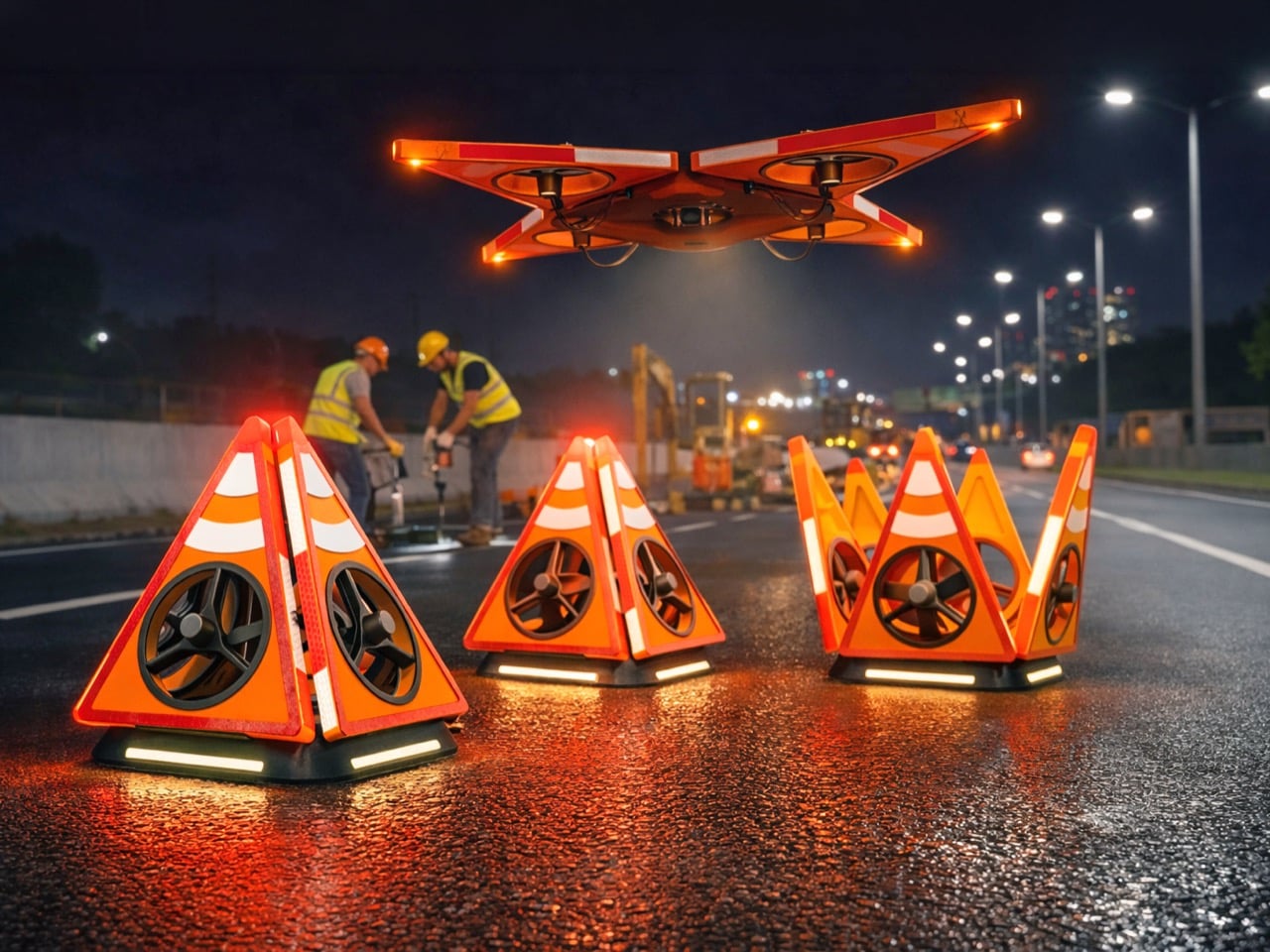
The traffic cone is basically a Rorschach test for the internet generation. Construction workers see a long night shift, college kids see dorm decor, and anyone who’s ever downloaded a movie sees VLC. I mostly see something to swerve around. Xinhao Guo saw a robot. Guo led a student team at the Beijing Institute of Technology that developed SkyCone, a drone concept designed to fly to a highway incident, land in position, and fold itself into a traffic cone.

Guo’s teammates were Songyan Pan, Zixu Zhang, and Wanzheng Liu, and their concept won in the Conceptual Industrial Product Design category at the 2026 European Product Design Award. SkyCone is designed to fly as an X-shaped quadcopter, with each of its four triangular arms housing a ducted propeller. After landing, the arms would tilt up and lock together at magnetic tips, forming a four-sided pyramid with the familiar orange and white stripes. The goal is to keep workers out of live lanes. The team cites a figure that 57% of frontline highway personnel consider manual cone placement their most dangerous task.

Designers: Xinhao Guo, Songyan Pan, Zixu Zhang & Wanzheng Liu

A square central hub anchors SkyCone, carrying a downward-facing camera on a gimbal, with an LED strip and a non-slip mat built into its underside. The four arms are what the team calls Triangular Prism Buckets, hollow orange wedges that each surround a ducted propeller. Red magnetic locks with integrated indicator lights cap the arm tips, which meet at the cone’s apex when everything folds shut. Reflective strips trace the arm edges to improve visibility. My favorite detail is graphic: the white cone bands sit on the faces that point outward after folding, so the drone only looks like a cone once it actually is one.

Charles D. Scanlon, a Los Angeles street painter, designed the modern traffic cone to keep cars away from his wet paint, building it from rubber and fabric salvaged from old tires. His patent was granted in November 1943, and Interstate Rubber Products began manufacturing the design in 1947. The cone eventually made it into the Manual on Uniform Traffic Control Devices, the federal traffic-control manual. Materials and reflective collars have evolved over eight decades, yet the silhouette has barely budged. SkyCone largely keeps that familiar shape while changing how it gets into position, a sensible approach for an object drivers need to recognize quickly.

Placing those cones is still mostly manual work, with crews riding the back of a slow-moving truck or walking beside it and setting cones down a few feet from passing traffic. The US recorded 850 work zone deaths in 2024, an average of more than two a day. In March 2023, a single crash on I-695 outside Baltimore killed six roadway workers. The SkyCone team describes the first few minutes of an emergency or maintenance call as the most critical stretch, when crews are particularly exposed. A fleet of drones that could position cones before anyone steps out of the truck might reduce that initial exposure.

Brisbane-based Arrowes has already built an Automated Cone Truck that drops a cone every five seconds. On Melbourne’s Eastern Freeway, it handled 65,000 cones while cutting worker exposure to live traffic by roughly 500 hours. Caltrans and UC Davis developed a cab-operated cone machine back in the 2000s, and Spain’s Sacyr and GMV set out to prototype a self-driving trailer with an AI-guided robotic arm. Each system relies on a truck or trailer. SkyCone proposes making each cone responsible for its own delivery. Chris Chang’s Apiece showed in 2022 that a cone could be assembled from flat triangles, and SkyCone basically gives those triangles propellers.

The team’s renders place SkyCone at a nighttime highway repair, an incident scene behind an arrow-board truck, a rockfall on a mountain road, a snowed-over highway, and the crumbling edge of an open-pit mine. The mine scenario sold me, since walking a crumbling pit edge to place cones sounds like a genuinely terrible afternoon. SkyCone joins a line of highway concepts that propose sending machines into hazardous places. The Highway Patrol Drone was designed to wait on light towers and fly to crash scenes ahead of responders, while the Median AMB proposed riding the road divider like a monorail to skip traffic. SkyCone’s role would be marking off the scene so responders can work.

The European Product Design Award is a global, open-entry program run by Farmani Group. SkyCone won in its conceptual tier as a student project, so the award recognizes a design proposal rather than proven roadside performance. Guo and his team want the cone to get into position on its own; whether it can do that reliably beside live traffic remains to be demonstrated. My brain will probably keep saying VLC whenever I see a cone, but now it’s going to add “robot” right after.


The post Flying Traffic Cone concept transforms into a Drone to auto-assemble itself on roads first appeared on Yanko Design.

❌