Vue normale

Il y a de nouveaux articles disponibles, cliquez pour rafraîchir la page.
Aujourd’hui — 2 février 2026Flux principal

World’s Slimmest AC Power Bank Can Run Appliances And Charge Your Laptop At Just 0.6 Inches Thick

Par : Sarang Sheth
2 février 2026 à 02:45

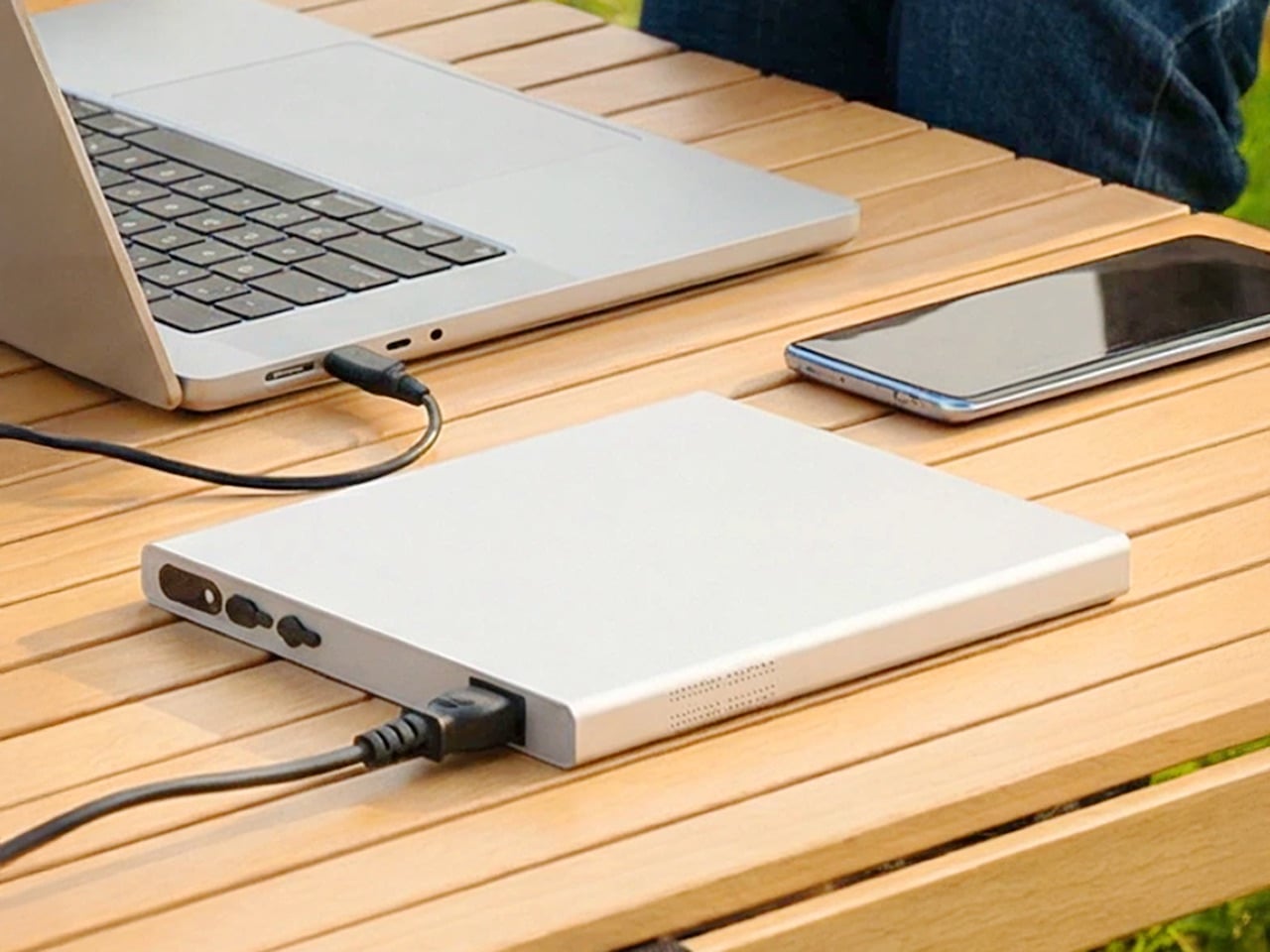
Digital nomads, field photographers, and mobile creatives share a common frustration: needing wall outlet power in places that don’t have walls. USB power banks handle phones and tablets, but cameras, projectors, and portable monitors still demand actual AC power. The world’s slimmest AC power bank exists because someone finally asked the right question: why do portable power stations look like car batteries instead of something you’d actually pack? The Noomdot N1 brings 70W of pure sine wave AC output to a device thin enough to slip into the laptop sleeve of a standard backpack.

At 16mm thick, it’s built around portability rather than maximum runtime. The semi-solid-state battery delivers approximately 40 minutes of continuous output at full 70W load, or several hours for lower-draw devices like LED lights or camera batteries. That’s not camping-weekend capacity, it’s designed for day trips, flights, and situations where outlets exist but aren’t convenient. The unit stays flight-safe under 100Wh limits, recharges in 90 minutes, and includes both USB-C PD output and pass-through charging. It’s live on Kickstarter at early pricing before the $259 retail launch.

Designer: PB-ELE

Click Here to Buy Now: $169 $259 ($90 off) Hurry! Only 17 of 200 left.

Years ago, a company called Memobottle had a brilliant, simple idea: since our bags are full of flat things like books and laptops, why are our water bottles round? The Noomdot N1 is the Memobottle of portable power, born from that same flash of spatial intelligence. It abandons the dense, pocket-bulging brick in favor of a slim slab of milled aluminum designed to slide into the forgotten spaces of a laptop sleeve or document pouch. This design is not an aesthetic choice; it is a fundamental understanding of the modern carry ecosystem. The N1 is engineered to be a good citizen in a world of flat devices, integrating seamlessly rather than demanding you build your bag around its awkward shape.

The use of a semi-solid-state battery is what enables this form factor without compromising on safety or longevity. While not a true solid-state cell, this hybrid chemistry significantly reduces the amount of volatile liquid electrolyte, leading to better thermal stability and a much slower rate of degradation. The claim of retaining 99% capacity after 100 full charge cycles is a direct benefit of this technology. For anyone who has felt the disappointment of a lithium-ion pack that barely holds a charge after a year, this focus on durability is a welcome and practical innovation. It reframes the device as a lasting piece of essential kit.

The main event is, of course, the 70W AC outlet. Its pure sine wave inverter is the kind of detail that professionals appreciate, ensuring clean, stable power that will not harm sensitive electronics. This is what separates it from cheaper, modified sine wave alternatives that can introduce electrical noise or even damage delicate circuits in cameras and audio gear. The inclusion of a 60W USB-C PD port is a nod to modern workflows, allowing it to charge a laptop directly or be slowly recharged itself. For a quick turnaround, the dedicated DC input remains king, refueling the entire 20,000mAh capacity in a scant 90 minutes.

Packing an inverter into a 16mm-thin chassis is a thermal challenge, and the N1 addresses this with a feature I’ve never seen in a power bank: an active cooling fan. An internal 6000 RPM fan kicks in during AC output to pull heat away from the core components, ensuring the device can sustain its peak performance without overheating. It is a pragmatic, if slightly brute-force, solution. The tradeoff is acoustics. While the fan is likely tuned to be as quiet as possible, it will not be silent… but that’s honestly a tiny price to pay for running a bunch of appliances or charging gadgets off a ‘wall-less power outlet’.

The N1 is a tool for a very specific mission: bridging the gap when AC power is needed for a short, critical period. It is for the wedding photographer who needs to juice up strobe batteries between the ceremony and reception. It is for the consultant who needs to run a projector for a 30-minute pitch in a conference room with no available outlets. Its 40-minute runtime at maximum load defines its purpose clearly. This is not an off-grid power solution for a weekend in the woods; it is a mobile professional’s get-out-of-jail-free card, ensuring a dead battery never becomes a single point of failure.

An IPX4 rating means it can shrug off a sudden rain shower, and passing a 1-meter drop test suggests it can survive being fumbled out of a backpack. These are not features one typically finds on power banks, and they speak to an understanding of the chaotic nature of travel and fieldwork. Combined with its TSA-friendly sub-100Wh capacity, the N1 is one of the few AC power sources truly designed from the ground up to leave the house and see the world, legally and safely.

You get to choose between two variants – 110V and 220V (depending on the country you live in and the rated voltage its appliances operate on). The Noomdot N1 ships along with a DC adapter for charging it, at a fairly discounted price of $169 ($90 less than its MSRP of $259). The device ships globally starting May 2026.

Click Here to Buy Now: $169 $259 ($90 off) Hurry! Only 17 of 200 left.

The post World’s Slimmest AC Power Bank Can Run Appliances And Charge Your Laptop At Just 0.6 Inches Thick first appeared on Yanko Design.

The Case for Heirloom Furniture in an Era Obsessed With Biodegradable Everything

Par : Sarang Sheth
1 février 2026 à 23:30

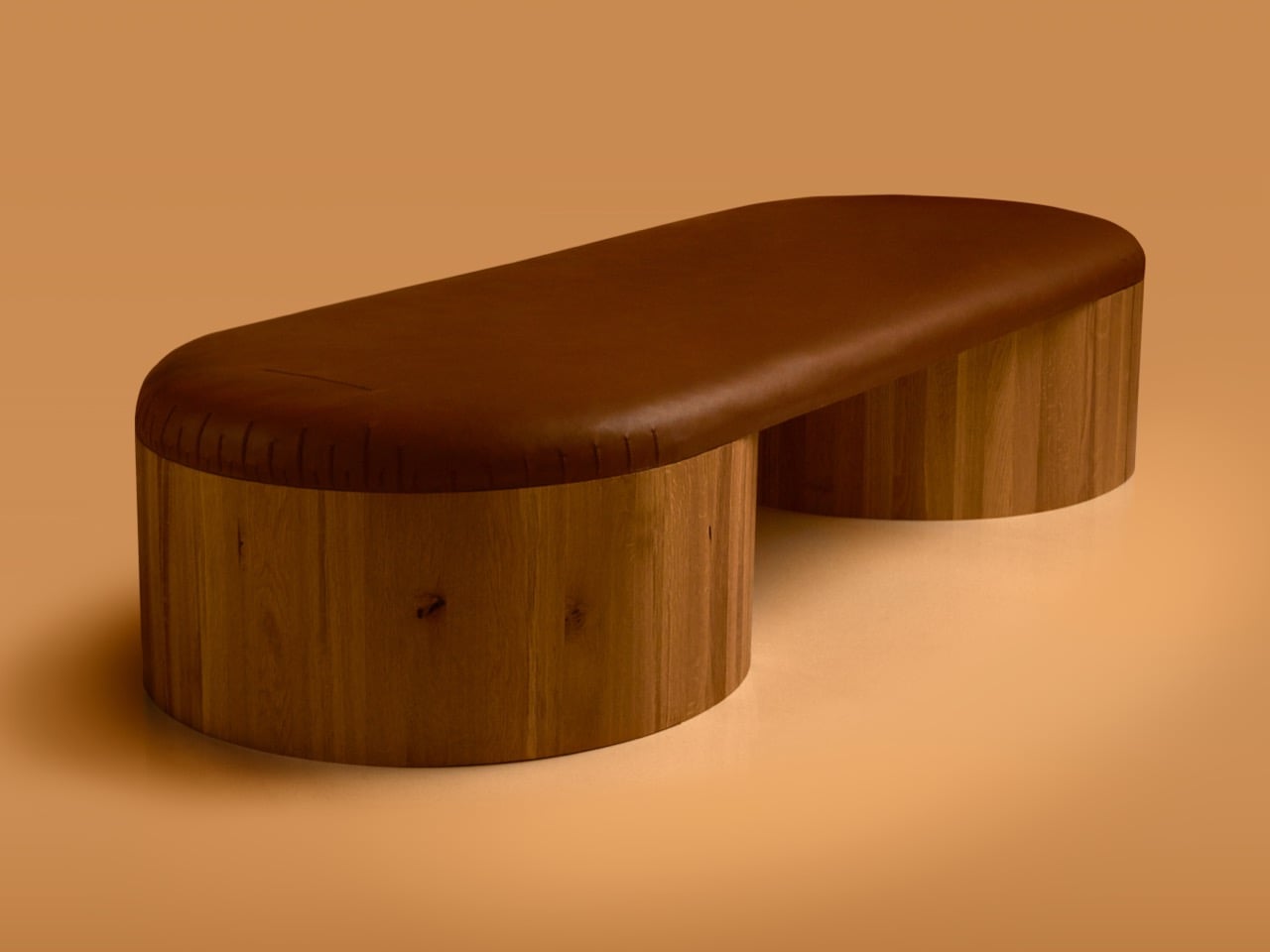
Joe Doucet has always been good at saying uncomfortable things politely. His latest provocation, delivered via Columns, a furniture collection with Bulgarian studio Oublier, is that the design industry’s obsession with biodegradable materials might be missing the point entirely. Furniture made from mycelium or algae can decompose in five years, sure, but a well-made antique armoire outlives empires because no one throws it away. Columns takes that logic seriously. Handcrafted in solid oak, natural leather, and horsehair, the pieces are built to last a thousand years, which sounds like marketing hyperbole until you look at the joinery, the hand stitching, and the material choices. This is furniture designed to be inherited, repaired, and remembered.

Oublier, a studio that typically explores forgetting as a cultural and creative act, seems like an odd partner for a project about permanence. But the contradiction makes sense once you see the work. The collection’s name refers to its columnar bases, two cylinders of oak laid horizontally and bridged by a continuous leather top. There are no fashionable details to anchor it to a specific decade, no finishes that will look dated in ten years. The form is so spare it borders on austere, which may be the entire strategy. If sustainability is about what we keep rather than what we compost, then the object has to earn its place across generations. Columns bets on clarity, craft, and a very patient understanding of time.

Designers: Joe Doucet X Oublier

Looking at the piece itself, the argument becomes tangible. The form is elemental, almost architectural, with the two solid oak drums giving it a grounded, permanent presence. The leather top is stretched over this base with a continuous curve, and the hand stitching along the perimeter is left visible. This small detail is a critical part of the story, acting as a quiet signal of human labor and future repairability. It suggests the piece can be opened, its horsehair padding refreshed, and its leather resewn a century from now. There is a thoughtful honesty in showing the construction, which reinforces the idea that this is a working object, not a sealed artifact. It feels built to withstand use, not just admiration.

The choice of materials is a direct commitment to graceful aging. The solid oak is not a uniform, characterless surface; it has grain and life that will deepen over the decades. Similarly, the natural leather is intended to absorb the evidence of its existence, developing a rich patina from sunlight, touch, and time. This philosophy is the complete opposite of designing for pristine, showroom condition. Instead, Columns proposes that wear is a form of beauty, that an object’s value increases as it accumulates a history. This approach redefines luxury away from novelty and toward endurance, suggesting that the ultimate premium is an object that improves with you.


What Doucet and Oublier have created is a subtle but firm critique of disposability. The project opines that true innovation might lie in looking backward, applying traditional techniques and durable materials to a clean, contemporary form. It challenges the prevailing notion that sustainability requires constant material invention and complex recycling systems. Instead, it offers a simpler, more profound solution: make things that last, and are simultaneously too good to throw away. Columns proposes that the most responsible act of consumption is to buy something once and keep it for a lifetime, passing it on as a functional heirloom rather than a problem for a landfill.

The post The Case for Heirloom Furniture in an Era Obsessed With Biodegradable Everything first appeared on Yanko Design.

This LEGO Furby 30th Anniversary Build Comes With Working Eyes and a Secret Agent Hidden in Its Head

Par : Sarang Sheth
1 février 2026 à 20:15

The Furby didn’t just sell 40 million units in its first three years. It created genuine paranoia. Parents whispered about hidden microphones. The NSA had to issue actual statements denying that these fuzzy toys were surveillance devices. Kids would wake up to unprompted Furbish babbling at 3 AM and wonder if their electronic pet had become sentient. Twenty-eight years later, those kids are adults, and one of them just submitted a 1,700-piece LEGO version to Ideas that’s already earned a Staff Pick designation.

Rancor1138’s Furby 30th Anniversary build stands nearly 19 inches tall in classic black and white, complete with working eyelids, articulated ears, and a movable mouth. The back panel opens to reveal the interior, where two Easter eggs wait. One is a brick-built heart, representing what Furbys were supposed to be. The other is a man in black hiding in the head, recording device in hand, representing what everyone feared they actually were. Both are perfect.

Designer: Rancor1138

The build uses helmet pieces from the buildable Buzz Lightyear sets for those opening eyelids, which captures the curved geometry needed even though they’re not available in black yet. Technic ball joints handle the ear articulation, giving them the full range of motion that made Furbys so expressive. The movable mouth works without gearing or complex mechanisms, keeping the design producible. At 46.6 centimeters tall with ears extended and 22.1 centimeters wide, this thing commands shelf space the way the original commanded attention in toy aisles. The 1,700-piece count puts it in the same territory as LEGO’s typewriter or piano, the kind of weekend project that adult collectors actually want to spend time on rather than snap together in an evening.

Tiger Electronics owns the Furby trademark, but this color scheme reads as “generic Furby” in a way that could survive legal review. You see those colors and ear shapes from across a room and your brain fills in the rest without needing specific commercial variants. The decision to include both the heart and the surveillance agent creates tension that reflects how people actually experienced these toys. They were supposed to be companions. They became sources of low-grade technological anxiety. Both truths exist simultaneously, and hiding them inside the build where you have to open the back panel to see them turns the discovery into a reveal rather than a punchline.

Rancor1138’s child developed an obsession with Y2K electronic toys despite being born decades after they mattered, which prompted the designer to build a LEGO version of the toy as a gift for their kid. The build went through three or four versions before landing to what we see now, and LEGO does have a tendency to tweak MOCs (My Own Creations) further before officially launching them, but this one absolutely needs no changing.

So why make a LEGO Furby in 2026 beyond just the fact that your child loves them? Well, Furby’s 30th anniversary hits in 2028, giving LEGO a marketing angle if this clears the Ideas review process. At 1,700 pieces, the probable price point lands somewhere between $170 and $220 based on how LEGO has priced recent Ideas sets. That positions it as a serious display piece for collectors who remember the original phenomenon and want something substantial to build, not an impulse grab for casual fans.

The man in black sitting inside the Furby’s head with recording equipment directly references conspiracy theories that required actual NSA clarification in 1999. These toys couldn’t record speech despite widespread belief otherwise, which feels simultaneously ridiculous and prescient given the smart speaker landscape two decades later. The heart in the chest cavity provides counterweight, acknowledging that underneath the paranoia these were designed to be loved. Both elements work because they’re physically integrated rather than existing as external commentary. Open the back panel and there they are, permanent features that reward closer inspection.

LEGO Ideas runs on a voting system where submissions need 10,000 supporters to enter review for possible production. This Furby currently sits at 2,622 votes with 563 days left to hit the next 5,000 milestone. The platform has produced genuinely strong sets over the years, proving community-driven design can match LEGO’s internal development when the right projects get traction. Anyone wanting to see this become an actual purchasable set needs to head over to the LEGO Ideas website and vote. The Furby deserves to exist as more than a digital render and some studio photos, if only because that man in black Easter egg is too good to stay conceptual.

The post This LEGO Furby 30th Anniversary Build Comes With Working Eyes and a Secret Agent Hidden in Its Head first appeared on Yanko Design.

Realme 16: 7,000mAh battery, iPhone Air ‘inspired’ design, 3-lens camera and a rear selfie mirror

Par : Sarang Sheth
1 février 2026 à 18:20

The horizontal camera bar has officially become the design language of 2025-2026, and Realme just joined the party with the Realme 16. Five months after Apple’s iPhone Air established the aesthetic last September, here comes a mid-range contender wearing the same silhouette like a fashion trend that jumped from runway to high street. The visor-style execution skews closer to Honor’s Magic8 Pro Air, complete with that clean horizontal sweep across the top of the phone. But Realme threw in a wild card: a circular selfie mirror embedded right in the camera module, encircled by a halo flash that adds theatrical flair to an otherwise familiar design.

Calling this phone “Air” anything requires some creative interpretation. The iPhone Air sits at 5.6mm thin, Honor’s version checks in at 6.1mm, and the Realme 16 lands at 8.1mm. That’s practically chunky by comparison, though the 7,000mAh battery inside explains the extra millimeters. At 183 grams, it still feels reasonable in hand despite housing enough power to outlast most flagships by a full day. The mirror feature positions itself as functional, giving you a way to frame selfies using the superior 50MP rear camera instead of the standard front sensor. Whether anyone actually uses it beyond the first Instagram story is the real test.

Designer: Realme

What’s more interesting than the mirror is the engineering required to make it all work. Squeezing a 7,000mAh battery into a body this manageable is no small feat, and it points to some clever internal packaging, what Realme calls an “Aircraft Structure layout” using high-density graphite battery tech. This is the kind of practical innovation that matters in the mid-range space, where two-day battery life is a legitimate killer feature. They even managed to secure an IP66, IP68, and IP69K rating, which means it’s protected against everything from dust to high-pressure water jets. That’s a level of durability you just don’t expect to see on a phone that isn’t a ruggedized brick.

The rest of the package is solidly mid-range. It’s running on a MediaTek Dimensity 6400 Turbo chipset, which is more than capable of keeping things running smoothly on the 6.57-inch AMOLED display. That screen, by the way, boasts a 120Hz refresh rate and an incredibly bright 4,500-nit peak brightness, so it should be perfectly visible even in direct sunlight. The camera system is led by that 50MP Sony IMX852 sensor with OIS, a very respectable piece of hardware for this segment, and it’s paired with a simple 2MP monochrome lens.

So, was the “Air” moniker really necessary? It feels like a stretch when the phone is 1.5x as thick as the devices it’s mimicking. And you have to wonder how much actual design work went into the chassis itself. The silhouette is pure iPhone Air, the camera plateau is straight from Honor’s playbook. Did Realme’s team just slap a mirror on a composite of last season’s hits and call it a day? Maybe. But for a mid-range phone with this much battery, maybe that’s all it needs to be. At its price tag, perhaps nobody minds a design that feels ‘inspired’ as long as it looks the part and lasts for two days.

The post Realme 16: 7,000mAh battery, iPhone Air ‘inspired’ design, 3-lens camera and a rear selfie mirror first appeared on Yanko Design.

Hier — 1 février 2026Flux principal

This 5-Inch “Video Business Card” Wants To Replace Your Stack Of Paper Cards

Par : Sarang Sheth
1 février 2026 à 02:45

Televisions used to be heavy boxes that dominated a room. Now, the latest LG and Samsung prototypes at CES 2026 look more like posters than TVs, with panels so slim they almost blend into the wall and bezels that seem to disappear when the screen lights up. These displays are no longer just appliances in the corner of a living room. They are becoming design elements that can live almost anywhere you might put a sheet of paper.

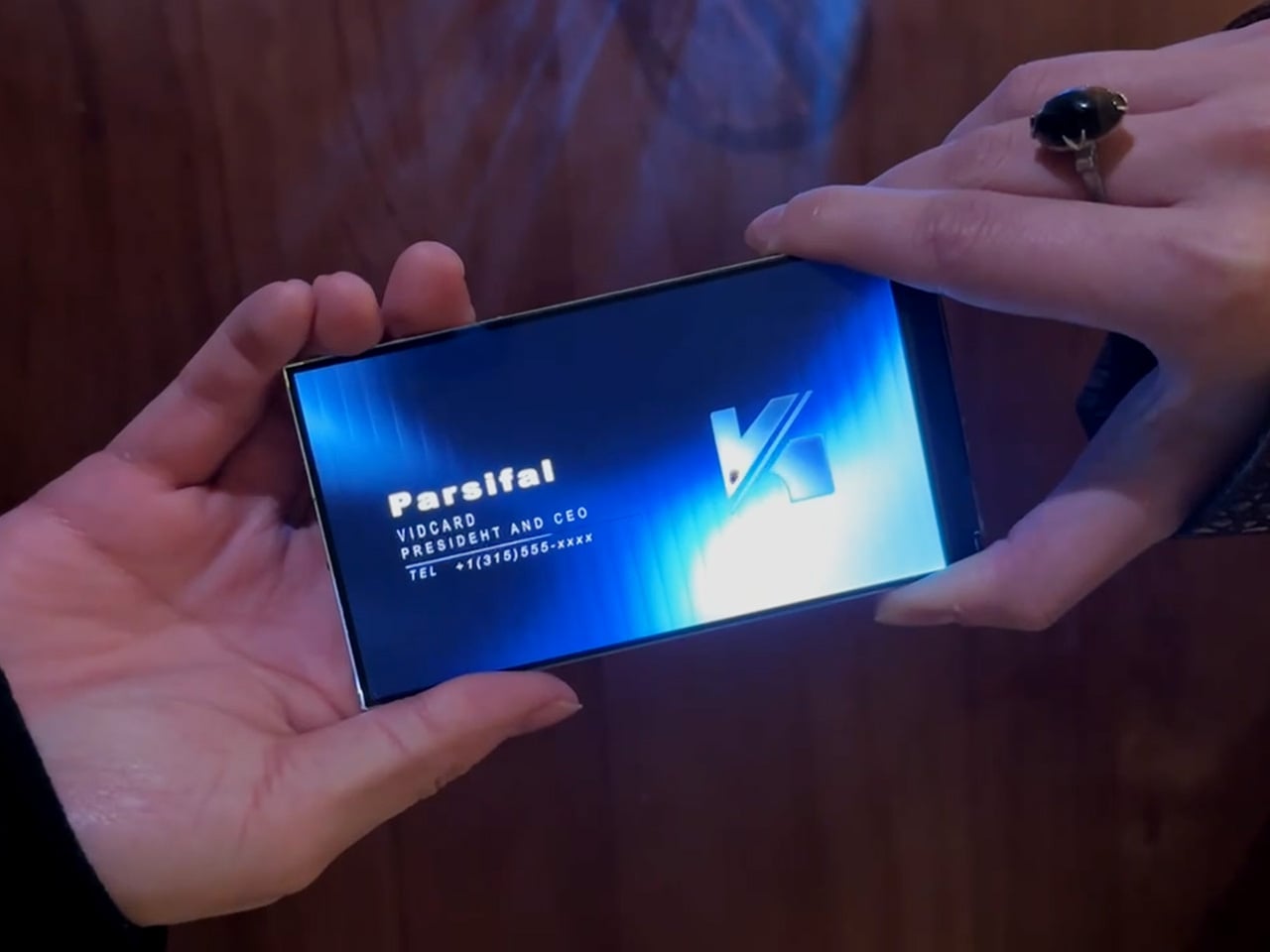
That shift makes it feel natural to ask a simple question: if screens can be this thin, why not put them where we have always relied on print? Business cards are a perfect example. They carry introductions, identity, and a first impression in a tiny rectangle. VidCard takes that same footprint and turns it into a living surface, transforming the familiar business card into a personal video introduction that plays in the palm of your hand.

Designer: Parsifal

Click Here to Buy Now: $59 $99 (40% off). Hurry, only a few left! Raised over $66,000.

VidCard is basically what it sounds like: a rigid card with a 5 inch, 1280×720 IPS LCD screen built in, playing a looping video of you introducing yourself or your brand motion graphic. The whole thing measures 120.05mm by 86.4mm, which puts it somewhere between a credit card and a small phone, and it’s under 5mm thick. That’s genuinely impressive when you remember there’s a battery, NFC chip, display controller, and 256MB of onboard storage packed inside. The card charges via contact pins, lasts about an hour of continuous playback (roughly 120 to 240 interactions per charge), and syncs content through a companion app on iOS or Android. You upload your intro video, it pushes to the card, and you’re set. The screen itself looks clean in the campaign photos and bright enough for indoor use.

The NFC feature sidesteps the whole “how do I actually save your contact info” problem. You tap the card against someone’s phone, and it pulls up your mobile optimized landing page with your video, company profile, documents, and whatever else you want to link. No app download required on their end, which makes sense because nobody wants to install something just to see your business card. Real time analytics track who viewed your profile, when they watched, how long they engaged, and if they came back for a second look. There’s a slightly dystopian charm to getting a notification at 11pm that someone just rewatched your intro for 87 seconds, but it does give you actual data to inform follow ups instead of wondering if your card got tossed in a drawer.

Here’s the thing, though. You know what else has a high resolution screen, NFC, internet connectivity, and can play video? The phone in your pocket. You could theoretically just show someone your intro video on your phone, tap for NFC sharing, and achieve most of the same result for zero additional hardware. VidCard’s counter to that is the physical artifact itself. Handing someone a glowing screen feels different than showing them your phone (besides, unlocking a phone, opening your gallery, and finding the right video can take painful minutes), and if you leave the card behind with a high value contact, it becomes a keepsake that lives on their desk instead of disappearing into a contacts list. That’s either brilliant or unnecessary depending on how much you value the showmanship in networking, although I genuinely can’t decide which camp I’m in.

The founders claim inspiration from Call of Duty: Advanced Warfare, where a character hands over a video business card inviting you to join a fictional military contractor. That’s a deeply nerdy origin story, and I respect it. VidCard works best in situations where you need to stand out in a sea of forgettable interactions: trade shows, high stakes sales meetings, investor pitches, creative industry networking where showing your work matters more than listing credentials. It’s overkill for casual meetups or industries where a LinkedIn connection does the job, but if you’re trying to leave an impression on someone who sees 50 people a day, a card that talks and moves will get you remembered. The real test is whether that memory translates to actual follow through, which the analytics dashboard is designed to help with by showing you who’s genuinely interested versus who just thought the card was neat.

VidCard is live on Kickstarter through February 5, 2026, with early bird pricing starting at $59 USD for a single unit, $162 USD for a three pack, and scaling up to $599 USD for a 10 unit business pack with bulk branding options. Estimated delivery is June 2026 for early backers, with standard shipments following through June 20. The campaign has already cleared its funding goal by a wide margin, which suggests the concept resonates with enough people that we may just end up seeing video or even holographic business cards in the not-so-distant future.

Click Here to Buy Now: $59 $99 (40% off). Hurry, only a few left! Raised over $66,000.

The post This 5-Inch “Video Business Card” Wants To Replace Your Stack Of Paper Cards first appeared on Yanko Design.

Meta Misread the Future Twice. Now They’re Sitting on a Golden Egg, But Don’t Know It

Par : Sarang Sheth
31 janvier 2026 à 02:45

Mark Zuckerberg changed his company’s name to Meta in October 2021 because he believed the future was virtual. Not just sort-of virtual, like Instagram filters or Zoom calls, but capital-V Virtual: immersive 3D worlds where you’d work, socialize, and live a parallel digital life through a VR headset. Four years and roughly $70 billion in cumulative Reality Labs losses later, Meta is quietly dismantling that vision. In January 2026, the company laid off around 1,500 people from its metaverse division, shut down multiple VR game studios, killed its VR meeting app Workrooms, and effectively admitted that the grand bet on virtual reality had failed. Investors barely blinked. The stock went up.

The official line now is that Meta is pivoting to AI and wearables. Zuckerberg spent much of 2025 building what he calls a “superintelligence” lab, hiring top-tier AI talent with eye-watering compensation packages that are now one of the largest drivers of Meta’s 2026 expense growth. The company released Llama models that benchmark decently against OpenAI and Google, embedded chatbots into WhatsApp and Instagram, and talks constantly about “AI agents” and “new media formats.” But from a product and profit perspective, Meta’s AI strategy looks suspiciously like its metaverse strategy: lots of spending, vague promises, and no breakout consumer experience that people actually love. Meanwhile, the thing that is quietly working, the thing people are buying and using in the real world, is a pair of $300 smart glasses that Meta barely talks about. If this sounds like a pattern, that’s because it is. Meta has now misread the future twice in a row, and both times the answer was hiding in plain sight.

The Metaverse Was a $70 Billion Fantasy

Reality Labs has been hemorrhaging money since late 2020. As of early 2026, cumulative operating losses sit somewhere between $70 and $80 billion, depending on how you slice the quarters. In the third quarter of 2025 alone, Reality Labs posted a $4.4 billion loss on $470 million in revenue. For 2025 as a whole, the division lost more than $19 billion. These are not rounding errors or R&D investments that will pay off next year. These are structural losses tied to a product category, VR headsets and metaverse platforms, that the market simply does not want at the scale Meta imagined.

The vision sounded compelling in a keynote. You would strap on a Quest headset, meet your coworkers in a virtual conference room with floating whiteboards, then hop over to Horizon Worlds to hang out with friends as legless avatars. The problem was that almost no one wanted to do any of that for more than a demo. VR remained a niche gaming platform with occasional fitness and entertainment use cases, not the next paradigm shift in human interaction. Zuckerberg kept insisting the breakthrough was just around the corner. He was wrong, and the January 2026 layoffs and studio closures were the formal acknowledgment that Reality Labs as originally conceived was dead.

The irony is that Meta actually had a potential killer app inside Reality Labs, and it murdered it. Supernatural, a VR fitness game that Meta acquired for $400 million in 2023, was one of the few pieces of Quest software that generated genuine user loyalty and recurring revenue. People who used Supernatural regularly described it as the most effective home workout they had ever done, combining rhythm-based gameplay with full-body movement in a way that treadmills and Peloton bikes could not replicate. It had a subscription model, a dedicated community, and real retention. In January 2026, Meta moved Supernatural into “maintenance mode,” which is corporate speak for “we fired almost everyone and it will get no new content.” If you are trying to prove that VR has mainstream utility beyond gaming, fitness is one of the most obvious wedges. Meta had that wedge, and it chose to kill it in the same round of cuts that shuttered studios working on Batman VR games and other prestige titles. The message was clear: Zuckerberg had lost interest in Quest, even the parts that worked.

The AI Bet That Looks Like the ‘Metaverse Bust’ 2.0

After spending years insisting the future was virtual worlds, Meta pivoted hard to AI in 2023 and 2024. Zuckerberg now talks about AI the way he used to talk about the metaverse: with sweeping language about paradigm shifts and transformative platforms. The company stood up an AI division focused on building what it calls “superintelligence,” hired aggressively from OpenAI and Anthropic, and made technical talent compensation the second-largest contributor to Meta’s 2026 expense growth behind infrastructure. This is not a side project. Meta is spending billions on AI research, training, and deployment, and Zuckerberg expects losses to remain near 2025 levels in 2026 before they start to taper.

From a technical standpoint, Meta’s AI work is solid. The Llama family of models is legitimately competitive with GPT-4 class systems and has found real adoption among developers who want open-source alternatives to OpenAI and Google. Meta’s internal AI is also driving real business value in ad targeting, content ranking, and moderation. Those systems work, and they contribute directly to Meta’s core revenue. But from a consumer product perspective, Meta’s AI feels scattered and often unnecessary. The company has embedded “Meta AI” chatbots into WhatsApp, Instagram, Messenger, and Facebook, none of which feel like natural places for a chatbot. Instagram’s feed is increasingly stuffed with AI-generated images and engagement bait that users actively complain about. Meta has launched character-based AI bots tied to influencers and celebrities, and approximately no one uses them. The gap between “we have impressive models” and “we have a product people love” is enormous, and it is the exact same gap that sank the metaverse.

What Meta is missing, again, is product intuition. OpenAI built ChatGPT and made it feel like the future because the interface was simple, the use cases were obvious, and it delivered consistent value. Google integrated Gemini into Search and productivity tools where users were already working. Meta, by contrast, seems to be throwing AI at every surface it controls and hoping something sticks. Zuckerberg talks about “an explosion of new media formats” and “more interactive feeds,” which in practice means more algorithmic slop and fewer posts from people you actually know. Analysts are starting to notice. One Bernstein note from early 2026 argued that the “winner” criteria in AI is shifting from model quality to product usage, which is a polite way of saying that having a great model does not matter if your product is annoying. Meta has a great model. Its products are annoying.

The financial picture is also murkier than Meta would like to admit. Reality Labs is still losing close to $20 billion a year, and while AI is not a separate reporting segment, the talent and infrastructure costs are clearly rising. Meta’s overall revenue growth is strong, driven by advertising, but the company is not yet showing a clear path to AI profitability outside of ‘ad optimization’. That puts Meta in the awkward position of having pivoted from one unprofitable moonshot (metaverse) to another potentially unprofitable moonshot (consumer AI products) while the actual profitable parts of the business, social ads and engagement, keep the lights on. This is a pattern, and it is not a good one.

The Smart Glasses Lead That Meta Is Poised to Lose

Meta talks about the Ray-Ban smart glasses constantly. Zuckerberg calls them the “ultimate incarnation” of the company’s AI vision, and the pitch is relentless: sales more than tripled in 2025, the glasses represent the future of ambient computing, this is the post-smartphone platform. The problem is not that Meta is ignoring the glasses. The problem is that Meta is about to squander a massive early lead, and the competition is closing in fast. 2026 is shaping up to be a blockbuster year for smart glasses. Samsung confirmed its AR glasses are launching this year. Google is releasing its first pair of smart glasses since 2013, an audio-only pair similar to the Ray-Ban Meta glasses. Apple is reportedly pursuing its own smart glasses and shelved plans for a cheaper Vision Pro to prioritize the project. Meta dominated VR because it was early, cheap, and had no real competition. In smart glasses, that window is closing fast, and the field is getting crowded with all kinds of names, from smaller players like Looktech and Xgimi’s Memomind to mid-sized brands like Xreal, to even larger ones like Google, TCL, and Xiaomi.

The Ray-Ban Meta glasses work because they are simple and focused. They take photos and videos, play music, make calls, and provide real-time answers through an AI assistant. Parents use them to record their kids hands-free. Travelers use them for translation. The form factor, actual Ray-Ban Wayfarers that cost around $300, means they do not scream “I am wearing a computer on my face.” This is the rare Meta hardware product that feels intuitive rather than forced, and it is selling because it solves boring, everyday problems without requiring users to change their behavior.

Then Meta made a critical mistake. To use the glasses, you have to route everything through the Meta AI app, which means you cannot just power-use the hardware without engaging with Meta’s AI-slop ecosystem. Want to access your photos? Meta AI. Want to tweak settings? Meta AI. The app is the mandatory gateway, and it is stuffed with the same kind of algorithmic recommendations and AI-generated suggestions that clutter Instagram and Facebook. Instead of letting the glasses be a clean, utilitarian tool, Meta is using them as another vector to push its AI products. Google and Samsung are not going to make that mistake. Their glasses will integrate with Android XR and existing ecosystems without forcing users into a single AI app. Apple, if and when it launches, will almost certainly take a similar approach: clean hardware, seamless OS integration, optional AI features. Meta had a head start, Ray-Ban branding, and a product people actually liked. It is on track to waste all of that by prioritizing AI evangelism over product discipline, and the competition is going to eat its lunch.

What Happens When You Chase Narratives Instead of Products

The pattern across metaverse and AI is that Meta keeps betting on big, abstract visions rather than iterating on the things that work. Zuckerberg is a narrative-driven founder. He wants to define the future, not respond to it. That impulse gave us Facebook in 2004, when no one else saw the potential of real-identity social networks, but it has led Meta astray repeatedly in the 2020s. The metaverse was a narrative, not a product. The idea that billions of people would strap on headsets to work and socialize in 3D was always more science fiction than product roadmap, but Zuckerberg committed so hard to it that he renamed the company.

AI feels like the same mistake. The narrative is that foundation models and “agents” will transform every part of computing, and Meta wants to be seen as a leader in that transformation. The actual products, chatbots in WhatsApp and AI-generated feed content, do not meaningfully improve the user experience and in many cases make it worse. Meanwhile, the thing that is working, smart glasses, does not fit cleanly into the AI or metaverse narrative, so it gets less attention and investment than it deserves. Meta’s 2026 strategy, “shifting investment from metaverse to wearables,” is a tacit admission of this, but it is couched in language that still emphasizes AI rather than the hardware itself.

The other pattern is that Meta is willing to kill its own successes if they do not fit the broader narrative. The hit VR fitness game on Meta’s Horizon, Supernatural, was working. It had subscribers, retention, and cultural momentum within the VR fitness community. It was also a relatively small, specific product rather than a platform play, and that made it expendable when Meta decided to scale back Reality Labs. The same logic applies to Quest more broadly. The headset had carved out a niche in gaming and fitness, and with sustained investment in content and ecosystem development, it could have grown into a meaningful adjacent business. Instead, Meta is deprioritizing it because Zuckerberg has decided the future is AI and lightweight wearables. That might turn out to be correct, but the way Meta is executing the pivot, by shuttering studios and putting products in maintenance mode rather than spinning them out or finding partners, suggests a lack of product discipline.

Why Smart Glasses Might Actually Be the Next Facebook

If you step back and ask what Meta is actually good at, the answer is not virtual reality or language models. Meta is good at building social products with massive scale, capturing and distributing content, and monetizing attention through ads. The Ray-Ban Meta glasses fit all of those strengths. They make it easier to capture photos and video, which feeds into Instagram and Facebook. They use AI to provide contextual information, which ties into Meta’s model development. And they are a physical product that people wear in public, which is a form of distribution and branding that Meta has never had before.

The bigger story is that smart glasses as a category are exploding, and Meta happened to be early. It is not just Samsung, Google, and Apple entering the space. Meta itself is expanding the Ray-Ban line with Displays (which adds a heads-up display) and partnering with Oakley on HSTN, a sportier model aimed at action sports. Google is teaming up with Warby Parker for its glasses, which gives it instant credibility in eyewear design. And then there are the startups: Even Realities, Xiaomi, Looktech, MemoMind, and dozens more, all slated for 2026 releases. This feels exactly like the moment AirPods sparked the true wireless earbud movement. Apple defined the format, then everyone from Samsung to Sony to no-name brands flooded the market, and now you can buy HMD ANC earbuds for 28 dollars. Smart glasses are following the same trajectory, which means the form factor itself is validated, and Meta’s early lead matters less than whether it can keep iterating faster than everyone else.

The other underrated piece is that having an instant camera on your face is genuinely useful in ways that VR headsets never were. People are using Ray-Ban Meta glasses as GoPro alternatives while skateboarding, cycling, and doing action sports, because POV capture without holding a phone or mounting a camera is frictionless. Content creators are using them to shoot hands-free B-roll at events like CES. Parents are using them to record their kids playing without the weird “I am holding my phone up at the playground” vibe. Pet owners are capturing spontaneous moments with dogs and cats that would be impossible to get with a phone. These are not sci-fi use cases or metaverse fantasies. They are boring, real-world problems that the glasses solve immediately, and that is why they are selling. Meta has spent a decade chasing grand visions of the future, and it accidentally built a product that people want right now. The challenge is whether it can resist the urge to over-complicate it before Google, Samsung, and Apple catch up.

The Real Lesson Is About Focus

Meta has spent the last five years oscillating between grand visions, metaverse and AI, and neglecting the products that actually work. The Ray-Ban Meta glasses are proof that when Meta focuses on solving real problems with tangible products, it can still build things people want. The metaverse failed because it was a solution in search of a problem, and the AI push is struggling because Meta is shipping features rather than products. Smart glasses, by contrast, are succeeding because they make everyday tasks easier without requiring users to change their behavior or buy into a futuristic narrative.

If Zuckerberg can internalize that lesson, Meta might actually have a shot at owning the next platform. But that requires a level of product discipline and restraint that Meta has not shown in years. It means resisting the urge to turn every product into a platform, admitting when a bet has failed rather than pouring another $10 billion into it, and focusing on iteration over narration. The irony is that Meta already has the right product. It just needs to stop looking past it.

The post Meta Misread the Future Twice. Now They’re Sitting on a Golden Egg, But Don’t Know It first appeared on Yanko Design.

À partir d’avant-hierFlux principal

This $2,899 Desktop AI Computer With RTX 5090M Lets You Cancel Every AI Subscription Forever

Par : Sarang Sheth
22 décembre 2025 à 02:45

Look across the history of consumer tech and a pattern appears. Ownership gives way to services, and services become subscriptions. We went from stacks of DVDs to streaming movies online, from external drives for storing data and backups to cloud drives, from MP3s on a player to Spotify subscriptions, from one time software licenses to recurring plans. But when AI arrived, it skipped the ownership phase entirely. Intelligence came as a service, priced per month or per million tokens. No ownership, no privacy. Just a $20 a month fee.

A device like Olares One rearranges that relationship. It compresses a full AI stack into a desktop sized box that behaves less like a website and more like a personal studio. You install models the way you once installed apps. You shape its behavior over time, training it on your documents, your archives, your creative habits. The result is an assistant that feels less rented and more grown, with privacy, latency, and long term cost all tilting back toward the owner.

Designer: Olares

Click Here to Buy Now: $2,899 $3,999 (28% off) Hurry! Only 15/320 units left!

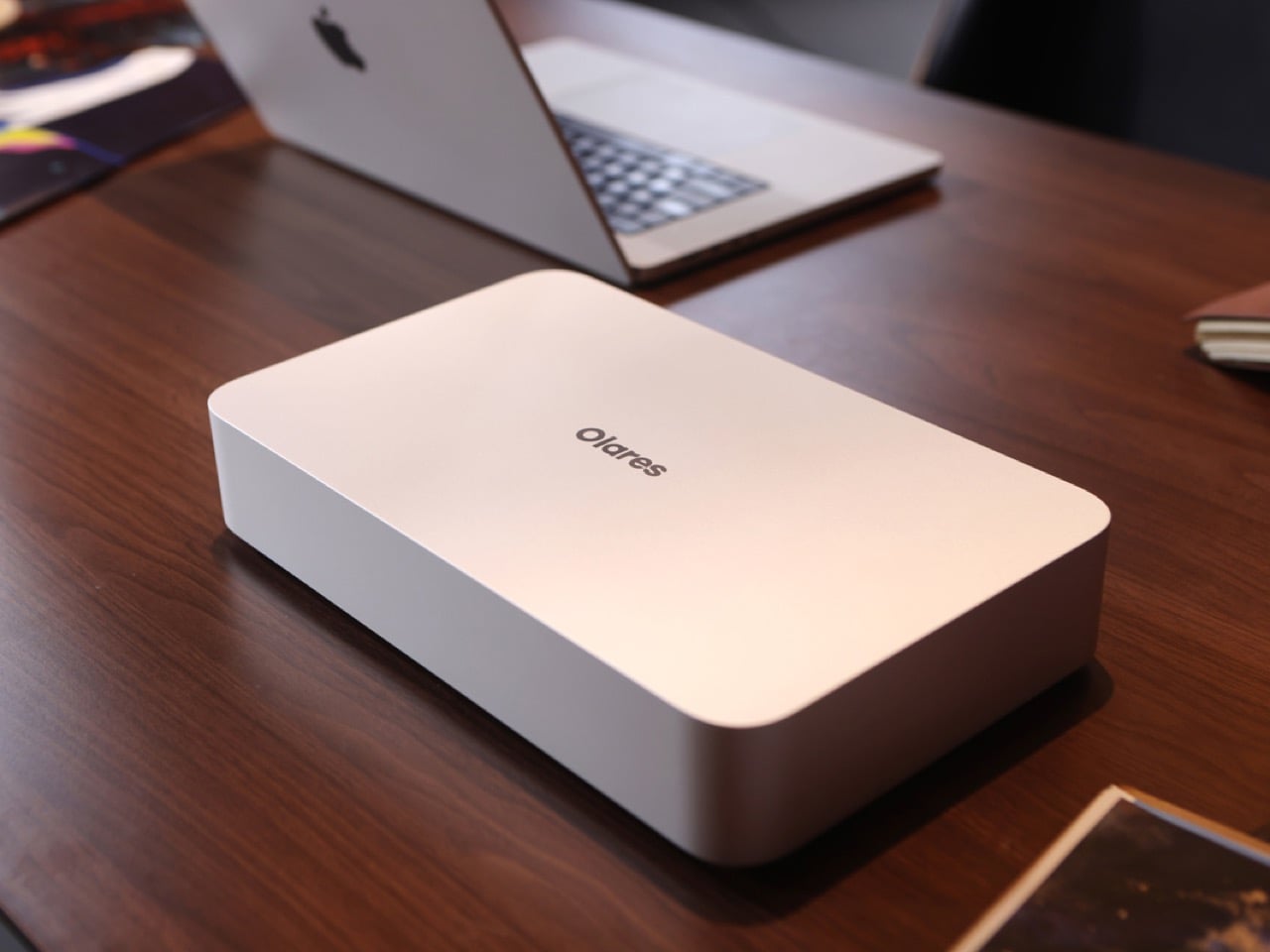
The pitch is straightforward. Take the guts of a $4,000 gaming laptop, strip out the screen and keyboard, put everything in a minimalist chassis that looks like Apple designed a chonky Mac mini, and tune it for sustained performance instead of portability. Dimensions are 320 x 197 x 55mm, weighs 2.15 kg without the PSU, and the whole package pulls 330 watts under full load. Inside sits an Intel Core Ultra 9 275HX with 24 cores running up to 5.4 GHz and 36 MB of cache, the same chip you would find in flagship creator laptops this year. The GPU is an NVIDIA GeForce RTX 5090 Mobile with 24 GB of GDDR7 VRAM, 1824 AI TOPS of tensor performance, and a 175W max TGP. Pair that with 96 GB of DDR5 RAM at 5600 MHz and a PCIe 4.0 NVMe SSD, and you have workstation level compute in a box smaller than most soundbars.

Olares OS runs on top of all that hardware, and it is open source, which means you can audit the code, fork it, or wipe it entirely if you want. Out of the box it behaves like a personal cloud with an app store containing over 200 applications ready to deploy with one click. Think Docker and Kubernetes, but without needing to touch a terminal unless you want to. The interface looks clean, almost suspiciously clean, like someone finally asked what would happen if you gave a NAS the polish of an iPhone. You get a unified account system so all your apps share a single login, configurable multi factor authentication, enterprise grade sandboxing for third party apps, and Tailscale integration that lets you access your Olares box securely from anywhere in the world. Your data stays on your hardware, full stop.

I have been tinkering with local LLMs for the past year, and the setup has always been the worst part. You spend hours wrestling with CUDA drivers, Python environments, and obscure GitHub repos just to get a model running, and then you realize you need a different frontend for image generation and another tool for managing multiple models and suddenly you have seven terminal windows open and nothing talks to each other. Olares solves that friction by bundling everything into a coherent ecosystem. Chat agents like Open WebUI and Lobe Chat, general agents like Suna and OWL, AI search with Perplexica and SearXNG, coding assistants like Void, design agents like Denpot, deep research tools like DeerFlow, task automation with n8n and Dify. Local LLMs include Ollama, vLLM, and SGIL. You also get observability tools like Grafana, Prometheus, and Langfuse so you can actually monitor what your models are doing. The philosophy is simple. String together workflows that feel as fluid as using a cloud service, except everything runs on metal you control.

Gaming on this thing is a legitimate use case, which feels almost incidental given the AI focus but makes total sense once you look at the hardware. That RTX 5090 Mobile with 24 GB of VRAM and 175 watts of power can handle AAA titles at high settings, and because the machine is designed as a desktop box, you can hook it up to any monitor or TV you want. Olares positions this as a way to turn your Steam library into a personal cloud gaming service. You install your games on the Olares One, then stream them to your phone, tablet, or laptop from anywhere. It is like running your own GeForce Now or Xbox Cloud Gaming, except you own the server and there are no monthly fees eating into your budget. The 2 TB of NVMe storage gives you room for a decent library, and if you need more, the system uses standard M.2 drives, so upgrades are straightforward.

Cooling is borrowed from high end laptops, with a 2.8mm vapor chamber and a 176 layer copper fin array handling heat dissipation across a massive 310,000 square millimeter surface. Two custom 54 blade fans keep everything moving, and the acoustic tuning is genuinely impressive. At idle, the system sits at 19 dB, which is whisper quiet. Under full GPU and CPU load, it climbs to 38.8 dB, quieter than most gaming desktops and even some laptops. Thermal control keeps things stable at 43.8 degrees Celsius under sustained loads, which means you can run inference on a 70B model or render a Blender scene without the fans turning into jet engines. I have used plenty of small form factor PCs that sound like they are preparing for liftoff the moment you ask them to do anything demanding, so this is a welcome change.

RAGFlow and AnythingLLM handle retrieval augmented generation, which lets you feed your own documents, notes, and files into your AI models so they can answer questions about your specific data. Wise and Files manage your media and documents, all searchable and indexed locally. There is a digital secret garden feature that keeps an AI powered local first reader for articles and research, with third party integration so you can pull in content from RSS feeds or save articles for later. The configuration hub lets you manage storage, backups, network settings, and app deployments without touching config files, and there is a full Kubernetes console if you want to go deep. The no CLI Kubernetes interface is a big deal for people who want the power of container orchestration but do not want to memorize kubectl commands. You get centralized control, performance monitoring at a glance, and the ability to spin up or tear down services in seconds.

Olares makes a blunt economic argument. If you are using Midjourney, Runway, ChatGPT Pro, and Manus for creative work, you are probably spending around $6,456 per year per user. For a five person team, that balloons to $32,280 annually. Olares One costs $2,899 for the hardware (early-bird pricing), which breaks down to about $22.20 per month per user over three years if you split it across a five person team. Your data stays private, stored locally on your own hardware instead of floating through someone else’s data center. You get a unified hub of over 200 apps with one click installs, so there are no fragmented tools or inconsistent experiences. Performance is fast and reliable, even when you are offline, because everything runs on device. You own the infrastructure, which means unconditional and sovereign control over your tools and data. The rented AI stack leaves you as a tenant with conditional and revocable access.

Ports include Thunderbolt 5, RJ45 Ethernet at 2.5 Gbps, USB A, and HDMI 2.1, plus Wi-Fi 7 and Bluetooth 5.4 for wireless connectivity. The industrial design leans heavily into the golden ratio aesthetic, with smooth curves and a matte aluminum finish that would not look out of place next to a high end monitor or a piece of studio equipment. It feels like someone took the guts of a $4,000 gaming laptop, stripped out the compromises of portability, and optimized everything for sustained performance and quietness. The result is a machine that can handle creative work, AI experimentation, gaming, and personal cloud duties without breaking a sweat or your eardrums.

Olares One is available now on Kickstarter, with units expected to ship early next year. The base configuration with the RTX 5090 Mobile, Intel Core Ultra 9 275HX, 96 GB RAM, and 2 TB SSD is priced at a discounted $2,899 for early-bird backers (MSRP $3,999). That still is a substantial upfront cost, but when you compare it to the ongoing expense of cloud AI subscriptions and the privacy compromises that come with them, the math starts to make sense. You pay once, and the machine is yours. No throttling, no price hikes, no terms of service updates that quietly change what the company can do with your data. If you have been looking for a way to bring AI home without sacrificing capability or convenience, this is probably the most polished attempt at that idea so far.

Click Here to Buy Now: $2,899 $3,999 (28% off) Hurry! Only 15/320 units left!

The post This $2,899 Desktop AI Computer With RTX 5090M Lets You Cancel Every AI Subscription Forever first appeared on Yanko Design.

How Coca Cola’s Benny Lee Is Redefining Industrial Design as Storytelling, Not Just “Making Products”

Par : Sarang Sheth
22 décembre 2025 à 00:30

Design Mindset steps into episode 16 with a clear purpose: to understand how industrial designers are navigating a world where tools, platforms, and expectations keep shifting under their feet. Yanko Design’s weekly podcast, Design Mindset, powered by KeyShot, is less about design celebrity and more about design thinking, unpacking how decisions get made, how stories are built around products, and how technology is reshaping the craft from the inside out. Each week, a new episode premieres with designers who are actively pushing workflows, visuals, and experiences into new territory.

This episode features Benny Lee, Senior Design Manager of Technology and Strategic Partnerships at The Coca-Cola Company, and a practitioner who moves comfortably between mass production, digital ecosystems, and even film props. Trained as an industrial designer, Benny started at Coke in a traditional ID role while also leading visualization, bringing advanced 3D rendering into a company that was still heavily reliant on Photoshop and 2D assets. He now sits at the intersection of heritage and innovation, helping a 140 year old brand adopt real time visualization, AI, and new storytelling platforms without losing what makes Coca-Cola recognizable everywhere.

Download your Free Trial of KeyShot Here

Storytelling as the real job of industrial design

Benny treats industrial design as a storytelling discipline first and a styling discipline second. His training spans sketching, 3D modeling, rendering, and prototyping, but he frames each of these as a narrative tool rather than a technical checkpoint. Sketches, CAD, and renders exist to show what a product does, how it behaves, and how it should feel to use, not just how it looks on a white background.

Inside a large organization, that narrative focus becomes practical very quickly. He puts it plainly in the conversation: “Storytelling as an ID, you know, is important because it’s all about bringing this visual alignment of the actual product when you’re trying to get a buy in to sell in.” The job is to reach a point where the design communicates its intent on its own, without the designer in the room. Call to action areas, material breaks, and even lighting choices in a render become part of that silent story, aligning stakeholders around what the product is supposed to be.

When rendering becomes a thinking tool, not just a final output

When Benny joined Coca-Cola, much of the visualization work sat in a 2D world. Concepts were often built through Photoshop and static compositions, heavily intertwined with graphic design. He talks about the shift he helped drive quite directly: “I find it really quite an honor and a pleasure that I was able to bring 3D renderings into the practice here.” That move to 3D was not just about realism, it was about adding depth to how ideas are explored and communicated.

The key change is that rendering is no longer treated as the last step before a presentation. Tools like KeyShot become part of the exploration loop. Benny uses quick CAD setups and fast render passes to test light, material, and even simple motion, and to storyboard how a product opens, glows, or reacts in context. He describes this as a way to “fail fast, iterate faster,” and he underlines that “we don’t always just use renderings to create pretty visuals and a lot of times we’re using it to build new experience.” Visualization turns into a thinking environment, especially valuable when physical labs and prototypes are slow or limited.

Respecting a 140 year old brand while pushing it into new arenas

Designing at Coca-Cola means working around a product that barely changes. The formula in the bottle remains constant, so innovation happens in the ecosystem that surrounds it. Packaging systems, retail touchpoints, digital layers, and immersive experiences become the canvas where design can move, while the core product stays familiar.

Benny describes his role with a custodian mindset. He imagines the brand as a skyscraper built over generations, and his work as adding “layers of bricks” rather than ripping out foundations. That perspective shows up in how Coca-Cola experiments with new platforms. The company explores metaverse activations, NFTs, experiential installations, and AI driven storytelling, not as disconnected stunts but as new ways to retell the same product story for new audiences. The strategy, as he frames it, is to adapt the ecosystem and technology “to retell the product’s story” while staying true to the brand’s core character.

Mass production versus one off film props

Benny’s portfolio stretches across lifestyle accessories, consumer electronics, and concept work for films like the Avengers. On the surface, the process for these domains begins similarly, with sketching, modeling, and rendering. The divergence appears when the work hits reality. In consumer products, industrial design is tied to mass production, with all the constraints of tooling, factory collaboration, golden samples, logistics, and long term durability.

Film work operates under a different set of pressures. Concept art might start in tools like ZBrush with exaggerated, dramatic forms that look incredible on screen but are not remotely manufacturable in a traditional sense. Benny’s responsibility in those situations is to respect the creative vision while making it buildable. Props do not have to scale to millions of units. They have to survive a shoot and read correctly on camera. If one breaks, it can be rebuilt. That freedom shifts what is possible in form and material, but the throughline is still storytelling, captured in a few seconds of screen time instead of years of daily use.

Adapting to an ever expanding toolset without losing your core

Throughout the episode, Benny returns to the pace of change in design tools. Skills that were once specialized are now table stakes. Students are graduating with exposure to UI and UX, electronics integration, and AI enhanced workflows. He notes that “you have to wear so many hats,” and points out that traditional industrial design is becoming a “rare breed” precisely because the field has branched into web, mobile, service, and emerging tech work.

His response is not to chase mastery of every new tool, but to understand what each category can do and to build teams around that understanding. He emphasizes hiring people who are better than you at specific domains and managing the mix of skills rather than guarding personal expertise. In parallel, he argues that adaptation is now the most important traditional trait. The designers who thrive will be the ones who stay resilient, keep a story first mindset, and move fluidly between CAD, KeyShot, AI, and whatever comes next, while still grounding their decisions in how things work in the real world.


Design Mindset, powered by KeyShot, returns every week with conversations like this, tracing the connection between how designers think, the tools they use, and the work they put into the world. Episode 6 with Reid Schlegel leaves you with a simple, practical challenge: see your ideas sooner, in more ways, and with less fear of being imperfect.

Download your Free Trial of KeyShot Here

The post How Coca Cola’s Benny Lee Is Redefining Industrial Design as Storytelling, Not Just “Making Products” first appeared on Yanko Design.

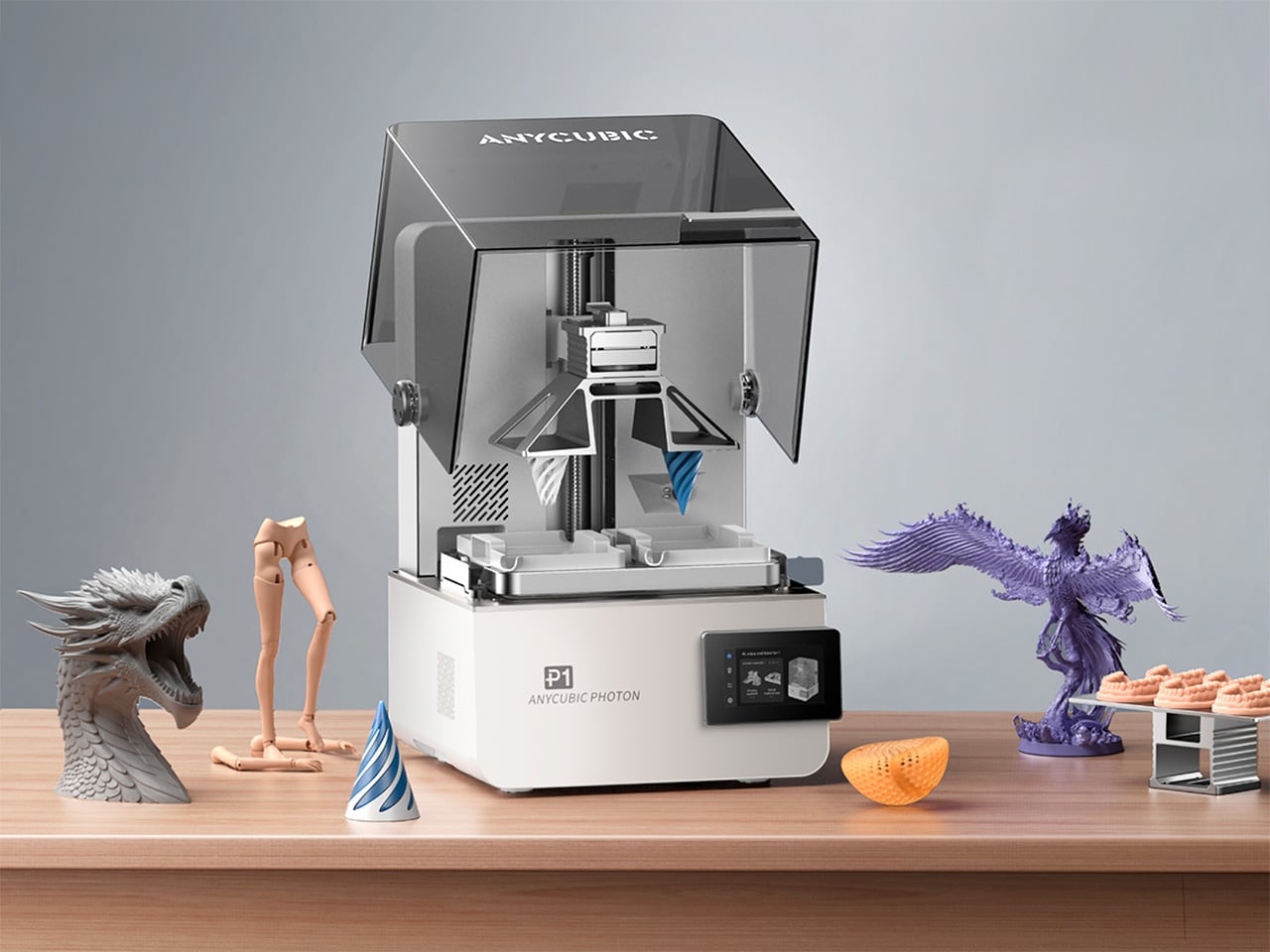
Dual vats, 14K screen, heated resin: inside Anycubic’s game-changing Photon P1 3D Printer

Par : Sarang Sheth
14 décembre 2025 à 02:45

Desktop resin printers usually ask a simple question: how much resolution can you afford. Anycubic’s Photon P1 adds a more interesting one: what if the same machine could handle two colors, two materials, or two entirely different jobs without claiming more room on your bench. By pairing a dual‑vat system with a high resolution 14K display and a serious Z axis, the Photon P1 feels tailored to studios that prototype daily and iterate fast. The Photon P1 also packs LighTurbo 4.0 (an advanced UV light source system) for curing developed specially by Anycubic, along with a smart heated vat that temperature-controls the resin baths, offering a kind of industrial-grade output you’d never see in other consumer 3D printers.

Central to this new approach is a cleverly engineered dual‑vat system, a feature so rare in the consumer space that it feels like a genuine novelty. Instead of a single, monolithic resin tank, the P1 offers the option of two smaller, distinct vats side by side (the default is still a single-vat version for most basic users). Hovering above them is a forked build plate, a single component with two separate printing surfaces that can operate in tandem. This architecture allows the printer to print two colors or two resin types in a single job, eliminating the need for separate runs. Its slicer supports material-specific configurations optimized for dual-vat workflows, keeping both materials stable and consistent within one print. When working with premium or engineering resins, this setup also reduces waste and helps lower overall material costs, this setup also reduces waste and helps lower overall material costs. This fundamentally changes the workflow – it effectively gives you the power of two printers, but with the synchronized precision and footprint of one. The machine is not just building an object, it is managing a production queue, all within its own chassis.

Designer: Anycubic

Click Here to Buy Now: $499 $799 (38% off). Hurry, only 31/400 left! Raised over $416,000.

This opens a fascinating playbook for designers and creators. A product designer, for instance, could prototype a remote control with a hard, rigid casing printed from standard resin in the left vat, while simultaneously printing soft, flexible buttons from a TPU‑like resin in the right vat. The result is a multi‑material prototype in a single print job, offering a far more accurate representation of a final product without the hassle of printing parts separately and assembling them later. For artists and miniature sculptors, the possibilities are just as compelling. Imagine printing a fantasy character where the main figure is rendered in an opaque grey for maximum detail, while a magical spell effect or a ghostly appendage is printed in a translucent, colored resin from the second vat. This dual‑system approach streamlines the creation of complex, multi‑part models, reducing post‑processing and painting time.

Beyond multi‑material applications, the P1 excels as a pure productivity engine. A technical studio can produce engineering-grade resin prototypes. Designers or creatives can model and produce flexible materials for complex assemblies. A small business owner running an Etsy shop for custom D&D miniatures could use it to fulfill two different orders at once, performing batch production or even dual-part workflows for maximized efficiency. This parallel workflow essentially doubles the machine’s throughput for small to medium‑sized objects, making it an incredibly efficient tool for anyone doing light production work. It transforms the printer from a single‑task device into a small‑batch manufacturing hub.

Of course, these advanced capabilities would be meaningless without a foundation of precision and reliability. Anycubic has clearly invested in the P1’s mechanical integrity, moving it out of the hobbyist category and into prosumer territory. The Z‑axis, often a weak point on budget machines, is built around an industrial‑grade ball screw and robust linear rails. This is a significant upgrade from the typical lead screw setup, translating to smoother, more consistent vertical travel. For the user, this means virtually no visible layer lines, a dramatic reduction in Z‑wobble artifacts, and exceptional repeatability, ensuring that parts designed to fit together do so with tight tolerances.

This focus on industrial‑grade components extends to the build plate itself. Instead of the usual anodized aluminum, the P1 uses a precision‑milled slab of steel. Steel’s superior rigidity and thermal stability mean the plate is less likely to warp over time, ensuring a perfectly flat and level surface for consistent first‑layer adhesion, which is critical for print success. It is a subtle but important detail that signals a commitment to long‑term reliability. This mechanical stability is the bedrock that supports the printer’s headline features.

At the heart of its imaging system is a 14K monochrome LCD. That number translates directly into breathtaking surface detail. With an extremely fine XY resolution, the P1 can reproduce microscopic textures, razor‑sharp edges, and intricate patterns that would be lost on lower‑resolution screens. For jewelry designers prototyping complex filigree or architects building scale models with fine brickwork, this level of detail is indispensable. The monochrome screen also offers the practical benefits of faster cure times and a much longer operational lifespan than the older RGB LCDs, reinforcing the P1’s role as a dependable workhorse.

The Anycubic Photon P1, therefore, is more than just the sum of its impressive parts. It represents a holistic design philosophy where each component complements the others. The high‑resolution 14K screen provides the detail, the industrial Z‑axis ensures that detail is rendered flawlessly layer after layer, and the innovative dual‑vat system leverages that quality to create more complex, more functional, and more beautiful objects with unparalleled efficiency. It is a machine that seems to understand the creative process, offering not just a tool, but a smarter way to work.

Anycubic unveiled the Photon P1 at the Formnext additive manufacturing show, with a Kickstarter campaign debuting this month to let people get their hands on the Photon P1. The retail price is set at a competitive $799, but early adopters have an opportunity to get in at a much lower early‑bird price of $499 (available for a limited period only), a figure that makes its prosumer features accessible to a much wider audience of serious creators and designers.

Click Here to Buy Now: $499 $799 (38% off). Hurry, only 31/400 left! Raised over $416,000.

The post Dual vats, 14K screen, heated resin: inside Anycubic’s game-changing Photon P1 3D Printer first appeared on Yanko Design.

I Stopped Paying for Cloud Storage After Trying This Tiny 256GB iPhone SSD

Par : Sarang Sheth
1 décembre 2025 à 02:45

I remember a time when smartphones had expandable storage. In fact, I remember feeling this internal rage when I saw the iPhone Air and that Apple even decided that a physical SIM slot wasn’t necessary anymore, because apparently a SIM tray blocks so much space that you need to shave down on a phone’s battery capacity. It’s wild that we’ve gotten to this point in our lives, and what’s more wild is that we now have to ‘rent’ storage out by paying for iCloud or Google Drive subscriptions to store our photos and videos. I remember when you could pop in a MicroSD card and those low-storage problems would go away… and ADAM Elements is trying to bring back that convenience with its ultra-tiny SSDs.

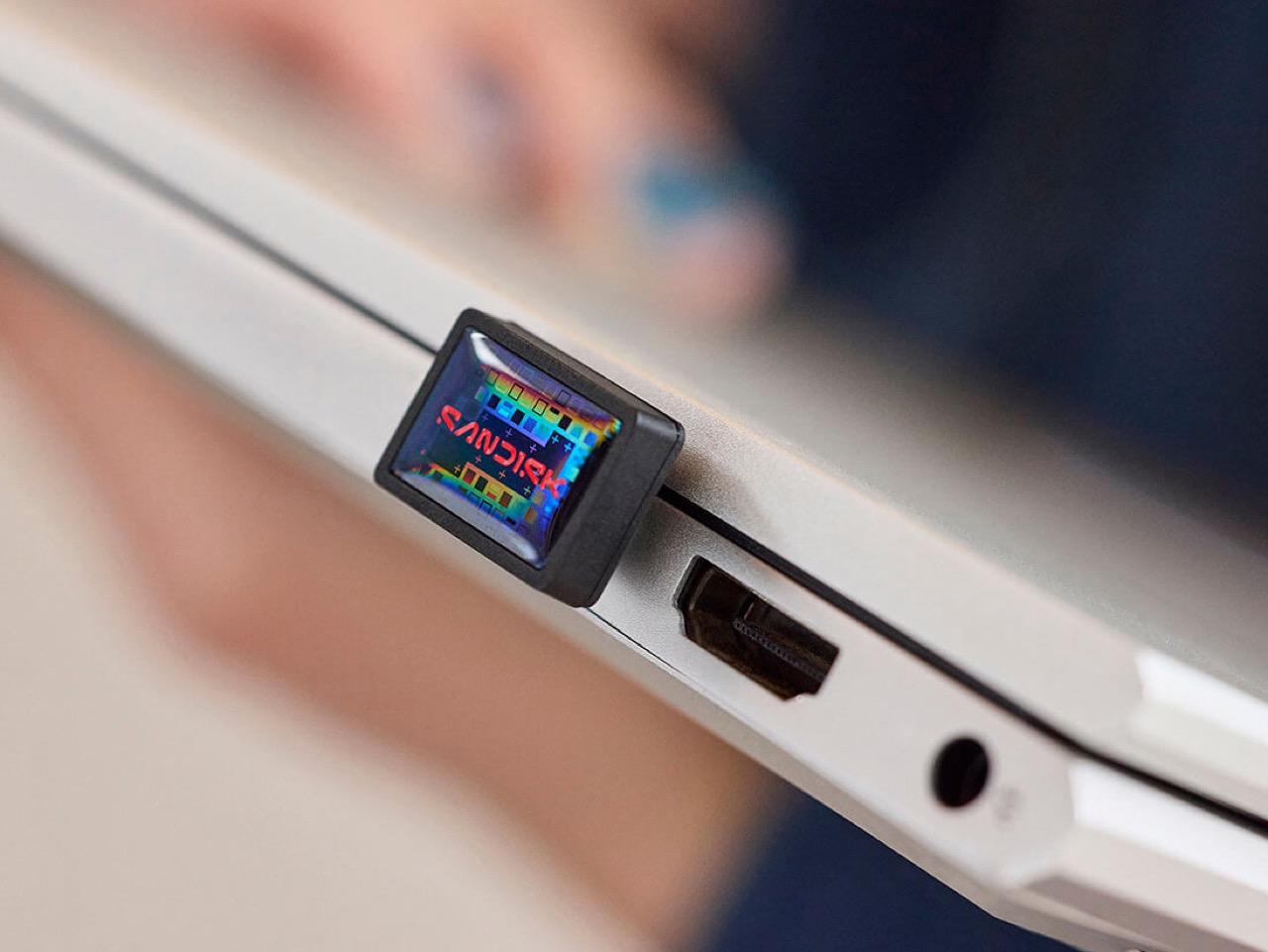
The iKlips S isn’t as small as a MicroSD, but it’s sufficiently more advanced than one. Barely the size of a 4-stud LEGO brick, this SSD plugs right into your smartphone, giving it an instant 256GB memory boost. It docks in your phone’s USB-C port, transferring data at incredible speeds, and here’s the best part – the tiny device packs biometric scanning too, which means you can pretty much secure your backups with a fingerprint the way you secure your phone with FaceID. The best part? No pesky subscription fees. You pay once and own the storage forever, and everything’s local and offline… so you never need to worry about remembering passwords, or about having companies and LLMs spy on your personal data to train themselves.

Designer: ADAM Elements

Click Here to Buy Now: $62.3 $89 (30% off, use coupon code “30YANKOIKPS”). Hurry, deal ends in 48-hours!

Think a thumb drive, but insanely tinier. That’s the beauty of SSDs, and ADAM Elements touts that the iKlips S currently holds the record for the world’s smallest SSD. Plug it into your phone, tablet, laptop, or any device and it instantly gets a 258GB bump. Data transfers at speeds of up to 400Mb/s with read speeds of 450Mb/s, that’s fast enough to move RAW files in milliseconds and entire 4K videos in seconds, or even directly preview/edit ProRes content on your phone, tablet, or laptop without having to transfer data to local storage. After all, that’s the dream, right?

The tiny device comes with a machined aluminum body and a lanyard hole so that you can string something through to prevent it from getting lost. Plug it into your phone to back up media, then into your laptop or iPad to edit said media. You can transfer data between multiple devices fairly quickly, across platforms too, thanks to cross-compatibility with iOS, Android, MacOS, Windows, ChromeOS, and even Linux. The tiny design sits practically flush against your phone, tablet, or laptop, occupying about the same amount of space as a USB receiver for a wireless keyboard or wireless mouse. Its most important design detail, however, hides in plain sight.

On the underside of the iKlips S is a fingerprint scanner, allowing you to add authentication to your SSD the way you add a password to your iCloud. The device can hold as many as 20 fingerprints, making it perfect for redundancies (just in case you cut a finger while chopping veggies) or even for a team of multiple people sharing data. Place your finger on the iKlips S and it unlocks the SSD, allowing you to read/write data in no time. You’re never faced with forgetting your iCloud password as your password literally lives on your fingertips.

The price of it all? A mere $62.3, which costs about as much as an annual subscription to these cloud storage services. For that, you get something you truly own, and can use without needing an app or an internet connection. Just plug it in and you’ve suddenly got extra storage. Secure the storage with a fingerprint, and move data around at speeds your internet service provider could only dream of. Neat, huh?

Click Here to Buy Now: $62.3 $89 (30% off, use coupon code “30YANKOIKPS”). Hurry, deal ends in 48-hours!

The post I Stopped Paying for Cloud Storage After Trying This Tiny 256GB iPhone SSD first appeared on Yanko Design.

Top 5 EDC Pocket Knives Running Major Last-Minute Discounts

Par : Sarang Sheth
1 décembre 2025 à 00:30

The annual flood of Black Friday deals can feel overwhelming, a constant barrage of alerts and ads all claiming to offer the deal of a lifetime. For those of us who appreciate well-designed gear, the challenge isn’t just finding something cheap; it’s finding something great at a price that makes it impossible to ignore. A good everyday carry knife, in particular, is an investment in utility and reliability. This is the time of year when that investment pays off before you even make the purchase, with respected brands and proven designs becoming more accessible than ever.

Consider this your curated shortlist, a direct path to the best value in the EDC knife world right now. We’ve cut through the noise to bring you five standout blades that are currently seeing major price drops, from compact workhorses to unique tactical designs. Each one was chosen based on its reputation, build quality, and a discount that truly matters. This is your chance to acquire a fantastic tool that punches well above its weight class for a fraction of its usual cost.

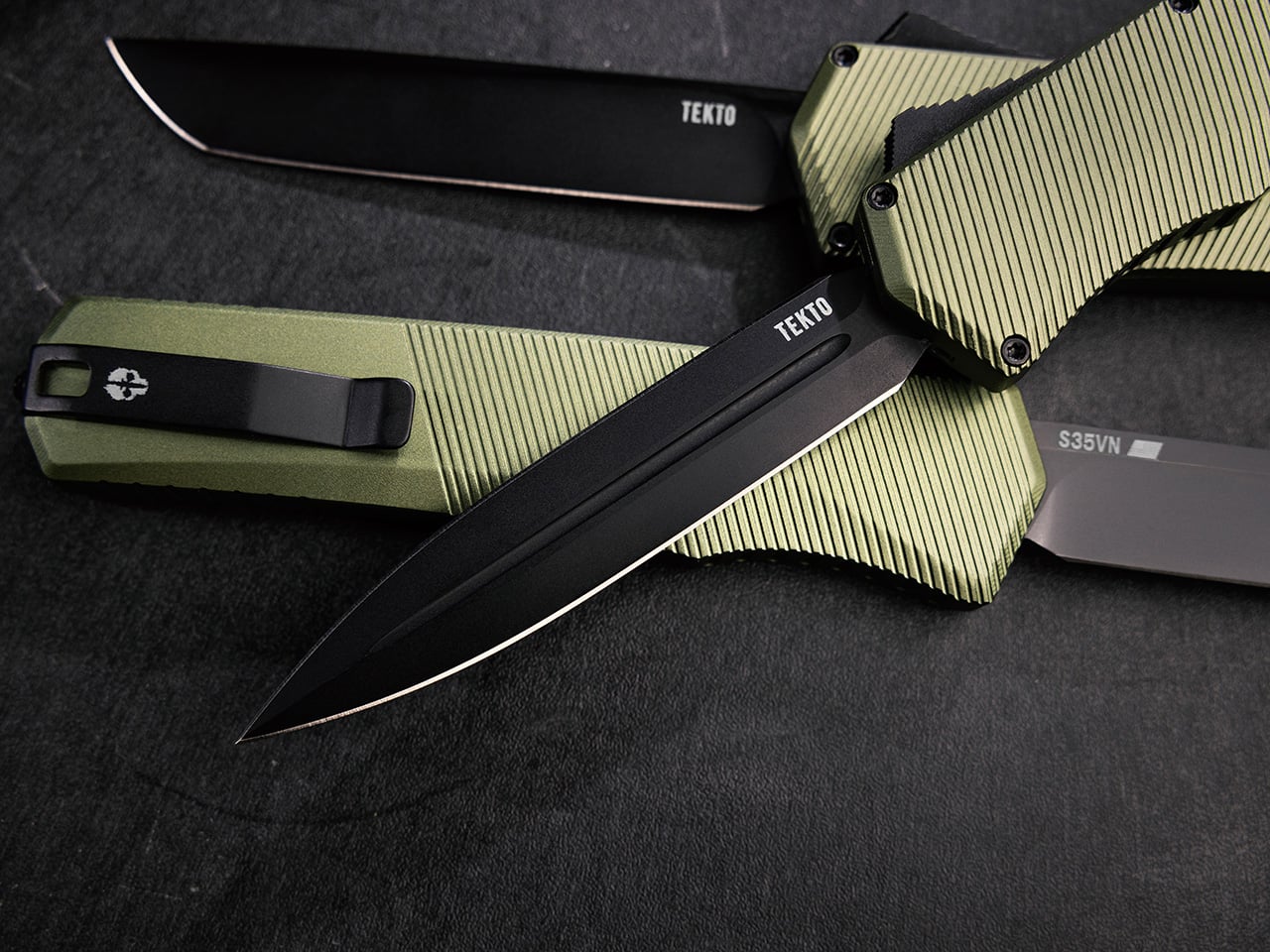
Tekto A5 Spry (20% Off)

Out-the-front automatics occupy a special place in the knife world, somewhere between practical tool and mechanical indulgence. The Tekto A5 Spry lands firmly in both camps. This is an OTF with a 3.5-inch S35VN blade, titanium-coated and available in three distinct profiles: drop point for general use, dagger for piercing and double-edged utility, and tanto for maximum tip strength. That blade choice matters because each geometry fundamentally changes how the knife performs. The drop point excels at everyday slicing, the dagger offers symmetrical cutting edges and a needle-sharp tip, while the tanto brings reinforced strength for tougher tasks. All three options run 60-62 HRC hardness, putting this steel in premium territory where edge retention meets reasonable sharpening requirements. The 6061-T6 aluminum handle is contoured and textured aggressively, offering what Tekto calls an “iron grip,” and they’re not exaggerating. At 8.6 inches open and 3.49 ounces, this knife has presence without crossing into heavy.

The double-action mechanism fires with the kind of authority that makes cheap OTFs feel like toys. The button sits perfectly positioned for thumb deployment, and the blade launches with zero hesitation. Retraction is equally satisfying, a smooth return that locks back into the handle without play or wiggle. Tekto offers the A5 Spry in black or OD green aluminum, giving you color options to match either stealth or tactical aesthetics. The glass breaker on the pommel isn’t decorative, it’s a legitimate emergency tool that adds function beyond cutting. The ambidextrous pocket clip works for tip-down carry, and the lanyard hole gives you attachment options if you prefer alternate carry methods. This is an American-made OTF priced to compete with imports, which is rare enough to be notable. The build quality reflects domestic manufacturing standards, with tight tolerances and finish work that justifies the premium over budget alternatives.

Why We Recommend It

At 20% off (bringing it to $200 from $249.99), the A5 Spry becomes one of the best values in American-made OTF knives. S35VN steel at this price point is already competitive, but pairing it with three blade options and two color choices means you’re buying exactly the knife you want rather than settling for what’s available. The customization factor alone makes this compelling: drop point for EDC versatility, dagger for collectors who appreciate double-edged designs, or tanto for anyone who prioritizes tip strength. OTF automatics typically command premiums, and finding one with premium steel, solid construction, and genuine versatility under two hundred dollars is legitimately rare. This is the knife for anyone who’s wanted a quality OTF but balked at the typical $300-plus entry point.

Click Here to Buy Now: $200 $249 (20% off, use coupon code “YANKO” at checkout for $49.99 off, plus 2-day FedEx shipping. Hurry, deal ends in 48-hours!

SOG Keytron (26% Off)

Most people never think about knife accessibility until they’re standing in a parking lot with a package that needs opening and their EDC folder is sitting on their dresser at home. The SOG Keytron exists specifically for that moment. This is a 1.8-inch clip point blade made from stainless steel with a hardness of 54-58 RC, mounted on a slim aluminum handle that stretches to 5.3 inches closed. At 1.3 ounces, it weighs less than most sets of car keys and takes up about as much space. The lockback mechanism keeps the blade secure during use, releasing with a simple press of the spine lock. SOG added a thumb groove for opening, which works well enough once you get the hang of it, though this isn’t a flipper or assisted opener. Deployment is deliberate, not fast, which makes sense for something designed to live on your keychain. The satin finish on the blade is functional rather than flashy, and the flat grind gives you enough cutting edge for everyday tasks.

The built-in bottle opener is the kind of feature that sounds gimmicky until you actually need it, then it becomes the reason you keep this knife around. The keyring attachment uses a simple latch mechanism, making it easy to add or remove from your key collection without disassembling anything. The aluminum handle keeps weight down while providing enough rigidity to handle light cutting without flexing. This isn’t the knife you reach for when serious work needs doing, but it’s the knife that’s always there when you need to open a package, cut some cord, or pop the top off a bottle. The clip point blade shape gives you a fine tip for detail work while maintaining enough belly for slicing. SOG designed this for people who want a knife available at all times without the bulk or weight of traditional EDC folders. It’s the backup to your backup, the blade you forget you’re carrying until you suddenly need it.

Why We Recommend It

At $19.96 (down 26% from $27), the Keytron costs less than most people spend on a single lunch and solves a problem most knife people don’t think about: what do you carry when carrying a real knife isn’t practical? The built-in bottle opener and keyring attachment turn this from a simple blade into a multi-function tool that actually fits on a keychain without destroying your pockets. The aluminum construction and sub-2-inch blade mean it’s legal almost everywhere and inconspicuous enough to carry in settings where larger knives would draw attention. This is the knife for gym bags, travel kits, office drawers, or anywhere you want cutting capability without commitment. At under twenty bucks, it’s cheap enough to buy multiples and stash them everywhere you might need one.

Click Here to Buy Now

Gerber Gear Quadrant (47% Off)

Gentleman’s folders exist in a strange intersection between knife and accessory, where aesthetics matter as much as edge geometry. The Gerber Quadrant understands this assignment perfectly. The 2.7-inch sheepsfoot blade is made from 7Cr17MoV stainless steel, a budget-friendly Chinese steel that sharpens easily and holds an edge well enough for daily cutting without requiring constant maintenance. That sheepsfoot profile is the defining characteristic here, a straight cutting edge with a curved spine that eliminates the pointy tip most knives sport. This makes it less aggressive, more workplace-friendly, and surprisingly effective for precise slicing tasks where you’d normally reach for a box cutter. The frame lock is textured stainless steel, providing structural rigidity while the flipper deployment snaps open with satisfying authority. At around 3 ounces, this knife has enough heft to feel substantial without weighing down your pocket.

The handle is where things get interesting. Gerber offers three scale options: white G-10 composite, natural bamboo, and black bamboo. The bamboo variants turn this knife into a genuine conversation starter, bringing organic warmth to a category typically dominated by synthetic materials and anodized metals. The bamboo isn’t just for looks, it provides natural texture and grip while keeping weight minimal. The white G-10 option appeals to anyone who wants a cleaner, more modern aesthetic without sacrificing durability. The deep-carry pocket clip keeps the knife discreet, sitting low enough that most people won’t notice you’re carrying unless they’re specifically looking. The overall package feels refined in a way that makes it appropriate for office environments, social settings, or anywhere a tactical folder would seem out of place. This is the knife you carry to meetings, dinners, or events where pulling out something aggressively tactical would raise eyebrows.

Why We Recommend It

At $25.10 (slashed 47% from $47), the Quadrant becomes one of the best gentleman’s folder deals you’ll find anywhere. That bamboo handle option at this price is borderline absurd, it’s a material upgrade that typically adds significant cost but here comes in under twenty-six dollars. The sheepsfoot blade makes this genuinely useful in situations where pointed tips feel unnecessary or inappropriate, and the flipper action provides quick deployment without screaming “tactical knife.” Gerber designed this for people who want something classy that still performs, and the discount turns an already reasonable $47 into an impulse buy that makes sense for anyone needing a sophisticated EDC option. This is style meeting substance at a price that removes any reason to hesitate.

Click Here to Buy Now

CRKT Daktyl (23% Off)

Some knives whisper. The Daktyl screams from across the room. Tom Hitchcock designed this thing to look like it escaped from a sci-fi prop department, and he succeeded completely. The entire knife is cut from stainless steel, both blade and handle, creating a skeletal framework that’s equal parts functional tool and conversation starter. That massive finger ring isn’t just for show, it’s the core of the “Hole In One” deployment system that lets you rotate the 3.05-inch modified Wharncliffe blade open with a flick of your finger. The 420J2 stainless steel blade is skeletonized with oval cutouts that reduce weight and add visual drama, while the slide lock mechanism keeps everything secure once deployed. At 6.813 inches open and weighing just 2.4 ounces, this is lightness taken to its logical extreme.

The handle is where things get interesting, and by interesting, we mean polarizing. Those flowing curves and cutouts look fantastic in photos, but they’re designed around that finger ring more than traditional grip ergonomics. The bead-blasted finish is grippy enough, and there’s a carabiner built into the pivot end that doubles as a bottle opener, because why not add party tricks to your EDC? The deep-carry pocket clip works for left or right-hand carry, and the whole package feels more like jewelry than a tool, which is either the point or the problem depending on your perspective. This isn’t the knife you grab for heavy cutting tasks or extended use. It’s the knife you carry when you want something that looks like nothing else in anyone’s pocket, a blade that values aesthetics and novelty as much as it does utility. The Wharncliffe profile is excellent for precision work and slicing, but that handle design means your grip options are limited by the architecture of the frame itself.

Why We Recommend It

The Daktyl at $45.99 (down from $60) is twenty-three percent off a knife that you either instantly love or completely don’t get, and that’s precisely why it belongs on this list. This is design as statement, a knife that refuses to blend into the background of standard folders and liner locks. That stainless steel skeleton construction and finger ring deployment make it instantly recognizable, and the built-in bottle opener means it’s actually useful at parties where knives normally aren’t. At under fifty bucks, you’re buying into something genuinely different without the usual premium that “unique” commands. It’s not the most ergonomic knife you’ll ever hold, but it might be the most interesting, and sometimes that counts for more than another perfectly competent but forgettable folder.

Click Here to Buy Now

Smith & Wesson Extreme Ops (31% Off)

Budget knives have a certain reputation, and the Extreme Ops leans into it completely. This is a knife designed to hit a price point first and ask questions later. The 3.1-inch clip point blade is made from 7Cr17MoV stainless steel, a perfectly serviceable Chinese steel that holds an edge well enough for everyday tasks without requiring expert sharpening skills. The partially serrated configuration gives you options: plain edge for clean cuts, serrations for rope and tougher materials. The black aluminum handle is lightweight and functional, adorned with jimping on both the spine and handle for grip. At 7.1 inches overall and weighing 3.5 ounces, this is a knife that announces its tactical aspirations loudly, with ambidextrous thumb studs, an index flipper, and aggressive styling that screams “I’m ready for anything” even if that anything is usually opening Amazon boxes.

The liner lock is straightforward and reliable, exactly what you’d expect from a workhorse folder at this price tier. The pocket clip allows for ambidextrous carry, and the whole package feels solid enough for regular use without the anxiety that comes with carrying something expensive. Smith & Wesson’s knife division isn’t trying to compete with high-end custom makers; they’re building tools for people who need something functional, affordable, and backed by a recognizable name. The Extreme Ops delivers on that promise without pretense. It won’t impress knife snobs, but it also won’t leave you stranded when you need to cut something. The partially serrated edge is genuinely useful for anyone who regularly deals with zip ties, packaging straps, or fibrous materials, and the aggressive jimping means your grip stays secure even when things get slippery.

Why We Recommend It

At $17.33 (down 31% from $24.99), the Extreme Ops costs less than most people spend on lunch and delivers a fully functional EDC knife with a lifetime warranty. This is the knife you throw in a tackle box, glove compartment, or work bag without worrying about it. The 7Cr17MoV steel won’t win awards, but it’s tough enough and sharpens easily when it dulls. The partially serrated blade makes it more versatile than single-edge alternatives, and the aluminum handle keeps weight down while providing decent durability. This is maximum utility for minimum investment, a knife that understands its place in the world and excels at being exactly that. At under eighteen bucks, it’s an impulse buy that actually makes sense.

Click Here to Buy Now

The post Top 5 EDC Pocket Knives Running Major Last-Minute Discounts first appeared on Yanko Design.

UNO x Formula 1 Card Game Features Exciting New Gameplay With All 10 Teams And 1000+ Collectible Cards

Par : Sarang Sheth
19 novembre 2025 à 01:30

Most licensed UNO decks are basically souvenirs; you play the same game you always have, only this time with movie stills or cartoon faces staring back at you. UNO Elite Formula 1 is aiming for something more ambitious. Mattel is taking the basic UNO framework and wrapping it in a light collectible shell, with Elite Action cards that feature F1 drivers, cars, team principals, circuits, and helmets, and then selling those cards in starter packs and boosters like a stripped down trading card game.

That shift changes what an “UNO edition” even is. Instead of a one and done deck, you get a product you can tune, expand, and personalize around your favorite teams and drivers. It is still approachable enough to throw on the table at a family gathering, but there is a clear nudge toward collecting, tinkering, and even house ruling your way into race weekend formats and team championships. In other words, this is UNO stepping closer to F1’s world of strategy and fandom, without asking players to learn an entirely new game.

Designer: Mattel

On paper, UNO and Formula 1 do not look like natural teammates. One is a simple, almost universal card game you can teach in under a minute; the other is a hyper technical, data obsessed motorsport with a rulebook thick enough to choke a diffuser. UNO Elite Formula 1 is Mattel’s attempt to bridge that gap, not by turning UNO into a simulation, but by layering F1’s personalities and drama onto a ruleset that practically everyone already knows. The result is a deck that plays like classic UNO at its core, but arrives packaged with Elite Action cards and boosters that push it into collectible territory.

The Core Edition Starter Pack gives you a 112 card deck that functions just like the one you already own, but it also includes four booster packs to get you started. Those packs contain a random assortment of the set’s 100 plus unique Elite Action cards. From there, you can buy separate Booster Sets to keep hunting for your favorite drivers or to find rare foil variations, which bring the total number of unique cards in the line to over 1,000. It is a clever way to add the thrill of the chase from trading card games without the intimidating barrier of complex deckbuilding rules.

What this does at the table is make the game modular. You can keep the Elite cards out and play a pure, classic game of UNO. Or you can shuffle in a handful of them to add a little F1 flavor, introducing new actions tied to drivers, teams, or circuits. For dedicated fans, the real fun will be in curating the experience, perhaps creating a deck where only cards from rival teams are included, or running a “constructors championship” where players team up and score points over a whole evening. The game provides the pieces; the players provide the narrative.


This is a smart play from both Mattel and Formula 1, who both acknowledge that their fanbases are passionate and ready for new ways to engage. It is a low friction entry point for F1 fans who might not touch a traditional hobby board game, and it gives UNO a much needed shot of strategic depth and collectibility that could keep it on the table for longer. The success of UNO Elite Formula 1 will ultimately depend on whether players embrace that potential. It is one thing to provide the tools for a deeper experience, but it is another for the community to pick them up and build something truly exciting with them.

The post UNO x Formula 1 Card Game Features Exciting New Gameplay With All 10 Teams And 1000+ Collectible Cards first appeared on Yanko Design.

iPhone ‘Lock Screen Mirror’ feature lets you quickly check your hair/teeth without opening the camera

Par : Sarang Sheth
18 novembre 2025 à 21:30

Never have I seen something so audaciously brilliant I actually summon a CEO to help make it a reality but Tim Cook… if you’re reading this, this lock-screen mirror definitely needs to ship on the next iOS build. Put together by Jakub Zegzulka, an ex-Apple, Meta, and OpenAI fellow, this tiny little feature is perhaps more important than FaceID itself!

How many times have you stepped out for a meeting with friends or for an interview, having no idea what you look like… or whether you’ve got food stuck in your teeth? You unlock your phone, open the camera app, and flip to the front-facing camera to do a quick vibe-check. It’s a 3-step process that absolutely doesn’t need to be a 3-step process. Instead, Zegzulka’s solution involves just long-pressing on the camera icon on the bottom right of your lock screen. That brings up a tiny window emerging off the dynamic island, giving you a quick preview of yourself. You can check your hair, fix your make-up, adjust your specs, run your tongue across your teeth, or just quickly check out that annoying zit that appeared at the wrong place and wrong time.

Designer: Jakub Zegzulka

Zegzulka didn’t outline much, except a quick video demo of this feature on Threads. Although that was enough to gather nearly 2K likes in just over a day. The Lock Screen Mirror isn’t an app. It’s just a quick interaction that lets you open the camera’s viewfinder right on your lock screen for checking your appearance. The tiny circular window is almost exactly the size of a make-up mirror, and the feature is legitimately handy, even for me as a guy who has fairly curly hair that needs to just be ruffled before I step out.

Heck, imagine going an entire hour on a date with spinach stuck in your teeth and them being polite enough to not point out. Instead, you just do a quick check, get that pesky piece of green stuck on your pearly whites, and you’re good to go. It’s such a tiny-yet-life-enhancing feature that Apple could totally ship with their next build. You’re NOT opening your camera app with this lock screen mirror function, just a preview. You could drag your finger up and have the app open like it traditionally does, but a feature like this would probably eliminate the need to, if all you need to do is see if you look good right before you meet your friends, your future boss, or the potential love of your life.

The post iPhone ‘Lock Screen Mirror’ feature lets you quickly check your hair/teeth without opening the camera first appeared on Yanko Design.

I Replaced My iPhone Alarm with this Literature Clock and it made my mornings 5x Stress-Free

Par : Sarang Sheth
7 novembre 2025 à 02:45

Your phone tells you it’s 7:23 AM and cloudy. NovellaMate tells you the same information through a passage from Dickens or Neruda, transforming raw data into something you actually want to read. The difference matters more than you’d think, because most of us have forgotten that time and weather aren’t just functional details to be consumed and discarded. They’re the backdrop to our lives, the quiet constants that shape mood, memory, and even creativity. A clock that treats them like poetry instead of spreadsheets isn’t just a novelty; it’s a quiet rebellion against the way we’ve been conditioned to interact with technology.

I’ll admit, when I first heard about the NovellaMate being a smart clock, my skepticism flared up like a bad WiFi connection. Another “smart” gadget for the nightstand? Another Kickstarter darling promising to revolutionize the way we wake up? But then I watched the demo video, and something clicked. This isn’t about smarter alarms or better sleep tracking. It’s about designing an object that respects the ritual of timekeeping, that understands how deeply literature can embed itself in the mundane, and that for some people, life isn’t a routine, it’s a movie or a book being played out as the main character. The kind of thing that makes you pause mid-morning, coffee in hand, because the clock just read you a line from One Hundred Years of Solitude that somehow fits the way the light is slanting through your window. That’s not a feature; that’s an experience. And in a market flooded with devices that prioritize efficiency over emotion, an experience like the NovellaMate feels magical.

Designers: Mark Chow, Jueer Lee, Stan Lee & Natto Kang

Click Here to Buy Now: $179 $279 ($100 off). Hurry, only 142 of 150 left!

The specs, when you dig into them, reveal a product that’s been thought through with unusual care. NovellaMate’s database doesn’t just pull random quotes from a generic pool; it’s a curated collection of handpicked literary passages, each tied to a specific minute of the day or a weather condition. Rain at 3:47 PM? There’s a quote for that. Clear skies at dawn? Another. The clock doesn’t just tell you it’s 10:12 AM; it finds a way to make 10:12 AM feel like a moment worth noticing. The team behind it claims to have spent over a year compiling and categorizing these quotes, working with literary experts to ensure the selections aren’t just famous but meaningful. That’s the kind of detail that separates a gimmick from something genuinely compelling, the difference between a product that gets used for a week and one that becomes part of your daily rhythm.

NovellaMate inspires us everyday.

Unlike most smart displays that shout information at you, NovellaMate leans into subtlety. The time and weather are presented through literature, either displayed in text or read aloud in a voice that’s designed to feel more like a friend sharing a favorite passage than a robot reciting data. The audio is paired with soft, adaptive lighting and ambient music, creating a wake-up routine that’s closer to a sunrise than an alarm. NovellaMate compares it to being nudged awake by a particularly thoughtful librarian, which, let’s be honest, is a vibe we could all use more of. The physical design reinforces this ethos: walnut grain, vegan leather, a warm glow that acts as an earthy antithesis to the plastic, glass, and metal boxes we associate with IoT devices today.

NovellaMate telling the time.

Of course, the elephant in the room is whether this thing actually works as a clock. The short answer is yes, but don’t expect this to replace your Swiss Chronograph. NovellaMate does tell the time, and it does so accurately, but it’s not designed for glance-and-go utility. If you’re the type of person who needs to know the exact second to time your morning sprint to the office, this isn’t for you. The device prioritizes immersion over immediacy- that’s a deliberate choice, one that forces you to slow down, which people with tight mechanical schedules will see as a trade-off, but to the target audience, it feels like being a protagonist of a book. The weather functionality relies on an internet connection to pull local data, so if your WiFi is acting up, you might get a generic quote instead of one tailored to a sudden downpour. These aren’t dealbreakers, but they’re worth noting if you’re someone who values precision over poetry.

NovellaMate telling the weather.

And sure, with time the same quotes may just become a tad bit repetitive, which is why the NovellaMate promises to constantly add newer quotes to its vast database. The team has hinted at regular updates, with new quotes and even seasonal themes added over time, which suggests they’re thinking long-term. There’s also the quote-saving feature, which lets you build a personal collection of favorites, turning the device into a kind of interactive anthology. That’s a smart move, because it gives users a reason to keep engaging with the clock beyond the initial charm. Still, the success of this hinges on execution. If the updates are sparse or the quotes start repeating too often, the illusion shatters.

What’s most striking about NovellaMate is how it reframes the role of technology in our lives. So much of what we interact with daily is designed to optimize, to streamline, to make us more efficient. NovellaMate does the opposite. It asks us to linger. It turns the act of checking the time into an opportunity for reflection, a tiny pause in the rush of the day. Given how all our devices are constantly demanding our attention, a clock that whispers instead of shouts feels like a small act of resistance, a refreshing reminder that technology can do more than just solve problems. Sometimes, it can make life a little more beautiful.

The NovellaMate comes in across 2 variants – an 8GB one and a 16GB one, which determines how vast its internal database of quotes will be. The 8GB variant is priced at $179, while the 16GB costs $199 (just an extra 20 bucks). Each NovellaMate ships with a 1-year warranty, starting January 2026, so your new year can begin on a much more poetic note!

Click Here to Buy Now: $179 $279 ($100 off). Hurry, only 142 of 150 left!

The post I Replaced My iPhone Alarm with this Literature Clock and it made my mornings 5x Stress-Free first appeared on Yanko Design.

This Tiny 1TB SanDisk Drive Solved My Biggest MacBook Storage Problem

Par : Sarang Sheth
6 novembre 2025 à 22:30

Imagine doubling, or even quadrupling, your laptop’s storage without opening the chassis, voiding a warranty, or so much as busting out a screwdriver. That’s the promise of SanDisk’s Extreme Fit USB-C. Plug it in, and it all but disappears, silently transforming your laptop, tablet, or car into a storage powerhouse. For anyone who’s hit the dreaded “disk full” warning, this tiny drive is a compelling solution, a simple fix for the sin of buying a laptop with too little built-in storage. It’s the kind of gadget that feels like it was designed out of pure necessity in an era of soldered-down SSDs.

The appeal is almost entirely in the name: “Fit.” This new USB-C model continues the legacy of its predecessors by being so comically small that once you plug it in, you can genuinely forget it’s there. The entire proposition hinges on its physical footprint, or lack thereof. You can slide a laptop into a tight sleeve without the drive catching or creating a pressure point on the screen. It turns the USB-C port from a temporary data gateway into a semi-permanent expansion slot. This is a fairly clear admission that sometimes, cloud storage isn’t the answer, and a dangling external SSD is just another piece of gear to carry and potentially break.

Designer: SanDisk

Click Here to Buy Now

The Extreme Fit comes in 4 sizes, a puny 128GB, a 256GB, a reasonable 512GB, and finally the big boss, a 1TB variant (all the exact same size). But let’s be clear about what this is, and what it is not. This is a capacity play, not a performance one. SanDisk claims read speeds of up to 400MB/s, and while that’s respectable for a drive this size, it’s a far cry from what you’d get from a proper external SSD, let alone your internal drive. For context, a decent portable SSD like Samsung’s T7 will hit speeds over 1,000MB/s, and your laptop’s internal NVMe drive likely operates anywhere from 3,000 to 7,000MB/s. So, no, you will not be editing 4K video directly from this thing. Its tiny chassis also means it will almost certainly throttle under sustained load, a basic law of thermal dynamics.

So, the ideal use case is specific. This is the drive for your permanent media library, your collection of documents, or as a secondary backup target that just lives in your machine. It’s for the user who bought a 256GB MacBook Air and now regrets it. You offload the large, infrequently accessed files to the Extreme Fit and free up your precious internal storage for applications and active projects. It’s a set-it-and-forget-it solution for static data. If your workflow involves constantly moving gigabytes of data back and forth, you should look elsewhere. The convenience of its form factor is paid for with a performance compromise.

The Extreme Fit is a fairly calculated bet from SanDisk. They know that for a large number of users, the pain point is not transfer speed, but the sheer inconvenience of external storage. By creating a drive that effectively merges with the device it’s plugged into, they have solved a real-world usability problem. It’s a clever piece of engineering that knows its limitations and leans into its strengths. For the right kind of user, the one who prioritizes capacity and invisibility over raw throughput, this drive is an elegant and incredibly practical fix.

Click Here to Buy Now

The post This Tiny 1TB SanDisk Drive Solved My Biggest MacBook Storage Problem first appeared on Yanko Design.

This LEGO Reflexology Mat Turns a Parent’s Worst Nightmare into Physical Therapy

Par : Sarang Sheth
6 novembre 2025 à 21:30

The only thing worse than ‘Floor is Lava’ is probably ‘Floor is LEGO Brick’. LEGO bricks are famously torturous to step on. The studs, the sharp corners, the unforgiving plastic, all of these combine into creating something that feels like modern day torture. Step on a lego brick with enough body-weight and that thing practically digs into your tissue, causing probably one of the most painful experiences according to the internet. However, what if there was a ‘right’ way of stepping on LEGO bricks?

No, I’m not talking about some mind-over-body nonsense where you overcome your ability to feel pain. LEGO builder eat.sleep.build.repeat. designed a foot reflexology mat using just LEGO bricks, tapping into ancient eastern healing techniques to create a stimulating mat that helps you boost blood flow to your legs and to even other parts of the body. Made from just 820 bricks, this piece, titled ‘How to Step on a LEGO Brick?’ is a rather fun and informative hat-tip to old culture, using modern-day plastic bricks. One might say it puts the LEG in LEGO!

Designer: eat.sleep.build.repeat.

“Foot reflexology is an ancient practice, extremely common in China, where people step on mats with pressure nodes that practitioners believe produce beneficial effects elsewhere in the body,” says eat.sleep.build.repeat. “Decades later, their popularity remains strong as people continue to embrace simple, natural methods for daily wellness.”

The 820-brick MOC comes with the foot mat itself, color coded to perfection with different zones that supposedly stimulate different parts of the body. Each kit also comes with a coded legend that lets you see which color is assigned to which body part. Not that we’re medical professionals (please don’t take this as medical advice), but standing on the mat while having pressure applied (thanks to the LEGO studs) on different parts of the foot is known to be able to cure diseases and boost recovery. Who knew standing on LEGO bricks could be this therapeutic?!

The MOC (My Own Creation) is currently gathering steam on the LEGO Ideas website, an online forum dedicated to enthusiasts who build and vote for their favorite LEGO creations. If this particular build sounds enticing to you (apart from the prospect of stepping on LEGO bricks of course), head down to the LEGO Ideas website and cast your vote for this build!

The post This LEGO Reflexology Mat Turns a Parent’s Worst Nightmare into Physical Therapy first appeared on Yanko Design.

Still Dragging Your Cooler? This 500W Electric Wagon Makes Hauling 200 Pounds Feel Weightless.

Par : Sarang Sheth
29 octobre 2025 à 01:45

The definition of a machine is to make life easier. Whether it’s a simple machine like a lever or a pulley, or something as complex as an electric vehicle, or even the AI you often find yourself using every time you have an obscure question. Machines make life easier by reducing effort – that’s just how they’re defined, but some machines do a better job than others. A wheelbarrow or a wagon does a better job than lifting things and transporting them on foot. So what does a better job than a wagon? An electric-powered one with 500W motors, regenerative braking, remote as well as handle-powered control, and a 12km range that makes transporting heavy items as easy as just applying a gentle push, or pressing a button.

The LITEFAR H1 doesn’t just add a motor to a wagon and call it a day. It’s designed for people who’ve ever struggled with a loaded cart on a hill, or tried to maneuver through a crowded festival while dragging gear, or just wanted to spare their back the strain of hauling groceries from the car. The specs tell part of the story: 200 lbs load capacity, 140L volume, a frame made of anodized aluminum alloy, and solid rubber tires that won’t go flat. But what really sets it apart is how it integrates those features into a cohesive experience. The MoveTrack Algorithm 2.0 adjusts power delivery based on terrain, so it feels smooth whether you’re on pavement, grass, or gravel. The thumbwheel speed dial lets you set your pace precisely, from a slow stroll to a brisk walk, and the cruise switch means you don’t have to constantly fiddle with controls. Even the folding mechanism is thoughtful, collapsing the wagon down to a third of its size for easy storage. This is the kind of design that doesn’t just solve a problem; it anticipates it.

Designer: XIVO

Click Here to Buy Now: $349 $640 (45% off). Hurry, only 53/100 left! Raised over $129,000.

Let’s talk about the dual control system – you’ve got two options: a handlebar with an integrated thumbwheel for precise control, or a remote joystick for hands-free operation. The handlebar is great when you want to walk alongside the wagon, guiding it like a traditional cart but with none of the effort. The remote, though, is where things get fun. You can send the H1 rolling ahead of you while you carry something else, or let it follow behind like a loyal robot mule. It’s not just a gimmick, either. The remote has a 50-meter range, and the wagon’s sensors automatically adjust speed and braking based on the terrain. That means it won’t go careening down a hill if you let go, and it won’t struggle unnecessarily on an incline. The regenerative braking system even recovers a bit of energy when you slow down or descend, which is a nice touch for extending battery life. It’s the kind of feature you’d expect in an electric car, not a wagon.

A 24,000mAh removable battery pack gives you up to 12km of range, which is more than enough for a day at the park, a camping trip, or even a long market run. The battery is also swappable, so you can carry a spare if you’re planning an extended outing. And because it’s USB-C compatible, you can use it to charge your phone or other devices on the go. That’s a level of practicality that’s rare in most gear, let alone a wagon. The H1’s battery isn’t just powering the motors; it’s an integral part of the system, designed to be as useful as possible. Even the charging time is reasonable, with a full recharge taking around 1.5 hours. For most people, that means you can top it up overnight and be ready to go the next day.

The frame is made from durable anodized aluminum alloy, which is lightweight but strong enough to handle the 200 lbs load capacity. The fabric is Teslin mesh, a material known for being breathable, water-resistant, UV-resistant, and easy to clean. That’s the kind of fabric you’d find in high-end outdoor gear, not something you’d expect in a wagon. The wheels are solid rubber, so no worries about punctures, and they’re wide enough to handle rough terrain without getting stuck. The handle is fixed, yet ergonomically designed to accommodate users of different heights. The attention to detail here is what separates the H1 from cheaper, flimsier alternatives. It’s clear that this wasn’t just designed to work; it was designed to last.

One of the most underrated features is the lighting system. The H1 comes with a telescopic lantern that can rotate 270 degrees, making it perfect for camping trips or late-night events. The light isn’t just a gimmick, either. It’s bright enough to illuminate your path, and the telescopic design means you can adjust the height and angle to suit your needs. There’s also a flashlight integrated into the remote control, making low-light or night-time usage easy. It’s the kind of feature that seems minor until you’re fumbling around in the dark, trying to set up a tent or find something in your gear. The lighting system is powered by the same battery as the motors, so you don’t have to worry about carrying extra batteries or chargers. It’s another example of how the H1 integrates multiple functions into a single, cohesive package.

The H1 features a folding mechanism that when collapsed, shrinks it down to just 30cm x 25cm x 80cm, which is small enough to fit in the trunk of most cars. That’s a 40% reduction in space, making it incredibly easy to transport and store. The folding process is straightforward, too, with no complicated steps or finicky latches. That’s important, because if a product is a pain to set up or put away, people won’t use it. The H1’s design ensures that it’s as convenient to store as it is to use. And because it’s lightweight at just 18 kg, it’s easy to lift and maneuver even when it’s not powered on. That’s a big deal for anyone who’s ever struggled with a bulky, heavy wagon.

The handle and remote are interchangeable, and the battery is swappable, meaning you can upgrade or replace components as needed. That’s a big deal for longevity, because it means the wagon can evolve with your needs. The modular design means future accessories can slot into the existing ecosystem, so LITEFAR can theoretically release weatherproof compartments, cup holders, or specialized cargo frames down the road.

The H1 comes in a color called Shadow Green, which is a muted olive tone that fits the outdoor aesthetic without being too loud or too tactical. Early bird pricing starts at $349, and the campaign includes optional add-ons like the Remote upgrade (available for $69, which is 22% off the $89 retail price), extra batteries, foldable tabletop, tow bar, and more. LITEFAR is offering global shipping, making it affordable as well as accessible for a whole host of users around the globe. Urban parents hauling kids’ gear to the park. Festival-goers moving coolers and tents across muddy fields. Photographers transporting camera cases and lighting rigs. Vanlifers and overlanders who need a versatile hauler that folds small and handles rough terrain. Older adults or people with mobility challenges who need help with heavy lifting. After all, a machine should make life easier for everyone, no?

Click Here to Buy Now: $349 $640 (45% off). Hurry, only 53/100 left! Raised over $129,000.

The post Still Dragging Your Cooler? This 500W Electric Wagon Makes Hauling 200 Pounds Feel Weightless. first appeared on Yanko Design.

The Swiss Army Knife of Sketching Tools Returns With Bold New Colors (And A Titanium Pencil)

Par : Sarang Sheth
24 octobre 2025 à 01:45

Precision. Portability. Swiss-grade craftsmanship. These have been Horizon’s calling cards since we first dubbed their Helvetica® ruler the “Swiss Army Knife of sketching tools.” Their 2025 Kickstarter stays true to that ethos while pushing in a new direction: adding vibrant new finishes to their compact multi-tools and introducing a numbered, hand-machined mechanical pencil for the design purists in their community.

The lineup sounds straightforward enough. Byzantine Purple, Irish Green, and Classic Blue colorways for both the Horizon Helvetica® and Helvetica® Max rulers, plus the collector-worthy Horizon Titanium S mechanical pencil, and the Horizon Hypatia A5 Notebook to go with it. But there’s an interesting tension here between what made Horizon successful and where they’re trying to go. The rulers that fit in your wallet are getting prettier. The new pencil costs significantly more and demands pocket space. One’s an iteration, the other’s a bet.

Designer: Ufuk Koc of Horizon Ruler

Click Here to Buy Now: $32 $40 (20% off). Hurry, only 40/50 left!

We covered the Helvetica® Max back in 2024, and the fundamentals haven’t changed because they don’t need to. Credit card-sized, measures up to 6 inches and 15 cm, packs a protractor with 180-degree markings, includes both imperial and metric compasses, offers quick circle guides from 3mm to 10mm, features isometric grids for 3D sketching, Swiss-made Bystronic laser cutter for precision, bold Helvetica® Neue typeface for readability, and TSA-approved with no sharp edges.. The original Helvetica® follows the same philosophy at a slightly smaller scale, topping out at 3 inches and 7 cm. Both are machined from 304 stainless steel, and honestly, they’ve earned their spot in designer EDC kits because they solve an actual problem: needing drafting precision without lugging around a drafting kit. Team Horizon also has improved the silk screen coating and UV-protected layering on all models 2025 onwards.

Byzantine Purple is having a moment, apparently. Irish Green and Classic Blue round out the new color options, joining the six finishes that already exist. Which, fine, this makes sense beyond pure aesthetics. When you’re pulling a ruler out of your wallet seventeen times a day across different projects, instant recognition matters. Purple for branding work, green for environmental projects, blue for UI mockups. Color coding is practical, not decorative. Horizon seems to understand this, or at least they’re banking on the more than 10,000 backers from their seven successful Kickstarter campaigns to recognize it.

While the titanium pencil jumps categories and the color rulers iterate on existing wins, the Horizon Hypatia A5⁺ Notebook slots directly into the workflow Horizon has been building toward: precision tools need somewhere to actually make marks. It’s sized at 150 × 220 mm, which makes it slightly larger than standard A5, giving you genuinely useful space without tipping into the unwieldy territory of A4. The paper is 140gsm ivory stock across 92 pages, thick enough to handle fountain pens and markers without bleed-through, which matters when you’re sketching with the same tools you’re using for technical notes. Machine-sewn spine with manual casing-in and hand-applied endbands, all finished by hand. The whole thing opens completely flat thanks to exposed spine stitching and hand-applied water-based PVA. Limited to 1,125 pieces, each with a hand-applied cotton label reading “A blank page holds infinite potential; don’t let your thoughts go unwritten,” which toes the line between inspirational and overwrought but probably lands correctly for the audience buying hand-bound notebooks. This is the product that actually complements the Helvetica rulers instead of competing with them for identity. You pull the ruler from your wallet, open the Hypatia flat on your desk, and the entire system makes sense.

Now about that titanium pencil. Grade 5 Ti-6Al-4V, which is aerospace-grade material with a 6:4 aluminum-to-vanadium ratio. German-made LAMY 0.5mm lead mechanism. Hand-machined by Maurizio in Hoofddorp, Netherlands, limited to 300 numbered pieces with gift-ready packaging. Every single detail screams premium, and that’s exactly where things get weird. Horizon built their entire reputation on $26 to $39 tools that fit in wallet-sized spaces. A full-length mechanical pencil cannot and will not fit in your wallet. It lives in a different part of your bag, serves a different function, competes against Rotring 800s and Tactile Turn Side Clicks and every other machined metal pencil that attracts design nerds with disposable income.

Grade 5 titanium is overkill for a pencil, which is precisely why it works as a statement piece. LAMY mechanisms are reliable, 0.5mm is the technical drawing sweet spot, and the hand-machining story provides artisanal credibility for whatever price point they land on. But does their audience actually want this? Because the people who loved Horizon loved them for making precision portable. Titanium S brings Horizon’s precision into a full-sized tool, where craftsmanship and balance redefine the sketching experience. It’s a different value proposition entirely, aimed at a designer who wants their tools to announce taste rather than disappear into workflow.

Honestly, the color expansion feels overdue. Designers have been stuck choosing between silver, black, and maybe gold finishes for pro-level technical tools since forever, as if precision work requires visual boredom. Byzantine Purple breaks that assumption hard. It’s a specific, confident color choice that suggests someone at Horizon actually looked at contemporary design trends instead of just defaulting to “professional” metallics. Irish Green and Classic Blue follow suit, giving creatives permission to match their tools to their aesthetic without sacrificing functionality. Your sketching kit doesn’t have to look like an engineer’s toolkit from 1987. It can look like it belongs to someone who cares about visual culture, who understands that the tools you carry say something about how you see the world.

The titanium pencil plays into the same idea but from a different angle. It’s a statement piece, numbered and limited, hand-machined instead of mass-produced. Grade 5 titanium is genuinely excessive for pushing 0.5mm lead across paper, but that excess is the entire point. It sits on your desk and announces that craftsmanship matters, that the weight and balance of a pencil affects how you think. Whether that resonates depends entirely on whether you see tools as utilities or extensions of creative identity.

The Kickstarter campaign just dropped, featuring early-bird rewards with significant discounts across the lineup. Exact pricing and availability are live on the campaign page, but based on Horizon’s past launches, the Horizon Helvetica® starts around $32, with the Helvetica® Max beginning at $39. Bundled tiers like the Duo, Core Trio, and creative sets offer even stronger value for backers looking to expand their toolkit. The Titanium S, limited to 300 pieces, commands a premium that reflects its hand-machined titanium construction and collectible nature, while the newly introduced Horizon Hypatia A5⁺ notebook completes the ecosystem, offering more space for ideas, notes, and sketches.

Helvetica® is a trademark of Monotype Imaging Inc. registered in the U.S. Patent and Trademark Office and may be registered in certain jurisdictions.

Click Here to Buy Now: $32 $40 (20% off). Hurry, only 40/50 left!

The post The Swiss Army Knife of Sketching Tools Returns With Bold New Colors (And A Titanium Pencil) first appeared on Yanko Design.

UGREEN’s New ARM-powered Budget NAS Is Perfect for Photos, Just Don’t Expect Much Else

Par : Sarang Sheth
24 octobre 2025 à 00:30

I’ve been telling people for years that owning a NAS (or Network Attached Storage) is one of the smartest tech investments you can make (here’s my list of top tech essentials for 2025 and beyond). Your data lives locally, you pay once for storage instead of renting it forever, and you get complete control over how everything works. The long-term economics make sense, the customization potential is massive, and you avoid the very real problem of your photos being scraped for AI training or handed over to government agencies or sold to data brokers. Cloud storage sounds convenient until you realize you’re paying $200 a year for the privilege of someone else owning your memories and potentially monetizing them in ways you never agreed to.

That said, NAS devices have always had a learning curve that scared away casual users. The setup process, RAID configurations, network settings, and maintenance requirements made them feel like enthusiast gear rather than consumer products. UGREEN’s new ARM-powered NASync DH2300 and DH4300 are trying to change that equation by targeting the specific use case of automatic photo backup and basic file storage. They’re priced at $210 and $430 respectively, which positions them as direct alternatives to multi-year Google Photos or iCloud subscriptions. The question is whether these ARM-based units make sense when UGREEN’s own x86 models exist at higher price points with significantly more flexibility.

Designer: UGREEN

What you get for the budget price is a 2-bay DH2300 that runs on a Rockchip RK3576 processor with 8 cores at 2.2 GHz, paired with 4GB of non-upgradable LPDDR4X RAM and a 32GB system drive. These NASync models have Gigabit Ethernet, HDMI output, USB-C, and two USB 3.2 Type-A ports. The design uses a top-down lidded approach that makes drive installation easier and reduces the footprint. You can theoretically store up to 60TB with two 30TB drives, but most people will mirror their drives in RAID 1 for redundancy, which means 30TB of usable storage. The 4-bay DH4300 bumps things up with a Rockchip RK3588C at 2.4 GHz, 8GB of RAM, and a 2 Gigabit Ethernet port. It supports RAID 0, 1, 5, 6, and 10, with a maximum 120TB raw capacity using four 30TB drives. Both units run UGOS, which is Debian-based and has matured considerably over the past few years based on user reviews and testing.

The ARM architecture choice creates very specific trade-offs that you need to understand before buying. These processors use RISC instruction sets that prioritize power efficiency over raw performance and x86 compatibility. What this means in practical terms: the DH2300 and DH4300 will handle automatic photo backups from your phone beautifully, organize files efficiently, and run UGOS’s built-in apps without breaking a sweat. They draw roughly 20 to 25 watts during operation and 4 to 6 watts on standby, compared to 35 to 45 watts and 10 to 15 watts for typical x86 NAS units. Over five years of 24/7 operation, that power difference translates to actual money saved on your electricity bill (which admittedly has been getting more and more expensive over the past few months). The thermal efficiency also means quieter operation since less heat requires less aggressive cooling. If your NAS sits in a bedroom or living room, that silent running matters more than benchmark scores.

But here’s what ARM struggles with or can’t do at all. Plex transcoding, which is when you stream your movie collection to different devices and the server automatically converts formats so everything plays smoothly, won’t work well here. Docker container support exists but many of these apps that tech enthusiasts install are built for computer processors and won’t run properly on ARM chips. Installing alternative operating systems like TrueNAS or Unraid is technically possible but practically more trouble than it’s worth. Virtual machines, which let you run multiple computers inside your NAS for testing or experimentation, are essentially off the table. If you want to use your NAS for homelabbing projects like running Pi-hole as a network-wide ad blocker or Home Assistant as a smart home controller, you’re going to hit limitations. The UGOS app ecosystem is functional but nowhere near as extensive as Synology’s DSM or what you can build on a computer-processor system with Docker. This is a photos and files appliance, not a do-everything server platform.

UGREEN made two decisions that genuinely puzzle me. First, they removed the SD card slot that every other NASync model includes. If you’re targeting people who want automatic photo backup, a significant portion of that audience shoots on DSLRs or mirrorless cameras that use SD cards. Photographers need to offload those cards regularly, and having to use a USB adapter or card reader adds friction to a workflow that should be seamless. Second, the RAM is soldered and non-upgradable. The DH2300’s 4GB might become a bottleneck when using AI photo organization features, which are increasingly standard in modern NAS photo apps. Given that competitors offer RAM upgrade paths, this feels like an unnecessary limitation for devices you expect to use for five to ten years.

Let’s address the elephant in the room: UGREEN’s own x86 models. The DXP2800 costs around $314 to $349 depending on sales, which is $104 to $139 more than the ARM DH2300. For that price, you get an Intel N100 processor, 8GB of DDR5 RAM, dual M.2 NVMe slots, and 2.5 Gigabit Ethernet. That hardware can run Docker containers smoothly, handle Plex transcoding (for streaming local media), support virtual machines, and give you the flexibility to grow into more advanced use cases. The DXP4800 is around $495, just $65 more than the DH4300, with similar spec advantages. For enthusiasts or anyone who might want to experiment with self-hosting services beyond photo backup, those x86 models are objectively better investments. The extra upfront cost buys you options and longevity that ARM fundamentally cannot provide.

So who are these ARM units actually for? The person who just wants their iPhone or Android phone to automatically back up photos when they connect to home WiFi, organized by date and face recognition, accessible from any device on the network. The household that’s tired of paying Google or Apple $10 to $20 monthly for cloud storage when a one-time hardware purchase eliminates that subscription forever. The user who values quiet operation and low power consumption because the NAS lives in a shared space and runs constantly. The beginner who doesn’t want to learn about advanced containers or storage configurations beyond the basics and just needs something that works out of the box for a specific, limited purpose. Worth noting: basic AI photo features like face recognition and object detection work fine on these ARM chips, but if you want to run multiple AI services simultaneously or more computationally heavy models, you’ll hit performance walls. If you fit one of those profiles and you’re confident you won’t expand into advanced home server territory, the DH2300 or DH4300 will serve you well.

The broader competitive landscape shows these units priced reasonably but not exceptionally. TerraMaster’s F2-212 costs $169.99 for a 2-bay unit, though with weaker specs. Synology’s DS223j sits around $250 but comes with Synology’s superior software ecosystem. QNAP’s TS-464 offers more expansion options at a higher price point. The real comparison point is UGREEN’s own lineup, where the price-to-performance ratio of their x86 models makes the ARM versions look less compelling unless power efficiency and simplicity are your primary concerns. Synology remains the software king with the most polished interface and mature app ecosystem, but you pay a premium for that experience. UGREEN’s UGOS has closed the gap considerably and works well for basic tasks, even if it lacks the depth of features that enthusiasts want.

Here’s my take: if you know you only need photo and file storage, never plan to run Plex or Docker, and value low power consumption, the DH2300 or DH4300 are solid choices at their price points. They do exactly what they promise without pretending to be something they’re not. But if you have even a slight interest in expanding your NAS usage beyond those basics, or if you might want to experiment with self-hosted services down the line, spend the extra money on the x86 DXP2800 or DXP4800. The flexibility is worth it, and you won’t feel limited six months after purchase when you discover something cool you want to try but can’t because of ARM’s architectural constraints. And if you’re a photographer who regularly shoots on actual cameras, skip both ARM models entirely and get something with an SD card slot. That omission is genuinely hard to justify for a product positioned as a Google Photos replacement when a huge chunk of serious photo-takers don’t use phones as their primary camera.

The post UGREEN’s New ARM-powered Budget NAS Is Perfect for Photos, Just Don’t Expect Much Else first appeared on Yanko Design.

❌
❌