
Vue normale

Il y a de nouveaux articles disponibles, cliquez pour rafraîchir la page.
Hier — 22 mars 2026Flux principal

A GameCube Controller on the Nintendo Switch 2? Meet Abxylute’s Deck-style Joy-Con Alternatives

Par : Sarang Sheth
22 mars 2026 à 01:45

When the Nintendo Switch 2 arrived in June 2025 at $449.99, it came with a 7.9-inch display, a faster processor, and a Joy-Con that doubles as a mouse. What it didn’t come with was a comfortable way to hold it for long sessions. The handheld form factor has always been a compromise between portability and ergonomics, and for players who log serious hours, that compromise starts showing up as wrist fatigue, awkward thumb angles, and a nagging wish for something with a proper grip. The accessory market has tried to fill that space for years, with results ranging from decent to deeply uninspiring.

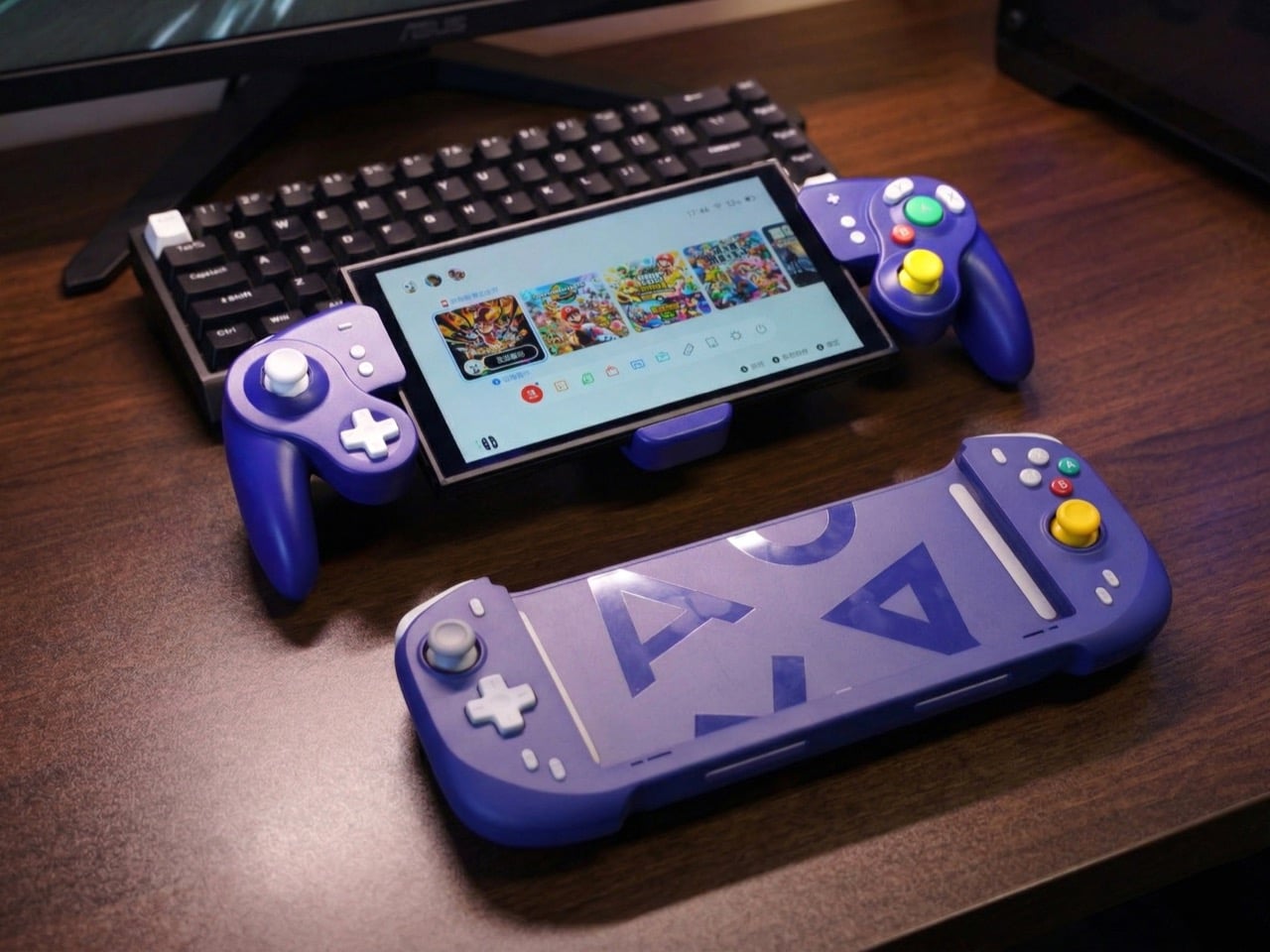
Abxylute’s answer comes in two forms: the N6 and the N9C, both deck-style controllers purpose-built for Switch 2 play. The N6 wraps the console in a full-size ergonomic grip with Hall-effect joysticks, native 9-axis motion control, a dedicated C Button for GameChat, and adjustable vibration levels the player can cycle through without leaving a session. The N9C leans into personality, drawing from GameCube design DNA with mechanical buttons, trigger switches, and a capacitive joystick system paired with swappable gates.

Designer: Abxylute

Click Here to Buy Now: $79 $110 (28% off) Hurry! Only 10 days left.

Joy-Cons were engineered for flexibility: detachable, shareable, usable solo or in pairs, functional as individual controllers for two-player sessions on a single console. That versatility comes at the cost of ergonomics, because a controller small enough to slide into a rail and function independently will never offer the grip depth, trigger travel, or palm support of something purpose-built for extended solo play. The N6 and N9C abandon that modularity entirely in favor of doing one thing exceptionally well, which is making handheld Switch 2 sessions feel like you’re holding a full-size controller instead of a tablet with thumbsticks glued to the sides. The tactile feedback is immediate and familiar, the kind of responsiveness you get from hardware designed around sustained single-player sessions rather than multi-function compromise. Both controllers connect via wired USB-C, skipping wireless pairing lag entirely, because when the target is solo handheld performance, eliminating variables takes priority over flexibility.

The N6’s open-top design is the first thing people will argue about online, and they’ll mostly be wrong. The Switch 2 stands over 11 cm tall, and a fully enclosed grip pushes that height further, putting your palms in the kind of awkward hover position that builds exactly the fatigue you were trying to avoid. Abxylute held the grip height at 8.5 cm, matching full-size controller proportions, so your palms have something to rest against rather than squeeze. The 7-inch grip width sits narrower than the console body deliberately, keeping your hands at a natural, relaxed spread instead of forcing them wide across a bulky frame. The physics of holding something for two hours straight are pretty straightforward, and this design reads those physics correctly.

Hall-effect joysticks solve a specific, measurable problem that standard potentiometer sticks fundamentally cannot. Potentiometer sticks use resistive contact that physically degrades over repeated use, which is why drift rates climb after a year or two of regular play. Hall-effect reads joystick position magnetically, with zero physical contact between moving components, and the N6 bumps the stick travel angle to 23 degrees compared to 18 degrees on Joy-Con, giving your thumbs more range for fine-grained inputs. A POM anti-wear ring around each stick handles mechanical stability without adding stiffness or noise to the movement. It’s a small detail, but the kind that separates purpose-built hardware from a generic controller with a different shell. On a device you use daily, that engineering choice compounds in your favor in a way that contact-based sticks simply never will.

Inputs across the N6 break down by material type, and the distinctions matter. ABXY buttons use conductive rubber for cushioned presses that reduce finger fatigue; the D-pad uses tactile switches for sharper directional accuracy; shoulder buttons deliver tactile clicks for faster responses in action-heavy play; and the linear digital triggers provide a genuine 0-100% input range rather than binary on/off clicks. That trigger range matters considerably in racing games and anything relying on gradual pressure inputs. Vibration adjusts at four levels, 0%, 40%, 70%, and 100%, switchable via button combo directly on the controller, bypassing the game-by-game settings adjustment that the Pro Controller requires. The grip’s internal structure forms a resonance chamber that redirects the Switch 2’s speakers forward and reinforces bass by around 10%, which you’ll register in a quiet room as fuller, punchier audio than bare Joy-Cons produce.

The N9C is doing something more niche and, honestly, more interesting. Where the N6 chases Pro Controller parity, the N9C chases the GameCube controller’s specific feel, complete with a centered A button and asymmetric face layout, rebuilt for a modern console using mechanical micro-switches and ALPS tactile shoulder buttons. Capacitive joysticks sidestep magnetic interference entirely, and the swappable 8-way and circular gate rings mean you can dial in a tight directional gate for fighters and swap to a smooth circular gate for platformers. A built-in battery hatch holds two replaceable batteries that reverse-charge the Switch 2 directly during play. Most grips on the market ignore battery life almost entirely, and a reverse charge system that powers the Switch 2 directly from the controller is a differentiator almost nothing else in this category offers.

The N9C carries four programmable rear buttons, two per side compared to the N6’s one per side, and each supports the same macro-recording system that chains directional inputs and actions into a single trigger. Switch 2 system-level button remapping works natively, requiring no third-party software, so a custom layout travels across every game without reconfiguring anything. An integrated rear stand sets the N9C apart from virtually every grip in this category, giving the Switch 2 a propped tabletop angle without relying on the console’s own kickstand. The primary connection is wired USB-C for ultra-low latency, with BLE available for configuration only, keeping the input chain clean during actual play. Every N9C ships with both C-stick and ring-style joystick caps in the box, so players can dial in the stick feel before the packaging hits the trash.

Mass production kicked off in March 2026, with shipping expected between April and June. Super Early Bird pricing runs $79 for the N6 (retail $110) and $89 for the N9C (retail $120), with a bundle sitting at $159. Nintendo’s own Pro Controller for Switch 2 retails at $79.99 and carries none of the Hall-effect sticks, programmable back buttons, or turbo functionality. Abxylute has shipped over 120,000 units across more than 20 projects to 100,000-plus customers, so the production infrastructure exists. What they’re solving for is specific: handheld Switch 2 play that performs at Pro Controller level without forcing players to accept the Joy-Con’s ergonomic ceiling as permanent.

Click Here to Buy Now: $79 $110 (28% off) Hurry! Only 10 days left.

The post A GameCube Controller on the Nintendo Switch 2? Meet Abxylute’s Deck-style Joy-Con Alternatives first appeared on Yanko Design.
À partir d’avant-hierFlux principal

This $130 Mario Kart Racing Wheel for the Switch 2 Has Seven Sensitivity Levels for Throwing Banana Peels

Par : Sarang Sheth
18 mars 2026 à 20:30

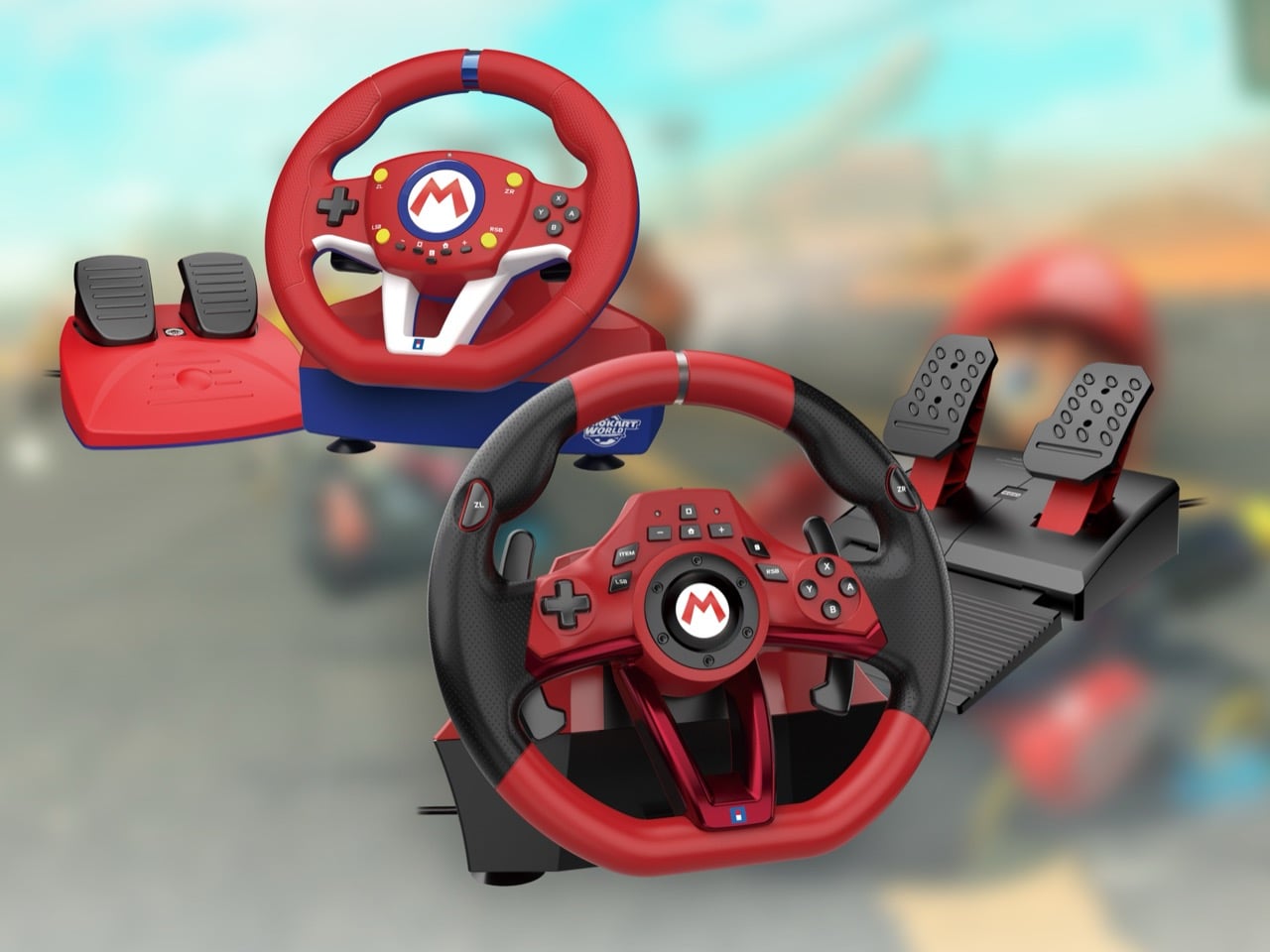
Nobody sits down to play Mario Kart and thinks “what this experience needs is a force feedback wheel, a pedal set, and a clamp-mounted desk rig.” And yet here we are, with Hori releasing two officially licensed racing wheels for the Switch 2, timed to launch alongside Mario Kart World on March 23. The Deluxe has an 11-inch wheel, a full pedal set, seven sensitivity levels, an adjustable dead zone, and a Quick Handling Mode that toggles steering output between 270 and 180 degrees. That last feature exists so you can more precisely navigate a rainbow-colored highway while a cartoon turtle throws a shell at you.

To be fair, the wheels look genuinely good. The Deluxe goes for a dark, almost aggressive red-and-black motorsport aesthetic, while the Mini leans fully into Mario’s red-blue-white color scheme with the Mario Kart World logo stamped on the base. Both add a C button for Switch 2’s GameChat, connect via a 9.8-foot USB-A cable, and work with the original Switch and OLED too. The Deluxe is $129.99, the Mini is $79.99, and both are available for pre-order now.

Designer: Hori

Click Here to Buy Now

The two wheels are closer in spec than the price gap suggests. Both have textured rubber grips, ZL and ZR buttons, racing paddles, programmable buttons, and the same ZL hold function that lets you drag items behind your kart in Mario Kart 8 Deluxe. That hold function is disabled in Mario Kart World, which handles item use differently, so if World is the primary reason you’re buying one of these, that particular feature is decorative. The Mini’s 8.6-inch wheel is smaller but not dramatically so, and for a game where precision steering matters about as much as knowing when to deploy a star, the size difference probably won’t register mid-race. Both also carry the Nintendo/PC toggle on the back, which is new to the Switch 2 versions and means you can run either wheel through a PC racing title if the Mario Kart novelty wears off.

The Mini, with its Fischer-Price aesthetic, attaches via suction cups only, which works fine on a smooth desk but becomes a liability if you’re the type to slam the wheel hard into a corner. The Deluxe, on the other hand, adds a physical clamp mount, a meaningful upgrade for anyone who takes their banana peel delivery system seriously. The dead zone adjustment and the 180/270 degree toggle are also Deluxe-only, and those matter more than they sound: dialing in the dead zone tightens center response considerably, and 180-degree mode makes the wheel feel snappier in arcadey conditions where full-rotation sim behavior would actively work against you.

The Deluxe reads like a peripheral that wants to be taken seriously, with perforated black leather-look grip material, metallic red spokes, and a fairly restrained button cluster around the center M logo. The Mini abandons that restraint completely: solid red rim, blue and white spokes, yellow accent buttons, Mario Kart World branding on the base. They’re aimed at different buyers within the same audience, and the visual split is deliberate enough that you wouldn’t mistake one for the other in a product lineup.

Both wheels connect over USB-A, which is worth flagging because the Switch 2 uses USB-C natively. You will need an adapter or a hub, and Hori ships neither in the box. The 9.8-foot cable is generous in length, but the connector mismatch is a friction point on a product designed specifically for a new console, and it’s the kind of thing that should have been sorted at the design stage rather than left to the buyer.

Hori has been the default answer for Switch racing wheels since the original console launched, and these Switch 2 versions do not reinvent that position. The older Switch wheels already work on the Switch 2, so this is really a product for new Switch 2 buyers rather than existing Hori customers looking to upgrade. For that audience, $79.99 for the Mini is a reasonable ask, $129.99 for the Deluxe is justified by the clamp mount and calibration options alone, and both are about as good as a wired USB wheel built around Mario Kart is ever going to get. Whether you need one is a separate question, but if you’re going to sit down with a dedicated racing rig to hurl banana peels at a go-kart driven by a plumber, at least Hori has given you two good ways to do it.

Click Here to Buy Now

The post This $130 Mario Kart Racing Wheel for the Switch 2 Has Seven Sensitivity Levels for Throwing Banana Peels first appeared on Yanko Design.

Nintendo Patented a Dual-Screen Switch and Never Made It. Here’s What It Looked Like.

Par : Sarang Sheth
10 mars 2026 à 20:45

Nintendo had a choice when designing the Switch 2. They could iterate on the formula that made the original a cultural phenomenon, refining the single-screen hybrid into a faster, sharper, better version of itself. Or they could reach back into their own history, pull out the design philosophy that once made the DS family the best-selling handheld hardware line of all time, and merge two eras of thinking into something genuinely new. They picked the first path. Designer Juan Manuel Guerrero just sketched out the second.

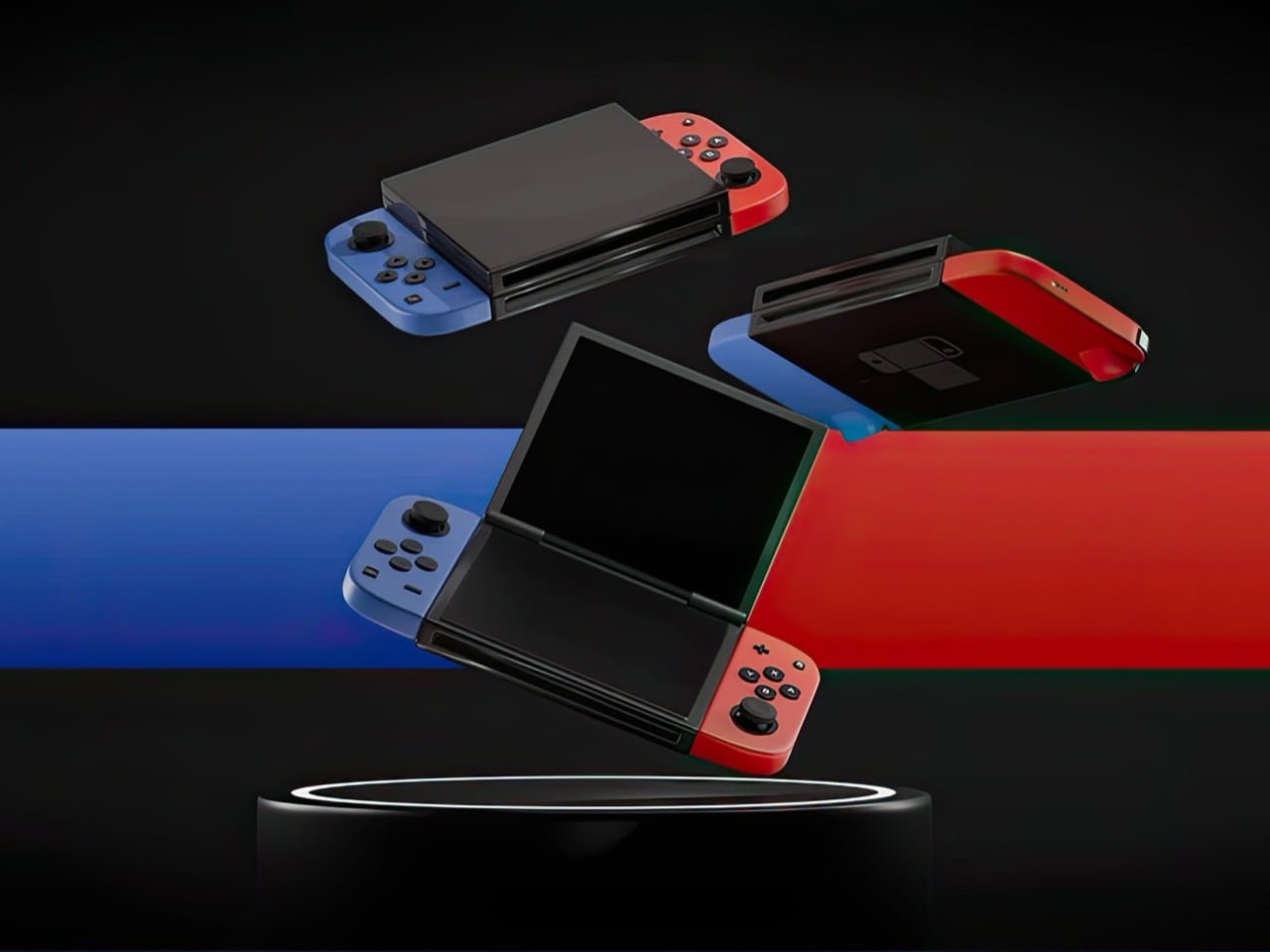
The concept arrives as a series of beautifully lit 3D renders: a folding Nintendo Switch with dual screens, a hinge running through the center of the body, and Joy-Cons in the familiar blue-red split attached to either end. The renders carry the finish of product photography, which makes it genuinely easy to forget this never shipped. Closed, it looks like a sleek, pocket-ready device with a tighter footprint than the original Switch. Open, it recalls something older and warmer, the quiet satisfaction of flipping a DS open on a long car ride, except now the screens are large, the controllers are proper, and the whole thing feels built for today. The proportions are deliberate, the design choices are considered, and the whole thing wears its Nintendo identity without apology.

Designer: Juan Manuel Guerrero

The Nintendo DS sat at 154.02 million lifetime units for years, the gold standard for Nintendo hardware, until the Switch finally crept past it in early 2026 with 155.37 million. Two hardware generations, both cultural touchstones, separated by fewer than two million units across a combined history of roughly three decades. The closeness of that race matters. The DS built those numbers on a genuine design idea, a spatial logic where two screens gave developers room for two distinct kinds of information at once, and players responded to that for fifteen years. Guerrero’s concept asks whether the Switch era ever had to leave that behind.

Phantom Hourglass let you draw on the bottom screen to annotate your own maps and solve puzzles, an idea original enough to win awards at the time. Pokemon Diamond and Pearl split the party menu from the battlefield, giving battles a spatial clarity the GBA never had room for. GTA: Chinatown Wars ran the full city map on the lower display and handed the top panel entirely to the action. These were designs built entirely around the format, dependent on the split in a way that made them fall apart on a single screen. That vocabulary has been sitting idle for the better part of a decade.

Samsung’s Galaxy Z Fold 6 runs a 7.6-inch interior display and represents the sixth generation of the company working foldable hardware into something genuinely reliable. Motorola, OnePlus, Google, and Huawei all have competitive entries in the space. Display durability and hinge reliability have been largely solved through successive product generations and real commercial pressure. A dual-screen Switch in 2025 wouldn’t be asking anyone to invent something new; the foldable category has already done the hard engineering work. Guerrero’s concept asks someone to point that already-mature technology at a gaming audience.

The DS touchscreen read as a toy gimmick in 2004. The Wii’s motion controls got laughed at before that console sold 101 million units. The Switch itself looked like a confused category play until it climbed past 155 million units and became Nintendo’s best-selling platform ever. That history of moves that look sideways before they land is the context Guerrero’s concept actually lives in. The foldable technology exists, the Joy-Con design language holds across both halves of the fold, and the IP is coherent. Someone drew it. Now it’s genuinely difficult to look at the Switch 2 without wondering what the other path could have looked like.

The post Nintendo Patented a Dual-Screen Switch and Never Made It. Here’s What It Looked Like. first appeared on Yanko Design.

Nintendo peut bannir votre Switch 2 à vie et vous devrez les supplier de vous pardonner

Par : Korben
21 décembre 2025 à 22:18

Y'a des fois où je me dis que certaines entreprises font vraiment tout pour qu'on les déteste. Et Nintendo vient de passer un cap dans le mépris de ses clients.

La Free Software Foundation vient de publier un article au vitriol sur les nouvelles conditions d'utilisation de la Switch 2. En fait, Nintendo s'arroge désormais le droit de rendre votre console "définitivement inutilisable en tout ou en partie" s'ils estiment que vous avez violé leurs conditions. Oui, vous avez bien lu... Vous achetez une console, vous la payez plein pot, et si Nintendo soupçonne que vous avez fait un truc qui leur plaît pas, ils peuvent vous bannir des services en ligne à vie. La console reste utilisable hors-ligne, mais bon courage pour jouer à quoi que ce soit de récent sans téléchargements ni mises à jour.

Et attendez, c'est pas fini car les motifs de bannissement sont d'une largeur hallucinante. Modifier votre console c'est ban, jouer à des jeux de backup c'est ban, utiliser une flashcart c'est ban. Et le pire : acheter un jeu d'occasion peut vous valoir un bannissement !! U n mec a acheté une cartouche sur une marketplace, et sa console a été bannie parce que le précédent proprio avait peut-être cloné le jeu. Certains ont quand même réussi à faire lever le ban en prouvant que leur achat était légitime, mais faut voir la procédure de zinzin... c'est à vous de prouver votre innocence, et surtout pas à Nintendo de prouver votre culpabilité.

Les conséquences peuvent donc être permanentes et sont liées à la console elle-même, et pas à votre compte. Plus d'eShop, plus de téléchargements, plus de mises à jour de sécurité, plus de jeux en ligne. Vos jeux numériques déjà téléchargés restent jouables hors-ligne, et ceux liés à votre compte peuvent être récupérés sur une autre console. Mais si vous revendez la console, le nouveau propriétaire héritera du ban. Sympa pour le marché de l'occasion.

D'ailleurs, quelqu'un a acheté une Switch 2 reconditionnée en pensant faire une bonne affaire... et s'est retrouvé avec du matériel parfaitement fonctionnel mais inutilisable pour les services en ligne et la plupart des jeux récents. Nintendo avait banni la console avant qu'elle soit remise en vente.

Le pire dans tout ça c'est que les conditions d'utilisation incluent une clause d'arbitrage obligatoire. Cela veut dire que vous renoncez à votre droit de poursuivre Nintendo en justice, de participer à un recours collectif, ou même d'avoir un procès avec jury. Il existe un opt-out dans les 30 jours suivant l'achat, mais qui lit vraiment les CGU d'une console de jeu ?

Heureusement, tout le monde n'accepte pas ces conneries puisque le Brésil vient d'ouvrir une enquête contre Nintendo car Procon-SP, l'organisme de protection des consommateurs de Sao Paulo, considère que cette politique viole les droits des utilisateurs à accéder aux services qu'ils ont payés. En Europe, le droit de la consommation offre aussi des protections que les Américains n'ont pas.

Bref, Nintendo continue de prouver qu'on peut faire des jeux exceptionnels tout en traitant ses clients comme des criminels, alors la prochaine fois que vous hésitez entre une Switch et une Steam Deck, pensez-y.

Source

Nintendo Switch 2 - Vos sauvegardes peuvent détruire votre console

Par : Korben
17 juin 2025 à 22:12

Vous pensiez que sauvegarder vos propres jeux était légal ? Que nenni car Nintendo a décidé que non, et maintenant ils peuvent carrément détruire votre Switch 2 à distance si vous utilisez une MIG flash cart.

Bienvenue dans le nouvelle ère du gaming totalitaire les amis ! Nintendo vient en effet de franchir une ligne rouge que même Sony ou Microsoft n’avaient jamais osé traverser : ils se donnent maintenant le droit de bricker définitivement votre console si vous ne respectez pas leurs règles. Et le plus fou dans l’histoire, c’est qu’ils peuvent le faire même si vous ne faites que jouer à VOS PROPRES jeux sauvegardés.

Nintendo Switch 2 - Le bug d'autonomie batterie confirmé !

Par : Korben
11 juin 2025 à 21:03

Vous n’en avez peut-être pas conscience, mais cette Nintendo Switch 2 que vous venez de déballer la semaine dernière pourrait bien vous mentir sur son niveau de batterie. C’est pas une blague, c’est Nintendo qui l’avoue dans un document de support officiel. Alors si vous avez l’impression que votre console se vide plus vite qu’un robinet qui fuit, y a peut-être une bonne nouvelle qui vous attend.

L’histoire commence comme ça… des joueurs râlent sur Reddit et ailleurs parce que leur toute nouvelle Switch 2 semble avoir une autonomie de misère. Certains rapportent que leur console affiche une batterie quasi vide alors qu’elle tient encore plusieurs heures de jeu. D’autres voient leur indicateur de charge faire n’importe quoi, passant de 90% à 20% en un claquement de doigts. Tout le monde avait l’impression d’halluciner jusqu’à ce que Nintendo finisse par reconnaître le problème et, Ô miracle, il y a des solutions !

❌
❌