Vue normale

Il y a de nouveaux articles disponibles, cliquez pour rafraîchir la page.
Aujourd’hui — 25 mars 2026Flux principal

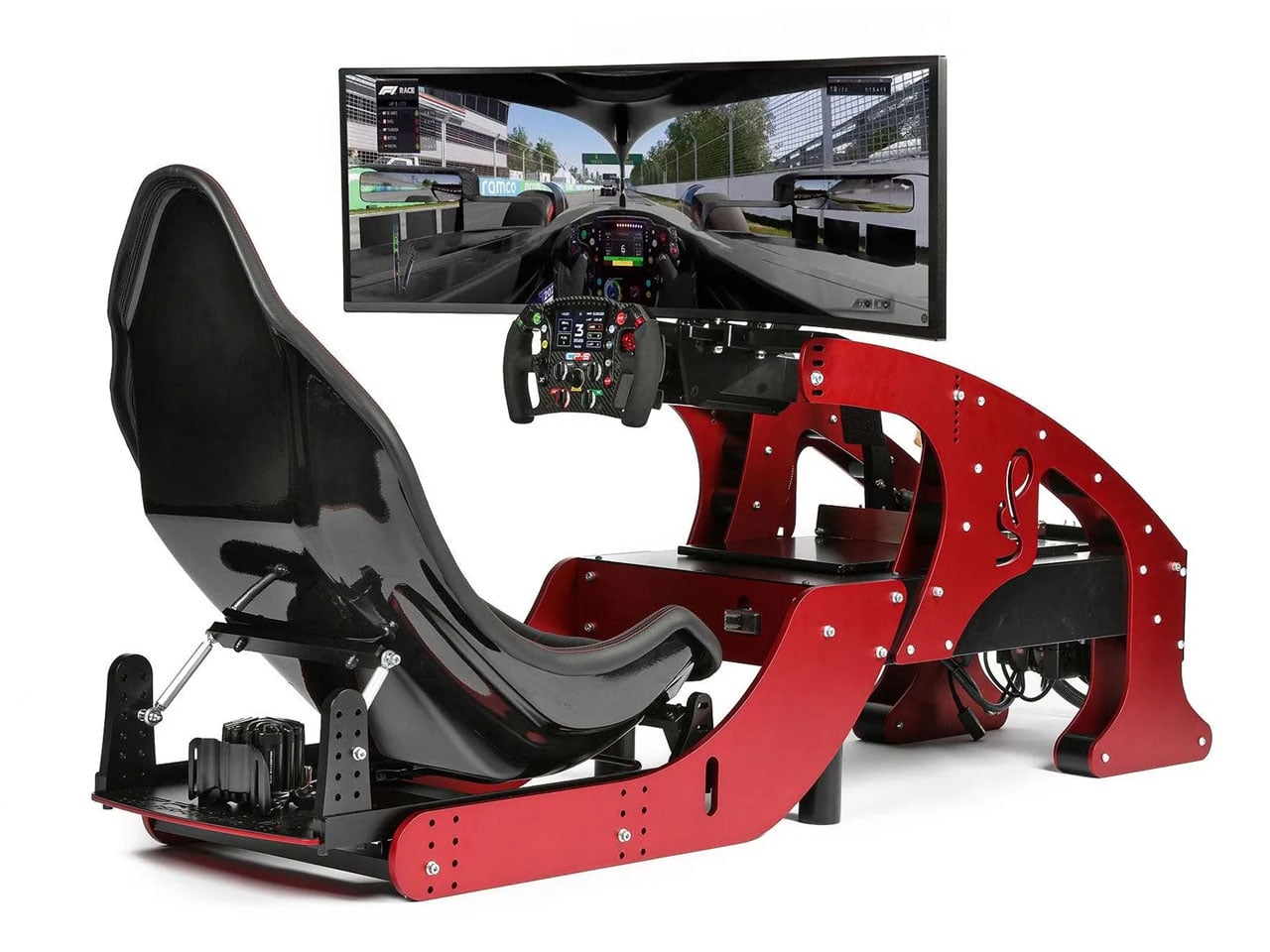
Formula Pro simulator with ultra-realistic controls emulates F1 racing fun in your living room

Par : Gaurav Sood
25 mars 2026 à 19:15

In the world of Formula-1 world championships are won by the slender margin of milliseconds that turn into big margins after every passing lap. The level of engineering in the pinnacle of Motorsports is unparalleled, and the drivers competing for the top podium step do every little thing that gives them a strategic advantage over their rivals.

Personal training is a part of the drill to stay in top shape, but the real deal is to polish the skills and gain telemetry data in the racing sims that very closely mimic the nuances of each track on the season calendar. With the hybrid era, the need for simulating the real track conditions has become even more important, given the metamorphosis this sport is undergoing.  A good simulator plays a vital role in giving the F1 and F2 drivers a fair idea of areas to improve, or develop strategic maneuvers that can be finally implemented on the track.

Designer: Cool Performance

With over two decades of motorsport experience and trusted by over 250 professional racers, Cool Performance now brings its most advanced F1 sim racer for professionals and motorsports fans. Current F1 drivers who train their driving skills on the Formula Pro Simulator include Lando Norris, Carlos Sainz, Sebastian Vettel and Alex Albon. Founder Oliver Norris has designed the simulator from the ground up with tons of experience in his own Motorsports journey and his brother Lando’s last couple of successful F1 seasons.

The professional-grade simulator has a precision-designed cockpit and race seat to recreate the realism of FPV in the single-seater racer. To simulate the nuances of a Formula -1 car riding the tarmac, the simulator has a high-torque force feedback steering and a Leo Bodnar SimSteering 2 base. This lets the sim racer feel every little bump of the chicane or the minute grip changes when the car is steered off the racing line. Braking in Formula 1 is way more challenging than your average SUV. That is mimicked by the CP-S hydraulic pedals with an AP Racing master cylinder support, which can simulate 200 kgs of braking force. For that, you’ll require immense strength in your core and lower body.

Every little detail of this F1 simulator is narrowed down to the last millimeter, much like the Formula 1 cars. Right from the highly technical CP-S Formula steering wheel that has virtually everything right at arms distance for the driver, to the CP-S custom hydraulic pedals, nothing gets better than the Cool Performance’s option. Clearly, if you want to feel the realism and the tiny details of Formula 1, this is it. Each one of the Formula Pro F1 simulators is custom-manufactured and tested by Oliver and Adrian Quaife-Hobbs in Kent, United Kingdom.

Eager buyers can opt for a single curved screen setup or a multiscreen array for better realism. If you are a purist, then the UK-based manufacturer can create a bespoke version of the sim to fit your specific needs. The Formula Pro simulator price starts from $40,950 and can go higher depending on the add-ons demanded or the bespoke modifications required.

The post Formula Pro simulator with ultra-realistic controls emulates F1 racing fun in your living room first appeared on Yanko Design.

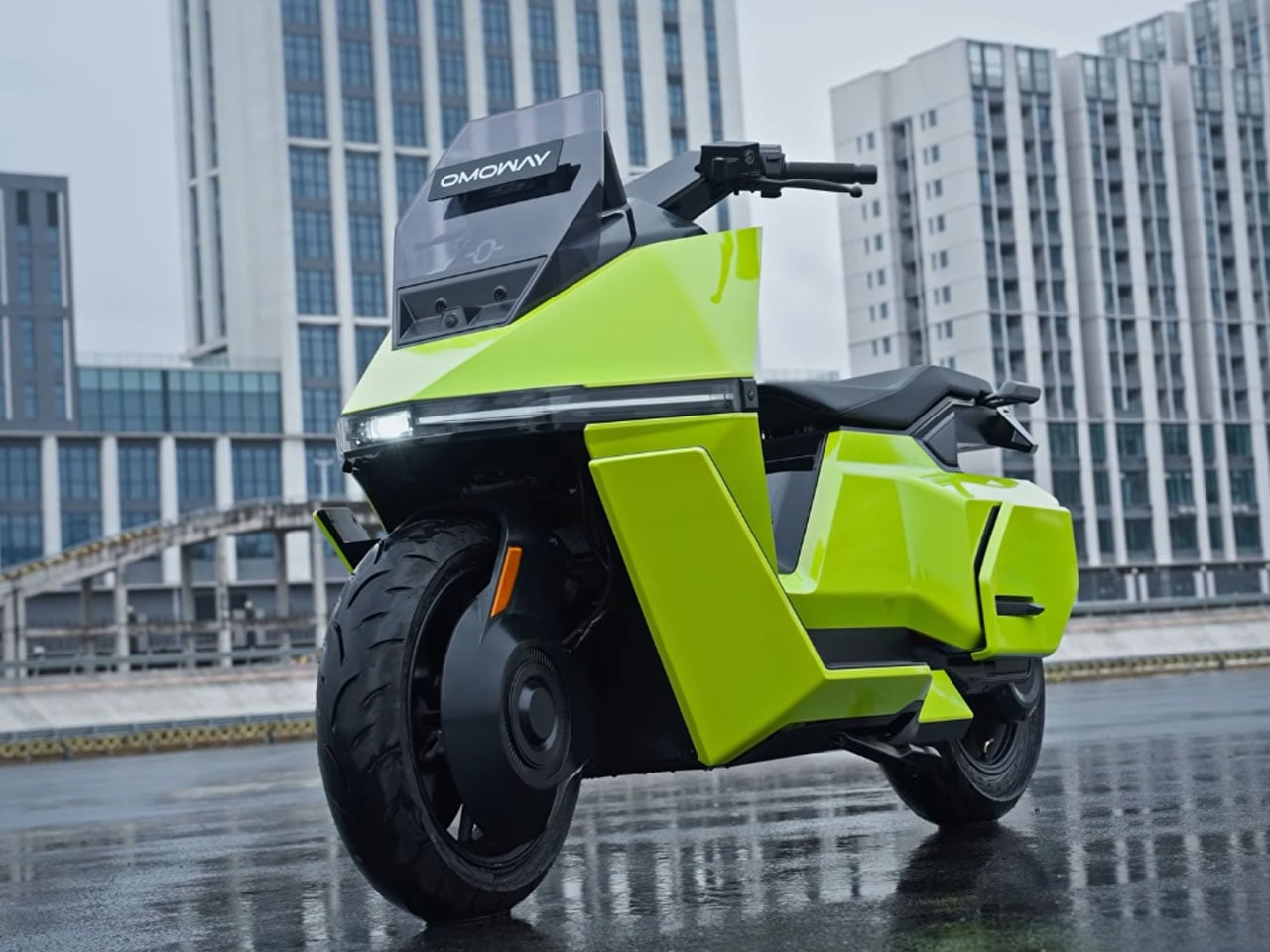
OMO X self-balancing electric scooter employs AI and Robotics to refresh urban riding experience

Par : Gaurav Sood
25 mars 2026 à 00:30

Two-wheelers have always demanded a certain level of skill and balance from riders, especially at low speeds or when navigating crowded city streets. OMO X by Omoway attempts to change that equation by introducing what the company describes as the world’s first mass-produced self-balancing electric motorcycle. Designed around advanced robotics and artificial intelligence, the new age electric bike blends traditional scooter convenience with autonomous technology that aims to make urban mobility easier and safer.

At the core of the two-wheeler is Omoway’s newly introduced OMO-ROBOT architecture, a full-stack control platform that integrates sensors, perception systems, decision-making software, and mechanical actuation into a unified framework. The system combines aerospace-grade gyroscope technology with reinforcement-learning models to continuously stabilize the motorcycle. This architecture allows the OMO X to maintain balance on its own, even when stationary, eliminating one of the biggest challenges riders face on two-wheeled vehicles.

Designer: Omoway

The balancing capability is achieved through a Control Moment Gyroscope (CMG) module. Using the principle of angular momentum, the spinning gyroscope actively stabilizes the vehicle, keeping it upright without rider input. Beyond simply preventing tip-overs, the system also supports a range of riding assistance features. These include slip prevention on wet surfaces, assistance while cornering, and obstacle-avoidance capabilities designed to enhance safety during everyday riding.

Omoway is also positioning the OMO X as a highly intelligent mobility device. The scooter incorporates a network of sensors and cameras that continuously monitor the surrounding environment and feed data into an AI-based riding system. This enables features such as adaptive speed adjustments, hazard detection, and automated safety responses if the system identifies a potential risk. Some demonstrations have even shown the scooter maneuvering on its own, driving onto a stage without a rider, and responding to remote commands through a smartphone app.

Another notable capability is automated parking. Instead of requiring riders to maneuver the bike into tight urban spaces manually, the OMO X can guide itself into a parking spot once a location is selected. The system relies on its self-balancing capability and onboard sensors to navigate safely, a feature that reflects the growing overlap between robotics and personal transportation.

The electric scooter’s futuristic design further reinforces its technological identity. Its sharp, angular styling and distinctive lighting signature give it a modern aesthetic that stands apart from traditional scooters. In a way, it carries the Tesla Cybertruck aesthetic, with a continuous front light bar replacing a conventional headlamp and creating a visually striking presence on the road.

Production plans for the OMO X are already underway. The company announced that the model has entered mass production following its global launch event in Singapore, with pre-orders expected to open in April 2026. Indonesia has been selected as the first launch market, where the electric scooter will debut commercially in Jakarta shortly afterward. Omoway is reportedly working with multiple regional distributors and plans to establish a dealer network of more than 100 locations in the country.

The post OMO X self-balancing electric scooter employs AI and Robotics to refresh urban riding experience first appeared on Yanko Design.

À partir d’avant-hierFlux principal

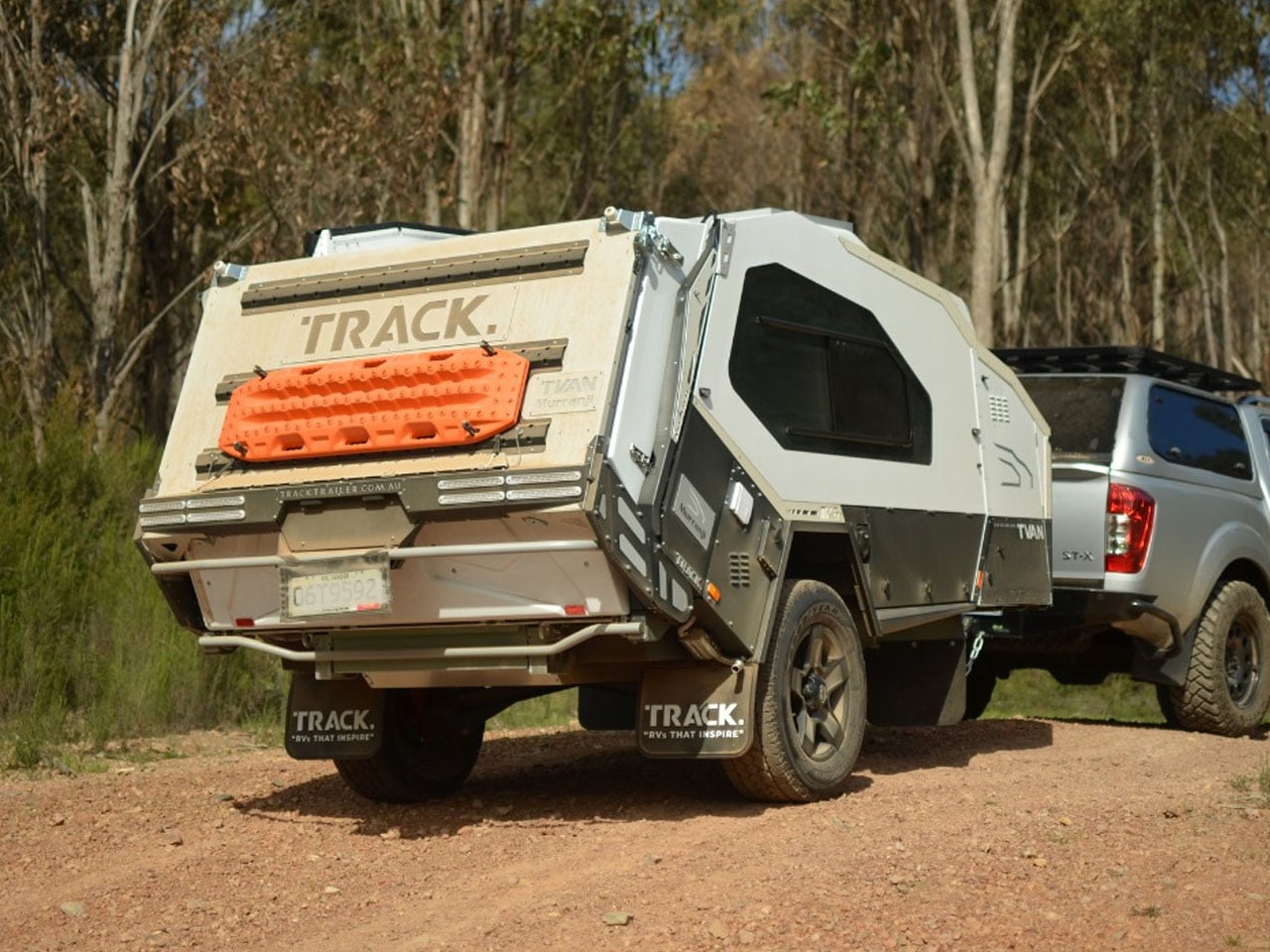
Track Trailer reinvents Tvan, one of the toughest off-roading trailers with roomier MK6 model

Par : Gaurav Sood
20 mars 2026 à 19:15

Track Trailer, the name behind the famous Tvan off-road camper trailers, needs little introduction. It has been powering the overlanding experience in Australia and worldwide for a good part of four decades now. Over the years, we have seen some interesting variants of the Tvan, which has now reached the MK6. The sixth iteration in the successful portfolio, Tvan MK6 Model, retains the same aluminum body, which runs in the bloodline, but is more spacious and even more comfortable.

As the appearance suggests, the new Tvan MK6 is available in four variants and is almost identical to its predecessors. What changes are the interior space and the headroom, which make the MK6 a different entrant in the same effective branding of the world’s toughest off-roading trailer.

Designer: Track Trailer

Track Trailer first tried reworking the interior space with the MK5 model. It was done staying within the confines of the Tvan styling: no pop-up roof attachment, but a slight raise in roof height. With the MK6, the company has also stayed true to its design ideology. It has only increased headroom, stretched the neck forward, and pushed the sides of the trailer outward to increase the interior space by up to 20%.

The expansion to the trailer permits more natural light inside the cabin, which is constructed using an aluminum sandwich-panel construction. Moreover, the MK6 features a durable chassis based on an advanced suspension system that enables it to roll comfortably on rugged terrains and off-road destinations. With its ruggedness assured, the camping trailer is ideal for all types of adventures, which is facilitated by its quick setup and clever storage designed throughout its exterior and also on the inside.

MK6 measures 16-foot-long and 6.3 feet wide, the trailer has an interesting storage cabinet in the extended nose up front, comprising a pantry and up to 95 liters fridge/freezer. Slightly further back is the slide-out kitchen with a three-burner gas stove, a full-size sink connected to a 108L fresh water tank, and a storage drawer topped with a prep area.

The most interesting part of the MK6 camping trailer is the rear hatch design. It features Track Trailer’s patented Skyward Lift Up Deck, which combines the hatch and the hard-floor deck. The electric lock system allows the two to lift up in unison for quick and direct access into the living space of the trailer. Just when you need it, a tent can be attached to the trailer to increase the living quarters.

Inside is a double bed surrounded by large windows and overhead and sidewall storage. LED lighting and dual roof hatches complete the design. Since the MK6 is available in four variants, each is designed differently for off-the-grid living. The entry-level Inspire features a 125Ah lithium battery that draws energy from a 200W rooftop solar panel, while a 350W inverter takes care of the power backup. Firetail accommodates a pair of 125Ah batteries, a 2000W inverter, and some premium features in the kitchen.

Tvan MK6 Murranji adds a 200W solar panel to the Firetail setup, but leaves out the inverter. The top-of-the-line, Lightning, on the other hand, comes with a 500Ah battery. It features a 2,000W inverter and a 360W solar panel to complete its all-electric setup. Each of these models can have further upgrades with add-ons like awnings and more. MK6 starts at AU$69,900 (approximately $50,000) with the mentioned amenities.

The post Track Trailer reinvents Tvan, one of the toughest off-roading trailers with roomier MK6 model first appeared on Yanko Design.

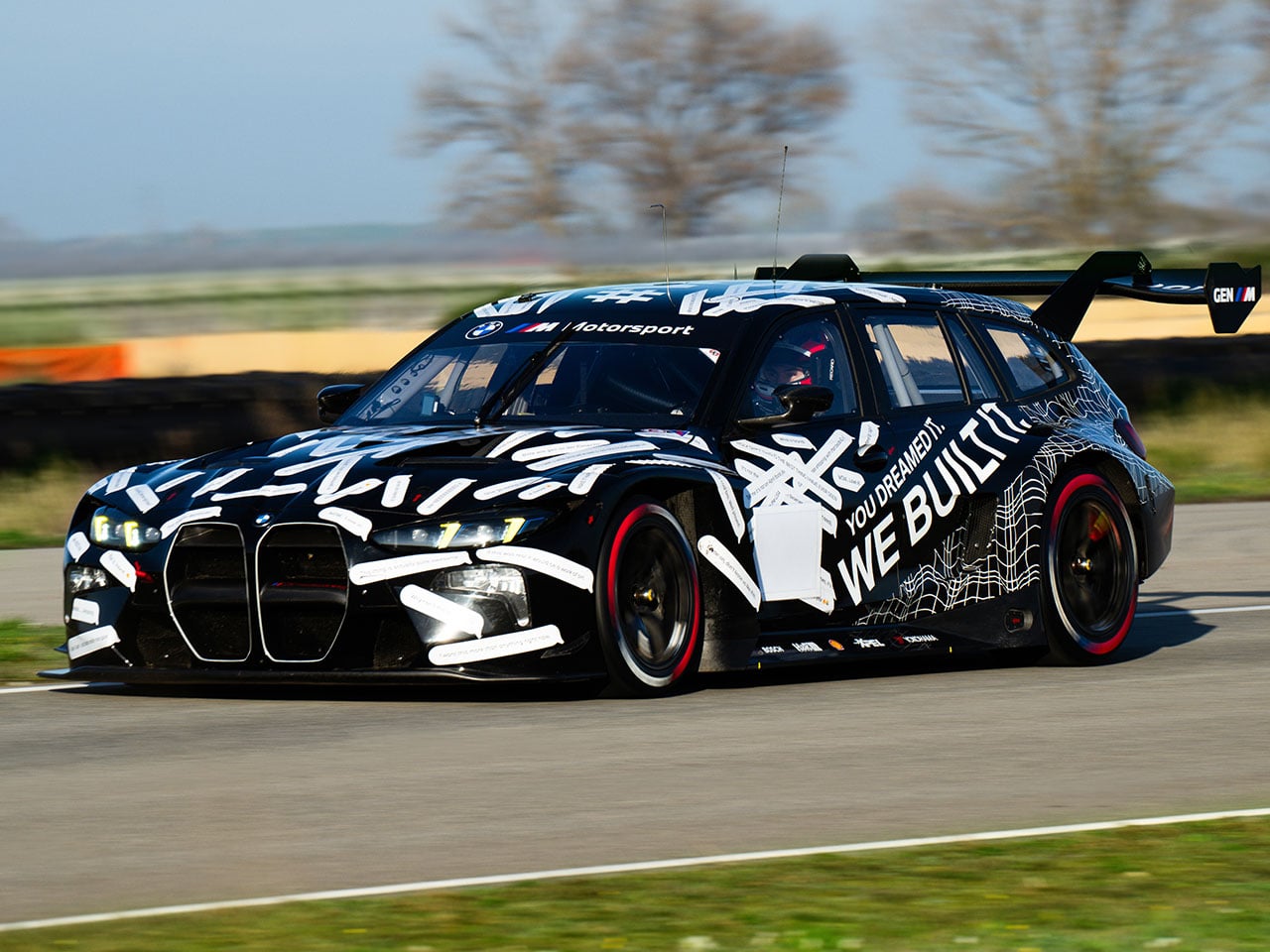
BMW turns 2025 April Fools’ joke into a Nürburgring-bound M3 touring race car

Par : Gaurav Sood
18 mars 2026 à 15:20

What began as a playful internet prank has evolved into a genuine motorsport project. The racing version of the BMW M3 Touring 24H will compete at the legendary 24 Hours of Nürburgring in 2026, turning an April Fools’ joke into a unique moment for endurance racing. Built by BMW M Motorsport, the car will take on the infamous Nürburgring Nordschleife (often called the “Green Hell”), bringing a wagon body style (rarely seen in modern motorsport) to one of the world’s most demanding circuits.

The idea originated on April 1, 2025, when BMW shared images of a supposed race-ready M3 Touring on social media as part of its annual April Fools’ tradition. The concept depicted a full-blown GT-style race car based on the performance wagon, complete with aggressive aerodynamic components and racing livery. While initially intended as a joke, the reaction from fans was overwhelmingly positive. Enthusiasts embraced the idea of a high-performance wagon competing on the track, prompting BMW engineers to explore whether the concept could become reality.

Designer: BMW Group

That fan enthusiasm ultimately led to the creation of the BMW M3 Touring 24H, a competition-ready machine developed specifically for endurance racing at the Nürburgring. The car is scheduled to make its racing debut at a round of the Nürburgring Langstrecken-Serie (NLS) before appearing at the 24-hour race itself in May 2026. The event will mark a rare sight in modern motorsport: a long-roof station wagon battling alongside purpose-built race cars in one of the world’s toughest endurance competitions.

Visually, the M3 Touring 24H transforms a practical family wagon into a striking track weapon. The bodywork incorporates wide fenders, a deep front splitter, aerodynamic side panels, and a large rear wing mounted above the tailgate. A racing diffuser and enlarged air intakes help optimize airflow and cooling during long stints on track, while the overall stance mirrors the aggressive proportions of BMW’s GT race cars. The familiar Touring silhouette remains intact, giving the car a distinctive appearance that blends practicality with pure racing performance.

Although detailed technical specifications for the race version remain limited, the project draws inspiration from the performance credentials of the road-going BMW M3 CS Touring. That high-performance wagon uses a 3.0-liter twin-turbocharged inline-six engine producing around 543 horsepower and 650 Nm of torque, paired with an eight-speed transmission and BMW’s M xDrive all-wheel-drive system. The result is a wagon capable of accelerating from 0 to 62 mph in about 3.5 seconds and reaching a top speed of approximately 186 mph.

The Nürburgring itself has long been central to BMW M’s development and racing activities. The 12.9-mile circuit features more than 70 corners and dramatic elevation changes, making it one of the most challenging tracks in the world. BMW M vehicles have achieved numerous successes there over the years, including multiple victories in the 24-hour race, reinforcing the brand’s deep connection to the track. The debut of the BMW M3 Touring 24H represents more than just a novelty. It highlights how fan enthusiasm and digital culture can influence real-world automotive projects, especially when a playful idea resonates strongly with enthusiasts.

When the M3 Touring 24H lines up on the grid at the Nürburgring in 2026, it will stand out among the field not only for its unusual body style but also for the story behind its creation.

The post BMW turns 2025 April Fools’ joke into a Nürburgring-bound M3 touring race car first appeared on Yanko Design.

This $99 Water Jet Remotely Cleans Your Car’s Backup Camera Without You Leaving Your Seat

Par : Sarang Sheth
14 mars 2026 à 01:45

Reverse driving accounts for just 1% of all driving time, yet it’s responsible for roughly 25% of all accidents. A dirty backup camera in winter, mud season, or on dusty country roads is not a hypothetical inconvenience but a genuine safety liability, one that most drivers have resigned themselves to either living with or solving by stepping out of the car every time. Mike Klein, a Vermont-based tinkerer with a characteristically no-nonsense approach to annoying problems, got fed up enough to build a solution in his garage. What started as a Ziploc-bag-and-zip-tie prototype strapped to his license plate has turned into the Lens Lizard, a compact, self-contained, remote-controlled backup camera washer that just hit Kickstarter and has absolutely run away with its funding goal.

The concept is beautifully blunt. Lens Lizard mounts behind your license plate, sandwiched discreetly between the plate and the bumper using your car’s existing screw holes. No drilling, no wiring, no running tubing through door gaps or under trim panels. The whole install takes under five minutes with a standard screwdriver, and once it’s on, it’s invisible. The unit itself houses a fluid reservoir, a battery pack, and a high-pressure nozzle that you aim at your camera once during setup and then never have to touch again. When your backup camera gets caked in snow/ice or road salt on a grey January morning, or buried under a slush splatter from the truck overtaking you on a Vermont highway, you press a wireless remote button from inside the car and a jet of washer fluid blasts the lens clean. Sort of like a lizard or a chameleon striking its prey with a sharp, swift flick of its tongue. Except this time, it’s a concentrated jet of soapy water. Maybe a Pokémon reference would work better but I don’t want Nintendo’s lawyers sending me a cease and desist.

Designer: Mike Klein

Click Here to Buy Now: $99 $149.99 ($50.99 off) Hurry! Only 5 days left.

The engineering philosophy here is aggressively practical. Klein explicitly designed the Lens Lizard for Vermont winters, which means sub-zero temperatures, aggressive road salting, heavy snow, and the kind of freeze-thaw cycling that destroys lesser materials. The housing is sealed and built from automotive-grade materials, and the battery and fluid reservoir are sized to last four-plus months between refills and recharges, meaning you top everything up roughly once per season.

Maintenance is a non-event: open the latch, refill with washer fluid, charge via USB-C, close it back up. Klein’s origin story is worth noting too, because it gives the product a satisfying internal logic. He tried hydrophobic lens covers (they peeled), ceramic coatings (they did essentially nothing), and eventually decided to just build a scaled-down windshield washer system for his license plate. The first prototype was, by his own admission, ridiculous. But it worked, and that was enough to tell him the idea had legs.

Lens Lizard works with any vehicle where the backup camera sits above the license plate, which covers 99% of cars on the road, pickup trucks very much included. The product ships with assorted license plate screws to handle different fastener sizes, and the adjustable nozzle lets you dial in the spray angle for your specific camera position during initial setup. After that, the unit lives its entire life tucked behind the plate, completely out of sight. The wireless remote is puck-shaped and lives wherever you keep it in the cabin, a glove box, a cupholder, the center console.

The Lens Lizard starts at just $99 for the entire kit as an early bird discount off its $149 price tag. A dual bundle costs $189 if you’ve got two cars, and all bundles include the Lens Lizard unit, a wireless remote, a battery pack, and an assortment of screws to help you install the gizmo on your car. Given its specific design (and that every nation has a different license plate), the Lens Lizard only ships to the US and Canada for now, although I’m sure a more universal version is in the works. Production is slated to begin in April 2026, with shipping to backers planned for May. For drivers in cold-weather states, high-dust regions, or anywhere that sees serious road grime, it’s a hard value proposition to argue with. Certain premium vehicles have had integrated camera washers for years, quietly tucked into the bumper plumbing. Klein has simply figured out how to give everyone else the same result for under a hundred bucks, no dealer visit required.

Click Here to Buy Now: $99 $149.99 ($50.99 off) Hurry! Only 5 days left.

The post This $99 Water Jet Remotely Cleans Your Car’s Backup Camera Without You Leaving Your Seat first appeared on Yanko Design.

Caterham Seven HWM Edition celebrates British racing heritage with a limited-run lightweight sports car

Par : Gaurav Sood
11 mars 2026 à 00:30

Few sports cars have preserved the spirit of lightweight performance quite like the Caterham Seven. With its minimalist design and uncompromising focus on driving purity, the model has remained one of the most authentic expressions of classic British motoring. Now, the British manufacturer has introduced a special variant that celebrates a lesser-known but historically important racing story. Developed in collaboration with Hersham and Walton Motors (HWM), the Caterham Seven HWM Edition pays tribute to the small British team that once challenged Europe’s best on the Grand Prix stage.

HWM was founded in 1938 and built a reputation in the early post-war years as a determined independent racing constructor. Its most famous machine was the 1951 HWM-Alta single-seater, which achieved several international race victories and podium finishes during an era dominated by far larger teams. The car also played a role in motorsport history by giving legendary driver Sir Stirling Moss an early Formula 1 appearance. By creating the Seven HWM Edition, Caterham and HWM are celebrating that underdog spirit and the shared heritage of two British brands deeply rooted in racing culture.

Designer: Caterham and HWM

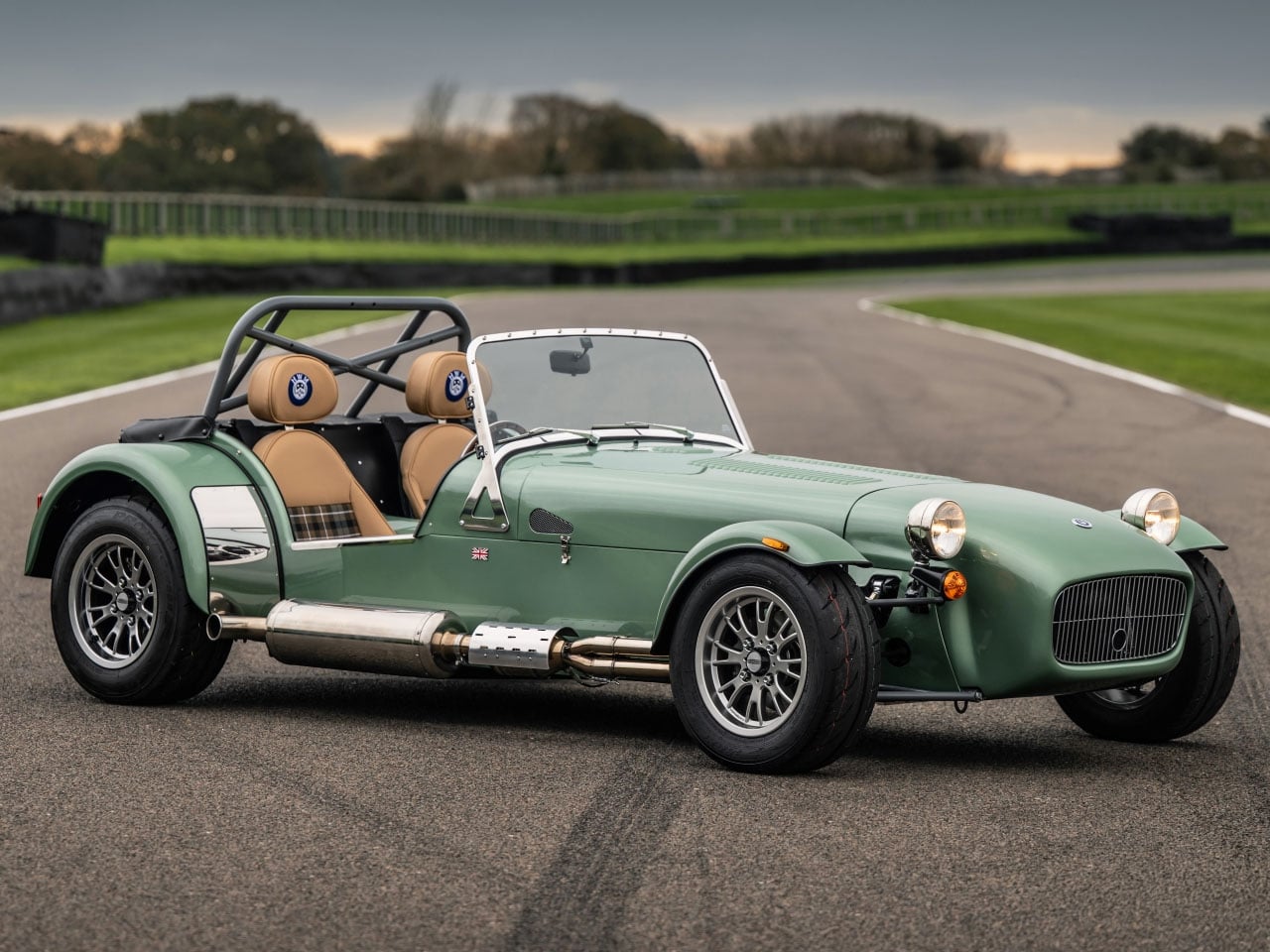
The limited-run model is inspired by the original HWM-Alta racer. Only 19 examples will be produced for the UK market, mirroring the exclusivity of historic racing specials and emphasizing the handcrafted nature of Caterham’s vehicles. Each car is finished in a distinctive HWM Green paint, a color digitally matched to the original 1951 race car. Exterior detailing reinforces the historical connection, with Alta-inspired side panel louvres, a bespoke nosecone grille, and suspension components such as the wishbones, anti-roll bar, and headlight brackets finished in Retro Grey. A centrally mounted chrome fuel filler cap and a special HWM Caterham nosecone badge further distinguish the model.

Inside the cockpit, the retro theme continues with a focus on craftsmanship and period-correct design cues. The dashboard features a hand-turned aluminum SuperSprint panel fitted with classic SMITHS chrome dials and a solid metal master cut-off switch. Drivers interact with the car through a polished wooden Moto-Lita quick-release steering wheel, while chrome-finished controls for the gear lever and handbrake add to the vintage racing aesthetic. The body-colored transmission tunnel enhances the bespoke feel, and buyers can choose between leather-trimmed seats or lightweight composite racing seats embroidered with the HWM logo. A numbered plaque on the passenger side of the dashboard marks each vehicle as “1 of 19,” underscoring its rarity.

Despite its historic inspiration, the Seven HWM Edition remains a thoroughly modern performance machine. The car is based on the Caterham Seven 420 platform and is powered by a naturally aspirated 2.0-liter Duratec four-cylinder engine producing around 210 horsepower. Paired with a five-speed manual gearbox and driving the rear wheels, the lightweight sports car delivers an impressive power-to-weight ratio of roughly 375 horsepower per ton. As a result, it can accelerate from 0 to 60 miles per hour in just 3.8 seconds and reach a top speed of approximately 136 miles per hour.

Prices for the Caterham Seven HWM Edition start at £57,990 (approximately $78,000), positioning it as an exclusive offering for enthusiasts who value both heritage and pure driving engagement.

The post Caterham Seven HWM Edition celebrates British racing heritage with a limited-run lightweight sports car first appeared on Yanko Design.

Transformers-inspired Shapeshifting Machine Splits Into An Entire Road-Construction Robot Fleet

Par : Sarang Sheth
18 février 2026 à 23:30

Road construction has a complexity problem. Getting a stretch of road built in a remote region, a disaster zone, or difficult terrain typically means coordinating multiple heavy machines, multiple skilled operators, and a logistical chain that can collapse at any point. Yan Zhang and Jialu Hou, two designers from Shandong University of Art and Design, spent several months in 2024 working on a concept that treats all of that complexity as a design challenge worth solving from scratch.

The result is PaveLink, an autonomous modular road-building system that arrives as a single articulated electric train and deploys into a coordinated fleet of AI-guided construction robots on site. One system. One delivery. A drone overhead, autonomous modules on the ground, and an intelligent command hub managing all of it in real time.

Designers: Yan Zhang and Jialu Hou

The truck head is a blocky, panoramic-windshield command center with a drone launch platform built right into the roof. When PaveLink reaches its target location, that drone lifts off first, ascending to map the terrain using aerial sensors and streaming data back to the cab in real time. The drone itself is worth a second look: shaped like a swept-back arrowhead with a multi-rotor configuration, it looks aggressive and purposeful in the air, matching the amber and gunmetal black palette of the ground units working below it.

Four distinct unit types detach from that spine: a front-loader with a wide scoop bucket, an excavator arm for breaking ground, a grader for leveling, and a heavy steel drum compactor for finishing the surface. On their own, each unit looks almost insectoid, riding on two or three fat rugged wheels with articulated limbs that flex and angle across uneven ground. Together, working in coordinated parallel, they turn what would normally require a crew of operators and days of staging into something that functions more like a synchronized performance.

All the modules stay tethered to the system via cables, which serve double duty as power lines and data channels. PaveLink runs fully electric, so there’s no diesel cloud hanging over the operation, and the continuous cable connection means the modules never need to stop and recharge independently. The drone keeps feeding updated terrain data overhead, flagging hazards and fine-tuning the AI’s workflow decisions as ground conditions change.

PaveLink is aimed squarely at the places traditional road construction struggles most: disaster-hit zones, remote regions with no skilled operators, and rugged terrain that conventional machinery can’t navigate efficiently. The modular autonomous approach answers all three problems at once. Fewer humans in harm’s way, fewer separate machines to transport in, and an AI coordination layer that adapts to whatever chaotic ground conditions it finds on arrival.

The post Transformers-inspired Shapeshifting Machine Splits Into An Entire Road-Construction Robot Fleet first appeared on Yanko Design.

2026 Mercedes-Benz Marco Polo camper van arrives with smarter pop-up roof and luxury upgrades

Par : Gaurav Sood
18 février 2026 à 21:30

Mercedes-Benz and Volkswagen have produced some of the best camper vans on the market, and they’ve long shared a common collaborator. Now, with Mercedes-Benz taking the complete production of its Marco Polo under its wings, Volkswagen and other competitors can expect some serious competition. The newly updated 2026 Marco Polo is the first new addition to Mercedes in-house van life portfolio and flaunts an interesting pop-up roof, which is its main talking point.

According to Mercedes-Benz press information, the body of the V-Class Marco Polo is built at the company’s Vans plant in Vitoria, Spain. The vehicle is then converted into a pop-up camper van at the Ludwigsfelde plant in Germany. The overall in-house production of the Marco Polo means it’s of the “highest quality standard” and that the company has complete control over every detail and pace at which it is produced.

Designer: Mercedes-Benz

Substantiating the fact, Sagree Sardien, head of sales & marketing Mercedes-Benz Vans said, it is a “Mercedes-Benz through and through,” which is designed to offer buyers a more sophisticated home on wheels. “A home that effortlessly combines travel and everyday life – while making a stylish statement,” he said.

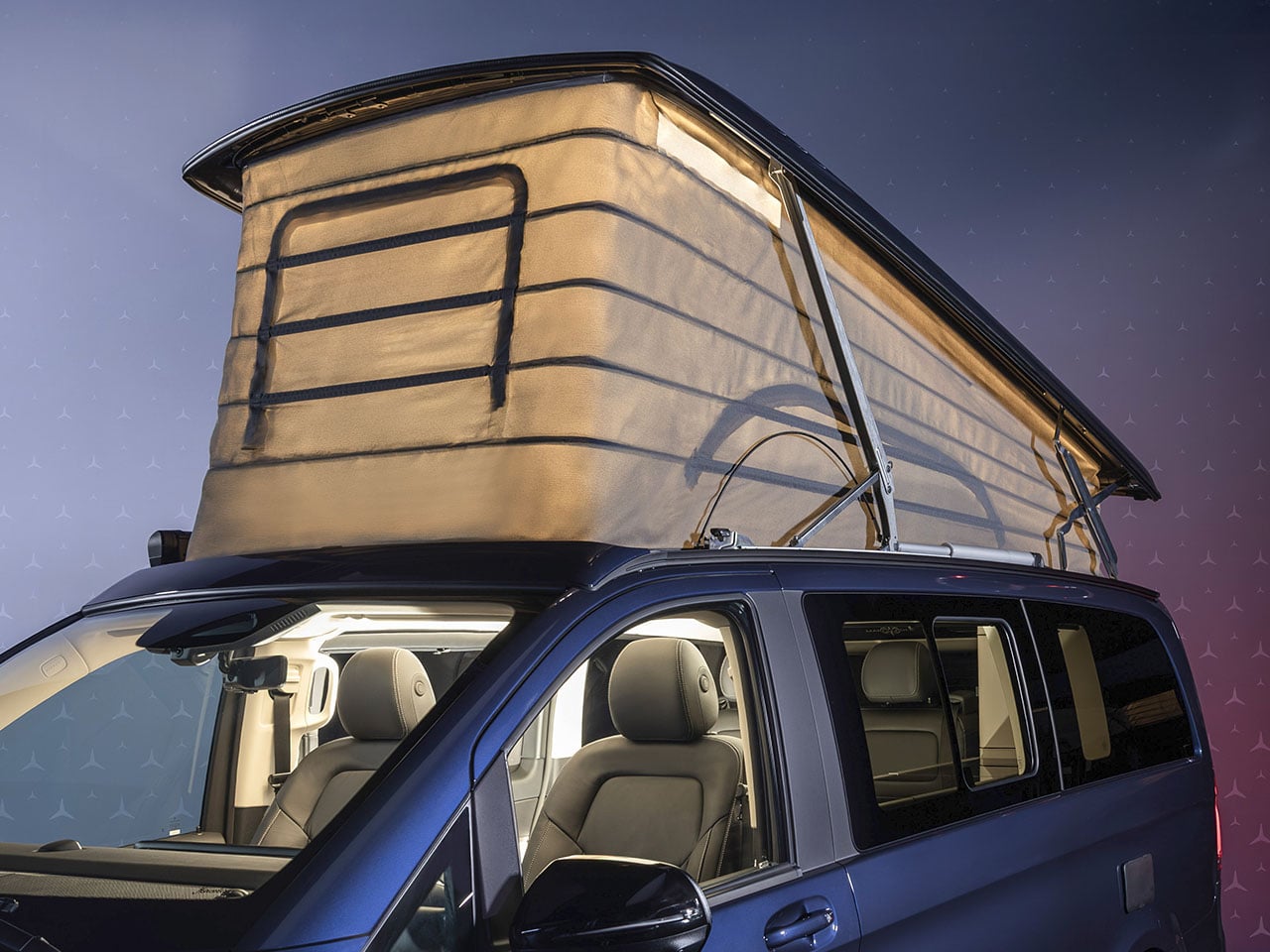
To that accord, the Mercedes-Benz 2026 Marco Polo is a compact, luxury camper van featuring a pop-up roof, convertible downstairs seating, kitchen, and ambient lighting to uplift the mood when you’re inside the van. The major update from the 2024 model of the van is focused around the improvement to the lifting roof space. The double-skinned aluminum pop-top makes for an additional 4 inches of headroom and is provided with an ambient LED system that allows the space to feel lively and inviting.

Downstairs, the Marco Polo doesn’t make many changes. It comes equipped with a kitchen featuring double burner gas stove, a sink, mini fridge, and a swiveling bench that can easily facilitate dining and sleeping. During mealtime, you have a folding table that reaches out of the kitchen block, and during the night it folds up to make room for the convertible sofa to create a double bed.

MBAC infotainment suite is another interesting facet of the new Mercedes camper van. Sitting in the cockpit, the smart touchscreen can control the interior components like the vehicle’s upgraded eight-speaker audio system and pop-up roof lighting. The infotainment system also has instant control to pop-up roof. You can deploy or retract the lifting roof remotely, while also maintaining the temperature of the van home.

The new Marco Polo will be available to order soon, Mercedes notes. It also mentions in the press release that the launch of Marco Polo Horizon is also on the cards. This model shares similar features except for the built-in kitchen unit, making it suitable for weekend outings or short holidays only.

The post 2026 Mercedes-Benz Marco Polo camper van arrives with smarter pop-up roof and luxury upgrades first appeared on Yanko Design.

Donkervoort P24 RS is a counterpunch build for drivers who crave raw speed

Par : Gaurav Sood
3 février 2026 à 17:20

Dutch manufacturer Donkervoort has been handcrafting lightweight performance cars for purists since 1978, and their creations do stand out. The Lelystad-based automaker has all eyes rolling with yet another limited-edition sports car that looks inspired by the clown shoe design that BMW perfected in the 90s.

The newly unveiled car is ultra-agile thanks to the weight reduction achieved by shaving off components like the skid-control, torque-vectoring, or automatic brake-assist. It doesn’t even have power steering, and gives buyers the option to skip the air conditioning unit for weight reduction, making it the ideal fit for raw purists who want to feel every little change happening in the driving dynamics. According to company CEO Denis Donkervoort, “The key to everything we do is about eliminating weight, minimizing inertia, and delivering unforgettable driving experiences.”

Designer: Donkervoort

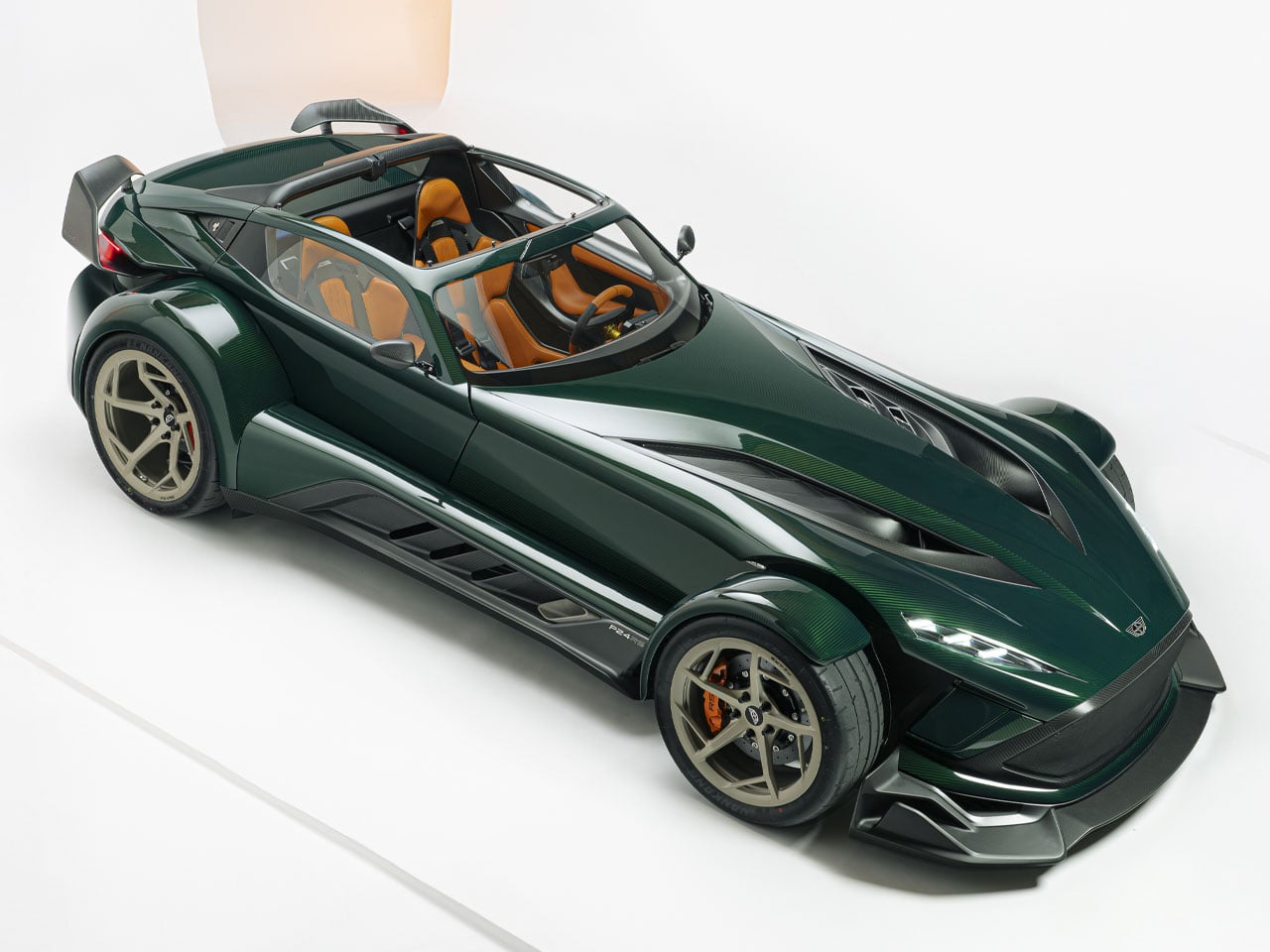
The Donkervoort P24 RS two-seater analogue supercar that looks like an Aston Martin DB12 with a long hood up front and exposed wheels. Straight out of the Hot Wheels world, the performance car packs a 3.5-liter twin-turbocharged V6 engine delivering 600 horsepower and 590 pound-feet torque. The power-to-weight ratio is high, given the car weighs 2,204 pounds, literally making it a road-legal race car on the streets. The driver can toggle the horsepower via the Power to Choose technology with three different outputs: 00, 500, or 600hp. That means 770hp per ton power-to-weight ratio at the highest settings, something similar to the mighty Bugatti Chiron.

Body components of the P24 RS are made out of carbon fiber and the in-house developed Ex-Core material, which is a combination of foam and carbon fiber. That explains the uniquely shaped body panels that are more flexible yet highly durable to take on the stresses at high speeds. Purists can attach two wings at the rear and a deep front spoiler to enable 198 pounds of downforce at speeds of 155 mph to keep the car glued to the tarmac and maneuver the track with maximum stability. Those cheeky Aero Blade headlights also fold away behind the grille when not in use to maximize airflow, assisting in peak performance at high speeds during daylight. The optional aero package can be easily removed and stored inside the 290 liters boot when not needed.

The interiors are as good as the exterior with matching colored leather trims for the steering wheels, doors, and the gear shifter. Carbon fiber inserts flow down to the inside of the dashboard as well as the side panels to keep the weight down while not compromising on the theme. The racing DNA is apparent in the bucket seat design that only misses one thing: a secure roll cage. The roof can be removed in no time to feel the thrill of speed. Not much has been detailed by the maker about the specific material choices, but it is for everyone to see.

Only 150 examples of the Donkervoort P24 RS will be made, out of which 50 have already been booked by customers in the U.S., Europe, and the Middle East. Deliveries are slated for the April timeline, with the starting price tag set at 298,000 Euros (approximately $354,000). The lightweight driver-focused supercar is a clear manifestation of Denis’ belief that “no supercar is worth the weight.”

The post Donkervoort P24 RS is a counterpunch build for drivers who crave raw speed first appeared on Yanko Design.

This $175 Bike Stand Finally Solved Our Garage Storage Mess

Par : Ida Torres
1 février 2026 à 16:23

If you own a bike, you’ve probably played the garage Tetris game at least once. You know the drill: your bike leans against a wall, falls over at 2 AM with a crash, or blocks the path to literally everything else you need. It’s the kind of everyday design problem that makes you wonder why nobody’s come up with something better.

Well, someone finally has. British industrial designer George Laight created the Flip, a freestanding bike stand that’s so cleverly designed, it makes you question why we’ve been settling for wall hooks and pulley systems all this time.

Designer: George Laight for BikeStow

The origin story is pretty relatable. Laight was studying Product Design Engineering at Loughborough University when he hit a wall, literally and figuratively. He had a bike and a tiny student flat with a strict no-holes-in-the-walls policy. Vertical storage made the most sense for his cramped space, but he couldn’t use traditional wall-mounted solutions without losing his security deposit. So he did what any frustrated design student would do: he invented his own solution.

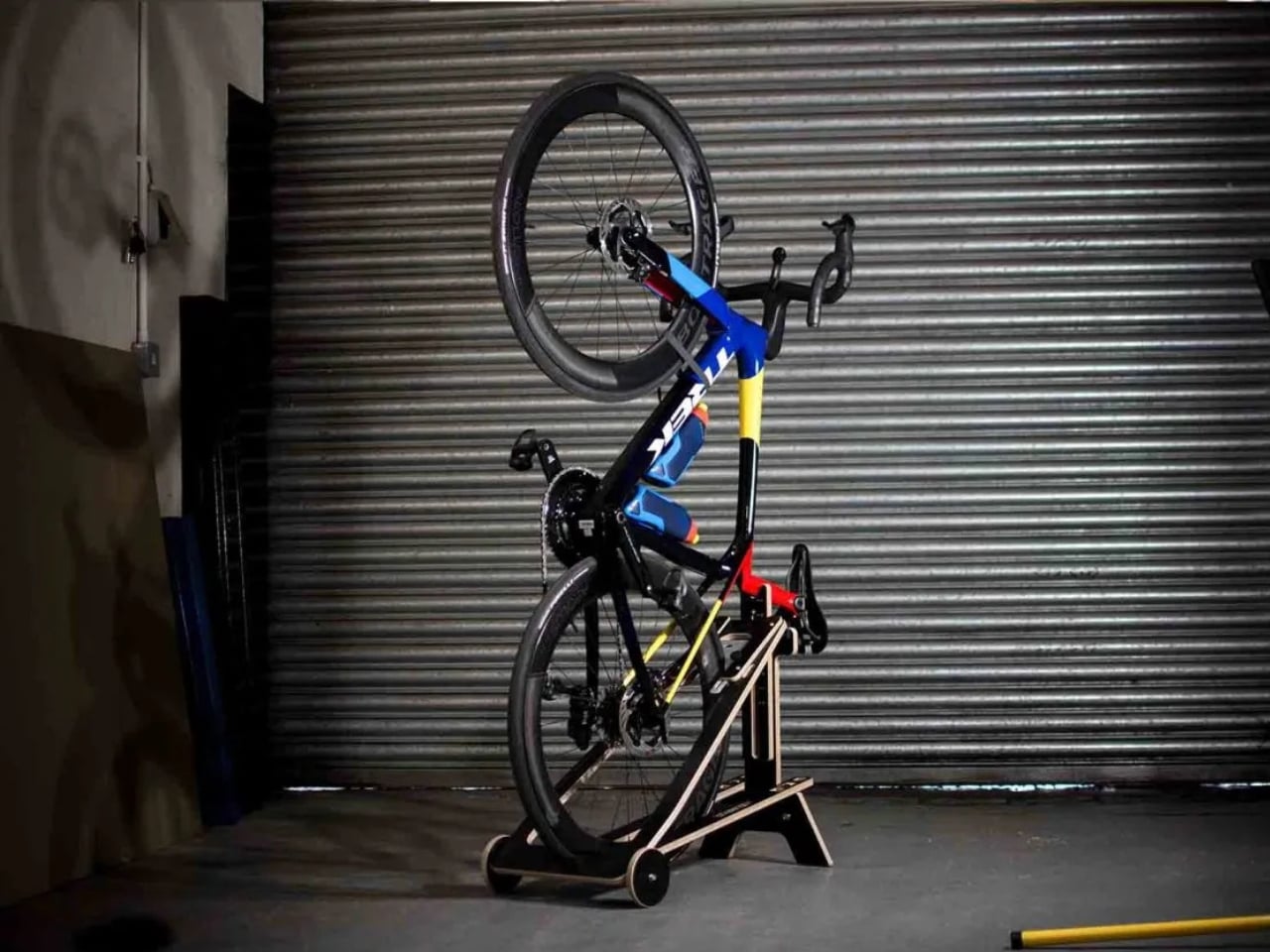
The Flip is essentially a portable bike stand with wheels that lets you store your bike vertically or horizontally, depending on what works for your space. The genius is in its flexibility. Unlike fixed storage solutions that require you to commit a specific area of your garage or apartment to bike storage forever, the Flip rolls around wherever you need it. Cleaning out the garage? Wheel it aside. Reorganizing your storage shed? Move it in seconds. It’s bike storage that adapts to your life instead of demanding you work around it.

Here’s how it works: you roll your bike into the stand while it’s in the horizontal position, then rotate it upright if you want vertical storage. There’s a slider mechanism that locks the bike in place, keeping it stable in either orientation. The wheels on the base make maneuvering surprisingly easy, even in tight spaces. And when you’re not using it at all, the entire stand folds flat for storage.

That last feature is particularly brilliant for anyone dealing with limited space. Heading out on a bike trip and your bike won’t be home for a week? Fold the stand flat and tuck it away. Living in a city apartment where every square foot counts? Same deal. The Flip essentially disappears when you don’t need it, which is more than you can say for permanent wall hooks or ceiling-mounted systems.

The stand is made from plywood, giving it a clean, modern aesthetic that doesn’t look out of place in contemporary homes. Customer reviews consistently mention that it’s attractive enough to display openly, whether you’re storing your bike in a hallway, office, or living space. One reviewer specifically noted that they’re “more than happy to have it on display in the office, with or without a bike in it.”

The Flip works with pretty much any bike you throw at it: road bikes, mountain bikes, electric bikes, even fat bikes with tires up to five inches wide. Multiple stands can be nested close together if you’ve got a household with several bikes, creating an organized parking area that doesn’t devolve into the usual tangled-handlebars chaos.

At around $175, it’s not the cheapest bike storage option out there, but it’s also significantly more versatile than a basic wall hook. BikeStow backs it with a two-year warranty and includes a custom Restrap securing strap to keep your bike stable. Customer ratings sit at a perfect five stars, with reviewers praising both its functionality and build quality.

Most bike storage solutions fall into two categories: cheap and flimsy, or expensive and permanent. The Flip occupies an interesting middle ground. It’s well-made and thoughtfully designed, but it doesn’t require you to drill holes in your walls or dedicate a chunk of your home to bike storage forever. It’s the kind of practical, human-centered design that solves a real problem without creating new ones.

For anyone tired of tripping over their bike or playing storage Tetris every time they need garage space, the Flip offers a refreshingly simple solution. Sometimes the best designs aren’t revolutionary, they just make everyday life a little bit easier.

The post This $175 Bike Stand Finally Solved Our Garage Storage Mess first appeared on Yanko Design.

2025 Lexus IS 500 F SPORT Performance Review: Designing Space for a V8 in an Electrified World

21 décembre 2025 à 16:20

PROS:


  • Linear V8 response - Naturally aspirated powertrain delivers tactile throttle connection

  • Rear wheel drive architecture - Traditional chassis balance in an AWD-dominated segment

  • Cohesive visual identity - Flare Yellow package unifies exterior and interior design

  • Mechanical limited slip - Torsen differential enhances predictable corner exits

  • Daily performance tuning - Comfort-biased chassis suits real-world use

CONS:


  • Dated infotainment - Interface feels a generation behind modern rivals

  • Fuel economy penalty - Significant consumption costs for daily driving

RATINGS:

AESTHETICS
ERGONOMICS
PERFORMANCE
SUSTAINABILITY / REPAIRABILITY
VALUE FOR MONEY

EDITOR'S QUOTE:

An unapologetic design preserves mechanical joy while others chase efficiency.

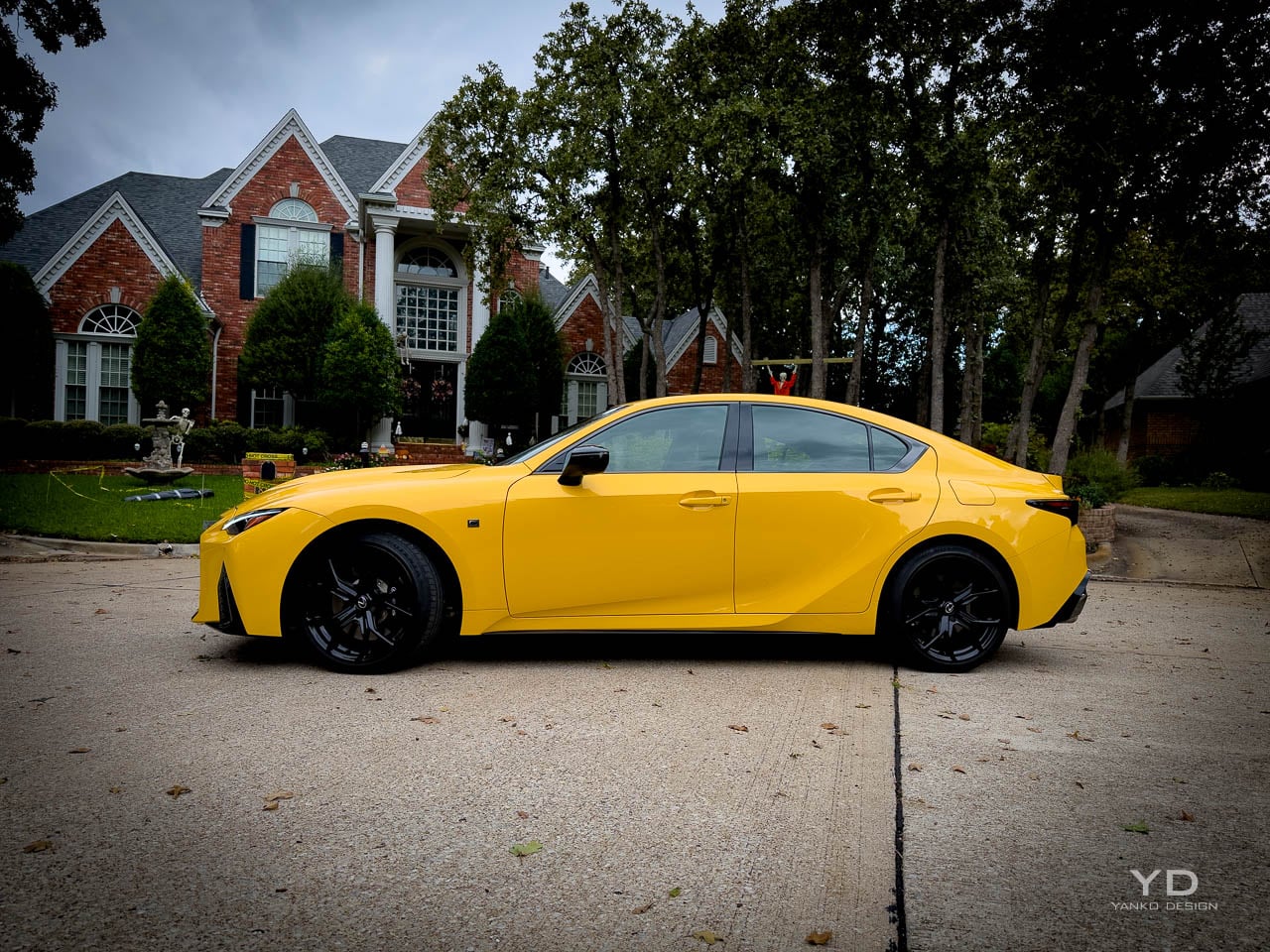
Flare Yellow bodywork catches parking garage fluorescents like a warning flare. Quad exhaust tips broadcast displacement before you turn the key. The 2025 Lexus IS 500 F SPORT Performance Premium arrives unapologetic while most luxury sedans in 2025 spend their energy explaining away downsized engines and turbocharger compromises. In a market segment that has largely abandoned both of those choices, this combination reads less like a product strategy and more like a design philosophy made physical. The sedan occupies a strange position: compact luxury dimensions wrapped around powertrain architecture that most competitors retired years ago. That tension between contemporary shell and analog holdout defines every interaction with the car, from the first ignition cycle to the hundredth highway merge.

Designer: Lexus

Flare Yellow is not simply a paint option here. Lexus positions it as a complete appearance system, bundling 19 inch black forged alloy wheels, Ultrasuede interior inserts with yellow stitching, matching seatbelts, illuminated door sills, and coordinated floor mats. The color becomes a unifying thread that connects exterior surfacing to cabin touchpoints, transforming what could be a single aesthetic choice into an integrated material language. At $4,050 for the package, the investment purchases coherence rather than mere visibility.

Exterior Form Language

Aggression arrives through geometry rather than applied decoration. The spindle grille dominates the frontal view, its lattice pattern creating depth and shadow that shifts with viewing angle and ambient light. Triple beam LED headlamps flank the grille, their layered optical elements suggesting technical complexity even at rest. The overall stance sits low and wide, with wheel arches that fill their openings without the exaggerated flaring that characterizes some performance variants.

Moving rearward, the roofline descends in a continuous arc that terminates at a ducktail spoiler integrated into the trunk lid. Quad exhaust tips emerge from the rear diffuser, their stacked arrangement serving as the primary visual signal of the V8 beneath. The proportion relationship between greenhouse and body mass reads as deliberately compact, the cabin volume compressed relative to the sculptural surfaces surrounding it. This creates the impression of a machine built around its mechanical core rather than a passenger compartment with propulsion attached. The 19 inch wheels and aggressive fender surfacing work to visually manage nearly 4,000 pounds, making the car read lighter and wider than the scales suggest.

Interior Material Hierarchy

Inside, tactile engagement takes priority over digital spectacle. NuLuxe trimmed seats provide the primary contact surface, their bolstering firm enough to communicate sport intent without creating discomfort during extended use. The Ultrasuede inserts in the Flare Yellow package introduce texture variation that catches fingertips differently than the surrounding synthetic leather, establishing a sensory hierarchy across the seating surfaces.

The steering wheel arrives wrapped in leather with a heated element, its rim diameter and grip circumference calibrated for hands that expect direct mechanical feedback. Aluminum pedals replace the standard rubber units, their knurled surfaces providing positive purchase under aggressive inputs. Satin trim accents break up the interior darkness, creating visual rhythm without the reflective distraction of polished chrome.

The Mark Levinson audio system occupies the acoustic environment with authority. Its 17 speakers deliver the kind of spatial imaging that justifies the premium trim designation, filling the cabin with presence that matches the V8’s mechanical drama.


The interface through which that system operates represents the cabin’s most significant temporal artifact. A 10.3 inch touchscreen accepts finger input but also responds to a trackpad controller mounted on the center console, a legacy interface element that creates immediate friction. Reaching for the screen to tap a climate shortcut feels natural until you remember the trackpad exists; defaulting to the trackpad means dragging a cursor across a surface designed for touch. Two design eras compete on the same console, and neither fully wins.

Powertrain as Sensory Design

Numbers tell part of the story: 472 horsepower at 7,100 rpm from a 5.0 liter V8. What matters more is how that power arrives. Natural aspiration means throttle response arrives without the intervention of turbocharger spool, creating a direct relationship between pedal position and acoustic output. The engine announces its presence through a broadband exhaust note that builds intensity with engine speed, the quad tips providing the exit path for a sound that functions as the car’s primary experiential feature.

The sprint to 60 arrives in the mid four second range, figures that place the IS 500 behind several turbocharged competitors on paper. The gap narrows in lived experience because the V8 delivers its power in a linear curve rather than a turbocharged surge, allowing the driver to modulate output with precision that boost dependent systems struggle to match. The eight speed automatic transmission shifts cleanly in sport mode, though it lacks the dual clutch immediacy that defines the segment’s sharper offerings.

Rear wheel drive completes the mechanical architecture, a configuration increasingly rare in this segment where all wheel drive has become the default assumption. The Torsen limited slip differential, a helical gear system that transfers torque mechanically rather than through electronic intervention, manages power distribution to the rear axle. Its purely mechanical operation provides predictable behavior at the adhesion limit, sending power to whichever wheel has grip without the response lag of clutch pack systems. Exiting a tight corner under throttle, the result is smooth, progressive traction rather than the sudden electronic clamp of stability nannies fighting for control. Adaptive suspension and upgraded brakes with enhanced cooling address the chassis requirements of the additional powertrain mass, though these systems tune toward comfort rather than track aggression.

Dynamic Compromise

Nearly 4,000 pounds announces itself the moment the road curves. The IS 500 weighs approximately 3,973 pounds in tested configuration, mass that reveals its presence during direction changes and hard braking. Push beyond street driving limits and understeer arrives predictably, the front tires reaching their grip threshold before the rear can rotate the chassis. The steering provides adequate weight but filters road texture in ways that prioritize refinement over information density. These are characteristics of a car tuned for daily use rather than weekend autocross, a calibration choice that aligns with the comfort of the seats and the isolation of the cabin.

The brake pedal requires calibration of expectations, its initial travel soft before building resistance. This tuning prioritizes smoothness during traffic deceleration but reduces confidence during aggressive threshold braking. Stability control intervention arrives earlier than competitors allow, limiting the exploration of chassis dynamics even when the driver seeks that engagement.

On a fast two lane road at seven tenths, the character clarifies. The V8 pulls cleanly out of corners while the chassis absorbs mid corner bumps that would unsettle lighter, stiffer competitors. Push harder and the front washes wide, but within the envelope of spirited street driving, the balance feels deliberate rather than deficient.

These compromises reflect a deliberate design decision: Lexus tuned for the commute, not the canyon. That calibration disappoints enthusiasts seeking sharper responses but serves the owner who wants to live with a V8 daily. The IS 500 prioritizes living with the V8 rather than extracting its maximum potential, a choice that makes the powertrain accessible across driving contexts rather than demanding specific conditions for enjoyment.

Value Positioning and Market Context

At $69,539 as tested, including destination and the Flare Yellow appearance package, the IS 500 positions itself against both four cylinder luxury sedans and more focused performance machinery. The competitive landscape has shifted around this car: BMW offers turbocharged inline sixes, Mercedes deploys electrified four cylinders, and Alfa Romeo provides sharper dynamics at similar price points. Against this field, the IS 500 competes on differentiation rather than specification superiority.

Fuel economy penalties are explicit and substantial. The EPA rates the powertrain at 17 mpg city, 25 highway, and 20 combined, figures that translate to approximately $3,200 in annual fuel costs. Over five years, that adds roughly $6,500 more than average. Environmental ratings land at 4 out of 10 for both fuel economy and smog, reflecting the consequences of maintaining natural aspiration while competitors optimize for regulatory compliance.

The value proposition depends on what the buyer prioritizes. Powertrain character over lap times. Exhaust note over efficiency. Mechanical simplicity over technological sophistication. For those criteria, the IS 500 delivers experiences its competitors have abandoned. The car exists because Lexus chose to preserve something rather than optimize everything.

Design Intent Realized

As a design object, the IS 500 F SPORT Performance Premium prioritizes a specific experience over balanced capability. The naturally aspirated V8 in rear wheel drive configuration represents a powertrain topology that market forces are eliminating, preserved here in a package refined enough for daily use. Flare Yellow demonstrates how color can function as a design element rather than a decorative choice, unifying interior and exterior into a coherent material statement.

Limitations and character prove inseparable. The weight that softens handling also supports the sound deadening that makes the V8 a companion rather than an assault. The infotainment system that frustrates also maintains the physical controls and clear hierarchy that digital native interfaces have abandoned. Fuel consumption that punishes the wallet finances the displacement that creates the acoustic experience.

Assembled in Tahara, Japan, the IS 500 wears a five star safety rating from NHTSA across all categories. It arrives as a complete product rather than a work in progress. Its design intent is preservation: holding space for a powertrain philosophy while the industry accelerates toward electrification. Whether that intent justifies the compromises depends on what the buyer believes is worth keeping alive. That Flare Yellow paint catching light in a parking garage announces the same thing the V8 announces at redline: this machine refused to apologize. For the driver who values mechanical tactility over interface novelty, the IS 500 answers a question the rest of the segment stopped asking.

The post 2025 Lexus IS 500 F SPORT Performance Review: Designing Space for a V8 in an Electrified World first appeared on Yanko Design.

Tern Vektron e-bike folds in seconds, deftly navigates crowed spaces

Par : Gaurav Sood
1 décembre 2025 à 16:20

Folding e-bikes have steadily evolved into genuinely capable daily commuters, offering riders a practical blend of compact storage and everyday usability. As cities grow denser and more people turn to mixed-mode travel, the demand for bikes that are easy to store, carry, and ride has never been higher. This shifting landscape sets the stage for Tern’s latest update to its well-known Vektron lineup.

The upgrade to Tern’s Vektron series shows how far folding e-bikes have come in combining portability with real everyday performance. Designed for riders who need a compact bike that doesn’t compromise on power, comfort, or practicality, the 4th-generation Tern Vektron models build on the brand’s established reputation for reliable urban mobility while introducing meaningful upgrades that improve the riding experience.

Designer: Tern

At the core of the new Vektron folding e-bike is a Bosch Performance mid-drive motor that delivers up to 75 Nm of torque and smooth, responsive pedal-assist. It pairs with a 545-Wh battery integrated into the frame, delivering a range of up to about 75 miles under light assist conditions. The motor and battery work with Bosch’s Smart System, allowing riders to access ride data, navigation, and system customization through a connected smartphone, and giving the bike optional GPS-based security features.

The 4th-generation P5i configuration brings one of the most practical changes to the lineup: a Gates Carbon Drive belt system paired with a 5-speed Shimano Nexus internally geared hub. This setup runs quietly and requires minimal maintenance, making it well-suited for riders who frequently fold and store their bike in tight indoor spaces. For those who prefer a wider gear range or a sportier feel, the Vektron is also available as the P10, equipped with a traditional 10-speed derailleur drivetrain. The frame uses hydroformed 6061 aluminum and Tern’s reinforced OCL+ hinge, ensuring that the bike remains stable even under the increased torque of the updated Bosch motor. It folds in under 10 seconds into a compact structure that fits easily into car trunks, office corners, elevators, and public transport. When folded, it can stand upright or roll, adding convenience for commuters moving through tight or crowded spaces.

Designed to accommodate a broad range of riders, the cockpit includes an adjustable stem and a telescopic seat post suitable for user heights between approximately 4’10” and 6’5″. Wide 20-inch Schwalbe Big Apple tires soften rough pavement and enhance stability, while Magura hydraulic disc brakes handle braking with consistent control, even in wet conditions. For daily commuting, the Vektron includes a rear rack rated for roughly 60 lb of cargo, full-coverage fenders, integrated lighting, and compatibility with additional front-mounted accessories. These practical features allow it to function as a full-fledged urban transporter capable of replacing short car trips and handling mixed-mode travel. The P5i model comes at a price of $4,099, and the P10 variant costs $3,699 with shipping in North America commencing from December 2025.

The post Tern Vektron e-bike folds in seconds, deftly navigates crowed spaces first appeared on Yanko Design.

This solar powered motorcycle never needs charging for true energy independence

Par : Gaurav Sood
18 novembre 2025 à 22:30

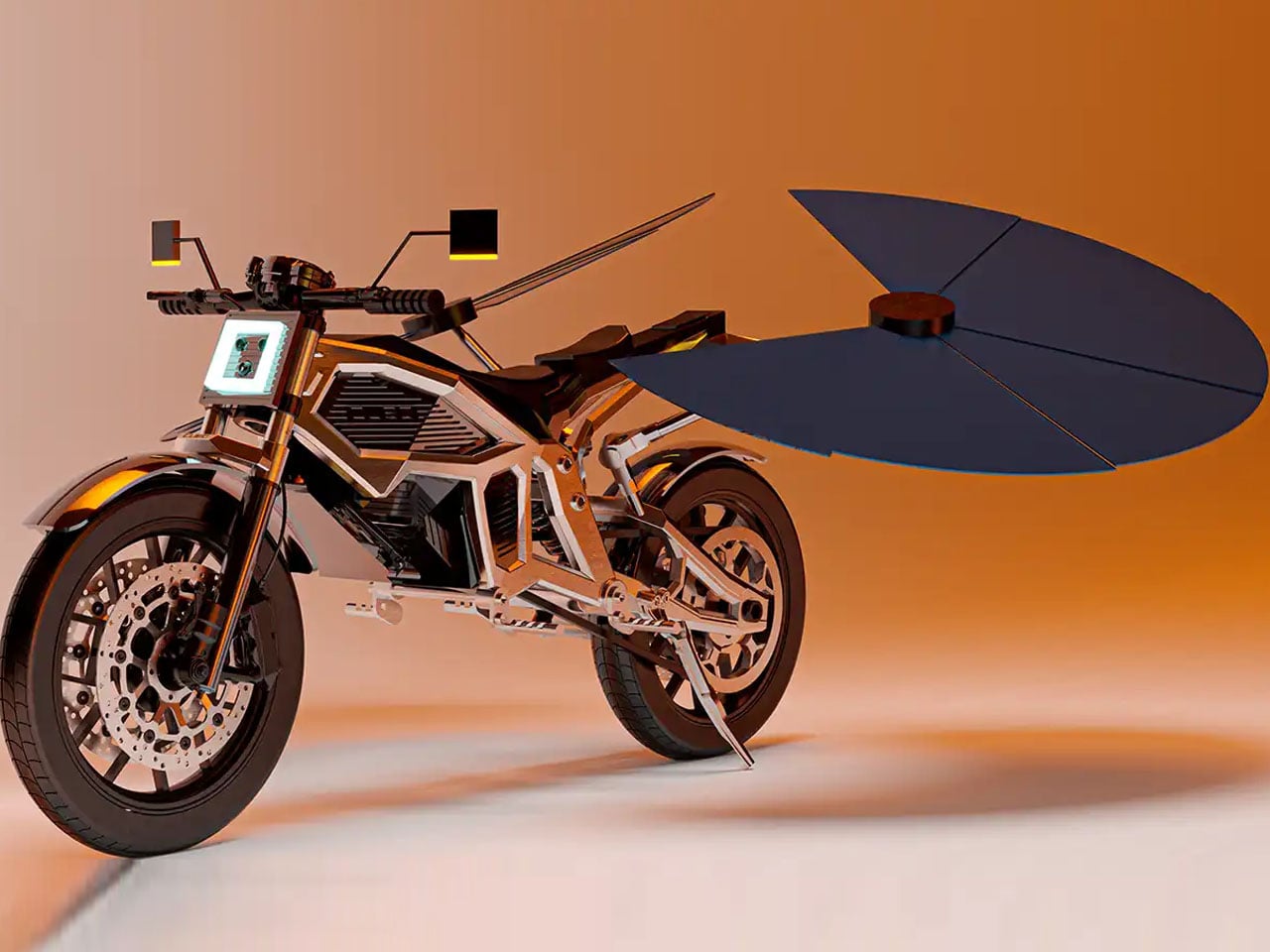
For years, electric mobility has been shaped by predictable patterns: bigger batteries, denser charging networks, and efficiency improvements that feel more evolutionary than revolutionary. Yet the dependency remains the same: riders still need plugs, stations, and the infrastructure that powers their daily movement. In the middle of this familiar landscape arrives a concept that doesn’t try to optimize the system but instead questions why the system needs to exist at all. The SOLARIS Self-Charging Solar Motorcycle by MASK Architects challenges the core assumptions of electric mobility with a vehicle that produces its own energy and redefines the relationship between rider, machine, and environment.

Developed by Öznur Pınar Cer and Danilo Petta, the SOLARIS approaches mobility as something closer to a self-sustaining organism than a machine waiting to be recharged. It operates entirely on power it generates itself, eliminating reliance on fuel stations, external charging points, or electrical grids. This shift reframes freedom for riders, offering movement that isn’t conditioned by access to infrastructure or energy markets. It introduces a future where independence is built into the vehicle, pushing the concept of autonomy far beyond driving modes or connected features.

Designer: MASK Architects

The technology that enables this transformation begins with next-generation photovoltaic cells integrated into the motorcycle’s structure. These high-efficiency solar elements convert light into energy throughout the day, ensuring the system remains active under varying conditions. A defining feature of the SOLARIS is its deployable charging mechanism, which expands into a protective wing when the motorcycle is parked. This design increases the solar capture area by up to 150 percent, allowing the battery to be replenished whether the vehicle is in motion or stationary. The result is a power source that continuously supports itself, removing the downtime associated with conventional charging and allowing the vehicle to remain ready for use without external input.

Visual identity plays an equally important role in its appeal. The deployable wing draws inspiration from the structure of a dragonfly’s wing, merging natural efficiency with a mechanical aesthetic. This biomimetic approach gives the motorcycle a distinctive presence while reinforcing its connection to the environment it relies on for power. The blend of organic influence and engineered precision creates a form that communicates both purpose and innovation, capturing the attention of users who value sustainability and future-focused design.

The potential impact of a self-charging motorcycle extends beyond individual riders. Without dependence on fuel or electricity networks, the concept becomes a practical solution for remote regions, developing communities, and delicate natural environments where infrastructure is limited or intentionally preserved. For logistics operators, tour providers, and municipal programs, the removal of energy costs and reduced mechanical complexity offers clear economic advantages and faster returns compared to traditional electric models.

The post This solar powered motorcycle never needs charging for true energy independence first appeared on Yanko Design.

Formula E Gen4 is a 800-horsepower evolution driving electric racing’s future

Par : Gaurav Sood
6 novembre 2025 à 20:15

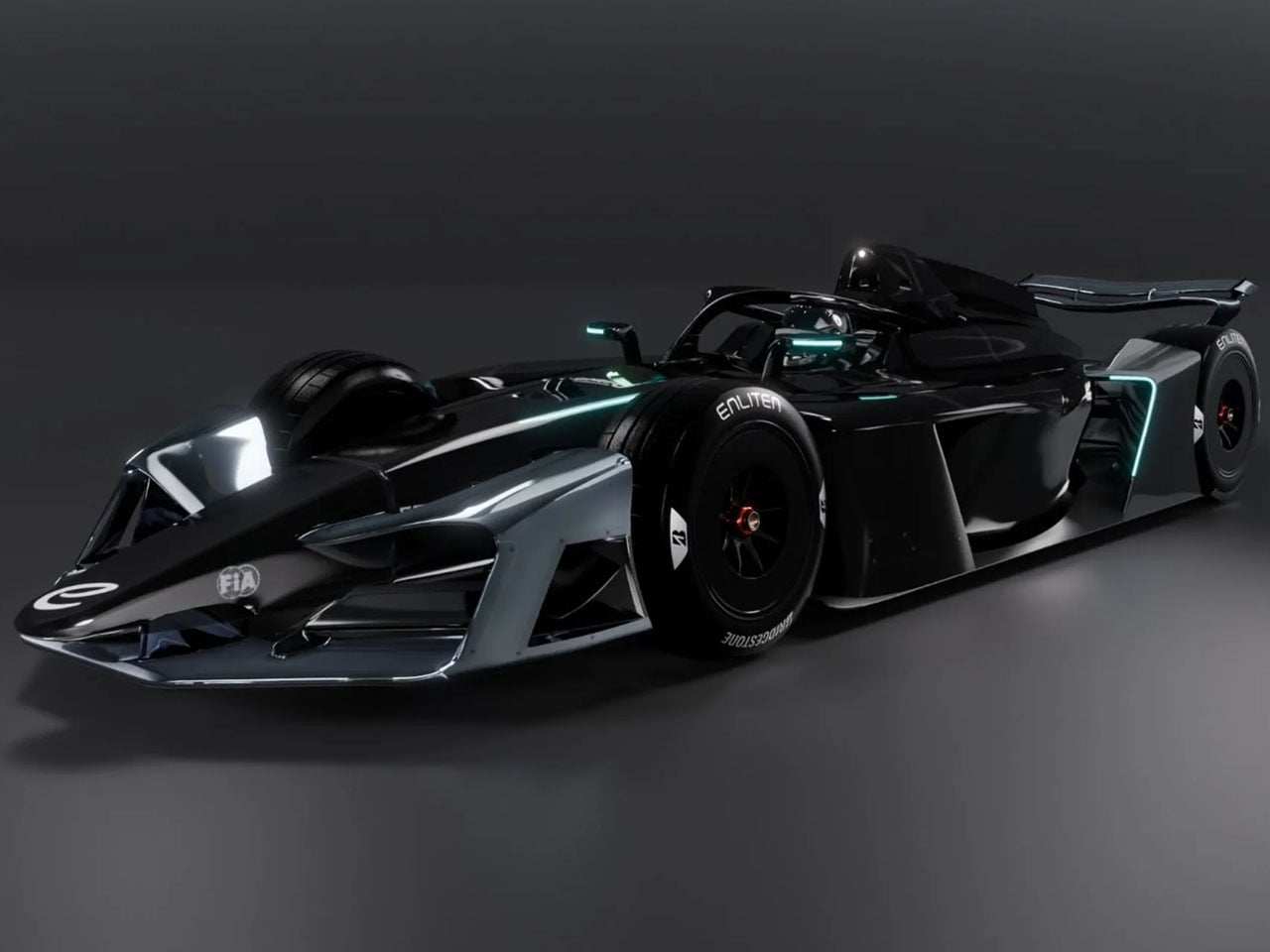
Electric racing has always been about progress—each generation of Formula E machinery redefining what’s possible for battery-powered performance. From the original Gen1 car that barely completed a race on a single battery to the sleek, aerodynamically advanced Gen3 that pushed 200 mph, every leap has mirrored the rapid evolution of EV technology itself. Now, the newly unveiled Gen4 signals another turning point; one that blends raw speed, cutting-edge control systems, and true sustainability into a single statement of intent for the sport’s future.

Set to debut in the 2026–27 ABB FIA Formula E World Championship, the Gen4 car represents a substantial step forward in both engineering and purpose. It delivers 450 kW (around 603 hp) in race trim and up to 600 kW (over 800 hp) in Attack Mode, nearly 200 hp more than the outgoing Gen3 machine. The boost is complemented by a new permanent all-wheel-drive system, which, unlike the Gen3’s limited use of front-axle regeneration, remains active throughout the race. This not only improves acceleration and grip but also introduces an unlimited traction control system and anti-lock braking for sharper, more consistent handling.

Designer: Formula E

Energy recovery has also been significantly enhanced. The Gen4’s regenerative braking now peaks at 700 kW compared to Gen3’s 600 kW, allowing for faster recharge during races and fewer compromises on pace. Its usable battery capacity rises to 55 kWh from 51 kWh, enabling teams to adopt more flexible strategies while sustaining higher outputs for longer durations. Combined with new aero options, high-downforce for qualifying and low-downforce for race conditions, the car offers tunable performance that better suits diverse circuits and race formats.

Visually and structurally, the Gen4 is sleeker yet more responsible. Built from 100 percent recyclable composites and containing at least 20 %percent recycled material, it reinforces Formula E’s environmental focus. The design is a collaboration between the FIA and Spark Racing Technology, refined with input from manufacturers such as Porsche, Nissan, Jaguar, Stellantis, and Lola, all of whom are integrating lessons from the track into road-going EV programs.

When compared to its predecessor, the Gen4 is more than just a performance upgrade; it’s a philosophical evolution. The Gen3 prioritized efficiency and lightweight engineering, but the Gen4 couples that efficiency with unprecedented power delivery and stability. It bridges the gap between electric precision and traditional motorsport spectacle, pushing top speeds beyond 209 mph while maintaining a smaller carbon footprint than ever before.

As Formula E enters this new era, the Gen4 car embodies the championship’s original promise – to make electric racing not only sustainable but thrilling. The sport is no longer proving that EVs can perform; it’s demonstrating how they can outperform. For fans and engineers alike, the Gen4 marks the moment electric racing stops chasing its combustion past and starts shaping motorsport’s electric future!

The post Formula E Gen4 is a 800-horsepower evolution driving electric racing’s future first appeared on Yanko Design.

Wheelhome turns Tesla Model 3 into ultimate electric rooftop camper with Dashaway eRC

Par : Gaurav Sood
29 octobre 2025 à 15:20

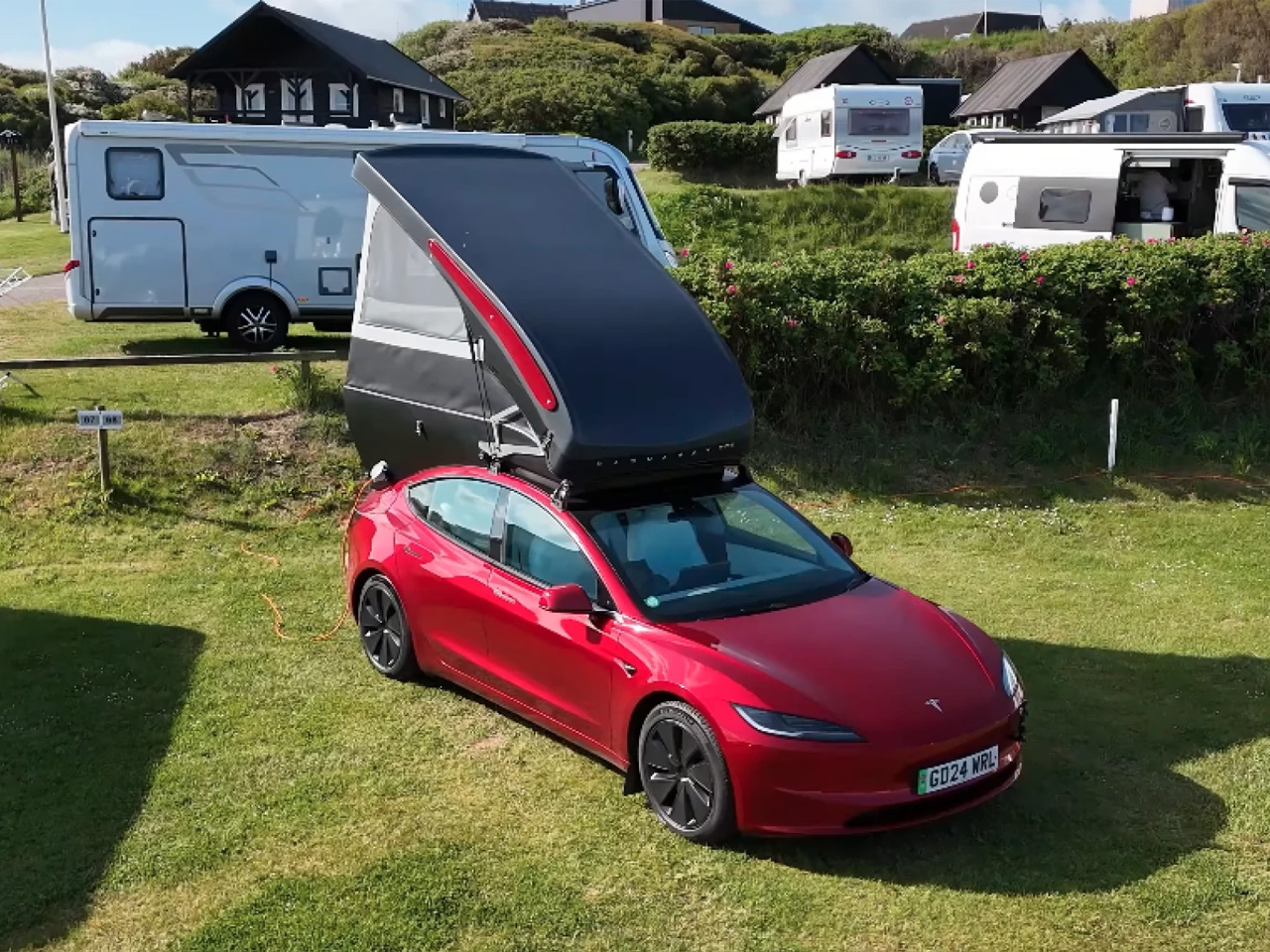
You don’t necessarily need a van or a pickup truck to have a camping rig capable of going off-grid for weeks on end. Wheelhome believes Tesla’s popular Model 3 is an ideal candidate to transform into a camping legend with a roof camper that fits seamlessly against its curving roofline.

The British manufacturer has been building compact camper cars and tiny caravans for more than three decades, but this latest conversion (or installation, rather) gives EV campers something entirely new to think about. With no modifications required to the car per se, Wheelhome has been able to turn the Tesla Model 3 into an electric rooftop camper complete with a sofa cum bed, an equipped kitchen, a sink, and a portable toilet, all within the camper’s full standing room and naturally lighted interior.

Designer: Wheelhome

The entire setup is made possible by mounting the Wheelhome Dashaway eRC (electric roof camper) onto the roof of the Model 3. Designed to sit on an additionally purchased Tesla roof rack and towbar, the Dashaway pop-up camping rig starts at about £23,400. It is a rooftop camper with a fast set-up time and an elevating roof, which adds roughly 150 kg of dead weight and turns the Tesla into a campervan-like facility for up to two people to share.

Dashaway eRC is a practical solution for the top of a Model 3 because, unlike the hard-sided rooftop tents, it has a nice standing height inside. The pod with a window and a mesh door offers ample natural light inside, while its fiberglass pop-up top keeps the construction lightweight and durable. The spacious interior cabin is good to sleep a couple and also cater to their daytime requirements with a two-seat rear-facing bench (that converts into a bed), plenty of storage just ahead.

The series of cabinetry is topped with a sink and a hideaway porta-potty (portable toilet). The folding counter and cabinets make space for a full-fledged kitchen, which can be packed with an induction cooktop, oven, microwave, and air fryer. Interestingly, the camper’s Water supply, compressor fridge, and the power bank reside behind the driver’s seat (converting the back into a two-seater bench). Behind the folding seats is Model 3’s boot, which is provided with storage containers (two of them a meter long each) for storing and transporting supplies.

You don’t need to be hooked up to a campsite for power; the camper’s battery can be powered by the car’s own low-voltage system, and the campsite electric grid can be used to charge the car battery, when required. The Wheelhome Dashaway eRC on the roof of the Model 3 is completely dismountable. According to the makers, it’s effortless, even a one-person can easily set up and remove the rooftop camper. Of course, you could wonder about the drag and range limitation with the Dashaway on the roof. Early tests suggest there are very few performance issues; yes, the speed takes a dip, but the camping solution doesn’t add more than 10 percent loss of the car’s range.

The post Wheelhome turns Tesla Model 3 into ultimate electric rooftop camper with Dashaway eRC first appeared on Yanko Design.

Still Dragging Your Cooler? This 500W Electric Wagon Makes Hauling 200 Pounds Feel Weightless.

Par : Sarang Sheth
29 octobre 2025 à 01:45

The definition of a machine is to make life easier. Whether it’s a simple machine like a lever or a pulley, or something as complex as an electric vehicle, or even the AI you often find yourself using every time you have an obscure question. Machines make life easier by reducing effort – that’s just how they’re defined, but some machines do a better job than others. A wheelbarrow or a wagon does a better job than lifting things and transporting them on foot. So what does a better job than a wagon? An electric-powered one with 500W motors, regenerative braking, remote as well as handle-powered control, and a 12km range that makes transporting heavy items as easy as just applying a gentle push, or pressing a button.

The LITEFAR H1 doesn’t just add a motor to a wagon and call it a day. It’s designed for people who’ve ever struggled with a loaded cart on a hill, or tried to maneuver through a crowded festival while dragging gear, or just wanted to spare their back the strain of hauling groceries from the car. The specs tell part of the story: 200 lbs load capacity, 140L volume, a frame made of anodized aluminum alloy, and solid rubber tires that won’t go flat. But what really sets it apart is how it integrates those features into a cohesive experience. The MoveTrack Algorithm 2.0 adjusts power delivery based on terrain, so it feels smooth whether you’re on pavement, grass, or gravel. The thumbwheel speed dial lets you set your pace precisely, from a slow stroll to a brisk walk, and the cruise switch means you don’t have to constantly fiddle with controls. Even the folding mechanism is thoughtful, collapsing the wagon down to a third of its size for easy storage. This is the kind of design that doesn’t just solve a problem; it anticipates it.

Designer: XIVO

Click Here to Buy Now: $349 $640 (45% off). Hurry, only 53/100 left! Raised over $129,000.

Let’s talk about the dual control system – you’ve got two options: a handlebar with an integrated thumbwheel for precise control, or a remote joystick for hands-free operation. The handlebar is great when you want to walk alongside the wagon, guiding it like a traditional cart but with none of the effort. The remote, though, is where things get fun. You can send the H1 rolling ahead of you while you carry something else, or let it follow behind like a loyal robot mule. It’s not just a gimmick, either. The remote has a 50-meter range, and the wagon’s sensors automatically adjust speed and braking based on the terrain. That means it won’t go careening down a hill if you let go, and it won’t struggle unnecessarily on an incline. The regenerative braking system even recovers a bit of energy when you slow down or descend, which is a nice touch for extending battery life. It’s the kind of feature you’d expect in an electric car, not a wagon.

A 24,000mAh removable battery pack gives you up to 12km of range, which is more than enough for a day at the park, a camping trip, or even a long market run. The battery is also swappable, so you can carry a spare if you’re planning an extended outing. And because it’s USB-C compatible, you can use it to charge your phone or other devices on the go. That’s a level of practicality that’s rare in most gear, let alone a wagon. The H1’s battery isn’t just powering the motors; it’s an integral part of the system, designed to be as useful as possible. Even the charging time is reasonable, with a full recharge taking around 1.5 hours. For most people, that means you can top it up overnight and be ready to go the next day.

The frame is made from durable anodized aluminum alloy, which is lightweight but strong enough to handle the 200 lbs load capacity. The fabric is Teslin mesh, a material known for being breathable, water-resistant, UV-resistant, and easy to clean. That’s the kind of fabric you’d find in high-end outdoor gear, not something you’d expect in a wagon. The wheels are solid rubber, so no worries about punctures, and they’re wide enough to handle rough terrain without getting stuck. The handle is fixed, yet ergonomically designed to accommodate users of different heights. The attention to detail here is what separates the H1 from cheaper, flimsier alternatives. It’s clear that this wasn’t just designed to work; it was designed to last.

One of the most underrated features is the lighting system. The H1 comes with a telescopic lantern that can rotate 270 degrees, making it perfect for camping trips or late-night events. The light isn’t just a gimmick, either. It’s bright enough to illuminate your path, and the telescopic design means you can adjust the height and angle to suit your needs. There’s also a flashlight integrated into the remote control, making low-light or night-time usage easy. It’s the kind of feature that seems minor until you’re fumbling around in the dark, trying to set up a tent or find something in your gear. The lighting system is powered by the same battery as the motors, so you don’t have to worry about carrying extra batteries or chargers. It’s another example of how the H1 integrates multiple functions into a single, cohesive package.

The H1 features a folding mechanism that when collapsed, shrinks it down to just 30cm x 25cm x 80cm, which is small enough to fit in the trunk of most cars. That’s a 40% reduction in space, making it incredibly easy to transport and store. The folding process is straightforward, too, with no complicated steps or finicky latches. That’s important, because if a product is a pain to set up or put away, people won’t use it. The H1’s design ensures that it’s as convenient to store as it is to use. And because it’s lightweight at just 18 kg, it’s easy to lift and maneuver even when it’s not powered on. That’s a big deal for anyone who’s ever struggled with a bulky, heavy wagon.

The handle and remote are interchangeable, and the battery is swappable, meaning you can upgrade or replace components as needed. That’s a big deal for longevity, because it means the wagon can evolve with your needs. The modular design means future accessories can slot into the existing ecosystem, so LITEFAR can theoretically release weatherproof compartments, cup holders, or specialized cargo frames down the road.

The H1 comes in a color called Shadow Green, which is a muted olive tone that fits the outdoor aesthetic without being too loud or too tactical. Early bird pricing starts at $349, and the campaign includes optional add-ons like the Remote upgrade (available for $69, which is 22% off the $89 retail price), extra batteries, foldable tabletop, tow bar, and more. LITEFAR is offering global shipping, making it affordable as well as accessible for a whole host of users around the globe. Urban parents hauling kids’ gear to the park. Festival-goers moving coolers and tents across muddy fields. Photographers transporting camera cases and lighting rigs. Vanlifers and overlanders who need a versatile hauler that folds small and handles rough terrain. Older adults or people with mobility challenges who need help with heavy lifting. After all, a machine should make life easier for everyone, no?

Click Here to Buy Now: $349 $640 (45% off). Hurry, only 53/100 left! Raised over $129,000.

The post Still Dragging Your Cooler? This 500W Electric Wagon Makes Hauling 200 Pounds Feel Weightless. first appeared on Yanko Design.

Ferrari’s F76 exists only in the metaverse yet feels more real than any hypercar

Par : Gaurav Sood
29 octobre 2025 à 00:30

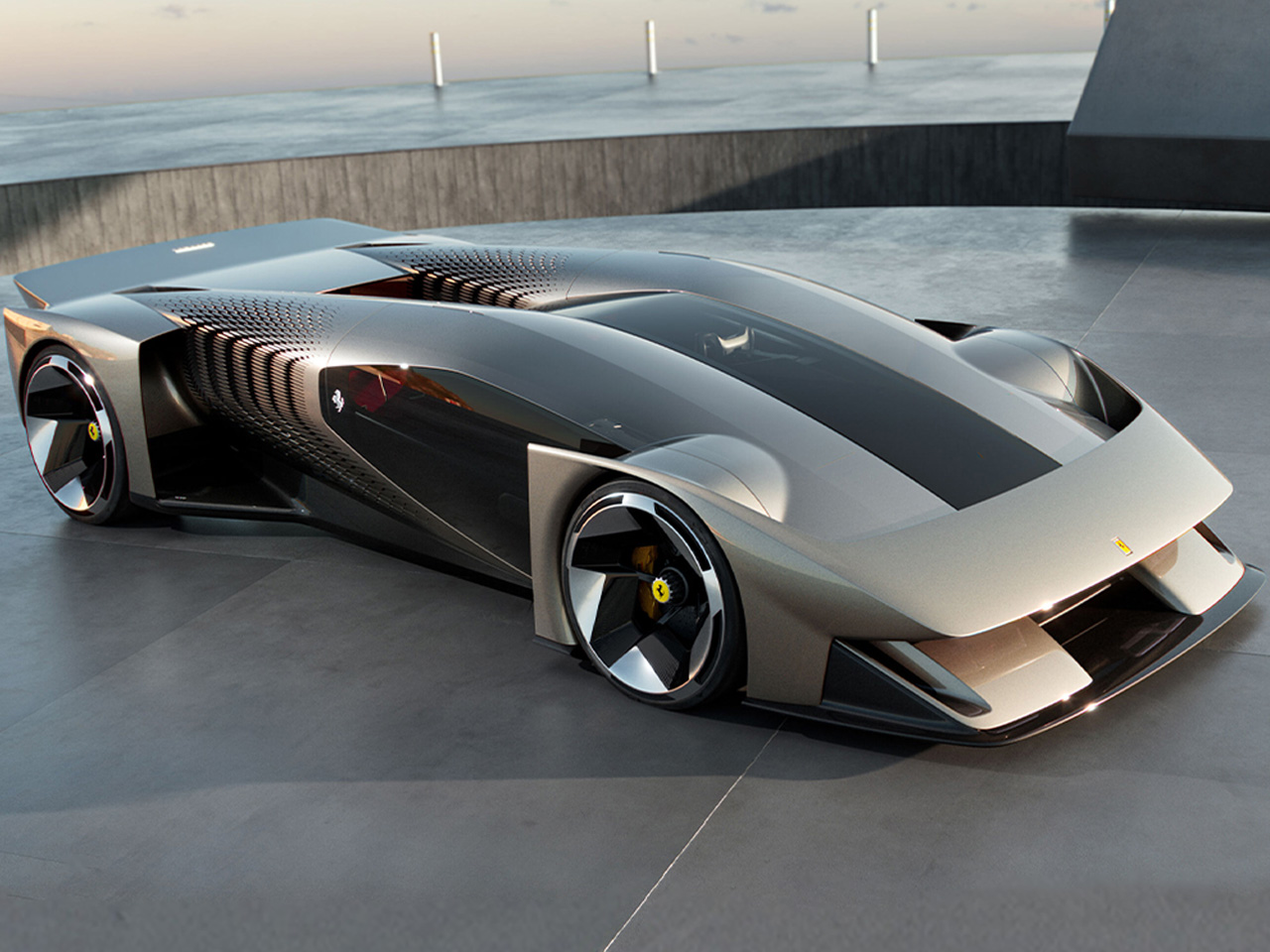
When Ferrari marks its milestones, it doesn’t merely look back; the Italian marque sketches the future. In honor of its 76-year legacy since the 1949 win at 24 Hours of Le Mans with the 166 MM Barchetta, the company has introduced the Ferrari F76: a purely digital hypercar existing solely as an NFT, ushering in a new era of automotive design and ownership.

Ferrari describes the F76 as the first-ever “digital hypercar,” built not for asphalt but for the blockchain. The project was conceived by Ferrari’s Styling Center under Flavio Manzoni as a legitimate design exercise, rather than a mere digital novelty. The choice of the number 76 commemorates Ferrari’s endurance racing heritage while signaling a bold digital pivot.

Designer: Ferrari

The F76 breaks conventional design constraints by embracing the possibilities of digital space. Its double-fuselage layout separates driver and passenger into two distinct cells, flanking a central channel that transforms the entire body into a giant wing, something entirely unfeasible under road-car regulations. The front features retractable headlights tucked beneath a floating band, vertical side cuts echoing the forthcoming F80 hypercar, and a rear section where four characteristic Ferrari taillights are integrated into a wing-bridge structure.

Ferrari employed generative algorithms and parametric design to optimize the F76’s bodywork for aerodynamics, cooling and ground-effect performance, an approach that Chevrolet might call “physics by code”. Inside the two cockpits, drive-by-wire technology synchronizes steering and pedals so driver and passenger receive feedback in unison, even though in the digital realm “feedback” is to the senses rather than the seat of the pants.

Availability is strictly limited to invitation-only membership in Ferrari’s “Hyperclub.” Each owner selects livery, wheels and interior trim during a three-year drop schedule, then receives a locked-down digital file: a unique NFT that can be held, sold, or displayed in a virtual garage. Pricing remains undisclosed and no real-world counterpart is being built. This is creation at the speed of light, not rubber on tarmac.

With the F76, Ferrari isn’t just tapping into the NFT trend; it’s staking its claim on digital metamorphosis. The project serves as a concept vehicle for design ideas that could eventually filter into road-going models, even though today the F76 is confined to the virtual realm. For enthusiasts of car culture and digital innovation alike, it raises the question: if a hypercar only exists in code, how real is the experience, and how far will that novelty travel into the physical world?

If you’re intrigued by the intersection of hypercar design, blockchain and digital exclusivity, keep an eye on how the F76 evolves—and whether its design DNA migrates into tangible Ferrari models. Consider this your invitation to explore what the future of automotive expression might look like. We also cannot count out the appearance of this beautiful hypercar in game franchises like Forza Horizon or Gran Turismo.


The post Ferrari’s F76 exists only in the metaverse yet feels more real than any hypercar first appeared on Yanko Design.

Axiom RV Vendetta is 47-foot fifth-wheeler that sleeps 12 people in a homely environment

Par : Gaurav Sood
23 octobre 2025 à 20:30

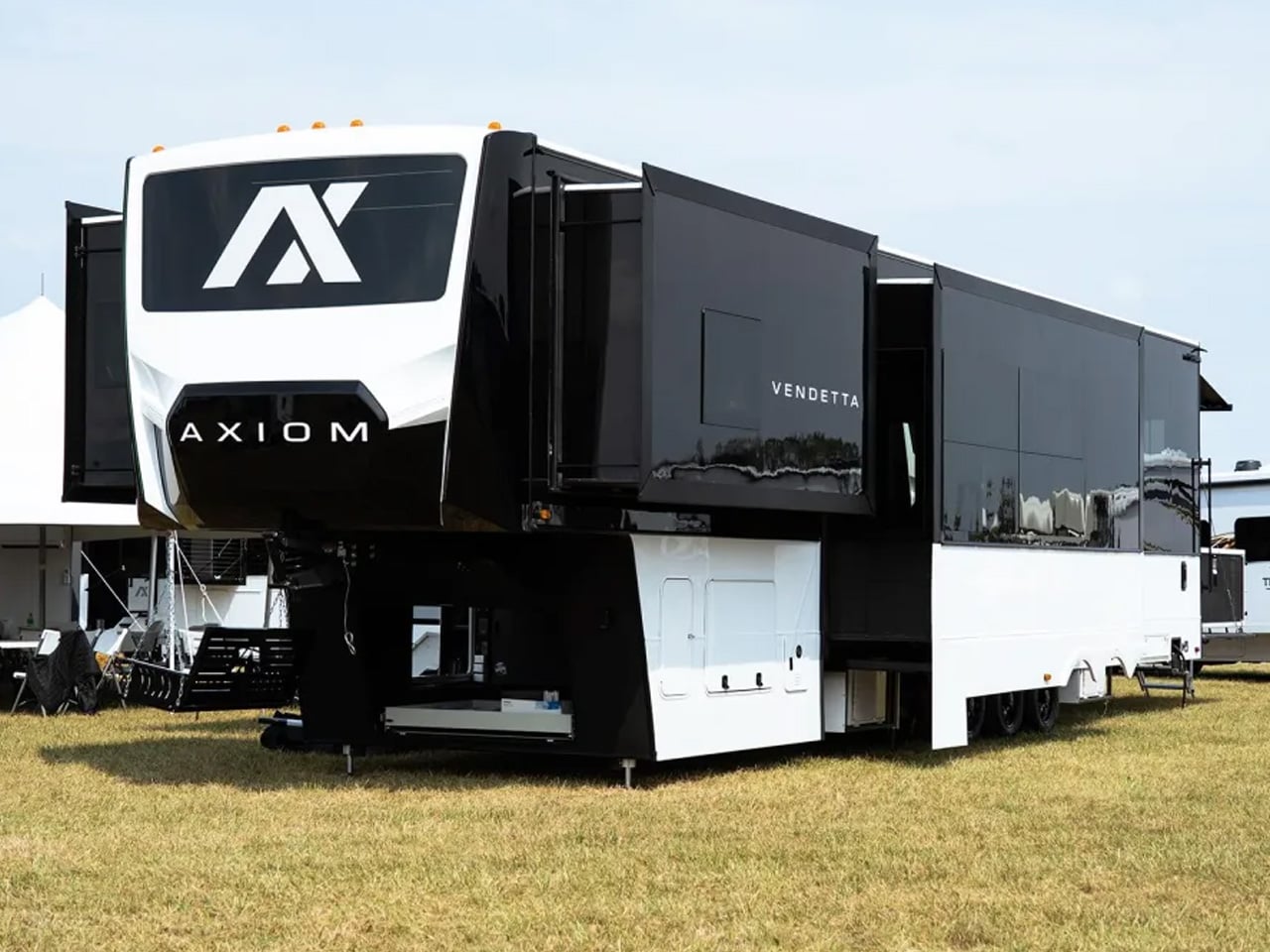
You can be forgiven for not knowing who Axiom RV is. They’re relatively new to the towable RV industry, but their presence is already being felt. Especially with the introduction of the Vendetta, a model designed to set a new standard in fifth wheels and toy haulers through its distinctive design and conceptualization.

The toy hauler market is typically dominated by rugged rigs built for adventurous couples seeking off-the-beaten-path experiences. The Vendetta, however, targets the other end of the spectrum. It’s designed to accommodate larger groups in comfort and style. If you’re a football team planning a camping trip together, this is exactly the kind of experience Axiom RV—founded by three industry veterans—had in mind with their latest offering.

Designer: Axiom RV

What sets the Vendetta apart is not essentially its insignificant clearance from the ground to make it a toy hauler for the days on the unpaved roads, but ideally its mammoth 47-foot real estate that can accommodate up to 12 people without feeling cramped. Based on a triple-axel trailer, the fifth wheeler has a dead weight of roughly 22,000 pounds and is easily the most extravagant camping trailer you can get your eyes on.

This distinction, of course, for most other rigs would start at the exterior or the luxurious interior. For the Vendetta, if I may, it starts at the roof, which has been essentially cleared out of any vents or holes; it’s a clean, new style of roof canvas for the user to explore. The body is made from marine-grade fiberglass with gelcoat, which Axiom proudly highlights, making no use of the unattractive wood or metal. The smooth and interesting finish is also durable. If you have been reading about the trailers and RVs we feature here on the website, you wouldn’t be surprised; most of the new adventure rigs are now employing fiberglass and composite materials in their construction, as Axiom RV boasts.

Once you enter the Vendetta, things really blow up in front of your eyes. The interior is nicely spaced and laid out to feel spacious and capable. And interestingly, the space inside is highlighted by the tall ceiling, which, according to the company, measures 9’10” high. The living area (in the middle) is outfitted with a U-shaped couch with 12 recliners, while the primary bedroom sits in the front of the trailer, and the garage goes into the rear side.  The trailer has four slides to create additional space, along with the convertible living space to sleep up to 12 individuals.

While the solitary bathroom may be a letdown for such a large occupancy, the open spaces, courtesy of a patio and the additional open garage door ramp, provide ample breathing room. Most fascinating still is the Vendetta’s huge rear kitchen. It is packed with extensive storage and large countertop space for homelike cooking on the road. The heating and cooling are catered to by the Mini Split HVAC system and rear-mount generator system, which allows for true pass-through storage. Available in two models: base model V4250 and a higher model V4250SP, priced roughly around $200,000, are provided with an entertainment system with a 65-inch TV, a 170-gallon fresh water tank, a 110-gallon gray water tank, and 200 watts of solar power. There is a range of add-ons that you can look for on the official Axiom website.

The post Axiom RV Vendetta is 47-foot fifth-wheeler that sleeps 12 people in a homely environment first appeared on Yanko Design.

Design Philosophy: When Automotive Thinking Meets Micromobility

23 octobre 2025 à 17:29

Rivian didn’t simply add another e-bike to the market. Through their new ALSO spinoff, they applied automotive-grade engineering to reimagine what two-wheeled transportation could become when stripped of mechanical constraints. The TM-B e-bike represents a fundamental shift in how we think about pedal-powered vehicles, replacing century-old drivetrain conventions with a software-defined riding experience.

Designer: Rivian

What emerges is a platform for modular micromobility that prioritizes adaptability over specialization. The design philosophy centers on one radical premise: remove the mechanical connection between pedaling and propulsion, then rebuild the entire vehicle around what becomes possible.

Proportions Freed from Mechanical Constraint

Traditional bicycle design bows to the demands of mechanical drivetrains. Chains dictate frame geometry. Derailleurs determine clearances. Gear ratios constrain wheel sizing. The TM-B dismisses these limitations entirely.

The pedal-by-wire system, which Rivian calls DreamRide, severs the physical link between your legs and the wheels. When you pedal, you’re powering a generator. That energy charges the battery, which then drives a motor at the rear wheel. The implications for design freedom are profound.

Frame tubes can be sized for structural efficiency rather than mechanical routing. Standover height becomes a pure ergonomic decision. Wheel placement optimizes handling instead of accommodating chain length. The entire architecture flows from rider needs rather than mechanical requirements.

Full suspension with 120mm travel front and rear creates spatial generosity in how the bike absorbs terrain. Those gold-anodized stanchions aren’t just premium visual cues, they signal a riding experience tuned for urban chaos and trail exploration equally.

Modular Surfaces: One Frame, Multiple Identities

The top frame isn’t fixed structure but rather a design canvas that transforms the vehicle’s purpose in seconds. This modularity enables three distinct configurations without tools or complex adjustment procedures.

Swap in a solo seat configuration, and the TM-B becomes a personal urban runner with dual water bottle mounts. The proportions read athletic, lean, focused. Slide in the bench seat instead, and suddenly spatial relationships shift. The bike lengthens visually. Room for a passenger or substantial cargo alters how you perceive the vehicle’s stance and capability.

Mount the utility cargo rack, and form follows function most overtly. That 77-pound capacity reshapes what this platform enables: grocery runs, equipment transport, daily errands that traditionally demanded four wheels. The transformations require no tools. Seconds to swap. The design intelligence lies in creating attachment points that disappear when not in use while providing industrial-grade strength when loaded.

Each configuration tells a different spatial story while maintaining design coherence. The frame proportions accommodate all three personalities without compromise.

Material Reduction Through Digital Shifting

Eliminating the mechanical drivetrain removes visual and tactile complexity from the entire right side of the bike. This creates unprecedented surface cleanliness that most e-bikes can’t achieve because they still rely on traditional bicycle components.

No derailleur hanging vulnerably from the dropout. No cassette stack creating width at the rear wheel. No chain requiring guards, maintenance, or lubricant. The Gates carbon belt drive (on the pedal input side) delivers power silently and permanently to the generator, not to the wheel directly. It’s designed to outlast the bike itself with zero maintenance intervals.

This material reduction extends to the cockpit. Traditional bikes clutter the handlebars with shifter pods, brake levers, and sometimes throttle controls. The TM-B consolidates everything through a central touchscreen that floats between the grips. Gear selection happens through software, not mechanical clicking. Ten levels of pedal assist adjust seamlessly. Sport, Trail, All Purpose, and Conserve modes reshape the riding character without adding physical controls.

The visual result is clean surfaces throughout. The bike reads as intentionally minimal rather than stripped down, because the design removed complexity rather than hiding it.

Battery Architecture as Design Element

Most e-bikes conceal batteries within frame tubes, prioritizing invisibility over accessibility. The TM-B makes power storage a designed interaction.

Two removable battery options (538Wh and 808Wh) twist free without tools. The larger capacity delivers 100-mile range, extraordinary for a vehicle this size. But range becomes secondary to the design thinking behind making batteries user-facing rather than integrated.

USB-C charging at up to 240W means these packs double as portable power banks. The batteries become part of your broader electronic ecosystem rather than single-purpose components. Pull a battery, charge your laptop at a coffee shop, return it to the bike. The design acknowledges that modern urban life revolves around managing multiple devices, not just transportation.

An e-ink display on each battery provides status without requiring phone connectivity, giving you physical feedback and immediate information. This creates designed confidence where you know exactly how much range remains before needing to swap or charge.

Lighting Rituals: Biomotion Safety

Integrated lighting typically means front and rear LEDs that meet minimum legal requirements. The TM-B’s lighting philosophy comes from automotive safety research.

Biomotion lighting highlights the rider’s body movement (head, arms, legs) rather than just illuminating the bike’s extremities. Studies show that drivers recognize moving human forms faster than static vehicle shapes, especially in peripheral vision. The lighting system transforms the rider into a more recognizable threat that drivers process earlier.

This isn’t decorative accent lighting but rather lighting as designed protective intervention. It borrows from decades of automotive human factors research and applies it to two-wheeled vulnerability.

Security Through Remote Architecture

Physical locks represent designed failure. Cable locks cut easily. U-locks require carrying bulk. Frame locks add weight. The TM-B makes theft functionally pointless through software architecture.

When you walk away, the bike automatically locks the battery, wheels, and frame. Not physically, but electronically. Attempt to ride a locked TM-B and nothing responds. The motor won’t engage. The battery won’t discharge. The entire vehicle becomes an expensive sculpture.

Remote bricking takes this further. Report a bike stolen, and ALSO can disable it remotely. The bike becomes worthless to a thief: not resellable, not rideable, not even useful for parts. Security becomes invisible, permanent, and comprehensive without adding physical bulk or weight.

Regenerative Braking as Range Extension

Hydraulic disc brakes handle primary stopping. But regenerative braking captures energy during deceleration and feeds it back to the battery.

The design outcome: up to 25% range extension from energy that typically dissipates as heat. It’s not dramatic enough to feel like engine braking in an EV car. It’s subtle, seamless, almost unnoticeable, which represents successful design integration rather than engineered compromise.

The system demonstrates how automotive EV thinking translates to micromobility. Every descent, every slow-down, every controlled deceleration becomes an opportunity to extend range without conscious rider input.

Manufactured Variants as Design Personas

Three trim levels don’t just offer different equipment but represent distinct design philosophies about what this platform should express.

The Launch Edition ($4,500, spring 2026) introduces the concept with unique blue, purple, and other launch finishes that communicate newness and differentiation. It’s ALSO announcing they’ve arrived with something visually distinct.

The Performance trim (same price, summer 2026) adds air suspension and higher output motor specs. Design shifts from introduction to capability. This version targets riders who prioritize dynamic range over value positioning.

The Base model (under $4,000, late 2026) strips back to essentials with 60-mile battery and simplified spec. The design message becomes accessibility: getting this platform’s core benefits to wider audiences without the premium finish work.

Each trim tells a clear story about who this bike serves and why. The pricing strategy keeps Performance and Launch identical, making the choice about timing and aesthetics rather than value hierarchy.

The Quad Evolution: Four-Wheeled Platform Thinking

ALSO’s roadmap extends beyond two wheels to pedal-assisted quads designed for cargo delivery.

The TM-Q vehicles represent the same core philosophy applied to different constraints. Remove mechanical drivetrain limitations. Build software-defined platforms. Enable modular transformation. Optimize for bike lane operation rather than automotive infrastructure.

The design thread connecting the TM-B and TM-Q products is platform thinking: creating foundational architecture that supports multiple form factors rather than designing discrete vehicles. It’s how automotive manufacturers approach product development, now applied to micromobility at urban scale.

Form as Manifestation of Vertically Integrated Engineering

The TM-B doesn’t source components from Shimano, Bosch, or other e-bike suppliers. Rivian developed the battery, motor, electronics, and software in-house. This vertical integration enables design decisions impossible with off-the-shelf components. Where most e-bikes still rely on partial automotive supplier components, Rivian’s approach is pure ground-up integration applying full automotive engineering rigor to two-wheeled transport.

The pedal-by-wire system exists because Rivian controlled the entire drivetrain stack. The security architecture works because they own the software. The battery packaging succeeds because they designed the cells and the enclosures simultaneously.

What you see in the TM-B’s form is the physical manifestation of engineering control. Proportion and surface decisions made possible only when every component answers to a single design vision rather than marketplace constraints.

Over-the-air updates will refine this bike’s behavior throughout its life. The riding characteristics you experience at delivery represent a starting point, not a fixed state. Software-defined vehicles evolve. The TM-B’s design accommodates continuous improvement rather than planned obsolescence. Service and repairs happen at Rivian’s automotive service centers, not traditional bike shops, treating the TM-B as an extension of their vehicle ecosystem.

Why This Matters for Design

The ALSO TM-B demonstrates what becomes possible when automotive engineering rigor meets micromobility scale. It’s not about making bikes more expensive or complex but about removing century-old mechanical constraints and rebuilding around what riders actually need.

Modular transformation without tools. Batteries as portable power rather than hidden components. Security through software instead of physical locks. Drivetrain without mechanical compromise. Lighting that makes riders more visible through human factors research rather than brighter bulbs.

Rivian took their EV platform thinking (vertical integration, software-defined experiences, continuous improvement through updates) and scaled it to two wheels. The result challenges what we accept as inevitable in bicycle design.

The TM-B isn’t trying to be a better traditional bike. It’s showing what happens when you throw out the script entirely and rebuild from first principles. That’s what makes it worth studying, regardless of whether you ever plan to buy one.

The post Design Philosophy: When Automotive Thinking Meets Micromobility first appeared on Yanko Design.

❌
❌