Vue normale

Il y a de nouveaux articles disponibles, cliquez pour rafraîchir la page.
Aujourd’hui — 12 mai 2026Flux principal

This Sculptural Glass Object Makes Flowers Feel Like a Van Gogh Painting

Par : Tanvi Joshi
11 mai 2026 à 22:30

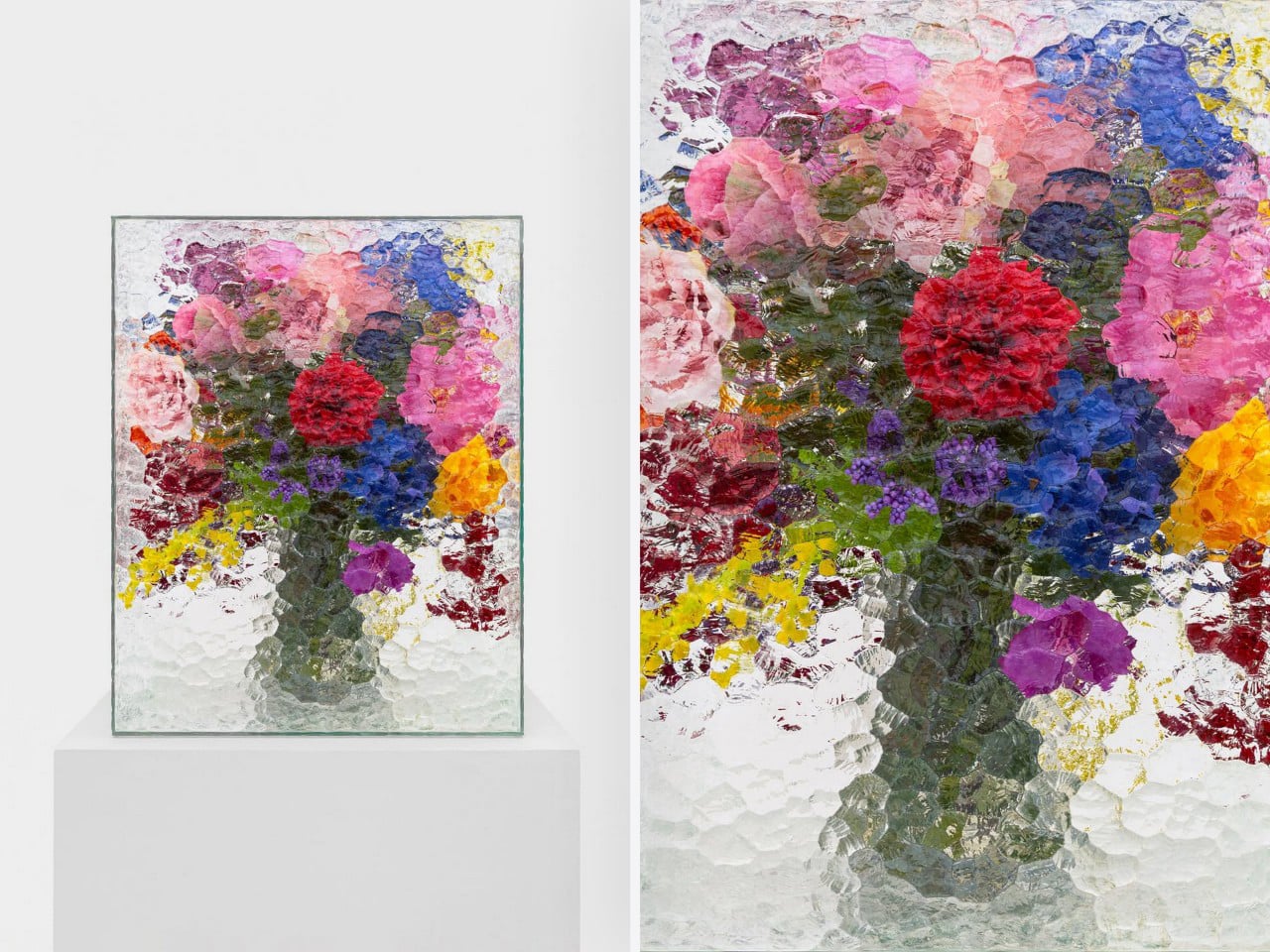
There is something instantly familiar about patterned glass. We have seen it in old windows, cabinet doors, bathroom partitions, and quiet corners of homes where privacy and light needed to exist together. It is a material that usually stays in the background, doing its job quietly. With Violet Frosted, designer Marius Boekhorst brings that overlooked material forward and turns it into something sculptural, expressive, and quietly poetic.

At its heart, Violet Frosted is a geometric glass object that plays with flowers, light, color, and texture. What makes it interesting is the way it changes how we see what is placed behind it. The frosted, patterned glass softens the flowers, turning bright petals and stems into blurred fields of color. A flower becomes a shadow, a brushstroke, a violet glow, or a faded green line depending on where you stand.

Designer: Marius Boekhorst

That is where the charm of the piece begins. Instead of presenting flowers directly, Violet Frosted filters them. It creates a gentle distance between the viewer and the arrangement. That distance makes you look closer. It asks you to slow down and notice how color shifts through glass, how a shape becomes unclear, and how something ordinary can feel painterly when it is partly hidden.

In many ways, Violet Frosted feels like a still life painting brought into the real world. Traditional still lifes capture flowers in one fixed composition, frozen in paint and time. This piece lets the still life move. The flowers change as they bloom and fade. The light changes throughout the day. The view changes as you move around it. From one angle, the arrangement may feel bold and graphic. From another, it becomes soft, quiet, and almost dreamlike.

The design feels especially beautiful because it does not try too hard. It avoids excess decoration. The form is clean and almost architectural, while the patterned glass gives it warmth and character. It feels contemporary without losing the memory of where the material comes from. That balance between old and new gives the piece its quiet confidence.

Violet Frosted also carries a museum-like feeling, though it never feels precious or untouchable. It brings the mood of a gallery into everyday space. A table, shelf, or windowsill suddenly feels more considered. A simple floral arrangement becomes an experience. You are looking at flowers through atmosphere, texture, and light.

Violet Frosted reminds us that design does not need to shout to stay with us. Sometimes, the most memorable objects are the ones that shift how we see familiar things. By turning patterned glass into a living frame, Marius Boekhorst creates a piece that sits between a vase, a sculpture, and a painting. It is functional, emotional, and deeply visual. It holds flowers, and it holds a moment.

The post This Sculptural Glass Object Makes Flowers Feel Like a Van Gogh Painting first appeared on Yanko Design.
À partir d’avant-hierFlux principal

A Double-Sided Clock That Turns Walls into Living Moments of Time

Par : Tanvi Joshi
8 avril 2026 à 00:30

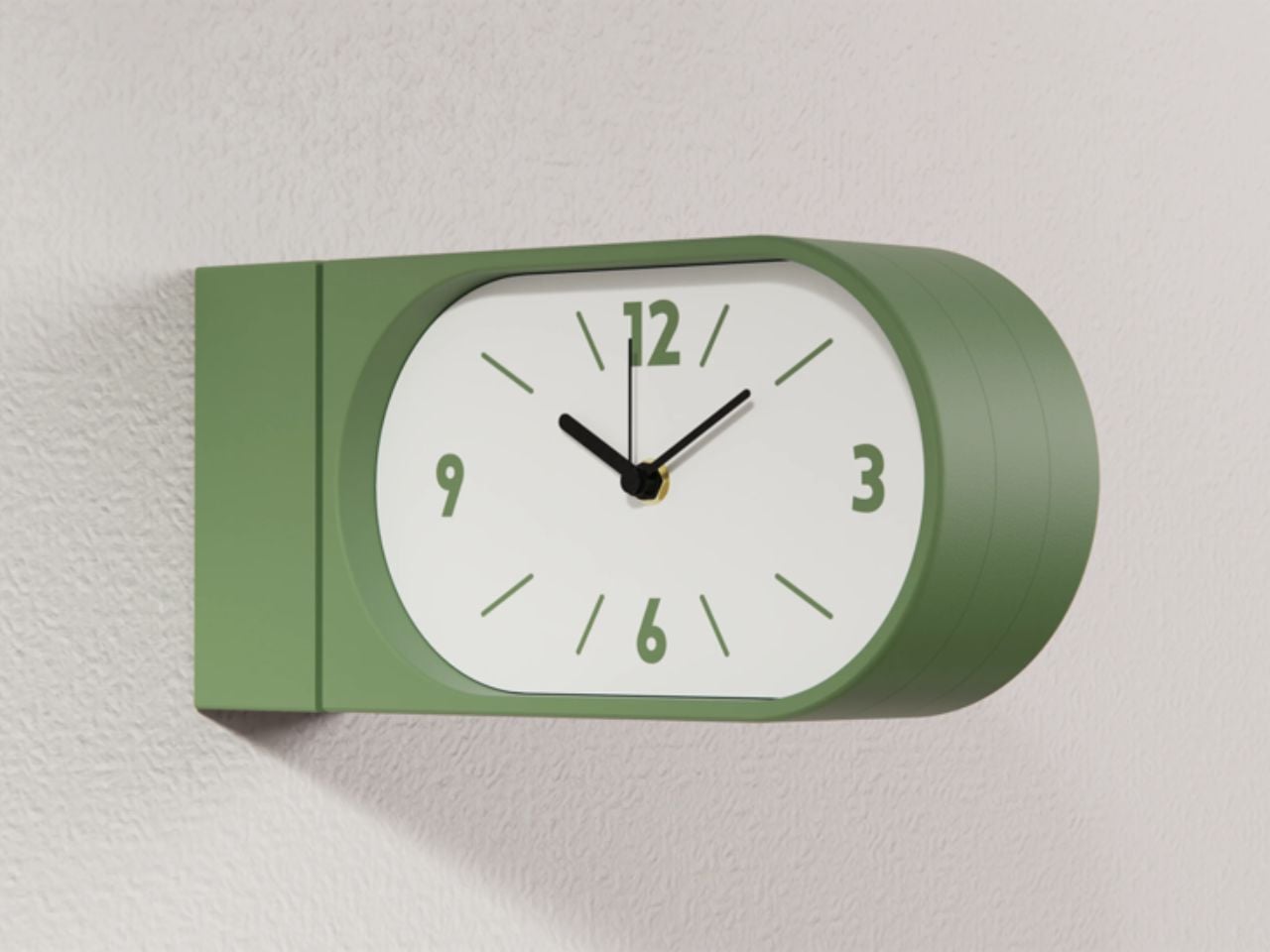
Double-sided wall clocks are not new. They have existed for decades, quietly moving between public and private spaces. While many people associate them with railway stations and institutional corridors across Europe, they also made their way into homes in earlier times, often as decorative yet functional pieces in hallways or larger living spaces. Over time, however, they faded out of domestic interiors, replaced by flatter, more minimal wall clocks designed to sit quietly against a surface.

Turin-based brand Goofball is bringing this format back, but with a distinctly modern lens. Their Perch clock does not just revive an old idea; it reframes it for how we live today.

Designer: Goofball

At first glance, the concept feels familiar. A clock that extends out from the wall, visible from both sides. But in a home setting, this simple shift changes everything. Instead of being something you look at from one fixed position, the clock becomes part of how you move through a space. Whether you are walking into a room, passing through a corridor, or glancing back as you leave, time is always within sight. It feels less like an object placed on a wall and more like something integrated into the rhythm of the room.

The functional decisions are just as thoughtful. The clock runs on two AA batteries, which means there is no need for wiring or complicated installation. It hangs on a bracket and can be easily lifted off when the batteries need to be changed. It is the kind of detail that you might not notice immediately, but it makes living with the product feel effortless.

Visually, the Perch clock embraces minimalism in a way that feels warm rather than clinical. It comes in three colors, allowing it to blend into different interiors while still holding its own presence. The design is clean and restrained, making it suitable for contemporary homes, yet it carries a quiet reference to its past. There is something unmistakably reminiscent of old railway clocks, those objects that once defined shared notions of time and movement.

That sense of nostalgia is part of its charm. It brings a subtle character into a space without feeling overly decorative. It introduces depth to a wall, quite literally, and creates a small moment of curiosity. Guests notice it. People interact with it differently. It becomes a conversation piece without trying too hard.

What makes this product particularly compelling is how it challenges a default assumption. We have grown used to thinking of wall clocks as flat, one-directional objects. This design questions the norm and reminds us that even the most familiar objects can be reimagined.

The response so far reflects this shift in perspective. The first batch sold out quickly, suggesting that people are ready for products that feel both nostalgic and new at the same time. Goofball is currently preparing the second batch, expected to be available in the coming weeks.

In the end, this clock is more than just a timekeeping device. It is a small but meaningful intervention in how we experience space. It takes something we already know, brings back its forgotten domestic presence, and gives it a contemporary voice. It does not just sit on a wall. It changes how the wall and the room around it are perceived.

The post A Double-Sided Clock That Turns Walls into Living Moments of Time first appeared on Yanko Design.

A Transforming Table-Chair That Turns Tradition into Space-Saving Intelligence

Par : Tanvi Joshi
6 avril 2026 à 22:30

At a time when living spaces are shrinking while expectations from them continue to expand, this design presents a thoughtful response that is both rooted in tradition and aligned with contemporary needs.

Emerging from the context of rising housing pressures in Taiwan, where compact homes are increasingly becoming the norm, the project addresses a fundamental question: how can furniture adapt to limited space without compromising comfort or experience? Rather than treating furniture as static, single-purpose objects, the designer reimagines them as dynamic systems capable of transformation.

Designer: Che-Chia Hsu

At the heart of this piece lies a deep engagement with traditional Chinese woodworking techniques, particularly the precision of tenon joints. These joints move beyond being structural solutions and become expressions of calculated craftsmanship, where geometry, material behavior, and human interaction converge. The result is a construction that feels both minimal and robust, relying on accuracy instead of excess.

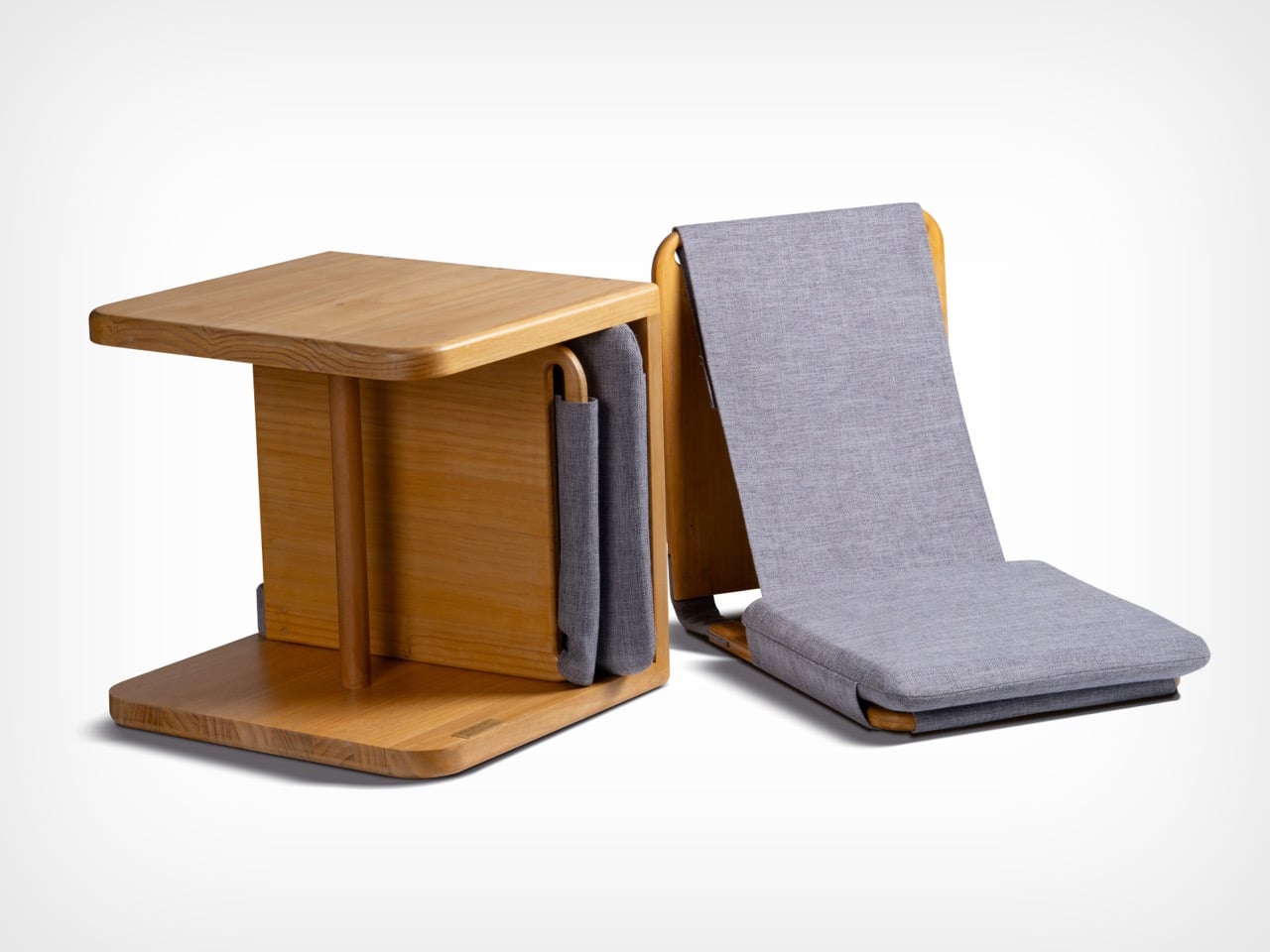
The furniture set is designed to integrate storage and seating within a compact footprint. A chair is concealed within the table and can be pulled out, unfolded, and expanded into a functional seat. The process is intuitive: the chair is extracted, the seat and backrest are opened, and the backrest angle is adjusted using velcro. The transformation is smooth and unobtrusive, allowing the object to shift roles effortlessly.

What distinguishes this design is its reliance on the user’s own body as part of the structural system. Instead of depending entirely on rigid supports, the chair uses the tension generated by the sitter to stabilize the backrest. This introduces a subtle interaction between user and object, where the act of sitting becomes integral to how the design performs. The experience feels efficient, responsive, and quietly intelligent.

Material choices reinforce this balance between function and experience. Lightweight pine wood panels provide durability while ensuring ease of movement. Paired with gray cotton linen fabric, the design introduces a tactile softness that enhances comfort. The fabric is breathable and visually understated, complementing the natural warmth of the wood. Together, these materials create a calm, cohesive aesthetic suited to contemporary interiors.

The development of the project reflects a layered and rigorous process. The designer began by studying traditional joinery techniques through literature, followed by hands-on training under a woodcraft master. This immersion enabled a deeper understanding of the craft beyond theory. Building on this foundation, the designer explored ways to translate these techniques into a modern, functional context through research and experimentation.

What emerges is a design that treats constraint as a starting point rather than a limitation. The piece brings together traditional knowledge and contemporary living patterns, shaping an object that adapts, responds, and participates in everyday use. It reflects a way of designing where space, material, and human interaction are considered together, resulting in furniture that feels considered, purposeful, and in tune with the realities of modern living.

The post A Transforming Table-Chair That Turns Tradition into Space-Saving Intelligence first appeared on Yanko Design.

A Hotel in Greece That Hides Inside the Cliff Instead of Sitting on It

Par : Tanvi Joshi
15 mars 2026 à 22:30

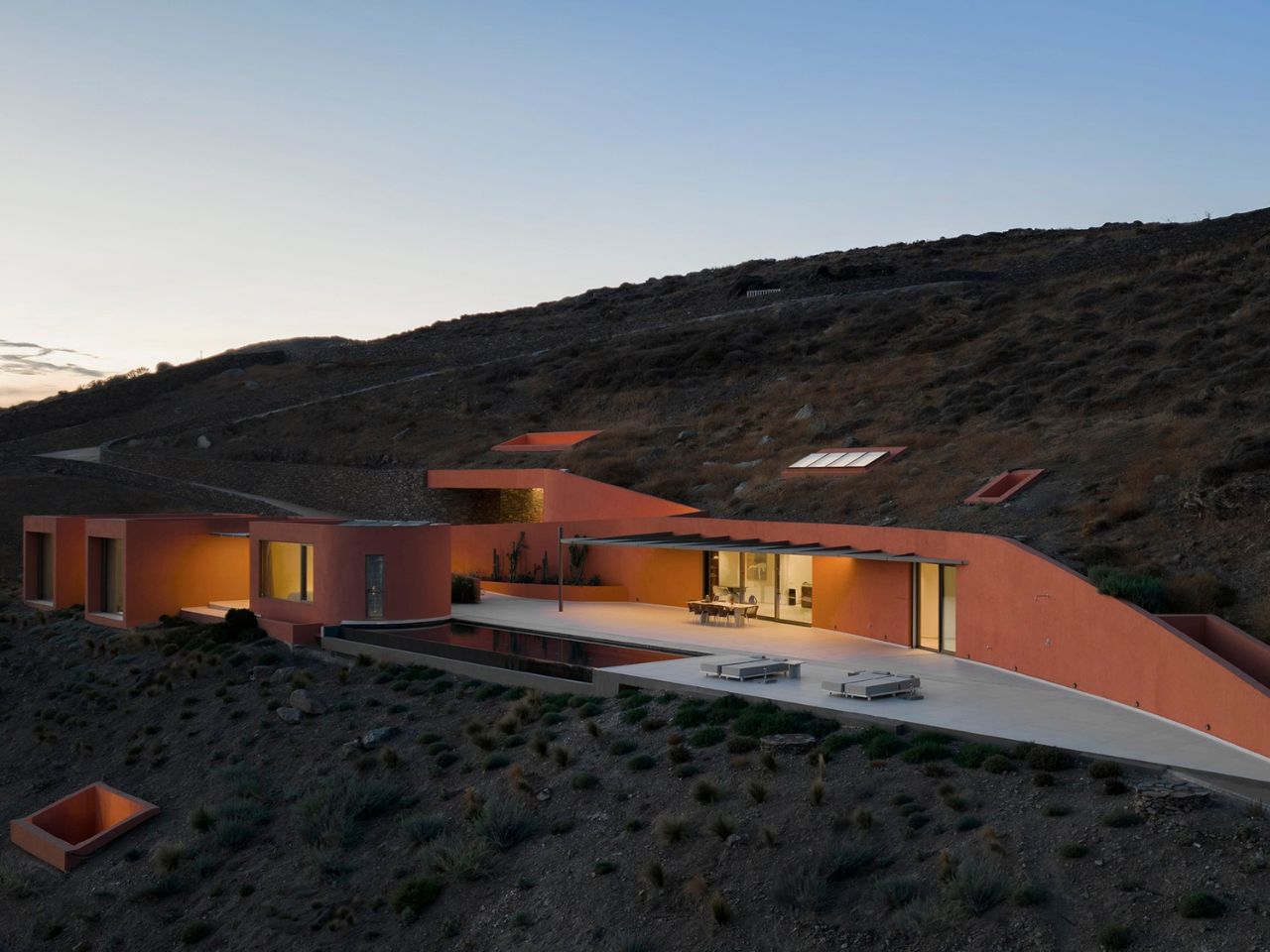
On a quiet stretch of coastline on the Greek island of Syros, a new resort seems to almost disappear into the landscape. Designed by the Athens-based firm Ateno Architecture Studio, Olen is a small seven-suite hotel that has been carefully carved into the rocky cliffs overlooking the Aegean Sea. Instead of standing out as a bold architectural object, the project quietly blends into its surroundings, allowing the landscape to remain the star of the show.

The site itself is relatively untouched, with rugged terrain and uninterrupted views across the sea. For the architects, this meant approaching the project with sensitivity. The aim was not simply to build a luxury retreat, but to do so in a way that respected the existing character of the place. Rather than placing a large structure on top of the land, the design tucks much of the building into the hillside so that the architecture feels like part of the terrain.

Designer: Ateno Architecture Studio

What makes Olen particularly interesting is the way the architecture is composed. Instead of focusing on striking building forms, the design is shaped through terraces, retaining walls, and subtle cuts into the earth. These elements create a series of spaces that unfold gradually across the cliff. The result is a composition that feels embedded in the landscape rather than imposed on it.

The resort steps down the slope in what the architects describe as an amphitheatre-like arrangement. As you move through the site, open terraces reveal sweeping views of the Aegean while more private rooms are tucked deeper into the hillside. The walls throughout the project are finished with textured render in warm, earthy tones, which helps the architecture blend naturally with the surrounding rock.

The layout of the resort is organised into three distinct parts called The Plane, The Line, and The Point. These areas are connected by a winding path that gently guides guests down the hillside. As you move lower on the site, the spaces become increasingly private.

At the very top sits The Plane, which acts as the social heart of the resort. A curved retaining wall wraps around a generous terrace that opens out toward the sea. Here, a sculptural pergola shaped like a leaf provides shade while a pool reflects the blue horizon beyond. Beneath this terrace, shared living areas and one bedroom are tucked into the hillside. Nearby, three additional bedrooms extend outward in simple cubic forms that frame the sea views.

The sweeping curve of the retaining wall is one of the most memorable features of the project. It creates a sense of enclosure and protection while still allowing the terrace to remain completely open to the landscape and the vast sea beyond.

Further down the hill is The Line, which contains two larger underground suites. These can operate as separate accommodations or be combined to form a larger living unit. Both open onto a shared terrace with a long, narrow infinity pool that stretches toward the horizon.

At the very bottom of the site lies The Point, the most secluded part of the resort. This independent guesthouse is framed by a curved stone wall and features a small circular pool. The exposed stone here provides a subtle contrast to the rendered walls used elsewhere across the project.

Inside the resort, the interiors are designed to feel calm and light despite the fact that many of the spaces sit within the hillside. Soft off-white tones reflect natural light throughout the rooms, while pale stone flooring connects indoor spaces with the terraces outside. This continuity helps blur the boundary between interior and exterior and keeps the atmosphere relaxed and airy.

In many ways, Olen feels less like a building placed on the landscape and more like an extension of it. The architecture follows the natural slope, opening itself gradually to the sea while remaining quietly anchored to the cliff. Guests move through terraces, shaded paths, and hidden rooms carved into the hillside, constantly aware of the surrounding horizon. The experience becomes less about staying in a hotel and more about inhabiting the landscape itself.

The post A Hotel in Greece That Hides Inside the Cliff Instead of Sitting on It first appeared on Yanko Design.

AI Earbuds Designed Like Fine Jewelry, Not Consumer Electronics

Par : Tanvi Joshi
15 mars 2026 à 19:15

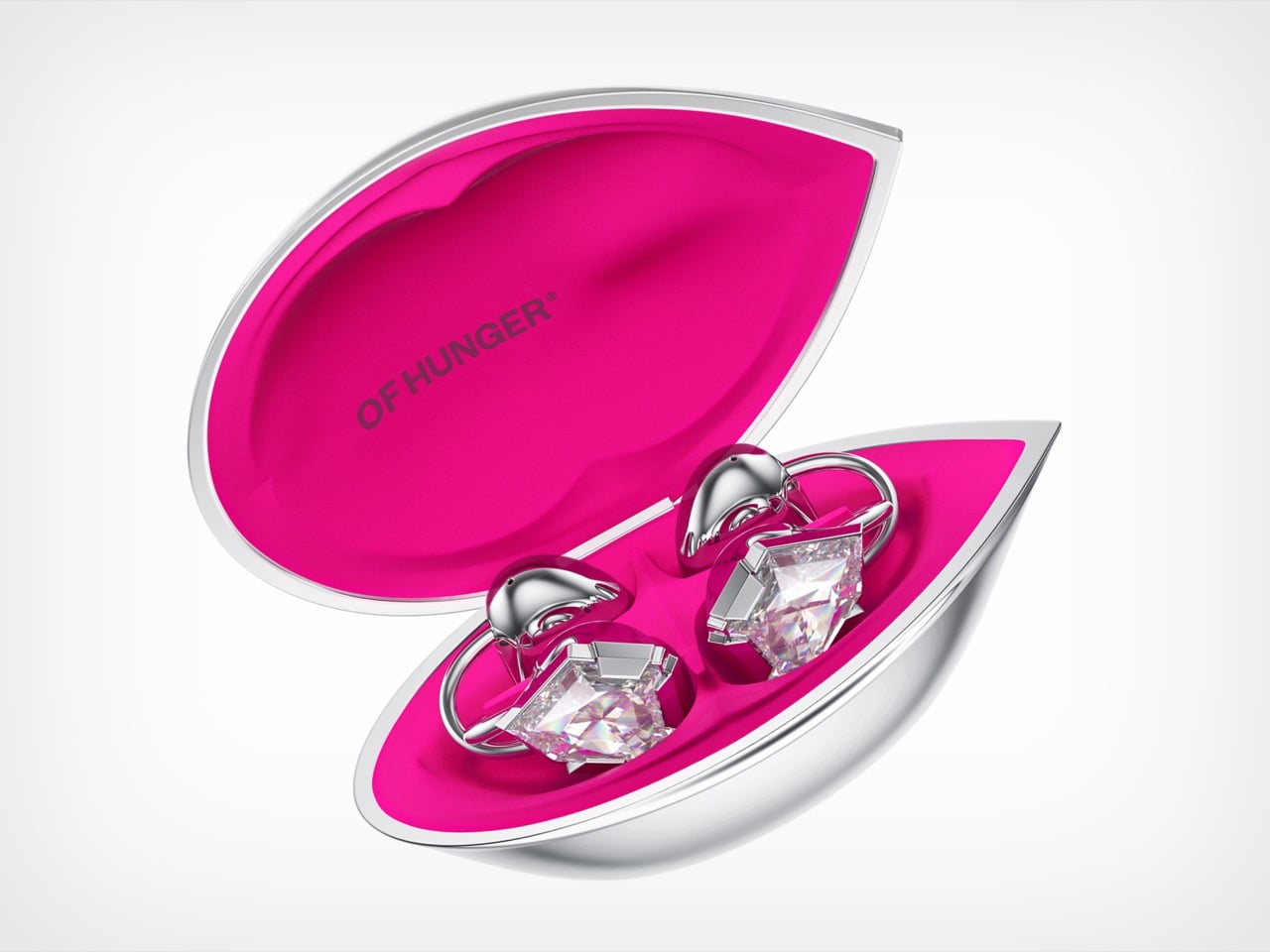
In most cases, wearable technology still announces itself as technology. Plastic shells, visible sensors, and utilitarian forms often make devices feel separate from the way people dress or present themselves. The AI Smart Gemstone Earpiece takes a different path. Instead of asking users to accommodate technology, it integrates technology into the language of personal adornment. Designed specifically with female users in mind, the earpiece approaches wireless audio as something that can live comfortably within fashion, jewelry, and everyday styling.

At first glance, the device does not read as a pair of earbuds at all. It looks remarkably similar to earrings. The form, scale, and surface detailing borrow directly from fine jewelry traditions rather than consumer electronics. Each earpiece is constructed from a copper acoustic chamber plated with eighteen karat white gold and inlaid with rare celestial gemstones, including meteorite fragments, tiger’s eye, opal, zircon, and obsidian. These materials introduce depth, color, and subtle light reflections that shift as the wearer moves. The result is a small object that sits on the ear like an accessory rather than a gadget.

Designer: Of Hunger

This shift in visual language matters. For many users, particularly women, accessories are an intentional part of how an outfit comes together. Traditional earbuds often interrupt that balance. They can feel out of place with formal clothing, evening wear, or carefully styled looks. The gemstone earpiece approaches the problem from the opposite direction. Instead of trying to hide technology, it celebrates it through jewelry craftsmanship. The gemstones and polished metal surfaces allow the device to complement clothing choices, hairstyles, and other jewelry pieces. Worn on the ear, it reads as something chosen for style as much as for function.

The experience begins even before the earbuds are worn. The charging case is designed to resemble a jewelry box rather than an electronics case. Opening it feels less like accessing a gadget and more like opening a pair of earrings. The earbuds rest neatly inside the case, echoing the presentation of high jewelry. This small gesture transforms a technical action such as charging into a familiar ritual. It reinforces the idea that the device belongs in the same category as personal accessories, objects that people care for and keep close.

Behind this jewelry-like presence lies a sophisticated technological system. The device operates on Qualcomm Snapdragon Sound architecture and uses thirteen millimeter dual magnet dynamic drivers paired with a HiFi grade composite diaphragm. This combination produces clear, balanced audio with a sense of spatial depth. The system also uses Open Wearable Stereo technology and air conduction sound transmission, allowing users to remain aware of their surroundings while listening. A three-dimensional sound field tuned by a professional acoustic laboratory with more than twenty-five years of experience ensures that the listening experience feels expansive and natural.

Interaction with the device remains simple and discreet. A touch-sensitive back panel on each earbud allows users to control playback or activate artificial intelligence features. The earbuds connect instantly through Bluetooth five point three when removed from the charging case. A spring-loaded mechanical structure allows the device to be worn with a single smooth motion, balancing comfort with stability. Each earbud weighs between twelve and fifteen grams, making it light enough for extended wear.

Artificial intelligence is deeply embedded in the experience. The system integrates ChatGPT and DeepSeek as its neural core, enabling functions that go far beyond music. Through the companion application, users can access real-time translation, intelligent conversation assistance, and meeting transcription. The application also allows users to customize acoustic equalization and connect to larger AI computing systems that power these features.

Battery performance supports everyday use without demanding constant attention. The earbuds offer approximately six to eight hours of listening time, while the charging case extends the total usage to around twenty hours. A ten-minute quick charge provides about one hour of playback, making the device practical for fast-paced daily routines.

The product itself emerged through a foresight-driven design process that explored how women might interact with wearable technology in an increasingly AI-supported world. The development team combined expertise in materials science, industrial design, acoustic engineering, and artificial intelligence. Several technical challenges had to be solved along the way, including integrating precious metals and gemstones with miniature electronics, creating an ergonomic wearing structure, and embedding acoustic modules alongside AI chips within a compact form.

Seen through a design lens, the AI Smart Gemstone Earpiece represents a subtle but meaningful shift in wearable technology. It treats personal devices not simply as tools but as objects that participate in how people dress, move, and present themselves. In doing so, it blurs the boundary between jewelry and electronics, suggesting a future where technology becomes something we wear with the same care and intention as the rest of our style.

The post AI Earbuds Designed Like Fine Jewelry, Not Consumer Electronics first appeared on Yanko Design.

The Modular Cat Habitat That Turns Playful Curiosity Into Living Architecture

Par : Tanvi Joshi
18 février 2026 à 22:33

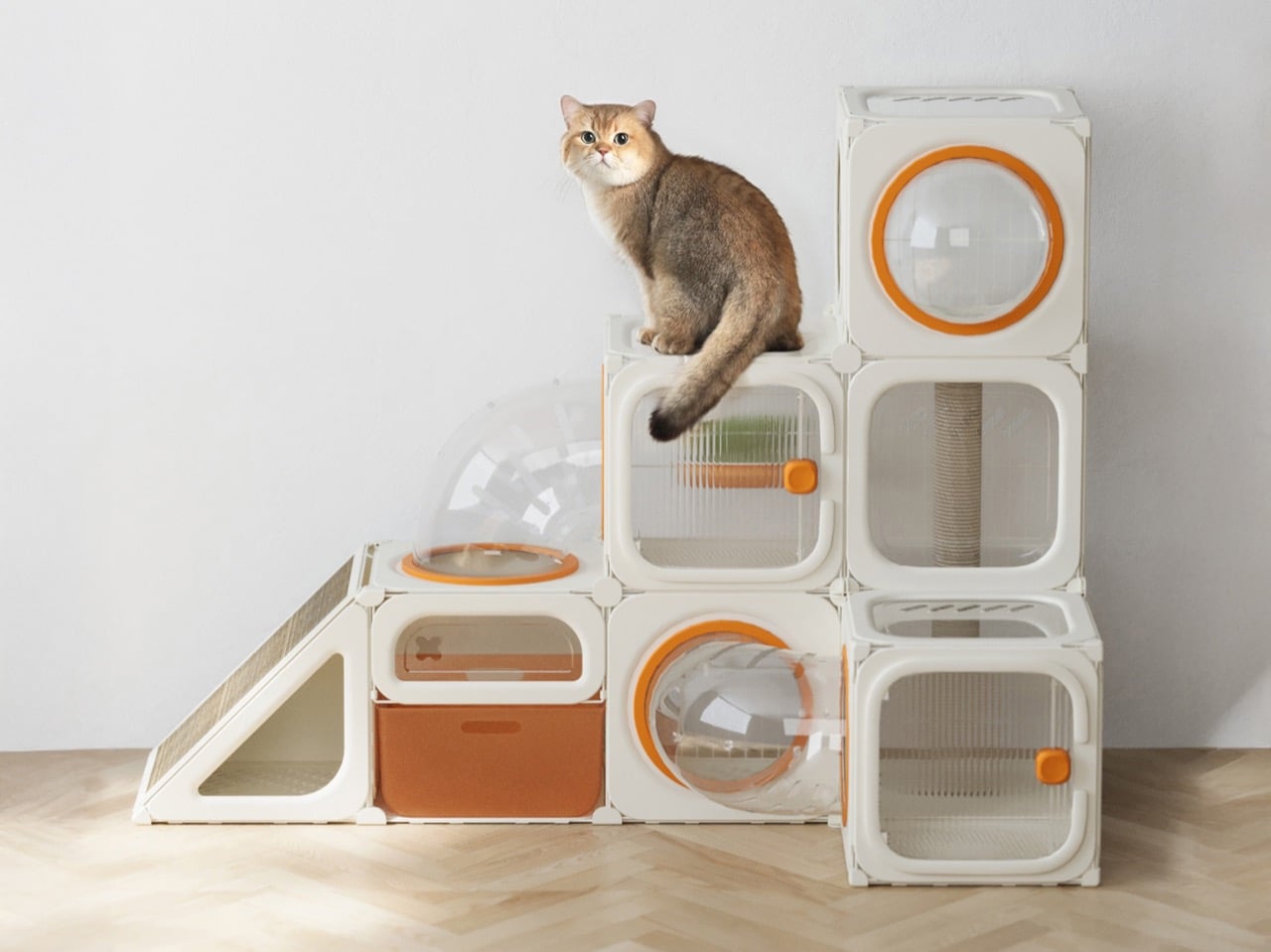
What if we designed homes the way cats would design them? Not human homes with a token scratching post in the corner but true spatial systems built around curiosity, vertical exploration, territorial comfort, and play. The N Plus Magic House begins precisely at that question, reframing pet furniture not as an accessory but as architecture scaled for feline psychology. Instead of treating a cat house as a static object, this project treats it as a living spatial framework, one that evolves alongside its inhabitant.

Today’s pet owners increasingly see their cats as emotional companions rather than animals that merely coexist in domestic space. That shift has quietly created a design problem. Traditional cat houses, even elaborate ones, tend to be fixed structures. They may be visually impressive, but they impose constraints on placement, adaptability, and long-term usability. The N Plus Magic House flips that paradigm by introducing modularity as its core philosophy. Rather than selling a finished form, it offers a system of standardized units that can be assembled, rearranged, expanded, or reduced as needed. The result is less like furniture and more like a customizable habitat kit.

Designer: Taizhou Hake Technology Co., Ltd

The genius of the design lies in its simplicity. Each module functions independently yet connects securely through precision-engineered connectors. Owners assemble structures by inserting panels into slots and stacking them like building blocks. No technical expertise, tools, or installation manuals are required. This intuitive construction method does something subtle but powerful. It turns pet care into participation. Instead of buying a finished object, users become co-designers of their cat’s environment. That interaction strengthens the emotional bond among the owner, the pet, and the space.

Material choices reinforce the system’s practicality. The structure combines impact-resistant PP resin, transparent PET panels for visibility, and carbon steel mesh for structural integrity. These materials balance durability with safety while allowing owners to monitor their pets without disturbing them. The manufacturing processes, such as injection molding and automatic wire welding, ensure consistency, precision, and reliability across units. Every element reflects careful alignment with feline behavior and safety requirements.

Behind the scenes, the development team approached the project with a research-driven mindset. They studied cats’ behavioral patterns, analyzed existing products on the market, and mapped owner expectations. One of the biggest technical challenges was maintaining structural stability while preserving modular flexibility. The solution was a custom connector engineered to withstand pressure and weight while preventing slippage. Its textured surface increases friction, ensuring modules remain firmly locked during use. This small component is arguably the system’s unsung hero. It transforms a playful concept into a reliable architectural structure.

Developed in Taizhou, Zhejiang Province, between July 2023 and November 2024 and later exhibited internationally, the N Plus Magic House represents a broader shift in product design thinking. It signals a move away from static ownership toward adaptive systems, objects that respond to changing needs over time. In a world where personalization defines modern consumer expectations, this approach feels less like a novelty and more like a glimpse into the future of domestic product design.

The post The Modular Cat Habitat That Turns Playful Curiosity Into Living Architecture first appeared on Yanko Design.

❌
❌