❌

Vue normale

  • ✇Yanko Design
  • Streaming Took Something From Us. The ENSA T1 Wants It Back
    Do you remember the last time music actually demanded something of you? Not just your attention while you scrolled, but your hands. The deliberate pull of a record from its sleeve. The small, mechanical click of a CD case. The unhurried ritual that came before every song, every mood shift, every late-night session on the floor with the volume just loud enough. Vladimir Dubrovin remembers. The California-based multidisciplinary designer has been quietly building a case for returning physicality
     

Streaming Took Something From Us. The ENSA T1 Wants It Back

12 août 2026 à 10:20

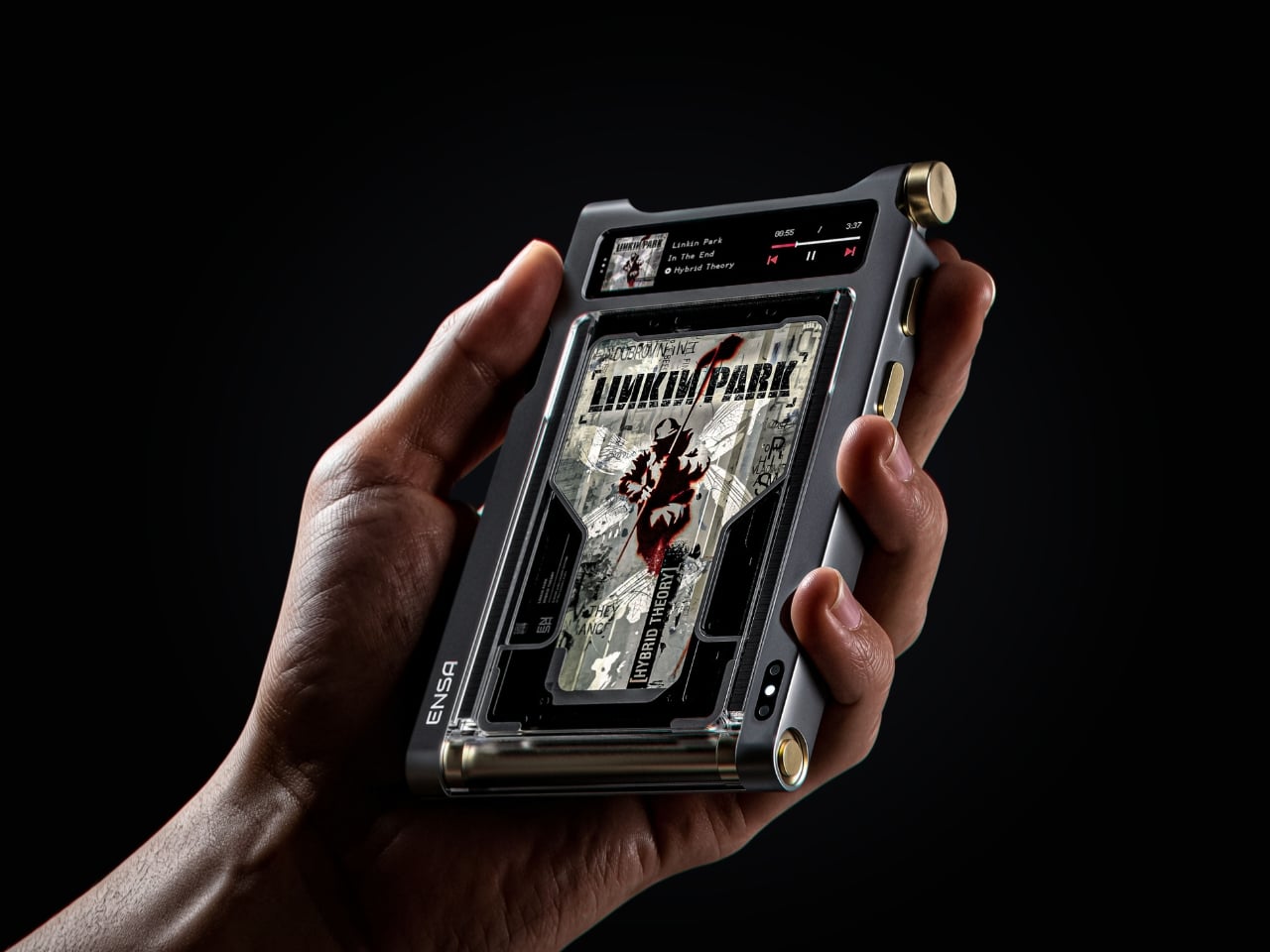
Do you remember the last time music actually demanded something of you? Not just your attention while you scrolled, but your hands. The deliberate pull of a record from its sleeve. The small, mechanical click of a CD case. The unhurried ritual that came before every song, every mood shift, every late-night session on the floor with the volume just loud enough. Vladimir Dubrovin remembers. The California-based multidisciplinary designer has been quietly building a case for returning physicality to the act of listening, and with the ENSA T1, his latest concept design, the argument gets considerably harder to dismiss.

The T1 is the newest addition to Dubrovin’s ENSA line, an evolving design series that began with the ENSA P1, a portable audio player concept that reimagined what a music device could look and feel like in the post-streaming era. The P1 introduced Dubrovin’s concept of C-NAND cartridges: small, disc-shaped, solid-state storage units where each cartridge holds one complete album. There are no moving parts, no spinning mechanisms. They’re fully digital in how they handle audio, but they exist in the physical world the way vinyl does. You pick one up, turn it over, look at it, choose it. The act of choosing your music becomes deliberate again, and that matters more than it sounds.

Designer: Vladimir Dubrovin

Where the P1 was built for portability and kept its design trim and pocketable, the T1 feels like the next chapter. Visually and conceptually, it carries the same DNA: clean, considered industrial design with an aluminum body and restrained detailing. But the T1 reads as something more anchored, a device you set somewhere permanent and return to, rather than slip into a bag. It’s a design that seems to understand the difference between music you consume and music you actually sit down for.

Aesthetically, Dubrovin’s approach has always felt less like tech product design and more like furniture-level thinking. The ENSA devices belong to the same visual conversation as early Braun electronics or a Dieter Rams concept sketch, where every detail either earns its place or gets removed entirely. The T1 continues that restraint. Its form doesn’t shout, which is precisely why it catches your eye. In a market saturated with speakers shaped like pebbles and smart displays with glowing rings, an audio device that looks like it was designed by someone who genuinely thought about what it means to own a piece of music is genuinely refreshing.

The broader question Dubrovin keeps posing with the ENSA project is one worth sitting with: what did we actually lose when music went weightless? Streaming solved convenience so completely that most of us never stopped to notice what the tradeoff cost. We gained access to everything and lost the kind of focus that comes from committing to a single album, from having music you could see, hold, or lend to a friend. The ENSA T1 is not trying to compete with Spotify. It’s asking whether the experience of music could mean something again, even if you have to build an entirely new format to get there.

It’s a concept project, not a product you can buy, and the realist in me knows that’s a significant caveat. Building out a new physical media format in 2026 is an uphill proposition at best. The infrastructure alone, manufacturing cartridges, convincing labels, and getting devices into homes, would require a level of industry commitment that’s difficult to imagine right now. But design concepts don’t have to ship to matter. The best ones articulate a desire most people feel but haven’t named yet, and the ENSA T1 does exactly that. The desire for music that has weight, that takes up space, that gives you something to do with your hands before the first note plays.

That’s why Dubrovin’s work keeps getting attention. The ENSA line isn’t nostalgic in the way that feels defensive or retrograde. It’s just honest about the fact that we traded something real for something convenient, and it’s asking, politely but persistently, if we’d like it back.

The post Streaming Took Something From Us. The ENSA T1 Wants It Back first appeared on Yanko Design.
  • ✇Yanko Design
  • Honor Robot Phone Hands-on: Bold Phone With A Moving Camera Few Can Buy
    After many teasers and demos, the Honor Robot Phone has finally and officially launched in China. It is also staying exclusive to the Chinese market for now, with Honor not planning an international release at this stage. That alone will make it a frustratingly out-of-reach device for many, because this is one of the rare smartphones that feels genuinely different at first glance. Part of the reason the launch has drawn so much interest is that Honor first revealed the Robot Phone at MWC earlie
     

Honor Robot Phone Hands-on: Bold Phone With A Moving Camera Few Can Buy

Par : Aki Ukita
12 août 2026 à 07:30

After many teasers and demos, the Honor Robot Phone has finally and officially launched in China. It is also staying exclusive to the Chinese market for now, with Honor not planning an international release at this stage. That alone will make it a frustratingly out-of-reach device for many, because this is one of the rare smartphones that feels genuinely different at first glance.

Part of the reason the launch has drawn so much interest is that Honor first revealed the Robot Phone at MWC earlier this year, where it quickly became one of the event’s biggest conversation pieces. Even in a show packed with concept hardware and camera claims, this was the device that made people stop, stare, and ask how it actually worked. Now that it has moved from trade show reveal to commercial launch, the Robot Phone still feels just as unusual.

Designer: HONOR

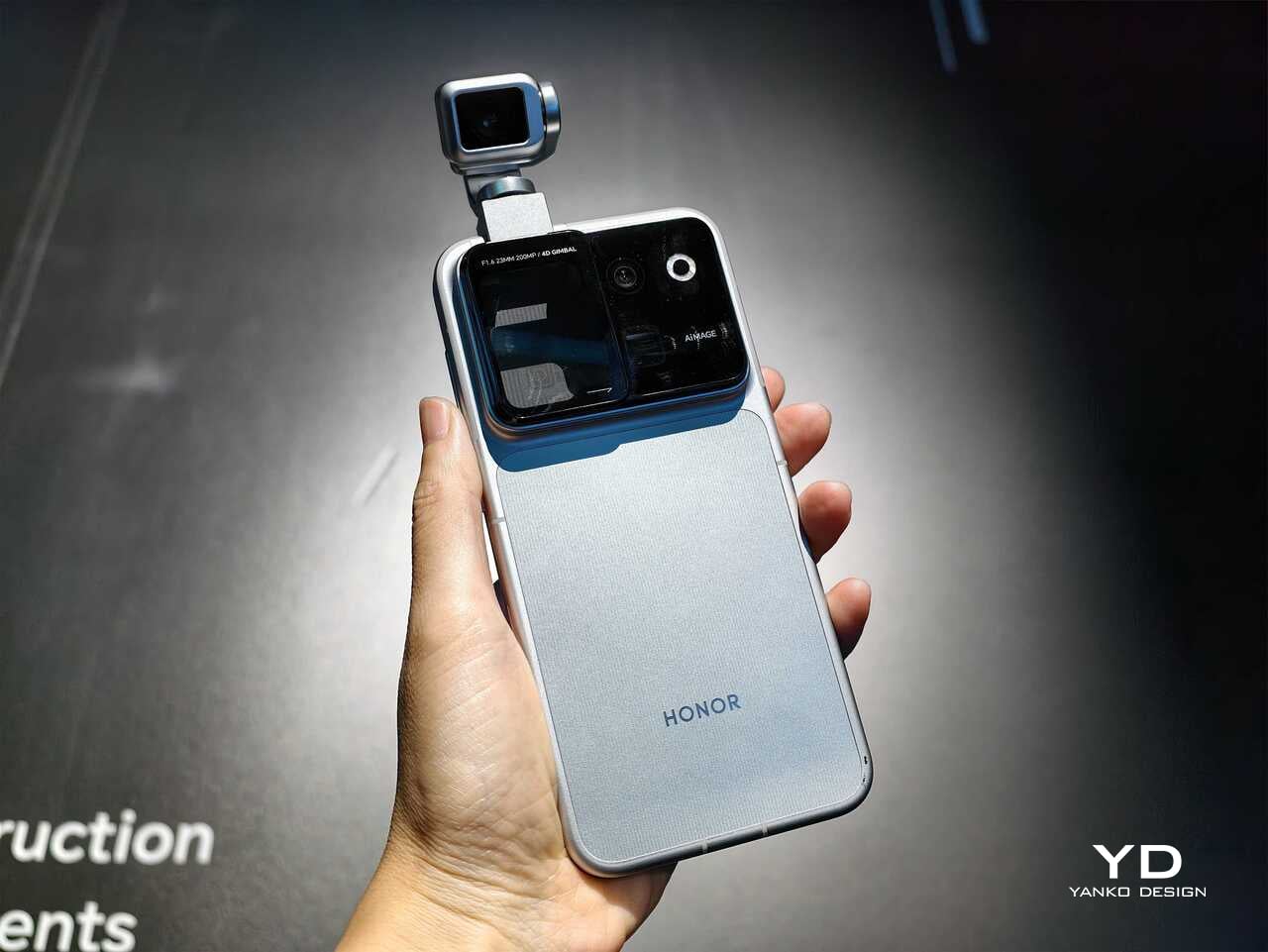
Rather than chasing attention with another familiar camera bump or an incremental spec upgrade, Honor has built a robotic gimbal directly into the phone itself. The result is a camera system that can physically move, track, tilt, and stabilize in ways a conventional flagship simply cannot. After spending time with the device, it is clear the Robot Phone is not just trying to be another premium handset with a long feature list. It is trying to pitch a new idea for what a creator-focused smartphone can be.

The big story is movement, not just megapixels

The core pitch behind the Honor Robot Phone is easy to understand once you see it in person. Honor has integrated what it calls a 4DoF Titanium Agile Gimbal into the phone, effectively turning the camera into an active moving system rather than a static sensor setup. The company says the module is 65 percent smaller than traditional gimbal solutions while also offering a 200 percent increase in structural strength, allowing it to fit inside a premium smartphone body without turning the device into a bulky experiment.

That change in hardware philosophy is what makes the Robot Phone immediately stand out. In practice, the moving camera module is meant to deliver smoother stabilization and more dynamic motion than a normal smartphone can manage on its own. Honor is also building in multiple movement modes, including Tilt Lock, First Person View, FPV Vertical, and AI SpinShot, all of which are designed to make mobile footage look more deliberate and more cinematic.

Honor is aiming this squarely at creators

The second half of the launch story is imaging. Honor says the Robot Phone is the first major product from its Cinematic Imaging Partnership with ARRI, bringing selected elements of ARRI Image Science and professional cinema workflow ideas into a smartphone. That includes ARRI LogC3 recording in ARRI CINEMA mode on the main gimbal camera, alongside ARRI Wide Gamut 3 and ARRI Looks.

On paper, the camera hardware is also extremely ambitious. The rear setup pairs a 200MP Agile Gimbal Main Camera with a 1/1.28-inch sensor and F1.6 aperture with a 200MP periscope telephoto camera using a 1/1.4-inch sensor and 2.7x optical zoom. A 50MP ultra-wide camera completes the setup. Honor is also claiming AI noise reduction improvements, up to 14 stops of dynamic range, and a video pipeline designed to preserve more usable information for post-production.

That is a lot of technical language, but the broader message is straightforward. Honor does not want the Robot Phone to be seen as a novelty. It wants this to be taken seriously as a compact filmmaking and creator tool.

Hands-on: The Honor Robot Phone feels different right away

The most striking thing about the Robot Phone in person is that its main feature is visible. So many smartphone launches revolve around internal improvements that are difficult to appreciate without extensive testing. Here, the big idea is immediately obvious. The camera module moves. It tracks. It gives the phone a sense of physical intention that most handsets simply do not have.

That makes the Robot Phone more memorable than most new flagships before you even get into image quality. Instead of relying entirely on software stabilization and fixed hardware, Honor is trying to introduce actual camera movement into the smartphone experience. In a short hands-on session, that makes the device feel less like a standard phone with a flashy camera and more like a compact production tool that happens to fit in your pocket.

The tracking and movement features are also easier to appreciate in person than they are on a spec sheet. AI Live-Tracking, gesture controls, and voice-directed movement all sound abstract on paper. Once you see the phone physically following a subject or repositioning itself, the concept becomes much easier to understand. Whether that turns into something essential in everyday use is a bigger question, but as a first impression, the idea lands more convincingly than I expected.

Using the on-screen virtual joystick, I was able to adjust the gimbal with surprising precision. The interface crams in a lot of features, so it does take some time to learn. Even so, the gimbal feels very responsive, which helps the controls feel more intuitive once you settle in.

There is still a full flagship wrapped around the concept

Outside the headline camera hardware, Honor is still treating the Robot Phone like a proper premium device. It is powered by the Snapdragon 8 Elite Gen 5, backed by a custom cooling system that is meant to keep performance stable during longer recording sessions. There is also a 7060mAh silicon-carbon battery, with support for 120W wired charging and 50W wireless charging.

The rest of the hardware sounds suitably high-end too. Honor is using an all-metal unibody design paired with a 6.31-inch LTPO OLED display, an adaptive 1 to 120Hz refresh rate, and a claimed peak brightness of 6800 nits. On paper at least, this is not a concept phone built around one attention-grabbing trick. Honor is trying to package an experimental camera idea inside a full flagship experience.

China-only for now, and that is a shame

For now, the Honor Robot Phone is launching only in China, where it might be staying indefinitely. Honor is not planning to release the device outside China at this stage, which means this unusually creator-focused phone is set to remain a domestic-market curiosity rather than a broader global play.

That is disappointing, because the Robot Phone feels like exactly the kind of launch the smartphone market needs more of. It may not be for everyone, and there are obvious questions about durability, long-term usefulness, and whether creators will trust a built-in robotic camera system over dedicated gear. Even so, it is difficult to dismiss because the concept is so easy to understand once you see it in action.

Early thoughts

After a brief hands-on, my early take is that the Honor Robot Phone feels niche but genuinely fresh. The robotic gimbal is not just a visual gimmick for launch-day headlines. It changes the way the device presents itself, and potentially the way some people shoot with it. Whether that translates into a truly great camera phone will need more time to answer, but as a statement of intent, Honor has made one of the boldest smartphone moves of the year.

The bigger frustration is that, for now, it is a bold move that most of the world will only be able to watch from a distance. First teased at MWC earlier this year and now officially on sale in China for 9,999 yuan (roughly $1,483) for the 12GB+512GB variant and 12,999 yuan (around $1,928) for the 16GB+1TB variant, the Robot Phone is not about to become the next mainstream global flagship. Still, even as a limited-market release, it stands out as one of the most unusual and ambitious smartphones to arrive this year.

The post Honor Robot Phone Hands-on: Bold Phone With A Moving Camera Few Can Buy first appeared on Yanko Design.

ChatGPT Atlas Shuts Down Aug. 9: What Users Must Save Before Migrating

6 août 2026 à 10:45

ChatGPT Atlas is scheduled to stop working Aug. 9, 2026. Users should export browser data, verify account access, and test replacement workflows before uninstalling it.

The post ChatGPT Atlas Shuts Down Aug. 9: What Users Must Save Before Migrating appeared first on TechRepublic.

Samsung: New Galaxy Foldables Beat Previous Preorder Record by 30%

6 août 2026 à 09:02

Samsung’s Galaxy Z Fold8 leads record foldable preorders in the US and South Korea as more buyers move from Flip models to the larger Fold lineup before launch.

The post Samsung: New Galaxy Foldables Beat Previous Preorder Record by 30% appeared first on TechRepublic.

OpenAI Launches 3 ChatGPT Education Plugins for Teachers and College Students

5 août 2026 à 21:30

OpenAI’s three education plugins help teachers and college students create lessons, quizzes, study plans, and other materials with ChatGPT.

The post OpenAI Launches 3 ChatGPT Education Plugins for Teachers and College Students appeared first on TechRepublic.

Apple Plans iPhone-to-Windows Clipboard Support After Microsoft DMA Request

5 août 2026 à 13:22

Apple plans an iOS framework for iPhone-to-Windows clipboard sharing after Microsoft’s EU request, but users face a wait until at least late 2027.

The post Apple Plans iPhone-to-Windows Clipboard Support After Microsoft DMA Request appeared first on TechRepublic.

Motorola Patents a Wearable that Could Transform From Watch to Phone

5 août 2026 à 13:02

Motorola patented a smartwatch that could one day transform into a phone. See how it works, who might use it, and what could keep it from reaching stores.

The post Motorola Patents a Wearable that Could Transform From Watch to Phone appeared first on TechRepublic.

Galaxy S26 FE Price Leak Follows Samsung’s Mobile Profit Slide

4 août 2026 à 13:49

Samsung’s Galaxy S26 FE could cost more than its predecessor, raising questions about whether the Fan Edition still offers strong value.

The post Galaxy S26 FE Price Leak Follows Samsung’s Mobile Profit Slide appeared first on TechRepublic.

Apple Could Launch Camera-Equipped AirPods Before the End of 2026

4 août 2026 à 12:03

Apple could launch camera-equipped AirPods before the end of 2026, using visual sensors to give Siri greater awareness of a user’s surroundings.

The post Apple Could Launch Camera-Equipped AirPods Before the End of 2026 appeared first on TechRepublic.

MacBook Air Delays Could Complicate Laptop Rollouts

4 août 2026 à 05:56

MacBook Air delays are turning Apple’s everyday laptop into a planning issue for buyers counting on quick delivery.

The post MacBook Air Delays Could Complicate Laptop Rollouts appeared first on TechRepublic.

Mark Zuckerberg Says AI Is Accelerating Software Development at Meta

31 juillet 2026 à 17:23

Meta CEO Mark Zuckerberg says AI is helping engineers build apps faster, but the company has not disclosed its tools or measured productivity gains.

The post Mark Zuckerberg Says AI Is Accelerating Software Development at Meta appeared first on TechRepublic.

OnePlus 16 May Skip the US and Europe: What Buyers Need to Know

31 juillet 2026 à 15:48

Thinking about importing the OnePlus 16? Learn what OnePlus' US and Europe exit means for availability, warranty, software support, and compatibility.

The post OnePlus 16 May Skip the US and Europe: What Buyers Need to Know appeared first on TechRepublic.

Samsung Earnings Put New Foldables at the Center of Its Asia Strategy

31 juillet 2026 à 08:05

Samsung’s record second-quarter earnings masked losses in its consumer-device businesses, making the Fold8 lineup more important to its Asia mobile strategy.

The post Samsung Earnings Put New Foldables at the Center of Its Asia Strategy appeared first on TechRepublic.

IBM: AI-Enabled Data Breaches Cost Organizations $6 Million on Average

30 juillet 2026 à 16:32

IBM found AI-enabled breaches cost organizations $6 million on average, exposing gaps in vulnerability management, access controls, and AI governance.

The post IBM: AI-Enabled Data Breaches Cost Organizations $6 Million on Average appeared first on TechRepublic.

Windows 11 KB5101684 Preview Update Delivers 42 Fixes for Intune, SMB, and File Explorer

30 juillet 2026 à 16:23

Microsoft’s Windows 11 KB5101684 preview update delivers 42 fixes for Intune, SMB, File Explorer, Search, Windows Hello, and more.

The post Windows 11 KB5101684 Preview Update Delivers 42 Fixes for Intune, SMB, and File Explorer appeared first on TechRepublic.

Apple’s New iPhone Leasing Program: What It Means Before You Upgrade

30 juillet 2026 à 14:42

Apple's new Apple Upgrade program lets US customers lease iPhones, Macs, iPads, and Apple Watches. Here's how it works and whether it's better than buying.

The post Apple’s New iPhone Leasing Program: What It Means Before You Upgrade appeared first on TechRepublic.

Australia Looks to Italy for the Next Phase of Its Social Media Ban

30 juillet 2026 à 13:27

Florence just opened a digital addiction clinic for teenagers — and it points to the next phase of Australia's world-first social media crackdown.

The post Australia Looks to Italy for the Next Phase of Its Social Media Ban appeared first on TechRepublic.

Google Pixel 11 Explained: What Google Has Confirmed and What the Rumors Say

30 juillet 2026 à 10:22

Google will unveil the Pixel 11 on Aug. 12. Here's what Google has confirmed, what reputable reports suggest, and what remains unknown ahead of launch.

The post Google Pixel 11 Explained: What Google Has Confirmed and What the Rumors Say appeared first on TechRepublic.

❌