❌

Vue normale

  • ✇Yanko Design
  • Your Second Screen Can Finally Work With No Cables and No Outlet
    Desks are overrated. So are the cables that come with them. The 4URPC is a 15.6-inch wireless touchscreen monitor built for people who’d rather not be chained to an outlet just to get a bigger screen. It’s slim, self-powered, and ready to mirror whatever’s on your phone, tablet, or laptop the moment you need more room to work, watch, or play. Cutting the cord doesn’t mean cutting functionality. The monitor mirrors an iPhone or Android device through a peer-to-peer wireless connection, no home W
     

Your Second Screen Can Finally Work With No Cables and No Outlet

Par : JC Torres
8 septembre 2026 à 21:45

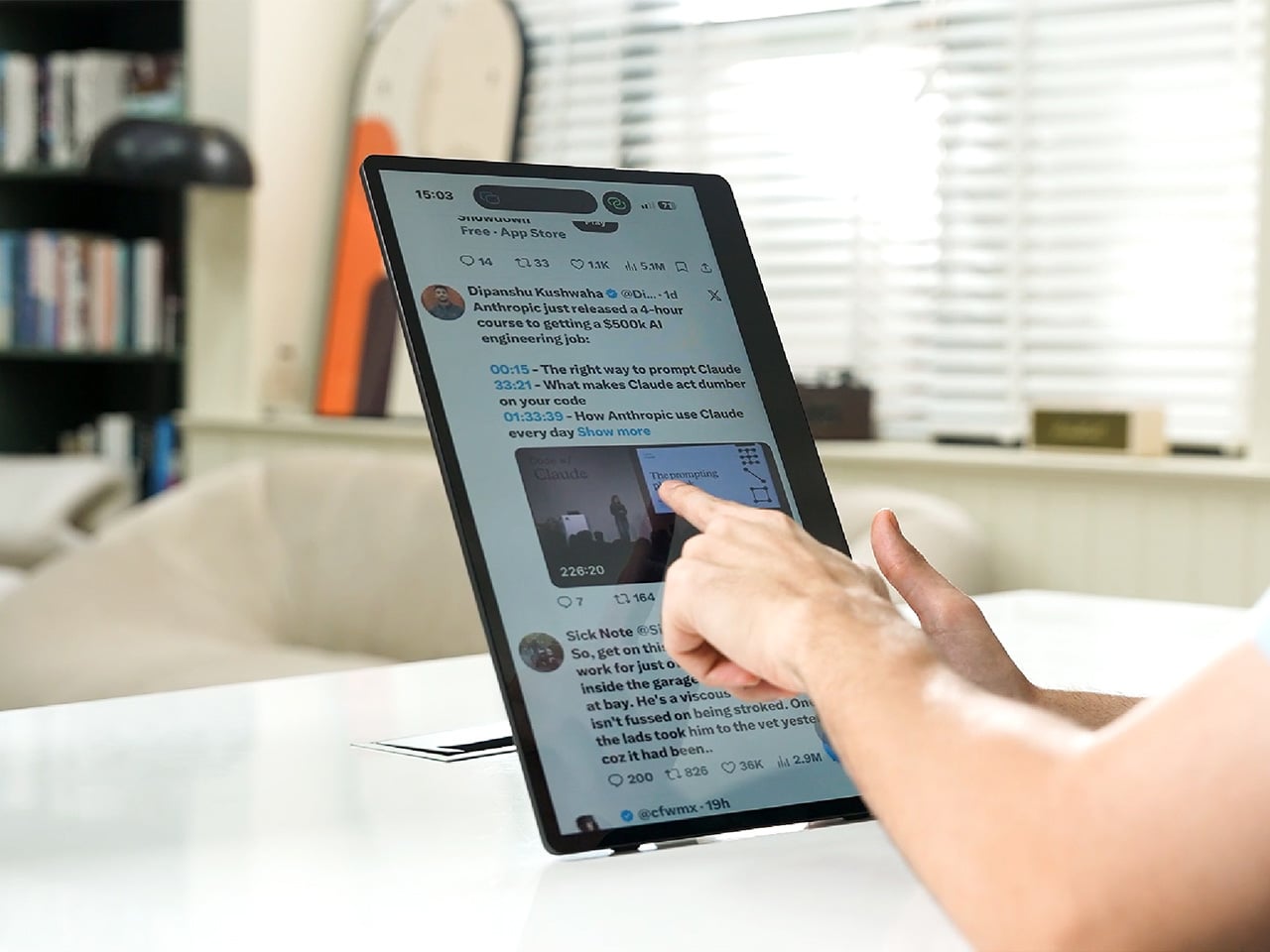
Desks are overrated. So are the cables that come with them. The 4URPC is a 15.6-inch wireless touchscreen monitor built for people who’d rather not be chained to an outlet just to get a bigger screen. It’s slim, self-powered, and ready to mirror whatever’s on your phone, tablet, or laptop the moment you need more room to work, watch, or play.

Cutting the cord doesn’t mean cutting functionality. The monitor mirrors an iPhone or Android device through a peer-to-peer wireless connection, no home Wi-Fi or app required. For streaming platforms like YouTube, Netflix, or Hulu, connecting to Wi-Fi and tapping the built-in TV Cast icon sends video to the screen. Either way, there’s no dongle to lose or cable to untangle before the movie starts.

Designer: 4URPC

Click Here to Buy Now: $219 $399 (45% off). Hurry, only 451/600 left! Raised over $181,000.

The more interesting trick happens after mirroring starts. The 10-point touchscreen can send input back to the connected phone, turning the monitor into a larger, shared control surface. Flip through photos with a friend, walk a colleague through a presentation, or hand someone the reins without handing over your phone. It’s a shift that makes shared screen time less awkward.

None of this would matter much if the monitor were bulky. At half an inch thick and just over 2 pounds, it’s built to disappear into a backpack rather than dominate it. The matte, textured shell keeps fingerprints and glare to a minimum, and a fold-out kickstand on the back means setup takes seconds on a desk, a kitchen counter, or the arm of a couch.

A built-in 4,000 mAh battery backs up that portability by taking the wall outlet out of the equation. Setting up on a train, in a hotel room, or on a patio doesn’t mean scouting for the nearest plug first. That same battery can lend a charge to a connected phone, turning the monitor into a backup power bank when the moment calls for it.

Plug it into a laptop with a USB-C cable, and the 4URPC switches roles, becoming an extended display rather than a wireless mirror. Dragging a browser tab, a chat window, or a reference document onto the second screen takes a second, and the touchscreen works over the wired connection. The laptop stays focused on the main task while the extra display handles everything else.

The screen also rotates between landscape and portrait without any fuss, which sounds minor until it changes how you use it day to day. Landscape suits video calls, games, and spreadsheets, while portrait mode fits scrolling through documents, reading long articles, or checking social feeds. Switching between the two takes a twist of the stand, not a trip through a settings menu.

Compatibility runs wide enough that most people won’t need to think twice before connecting. Wireless mirroring covers iPhones, Android phones running version 10 or later, MacBooks, and most Windows laptops, while the wired USB-C or HDMI input works with game consoles, streaming boxes, and the Nintendo Switch. There’s no software to install and nothing to configure; connecting the device and turning it on is the entire setup process.

Under the glass sits a 1920×1080 matte IPS panel running at 60 Hz, built more for comfortable, glare-free sessions than eye-popping color numbers. Dual USB-C ports split power delivery and video duties, small stereo speakers cover casual audio, and a VESA mount plus a standard camera screw thread add mounting options beyond the built-in stand. It’s a practical set of choices rather than a flashy one.

There’s something telling about a monitor that assumes you won’t always be sitting at the same desk tomorrow. Work has scattered across kitchen tables, coffee shops, and airport gates for a while now, and screens are only starting to catch up. The 4URPC doesn’t try to be the sharpest or brightest display around; it just tries to be wherever you happen to land next.

Click Here to Buy Now: $219 $399 (45% off). Hurry, only 451/600 left! Raised over $181,000.

The post Your Second Screen Can Finally Work With No Cables and No Outlet first appeared on Yanko Design.
  • ✇Yanko Design
  • Ruka Studio’s TD-1 Vertical Turntable Turns Your Vinyl Collection Into Stunning Part of Your Room
    For a very long time, the world was fixated on horizontal vinyl players that took up a premium space on a table. Just recently, the tide has started shifting in favor of vertical record players that are designed to stand out instead of blending in. The new entrant in the category already explored by designer Fatih Demirci, CoolGeek, and Dutch Hi-Fi maker Miniot, is Ruka Studio – a Los Angeles-based company that was founded in 2024. Relatively new in its existence, Ruka makes its presence felt w
     

Ruka Studio’s TD-1 Vertical Turntable Turns Your Vinyl Collection Into Stunning Part of Your Room

17 août 2026 à 11:20

For a very long time, the world was fixated on horizontal vinyl players that took up a premium space on a table. Just recently, the tide has started shifting in favor of vertical record players that are designed to stand out instead of blending in. The new entrant in the category already explored by designer Fatih Demirci, CoolGeek, and Dutch Hi-Fi maker Miniot, is Ruka Studio – a Los Angeles-based company that was founded in 2024.

Relatively new in its existence, Ruka makes its presence felt with the wealth of experience that forms the DNA of the brand. Reportedly, Ruka Studio was founded by a group of former Apple engineers and designers, so a high-end turntable with a premium finish would be a given. But that’s not where it’s stopping; the company has launched its first vertical turntable called the TD-1.

Designer: Ruka Studio

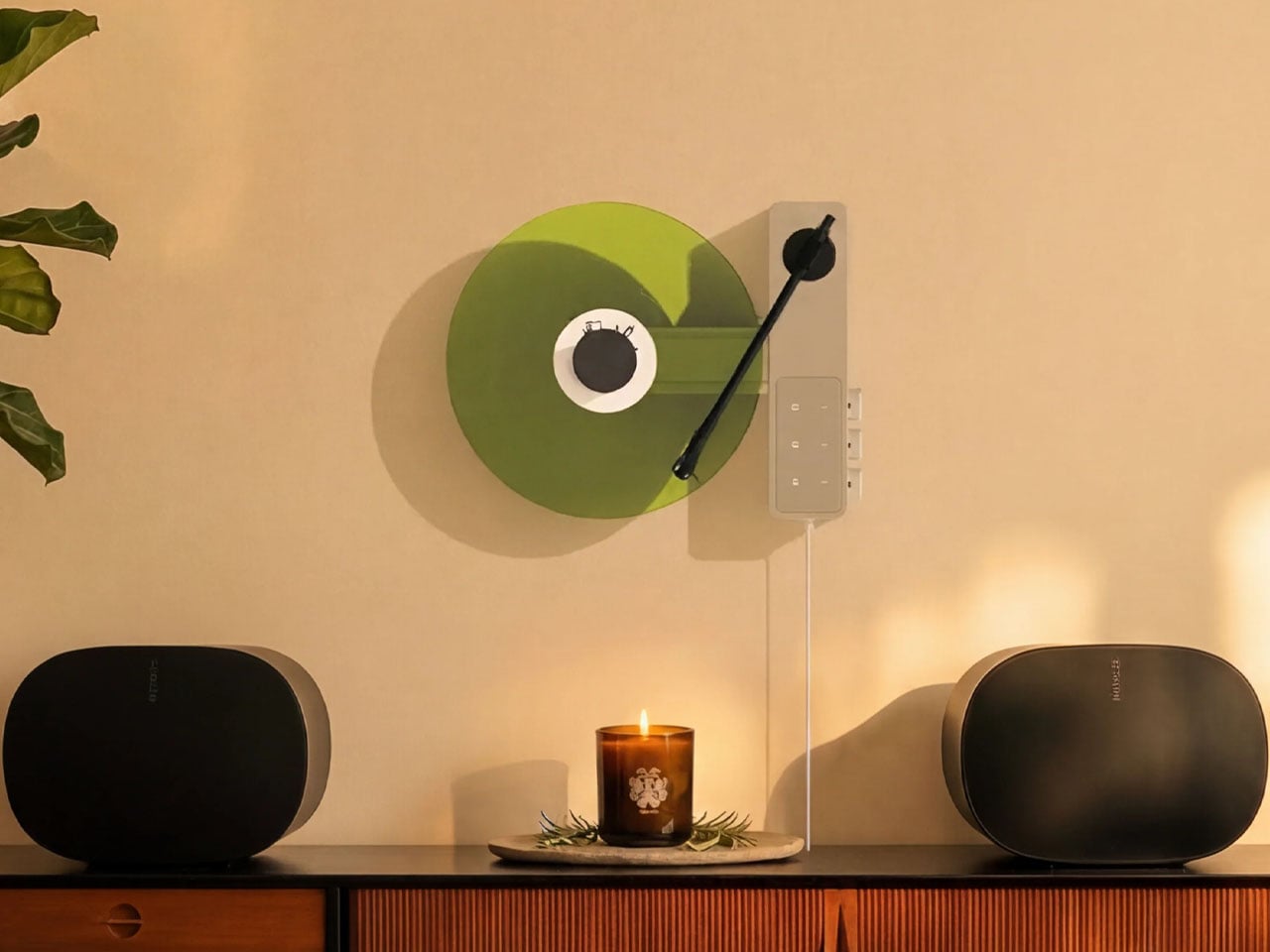
Designed as a turntable that mounts vertically on the wall, or stands upright on a floor stand, it becomes part of the room instead of taking over a table. The TD-1 can spin a vinyl record vertically, which is a treat to the eye and food for thought for your mind. The design is pretty seamless, and you’re left wondering how the giant disk is actually spinning without gravity acting upon it.

If you’re someone who holds your record collection dear and as a reflection of who you are. The TD-1 is conceived with the idea of enhancing that experience like no other has done before. Yes, there have been vertical record players we have seen in our time, but the Ruka’s model is a standout, thanks to its aluminum body and visibly enticing mechanical switches and knobs that turn and click to control playback, adjust the record’s rotational speed, and also to pair the device with a speaker system over Bluetooth. It also comes with wired output to connect with a hi-fi system.

When everyone is trying to integrate AI and convenient remote control via dedicated apps, the TD-1 remains as analog as the record playing was meant to be. The most it gets away from the analog commitment is to stream your vinyl records to a wireless Bluetooth speaker or compatible earbuds.

To make how it looks placed vertically more exciting, the TD-1 arrives with a rubber-coated magnetic plate that holds the record against the wall to appear as if it were floating in mid-air. To ensure you are not hassled with getting the placement straight, it comes with a built-in spirit level. The player features a swappable moving-magnet cartridge, which the company says should allow users to select the cartridge they want, of course for an additional cost from the device itself. The TD-1 turntable itself is belt-drive. The motor has been de-coupled from the acrylic platter to minimize vibration, ensuring smoother and quieter playback.

Ruka Studio TD-1 is available to preorder now starting at a reserve price of $100 on the company’s website. It is priced at $1,399, and preordered models are expected to ship in 2027. The $100 credit is fully refundable or will be adjusted in the final price when a device is shipped.

The post Ruka Studio’s TD-1 Vertical Turntable Turns Your Vinyl Collection Into Stunning Part of Your Room first appeared on Yanko Design.

  • ✇Yanko Design
  • Furniture Made From Wood Scraps You’d Actually Pay For
    Every furniture workshop generates a particular kind of guilt. There are the offcuts, the trimmings, the odd-shaped remainders of boards that got cut to size and are now too small for anything useful, or so we assume. Most of them end up as kindling, compost, or landfill. We’ve accepted that as the cost of making things, a small fine paid for the privilege of precision. Studio Booboon is not interested in paying that fine. The Copenhagen-based studio, founded by Richard Bone and Jisu Yun, two d
     

Furniture Made From Wood Scraps You’d Actually Pay For

12 août 2026 à 09:20

Every furniture workshop generates a particular kind of guilt. There are the offcuts, the trimmings, the odd-shaped remainders of boards that got cut to size and are now too small for anything useful, or so we assume. Most of them end up as kindling, compost, or landfill. We’ve accepted that as the cost of making things, a small fine paid for the privilege of precision. Studio Booboon is not interested in paying that fine.

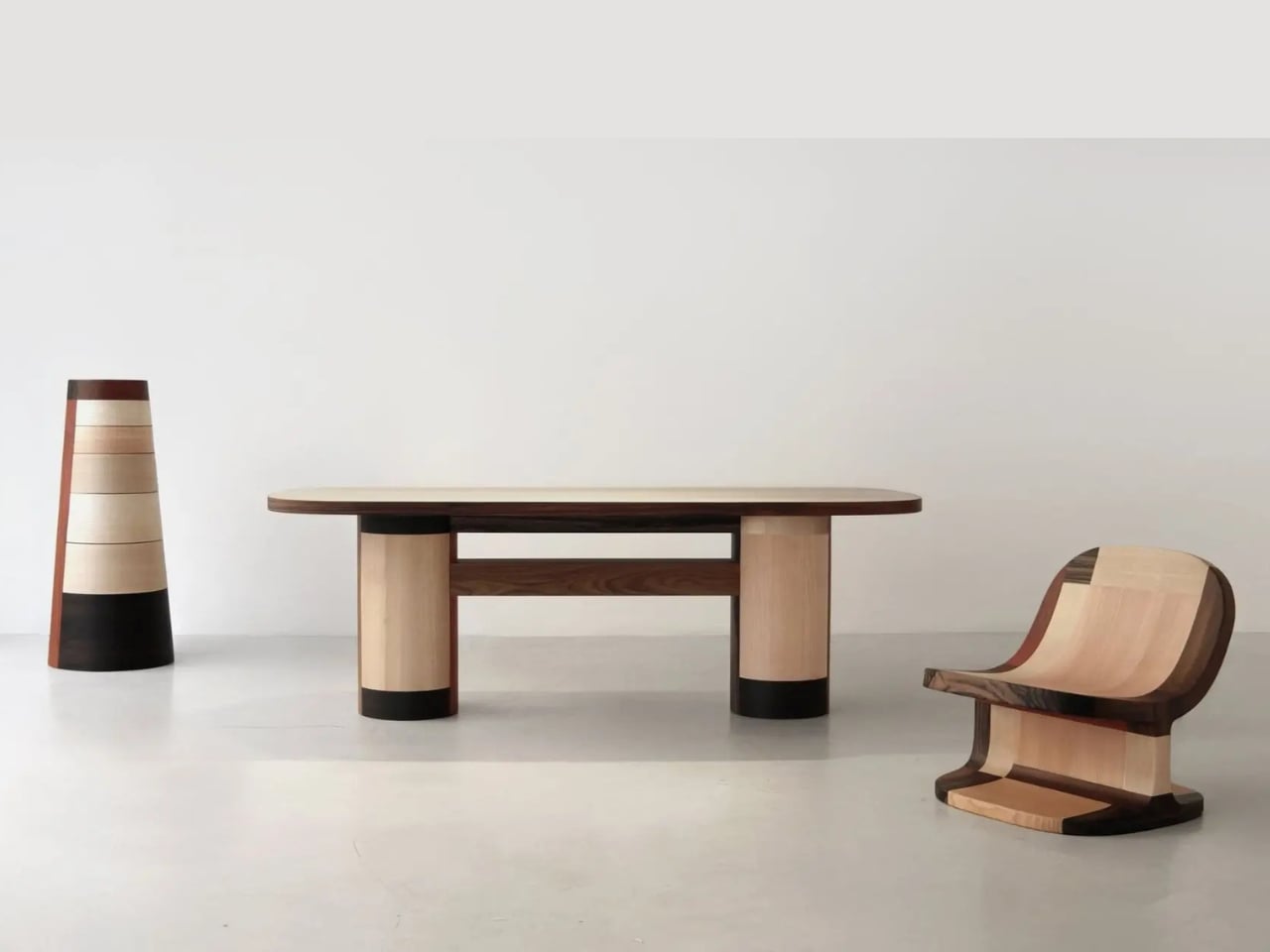
The Copenhagen-based studio, founded by Richard Bone and Jisu Yun, two designers who both trained under Japanese studio Nendo, released their latest collection, Fragments Becoming, and it’s exactly the kind of work that makes you wonder why no one thought to do it this way sooner. The collection is built entirely from timber offcuts, and before you picture something rustic or deliberately imperfect, let me be clear: these pieces are stunning. A cabinet, a dining table, and a lounge chair, each constructed from assembled fragments of discarded wood arranged with such precision and intention that the effect is closer to fine art than furniture-as-apology for sustainability.

Designer: Studio Booboon

The concept the studio uses is something they call “3D marquetry,” which sounds technical but is actually a fairly elegant idea once you sit with it. Traditional marquetry, the kind you’d see on antique furniture or decorative boxes, applies a pattern to a surface. It’s essentially decoration laid on top of structure. What Studio Booboon does instead is treat each fragment of wood as the structure itself. The pattern isn’t on the cabinet door; the door is the pattern. It runs through the object’s entire volume, which means the visual logic and the physical construction are the same thing. That’s not a subtle distinction. That’s a fundamentally different philosophy.

What I appreciate about this approach is that it removes the option to hide mistakes. The studio works with unstained wood, which means every fragment has to earn its place on its own terms, no pigment masking a poor match, no stain blurring the edges. Each piece has to work compositionally before it works functionally. That kind of constraint tends to produce either chaos or brilliance, and in this case, it’s clearly the latter.

Bone and Yun bring a cross-cultural sensibility to the work that shows up in the details. Their debut collection, Playful Reappropriation, released at Milan Design Week 2024, pulled from Korean craft traditions, and Fragments Becoming continues that thread. The materials include hanji (traditional Korean paper), canvas, silk, and Ottchil, a Korean lacquer technique that adds depth without dominating the natural tones of the wood. The combination of a British RCA education, Korean craft heritage, and a shared apprenticeship at Nendo, one of the most conceptually rigorous studios in contemporary design, explains a lot about why this work feels so considered without ever feeling cold.

The collection premiered at Milan Design Week 2026 and later showed at Other Circle 2026 during 3daysofdesign in Copenhagen. That double-billing matters. Milan tends to reward spectacle, while the Copenhagen circuit rewards ideas. The fact that Fragments Becoming landed well in both contexts suggests it’s doing something more than just looking good in photographs, which, for the record, it absolutely does.

Sustainability in design has become such an overused talking point that the word barely registers anymore. Every brand gestures toward it. But there’s a difference between sustainability as a value and sustainability as a method, and Studio Booboon’s work lives in the second category. They’re not telling you the collection is responsible and letting the aesthetics carry a different message. The responsible practice is the aesthetic. The offcut isn’t hidden. It’s the whole point.

That feels rare enough to be worth paying attention to. Design tends to celebrate the new, the seamless, the perfect. Fragments Becoming makes a quiet argument that the incomplete, the leftover, and the discarded might be where the most interesting work is still waiting to happen.

The post Furniture Made From Wood Scraps You’d Actually Pay For first appeared on Yanko Design.

  • ✇Korben
  • Sa famille vidait la batterie, alors il a électrifié sa Steam Deck
    Alors celle-là, c'est la meilleure ! Conroyy Jenkinss en avait tellement marre que sa famille lui vide la batterie de sa Steam Deck sans jamais la recharger qu'il a fini par coller des pics et un taser dessus. Oui, un taser, le mec est fou ! Il a posté son truc hier sur r/SteamDeck en racontant comment il s'y est pris. "J'en avais marre que ma famille vide toujours la batterie de ma console sans la recharger", donc il a modélisé une coque hérissée de pointes dans Blender, l'a imp
     

Sa famille vidait la batterie, alors il a électrifié sa Steam Deck

27 juillet 2026 à 13:20

Alors celle-là, c'est la meilleure ! Conroyy Jenkinss en avait tellement marre que sa famille lui vide la batterie de sa Steam Deck sans jamais la recharger qu'il a fini par coller des pics et un taser dessus. Oui, un taser, le mec est fou !

Il a posté son truc hier sur r/SteamDeck en racontant comment il s'y est pris. "J'en avais marre que ma famille vide toujours la batterie de ma console sans la recharger", donc il a modélisé une coque hérissée de pointes dans Blender, l'a imprimée en 3D et l'a clipsée sur la bête. Plus moyen comme ça de la tenir en main confortablement.

Vous allez me dire qu'il exagère, sauf qu'une Steam Deck n'est plus vraiment l'objet qu'on prête à la légère. Le modèle OLED 1 To est passé de 649 à 949 dollars, du jour au lendemain, à cause de la flambée du prix des composants donc à ce tarif, je comprends qu'il y tienne plus qu'à ses propres gosses ^^/

Sauf que la coque à pointes ça ne lui suffisait pas. Il a donc branché un Raspberry Pi avec un petit haut-parleur, une caméra de détection d'objets et un servomoteur, puis écrit un script Python.

Quand la caméra repère quelqu'un dans le champ, ça balance un clip audio débile, ça attend quelques secondes, et le servo déclenche un taser monté sur le dessus de la console. C'est la même techno que celle qui sert normalement à repérer un colis devant votre porte , sauf qu'ici elle repère votre petit frère.

Rassurez-vous quand même pour la famille. Quand on y regarde d'un peu plus près, le taser ne peut atteindre personne depuis son perchoir. Il crépite dans le vide, façon épouvantail. Ça fait donc quand même un peu peur, mais ça n'électrocute pas, sauf si on met son doigt.

Dans les commentaires sur Reddit, les gens se sont demandé pourquoi il n'avait pas juste mis un mot de passe. Mais lui explique que ça minimise le risque que sa famille y touche. Ils sont forcés de lui demander la permission maintenant.

Voilà, d'après l'auteur lui-même, c'est "clairement le truc le plus con que j'aie jamais construit, mais ça marche, et plus personne n'y touche". Après, c'est pénible aussi pour lui parce que quand il veut jouer, il faut qu'il enlève la coque avec les piques et qu'il désactive le taser.

Mais il reconnaît que ça vaut le coup quand même ^^.

Source

  • ✇Korben
  • macUSB - Créer une clé USB macOS sans toucher au Terminal
    Krystian Pierz, un développeur polonais qui se planque derrière le pseudo Kruszoneq, en a eu marre de se galérer à chaque fois pour faire des clés USB bootable pour Mac, alors il a sorti macUSB , une app Mac native (du vrai Swift, pas un machin Electron quoi) qui fait tout le sale boulot à votre place. C'est gratuit, le code est ouvert, et surtout c'est notarisé par Apple, donc pas besoin de bidouiller la sécurité de votre Mac avec Sentinel pour la lancer. Et ça se fait en trois clics. Vous bala
     

macUSB - Créer une clé USB macOS sans toucher au Terminal

26 juin 2026 à 04:52

Krystian Pierz, un développeur polonais qui se planque derrière le pseudo Kruszoneq, en a eu marre de se galérer à chaque fois pour faire des clés USB bootable pour Mac, alors il a sorti macUSB , une app Mac native (du vrai Swift, pas un machin Electron quoi) qui fait tout le sale boulot à votre place. C'est gratuit, le code est ouvert, et surtout c'est notarisé par Apple, donc pas besoin de bidouiller la sécurité de votre Mac avec Sentinel pour la lancer.

Et ça se fait en trois clics. Vous balancez votre image (un .dmg, un .app d'installation macOS, ou même un .iso), vous désignez votre clé USB, et macUSB se débrouille pour calculer le checksum, détecter la version et l'architecture, formater le support dans le bon système de fichiers et écrire le tout en vous affichant la vitesse en temps réel. Pas de Terminal, pas de commande à rallonge à recopier sans se tromper d'un espace, et surtout l'Utilitaire de disque qu'on déteste tous reste fermé.

Le vrai exploit de Kruszoneq c'est surtout qu'il a réussi à régler les cas de figure où createinstallmedia, l'outil officiel d'Apple, se crashait comme une merde. Je pense que si vous avez déjà essayé de vous faire une clé Monterey ou Big Sur depuis un Mac Silicon par exemple, pour réparer un autre Mac Intel, vous avez dû vous galérer avec des erreurs de validation et autres messages d'erreur pour cause d'architecture incompatible.

Bah macUSB contourne tout ça tout seul comme un grand, et répare même les certificats expirés des installeurs High Sierra et Mojave sans rien vous demander.

Pour situer le progrès, la méthode "propre" côté Apple ressemble à ça :

sudo /Applications/Install macOS Sequoia.app/Contents/Resources/createinstallmedia --volume /Volumes/MaCle

...et encore, à condition d'avoir déjà récupéré le bon installeur dans l'App Store. Je ne vous parle même pas de l'époque où il fallait extraire à la main le fichier InstallESD.dmg planqué dans le paquet de l'installeur (j'expliquais déjà ce bricolage en 2011 pour OSX Lion ). Alors que macUSB, lui, embarque un téléchargeur qui va chercher les installeurs directement sur les serveurs d'Apple. Vous n'avez plus rien à préparer en amont.

L'outil sait donc préparer des clés USB de macOS Tahoe (la version 26, celle de cette année) jusqu'à Tiger 10.4 sorti en 2005, PowerPC compris. Oui, vous pouvez ressusciter un iMac G5 depuis votre MacBook M4. Pour les collectionneurs de vieilles machines, les labos qui gardent des Macs d'époque, ou juste pour remettre d'aplomb un ordi que vous comptez revendre, c'est du bonbon ^^.

Et la v2.3, sortie hier, en remet une couche côté Windows puisqu'elle sait également préparer des clés Windows 10 et 11 en contournant le check TPM 2.0 (le compte Microsoft obligatoire avec la connexion Wi-Fi forcée pendant l'installation, argh !). Et elle écrit aussi les images Linux en .iso et en .img. Après si c'est juste faire une clé Windows depuis votre Mac que vous cherchez, WinDiskWriter fait déjà très bien le job, mais macUSB a l'avantage de tout regrouper au même endroit.

Côté prérequis, votre Mac doit donc tourner au minimum sous Sonoma 14.6 (Apple Silicon ou Intel), et il faudra lui accorder l'accès complet au disque dans les réglages système, rien d'anormal puisqu'il écrit directement sur vos volumes. Une fois ça réglé, vous récupérez le .dmg sur la page des releases GitHub , ou vous l'installez en une ligne avec Homebrew :

brew install --cask macusb

C'est super impressionnant pour un projet développé par une seule personne et qui plus est n'a que 6 mois d'existence. Bref, si vous avez un Mac à réinstaller, un vieux coucou à dépanner ou une machine à remettre d'aplomb avant de la revendre, foncez !

  • ✇Korben
  • Une veste qui fabrique de l'eau potable à partir de l'air, comme dans Dune
    Des ingénieurs de l'université du Texas à Austin ont mis au point un vêtement qui tire de l'eau potable directement de l'air ambiant, sans réservoir à remplir ni source à proximité, simplement grâce au tissu dont il est fait. Le travail, mené par Guihua Yu et son équipe de la Cockrell School of Engineering, avec le chimiste Keith Johnston du département de génie chimique McKetta et l'auteur principal Weixin Guan, vient d'être publié dans la revue scientifique Science Advances. Le secret tient da
     

Une veste qui fabrique de l'eau potable à partir de l'air, comme dans Dune

16 juin 2026 à 05:13

Des ingénieurs de l'université du Texas à Austin ont mis au point un vêtement qui tire de l'eau potable directement de l'air ambiant, sans réservoir à remplir ni source à proximité, simplement grâce au tissu dont il est fait. Le travail, mené par Guihua Yu et son équipe de la Cockrell School of Engineering, avec le chimiste Keith Johnston du département de génie chimique McKetta et l'auteur principal Weixin Guan, vient d'être publié dans la revue scientifique Science Advances.

Le secret tient dans la matière. Il s'agit d'un tissu en hydrogel, c'est-à-dire un gel ultra-absorbant ici fabriqué à partir de matières issues de la biomasse, donc d'origine végétale, qui capte les molécules d'eau présentes dans l'air sous forme de vapeur avant de les faire passer à l'état liquide sur la surface des fibres puis de les stocker en profondeur.

Toute la prouesse réside dans la vitesse à laquelle l'eau franchit ces étapes, l'équipe ayant conçu un chemin qui la fait circuler très rapidement de la vapeur vers le liquide puis vers le textile, ce qui lui vaut une efficacité de trois à dix fois supérieure aux matériaux de récupération atmosphérique habituels.

Une fois l'humidité captée, elle est dirigée vers de petits modules détachables que l'on retire pour les glisser dans un collecteur pliable, où la chaleur du soleil libère l'eau emprisonnée dans le gel, qui se condense alors et devient buvable.

Côté rendement, la veste produit entre 400 et 900 millilitres d'eau potable par jour, soit grosso modo une à deux petites bouteilles, selon le taux d'humidité de l'air. Une version posée au sol plutôt que portée grimpe, elle, jusqu'à 1,3 litre quotidien, et tient ce chiffre aussi bien dans un climat aride que dans une ambiance tropicale moite.

La comparaison avec Dune était écrite d'avance. Dans le roman de Frank Herbert porté à l'écran par Denis Villeneuve, les habitants de la planète désertique Arrakis enfilent des stillsuits, ces combinaisons qui recyclent la transpiration et l'urine de celui qui les porte pour ne gaspiller aucune goutte d'eau dans un monde où elle vaut plus cher que tout. Ici, c'est nettement plus ragoûtant, puisque la veste ne prélève rien sur le corps et se contente d'aspirer l'humidité de l'air.

Et le projet ne s'arrête pas à un simple blouson, l'équipe imaginant déjà glisser le même tissu dans des sacs à dos, des tentes ou des abris d'urgence, histoire de transformer du matériel qu'on transporte déjà partout en petite usine à eau qui ne réclame ni pile ni branchement électrique.

Bon, il reste des inconnues de taille, puisqu'on ignore le poids réel du vêtement, son prix éventuel et surtout sa tenue dans le temps une fois enchaînés les cycles d'absorption et de chauffe. Et 900 millilitres, c'est encore loin de couvrir les besoins d'un adulte qui marche toute la journée en plein cagnard.

N'empêche, pour un randonneur perdu ou une région privée d'eau, tirer un demi-litre du ciel sans la moindre nappe à proximité, ça peut tout changer.

Source : Techspot

❌