Vue normale

Il y a de nouveaux articles disponibles, cliquez pour rafraîchir la page.
Aujourd’hui — 19 février 2026Flux principal

This Wooden Basket Becomes a Low Table When You Flip It Upside Down

Par : JC Torres
19 février 2026 à 17:20

There’s a familiar moment that happens when you carry food, cups, and random essentials to a park, balcony, or floor seating setup and then realize you still need a stable surface to put any of it on. Most people improvise with a bag or a corner of a blanket. Small-space living and casual gatherings reward objects that can do two jobs without taking up twice the storage, but most furniture is still designed around one fixed purpose.

This Convertible Basket Table concept works as both a carry basket and a low table in one form. By simply inverting it, the basket becomes a stable table surface suitable for picnics or casual indoor use. The design combines storage, portability, and easy transformation, making it ideal for relaxed gatherings and compact living spaces.

Designer: Siya Garg

In basket mode, the structured wooden body has a built-in handle and a container that can hold the messy mix of picnic items, fruit, napkins, a book, or a small speaker. The form feels sturdy rather than floppy, carrying like a proper object with a clear handle instead of a tote that collapses when you set it down. That sturdiness is what makes the flip transformation credible. It’s definitely not a soft bag pretending to be furniture.

Once inverted and unfolded, it becomes a low table that works with floor cushions, outdoor blankets, or a casual living room setup. Low tables are the unsung heroes of flexible spaces. They work as coffee tables, game surfaces, or quick work perches, but they’re rarely portable. This one travels in your hand and arrives as a surface, which is a surprisingly underexplored idea.

A square knot side lock keeps the form secure when needed. It’s a rope-based closure that tightens the sides without complicated latches, click mechanisms, or hardware that will eventually strip or break. The whole thing is quiet, tool-free, and easy to replace if the rope wears out, which fits the picnic vibe better than snapping plastic clips would.

The build draws on traditional woodworking throughout. Pattern making involved pine wood in alternating grain directions and a chevron pattern using alternating teak and pine strips. Assembly relies on mortise and tenon joints and sliding mortise and tenon joints to hold the structure together without screws, so the connections are strong enough to handle the repeated flipping and carrying that the concept demands.

The design doesn’t ask you to change how you live, it just quietly accommodates the way you already move through the day. A basket when you’re going somewhere, a table when you arrive, and a warm wooden object that looks like someone actually made it rather than assembled it from a flat pack.

The post This Wooden Basket Becomes a Low Table When You Flip It Upside Down first appeared on Yanko Design.

À partir d’avant-hierFlux principal

Emails jetables - Yopmail et les meilleures alternatives européennes

Par : Korben
2 février 2026 à 07:57

Vous devez tester un service en ligne et là, PAF 🥲 formulaire d'inscription 🥲 Ouiiiin !!!

Et bien sûr, même si vous pouvez remplir tous les champs avec un tas de conneries, forcement à un moment, ça vous demande votre email. Et là, impossible d'y échapper... Heureusement pour éviter ça, il existe des services d'emails jetables et je vous propose qu'ensemble qu'on fasse un petit point dessus parce que ça a beaucoup bougé ces dernières années..

Yopmail , c'est un peu le vétéran du domaine. J'suis certain que vous le connaissez par cœur car ce site tourne quand même depuis 2004 (22 ans au compteur ! Comme mon site en fait !) et le principe c'est que vous choisissez un nom au pif, genre " [email protected] ", et hop, vous avez une boîte mail temporaire. Pas d'inscription, pas de mot de passe, rien. Les messages restent 8 jours puis disparaissent et le truc cool c'est qu'ils ajoutent un nouveau domaine tous les jours pour éviter les blacklists, du coup y'a moins de chances que votre adresse jetable soit refusée.

Sauf que Yopmail a une limitation importante... En effet, n'importe qui peut accéder à votre boîte si il en devine le nom. J'ai testé avec "[email protected]" et effectivement, on tombe sur les mails de dizaines d'autres personnes qui ont eu la même idée... pas ouf pour du confidentiel. Côté envoi de mails, c'est un peu plus nuancé : vous ne pouvez pas initier une conversation vers l'extérieur, mais vous pouvez répondre à un mail reçu d'une adresse externe, à condition que le message n'ait pas été identifié comme spam et que l'expéditeur soit authentifiable (merci Fred, le créateur de Yopmail, pour la précision !).

Pour ceux qui veulent du "privacy first" radical, y'a aussi MephistoMail qui ne garde aucun log. Attention par contre, l'inbox peut disparaître à tout moment sans prévenir. J'ai failli me faire avoir la première fois, j'ai fermé l'onglet avant de récupérer mon lien de confirmation et pouf, game over. Pensez donc à copier ce dont vous avez besoin AVANT de fermer.

Dans la catégorie "je veux juste une inbox vite fait", j'ai aussi croisé pas mal de services qui font le job pour récupérer un lien de confirmation ou un code OTP en 10 secondes chrono. TrashMail.de par exemple, c'est du mail jetable basique mais efficace. Byom.de est marrant également parce que c'est un peu en mode "catch-all" où vous inventez n'importe quelle adresse, vous la balancez au site qui vous demande un email, puis seulement ensuite vous allez lire ce qui est arrivé. Et si vous trouvez que le "10 minutes mail" c'est trop court, Muellmail.com joue justement la carte "10 min, c'est pas assez" sans vous prendre la tête.

Ah, et pour les devs / QA qui aiment automatiser des tests de signup (oui, je vous vois 😄), y'a aussi mail.tm qui propose des boîtes temporaires avec mot de passe, plus une API, et des services comme Temp-Mail qui ont carrément une API officielle pour tester des workflows email en boucle. Pratique quand vous devez valider "inscription -> email -> clic -> compte OK" sans y passer votre vie.

Et puis y'a une autre catégorie qui m'intéresse de plus en plus : les gestionnaires d'alias. J'ai d'abord hésité entre SimpleLogin et addy.io, mais j'ai fini par choisir Addy.io (anciennement AnonAddy) parce que c'est open source sous licence AGPL-3.0 et que vous pouvez l'héberger vous-même si vous êtes parano. Le principe c'est qu'au lieu d'avoir un mail jetable, vous créez des alias illimités qui redirigent vers votre vraie boîte. Si un alias se fait spammer, vous le désactivez en un clic sans toucher au reste. Y'a une version gratuite et des abonnements entre 1 et 3$/mois (Lite à 1$/mois, Pro à 3$/mois). Par contre attention, si vous self-hostez, faut quand même gérer un serveur mail et ça c'est pas une mince affaire...

Et du coup, si vous voulez le même délire qu'addy.io mais avec une autre approche, SimpleLogin est une très bonne option aussi puisque c'est open source, auto-hébergeable, et le gros plus c'est que vous pouvez répondre / envoyer depuis vos alias (Et ça c'est trop bien quand faut valider un truc ou parler à un support sans exposer votre vraie adresse). Bref, c'est le genre d'outil qui passe mieux que les domaines jetables quand un site commence à sortir la sulfateuse anti-temp-mail.

Et si vous êtes déjà chez un fournisseur mail orienté privacy, y'a des alternatives "pas jetables mais ultra pratiques". Je pense à Tuta par exemple permet d'avoir des alias (et même du catch-all sur domaine perso selon les offres). Migadu aussi est très cool dans le genre "j'ai mon domaine, je veux créer plein d'adresses/alias sans payer par boîte", et ils annoncent être une boite suisse avec des datacenters en France. C'est pas du "mail jetable", mais pour garder le contrôle sur le long terme, c'est une approche qui se défend.

Et pour les plus motivés (ou les plus masochistes 😅), y'a la voie du "je self-host tout" avec des stacks comme mailcow , Mailu ou docker-mailserver . Mais je vous le dis cash patate, monter son propre serveur mail, c'est la porte ouverte aux joies de SPF/DKIM/DMARC, de la réputation d'IP, des mails qui finissent en spam "parce que lol", et des heures à se demander pourquoi Outlook vous boude. Donc oui c'est souverain de votre village de ploucs, oui c'est stylé, oui c'est gratuit si votre temps vaut tripette, mais c'est pas un petit dimanche tranquille.

Côté souveraineté européenne, tout ce que je viens de vous présenter peut aider à limiter l'exposition aux joies du Cloud Act... mais attention, faut regarder au cas par cas où c'est hébergé et qui opère le service. Dans tous les cas, gardez en tête que certains sites comme Amazon ou PayPal bloquent carrément les domaines de mails jetables connus. Dans ce cas, les alias (surtout si vous avez votre propre domaine) passent généralement mieux parce que ça ressemble à une adresse "normale" qui redirige vers votre vraie boîte.

Bref, pour le quotidien Yopmail fera bien le taf (le gars sûr !), mais si vous voulez envoyer des mails, éviter les blacklistages (c'est comme ça qu'on dit ??), ou garder le contrôle sur vos alias à long terme, regardez du côté de TempMail, SimpleLogin ou addy.io.

Et si vous aimez bricoler et souffrir, vous savez ce qu'il vous reste à faire... 😈

When Your Speaker Is Also a Statement: The Tresound Mini

Par : Ida Torres
1 février 2026 à 14:20

Sometimes the best tech isn’t the loudest. It’s the one that makes you pause and actually look at it before you press play. That’s what designers Yong Cao and Jianfeng Lv have managed to pull off with the Tresound Mini, a desktop Bluetooth speaker that refuses to be just another black box on your desk.

At first glance, this compact speaker looks like it wandered in from a modern art gallery. Its cone-shaped design is clean, almost architectural, with a minimalist aesthetic that feels intentional without being precious about it. The form isn’t just for show, either. TRETTITRE, the emerging HiFi brand behind the speaker, describes itself as bridging traditional audio quality with something more forward-thinking, and you can see that philosophy at work here.

Designers: Yong Cao and Jianfeng Lv

The Tresound Mini recently won the Golden A’ Design Award in the Audio and Sound Equipment Design category, which is one of those achievements that signals serious design cred. But awards aside, what makes this speaker interesting is how it thinks about the desktop experience differently. Instead of trying to dominate your workspace with aggressive angles or flashy lights, it takes a more refined approach. The design integrates seamlessly into your environment, whether that’s a home office setup, a creative studio, or just a corner of your apartment where you actually get things done.

Art Director Yong Cao and Designer Jianfeng Lv, both from China, approached this project with a focus on what they call the “deep integration of brand design and product design”. That sounds like design speak, but what it really means is that every element serves a purpose. The cone shape isn’t arbitrary. It contributes to the audio performance while also giving the speaker a distinctive profile that stands out without screaming for attention. It’s the kind of design that works equally well in a carefully curated Instagram photo or just sitting there doing its job.

Let’s talk about the packaging, because this is where things get genuinely clever. Instead of going with the typical cardboard box and foam inserts, the Tresound Mini comes with a carrying bag that’s wet-pressed from bamboo fiber pulp. This isn’t just packaging in the traditional sense. It’s designed to double as a carrying case, making the speaker genuinely portable. The bamboo fiber approach is both environmentally friendly and cost-effective, reducing packaging waste while providing actual protection for the product. It’s the kind of thoughtful detail that shows someone was actually thinking about the full lifecycle of the product, not just the unboxing moment.

The portability factor is key here. Desktop speakers traditionally live in one spot, tethered to your workspace. But the Tresound Mini was designed with the understanding that people move around now. You might want it on your desk in the morning, out on a balcony in the afternoon, or in your kitchen while you’re cooking dinner. The compact size and that bamboo fiber carrying bag make that kind of flexibility possible.

TRETTITRE positions itself as catering to “the new generation of HiFi enthusiasts”, which is a smart read of where audio culture is heading. There’s a growing audience that cares about sound quality but doesn’t want to sacrifice design or deal with the bulk and complexity of traditional HiFi setups. They want something that sounds good, looks intentional, and fits into spaces that might not have room for a full speaker system. The Tresound Mini seems built specifically for that demographic.

What’s interesting about this design is how it challenges the assumption that good audio equipment needs to look technical or industrial. There’s no display screen, no visible screws, no aggressive branding. Just a clean geometric form that happens to deliver quality sound. It’s the audio equivalent of those minimal tech accessories that proved you don’t need to sacrifice aesthetics for function.

The success of the Tresound Mini might signal a broader shift in how we think about desktop audio. As more people work from home or create hybrid living and working spaces, there’s an appetite for products that perform well without dominating the visual landscape. We want our tech to be good at what it does, but we also want it to feel like it belongs in our actual lives, not in a showroom.

Yong Cao and Jianfeng Lv have created something that manages to be both functional and thoughtful. The Tresound Mini proves that when you approach product design with real consideration for how people actually use things, you can create something that transcends its basic function and becomes worth talking about.

The post When Your Speaker Is Also a Statement: The Tresound Mini first appeared on Yanko Design.

Comment imprimer une brique LEGO ?

Par : Korben
28 janvier 2026 à 08:23

On a tous gardé notre âme d'enfant, notamment en ce qui concerne les LEGO. Je connais d'ailleurs pas mal d'adultes qui achètent et montent encore des boites pour le kiff. Et c'est cool parce que ça fait travailler les doigts et l'esprit !

Seulement, si à un moment, il se passe un petit drame et que vous égarez une pièce LEGO, votre vie peut vite être gâchée. Rien que ça oui. Parlez-en à ceux qui font des puzzles par PASSION... Oui y'en a !

Évidemment, il y a plein de sites web où vous pouvez racheter des pièces comme je vous l'expliquais dans cet article sur la restauration d'anciens sets LEGOs . Mais si vous avez une imprimante 3D, vous pouvez franchir le pas de la contrefaçon copie privée à but non commercial et produire vous-même la pièce manquante !

Comment ? Et bien grâce à Printable Bricks qui vous propose plus de 5000 pièces de LEGO au format STL à imprimer directement et bien sûr compatible avec de vrais LEGO.

Après même si le site a survécu aux menaces DMCA et reste toujours en ligne, prenez quand même le temps de sauvegarder ce dont vous avez besoin, on ne sait jamais ;-)

Et si vous voulez aller plus loin dans la personnalisation, y'a maintenant MachineBlocks qui permet de générer des briques sur mesure directement depuis votre navigateur. Vous pouvez ajuster les dimensions, choisir le type de brique, et même utiliser leur outil de calibration pour que ça s'emboîte parfaitement avec vos LEGO originaux. Hop ensuite un export en STL ou 3MF et c'est parti !

Dans le même genre, le générateur de Lapinoo vous permet aussi de dessiner la forme de votre brique à la souris sur une grille. Vous voulez une pièce en L bizarre qu'aucun set n'a jamais proposé ? Pas de souci, vous dessinez, vous ajustez les plots et la cavité inférieure, et boum, le fichier STL est prêt.

Et si vous n'avez pas encore d'imprimante 3D, pas de problème, il vous suffit de la fabriquer en LEGO . Oh wait...

Merci B0t_Ox de la formidable communauté Twitch Korben.info pour l'info !

Pour aller plus loin :

Si ce genre de projets DIY vous branche, je partage aussi des trucs sur ma page Facebook .

Article initialement publié le 4 mai 2021, mis à jour le 28 janvier 2026.

MephistoMail - L'email jetable qui ne garde aucune trace de vous

Par : Korben
19 décembre 2025 à 13:00

Vous voulez tester un service, télécharger un truc, ou vous inscrire sur un site que vous n'utiliserez probablement qu'une fois et là, une fois encore, on vous demande votre email. Alors vous pétez un câble, vous retournez votre bureau en hurlant, vous jetez votre tasse de café sur le visage de votre collègue, et vous essayez de vous suicidez en mettant frénétiquement votre langue dans la multiprise. Ne rigolez pas, ça arrive tous les jours !

Heureusement, voici une solution qui va vous permettre de contourner le problème. Ça s'appelle MephistoMail , et c'est un service d'email jetable, anonyme, et qui ne garde aucun log de vos activités. Vous allez sur le site, vous copiez l'adresse temporaire qui vous est attribuée, vous l'utilisez pour vous inscrire quelque part, et hop, les mails de confirmation arrivent dans votre inbox temporaire. Une fois que c'est fait, vous fermez l'onglet et tout disparaît.

Vous allez me dire, le concept n'est pas nouveau, y'a des dizaines de services de temp mail qui existent depuis des années. Mais MephistoMail se distingue par son approche "privacy first" assez radicale. Pas de tracking, pas de logs, pas de collecte de données et surtout l'inbox est vraiment volatile et peut être supprimée à tout moment par le système.

Du coup, y'a quelques limitations à connaître avant de vous lancer. Ce service est prévu principalement pour recevoir des emails, pas pour en envoyer. Certains sites ont également commencé à bloquer les domaines de temp mail connus, donc ça marchera pas partout. Et surtout, ne l'utilisez jamais pour des trucs sensibles comme votre banque ou des services critiques. Si vous perdez l'accès à l'inbox avant d'avoir récupéré votre lien de confirmation, c'est game over.

L'utilisation est par contre hyper simple et surtout y'a pas de compte à créer, pas de mot de passe à retenir, bref pas d'emmerdes.

Voilà, si vous en avez marre de donner votre vraie adresse mail à n'importe qui et de vous retrouver noyé sous les newsletters non désirées, MephistoMail fera bien le taf. Et en plus c'est gratuit !

Handcrafted Porcelain Dinnerware Redefines Everyday Dining Through Craft, Light, and Ritual

Par : Tanvi Joshi
21 décembre 2025 à 18:20

Porcelain dinnerware has long been shaped by the logic of industrial production. Uniform forms, limited color palettes, and standardized finishes dominate the contemporary table, reducing porcelain to a neutral backdrop rather than an active part of the dining experience. This porcelain dinner set positions itself in deliberate contrast to that reality. It proposes a quieter, more thoughtful vision in which craft, material honesty, and visual sensitivity redefine how everyday meals are experienced.

At the core of the design lies a simple but powerful idea: food presentation should be as engaging as flavor. Dining is not only an act of nourishment, but also one of attention, rhythm, and atmosphere. By merging handcrafted processes with functional versatility, the set bridges modern living and nostalgic familiarity. It feels contemporary in its restraint, yet warm in its tactile and visual language.

Designer: Monte Porcelain

The collection consists of four pieces designed as a cohesive system: a glass, a bowl, a deep plate known as the Saturn plate, and a service or supla plate. Rather than assigning each object a single rigid purpose, the designer embraced multi-use functionality. This approach reflects evolving dining habits, where objects are expected to adapt fluidly across meals, occasions, and spaces.

The glass is conceived as more than a vessel for drinks. Its form allows it to function equally well as a dessert or snack bowl, encouraging informal and flexible use. The bowl supports a wide range of meals, from soup and salad to breakfast cereal and hot appetizers. Along its upper edge, engraved firefly patterns introduce a subtle decorative layer. These motifs are filled with glaze, ensuring a smooth, sealed surface that interacts gently with light, adding depth without distracting from the food itself.

The Saturn plate is designed for both sauced and non-sauced dishes, such as pasta and main courses. Its flat-edged form frames the food cleanly, while the patterned base enriches the visual composition of the plate. The service plate anchors the set, offering generous proportions suitable for main course presentations or layered pasta services. Together, the four pieces create a table setting that is expressive yet balanced.

Material integrity and production ethics play a central role in the project. White porcelain, often referred to as bone porcelain, was selected for its suitability for food contact, durability, and timeless visual quality. Each piece was cast using high-quality porcelain clay in plaster molds, then fired at 1230 degrees with transparent glaze. The firefly patterns were engraved using a special technique and selectively colored or left transparent, allowing light to pass through while remaining fully sealed and hygienic.

The project was developed over an eight-month period, beginning in June 2024 and completed in February 2025 at the Monte Porcelain Ayvalık Workshop. Every stage of production was carried out by hand, including molding, casting, glazing, and painting. Throughout the process, a fair production approach was maintained, with careful consideration for environmental responsibility and respect for nature. No living creatures were harmed at any stage.

Dishwasher safe, food safe, and designed for long-term daily use, the set demonstrates that handcrafted objects can be both poetic and practical. Recognized within international design contexts such as the A’ Design Award & Competition, this dinnerware collection repositions porcelain as an active participant in the dining ritual. It invites users to slow down, notice light and texture, and rediscover the quiet pleasure of thoughtfully designed everyday objects.

The post Handcrafted Porcelain Dinnerware Redefines Everyday Dining Through Craft, Light, and Ritual first appeared on Yanko Design.

Poco Pad X1 & Poco Pad M1 Review: Budget Tablets That Challenge the iPad

Par : Aki Ukita
13 décembre 2025 à 16:20

PROS:


  • Strong display for the money

  • Complete accessory ecosystem

  • Big batteries

CONS:


  • Neither tablet is light enough for comfortable one-handed use

  • Fully kitted-out X1 with Floating Keyboard and Focus Pen gets expensive fast

RATINGS:

AESTHETICS
ERGONOMICS
PERFORMANCE
SUSTAINABILITY / REPAIRABILITY
VALUE FOR MONEY

EDITOR'S QUOTE:

Poco Pad X1 and M1 are not perfect, but together they deliver more screen, battery, and versatility than almost any other budget tablet pair right now.

Poco built its name on phones that punch above their price, and now it wants to do the same on your coffee table. With Poco Pad X1 and Poco Pad M1, the brand is not just throwing out a couple of cheap tablets. It is trying to turn its budget DNA into a fuller ecosystem that covers gaming, work, and everyday media.

You can feel that ambition in how these two models are drawn. The Poco Pad X1 is a slightly more compact, high refresh performance slate, tuned for games and quick multitasking on an 11.2-inch 3.2K display. The Poco Pad M1 steps up to a 12.1-inch 2.5K panel and the largest battery Poco has ever shipped in a global device, aiming to be the big screen that carries you through movies, sketching sessions, and long days away from a charger.

Designer: Poco

If you have been eyeing an affordable Android tablet for gaming, streaming, or light work, should you reach for the sharper, faster Poco Pad X1, or the larger, more relaxed Poco Pad M1? In this review, we will live with both, compare their strengths, and help you decide which one actually fits your desk, your bag, and your budget.

Aesthetics

Poco Pad X1

Poco is not trying to reinvent tablet hardware with Poco Pad X1 or Poco Pad M1. Both follow a familiar rectangle with rounded corners, flat sides, and a camera module that sits quietly in one corner. On Poco Pad X1, the focus is clearly on framing its 11.2-inch display as efficiently as possible. Poco Pad M1 takes the same basic formula and scales it up with a 12.1-inch panel.

Color choices on the Pad X1 and the Pad M1 are simple. They both come in Grey and Blue. Grey leans more gunmetal and understated with a contrasting yellow accent around the camera module, while Blue reads a little more casual and friendly, but neither option is loud or experimental. Both tablets use a metal unibody design for the main shell, with separate parts for the camera island and buttons, and a big Poco logo stamped in the center for instant brand recognition. The Poco Pad X1 uses a square camera island, while the Poco Pad M1 switches to a softer oval, which gives each model a slightly different signature when you flip them over.

Poco Pad M1

Taken together, the two tablets look exactly like what they are meant to be. They are straightforward, modern Android slabs that fade into the background and let their screens and specs do the talking. For budget-friendly hardware, that quiet, functional design approach feels like the right call.

Ergonomics

In the hand, the main ergonomic difference between Poco Pad X1 and Poco Pad M1 is simply size and weight, but neither is a true one-handed tablet for long stretches. The Poco Pad X1, with its 11.2-inch footprint and 500 g weight, is the more compact of the two. It is easier to manage on a sofa or in bed than the larger Poco Pad M1, but you will still want a second hand or some support if you are holding it for a long time. Even though the Poco Pad X1 is relatively slim and light for an aluminum unibody tablet with an 8,850 mAh battery, with dimensions of 251.22 x 173.42 x 6.18 mm, it does not quietly disappear in one hand the way a smaller 8 or 9-inch device might.

Poco Pad M1

Poco Pad M1 stretches that template out to a 12.1-inch diagonal with dimensions of 279.8 x 181.65 x 7.5 mm and a weight of about 610 g, which puts it clearly into big tablet territory. It is still slim, but the larger footprint makes it even less suited to long one-handed use, especially if you are moving around. Instead, it feels more like a tablet you rest on a table, prop up with a cover, or pair with its official keyboard, where the extra screen real estate really pays off for split-screen apps, video, and drawing.

The accessory ecosystem around the Pad X1 and the Pad M1 makes them versatile, but in slightly different ways. Poco Pad M1 is compatible with the optional Poco Pad M1 Keyboard, Poco Smart Pen, and Poco Pad M1 Cover, a trio that turns it into a very capable small-screen workstation. The cover folds into a stand and adds a built-in holder for the pen, which makes it easy to move between bag, desk, and sofa without worrying about where the stylus went. The keyboard is lightweight and easy to carry, but the keys feel a bit plasticky in use, which slightly undercuts the otherwise solid metal body of the tablet.

Poco Pad X1

Poco Pad X1 has its own dedicated set of accessories. It supports the Poco Pad X1 Floating Keyboard, the Poco Pad X1 Keyboard, the Poco Focus Pen, and the Poco Pad X1 Cover, which together give it a surprisingly flexible setup for both work and play. The cover folds like origami and doubles as a stand, letting you enjoy the tablet vertically or horizontally, and for horizontal use, you can choose between two different viewing heights.

The Floating Keyboard is the standout here. It adds some weight and only offers a modest tilt range, but the key feel is excellent for this class, and the trackpad is responsive and accurate enough that you quickly forget you are on a tablet accessory. Clipped together, the Poco Pad X1 and the Floating Keyboard behave much more like a compact laptop than a budget slate with an afterthought keyboard, which makes it far easier to treat this smaller tablet as a real writing and work machine when you need it.
 

Performance

Living with Poco Pad X1 and Poco Pad M1 quickly shows how differently they lean, even though they share a lot of DNA. The Poco Pad X1 is the sharper and faster option, with an 11.2-inch 3.2K display at 3,200 x 2,136 px, around 345 ppi, and refresh up to 144 Hz in supported apps. It can hit about 800 nits peak brightness, supports Dolby Vision and HDR10, and uses a 3:2 aspect ratio that feels very natural for reading, web browsing, and document work, helped by TÜV eye care, DC dimming, and adaptive colors to keep things comfortable.

Poco Pad M1

The Poco Pad M1, on the other hand, trades a bit of sharpness and speed for sheer size and flexibility. Its 12.1-inch 2.5K panel runs at 2,560 x 1,600px with around 249 ppi and up to 120 Hz refresh, plus 500 nits typical and 600 nits in high brightness mode. You still get Dolby Vision, DC dimming, and TÜV certifications for low blue light, flicker-free behavior, and circadian friendliness, along with wet touch support that keeps it usable with damp fingers.

Poco Pad X1

Both tablets use quad speakers with Dolby Atmos and Hi-Res support, so you get surprisingly full sound from either. Crucially, the Poco Pad M1 also adds a 3.5 mm headphone jack and a microSD slot for up to 2 TB of expandable storage, which makes it a much easier media hoarder and a better fit for wired headphones and speakers. The X1 relies on its internal storage and wireless audio instead, which suits its more performance-driven, travel-friendly role.

Poco Pad X1

Poco Pad M1

Performance and gaming clearly favor the Poco Pad X1. It uses the Snapdragon 7+ Gen 3 with 8 GB of RAM and up to 512 GB of storage, and combined with the 144 Hz panel, it feels like a handheld console that also happens to be good at multitasking and productivity. The Poco Pad M1 steps down to the Snapdragon 7s Gen 4 with 8 GB of RAM and 256 GB of storage, which is still more than enough for apps and casual gaming, but clearly tuned more for streaming, browsing, and note-taking than for chasing every last frame. In practice, the Poco Pad X1 is the one you reach for when you care about smooth, high refresh gameplay, while the Pad M1 is the one you leave on the coffee table for everyone to use.

Poco Pad M1

Battery life follows the same logic. The Poco Pad X1 pairs its 8,850 mAh battery with 45 W turbo charging, which Poco says can go from zero to full in about 94 minutes, and my experience matches that claim in day-to-day use. The Poco Pad M1 leans into a 12,000 mAh pack, billed as the largest battery in a global Poco device, with up to 105.36 hours of music playback, around 83 days of standby, 33 W charging, and up to 27 W wired reverse charging so it can top up your other devices.

Poco Pad M1

Poco Pad X1

On the software side, both run Xiaomi HyperOS with Xiaomi Interconnectivity and Google’s AI hooks, so you get shared clipboard, call and network sync, Circle to Search, and Gemini support whichever size you choose. As for cameras, Poco Pad X1 pairs a 13 MP rear camera and an 8 MP front camera, while Poco Pad M1 sticks to 8 MP sensors on both sides. The results are perfectly fine for video calls, document scans, and the odd quick snap, but nothing special, which is exactly what you would expect from tablets at this price bracket.

Poco Pad M1

Poco Pad X1

Sustainability

Poco is not making a big environmental branding play with Poco Pad X1 and Poco Pad M1, but there are a few practical touches that matter if you plan to keep a tablet for several years. The most important one is long-term software support. Both Pad X1 and Pad M1 are slated to receive four years of security updates, which gives you a clearer runway for safe everyday use. For budget tablets, that commitment is still not guaranteed across the market, so it is good to see Poco spell it out.

Poco Pad M1


That longer support window pairs well with the hardware choices. The aluminum unibody shells on both models feel sturdy enough to survive several upgrade cycles, and the generous storage options, plus microSD expansion on the Poco Pad M1, reduce the pressure to replace them early just to fit more apps or media. It is not a full sustainability story with recycled materials and carbon tracking, but if your definition of sustainable starts with buying something that will not feel obsolete or unsafe in two years, these tablets are at least pointed in the right direction.

Value

The Poco Pad X1 and Poco Pad M1 both land in the affordable bracket, but they scale very differently once you add accessories. The Poco Pad X1 with 8 GB of RAM and 512 GB of storage is $399 USD, which feels fair for the Snapdragon 7+ Gen 3 and high-end 3.2K 144 hertz display. Its accessories are priced like mini laptop gear, with the Floating Keyboard at $199 USD, the X1 Keyboard at $129 USD, the X1 Cover at $49 USD, and the Poco Focus Pen at $99 USD. A fully loaded X1 setup quickly pushes past $600 USD, but in return, you get a compact tablet that can genuinely stand in for a small laptop and drawing pad.

Poco Pad X1

The Poco Pad M1 starts cheaper at $329 USD for 8 GB and 256 GB, and its add-ons stay firmly in value territory. The M1 Keyboard is $99 USD, the M1 Cover is $29 USD, and the Poco Smart Pen is $69 USD, so even a complete kit undercuts an equivalently kitted X1 by a healthy margin. Factor in the microSD slot and 3.5 millimeter headphone jack, and M1 clearly aims to be the better deal for big screen media, note-taking, and family use, while X1 makes more sense if you are willing to pay extra for performance, storage, and that excellent Floating Keyboard experience.

Verdict

The Poco Pad X1 and Poco Pad M1 end up serving two somewhat different roles. If you prioritize performance, the Poco Pad X1 is the clear choice. The Snapdragon 7+ Gen 3, 3.2K 144 Hz display, 512 GB storage, and excellent Floating Keyboard make it feel like a serious little work and gaming machine, even if the full setup gets expensive and you give up the headphone jack and SD slot. If you care more about big-screen comfort and value, the Poco Pad M1 quietly wins. The 12.1-inch 2.5K screen, quad speakers, 3.5 mm jack, microSD expansion, huge battery, and cheaper accessories make it a better fit for big-screen media and everyday productivity.

Poco Pad X1

Whichever way you lean, you are getting more tablet than the price suggests. For context, Apple’s base iPad costs $449 with only 64 GB of storage and a 60 Hz screen. The iPad still has a faster processor and a tighter app ecosystem, but Poco gives you bigger batteries, sharper displays, and a lot more storage for less money. Pick the Poco Pad X1 if you want compact power and a great keyboard experience. Pick the Poco Pad M1 if you want maximum screen, battery, and flexibility for the money. Either way, you end up with a tablet that feels more considered than most of what you will find at this price.

The post Poco Pad X1 & Poco Pad M1 Review: Budget Tablets That Challenge the iPad first appeared on Yanko Design.

Do Kwon Gets 15 Years for $40B Terra Luna Crypto Fraud

12 décembre 2025 à 14:39

Behind the scenes, he had struck deals with trading firms to artificially prop up prices, creating what experts later called "a glorified pyramid scheme."

The post Do Kwon Gets 15 Years for $40B Terra Luna Crypto Fraud appeared first on TechRepublic.

L'Esport sur Excel existe et des milliers de gens en sont fans !

Par : Korben
28 novembre 2025 à 10:17

Jusqu’à ce matin, je pensais que l’esport était une activité consacrée à 100% aux jeux vidéos et en fait non !! Je viens de découvrir qu’il y a des mecs qui font des compétitions de tableurs Excel à Las Vegas, devant des centaines de spectateurs en IRL et des 60 000 personnes sur YouTube, avec diffusion sur ESPN et une même une ceinture de champion façon catch à remporter !

Bienvenue dans le monde merveilleux du Microsoft Excel World Championship.

Screenshot

Ce truc existe depuis une douzaine d’années, mais ça a vraiment décollé en 2021 quand le Financial Modeling World Cup s’est associé avec Microsoft pour créer un format plus spectaculaire. Parce que regarder des gens faire de la modélisation financière pendant des heures… Disons que c’est pas le contenu Twitch le plus palpitant. Du coup ils ont totalement gamifié le truc !

Et c’est en décembre 2024 que s’est tenue la finale au HyperX Arena de Las Vegas avec un prize pool de 60 000 dollars avec comme grand gagnant Michael Jarman, un Canadien de Toronto qui bosse comme directeur de modélisation financière chez Operis. Le mec a détrôné Andrew Ngai, surnommé “The Annihilator”, qui avait remporté les trois éditions précédentes.

D’ailleurs, le thème de la finale 2024 c’était World of Warcraft et les participants devaient tracker des stats comme l’XP, l’or et les capacités de leur équipe jusqu’au raid final de Molten Core… Le tout dans Excel évidemment. Et les années précédentes, y’a eu des thèmes détective, du Scrabble, des jeux de cartes type poker, et même du décodage. Ça a l’air trop fun !

Le format de la compétition se veut brutal avec 30 minutes par round, des problèmes logiques de plus en plus complexes, et toutes les 5 minutes le dernier du classement dégage. Y’a aussi des questions bonus risquées pour gratter des points supplémentaires et tout ça avec un public de fans hystériques qui beuglent autour des candidats. Bref, mentalement, c’est épuisant !

Pour se qualifier, les joueurs peuvent participer à une série de 10 battles mensuelles appelée “Road to Las Vegas” qui s’étend de janvier à octobre et si vous accumulez assez de points, vous décrochez votre ticket pour la finale.

La prochaine finale aura lieu du 1er au 3 décembre, donc si ça vous chauffe, toutes les infos sont ici !

Alors oui, y’a pas encore d’esport pour les blogueurs, snif, (quoique, un concours de vitesse de frappe avec des fautes d’orthographe obligatoires, ça pourrait le faire) mais si jamais vous êtes du genre à kiffer les problèmes logiques et les tableurs, le MEWC recrute alors foncez !

This Square Player Refuses to Stream Music, and That’s the Point

Par : JC Torres
1 décembre 2025 à 15:20

Streaming services turned album covers into tiny squares you scroll past on your way to something else. Phones made music convenient, but also turned it into background noise competing with notifications, emails, and every app demanding attention at once. You used to hold a record sleeve and feel like you owned something specific. Now your entire library is just files in a folder somewhere, and nothing about that experience feels remotely special or worth paying attention to.

Sleevenote is musician Tom Vek’s attempt to give digital albums their own object again. It’s a square music player with a 4-inch screen that matches the shape of album artwork, designed to show covers, back sleeves, and booklet pages without any other interface getting in the way. The device only plays music you actually buy and download from places like Bandcamp, deliberately skipping Spotify and Apple Music to keep ownership separate from the endless scroll.

Designers: Tom Vek, Chris Hipgrave (Sleevenote)

The hardware is a black square that’s mostly screen from the front, with a thick body and rounded edges that make it feel more like a handheld picture frame than a phone. Physical playback buttons sit along one side so you can skip tracks without touching the screen. When you hold it, the weight and thickness are noticeable. This isn’t trying to slip into a pocket; it’s trying to sit on your desk or rest in your hand like a miniature album sleeve.

The screen shows high-resolution artwork, back covers, lyrics, and credits supplied through the Sleevenote platform. You swipe through booklet pages while listening, and the interface stays out of the way so the album art fills the entire square without overlays or buttons. The whole point is that the device becomes the album cover while music plays, which works better in practice than it sounds on paper when you describe it.

Sleevenote won’t let you stream anything. It encourages you to “audition” music on your phone and only put albums you truly love on the player, treating it more like a curated shelf than a jukebox with everything. This sounds good in theory, but means carrying a second device that can’t do anything except play the files you’ve already bought, which feels like a lot of friction for album art, no matter how nice the screen looks.

Sleevenote works as a small act of resistance against music as disposable content. For people who miss having a physical relationship with albums, a square player that only does one thing might feel like a shrine worth keeping. Whether that’s worth the price for a device with a screen barely bigger than your phone is a different question, but the idea that digital music deserves its own object makes more sense than cramming everything into the same distracted rectangle.

The post This Square Player Refuses to Stream Music, and That’s the Point first appeared on Yanko Design.

AYANEO Just Built a 115Wh Strix Halo Handheld and Killed Portability

Par : JC Torres
1 décembre 2025 à 09:45

Gaming handhelds are supposed to fit in your hands, but AMD’s new Strix Halo processors generate serious heat and drain batteries faster than you can finish a boss fight. The GPD Win 5 and OneXFly Apex responded by strapping external battery packs to their backs, which works, but looks like your handheld is wearing a fanny pack in the wrong spot. It’s practical but awkward, and it raises an obvious question: if you’re adding external batteries anyway, why not just make the whole device bigger?

AYANEO apparently asked that same question and decided to run with it. The AYANEO NEXT II skips external packs entirely, hiding a massive 115Wh battery and a 9.06-inch OLED inside a thick, sculpted body that feels more like a portable gaming monitor with grips than something you’d slip into a backpack. It’s AYANEO’s answer to Strix Halo’s power demands, and the solution involves simply accepting that this thing was never going to be pocketable in the first place.

Designer: AYANEO

The design doesn’t apologize for its size. Deep grips flare outward like a proper gamepad, and the body is thick enough to house dual cooling fans without turning into a space heater. Hall effect sticks sit where your thumbs expect them, surrounded by a floating D-pad, dual touchpads, and speakers that actually face you instead of firing sound into your lap. It looks less like a Switch rival and more like someone decided gaming monitors needed handles attached.

That 9.06-inch screen uses an unusual 3:2 aspect ratio instead of the typical widescreen shape most games expect. You get a gorgeous OLED panel with refresh rates up to 165Hz and brightness that peaks at 1100 nits, which sounds fantastic until you realize most games will either add black bars or run nowhere near 165 frames per second at this resolution anyway. Still, it’s lovely for desktop windows and emulators that appreciate the extra vertical space.

The 115Wh battery is where things get complicated. Everything stays hidden inside for a cleaner look and more console-like feel, but that capacity might cause questions at airport security since many airlines cap carry-on batteries at 100Wh. You also can’t swap batteries when one dies, and constantly feeding an 85-watt processor means faster charge cycles and potential long-term wear. You’re looking at two to three hours of heavy gaming before hunting for an outlet.

The dual cooling fans work hard to keep Strix Halo from overheating, and you’ll definitely hear them during intense sessions. AYANEO claims it can sustain up to 85 watts, which should let the integrated Radeon graphics handle modern games at respectable settings, though you’ll also feel warmth radiating from the vents. This is less a grab-and-go portable and more something you carry from the couch to the desk when you need a scenery change.

AYANEO loaded the NEXT II with premium controls that enthusiasts will genuinely appreciate. Hall effect sticks and triggers promise zero drift, dual-stage trigger locks switch between smooth analog and clicky digital modes, and rear buttons plus dual touchpads give you more inputs than a standard controller. A magnetic haptic motor adds feedback that tries to mimic console vibration, and the AYASpace software hides Windows behind a console-style launcher with performance tuning options built in.

The AYANEO NEXT II essentially stops pretending to be portable. It won’t fit in a jacket pocket, might get flagged at airport security, and is almost certainly too heavy for comfortable one-handed play in bed. But if you want something that feels more like a small gaming monitor with built-in controls rather than a device you’d actually carry around town, this oversized approach makes a strange kind of sense. You just have to accept that portability took a back seat to screen size and battery capacity.

The post AYANEO Just Built a 115Wh Strix Halo Handheld and Killed Portability first appeared on Yanko Design.

I Stopped Paying for Cloud Storage After Trying This Tiny 256GB iPhone SSD

Par : Sarang Sheth
1 décembre 2025 à 02:45

I remember a time when smartphones had expandable storage. In fact, I remember feeling this internal rage when I saw the iPhone Air and that Apple even decided that a physical SIM slot wasn’t necessary anymore, because apparently a SIM tray blocks so much space that you need to shave down on a phone’s battery capacity. It’s wild that we’ve gotten to this point in our lives, and what’s more wild is that we now have to ‘rent’ storage out by paying for iCloud or Google Drive subscriptions to store our photos and videos. I remember when you could pop in a MicroSD card and those low-storage problems would go away… and ADAM Elements is trying to bring back that convenience with its ultra-tiny SSDs.

The iKlips S isn’t as small as a MicroSD, but it’s sufficiently more advanced than one. Barely the size of a 4-stud LEGO brick, this SSD plugs right into your smartphone, giving it an instant 256GB memory boost. It docks in your phone’s USB-C port, transferring data at incredible speeds, and here’s the best part – the tiny device packs biometric scanning too, which means you can pretty much secure your backups with a fingerprint the way you secure your phone with FaceID. The best part? No pesky subscription fees. You pay once and own the storage forever, and everything’s local and offline… so you never need to worry about remembering passwords, or about having companies and LLMs spy on your personal data to train themselves.

Designer: ADAM Elements

Click Here to Buy Now: $62.3 $89 (30% off, use coupon code “30YANKOIKPS”). Hurry, deal ends in 48-hours!

Think a thumb drive, but insanely tinier. That’s the beauty of SSDs, and ADAM Elements touts that the iKlips S currently holds the record for the world’s smallest SSD. Plug it into your phone, tablet, laptop, or any device and it instantly gets a 258GB bump. Data transfers at speeds of up to 400Mb/s with read speeds of 450Mb/s, that’s fast enough to move RAW files in milliseconds and entire 4K videos in seconds, or even directly preview/edit ProRes content on your phone, tablet, or laptop without having to transfer data to local storage. After all, that’s the dream, right?

The tiny device comes with a machined aluminum body and a lanyard hole so that you can string something through to prevent it from getting lost. Plug it into your phone to back up media, then into your laptop or iPad to edit said media. You can transfer data between multiple devices fairly quickly, across platforms too, thanks to cross-compatibility with iOS, Android, MacOS, Windows, ChromeOS, and even Linux. The tiny design sits practically flush against your phone, tablet, or laptop, occupying about the same amount of space as a USB receiver for a wireless keyboard or wireless mouse. Its most important design detail, however, hides in plain sight.

On the underside of the iKlips S is a fingerprint scanner, allowing you to add authentication to your SSD the way you add a password to your iCloud. The device can hold as many as 20 fingerprints, making it perfect for redundancies (just in case you cut a finger while chopping veggies) or even for a team of multiple people sharing data. Place your finger on the iKlips S and it unlocks the SSD, allowing you to read/write data in no time. You’re never faced with forgetting your iCloud password as your password literally lives on your fingertips.

The price of it all? A mere $62.3, which costs about as much as an annual subscription to these cloud storage services. For that, you get something you truly own, and can use without needing an app or an internet connection. Just plug it in and you’ve suddenly got extra storage. Secure the storage with a fingerprint, and move data around at speeds your internet service provider could only dream of. Neat, huh?

Click Here to Buy Now: $62.3 $89 (30% off, use coupon code “30YANKOIKPS”). Hurry, deal ends in 48-hours!

The post I Stopped Paying for Cloud Storage After Trying This Tiny 256GB iPhone SSD first appeared on Yanko Design.

SmoothCSV3 - Pour traiter vos fichiers CSV avec respect

Par : Korben
17 octobre 2025 à 15:27

Les CSV, c’est comme les cafards et les politiciens. Tout le monde les déteste, mais ils survivront à l’apocalypse nucléaire. Ainsi, pendant que les formats propriétaires disparaissent avec leurs éditeurs au fil des ans, ce petit fichier texte avec des virgules continue tranquillement de faire tourner le monde.

Par exemple, 80% des datasets sur Kaggle sont en CSV et toutes les APIs qui valent quelque chose proposent un export CSV. Même votre comptable, ce gros nullos en informatique vous envoie des CSV.

Et vous, vous ouvrez ça avec quoi ? Excel ?

Aïe aïe aïe, Excel, votre meilleure ennemi en ce qui concerne les CSV ! Vous double-cliquez sur un fichier de 100 Mo, et le ventilo de votre machine s’emballe comme si vous miniez du Bitcoin ! La RAM explose et, PAF, 15 minutes plus tard, l’outil de Microsoft se crash. Ou pire, il ouvre le fichier, mais il a transformé les IDs en formules de maths, vos dates en n’importe quoi, et votre UTF-8 est massacré.

Bref, pas merci Microsoft.

Et c’est pas un problème théorique. Rien qu’en 2020, le Royaume-Uni a égaré 16 000 cas de COVID parce qu’Excel a une limite de 65 000 lignes par feuille, du coup des milliers de cas positifs n’ont jamais été contactés par les services de santé. Même JP Morgan a perdu 6 milliards de dollars à cause d’une erreur dans un fichier Excel. Et des centaines d’articles scientifiques ont dû être retirés parce qu’Excel avait corrompu des noms de gènes en les transformant automatiquement en dates.

Le problème, c’est qu’Excel n’a jamais été conçu pour éditer des CSV. Excel, c’est fait pour les tableaux croisés dynamiques et les graphiques en camembert que personne ne lit mais surtout pas pour bosser proprement avec des fichiers texte qui font 500 Mo.

Alors en bon geek, vous vous êtes surement déjà dit : OK, je vais utiliser autre chose. LibreOffice ? Même combat mais en moche. Un chouette éditeur de texte comme Notepad++ ou Sublime ? Super pour voir les virgules, mais nul pour visualiser la structure. Et les outils en ligne ? Lents, pas sécurisés, et vous envoyez vos données chez oncle Sam la plupart du temps. Bref, vous êtes coincé !

Et c’est après cette intro interminable (je m’en fous, c’est vendredi) qu’arrive SmoothCSV3, un éditeur CSV développé par kohii et dispo sur GitHub et dont l’ambition affichée par le dev est claire : devenir le VS Code des éditeurs tabulaires. Rien que ça !

Le logiciel tourne sur macOS et Windows, avec Linux en approche. Comme vous pouvez le voir sur ma capture écran, l’interface ressemble à un tableur classique, mais sous le capot, c’est du costaud. Le dev annonce une execution 12× plus rapide qu’Excel sur un fichier de 100 Mo et niveau fonctionnalités, vous avez la recherche et le remplacement, le tri, le filtrage, l’édition multi-cellules mais surtout, vous avez des requêtes SQL directement dans le CSV. Oui, du SQL dans un fichier texte avec des virgules. Ça vous permet de sélectionner vos colonnes avec un WHERE, de faire des JOINs entre plusieurs fichiers, et de les grouper avec un GROUP BY. C’est encore plus magique qu’Eric Antoine !

Il y a aussi une palette de commandes à la VS Code. Vous tapez Cmd+Shift+P et vous avez accès à toutes les fonctions du logiciel sans quitter le clavier. Si vous avez déjà utilisé VS Code, Sublime Text ou IntelliJ, vous êtes donc en terrain familier.

Alors oui, le CSV, c’est moche, c’est fragile, c’est chiant à parser, mais c’est universel, ça marche partout et surtout, ça traverse les époques. Ce qui lui manquait c’était surtout un outil qui le traite comme une princesse, avec le respect qu’il mérite.

Téléchargez SmoothCSV3 ici !

Your IKEA Couch Is Dead: 5 Sculptural Pieces That Actually Spark Joy

11 octobre 2025 à 15:20

When designing a home that genuinely reflects your personality, it is natural to focus on color schemes, furniture layouts, and curated decor. These elements shape the foundation of a space, but there is one often-overlooked design element that can completely transform how your home feels, and that is playful furniture design.

This does not mean that you need to fill your space with childish or overly quirky pieces. Instead, it is about choosing furniture with unexpected shapes, bold colors, or whimsical details that spark joy. These thoughtful and personality-driven touches add charm, create visual interest, and infuse your interiors with warmth and wonder.
Let’s understand how playful furniture design can turn ordinary spaces into lively, emotionally uplifting designs.

1. The Psychology of Playful Design

Design goes beyond aesthetics as it influences how people feel and interact with their surroundings. Playful furniture, with its bold colors and unexpected shapes, can spark curiosity and joy, challenging the idea that furnishings must be strictly functional.

By incorporating unconventional pieces, such as a sculptural chair or a whimsical bookshelf, interiors become more engaging and less monotonous. Studies suggest that novel environments can enhance creativity and reduce stress. In this way, playful furniture is not just decorative, but it supports emotional well-being and helps create a home that feels vibrant, inspiring, and deeply personal.

The Fossil Furniture Collection, a collaboration between Ukrainian designer Dmitry Kozinenko and oitoproducts, reinterprets classic furniture forms through the use of sculptural monolithic shapes and bold geometric compositions. Each piece merges simple volumes, both square and round, into a cohesive design language that feels familiar and fresh. The Fossil chair combines two straight, supportive back legs with a rounded front base, creating a dynamic form that serves as a comfortable stool and a visually engaging footrest.

Echoing the chair’s silhouette, the Fossil pouf retains the distinctive base and seat module while omitting the backrest, offering a more casual and adaptable seating option. The bench expands the pouf’s form, featuring an elongated rectangular seat to accommodate two or three individuals, making it suitable for dining areas, entryways, or shared spaces. Together, the collection blends functionality with playful design, demonstrating how geometric reinterpretation can elevate everyday furniture into sculptural statement pieces.

2. Clever Ways to Add Whimsy

Adding playful furniture to a space does not mean giving up comfort or sophistication. It is about selecting pieces with personality, like a bold pouf, a sculptural table, or a quirky-backed chair that injects charm without overwhelming the room. These accents can become focal points and spark conversation.

To make smart selections, one can think about function, proportion, and how each item complements your existing decor. It is important to prioritize quality craftsmanship and sustainable materials, so your fun finds also stand the test of time and infuse a touch of joy.

The Doodle Collection by Ring presents furniture pieces that evoke the whimsical appearance of twisted paper clips, transformed into bold, sculptural forms. Inspired by blind contour drawings brought into three dimensions, each piece is crafted from nickel-plated steel arches, meticulously hand-bent and welded around a cast resin core. The collection includes an abstract table and a pair of chairs that appear impossibly delicate yet remain structurally stable. The table’s cast resin surface, seemingly suspended against gravity, enhances the sense of playful defiance that defines the series.

Ring describes the design approach as “free and exploratory,” resulting in creations that blur the line between functional objects and artistic statements. With their unconventional forms and dynamic silhouettes, these pieces feel more at home in an art gallery than in a traditional showroom. Designed for bold, adventurous collectors, the Doodle Collection serves as a statement against predictable design, offering a lively and imaginative addition to contemporary interiors.

3. Using Playful Materials and Textures

The tactile quality of furniture is just as important as its visual appeal. Designers often use varied materials and textures to make interiors feel more inviting and engaging. Unexpected choices like recycled plastics, woven rattan, or soft felt not only add visual interest but also a sensory layer that enhances the user experience.

Combining textures, such as pairing a smooth metal frame with a plush velvet seat, introduces depth and sophistication. These contrasts keep the eye moving and the space feeling curated. Also, mixing elements like wood, leather, fabric, or metal creates a multi-sensory environment that feels intentional, comfortable, and uniquely welcoming to everyone who enters.

The Moopi chair collection reinterprets the playful spirit of childhood playgrounds into sculptural, ergonomic seating for modern interiors. Inspired by slides, tunnels, and rocking horses, each design captures the posture and sensation of these familiar forms. MOOPI 01 (Blue) evokes the cozy enclosure of a playground tunnel with its circular opening, inviting users to curl up or lounge. MOOPI 02 (Green) features a gentle slope reminiscent of a slide, ideal for relaxed seating or casual conversations. MOOPI 03 (Orange) recalls the backward seating position often found on rocking horses or slide edges, offering both comfort and a whimsical silhouette.

Crafted with smooth contours and vibrant finishes, the collection is designed to be visually striking while remaining functional for all ages. The bold colors reference classic plastic playsets, instantly adding energy to any space. More than just seating, Moopi pieces serve as statement designs that blend nostalgia, creativity, and comfort, making them ideal for living rooms, studios, or curated interiors.

4. Designing for All Ages

Playful furniture offers a smart way to design spaces that are stylish for adults and welcoming for children. Instead of filling rooms with separate items, families can opt for multi-functional pieces that serve everyone. A low, rounded table, for instance, works as a coffee spot and a child’s play surface.

Soft edges enhance safety while maintaining a clean, modern aesthetic. Versatile pieces like storage ottomans or modular seating adapt easily as family needs change. This thoughtful approach proves that a home can be beautiful and practical.

The Rolly table by Mike & Maaike blends functionality with playful design, featuring four identical circles that serve as wheels and visual anchors. Crafted from solid wood or multi-ply, these circles highlight natural grain or bold colors while forming the table’s structural base and mobility. Supported by a minimal steel frame and a clever swivel mechanism, Rolly moves effortlessly across floors. Its swiveling rear wheel offers smooth control, allowing it to function as a stationary side table, portable serving cart, or stylish display stand.

Available in finishes ranging from light Scandinavian-inspired woods to rich stains, vibrant colors, and striking black-and-white stripes, the Rolly table adapts to a variety of interiors. Clean lines, seamless joinery, and a spacious tabletop reflect meticulous craftsmanship. Designed for design lovers and collectors, it turns simple tasks like serving drinks or rearranging a room into enjoyable experiences, making it a standout piece that merges versatility, movement, and modern style.

5. Upcycle for a Personal Touch

Upcycling old furniture or using upcycled materials offers a budget-friendly, eco-conscious way to add personality to any space. A bold coat of paint on a vintage chair or reupholstering with fun fabric can transform overlooked items into standout features.

DIY projects allow for creativity and customization, whether it is painting patterns on drawers, adding colorful legs to a plain table, or making cushions from vibrant textiles. These efforts result in distinctive pieces and a sense of accomplishment. Playful design celebrates imagination and resourcefulness, showing that style can be sustainable and uniquely personal.

The Hana-Arashi (Flower Storm) collection by Paola Lenti showcases a refined approach to sustainable outdoor furniture design, transforming surplus 100% polypropylene mesh fabric into sculptural, functional pieces. This recyclable mono-material, celebrated for its durability, water resistance, and extensive range of approximately 180 colors, is reimagined through a high-frequency thermocompression technique. Leveraging polypropylene’s low melting point, multiple fabric layers are fused without adhesives or threads, selectively hardening certain areas for strength while retaining translucent sections that allow light to pass through, creating a luminous, ethereal effect.

The production process begins with assembling large fabric offcuts into a base, then welding smaller, precisely cut remnants to enhance texture and depth. Rolled and fused into fluid, three-dimensional forms, the resulting pieces evoke the organic beauty of swirling petals. Lightweight yet robust, Hana-Arashi is well-suited for public spaces, parks, and community areas, merging structural integrity with artistic elegance while advancing Paola Lenti’s commitment to eco-conscious innovation.

By selecting pieces that prioritize happiness, you can transform your space into a reflection of your personality and a haven of well-being. It’s about moving beyond the conventional and creating an environment that encourages laughter, creativity, and a little bit of fun.

The post Your IKEA Couch Is Dead: 5 Sculptural Pieces That Actually Spark Joy first appeared on Yanko Design.

Cloudflare veut tuer la pub - Bienvenue dans l'ère Net Dollar, le web au centime près avec

Par : Korben
4 octobre 2025 à 15:35

Vous gagnez combien avec la pub sur votre site ??

On est d’accord, c’est dérisoire, et pendant ce temps, Google et Facebook se gavent en revendant votre contenu et l’attention de vos lecteurs à leurs clients. Le modèle est cassé, tout le monde le sait , mais personne n’avait de solution viable… enfin, jusqu’à maintenant.

Matthew Prince, CEO de Cloudflare, vient en effet d’annoncer le lancement du Net Dollar , un stablecoin adossé au dollar américain conçu pour les micropaiements instantanés. Son objectif c’est donc de tuer le modèle publicitaire et le remplacer par du pay-per-use généralisé. Comme ça, terminé le “gratuit financé par la pub”, et bonjour le web à 0,01 euro l’article.

1 Net Dollar = 1 dollar US, puisque c’est un stablecoin adossé au dollar. Il n’y a donc pas la volatilité de Bitcoin et pas de spéculation. C’est vraiment fait pour les transactions, pas l’investissement.

Ainsi, chaque fois qu’un agent IA accède à votre contenu, il paie automatiquement quelques centimes de manière instantanée et cela peu importe où vous vous trouvez… Par exemple, vous êtes en France, un agent IA lit votre article au Japon, et hop vous recevez 0,01 dollar dans la seconde.

On évite ainsi les virements qui mettent du temps, les commissions abusives (coucou Paypal), les seuils minimums avant de prendre le pognon et si ça nous amuse, on peut même facturer 0,0001 dollar par requête API ce qui ne serait pas exemple pas possible avec Visa qui de toute façon prend 0,30 dollars de frais fixes. Là avec Net Dollar, on va pouvoir descendre à des fractions de centimes…

Par exemple, si je me tape dans le mois 50 000 agents IA qui viennent lire un de mes articles, et que je leur facture 0,01 euro par lecture, ça me fait 500 euros dans la poche. Et pour les dev, c’est pareil. Vous pouvez proposer une API gratuitement sans crouler sous les requêtes abusives. Là vous enclenchez un micro-paiement à 0,0001 dollar par requête, comme ça, chacun peut payer à la hauteur de sa consommation. Même chose pour les photographes ou les graphistes, quand une IA utilisera votre photo pour illustrer une de ces réponses….etc.

Bref, c’est plutôt cool pour les créateurs.

Maintenant reste à savoir qui va vraiment payer car ce n’est pas vraiment très clair ? Est ce uniquement les IA de OpenAI, Anthropic, Google qui vont passer à la caisse ? Ou est ce qu’à terme, les humains vont devoir créditer leur navigateur pour pouvoir surfer sur les sites web ? Honnêtement, je n’en sais rien mais si on tombe dans un monde où chaque site exige quelques centimes, je pense que chacun va y réfléchir à deux fois avant de cliquer sur un lien.

Et comme on est sur de la blockchain privée, je vous laisse imaginer le flot de données que ça va apporter à Cloudflare. Ils sauront exactement quel article vous avez lu, ou quel API vous avez utilisé. C’est pas forcement très cool.

Bref, je ne sais pas si le Net Dollar va révolutionner le web, finir de l’achever ou terminer comme toutes ces initiatives qui n’ont jamais décollé, mais à un moment, faudrait qu’on se pose la question de savoir si on préfère se farcir des bannières de pub ou payer 1 centime pour lire un article…

Source

DIY spinning coffee table turns into storage and ottoman

Par : Ida Torres
6 octobre 2025 à 08:45

Simone Giertz, known for her inventive and often playful creations, has taken furniture design to a new level with her latest project: a spinning coffee table. This unique piece isn’t just a conversation starter; it’s a testament to the creativity and resourcefulness that fans have come to expect from the popular YouTuber and inventor. Inspired by the idea of making everyday objects more fun and functional, Simone’s spinning coffee table brings a dynamic twist to any living room.

The journey of creating the spinning coffee table is documented in a captivating YouTube video where Simone guides viewers through the process, from initial sketches to the final product. The entire project is infused with her signature humor and transparency, revealing not just the successes but also the challenges along the way. The idea stemmed from wanting to make a coffee table that was more than just a static piece of furniture. Simone envisioned a table that could rotate smoothly, allowing users to access items from any side without having to stretch or walk around it.

Designer Name: Simone Giertz

Simone started by designing the table’s structure. She opted for a rectangular tabletop, which naturally lends itself to rotation. The main challenge was figuring out how to make the table spin easily and safely, especially considering the weight of the materials. After exploring several mechanisms, she settled on using a large, industrial-grade lazy Susan bearing, which is typically used for heavy-duty applications. This choice allowed the table to rotate effortlessly while supporting the weight of books, drinks, and even the occasional curious pet.

The construction process was both educational and entertaining. Simone shared her experience with woodworking, metalwork, and problem-solving as she assembled the table. She even highlighted a few mistakes and how she fixed them, making the project feel approachable for DIY enthusiasts. The table’s aesthetic is sleek and modern, featuring a wooden top with a smooth finish and a sturdy metal base. The combination of materials ensures durability while maintaining a minimalist look that fits a variety of interior styles.

One of the most delightful features of the spinning coffee table is its playful functionality. Whether you’re hosting a game night or just relaxing with your favorite snacks, the rotating surface turns the table into an ottoman where you can put your feet up. It also acts as a storage so you can place some stuff that you want to be accessible to you. It has mini shelves and a space under the ottoman where you can put things. It’s a simple idea, but it adds a layer of interactivity that’s both practical and fun.

For those interested in making their own spinning coffee table, Simone’s detailed walkthrough provides plenty of tips and inspiration. She encourages viewers to experiment with their own designs and to embrace the trial-and-error process. The spinning coffee table stands as a shining example of how thoughtful design and a bit of ingenuity can transform ordinary objects into something truly special.

The post DIY spinning coffee table turns into storage and ottoman first appeared on Yanko Design.

Top 5 Turntables For Superior Listening Experience: Audiophile’s Guide For September 2025

20 septembre 2025 à 11:40

The hunt for perfect sound has pushed audio lovers way beyond basic functionality into something that feels more like sonic art. Modern turntable design isn’t just about spinning vinyl anymore – it’s embracing wild new technologies and materials that completely change how we experience music. We’re talking optical systems that don’t even touch your records and transparent builds that kill vibration before it starts.

Today’s listening experiences need gear that respects both the hands-on ritual of analog playback and the crisp precision of digital formats. These five incredible turntables show exactly how smart design can make music more engaging, whether you’re spinning classic vinyl or giving CDs the analog treatment they deserve. Each one takes a totally different approach to killer sound, mixing jaw-dropping looks with the kind of technical chops that make serious audiophiles weak at the knees.

1. Vivia CD Turntable

The Vivia CD Turntable does something really cool – it makes playing CDs feel like the analog ritual vinyl lovers can’t get enough of. That tone arm actually figures out how long your CD is and travels from the outside edge to the center while your album plays, just like a real record player would. The volume knob feels incredible in your hands, giving you those smooth adjustments that make you want to keep tweaking. Every single control on this thing connects you physically to your music.

You can grab that tone arm and move it around to jump between tracks, just like positioning a needle on vinyl. Those Track Selector buttons work like DJ controls, letting you skip tracks while the arm moves to exactly the right spot on your CD. It’s this attention to the visual show that makes the Vivia special. This thing actually makes CD listening feel like an event instead of just hitting play on a boring digital player.

What we like

  • Revolutionary approach brings analog ritual to digital CD playback.
  • Tactile controls create a genuine connection between you and your music.

What we dislike

  • Only works with CDs, so vinyl collectors are out of luck.
  • The complex tone arm system might need more maintenance than simple CD players.

2. Miniot Wheel 3

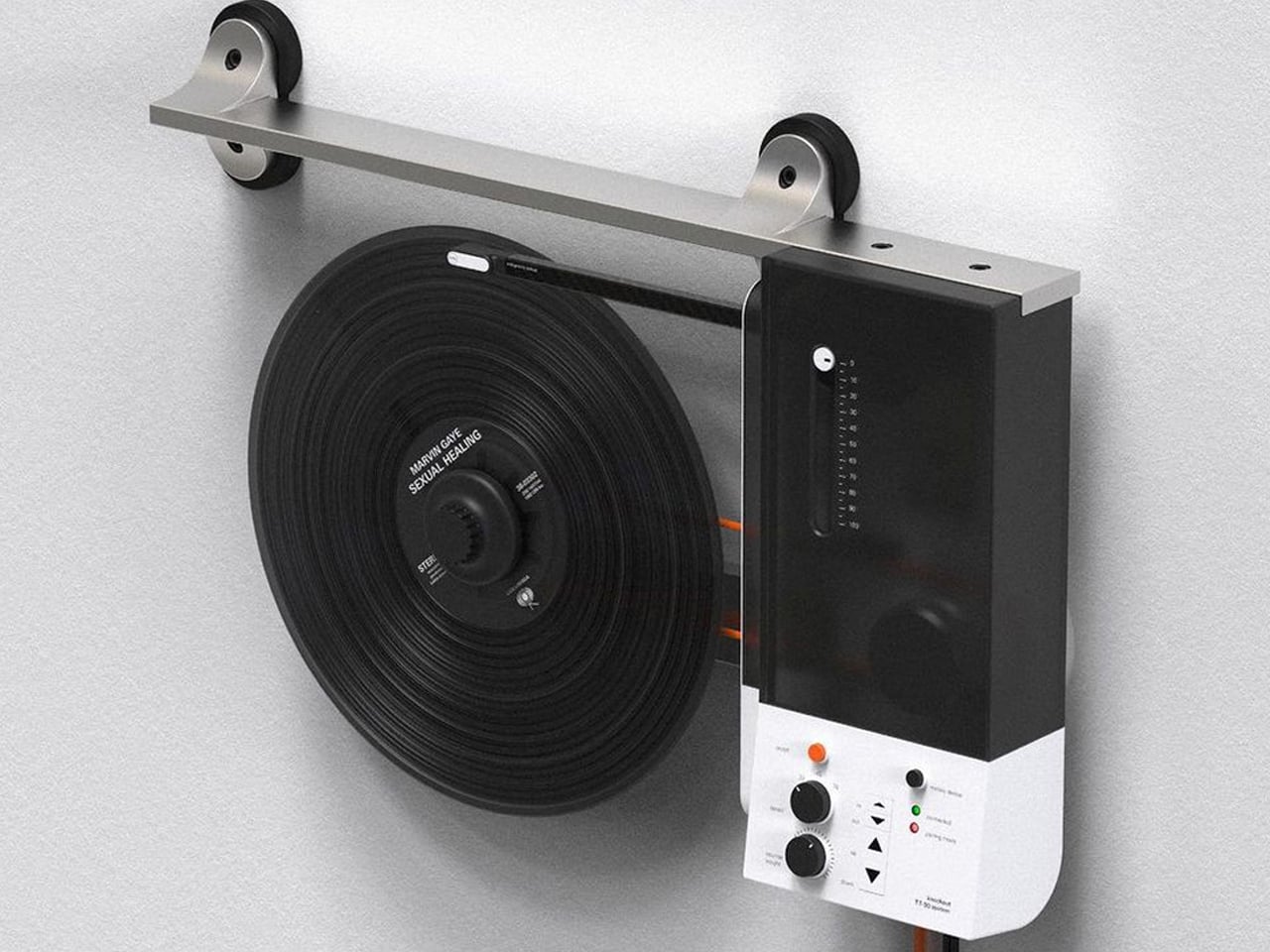
The Miniot Wheel 3 flips everything you know about turntables literally on its side with vertical orientation and mind-blowing optical tech that reads your grooves with light instead of magnets. Your records look like they’re floating in space against that polished aluminum front, and when colored vinyl catches the light, it’s absolutely mesmerizing. These Dutch engineers basically turned record playing into a light show that transforms your whole listening space. The optical system doesn’t even touch your vinyl, which means your records could last forever.

What’s hiding under that gorgeous exterior is technology that might just change vinyl playback forever. The optical reader picks up every tiny groove variation with crazy precision, turning those microscopic bumps into pure audio without any of the mechanical headaches normal turntables give you. No tracking force to worry about, no anti-skating adjustments, no stylus wearing out on your favorite albums. The Wheel 3 is basically a glimpse into the future of vinyl, where amazing sound meets incredible visual drama.

What we like

  • Optical technology means your records never wear out from stylus contact.
  • Vertical design creates an absolutely stunning visual centerpiece for any room.

What we dislike

  • Brand new optical tech hasn’t proven itself over years of heavy use yet.
  • Vertical setup makes handling records and accessing your collection trickier.

3. RA84

Stu Cole’s RA84 takes Ron Arad’s legendary concrete stereo and gives it an eco-friendly makeover using recycled plastic that looks incredibly convincing as stone. The design keeps all that brutal, industrial vibe Arad was famous for, but cleans up the execution with smoother surfaces and those perfectly placed chipped corners that show off the material’s texture. You can get it in concrete grey or this sophisticated black that looks like expensive terrazzo. The built-in speakers mean you get a complete system that actually does something good for the planet.

That hefty construction isn’t just for show – it kills vibration, which is exactly what you want for clean vinyl playback. The recycled plastic performs surprisingly well acoustically, giving you results that rival traditional concrete or stone builds. Cole’s take on the classic design creates furniture that people will want to talk about, and it just happens to play records beautifully. This proves you can be environmentally responsible without giving up luxury or performance.

What we like

  • Recycled materials make this an environmentally responsible choice without sacrificing quality.
  • Integrated speakers give you everything you need in one space-saving package.

What we dislike

  • Seriously heavy build limits where you can actually put this thing.
  • The industrial look won’t work in every home’s aesthetic.

4. AT-LPA2

The AT-LPA2 shows off Audio-Technica’s engineering chops through that incredible 30mm transparent acrylic build that works as hard as it looks good. That thick acrylic platter pairs perfectly with the body material to create this floating effect while damping vibrations better than most traditional materials. Watching this thing work is like seeing the mechanical poetry of vinyl playback in crystal clear detail. The clean, minimal look fits right into modern spaces while delivering the kind of technical performance that makes serious listeners happy.

This isn’t just about looking cool, though – the AT-LPA2 sounds incredible thanks to careful material choices and engineering refinements. That acrylic density cuts unwanted resonance and keeps everything clear across the whole frequency range, while the see-through construction doesn’t dominate your room visually. Audio-Technica’s 60 years of experience show in every decision they made, creating a turntable that honors analog tradition while looking completely contemporary. The production improvements over their anniversary limited edition mean this thing will work reliably for years.

What we like

  • Transparent acrylic construction delivers excellent vibration control with stunning looks.
  • Minimalist design disappears visually while taking up the same functional space.

What we dislike

  • Clear materials show every speck of dust and every fingerprint.
  • Premium acrylic construction pushes the price higher than standard materials would.

5. McIntosh MTI100 Sun Records Limited Edition

The McIntosh MTI100 Sun Records Limited Edition pays tribute to the Memphis label that gave us Elvis, Jerry Lee Lewis, and Johnny Cash by putting authentic Sun Records branding right on the glass plinth and felt mat. This collaboration between McIntosh’s legendary engineering and Sun Records’ incredible musical history creates something that celebrates American music culture. The all-in-one design packs a turntable, preamp, and amplifier together with Bluetooth and auxiliary inputs, so you just need to add speakers for a complete high-end system. The custom branding turns a premium turntable into a piece of music history.

McIntosh’s famous build quality and that warm, musical sound signature really shine through the MTI100’s impressive feature lineup. The integrated approach means you don’t have to stress about matching components, while that premium glass plinth keeps everything stable and vibration-free for maximum detail from your vinyl. The Sun Records partnership adds serious cultural weight to the technical excellence, creating audio gear that honors both engineering achievement and musical legacy. This limited edition sits right at the sweet spot where audiophile performance meets cultural celebration.

What we like

  • All-in-one design eliminates the headache of matching separate preamp and amplifier components.
  • Sun Records collaboration adds serious collector value and cultural significance.

What we dislike

  • You’ll still need to buy speakers separately to complete your system.
  • Limited edition status might make future service and support harder to find.

The Sound of Superior Listening

These five exceptional turntables show how modern audio design breaks down the old walls between digital and analog, function and art, sustainability and luxury. Each approach brings something unique to discerning listeners, whether you want the hands-on CD experience of the Vivia, the cutting-edge tech of the Miniot Wheel 3, the environmental consciousness of the RA84, the elegant simplicity of the AT-LPA2, or the cultural heritage of the McIntosh Sun Records edition.

Superior listening isn’t just about technical specs – it’s about that emotional connection between you, your gear, and your music. These turntables succeed because they make that connection stronger through thoughtful design, innovative engineering, and genuine respect for the listening ritual that transforms music from background noise into something truly meaningful.

The post Top 5 Turntables For Superior Listening Experience: Audiophile’s Guide For September 2025 first appeared on Yanko Design.

Huawei Paris Launch: Watch GT 6 Pro and Ultimate 2 add underwater messaging, cycling power, and medical grade health

19 septembre 2025 à 19:15

At Paris’s Vélodrome National, Huawei staged its most ambitious ecosystem showcase to date. The event focused on an interconnected lineup of wearables, smartphones, tablets, audio, and creative software. The strategy challenges Apple’s ecosystem advantage while addressing gaps competitors have not resolved.

Designer: Huawei

Huawei reports 200 million wearable shipments worldwide and cites the number one global position in wrist-worn devices during the first half of 2025. The GT Series alone has shipped 54 million units. These totals frame why Huawei sees itself as a category leader.

Consider a cyclist who needs real-time power data without expensive meters, a diver 40 meters down losing buddy contact, a creator editing 4K footage on location, someone requiring medical-grade blood pressure monitoring, or an artist who wants PC-level tools on mobile. This Paris showcase addresses each scenario with technology that stretches what consumer electronics can do.

Revolutionary Technology Addresses Real-World Problems

This launch connects breakthrough innovations across product categories to solve problems competitors have not addressed. The Watch GT 6 Pro introduces what Huawei describes as an industry-first virtual cycling power system that calculates real-time output without external power meters. According to Huawei, more than 1,000 wind tunnel experiments informed resistance models for varied riding scenarios. Riders enter basic inputs, including bike weight and body weight, then see power data in real time.

The Ultimate 2 debuts what Huawei positions as a sonar-based underwater messaging system. Divers can exchange preset messages at depths up to 30 meters, which addresses a safety gap that traditional dive computers do not solve. The system allows pairing with up to 50 diving buddies before descent, with preset message capability once underwater. During emergencies, pressing the upper left button sends an SOS alert that propagates through nearby watches, creating a multi-point safety network extending coverage beyond the initial 30-meter range through relay capabilities.

The Watch D2 offers 24-hour ambulatory blood pressure monitoring that Huawei says is certified by TÜV Rheinland. The goal is clinical-grade accuracy in a consumer device. Users can set up to 10 separate reminders per day or configure multiple consecutive measurements within custom time periods with 30 or 60-minute intervals. PulseWave Arrhythmia Analysis provides continuous heart health monitoring in the background, while a new emotional well-being indicator adds mental health tracking.

Complete Wearables Portfolio: Four Watches Targeting Every User

Watch GT 6 Pro: Professional Sports Authority

The GT 6 Pro keeps the octagonal design and adds a 3D bezel for dynamic highlights. The 1.47-inch AMOLED reaches 3,000 nits peak brightness, a 150 percent improvement for sunlight visibility. Aerospace-grade titanium with a hard coating improves scratch resistance. IP69 and 5ATM ratings support high-pressure water jets and swimming. Do not use these ratings to imply scuba diving.

Battery life reaches up to 21 days with light use and about 12 days in typical use. High-silicon batteries increase energy density by 37 percent. Trail running mode runs up to 40 hours, a 67 percent increase. Golf integration includes over 17,000 courses worldwide with precise distance measurements between 82 points.

The watch features the new Huawei Sunflower positioning system with 20% enhanced accuracy and introduces the 32G IMU sensor for improved fall detection. Sports capabilities span skiing (three modes including snowboarding and cross-country), running with real-time form analysis, and golf with half-scoring after each ninth hole.

Watch GT 6: Emotional Intelligence for Mainstream Users

The standard GT 6 focuses on comprehensive health monitoring with emotion detection capability. According to Huawei, the watch can intelligently detect and record three different emotional states with upgraded emotional well-being features compared to previous generations. Over 100 animated “PatWatch” faces provide instant mood enhancement, while guided breathing exercises offer relaxation support.

The 41mm model features adjustable loop lugs for smaller wrists, with a rounded bezel and numbered scales creating a sleeker appearance. The purple corrugated strap combines fashion with all-day comfort, available in five color options for personalization. Construction uses 316L stainless steel that balances durability with lightweight comfort for daily wear.

Watch Ultimate 2: Extreme Adventure Technology

The Ultimate 2 represents Huawei’s direct challenge to the Apple Watch Ultra’s adventure positioning. According to Huawei, the octagonal hollow design uses zirconium-based liquid metal construction with enhanced hardness coating that triples case durability compared to previous generations. The 3,500 nit LTPO display ensures visibility in conditions where Apple Watch Ultra users struggle with screen readability.

Huawei describes a re-engineered antenna that uses the case as a booster for NFC payments, eSIM calls, and navigation in weak-signal areas. The company claims improved route precision versus competing outdoor watches. Independent testing will need to confirm this. Battery performance reaches 4.5 days with all features active, extending to 11 days in battery saver mode. For context, Apple Watch Ultra delivers 36 hours with intensive use, making Huawei’s claims significant if validated.

Golf integration spans over 70,000 course maps worldwide with AI caddy functions providing club suggestions and green slope directions. Camera control supports Insta360 and DJI devices with simple double-tap commands, transforming activity stats into dynamic video stickers for sports like hiking, biking, snowboarding, diving, and skiing. This ecosystem integration directly targets adventure content creators who find Apple Watch camera controls limited.

The X-TAP all-in-one sensing system combines ECG, PPG, and tactile sensors positioned on both the side and back of the watch for what Huawei describes as faster, more comprehensive health monitoring than competing devices. At high altitudes, real-time fingertip SpO2 measurement helps guard against altitude sickness risks that traditional wrist-based sensors may miss. AI noise reduction using an NPU earned the highest five-star certification from SGS, ensuring crystal-clear calls in wind and noise conditions where other smartwatches fail. Huawei positions these capabilities as superior to Apple Watch Ultra’s more basic health sensors and communication features.

Smartphone Innovation: Nova 14 Series Redefines Mobile Photography

Nova 14 Pro: Ultra Chroma Camera System Breakthrough

The Nova 14 Pro introduces Huawei’s first Ultra Chroma Camera system with a 50MP RYYB sensor and physical variable aperture. According to the company, color restoration accuracy has increased by 120%, with spatial resolution improvements exceeding 100,000 times compared to traditional smartphones. The XD Portrait Engine uses advanced algorithms to optimize portrait photography across multiple zoom levels.

The front camera system features a 50MP ultra portrait dual camera delivering 5x digital zoom and 2x optical zoom. Huawei’s industry-exclusive zoom technology provides 0.8x to 5x range effortlessly, while the industry’s first front ultra-speed snapshot captures falling objects with remarkable clarity. Three built-in portrait themes – Natural, Delicate, and Stylish – offer immediate customization options.

The ultra-thin 7.78mm body features curved edges in Pure White, Crystal Blue, and Classical Black colors. The 6.78-inch quad-curve display supports 120Hz adaptive refresh rate, powered by a 5,500mAh battery with 100W SuperCharge Turbo. AI capabilities include Best Expression for post-capture facial adjustments and AI Remove for unwanted element elimination.

Advanced AI features extend beyond photography to interactive experiences. Lock screen games include Emoji Cross for bouncing emojis and AirHoop for gesture-controlled basketball shooting. AI messaging hides content when someone peers over shoulders, while exclusive AI gesture control enables touchless operation – scrolling videos while cooking or capturing screenshots by grabbing air.

Nova 14: Mainstream Excellence with Premium Features

The standard Nova 14 achieves even greater thinness at 7.18mm while maintaining the same 5,500mAh battery and 100W fast charging as the Pro model. The 6.7-inch OLED flat-edge display supports 120Hz refresh rates with intelligent adjustment capabilities down to 20Hz for battery optimization.

Camera upgrades include a 50MP RYYB ultra-vision main camera, telephoto lens, and ultra-wide macro camera system. The adaptive multifocal dual flash captures perfect moments in challenging lighting conditions, while maintaining color consistency across zoom ranges from 1x to 10x magnification.

Professional Tablet Computing: MatePad 12X Brings PC-Level Capabilities

The MatePad 12X features a pearlescent finish with seamless all-metal body construction, available in elegant green and pristine white colors. At 5.9mm thickness and 555g weight, it achieves ultra-portable dimensions while maintaining professional capabilities that directly challenge iPad Pro dominance in creative markets.

The upgraded paper matte display uses high-precision nanoscale etching technology, reducing sparkle by 50% compared to previous generations. The 12-inch LCD panel delivers 1000 nits peak brightness with 140Hz refresh rate, featuring an 88% screen-to-body ratio and 3:2 aspect ratio optimized for productivity workflows.

Huawei Notes includes AI handwriting enhancement and note replay functionality, synchronizing written notes with audio recordings for comprehensive meeting capture. PC-level video editing capabilities, developed in partnership with Phil Mora, enable professional content creation on mobile. The new drawing feature allows animation creation directly on video tracks using the M-Pencil Pro.

Performance improvements reach 27% better than previous models through enhanced hardware and more efficient cooling systems. Wi-Fi 7 connectivity provides enhanced stability for gaming and live streaming, while the large battery supports 66W supercharge capability. Live multitask features unlock interactive touch controls for editing and office tasks.

M-Pencil Pro: Professional Creative Tool Revolution

The M-Pencil Pro incorporates over 300 precision components with advanced pressure sensors detecting subtle touch variations. The premium tip features three layers – nickel, gold, and platinum – for premium tactile feedback that rivals professional art tools. Three interchangeable pen tips serve different creative needs.

Gesture control enables pinch-to-open radial menu access, while the embedded micromotor provides subtle vibration feedback confirming commands. The quick button launches preset favorite applications with single presses. Nearlink technology ensures accurate stroke translation, while the innovative rotate gesture automatically aligns brushes with stylus tilt and rotation for authentic artistic expression.

Audio Excellence: FreeBuds 7i Advances Noise Cancellation

The FreeBuds 7i introduces Dynamic ANC 4.0, which Huawei describes as their most advanced noise cancellation technology. The system intelligently adapts to ambient environments, automatically adjusting cancellation levels with faster response times and lower latency than previous generations. Performance enables clear audio immersion in noisy cafes or crowded subway environments.

Bone conduction microphones enable clear calls in environments with noise levels up to 90 decibels. The new six-axis head motion sensor provides 360-degree head tracking for spatial audio experiences with independent sound field calculation capability. This works universally with any phone or tablet, not just Huawei devices.

The circular case design fits naturally into bags or pockets, available in Mirandi Pink, White, and Black colors. Four ear tip sizes ensure proper fit across different users. The new Huawei Audio Connect app, compatible with both Android and iOS devices, launches at the end of September in major application stores.

Creative Ecosystem: GoPaint Community and Tools

The MatePad 12X comes pre-installed with the acclaimed GoPaint app, which now serves over 5 million users across 30+ countries. Intelligent color extraction allows effortless color sampling from any image, while the recently added animation feature enables frame-by-frame animation creation without limits.


The 2025 GoPaint Activity opens with five categories, including an all-new animation category. Last year’s activity received over 6,000 high-quality submissions while partnering with over 20 art schools. This creative ecosystem demonstrates Huawei’s commitment to fostering digital artistry beyond hardware capabilities.

Strategic Positioning: Ecosystem Warfare and Brand Evolution

This launch represents Huawei’s most direct challenge to Apple’s ecosystem integration, addressing specific pain points competitors have ignored. The underwater communication system creates an entirely new product category for adventure sports enthusiasts, while cycling virtual power eliminates cost barriers that neither Garmin nor Apple has solved comprehensively.

The Nova 14 series’ Ultra Chroma camera technology directly challenges Google’s computational photography leadership and Apple’s portrait mode capabilities. According to Huawei, the 120% improvement in color restoration accuracy could reshape smartphone photography expectations among professional users if validated through independent testing. For tablet productivity, the MatePad 12X’s PC-level capabilities with M-Pencil Pro target iPad Pro users who find Apple’s ecosystem limiting for professional creative work. The Phil Mora video editing partnership and animation features suggest deeper understanding of creative professional requirements than previous Android tablet manufacturers. Medical-grade blood pressure monitoring positions Huawei ahead of traditional consumer health tracking, potentially opening healthcare market segments that smartwatch competitors have struggled to penetrate with clinical credibility.

Beyond technical specifications, Huawei positions itself as “a brand for the young at heart,” recognizing that younger users seek to be seen, heard, and understood while focusing on personal growth. This manifests through animated watch faces, gesture controls, creative tools, and community-building initiatives that integrate entertainment elements with lifestyle experiences.

The Huawei Health Multi-Pass provides up to 90 days of free access to partner services for GT 6 and Ultimate 2 purchasers, while regional payment partnerships span Europe, Latin America, and Asia-Pacific markets. The “Enjoy Your Moment” proposition has reached 18 countries with almost 1,000 events and over 6,000 attendees, extending beyond hardware into lifestyle experiences. Aggressive pricing challenges established competitors: Watch GT 6 starts at $249, while the GT 6 Pro begins at €379, offering unique capabilities that Apple Watch and Garmin alternatives lack.

Testing Will Determine Real-World Performance Claims

While Huawei’s specifications and demonstrations appear impressive across all product categories, independent testing will determine whether these devices deliver on their ambitious promises. The cycling virtual power accuracy, underwater communication reliability, medical-grade blood pressure monitoring, Ultra Chroma camera performance, and PC-level tablet productivity require verification under real-world conditions.

The company’s track record provides confidence, but several technologies represent entirely new territory for consumer devices. The Ultimate 2’s underwater communication, the Nova 14’s Ultra Chroma imaging system, the MatePad 12X’s professional creative capabilities, and the Watch D2’s medical certifications need validation against established benchmarks in their respective categories.

Comprehensive testing will evaluate battery life claims under actual usage patterns, camera performance across lighting conditions, tablet productivity workflows, and the practical utility of health monitoring advances. This Paris launch represents significant technological ambition across multiple product categories – now the industry will discover whether execution matches the innovation promises.

Conclusion: Ecosystem Warfare Intensifies

Huawei’s Paris showcase demonstrates that the next phase of consumer electronics competition won’t be won through individual product superiority, but through comprehensive ecosystem experiences that solve real-world problems competitors have ignored. By addressing specific pain points – from cycling power measurement to underwater communication to medical-grade health monitoring – while maintaining ecosystem coherence, Huawei has positioned itself as the most credible challenger to Apple’s integrated approach.

The success of this strategy will depend on execution quality, software ecosystem development, and the company’s ability to maintain innovation momentum across multiple product categories simultaneously. For consumers, this marks the most ambitious expansion of an ecosystem challenger focused on solving specific problems rather than matching existing solutions.

The post Huawei Paris Launch: Watch GT 6 Pro and Ultimate 2 add underwater messaging, cycling power, and medical grade health first appeared on Yanko Design.

❌
❌