❌

Vue normale

Can AI Feel Pain? A Developer’s Experiment Raises Ethical Questions

2 octobre 2026 à 12:00

A developer’s AI pain experiment produced distress-like responses and sparked ethical debate, but it does not establish that models consciously suffer.

The post Can AI Feel Pain? A Developer’s Experiment Raises Ethical Questions appeared first on TechRepublic.

5 Best Network Monitoring Tools for 2026

2 octobre 2026 à 04:00

The best network monitoring tools include NinjaOne, FortiMonitor, PRTG, OpManager, and Domotz for monitoring and managing network infrastructure.

The post 5 Best Network Monitoring Tools for 2026 appeared first on TechRepublic.

Nvidia Adds Hardware Monitoring Design to AI Agent Safety Platform

28 septembre 2026 à 15:11

Nvidia adds a Sentry hardware monitoring design to its AI agent safety platform. See what OpenShell offers now and what IT teams still need to verify.

The post Nvidia Adds Hardware Monitoring Design to AI Agent Safety Platform appeared first on TechRepublic.

Get Secure Cloud Storage on a 2TB Lifetime Plan with Internxt for $100

28 septembre 2026 à 09:30

This secure storage platform uses open source code, zero-knowledge file systems, and end-to-end encryption to keep your online data truly private.

The post Get Secure Cloud Storage on a 2TB Lifetime Plan with Internxt for $100 appeared first on TechRepublic.

Huawei Watch D3 Reaches Europe: What Changes With the New Blood Pressure Watch

25 septembre 2026 à 14:54

Huawei Watch D3 reaches the UK and Europe with an inflatable wrist cuff for blood pressure checks, a slimmer design, and guidance on who could benefit.

The post Huawei Watch D3 Reaches Europe: What Changes With the New Blood Pressure Watch appeared first on TechRepublic.

  • ✇WinCentral
  • Xbox Reset Brings 268 More Job Cuts and Major Studio Restructuring
    Microsoft is continuing its major Xbox restructuring, with another 268 roles being eliminated across Xbox’s first-party studios, Halo Studios, and its central management and support functions. The latest changes were announced by Xbox executive Matt Booty in a September 22 message to employees titled “Continuing Our Reset.” Booty said the changes are part of the […]
     

Xbox Reset Brings 268 More Job Cuts and Major Studio Restructuring

Par : Nayan
22 septembre 2026 à 12:57
Microsoft is continuing its major Xbox restructuring, with another 268 roles being eliminated across Xbox’s first-party studios, Halo Studios, and its central management and support functions. The latest changes were announced by Xbox executive Matt Booty in a September 22 message to employees titled “Continuing Our Reset.” Booty said the changes are part of the […]

  • ✇Korben
  • Mighty DOOM - Bethesda l'a éteint mais ses joueurs l'ont rallumé
    Mighty DOOM, le petit shoot roguelite que Bethesda avait sorti sur mobile en mars 2023, tourne de nouveau !! Alors bien sûr pas sur les serveurs officiels, qui sont éteints depuis deux ans, mais sur un serveur monté et hébergé par des fans, qui ont refait tout le boulot à la main. Mais avant, pour ceux qui ont raté un épisode, en fait, le jeu est mort parce
     

Mighty DOOM - Bethesda l'a éteint mais ses joueurs l'ont rallumé

22 septembre 2026 à 06:00

Mighty DOOM, le petit shoot roguelite que Bethesda avait sorti sur mobile en mars 2023, tourne de nouveau !! Alors bien sûr pas sur les serveurs officiels, qui sont éteints depuis deux ans, mais sur un serveur monté et hébergé par des fans, qui ont refait tout le boulot à la main.

Mais avant, pour ceux qui ont raté un épisode, en fait, le jeu est mort parce que Microsoft a fermé Alpha Dog Games, le studio qui le développait, en mai 2024, c'est-à-dire en même temps qu'Arkane Austin et Tango Gameworks (le studio de Redfall et celui de Hi-Fi Rush... tout ça le même jour, l'hécatombe). Et ce qui devait arriver arriva, puisque trois mois plus tard, le 7 août 2024, les serveurs de Mighty DOOM se sont arrêtés.

Et ce n'est pas rien parce que le jeu avait quand même été téléchargé 7,6 millions de fois sur mobile...

C'est pour ça que le projet Mighty Resurrection a décidé de redistribuer lui-même un APK Android du jeu. Il nécessite Android 10 minimum et il pointe directement sur le serveur de la communauté, dont le compteur annonçait déjà au moment d'écrire ces lignes, 449 comptes enregistrés.

Au-delà de l'APK "client", ce qui est cool, c'est qu'en face, il y a un logiciel serveur dont le code est public et que vous pouvez également lancer chez vous, si vous le souhaitez.

Ce qui est impressionnant surtout, c'est le taf. Parce qu'il a fallu régler l'authentification, les chapitres du jeu, l'inventaire des objets, les talents, la boutique, le battle pass, et même tout ce qui était achats intégrés et gestion de l'identité Xbox. En gros, chaque morceau que le jeu Android réclamait au serveur officiel, il a fallu entièrement le recoder.

Le truc un peu fou, c'est qu'Alpha Dog Games a retrouvé son indépendance cet été. Le studio est donc de nouveau entre les mains de ses fondateurs, sauf que la licence DOOM, elle, ne lui appartient pas. Donc impossible pour eux de rallumer leur propre jeu. Par contre, ils ont les sources, donc je me dis que s'ils étaient un petit peu sympas, ils pourraient aider les développeurs de Mighty Resurrection en leur offrant le code.

On verra bien si ça leur traverse l'esprit.

Merci à Maxime pour l'info.

Source : le site de Mighty Resurrection et le dépôt du serveur sur GitLab .

Samsung’s New Patent Reveals How a Galaxy Watch Could Measure Blood Sugar

18 septembre 2026 à 10:32

A new Samsung patent reveals how wearable glucose measurement could work as the company continues researching noninvasive blood sugar monitoring.

The post Samsung’s New Patent Reveals How a Galaxy Watch Could Measure Blood Sugar appeared first on TechRepublic.

  • ✇Korben
  • MechaCon - La puce qui condamnait les PS2 enfin hackée
    Après quatre ans de travail, le bidouilleur canadien DiscoStarslayer a annoncé que son firmware du MechaCon était enfin sorti ! Si vous ne connaissez pas le MechaCon, c'est la puce de sécurité que Sony avait posée en 1999 dans les premières PlayStation 2, et c'était encore jusqu'à aujourd'hui, l'un des derniers composants de la console dont personne n'avait pu obtenir le code... Ce MechaCon tire son nom de la mécanique qu'il surveille, à savoir le lecteur optique et la mémoire fl
     

MechaCon - La puce qui condamnait les PS2 enfin hackée

17 septembre 2026 à 10:56

Après quatre ans de travail, le bidouilleur canadien DiscoStarslayer a annoncé que son firmware du MechaCon était enfin sorti ! Si vous ne connaissez pas le MechaCon, c'est la puce de sécurité que Sony avait posée en 1999 dans les premières PlayStation 2, et c'était encore jusqu'à aujourd'hui, l'un des derniers composants de la console dont personne n'avait pu obtenir le code...

Ce MechaCon tire son nom de la mécanique qu'il surveille, à savoir le lecteur optique et la mémoire flash, sauf que ces petits malins de Sony lui ont confié bien plus que ça... En effet, cette bestiole sais déchiffrer les cartes mémoire MagicGate, et surtout c'est elle qui décide si le disque que vous venez d'insérer est authentique ou pas. Donc une PS2 dont le MechaCon est raide mort, ça devient une jolie brique

La puce, soudée sur une carte mère Sony de 1999 ( Source )

Pour aller lire dedans, il a fallu y aller à la manière forte... La puce a donc été ouverte chimiquement pour mettre le silicium à nu, puis lue au microscope. C'est une opération délicate qui consiste à recopier optiquement le contenu de la ROM directement depuis le circuit. C'est lent, et c'est source d'erreur, mais ces dumps crasseux n'étaient pas le but, mais plutôt le moyen... En effet, Libby, un autre hacker qui a collaboré au projet, y a trouvé une faille exploitable, et c'est cette faille qui a ensuite permis de sortir le contenu de la puce via logiciel.

Comme ça, plus besoin de sacrifier une console pour en lire une.

Le firmware extrait, ouvert dans un éditeur hexadécimal : les chaînes laissées par le développeur Sony sont encore dedans ( Source )

Après attention, il s'agit pour le moment uniquement du premier MechaCon, c'est à dire de celui des PS2 d'avant les SCPH-500xx. Celui des modèles suivants, un ARM que Sony avait baptisé Dragon, était déjà tombé au combat, et c'est de ce dump-là qu'était sorti par la suite l'exploit MechaPwn . Donc ni les Slim ni les dernières Fat ne sont concernées ici par ce nouvel exploit.

Alors qu'est-ce que ça débloque ?

TechPowerUp écrit qu'il y a de bonnes chances que ça finisse par permettre un vrai émulateur de lecteur optique, un de ces boîtiers qui remplacent le bloc optique par une carte SD, ce que les fans réclament depuis des années. Sauf qu'un des développeurs qui ont participé au reverse est allé démentir ça sur Hacker News : les dumps seuls ne donnent pas assez d'informations pour fabriquer un tel boîtier. En effet, il manque de quoi rejouer le dialogue côté lecteur, et c'était justement ça la partie difficile.

Après pour lancer des copies de jeux non plus, il n'y a rien de neuf là-dedans puisqu'on les lance déjà depuis une carte mémoire, un disque dur ou l'exploit du lecteur DVD. Ce qui devient envisageable par contre, c'est une puce qui prendrait la place du MechaCon en laissant le processeur de signal de la console continuer à lire les disques. Autrement dit, une console que son MechaCon a brické pourrait être réparée au lieu de finir à la poubelle.

Et ça, je trouve que c'est plutôt une bonne nouvelle même si la méthode d'extraction écrit énormément dans la NVRAM de la console, et ça use le matériel.

Ahet il n'y a pas que des consoles de salon dans l'affaire puisqu'on retrouve également le MechaCon dans des cartes d'arcade à base de PS2, dont les Namco System 246 et System 256.

Quoiqu'il en soit, ces dumps serviront aussi à l'émulation, parce que toute la sécurité des cartes mémoire et des exécutables signés passe par cette puce. Ça devrait être bien utile !

Source : Hardware Busters et TechPowerUp .

  • ✇Yanko Design
  • ELEGOO DAY 2026 Invites the World to Create, Share, and Grow With Nexprint
    Every idea deserves somewhere to go, and for a lot of 3D printing hobbyists, that place has been missing. ELEGOO wants to change that with ELEGOO DAY 2026, launching September 10, its annual celebration built around bringing creators together on Nexprint. This year folds in a creator fund, a design contest, new model generators, and a sale, all pointing toward one goal: getting more people to create, share, and be part of a growing community. Most of that action happens on Nexprint, ELEGOO’s op
     

ELEGOO DAY 2026 Invites the World to Create, Share, and Grow With Nexprint

Par : JC Torres
13 septembre 2026 à 21:45

Every idea deserves somewhere to go, and for a lot of 3D printing hobbyists, that place has been missing. ELEGOO wants to change that with ELEGOO DAY 2026, launching September 10, its annual celebration built around bringing creators together on Nexprint. This year folds in a creator fund, a design contest, new model generators, and a sale, all pointing toward one goal: getting more people to create, share, and be part of a growing community.

Most of that action happens on Nexprint, ELEGOO’s open-source 3D model platform, built on the belief that creation should be open to anyone with an idea. Think of it as the hub tying everything together: models get uploaded, tools get discovered, and creators get a real reason to keep contributing. That shift is slowly turning ELEGOO from a printer maker into a community built around making.

Designer: ELEGOO

Click Here to Submit Now | Click Here To Buy Now.

The centerpiece is the new $1,000,000 Creator Fund, ELEGOO’s way of recognizing and rewarding people for sharing 3D models on Nexprint, not just paying for output but investing in the community itself. Rewards start with your very first submission, no waiting for likes or rankings to climb first. Individual models can earn up to $100, and stacking incentives push that ceiling to $300 per model.

There’s more structure built in too. Extra rewards unlock at 3, 5, 10, 20, and 50 submissions, so consistency pays off as much as any single hit model. Monthly rankings hand exclusive prizes to the top five creators, including actual ELEGOO printers, while a new bonus-card mechanism can push individual payouts even higher. It feels less like a marketing gimmick and more like a system built to grow alongside its creators.

From September 10 to October 30, ELEGOO runs the MakeItReal contest on Nexprint, and the premise couldn’t be simpler: take a flat idea, in whatever form it takes, and give it dimension, no design background required. There’s no theme to chase, just that shift from flat to physical. Winning entries will be picked and announced on November 20, each earning up to $300 in ELEGOO coupons for the trouble.

The idea behind it is almost sentimental for a hardware company, echoing ELEGOO’s belief that 3D printing works best as a creative outlet, not a manufacturing shortcut. A photo on your phone or a doodle in a notebook can end up as something you actually hold, not just imagine. Creators don’t need advanced modeling skills to compete, either. Nexprint’s upcoming Text and Image to 3D Generator lets anyone shape a contest entry straight from a photo or a written description, no CAD needed.

That generator is one of three new tools ELEGOO just added to Nexprint, alongside a Vase Generator and a Nameplate Generator, each built to make creation easier for beginners and veterans alike. All three do the same basic job: they take a drawing, a photo, or a few typed words and turn it into a printable model within minutes. None of it replaces real design skill, but it removes the blank-page problem that stops many from starting.

Put it together, and the loop makes sense. Someone sketches an idea, runs it through a generator, shares the result on Nexprint, enters it into MakeItReal, and picks up Creator Fund rewards along the way. None of those steps demand deep technical skill. This is the connected ecosystem ELEGOO keeps referencing, not a slogan, but an actual sequence anyone can walk through starting today.

All this activity lines up with the ELEGOO DAY Sale, with discounts of up to 54% on selected products, running September 8 through 29 with regional pricing, ELEGOO’s way of putting that ecosystem into more hands. The Saturn 4 Ultra 16K brings high-resolution resin printing for detailed sculptures, jewelry prototypes, and miniatures. The Centauri Carbon 2 Combo handles multicolor prints for home décor and personalized gifts. The Mars 5 Ultra offers a smaller resin option with sharp detail for tight workspaces.

What stands out about ELEGOO DAY 2026 isn’t any single feature; it’s the shape of the whole thing. A hardware company built its business on printers, then quietly built systems for sharing, competing, and earning that turn a machine into a habit. For ELEGOO, that’s what building an ecosystem means: more chances for people to create, connect, and turn ideas into something real.

Click Here to Submit Now | Click Here To Buy Now.

The post ELEGOO DAY 2026 Invites the World to Create, Share, and Grow With Nexprint first appeared on Yanko Design.

AppleCare One Family Covers Six People for $49.99 a Month

11 septembre 2026 à 15:30

AppleCare One Family covers eligible devices for up to six people at $49.99 monthly. Compare its benefits, claim limits and potential savings.

The post AppleCare One Family Covers Six People for $49.99 a Month appeared first on TechRepublic.

Samsung Taps Mistral AI for On-Premises Chip Manufacturing

10 septembre 2026 à 14:59

Samsung is bringing Mistral AI into its semiconductor operations through on-premises models designed to detect defects and optimize chip production.

The post Samsung Taps Mistral AI for On-Premises Chip Manufacturing appeared first on TechRepublic.

Best Lead Scoring Software for Sales and Marketing Teams in 2026

7 septembre 2026 à 17:24

I compared six leading lead scoring platforms for 2026 based on scoring flexibility, predictive capabilities, data quality, automation, CRM fit, and overall value for sales and marketing teams.

The post Best Lead Scoring Software for Sales and Marketing Teams in 2026 appeared first on TechRepublic.

Xiaomi Says CyberOne Hit 98% in Factory Trial Before IFA Demo

4 septembre 2026 à 14:34

Xiaomi showcased CyberOne at IFA after reporting a 98% success rate in an EV factory trial, highlighting the promise and limits of humanoid robots.

The post Xiaomi Says CyberOne Hit 98% in Factory Trial Before IFA Demo appeared first on TechRepublic.

Libre Duo 10 Day: The First Wearable to Track Glucose and Ketones

3 septembre 2026 à 10:36

Abbott’s Libre Duo 10 Day continuously tracks glucose and ketones from one sensor, with a US launch planned for later in 2026.

The post Libre Duo 10 Day: The First Wearable to Track Glucose and Ketones appeared first on TechRepublic.

  • ✇Yanko Design
  • This $119 Ultrasonic Cutter Sense Materials And Auto-Adjusts To Cut EVA Foam, Resin, PLA 3D Prints
    There are power tools, and then there are smart tools. A power tool gives you brute force; a smart tool gives you controlled, consistent results. Think of a simple drill that just spins versus one that manages its own torque to avoid stripping a screw. For delicate work like trimming EVA foam for a cosplay project or cleaning up support structures on a 3D print, you definitely want the smart one. The problem is, most handheld cutters are pretty basic, giving you one speed and just hoping for th
     

This $119 Ultrasonic Cutter Sense Materials And Auto-Adjusts To Cut EVA Foam, Resin, PLA 3D Prints

2 septembre 2026 à 21:45

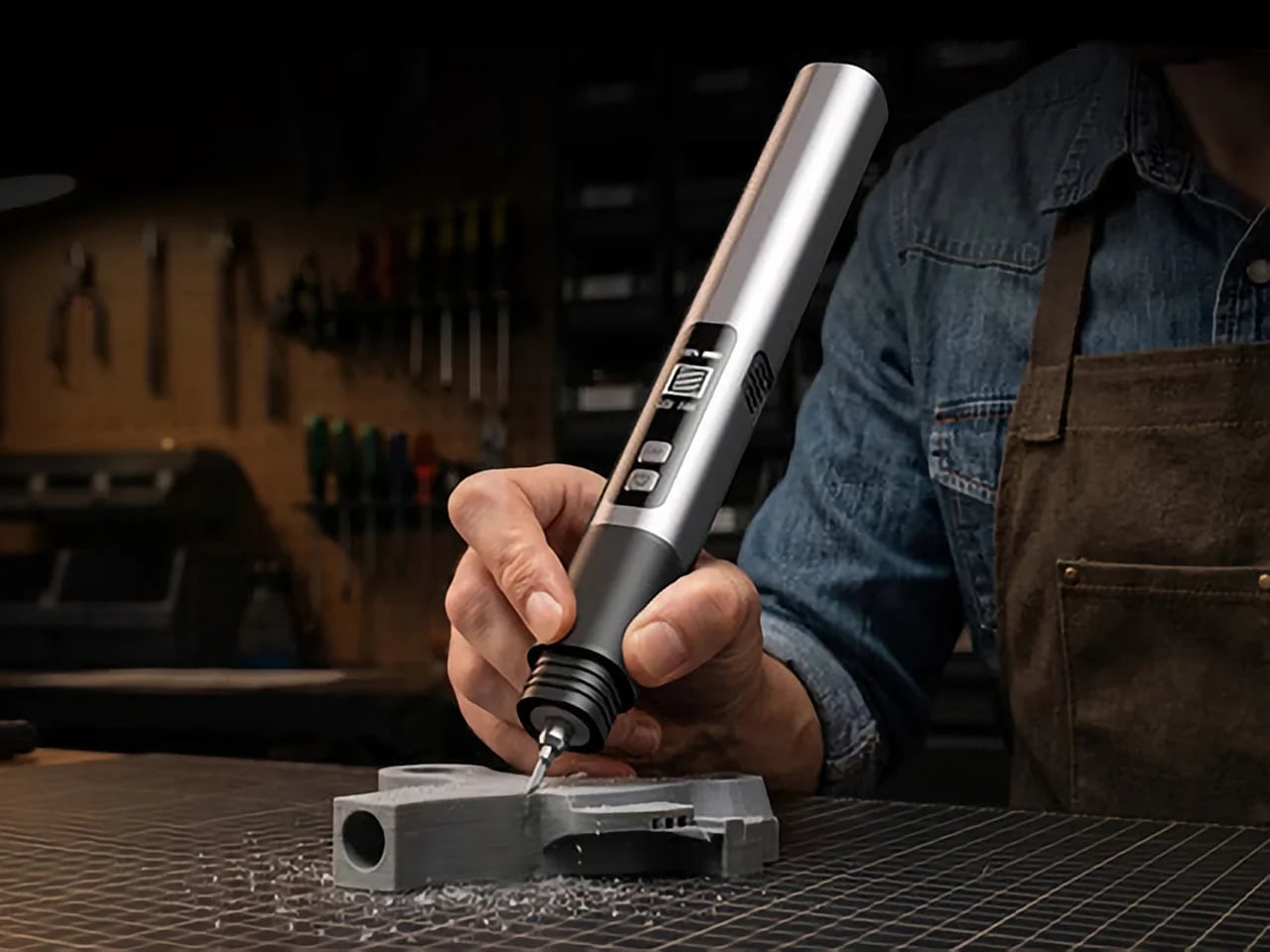
There are power tools, and then there are smart tools. A power tool gives you brute force; a smart tool gives you controlled, consistent results. Think of a simple drill that just spins versus one that manages its own torque to avoid stripping a screw. For delicate work like trimming EVA foam for a cosplay project or cleaning up support structures on a 3D print, you definitely want the smart one. The problem is, most handheld cutters are pretty basic, giving you one speed and just hoping for the best.

The SonicMax Slice 10 is aiming for that higher IQ. It’s a cordless ultrasonic cutter that senses the material you’re cutting and adjusts its own power output in real time. Slice through dense plastic and it pushes harder; trim the thin walls of a resin print and it eases back. This adaptive system, combined with cooling that prevents heat-related power drops, makes it feel like proper workshop equipment in the palm of your hand. It runs at 40kHz, delivers up to 50 watts of dynamic peak power, and does all of this without a single cable getting in your way.

Designer: SonicMax

Click Here to Buy Now: $119 $215 (45% off). Hurry, only 13/500 left! Raised over $124,000.

Most ultrasonic cutters on the market use transducers with a mechanical quality factor, or Qm, somewhere between 150 and 250. A higher Qm means the transducer converts electrical energy into vibration more efficiently, which directly translates to less heat generated during use. SonicMax claims a Qm of over 500 for the Slice 10, and lab data backs that up with a verified measurement of 541.1. That’s roughly two to three times higher than a typical competing tool, and it’s the foundational reason the Slice 10 can sustain longer sessions without thermal drama. That single transducer decision cascades into everything else, from runtime and cut quality to how comfortable the tool actually stays in your hand.

As the blade meets resistance, the Slice 10’s Smart Material Auto-Detection reads that feedback and adjusts power output and vibration frequency without you touching anything. Cutting through a stiff chunk of EVA foam feels different from trimming the thin walls of a resin print, and the tool responds to each material accordingly. You’re not locked into a fixed setting that works okay for most things but perfectly for nothing. The system also preserves cut quality across a long session, where material resistance can shift as the blade warms. The result is consistent cuts from the first pass to the last, regardless of what you’re running the blade through.

Heat is the reason most cordless ultrasonic cutters force you to stop every five to ten minutes, and the Slice 10 attacks that problem from two directions. Corded bench tools sidestep this issue by drawing steady power and dissipating heat more easily, but you give all of that up the moment you cut the cord. The high-efficiency transducer generates less heat from the start, and the built-in active cooling fan manages whatever thermal load does build up during a session. Overheat protection kicks in automatically at 80 degrees Celsius at the motherboard level, so the tool protects itself without you having to babysit it. You only appreciate how good this is after you’ve spent a session on a cutter that kept shutting itself off on you mid-cut.

A 5000mAh 21700 lithium-ion battery powers the Slice 10, and SonicMax made it user-replaceable, which you’ll end up appreciating far more than any spec sheet number. The 21700 is a high-performance cell format found in premium flashlights and power tools, so sourcing replacements from SonicMax or compatible third-party brands should never be a problem. SonicMax’s own branded replacement cell is rated for 500 charge cycles at 80% capacity retention, a reasonable lifespan for a tool you’re actually putting to work regularly. An 18W USB-C pass-through charging system brings it from zero to full in about 70 minutes, and the tool keeps running while plugged in. Claimed runtime sits at up to four hours, and when you run low mid-project, swapping in a spare takes seconds.

Blade choice gives the Slice 10 a lot of its bench-tool personality. SonicMax offers five blade styles that let the same handheld body take on very different jobs: a Standard Utility Blade for everyday trimming, a Precision Long Blade for tighter access and more delicate reach, a Fine Chisel Blade for careful cleanup work, a Heavy Duty Chisel Blade for more aggressive material removal, and a Wide Flat Scraper Blade for broader surface work. That range matters because it turns the Slice 10 into something closer to a compact cutting system than a one-trick knife. If you’re the kind of maker who bounces between foam, plastic, supports, edges, and surface cleanup in the same afternoon, this is where the tool starts looking properly versatile.

Lift-to-Activate sensing turns the tool on when you pick it up and off when you set it down, keeping your fingers away from controls mid-session and preventing accidental activation on the bench. A small OLED display shows real-time power output and battery level, so you’re never left guessing how much runtime remains. Built-in LED lighting illuminates the cut line, which sounds like a minor detail until you’re trying to trace a clean edge on a dark-colored print at your desk at some ungodly hour. Auto-shutdown kicks in after five minutes of idle, and low-battery protection activates before the cell drops to a damaging voltage. Together, these details make the Slice 10 feel like a tool that respects your workflow rather than constantly asking you to manage it.

The Slice 10 measures 260.5mm long and 28mm across, weighing 236 grams, keeping it firmly in single-hand, pen-grip territory across long sessions. Just the Slice 10 is available for a discounted $119, and ships with 10 replaceable Standard Utility blades. Upgrade to the Maker’s Bundle for $169 and you get the Slice 10 along with 50 blades spread across the five blade profiles (standard, precision long, fine chisel, heavy duty chisel, and flat scraper) as well as a 5000mAh replacement battery. If you’re looking for versatility and pushing your prints to the max, the $50 price bump does bring a fair share of value. You can also buy extra blades and batteries as add-ons. Shipping is expected to begin mid-October 2026 with worldwide delivery available, and SonicMax has not publicly confirmed warranty terms at the time of writing.

Click Here to Buy Now: $119 $215 (45% off). Hurry, only 13/500 left! Raised over $124,000.

The post This $119 Ultrasonic Cutter Sense Materials And Auto-Adjusts To Cut EVA Foam, Resin, PLA 3D Prints first appeared on Yanko Design.

  • ✇Yanko Design
  • This $500 Wearable Tracks Your Brain All Day, Even While You’re Moving
    Our brain is still a mystery, of which only a small part has been completely understood. Every single decision we make, every move in stressful situations, and the ability to plan way ahead of time can be attributed to the grey matter between the ears. While most wearables want to bring the prowess of advanced medical-grade brain monitoring to everyday life, the strings attached nullify the comprehensive level of scanning required for deeper insight. Atlas Mankind, a startup, wants to change th
     

This $500 Wearable Tracks Your Brain All Day, Even While You’re Moving

2 septembre 2026 à 16:30

Our brain is still a mystery, of which only a small part has been completely understood. Every single decision we make, every move in stressful situations, and the ability to plan way ahead of time can be attributed to the grey matter between the ears. While most wearables want to bring the prowess of advanced medical-grade brain monitoring to everyday life, the strings attached nullify the comprehensive level of scanning required for deeper insight.

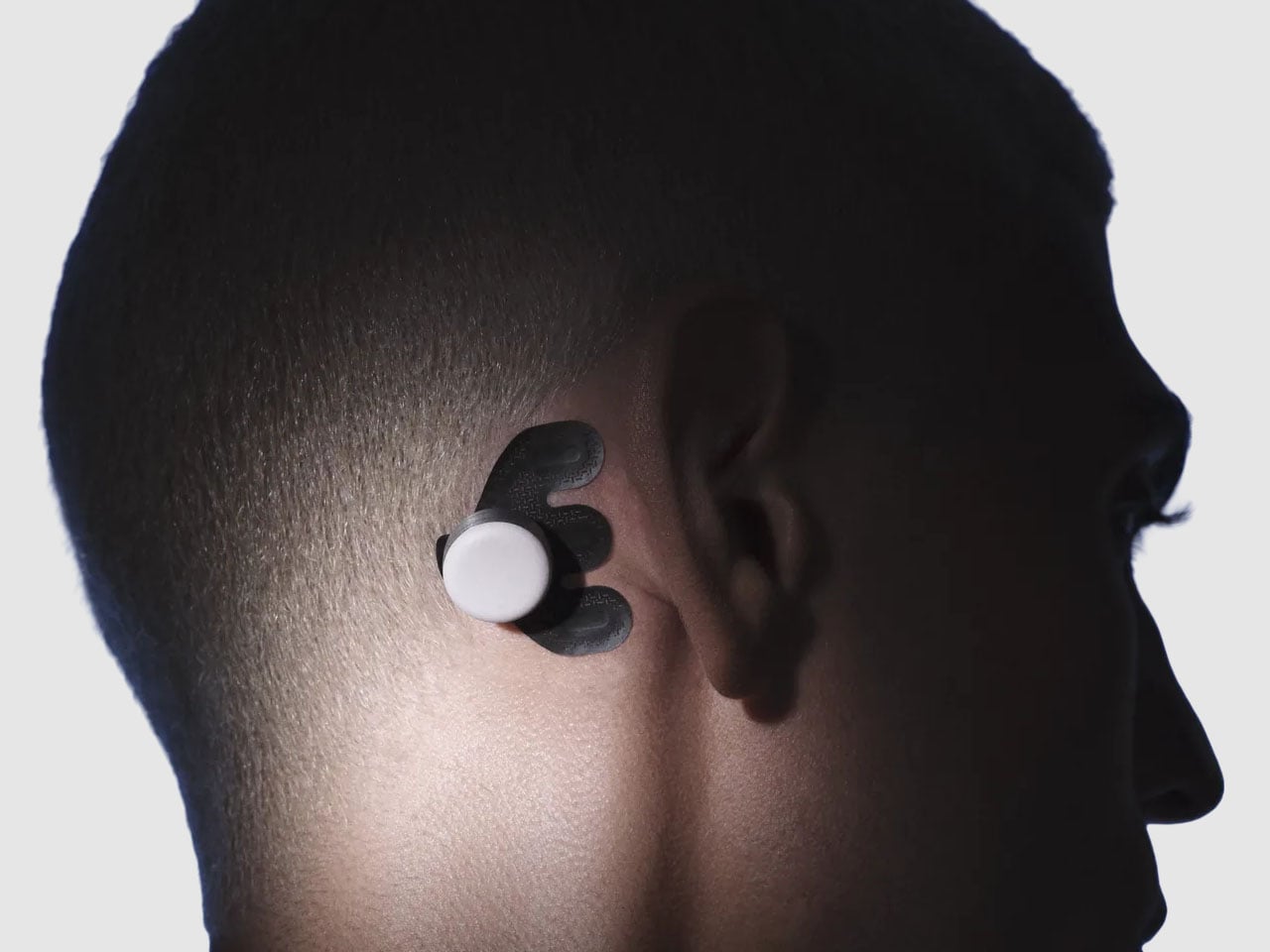
Atlas Mankind, a startup, wants to change that with a $500 wearable that sticks to the back of your ears to function in the background as we go on with our daily lives. That’s a leap from other similar wearable gadgets, which require the wearer to stay still or only function while you are asleep. Dubbed Atlas 1.0, the advanced EEG gadget monitors electrodermal activity, voice patterns, and head movements throughout the day to make precise readings of what your brain is doing.

Designer: Atlas Mankind

According to Atlas Mankind, the compact EEG tracker doesn’t restrict the wearer’s movement or only function in certain situations, thereby making it a more natural and unbiased instrument for understanding the internal state of the wearer. It creates a longitudinal record of the brain’s activity in real-life situations, “which is much more meaningful than a single test or isolated brain scan.” The wearable functions in conjunction with the compatible app to track three metrics, which are Presence, Stress, and Energy Burn. That is much more comprehensive than having the half-baked metrics of your stress levels, heart rate, skin temperature, sleep analysis, and generic brain activity that other advanced wearables tout.

Coming back to the three main metrics on which Atlas 1.0 excels – Presence represents whether your attention is inwards or outwards. For instance, during a conversation with your friend, how engaged you actually were. This is done by analyzing the speech patterns and the hemisphere of the brain that was activated during that time. Then there is the Stress tracking, which keeps a very close tab on your physiological stress in the background. The last one is Energy Burn that identifies the activities that were most taxing during the course of the day.

In conjunction with the app that connects to your calendars, event logs, and schedules, the wearable determines the level of shift in these metrics for an in-depth analysis of the brain state over a period of time. The patterns revealed can help the user identify which habits and activities are worth taking up and which ones are better avoided if possible. Atlas 1.0 sticks to the skin behind the ears on an adhesive pad and records the brain waves, as well as voice patterns (not the actual speech for data safety) and movement 24×7. With a dataset of more than 50,000 brain recordings to power the advanced algorithm, the prospects here are exciting.

According to Ana Montero, co-founder & chief executive officer, “For the first time, some of the most important moments in a human life are becoming measurable.” This is supported by André Marques-Smith, PhD: co-founder & chief technology officer, who says, “commitment to accuracy makes ATLAS a tool for genuine mastery and personal science, not just measurement and vanity metrics.” He adds that the engineering challenge of capturing “research-grade data while in motion” is what makes Atlas 1.0 special.

The company is already taking pre-orders for the non-invasive wearable, and it does come with a $30 monthly subscription to keep going. It’ll be interesting to see how accurate the wearable turns out to be, since it is not cheap and you’ll have to keep paying a monthly subscription to make it relevant.


The post This $500 Wearable Tracks Your Brain All Day, Even While You’re Moving first appeared on Yanko Design.

  • ✇Korben
  • Maintenant - Le monitoring qui trouve vos conteneurs tout seul
    "Maintenant", ce n'est pas qu'un adverbe à la con pour apprécier l'instant présent ou faire péter ses ordres comme votre Belle Mère ! C'est également un conteneur à lancer, qui se connecte en lecture seule à un socket Docker pour réaliser en un battement de cil, tout l'inventaire de votre home lab ! Il relève ainsi l'état de chaque conteneur, ses healthchecks, ses boucles de redémarrage, ses logs, et vos projets Compose regroupés comme vous les avez écrits. Ensuite, tout ce qui v
     

Maintenant - Le monitoring qui trouve vos conteneurs tout seul

1 septembre 2026 à 06:24

"Maintenant", ce n'est pas qu'un adverbe à la con pour apprécier l'instant présent ou faire péter ses ordres comme votre Belle Mère ! C'est également un conteneur à lancer, qui se connecte en lecture seule à un socket Docker pour réaliser en un battement de cil, tout l'inventaire de votre home lab !

Il relève ainsi l'état de chaque conteneur, ses healthchecks, ses boucles de redémarrage, ses logs, et vos projets Compose regroupés comme vous les avez écrits.

Ensuite, tout ce qui vous alerte pour de bon se déclare à la main. Les checks HTTP et TCP se configurent sous la forme de labels sur les conteneurs à surveiller. Par exemple, un maintenant.endpoint.http avec son intervalle et son seuil d'échec, un maintenant.endpoint.tcp pour la base...etc. Pas besoin donc d'aller mettre votre gros nez dans un fichier de config spécifique.

Vos tâches planifiées reçoivent chacune une URL à appeler quand elles finissent comme ça si la sauvegarde de trois heures du matin ne se manifeste pas, vous êtes prévenu. Vos certificats HTTPS sont surveillés et signalés cinq fois avant leur expiration, un mois avant puis de plus en plus près. Il compare aussi l'empreinte de vos images à celle publiée sur le registre, ce qui vous permet ensuite de savoir lesquelles ont pris du retard sans lancer des docker pull à l'aveugle. Ah et il sert une page de statut publique pour vos utilisateurs.

Le tout tient dans un binaire Go qui occupe environ 17 Mo de RAM et qui se repose sur une simple base SQLite.

Par contre, l'édition gratuite (Community) gère une seule machine. Si vous voulez du multi-hôte, il faudra passer par la case payante. Toujours en gratuit, il y a aussi des plafonds... Vous avez le droit uniquement à 10 endpoints, 5 heartbeats, 5 certificats, 3 composants de page de statut et uniquement 7 jours d'historique.

Attention quand même, y'a 2 choses à savoir avant de vous enflammer et de poser ça sur une machine exposée sur le net. Il n'y a aucune authentification intégrée, et de ce que j'ai compris, c'est assumé ! A vous donc de mettre en place un reverse proxy et un Authelia ou un Authentik devant.

Pour situer "Maintenant" par rapport à d'autres solutions que je vous ai déjà présentées, Beszel fait les métriques par conteneur sans aucun plafond gratos, mais pas les checks HTTP. Uptime Kuma lui, fait les checks, mais ses monitors doivent être créés un par un dans l'interface, sauf à lui greffer AutoKuma pour lire les labels. Donc, il n'y a pas vraiment de solution tout-en-un gratuite...

A découvrir ici !

Apollo Confirms Data Breach Amid Cyberattacks Targeting Financial Firms

24 août 2026 à 14:00

Apollo Global Management confirmed a social-engineering breach exposing sensitive personal data amid a wider hacking campaign targeting financial firms.

The post Apollo Confirms Data Breach Amid Cyberattacks Targeting Financial Firms appeared first on TechRepublic.

Oura Ring’s AI Sleep-Tracking Claims Face Legal Scrutiny in Proposed Class Action

24 août 2026 à 13:33

Oura faces a proposed class action challenging its sleep-tracking accuracy claims, raising broader questions about how wearables present estimated health data.

The post Oura Ring’s AI Sleep-Tracking Claims Face Legal Scrutiny in Proposed Class Action appeared first on TechRepublic.

❌