❌

Vue normale

  • ✇Yanko Design
  • DJI Mini 5 Pro Packs a 1-Inch Sensor Without the Bulk
    A drone’s camera can be impressive on paper and still lose the argument over backpack space. Better imaging is appealing but when it means carrying a larger aircraft along with a controller, batteries, and your other luggage, it can be a hassle that you’d not want to carry. The challenge of course is making a capable aerial camera small enough that bringing it is a no-brainer and you won’t need a whole packing ceremony to lug it around. DJI’s Mini 5 Pro approaches that problem with a folding bo
     

DJI Mini 5 Pro Packs a 1-Inch Sensor Without the Bulk

18 novembre 2026 à 09:20

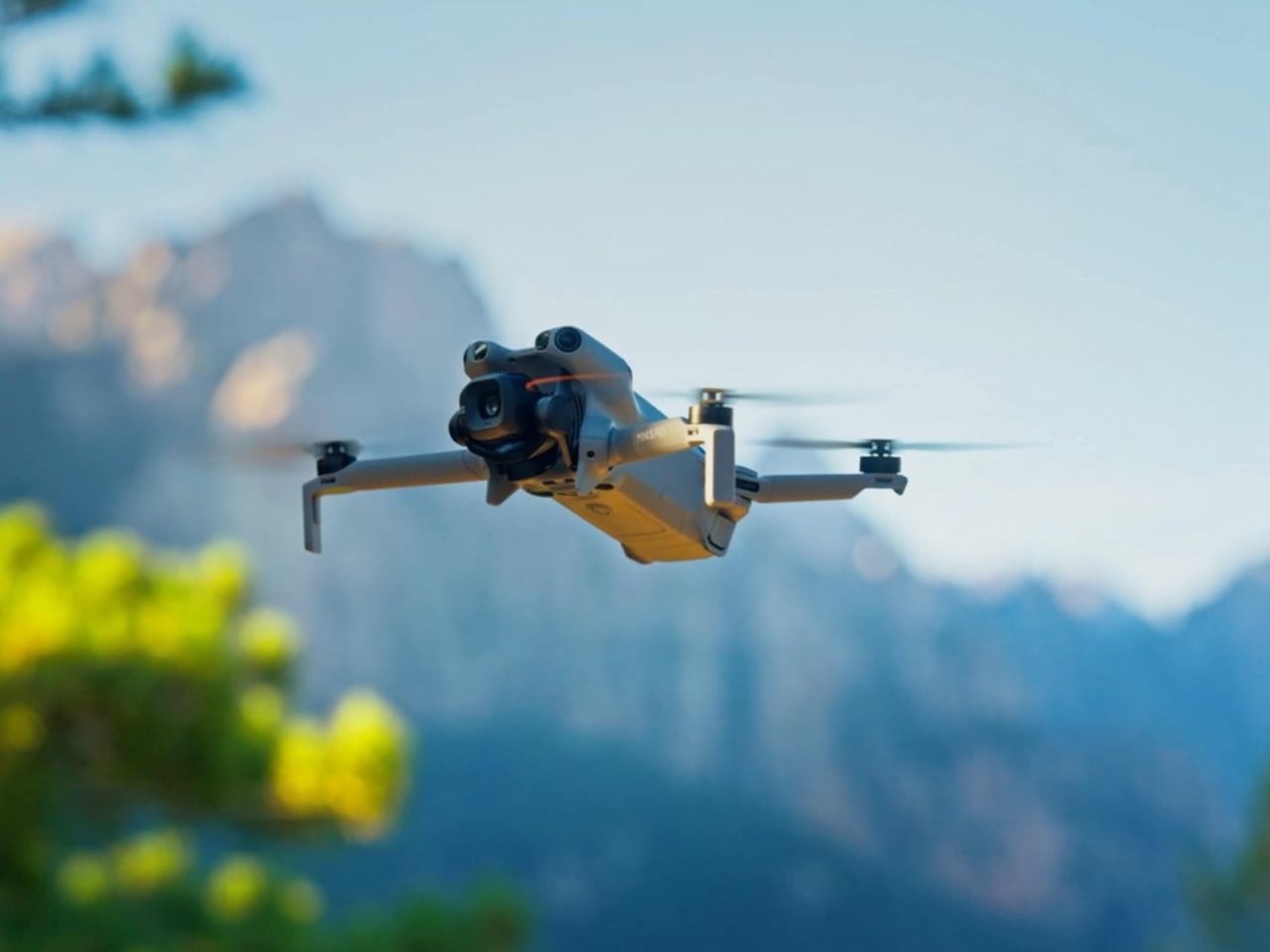
A drone’s camera can be impressive on paper and still lose the argument over backpack space. Better imaging is appealing but when it means carrying a larger aircraft along with a controller, batteries, and your other luggage, it can be a hassle that you’d not want to carry. The challenge of course is making a capable aerial camera small enough that bringing it is a no-brainer and you won’t need a whole packing ceremony to lug it around.

DJI’s Mini 5 Pro approaches that problem with a folding body roughly 6.2 inches long and a 1-inch-type camera sensor. It pairs that sensor with an f/1.8 lens and 4K/60fps HDR recording, which can actually be more important than the 50MP resolution detail. The more interesting promise is greater photographic flexibility, particularly as daylight fades, without stepping up to a much bulkier drone.

Designer: DJI

DJI positions that sensor as a way to preserve detail in sunsets and nighttime landscapes. Think of a bright evening sky above a darker waterfront: you want both to remain recognizable, rather than sacrificing one to expose the other. That’s the practical promise here. It isn’t proof that every dusk shot will look spectacular, and exposure and processing still matter. But it’s a more useful ambition than simply making larger files.

The camera’s movement is equally interesting. A three-axis mechanical gimbal steadies the image, while a 225-degree controllable roll range allows deliberate rotating shots. True vertical shooting physically reorients the camera for portrait framing. For a tall building or waterfall, that means composing vertically at capture instead of cutting a narrow slice out of horizontal footage later. I like that approach because the mechanism addresses the composition directly, before editing begins.

The folding body is also pretty important as it’s palm-sized and comes with arms that tuck into a compact transport configuration. For someone already packing a camera, water bottle, and an unreasonable number of charging cables, having a smaller object to add to all those things would be a consideration. Still, the aircraft’s dimensions don’t describe the whole travel kit. Leave room in the packing plan for the controller and whatever charging equipment you bring.

Then there’s a feature that sounds boring until you need it: 42GB of internal storage. This is important for those annoying moments when you forgot your extra memory card. Off-State QuickTransfer also lets the DJI Fly app wake the aircraft within Bluetooth range for wireless downloads. Neither feature will dominate a dramatic product video, but both address the little interruptions between wanting a photograph and actually getting it onto your phone.

The camera also has obstacle sensing that combines an omnidirectional vision system with forward-facing LiDAR and a downward infrared sensor. DJI says the LiDAR can assist with forward obstacle detection when darkness limits the vision cameras. That’s useful support for the flight home, not permission to stop paying attention. Forward-facing LiDAR does not mean laser coverage in every direction, and the vision system still needs suitable light and surface detail.

Battery figures need a similarly grounded reading. DJI advertises up to 36 minutes with the standard battery, but its separate typical-flight test lists 21 minutes, including recording and a return to landing. I’d plan around the more conservative figure. A short, purposeful flight with a clear shot in mind sounds more satisfying than discovering that a headline endurance number doesn’t match the afternoon you planned.

Its weight also comes with fine print worth reading. DJI lists approximately 249.9 grams, with variation of plus or minus 4 grams. That crosses the familiar 250-gram boundary, so “registration-free” is too broad a promise. The FAA exemption applies to qualifying recreational flights with aircraft below that threshold, not every flight involving a Mini. Check the actual flight-ready weight and the rules that apply to your use.

For me, the appeal comes down to fewer compromises before pressing record. The rotating camera and internal storage feel especially thoughtful because they address ordinary frustrations. The Mini 5 Pro makes the case for carrying an aerial camera more often, while still leaving the photographer responsible for the flight.

The post DJI Mini 5 Pro Packs a 1-Inch Sensor Without the Bulk first appeared on Yanko Design.
  • ✇Yanko Design
  • Flying Traffic Cone concept transforms into a Drone to auto-assemble itself on roads
    The traffic cone is basically a Rorschach test for the internet generation. Construction workers see a long night shift, college kids see dorm decor, and anyone who’s ever downloaded a movie sees VLC. I mostly see something to swerve around. Xinhao Guo saw a robot. Guo led a student team at the Beijing Institute of Technology that developed SkyCone, a drone concept designed to fly to a highway incident, land in position, and fold itself into a traffic cone. Guo’s teammates were Songyan Pan, Zix
     

Flying Traffic Cone concept transforms into a Drone to auto-assemble itself on roads

2 novembre 2026 à 15:20

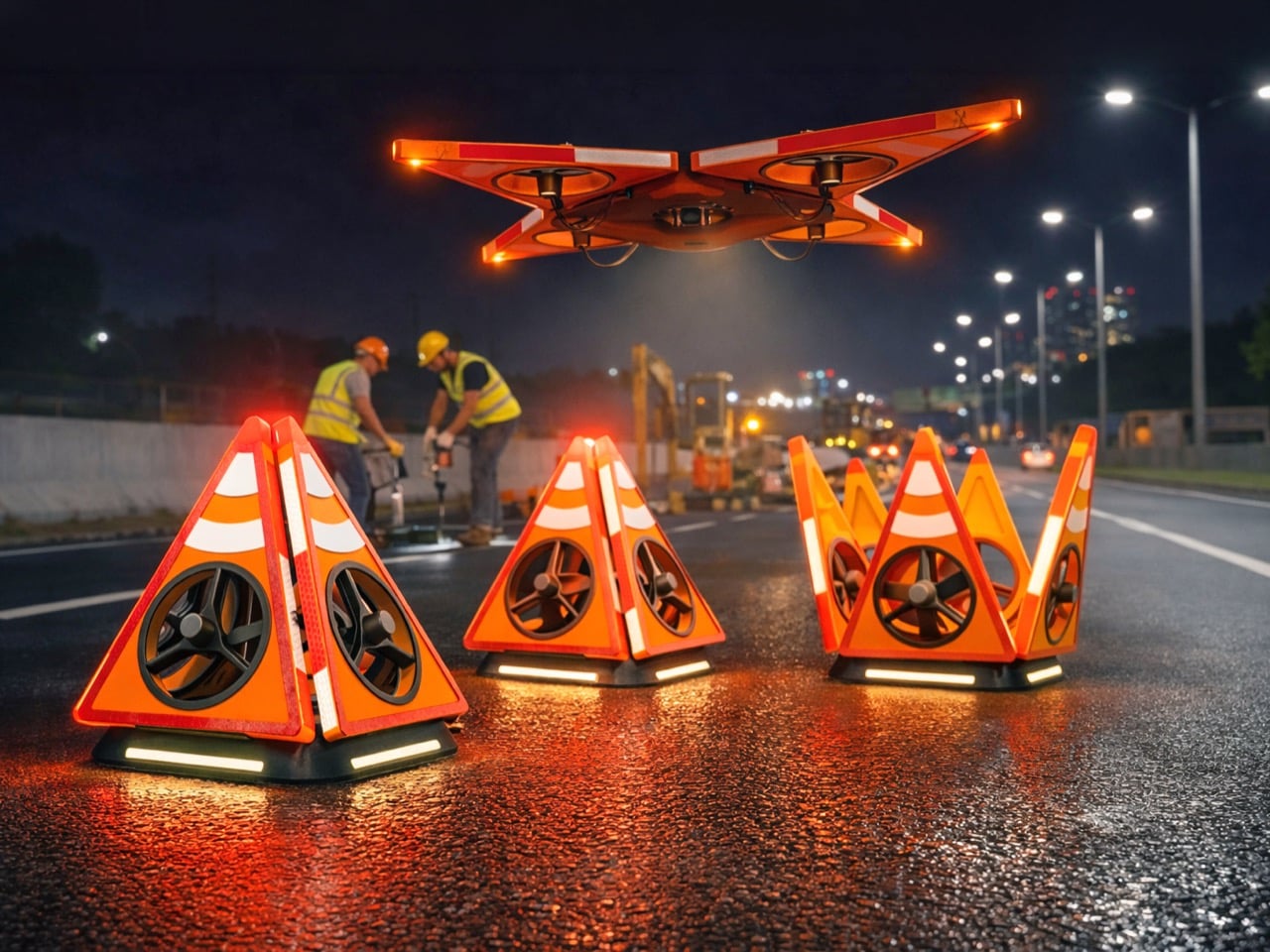
The traffic cone is basically a Rorschach test for the internet generation. Construction workers see a long night shift, college kids see dorm decor, and anyone who’s ever downloaded a movie sees VLC. I mostly see something to swerve around. Xinhao Guo saw a robot. Guo led a student team at the Beijing Institute of Technology that developed SkyCone, a drone concept designed to fly to a highway incident, land in position, and fold itself into a traffic cone.

Guo’s teammates were Songyan Pan, Zixu Zhang, and Wanzheng Liu, and their concept won in the Conceptual Industrial Product Design category at the 2026 European Product Design Award. SkyCone is designed to fly as an X-shaped quadcopter, with each of its four triangular arms housing a ducted propeller. After landing, the arms would tilt up and lock together at magnetic tips, forming a four-sided pyramid with the familiar orange and white stripes. The goal is to keep workers out of live lanes. The team cites a figure that 57% of frontline highway personnel consider manual cone placement their most dangerous task.

Designers: Xinhao Guo, Songyan Pan, Zixu Zhang & Wanzheng Liu

A square central hub anchors SkyCone, carrying a downward-facing camera on a gimbal, with an LED strip and a non-slip mat built into its underside. The four arms are what the team calls Triangular Prism Buckets, hollow orange wedges that each surround a ducted propeller. Red magnetic locks with integrated indicator lights cap the arm tips, which meet at the cone’s apex when everything folds shut. Reflective strips trace the arm edges to improve visibility. My favorite detail is graphic: the white cone bands sit on the faces that point outward after folding, so the drone only looks like a cone once it actually is one.

Charles D. Scanlon, a Los Angeles street painter, designed the modern traffic cone to keep cars away from his wet paint, building it from rubber and fabric salvaged from old tires. His patent was granted in November 1943, and Interstate Rubber Products began manufacturing the design in 1947. The cone eventually made it into the Manual on Uniform Traffic Control Devices, the federal traffic-control manual. Materials and reflective collars have evolved over eight decades, yet the silhouette has barely budged. SkyCone largely keeps that familiar shape while changing how it gets into position, a sensible approach for an object drivers need to recognize quickly.

Placing those cones is still mostly manual work, with crews riding the back of a slow-moving truck or walking beside it and setting cones down a few feet from passing traffic. The US recorded 850 work zone deaths in 2024, an average of more than two a day. In March 2023, a single crash on I-695 outside Baltimore killed six roadway workers. The SkyCone team describes the first few minutes of an emergency or maintenance call as the most critical stretch, when crews are particularly exposed. A fleet of drones that could position cones before anyone steps out of the truck might reduce that initial exposure.

Brisbane-based Arrowes has already built an Automated Cone Truck that drops a cone every five seconds. On Melbourne’s Eastern Freeway, it handled 65,000 cones while cutting worker exposure to live traffic by roughly 500 hours. Caltrans and UC Davis developed a cab-operated cone machine back in the 2000s, and Spain’s Sacyr and GMV set out to prototype a self-driving trailer with an AI-guided robotic arm. Each system relies on a truck or trailer. SkyCone proposes making each cone responsible for its own delivery. Chris Chang’s Apiece showed in 2022 that a cone could be assembled from flat triangles, and SkyCone basically gives those triangles propellers.

The team’s renders place SkyCone at a nighttime highway repair, an incident scene behind an arrow-board truck, a rockfall on a mountain road, a snowed-over highway, and the crumbling edge of an open-pit mine. The mine scenario sold me, since walking a crumbling pit edge to place cones sounds like a genuinely terrible afternoon. SkyCone joins a line of highway concepts that propose sending machines into hazardous places. The Highway Patrol Drone was designed to wait on light towers and fly to crash scenes ahead of responders, while the Median AMB proposed riding the road divider like a monorail to skip traffic. SkyCone’s role would be marking off the scene so responders can work.

The European Product Design Award is a global, open-entry program run by Farmani Group. SkyCone won in its conceptual tier as a student project, so the award recognizes a design proposal rather than proven roadside performance. Guo and his team want the cone to get into position on its own; whether it can do that reliably beside live traffic remains to be demonstrated. My brain will probably keep saying VLC whenever I see a cone, but now it’s going to add “robot” right after.


The post Flying Traffic Cone concept transforms into a Drone to auto-assemble itself on roads first appeared on Yanko Design.

❌