❌

Vue normale

  • ✇Yanko Design
  • Bellavista 11 Folds Thin White Concrete Planes Down an Ibiza Hillside Toward the Sea
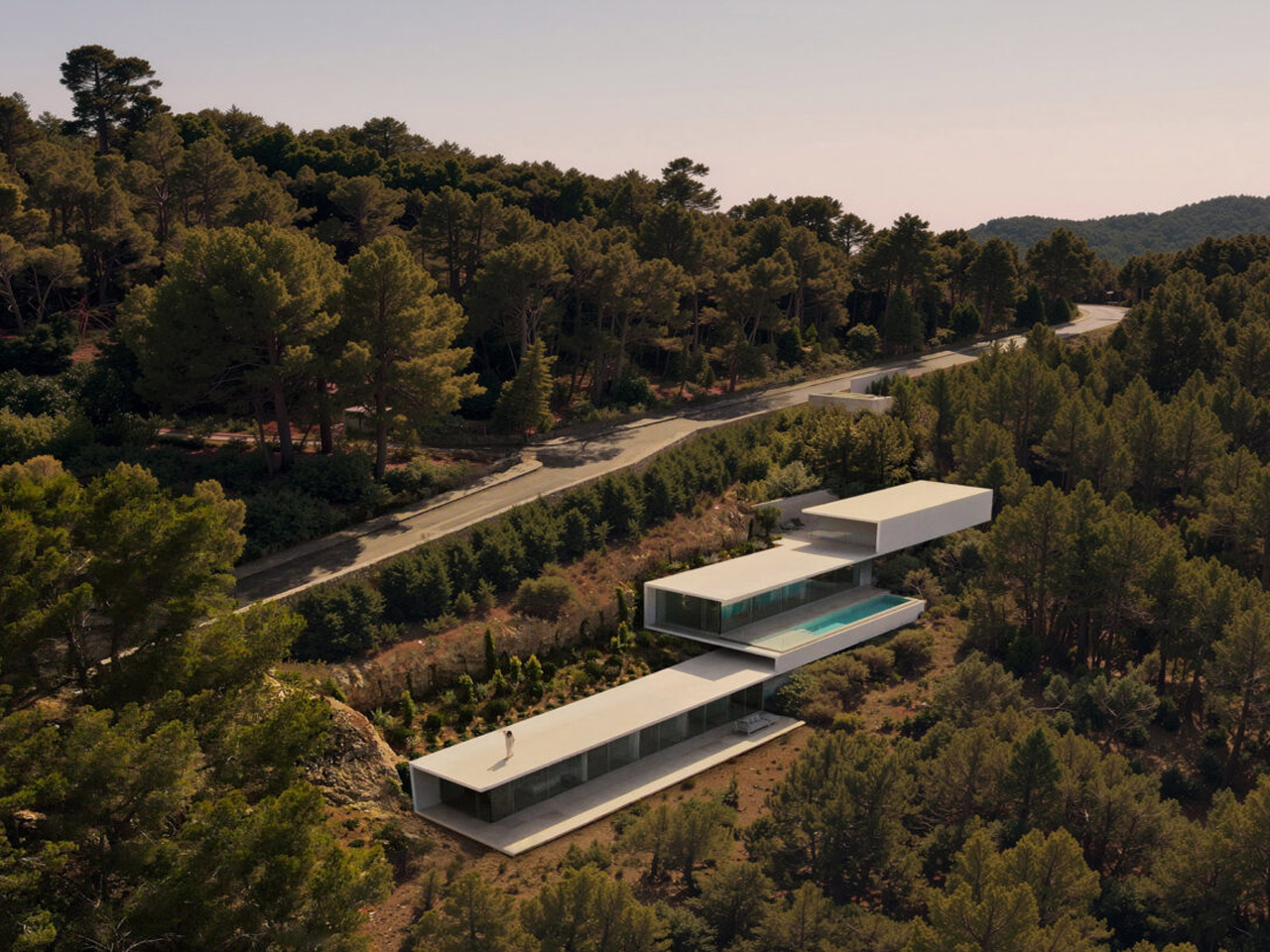
    Bellavista 11 makes a hillside feel like the starting point of a home rather than a problem to solve. Designed by Fran Silvestre Arquitectos in Roca Llisa, Ibiza, the villa descends toward the Mediterranean through a sequence of white horizontal planes. Its most striking feature is not its size or its pool, but the way its roofs, floors, and terraces appear to belong to one continuous architectural gesture. The house is the first completed residence in The Roca Views, a development of six homes
     

Bellavista 11 Folds Thin White Concrete Planes Down an Ibiza Hillside Toward the Sea

25 octobre 2026 à 13:20

Bellavista 11 makes a hillside feel like the starting point of a home rather than a problem to solve. Designed by Fran Silvestre Arquitectos in Roca Llisa, Ibiza, the villa descends toward the Mediterranean through a sequence of white horizontal planes. Its most striking feature is not its size or its pool, but the way its roofs, floors, and terraces appear to belong to one continuous architectural gesture.

The house is the first completed residence in The Roca Views, a development of six homes by the studio. Across three low volumes, the arrangement follows the slope: arrival and garage at the top, shared living spaces in the middle, and five bedrooms below. This descending organization gives the building a legible rhythm, breaking its mass into layers rather than presenting one tall facade to the hillside.

Designer: Fran Silvestre Arquitectos

The defining white concrete plane is just 15 centimeters thick, approximately six inches. Its folds establish roof terraces above the lower volumes and extend outward to shelter outdoor areas. The appeal lies in this double duty: the geometry that gives the villa its identity also helps organize daily life around sun, shade, and time outside.

The central living level brings the kitchen, dining area, and lounge together beside the swimming pool. Full-height sliding glass doors use slender frames and concealed tracks to keep the threshold visually quiet. Open, they connect the rooms to their terraces; closed, they retain the expansive outlook. Below, the bedroom volume faces another outdoor seating area, giving the quieter part of the house its own relationship with the surrounding landscape.

Inside, the material palette softens the precision of the exterior. White walls sit alongside natural stone flooring, oak, and stretched textile ceilings, as detailed by the developer. These surfaces give sunlight different textures to move across, allowing warmth without relying on a busy mix of finishes. In the main bedroom, a private terrace extends the room outward, while motorized curtains offer control over daylight and privacy.

There is a practical counterpoint to all this apparent effortlessness: a house arranged down a slope moves to levels part of everyday living. The developer lists an elevator among the villa’s features, an important detail within such a strongly stepped plan. The project is therefore more interesting as a carefully organized hillside home than as an image of minimalism alone.

Bellavista 11 works best when its sculptural clarity is understood through those ordinary experiences: arriving, descending, opening a door, or finding shade beside the pool. The white planes provide a consistent frame, but the changing Mediterranean light and distant sea supply the variation. Its restraint gives the landscape room to remain the most compelling presence in the house every day.

The post Bellavista 11 Folds Thin White Concrete Planes Down an Ibiza Hillside Toward the Sea first appeared on Yanko Design.
  • ✇Yanko Design
  • Neo-Brutalist Vases Look Like Tiny Towers, Even Without Flowers
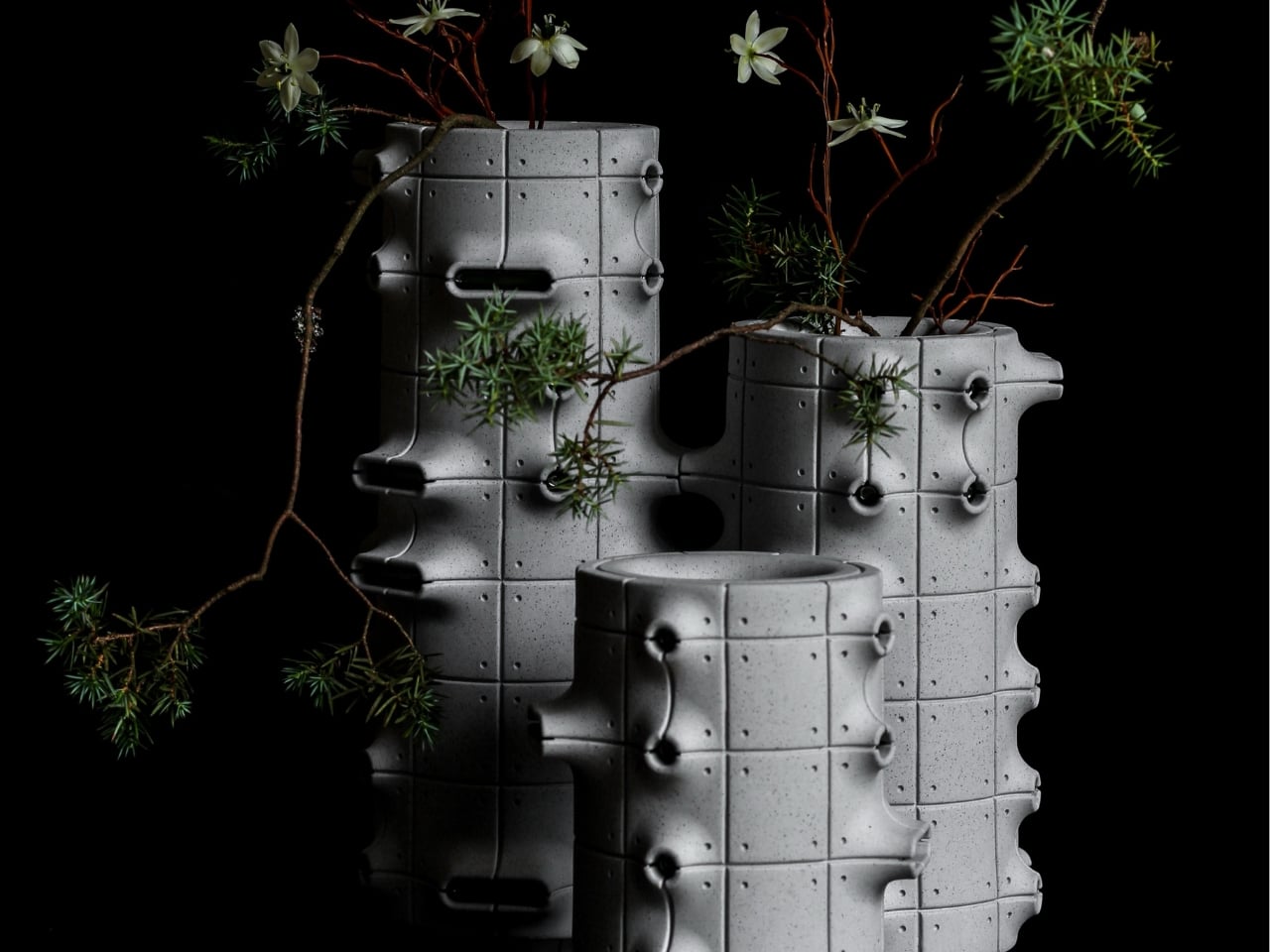
    An empty vase can make a shelf look oddly unfinished, as though the flowers were supposed to do all the decorating. Aleksander Kozera’s Neo-Brutalist Vases offer a convincing way around that small domestic problem. Created under his Warsaw-based Yird Ceramics brand, these ceramic vessels have enough architectural detail to hold attention on their own. I’d be inclined to leave them empty before deciding what, if anything, belongs inside. Their cylindrical bodies are divided into rectangular pane
     

Neo-Brutalist Vases Look Like Tiny Towers, Even Without Flowers

24 octobre 2026 à 18:30

An empty vase can make a shelf look oddly unfinished, as though the flowers were supposed to do all the decorating. Aleksander Kozera’s Neo-Brutalist Vases offer a convincing way around that small domestic problem. Created under his Warsaw-based Yird Ceramics brand, these ceramic vessels have enough architectural detail to hold attention on their own. I’d be inclined to leave them empty before deciding what, if anything, belongs inside.

Their cylindrical bodies are divided into rectangular panels, with tiny indentations that suggest construction details on a concrete facade. Circular recesses interrupt that grid, while curved projections extend from the sides like abbreviated balconies or exposed joints. The effect lands somewhere between an architectural model and a piece of science-fiction set dressing. They look a little like infrastructure for a very small, very design-conscious civilization, which is part of their appeal.

Designer: Aleksander Kozera

The concrete resemblance comes from the ceramic body itself. According to the collection’s Łódź Design Festival description, Kozera uses porcelain casting slip with ceramic pigments and black grog to produce that raw, concrete-like finish. In the close-up photographs, dark speckles break up the gray surface. That texture matters visually: without it, the panel lines and repeated circles could read as a smooth plastic prop. Instead, the surface gives the geometry some grit.

The modular approach also makes the collection more interesting than a row of differently sized cylinders. The festival describes vessels that can be combined and arranged into larger compositions. In the photographs, neighboring forms create narrow gaps, overlapping projections, and changing silhouettes. I like the possibility of treating a shelf as a small architectural composition rather than lining up three matching accessories. The vessels share a vocabulary without looking identical from every angle.

Kozera’s broader studio process helps explain that controlled repetition. He describes beginning with digital modeling, then 3D-printing master forms used to make plaster molds for slip-casting porcelain. That’s a useful distinction for anyone assuming these are printed plastic objects or directly printed ceramics. Digital tools establish the geometry, while casting translates it into ceramic. The workshop photographs make that relationship tangible, showing shaped components and molds alongside vessels at different stages of production.

The finish introduces another layer of detail. The collection description specifies a translucent green glaze, with the small exterior “windows” individually glazed by hand. The green is restrained enough that the photographed pieces still read predominantly as gray architectural objects. I prefer that decision to an all-over glossy finish. Small glazed areas give the eye somewhere to pause without obscuring the panel divisions or competing with the speckled body.

Flowers change the balance considerably. In the styled photograph, branching stems stretch above and across the vessels, disrupting all those disciplined horizontal and vertical lines. The arrangement is sparse enough that the ceramic remains visible, which seems the right approach. A dense supermarket bouquet might conceal much of the detail that makes these worth looking at. A few irregular branches would let the architecture and the plant material each have some breathing room.

My reservation is mostly about where they would live. These are visually busy objects, even with their limited palette. On a shelf already crowded with books, collectibles, and patterned ceramics, the small recesses and projecting edges could get lost. I’d give one a relatively clear stretch of console or place a group against a plain wall. That’s a styling preference, but the design rewards enough space to read its silhouette.

These are physical ceramic works rather than render-only proposals, and the collection is listed as selected for the make me! 2026 exhibition at Łódź Design Festival. That listing does not establish retail pricing or US availability, so it shouldn’t be mistaken for a confirmed shopping announcement.

For me, the strongest choice is the attention given to the sides of each vessel. Turn one, and the relationship between grid, recess, and projection changes. That gives the object a reason to stay on display after the stems are gone, without asking an empty vase to pretend it’s waiting for its next assignment.

The post Neo-Brutalist Vases Look Like Tiny Towers, Even Without Flowers first appeared on Yanko Design.

❌