❌

Vue normale

  • ✇Yanko Design
  • Ring wants to put a drone in your house right as towns are kicking out Flock
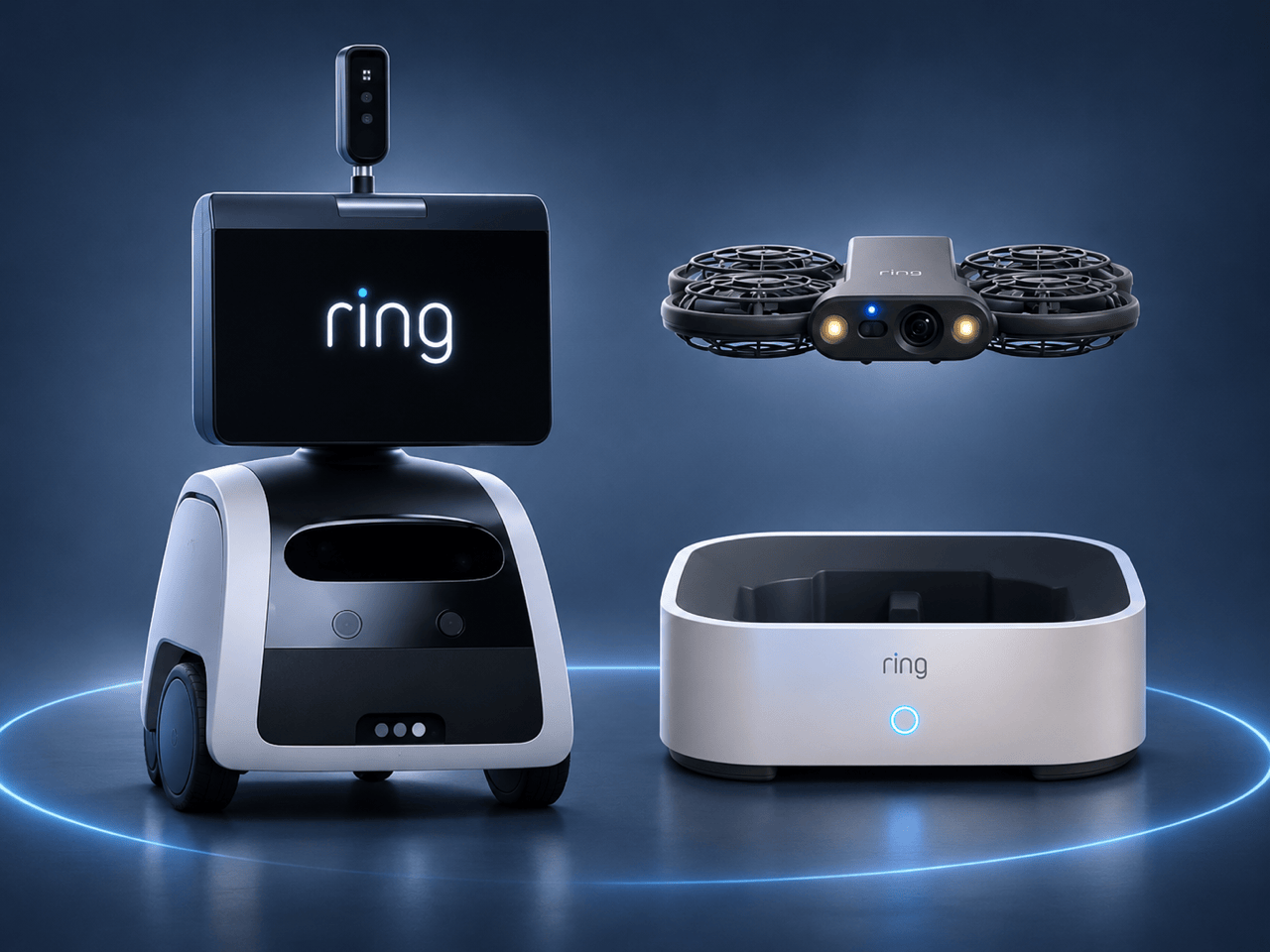
    2026 is the year America started unplugging its surveillance cameras, and Ring chose that exact year to launch cameras that follow you around. Cities and counties have been dropping Flock Safety’s license plate readers at a record pace, with one anti-surveillance group counting roughly 90 cancellations in August alone. Into that mood rolls Ring Robotics, Amazon’s new lineup of security cameras that move on their own. There’s the Ring Drone Cam, a $249.99 drone that flies through your home, and
     

Ring wants to put a drone in your house right as towns are kicking out Flock

10 novembre 2026 à 20:30

2026 is the year America started unplugging its surveillance cameras, and Ring chose that exact year to launch cameras that follow you around. Cities and counties have been dropping Flock Safety’s license plate readers at a record pace, with one anti-surveillance group counting roughly 90 cancellations in August alone. Into that mood rolls Ring Robotics, Amazon’s new lineup of security cameras that move on their own. There’s the Ring Drone Cam, a $249.99 drone that flies through your home, and the Ring Rover Cam, a $999.99 robot that patrols businesses after hours. Reading the room has never been Ring’s strong suit, but this is impressive even by its standards.

Ring has history with Flock, too. In October 2025, the two companies announced a deal to route police footage requests through Ring’s Community Requests feature. Four months later, Ring killed it after a Super Bowl ad about finding lost dogs creeped out a lot of viewers. Ring blamed the breakup on time and resources, which is the corporate version of saying you’ve been too busy to text back. Meanwhile, Flock kept making headlines for officers allegedly using its network to track ex-partners. A brand that nearly plugged into that system now wants its cameras flying up your stairs, and my answer is a polite no thanks.

Designer: Ring

Eight Minutes of Flight, Then an Hour on the Charger

The Drone Cam weighs 165 grams (0.36 pounds) and carries a 2K camera with a 148-degree field of view, plus two LEDs for night patrols. Setup involves carrying it through your house like an expensive newborn so it can sketch a floor plan, after which it flies preset routes or launches whenever a Ring sensor trips. Flights last somewhere between 5 and 10 minutes depending on whose numbers you trust, and every minute in the air costs roughly eight minutes on the dock. So if your back door sensor trips twice in an hour, the drone checks the first one and naps through the sequel. Lose Wi-Fi mid-flight and it simply lands wherever it happens to be, guarding the rug.

The Rover Cam is Amazon’s Astro robot with a security badge pinned on, shipping December 16. It rolls through shops, offices, and stockrooms on scheduled patrols, raising a periscope camera up to 4 feet (about 1.2 meters) to peer over shelves while streaming up to 4K video. Ring added a light tower that projects a blue circle onto the ceiling so you can find the thing, flipping to a spinning red light and a siren when something looks wrong. Both robots run on AI Pilot, Ring’s navigation system, which does most of its thinking in the cloud. Scheduled patrols require a Ring Protect subscription, and the drone still needs FCC authorization before it can actually ship on January 27, 2027.

Amazon Already Bricked This Exact Robot Once

Amazon sold Astro for Business to small companies in late 2023 for $2,349.99, plus a $60 monthly subscription to unlock patrol routes. About seven months later it shut the program down, and on September 25, 2024, every unit stopped working. Owners got refunds, a $300 credit, and a shipping label to recycle a robot that couldn’t even be converted into the home version. The Rover is cheaper, but it targets the exact shop owner Amazon already left holding a dead robot. Amazon never disclosed how many Astros it sold, and companies rarely keep the good numbers secret.

The drone’s biggest engineering win doubles as its biggest liability. Ring got it down to 165 grams by moving the brains to the cloud, which means a room-by-room map of your home lives on Amazon’s servers. The privacy features are genuine hardware, with a dock that covers the lens and propellers loud enough to announce every flight. They protect you from the drone, and they do nothing about who can request its footage later from a company that once handed police discounted doorbells and nearly plugged into Flock. Towns are pulling Flock cameras off their poles this year, and my bet is that Ring’s flying camera lasts about as long as Astro for Business did.

The post Ring wants to put a drone in your house right as towns are kicking out Flock first appeared on Yanko Design.

  • ✇Yanko Design
  • This Self-Driving Hospital Chair Wants to Retire Hollywood’s Dramatic Gurney Sprint
    You know the shot. Double doors bang open, a gurney comes flying down the hallway, and five people in scrubs jog alongside it yelling numbers at each other. Someone’s holding an IV bag over their head like a trophy. Someone else shouts “We’re losing him!” and the camera shakes for extra drama. Every medical show from ER to Grey’s Anatomy has filmed some version of this scene, probably a dozen times a season. It’s great television. It’s also a lot of very expensive people pushing one bed. Seoul-
     

This Self-Driving Hospital Chair Wants to Retire Hollywood’s Dramatic Gurney Sprint

10 novembre 2026 à 18:30

You know the shot. Double doors bang open, a gurney comes flying down the hallway, and five people in scrubs jog alongside it yelling numbers at each other. Someone’s holding an IV bag over their head like a trophy. Someone else shouts “We’re losing him!” and the camera shakes for extra drama. Every medical show from ER to Grey’s Anatomy has filmed some version of this scene, probably a dozen times a season. It’s great television. It’s also a lot of very expensive people pushing one bed.

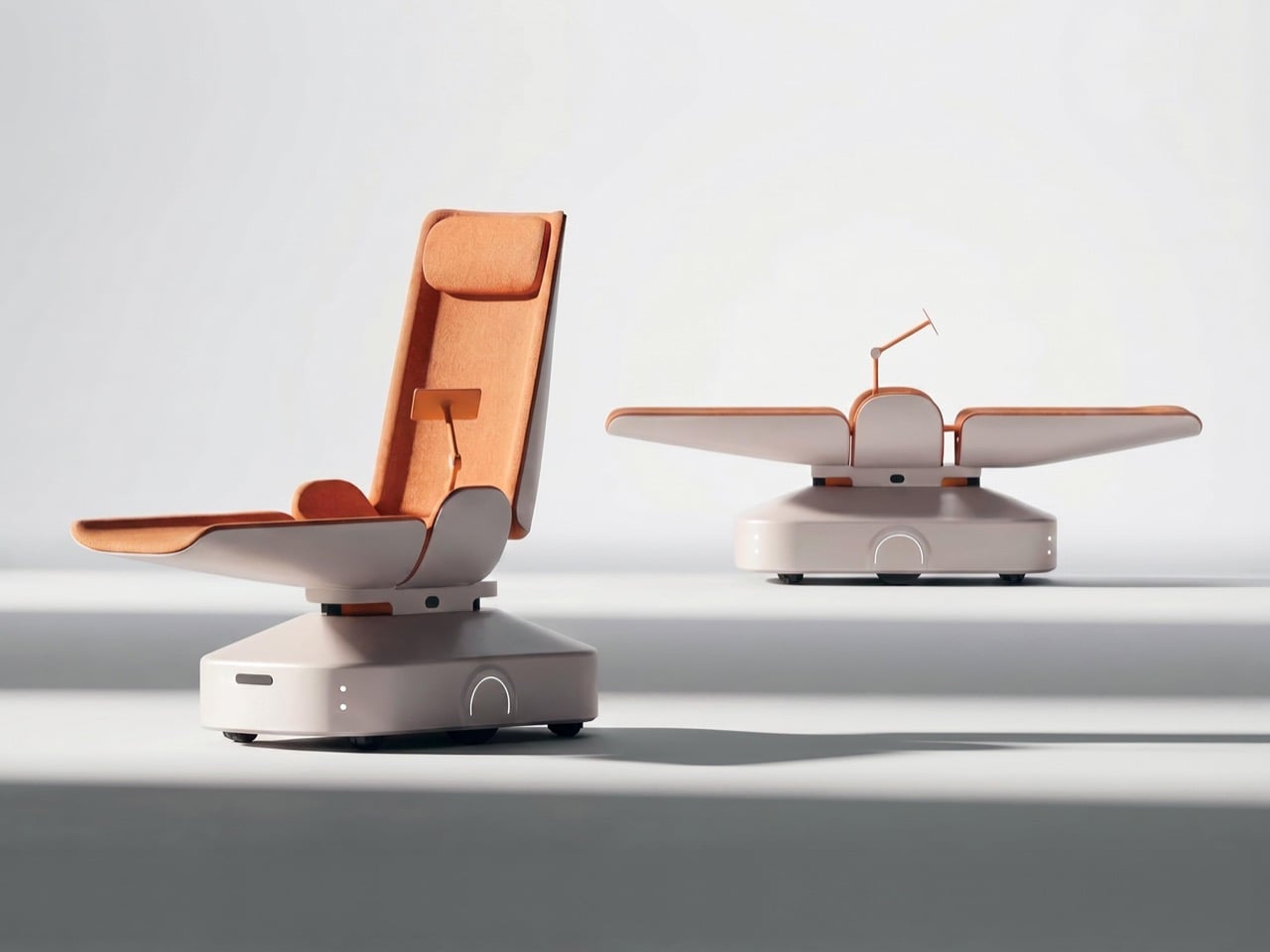
Seoul-based studio BDCI looked at that scene and apparently thought, what if the bed just drove itself? Their Autonomous Clinical Mobility concept, a 2026 Red Dot Design Concept winner, is a self-navigating hospital chair that ferries patients between diagnostic rooms, then reclines flat into a bed so you can get scanned, poked and checked without climbing off. It’s built for routine outpatient visits, so nobody’s yelling “Stat!” here. The idea still holds, though. The staff stay put, and the patient comes to them.

Designer: BDCI (Team Leads: Lee Seomin, Lee Gwongak)

Visually, this thing lives a world away from the squeaky beige gurney you’re picturing right now. The base is a soft, rounded pod in warm greige with tiny LED dots and a glowing arch on its flank, a bit like a friendly robot vacuum that started going to the gym. On top sits a seat built from curved shell panels, with little wings that hug your hips like flower petals. Everything is wrapped in a textured burnt orange fabric that feels closer to a boutique hotel lounge than a hospital ward. BDCI says the textile is antibacterial and the cushions are modular, so they can be swapped and cleaned between patients.

The cleverest trick happens when it’s exam time. The backrest drops, the legrest rises, and those hip petals fan outward until the whole chair lies completely flat, looking a lot like a tiny airplane seen head-on. That means no awkward shuffle from wheelchair to exam table, which anyone who has helped an elderly parent through a clinic visit knows is the hardest part of the day. Panasonic tackled a similar headache years ago with Resyone, a care bed that splits in half to become a reclining wheelchair, and it became the first product to earn the ISO 13482 safety certification for personal care robots. BDCI takes that same thinking and puts it on wheels that steer themselves.

Steering is where the AI comes in. The concept plugs into the hospital’s clinical workflow, figures out which tests you need, and plots a route that keeps you out of the longest queues. An orange articulated arm holds a tablet showing your next stop, a live floor map, a progress bar for your entire visit, and a big red SOS button for when you’d like a human, please. Self-driving wheelchairs already roam a few real buildings, too. WHILL brought its autonomous chairs to Keio University Hospital in Tokyo back in 2020 to help patients who found walking a giant hospital difficult or stressful.

Okay, the elephant in the hallway. Patients in matching gowns, reclining on rolling loungers with screens at face level, gliding along glowing lanes… BDCI’s renders look an awful lot like the Axiom from WALL-E. Pixar meant that as a warning about humans who stopped moving, though a sick person in a hospital gown has fairly earned the right to be chauffeured. There are practical wrinkles to sort out, like the fact that a battery-packed robot can’t roll into an MRI scanner room, and that hospitals usually favor wipeable surfaces over fabric. Still, given the choice, I’d take a calm orange chair over a sprinting crowd of extras any day.

The post This Self-Driving Hospital Chair Wants to Retire Hollywood’s Dramatic Gurney Sprint first appeared on Yanko Design.

  • ✇Yanko Design
  • The coolest thing about Polestar’s futuristic concept might be its physical button dashboard
    Polestar has a habit of turning its concept cars into real cars, which makes its show cars worth a closer look. The Precept, a sleek four-door GT revealed online in 2020 after the Geneva Motor Show was canceled, grew up into the Polestar 5. Nahum Escobedo, the designer who gave the Precept its shark-and-airplane lines, now runs exterior design for the whole brand. So when Polestar shows a new concept and says pieces of it are headed for showrooms, I believe them. Meet the Formula 2030, a low-sl
     

The coolest thing about Polestar’s futuristic concept might be its physical button dashboard

10 novembre 2026 à 15:20

Polestar has a habit of turning its concept cars into real cars, which makes its show cars worth a closer look. The Precept, a sleek four-door GT revealed online in 2020 after the Geneva Motor Show was canceled, grew up into the Polestar 5. Nahum Escobedo, the designer who gave the Precept its shark-and-airplane lines, now runs exterior design for the whole brand. So when Polestar shows a new concept and says pieces of it are headed for showrooms, I believe them. Meet the Formula 2030, a low-slung four-door sports car that previews the next Polestar 2 and the upcoming Polestar 7.

The Formula 2030 is also the first show car from head of design Philipp Römers, who came over from Audi in 2024. It sits just 53 inches tall, lower than the Polestar 5. It wears a new color Polestar calls Nitrogen that shifts with natural light, plus Swedish Gold on everything from the Brembo calipers to the seatbelts. Inside, Polestar brings back eight physical controls, and you can swap each one between a rocker switch and a rotary knob. One catch for US readers: Polestar is barred from selling new models here starting with model year 2027, so you’ll be enjoying this future from a distance.

Designer: Polestar

Lower Than a Model 3, Shaped Like a Coupe

Polestar lists the Formula 2030 at 184.3 inches long, 79.6 inches wide, and 53 inches tall (4,680 x 2,021 x 1,350 mm), riding on a 109.4-inch (2,780 mm) wheelbase. That makes it slightly shorter than a Tesla Model 3 and about 3.5 inches lower. The cabin sits pushed back over fat rear haunches, with a long hood and short overhangs, a cab-rearward recipe usually reserved for two-door coupes. From above, Polestar describes coke-bottle hips with the visual weight piled onto the rear wheels. The brand says the car lands somewhere between the next Polestar 2 and the Polestar 7 in size, so think of it as the family sketchbook in physical form.

Up front, the Dual Blade headlights borrow from the Polestar 3 and get tucked into a front aero wing above a shark nose and a deep splitter. A central spine anchors that splitter to the body and runs up the hood to a single, vertically mounted windshield wiper, a motorsport trick that looks fantastic even parked. The wraparound, visor-style windscreen is a deliberate nod to the original Polestar 2. My favorite detail is the LiDAR, which hides under an aero shroud and only pops up when the car is driving itself. After years of roof-mounted sensor humps on cars like Volvo’s EX90, a sensor that knows when to disappear feels like good manners.

The Light Bar Is Dead, and the Trunk Has Nothing to Hide

Around back, Polestar drops the full-width light bar found on nearly every EV and replaces it with Single Blade taillights, which the brand says are arriving ahead of series production. The lights trace a graphic that angles down toward the road, evolving the sharp geometric shapes Polestar has used before. Polestar itself calls the rear UFO-esque, and the glass backs that up by wrapping into the shallow side windows, broken only by a chunky C-pillar. A wing sits centrally on illuminated mounts, with a diffuser below doing the aero work. Escobedo says the goal was to keep the brand instantly recognizable while challenging expectations, and the taillights are where that tension shows most.

The rear doors hinge at the back and there’s no B-pillar, so opening both sides exposes the entire cabin and its four individual seats, a trick the Precept also pulled. Pop the rear clamshell and you find a transparent trunk floor, with custom Polestar bags strapped underneath by gold luggage straps. It’s luggage displayed like a museum exhibit, which I find both ridiculous and delightful. The race-inspired Öhlins dampers are on show back there too. Up front, the frunk is fitted for two racing helmets and a fire extinguisher, framed by a gold strut brace, which pretty much spells out Polestar’s idea of a good weekend.

Eight Buttons and a Cabin That Moves Around You

The driver faces the 20-inch HyperDIM, a curved display mounted directly on the steering column so it travels with the wheel. A 12.2-inch center screen rises out of a gently sloping center tunnel. You pick drive modes by sliding a selector forward through the console, and the cabin physically rearranges itself to match. In Autonomous, the center screen stands upright while the seat and steering wheel move away from each other, giving you room to lounge. Slide into Performance and the center screen sinks flush into the console as the wheel and HyperDIM pull toward your chest, which is about as close as an interior gets to rolling up its sleeves.

Below that center screen sits the panel that made me want to applaud: eight physical controls built on what Polestar calls a mechatronics solution. Owners can pick rocker switches or rotary controllers for each slot, then program individual hot keys for the functions they use most. Interior design chief Juan Pablo Bernal says the brand is rebalancing digital and physical in pursuit of a “tactile harmony.” The timing lines up with Euro NCAP, whose 2026 protocols reward physical controls for basics like indicators, hazards, and wipers, and Europe is where Polestar sells most of its cars. Google Gemini handles voice commands, so the screens keep the deep stuff while your fingers handle the everyday.

Nitrogen Paint, Swedish Gold, and the Polestar 2 Coming in 2027

Nitrogen, the concept’s new exterior color, is designed to react to natural light and runs tone-on-tone across the body, side cladding, splitter, diffuser, and 22-inch center-lock four-spoke wheels. Gloss, matte, and satin finishes keep each part distinct, while Swedish Gold lands on the calipers, valve caps, seatbelts, and cabin trim. Structural parts inside, like the seat frames and cross-car beam, are made from low-emission galvanized steel and left exposed on purpose. The seat backs use European flax and bio-based polypropylene in a grid weave, colored after the fields the flax grows in. Bcomp’s natural-fiber composite shows up in the cargo area too, so the sustainability pitch is something you can literally see.

Polestar has confirmed that design elements from the Formula 2030 will reach the next Polestar 2 in 2027 and the Polestar 7 in 2028, with the 7 set to be built in Europe. The Dual Blade face is already earmarked for the new Polestar 2, and the Single Blade taillights are tagged for production too. Power, range, and pricing remain under wraps, so the concept’s job right now is setting the look and the cabin philosophy. Römers inherited a strong design language from Maximilian Missoni, and his first show car keeps that DNA while fixing the biggest gripe about modern EV cabins. If the Precept is any guide, a good chunk of this car will be sitting in European driveways soon.

The post The coolest thing about Polestar’s futuristic concept might be its physical button dashboard first appeared on Yanko Design.

❌