❌

Vue normale

  • ✇Yanko Design
  • Loupe Light Concept Lets Diners Borrow a Magnifier From the Table Lamp
    Dim restaurant lighting can make dinner feel intimate, right up until you have to decipher the menu. Reaching for your phone’s flashlight solves one problem while introducing a rather conspicuous beam across the table. MK-II Studio’s Loupe Light concept offers another option, stacking magnetic light rings into a table lamp that guests can take apart whenever the small print needs some help. Together, the rings form a squat, ribbed shade above a cylindrical base, with warm light spilling around
     

Loupe Light Concept Lets Diners Borrow a Magnifier From the Table Lamp

Par : JC Torres
11 novembre 2026 à 13:20

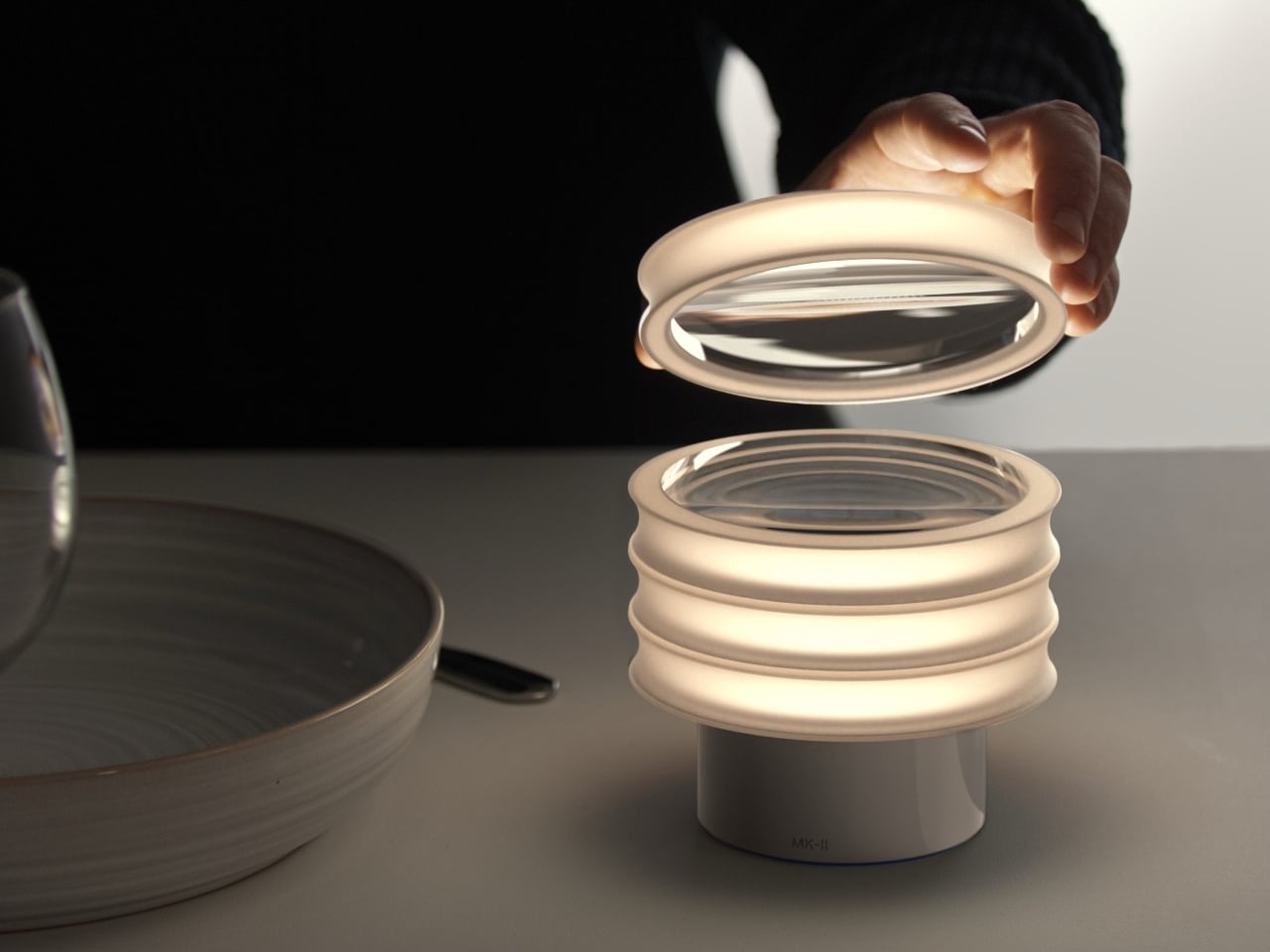
Dim restaurant lighting can make dinner feel intimate, right up until you have to decipher the menu. Reaching for your phone’s flashlight solves one problem while introducing a rather conspicuous beam across the table. MK-II Studio’s Loupe Light concept offers another option, stacking magnetic light rings into a table lamp that guests can take apart whenever the small print needs some help.

Together, the rings form a squat, ribbed shade above a cylindrical base, with warm light spilling around their edges. The clear center of each ring is actually a magnifying lens, rather than an empty opening. Lift one away, and you have both illumination and magnification in your hand, without switching on a screen or asking someone else to read the menu aloud.

Designer: Andrew Ferrier (MK-11 Studio)

That ring shape gives the reading aid a different character from a conventional magnifying glass. There’s no handle announcing a separate tool, just a rounded edge to hold as you move across the page. The lens is intended to sit above the paper, maintaining focus while keeping its surface clear of the menu, rather than rubbing directly against whatever you’re trying to read.

The idea follows the meal beyond choosing what to eat. When the bill arrives, you could borrow a ring to check the total or make sense of a line of charges. Someone else could reach for another without waiting for a shared flashlight, while the remaining rings stay on the base. The table’s reading aids and centerpiece would occupy the same spot.

The stack can also change with the table. The proposal allows rings to be added or removed for different table sizes, so a couple wouldn’t necessarily need the same arrangement as a larger group. Repetition gives the lamp its appearance, but also provides a way to distribute several reading aids without introducing a collection of unrelated accessories among the glasses, plates, and cutlery.

Restaurant staff have a part in this arrangement, too. The concept specifies cordless, sealed construction and inductive charging, intended to simplify wiping everything down between seatings. Avoiding a cable across the table makes sense around drinks and dishes. Returning the rings to a common base would also give staff a place to check that the set is together before the next guests arrive.

Loupe Light remains a concept, with magnification strength, brightness, and battery runtime still unspecified. Those details would determine how well it serves different diners, rather than simply how good it looks beside a plate. A lens that works for one person’s menu reading might not suit another, while the light needs to illuminate the paper without becoming another distraction across the table.

There’s something considerate about making the reading aid part of an object everyone shares. A guest could reach for a ring as casually as reaching for the salt, without asking a server for special equipment. The phone can stay in a pocket, provided the lens does its job. Dinner’s atmosphere wouldn’t have to depend on anyone pretending they can read the menu.

The post Loupe Light Concept Lets Diners Borrow a Magnifier From the Table Lamp first appeared on Yanko Design.
  • ✇Yanko Design
  • Natural Objet Concept Gives a Car Key a Stone-Like Cover
    A car key doesn’t have to advertise its electronics with a shiny shell and conspicuous buttons. Natural Objet is a design concept for smart keys. Its rounded body takes the shape of a pebble and adds a grainy finish, aiming to make something you carry every day feel less like a miniature remote control. The case keeps the original key inside, so this isn’t a replacement remote or an extra layer of smart technology. Instead, it changes the surface your thumb meets. Irregular curved cuts across t
     

Natural Objet Concept Gives a Car Key a Stone-Like Cover

Par : JC Torres
11 novembre 2026 à 12:20

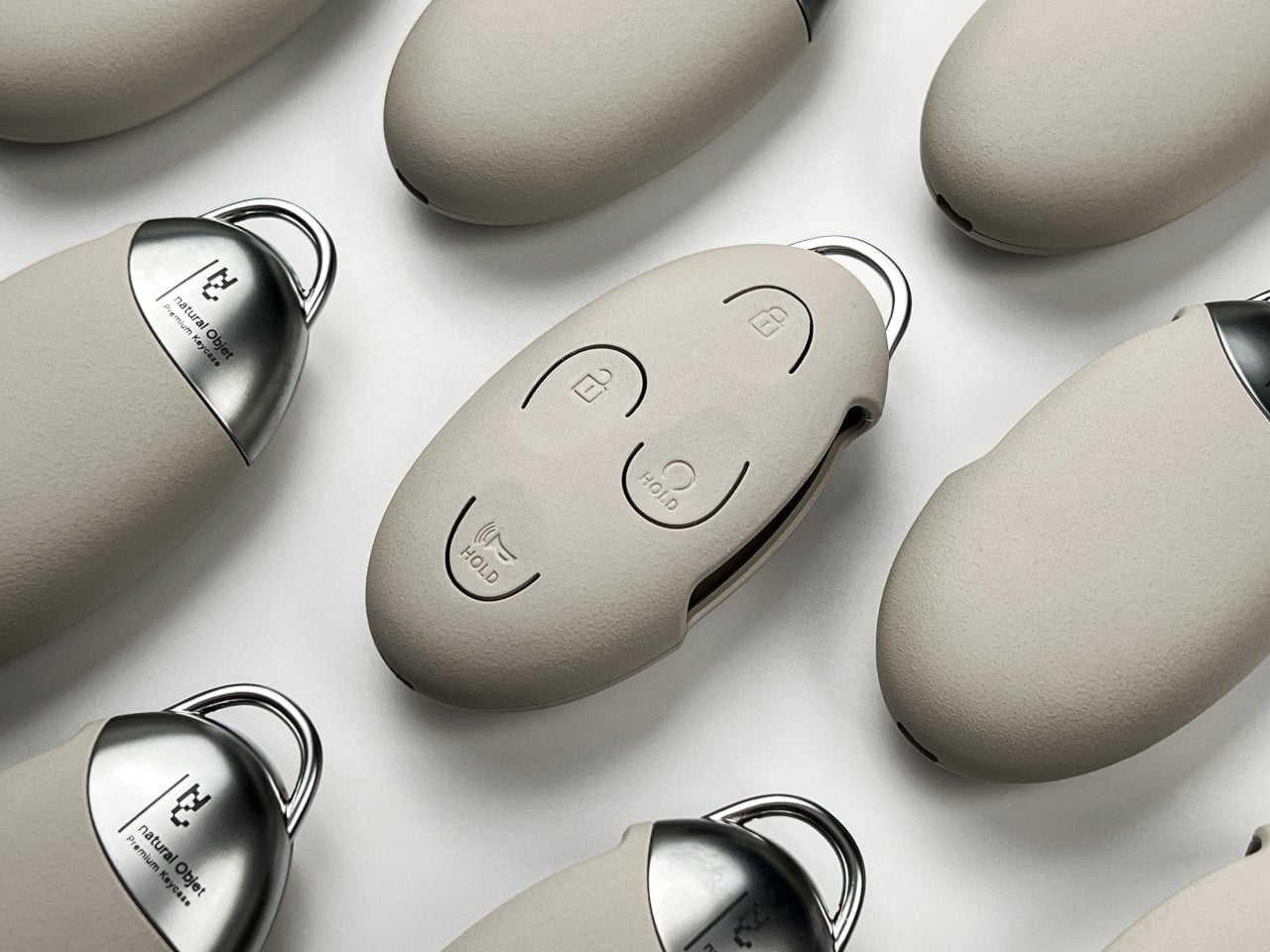
A car key doesn’t have to advertise its electronics with a shiny shell and conspicuous buttons. Natural Objet is a design concept for smart keys. Its rounded body takes the shape of a pebble and adds a grainy finish, aiming to make something you carry every day feel less like a miniature remote control.

The case keeps the original key inside, so this isn’t a replacement remote or an extra layer of smart technology. Instead, it changes the surface your thumb meets. Irregular curved cuts across the front outline the lock, unlock, remote-start, and horn buttons, interrupting the shell just enough to define each control without bringing back the bold, emblem-like pattern of an uncovered Hyundai key.

Designer: Eunsu Lee

That understated front hides a practical material problem. The button areas need to move, even though the case needs to hold its shape. In testing materials, ABS versions resisted pressing too much, while softer materials didn’t deliver the intended finish. Polycarbonate became the compromise, with repeated changes to the internal contact points intended to improve how each press reaches the key.

The custom coating carries that stone association. It’s intended to recreate a sandy sensation rather than the smoothness you might expect from molded plastic. A rounded edge can suggest a pebble, but a textured surface asks you to notice it with your fingers, too. That could make it easier to distinguish from other smooth objects in a bag before you see the buttons.

Metal breaks up the textured body at the back, where a die-cast zinc-alloy section meets the shell along a sloping edge. The design uses an interlocking connection rather than a merely attached decorative piece, intended to improve durability. A loop extends beyond the top for carrying accessories, giving the otherwise quiet object a small flash of shine when it hangs from a bag.

Warm gray, deep black, and earthy brown keep the palette close to sand, volcanic rock, and soil. A matching wrist loop continues the color beyond the shell, giving you somewhere to hold the key while carrying it between the house and car. Hanging from a handbag, the case could read as an accessory in its own right, rather than exposed automotive equipment.

The packaging gives you a similar sequence of surfaces before the case ever reaches your pocket. A translucent sleeve softens the outline of the object inside, then slides away from a folding kraft box. Its paper texture continues the material theme without copying the case’s coating. The contrast between hazy wrapping and rougher paper prepares you for the mix of surfaces underneath.

Keeping everything visually quiet has a practical consequence. The subtle symbols have less contrast than the original dark buttons, potentially making a quick glance less useful. Their curved borders would have to do more of the work when finding a control by touch. That’s where the pebble idea meets its test, somewhere between enjoying the surface and pressing the right button.

The post Natural Objet Concept Gives a Car Key a Stone-Like Cover first appeared on Yanko Design.

  • ✇Yanko Design
  • This Folding AI Handheld Concept Opens Into a Wildlife Field Guide
    Coming across an unfamiliar bird is often the beginning of a phone search, with a few unrelated notifications along for the ride. The log handheld concept proposes a more focused companion for those moments, pairing a camera with AI-assisted species identification and a personal field log. Its folding screen turns a narrow device into an L-shaped tool for exploring what’s around you. Closed, the device keeps its display folded against the body, leaving a slim rectangle with a distinctive circul
     

This Folding AI Handheld Concept Opens Into a Wildlife Field Guide

Par : JC Torres
11 novembre 2026 à 11:20

Coming across an unfamiliar bird is often the beginning of a phone search, with a few unrelated notifications along for the ride. The log handheld concept proposes a more focused companion for those moments, pairing a camera with AI-assisted species identification and a personal field log. Its folding screen turns a narrow device into an L-shaped tool for exploring what’s around you.

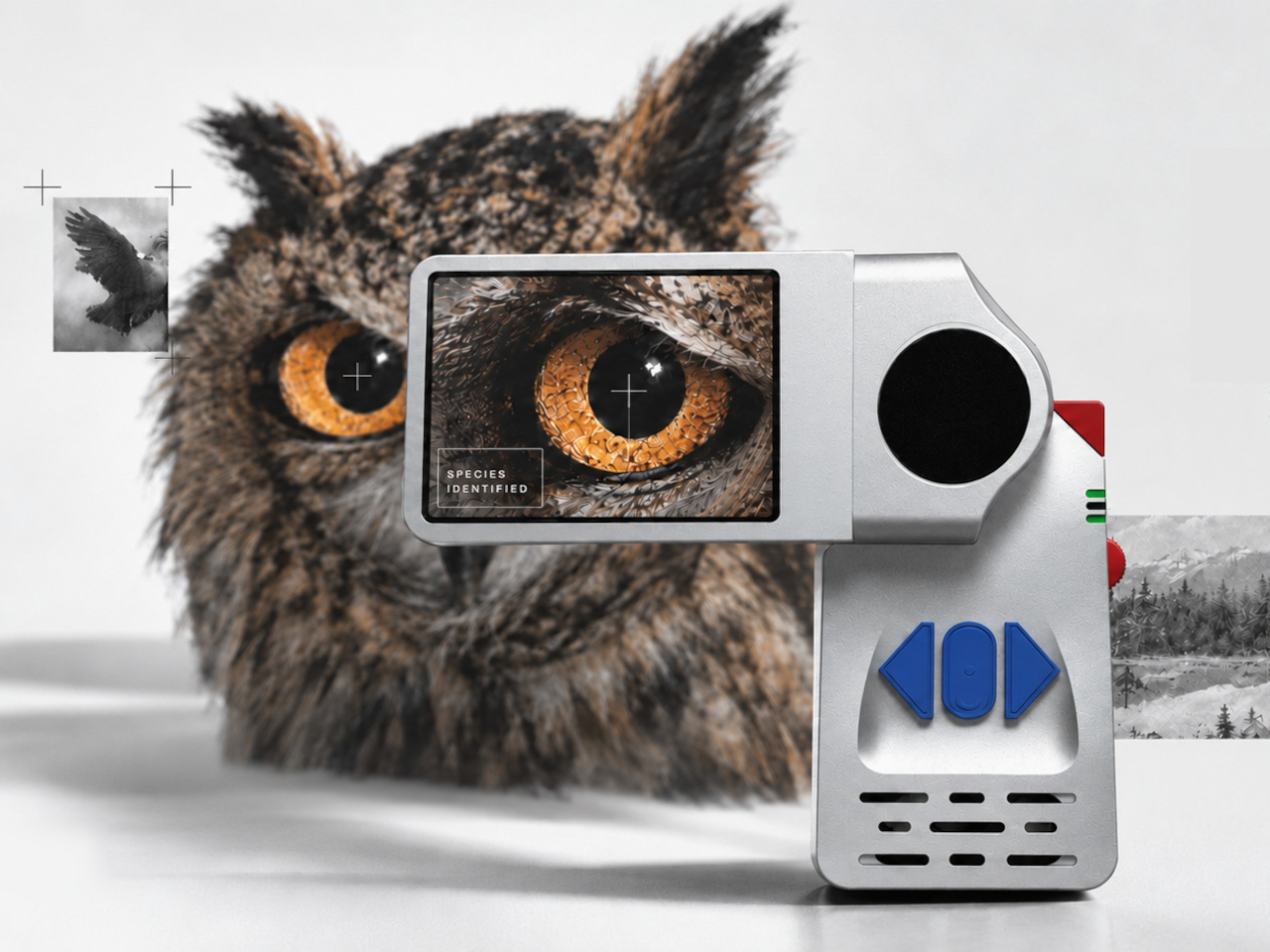
Closed, the device keeps its display folded against the body, leaving a slim rectangle with a distinctive circular joint at one end. Swing the screen outward, and it extends sideways above the grip, separating viewing from holding. That change gives the object a little of the character of an old camcorder, rather than yet another phone-shaped slab pretending to be something completely different.

Designer: Maanit Singh

The silver-colored shell makes the controls hard to miss, with blue directional buttons set into a recessed area and red accents along the side. Their shapes suggest a device you operate by pressing rather than constantly swiping. For someone pausing beside a trail, that could mean keeping navigation under a thumb while the image stays visible on the separate screen above your hand.

An unfamiliar flower or a bird on a branch would give that arrangement something to work with. The proposed interface pairs a photograph with identification information, then organizes encounters in a field log. Instead of leaving every sighting buried among screenshots and lunch photos, you’d have a dedicated collection to revisit, turning a short walk into something you can keep exploring afterward.

1

1

The proposed electronics include an ESP32-S3 controller, a camera module, a 2.8-inch TFT display, and a 4,000mAh battery. A speaker and two vibration motors suggest sound and tactile feedback could accompany the screen, although their exact behavior isn’t explained. That gives the concept more ways to get your attention than a visual prompt alone, potentially useful while you’re concentrating on something moving.

There’s some physical development behind the concept, including wired electronics, cardboard hinge studies, and a 3D-printed housing. Those experiments focus attention on the moving joint, which has to do more than make the device look unusual. It also needs to support a screen while someone holds the grip, then let the two sections return to a compact shape when the walk is over.

The AI side needs more caution than the friendly hardware suggests. The presentation doesn’t establish identification accuracy or explain whether recognition requires an internet connection. A species name on a screen should be a starting point for learning, not an unquestionable answer. That distinction matters especially with fungi and plants, where recognizing a resemblance isn’t the same as knowing what’s safe.

A dedicated nature gadget still has to earn the pocket space that a phone already occupies. With log, the distinction lies in the ritual of opening a tool built around observing and recording, rather than jumping into another app. You’d still be looking at a screen, of course. The hope is that you’d put it away with a better reason to look up.

The post This Folding AI Handheld Concept Opens Into a Wildlife Field Guide first appeared on Yanko Design.

  • ✇Yanko Design
  • Seagate FireCuda Forge Manages Your Hard Drive and SSD as One Volume
    Keeping a game library on a hard drive and your current favorites on an SSD sounds sensible, until you’re constantly moving things between them. Seagate’s FireCuda Forge puts both types of storage inside one desktop enclosure, promising that its new Alkemi technology will be the one to handle that sorting. It comes with an 8TB or 20TB hard drive, but requires an SSD you supply. That enclosure certainly isn’t trying to disappear behind your monitor. Dark, angular top panels sit above deeply ribb
     

Seagate FireCuda Forge Manages Your Hard Drive and SSD as One Volume

Par : JC Torres
11 novembre 2026 à 09:20

Keeping a game library on a hard drive and your current favorites on an SSD sounds sensible, until you’re constantly moving things between them. Seagate’s FireCuda Forge puts both types of storage inside one desktop enclosure, promising that its new Alkemi technology will be the one to handle that sorting. It comes with an 8TB or 20TB hard drive, but requires an SSD you supply.

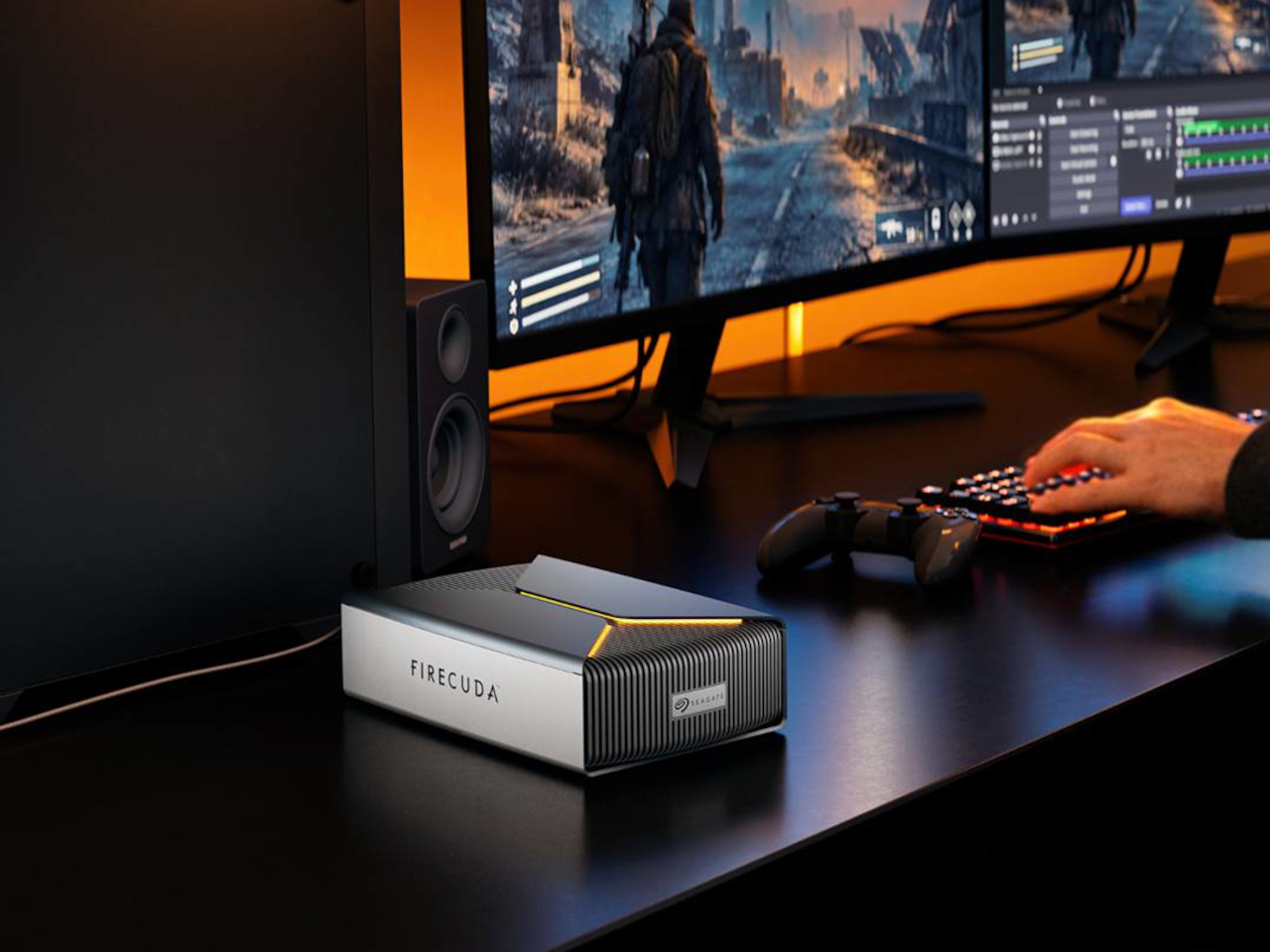
That enclosure certainly isn’t trying to disappear behind your monitor. Dark, angular top panels sit above deeply ribbed surfaces, with programmable RGB lighting picking out their edges. It has more in common with a gaming desktop than a discreet pocket drive, giving the hardware a conspicuous place beside your keyboard. Anyone hoping for an anonymous black box might find the styling rather enthusiastic.

Designer: Seagate

Inside, the SSD works as a cache rather than another storage compartment you manage yourself. Seagate says Alkemi follows usage patterns and prioritizes frequently accessed data on that faster drive, while the hard drive accommodates the broader library. Your computer sees one volume, and the SSD doesn’t add to its capacity. An 8TB model stays an 8TB model after installing flash storage.

That arrangement could suit someone who spends weeks playing one title before returning to something else. Instead of deciding which games deserve the fast drive, you’d let the enclosure respond as your habits change. The same logic applies to a video editor revisiting project files while keeping older footage nearby. The appeal is less digital housekeeping, rather than making every file equally fast.

Before any of that happens, though, there’s some assembly required. Seagate specifies an M.2 2280 NVMe SSD, with PCIe Gen3 or newer connectivity and a 1TB maximum. The mounting screw, thermal pads, and hex screwdriver are included, but the SSD isn’t optional: the system won’t operate without it. Choosing your own flash storage brings flexibility, along with another item on the shopping list.

Over USB4, Seagate advertises read speeds up to 2,500 MB/s and writes up to 2,000 MB/s on compatible systems. Those figures aren’t a promise that a forgotten game buried on the hard drive will suddenly behave like an SSD installation. Seagate itself acknowledges that new data may not immediately benefit from established usage patterns. The cache needs useful activity to learn from.

The Forge also expects a dedicated patch of desk rather than a pocket in your laptop bag. The 8TB unit measures about 9.46 x 5.78 x 2.57 inches and weighs roughly 4.1 lbs. It needs an external power adapter alongside its USB-C cable, too. On the practical side, Seagate makes the hard drive upgradeable, leaving room to expand beyond your initial purchase.

Seagate’s announced prices start at $699 for 8TB and $899 for 20TB, before adding that required SSD. Already owning a suitable spare would make the proposition easier to consider, especially if you’re tired of shuffling files between drives. Otherwise, the automatic management comes with another purchase to make before the system works, despite all that storage already sitting inside its conspicuous enclosure.

The post Seagate FireCuda Forge Manages Your Hard Drive and SSD as One Volume first appeared on Yanko Design.

❌