Connexion

The 7 Best Designs for Off-Grid Luxury Living

Off-grid luxury starts with deciding which comforts deserve space in the car. A place to stretch out, a proper morning coffee, and a drink served in something nicer than a battered camping mug can change the character of a weekend outdoors. The goal is to make staying outside appealing enough that nobody starts calculating the drive home before dinner. Good design has a useful role in making that happen, too.
These seven picks approach luxury through sleep, food, music, and the occasional extravagance. They’re best understood as additions to a vehicle-supported camp or remote retreat, not a lightweight backpacking checklist or a complete self-sufficient home. Some need charged batteries, others need fuel, and every powered comfort brings a little planning. What earns them a place here is a specific design choice that makes a familiar pleasure more portable or practical.
1. Haven Spectre Hammock Tent
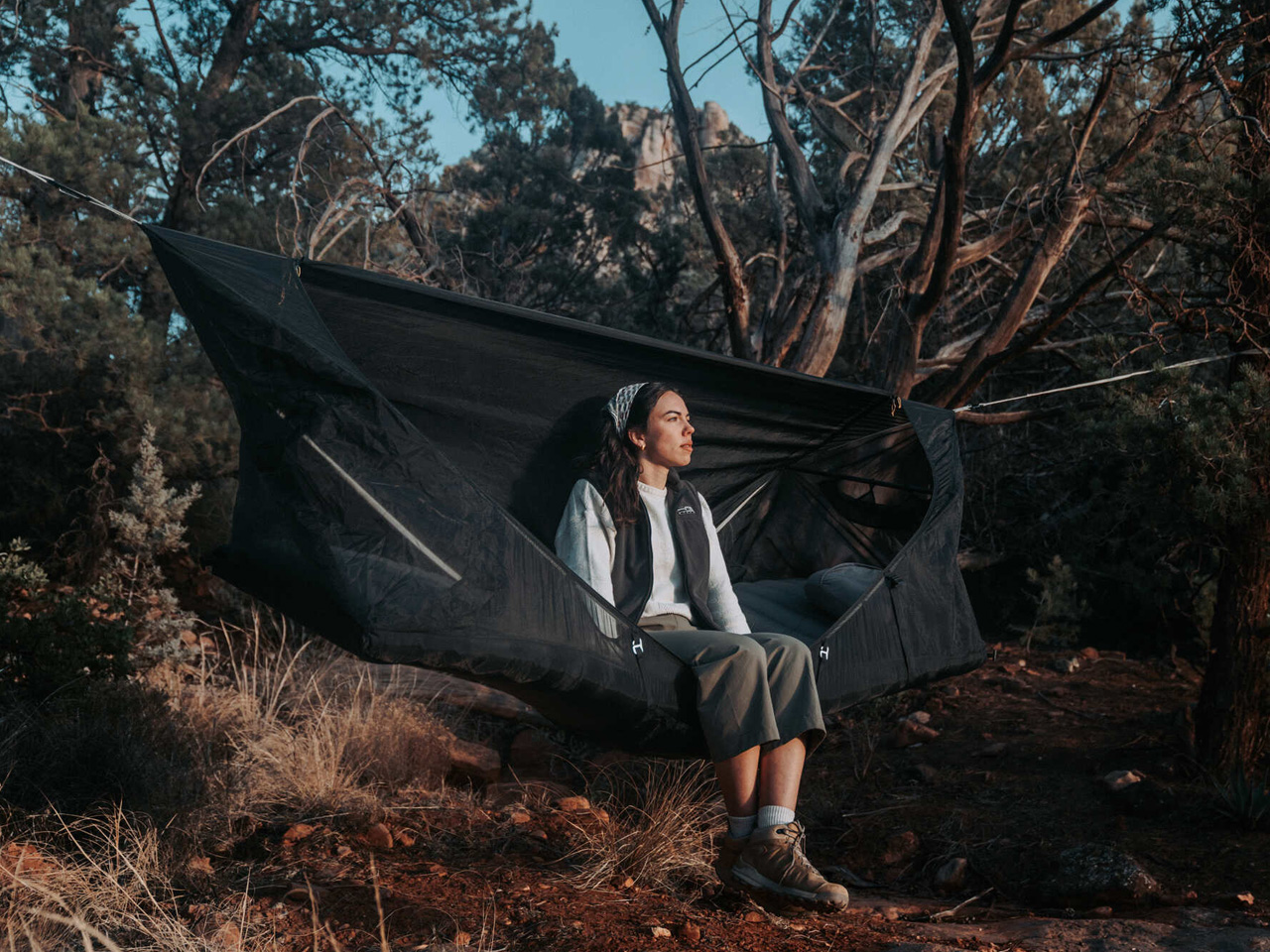
Sleeping comfort is a convincing place to spend your weight allowance. Haven Tents’ Spectre uses a lay-flat structure to avoid the deep curve of a conventional hammock. Spreader bars and a fitted inflatable pad create a rectangular sleeping platform, which the company designs for back, side, and stomach sleeping. Its mesh construction keeps the surroundings visible with the rainfly removed. The appeal is having a sleeping arrangement that leaves the landscape in view without requiring you to lie on the ground.
Now sold in configurable retail kits, the Spectre needs a little attention at checkout. The sleeping pad contributes to its structure, and the mesh hammock body is not waterproof, so the rainfly does the weatherproofing. Haven lists its lightest combination with the Spectre pad and Dyneema rainfly at 4 pounds, 5 ounces. That makes configuration consequential: choosing different materials changes the weight. It’s also strictly a single-person shelter, with a 285-pound capacity, rather than a shared glamping bedroom.
What we like
- The lay-flat structure accommodates different sleeping positions.
- Mesh construction preserves the view with the rainfly removed.
What we dislike
- The fitted pad is part of the structural system.
- Single-person capacity limits its usefulness for couples.
2. RetroWave 7-in-1 Radio
A radio gives a campsite something a phone speaker doesn’t: an object dedicated to listening, with a tuning dial instead of another screen. The RetroWave 7-in-1 Radio combines AM, FM, and shortwave reception with Bluetooth and MP3 playback from USB storage or a microSD card. Loading music beforehand gives it a useful role beyond broadcast reception. You can leave the phone alone while keeping a soundtrack for cooking, reading, or doing very little besides the tent.
Its backup functions make sense outdoors, provided their limits stay clear. The radio contains a flashlight, SOS siren, and a 2,000mAh battery that can also supply power to a phone. USB is the primary charging method; the listing identifies the hand crank as an emergency option and solar charging as supplemental. That distinction matters when planning a longer stay. Treat those alternatives as reserves, not permission to forget charging altogether, especially when listening and phone charging draw on the same battery.
Click Here to Buy Now: $89.00 Black Friday: Free $20 calendar with every order.
What we like
- Radio and stored music work without an internet connection.
- A tactile dial keeps listening separate from a phone screen.
What we dislike
- Solar charging is supplemental.
- Phone charging shares the radio’s modest battery reserve.
3. Iam Sauna Portable Wood-Fired Sauna
Packing a sauna is a fairly clear declaration that this won’t be a minimalist camping trip. Japanese brand Iam Sauna pairs a collapsible, insulated tent with a wood-burning stove, bringing a dedicated sauna space to an outdoor stay. Five windows keep the setting part of the experience, while the layered fabric forms an enclosure around the heat source. This is the collection’s most indulgent choice: a separate room for an activity that has nothing to do with getting dinner cooked or sleeping sheltered.
Portability needs perspective. The brand’s current tanzawa3 stove alone weighs approximately 40 pounds, before adding the tent, stones, and firewood. This belongs at a vehicle-supported base camp where you’re staying long enough to justify the setup. It also demands proper fire management. Iam Sauna specifies continuous ventilation through the designated openings, chimney cleaning before use, and a carbon monoxide detector, while warning against operation in strong winds. The luxury is a private sauna session; the responsibility is operating a combustion appliance correctly.
What we like
- Wood-fired heating avoids the need for an electric sauna heater.
- Five windows keep the outdoor setting visible.
What we dislike
- The stove alone makes this a substantial load.
- Ventilation, chimney maintenance, and fire precautions require active attention.
4. Flex Glass Tumbler
The Flex Glass Tumbler brings a cut-glass silhouette to a material better suited to a campsite. Made by KINJO in Yao, Osaka, it uses transparent silicone rubber rather than glass, with faceted geometry inspired by Japanese kiriko. Those details are molded into the body, not added as surface decoration. For an outdoor table, that is a useful material substitution: the drinkware can look considered without introducing conventional glass’s tendency to shatter when it gets knocked over during a meal.
Its 250ml capacity makes it a small tumbler for a short drink, rather than a substitute for your water bottle. The flexible body comes with silicone’s own care requirements. The maker warns that some food and drink can leave odors or discoloration, and sharp objects can cut or tear it. Hand washing with mild detergent is recommended. Pack it as attractive, reusable tableware, not as an indestructible cup that can be thrown loose among knives and other sharp cooking tools.
Click Here to Buy Now: $60 Black Friday: Free $20 calendar with every order.
What we like
- Kiriko-inspired facets without fragile glass.
- Flexible construction suits outdoor dining.
What we dislike
- Some drinks can leave odors or discoloration.
- Sharp objects can cut or tear the silicone.
5. OutIn Nano Portable Espresso Maker
The most useful detail in OutIn’s Nano espresso maker is the heater inside its flask-shaped body. Many outdoor coffee routines begin by finding a way to boil water; this rechargeable machine incorporates that step alongside the pump. Add drinking water and either ground coffee or a compatible Nespresso Original capsule, then brew into the included cup. It’s a compact way to preserve a particular morning ritual without building an entire coffee station beside the stove or carrying a separate electric kettle.
Heating is also what sets its practical limits. OutIn claims up to five brews per charge using 50ml of water initially at 77°F, based on its own testing. Colder water or larger servings change that calculation, so a couple’s weekend could use the reserve quickly. The maximum water level is 80ml, keeping this firmly in espresso territory. At approximately 670 grams, it’s an intentional comfort purchase, best packed with a suitable USB charging source and realistic expectations about how many coffees it will make.
What we like
- Built-in heating removes a separate preparation step.
- Accepts ground coffee and compatible capsules.
What we dislike
- Heating limits the number of brews per charge.
- Small capacity favors espresso over larger servings.
6. All-in-One Grill
A dedicated vessel for warming sake is a persuasive detail in a collection about outdoor luxury. Hayano Kenko’s All-in-One Grill, also known as +Base, builds that function into a modular charcoal cooking system. Its interchangeable components support grilling, frying, steaming, smoking, and cooking in a pot. The point is flexibility within a small footprint. You can plan a meal around several cooking methods without packing an unrelated appliance for each one, then give the drinks their own place beside dinner.
The Japanese-made stainless-steel body measures approximately 11.8 by 7 by 5.9 inches, making it better suited to a succession of smaller dishes than a large barbecue spread. The set includes a thick plate, grill net, covered pot, steaming and smoking rack, and bottle-warming vessel. Components are separate for cleaning, though more cooking options still mean more pieces to wash. Its compact proportions don’t remove the work of charcoal cooking, either: fuel preparation, tending the heat, and waiting for everything to cool remain part of the meal.
Click Here to Buy Now: $449 Black Friday: Free $20 calendar with every order.
What we like
- Interchangeable cookware supports a varied outdoor menu.
- The bottle warmer adds a genuinely indulgent detail.
What we dislike
- A small cooking area favors cooking in batches.
- Multiple components still need cleaning and packing.
7. EcoFlow GLACIER Classic Portable Refrigerator
Refrigeration makes a more ambitious outdoor menu possible, which gives EcoFlow’s GLACIER Classic a clear role beside the grill. The range comes in 35L, 45L, and 55L sizes, with separate temperature zones on the two larger models for refrigerated and frozen provisions. The 45L version is a sensible middle candidate for this collection. Its dual-sided lid can open from either long side, a useful detail when the refrigerator is packed into a vehicle with access restricted on one side.
EcoFlow quotes up to 39 hours at 39°F in 77°F ambient conditions with its 298Wh battery. That is a test result, not a promise for every weekend. The battery is optional, with fridge-only and battery-inclusive configurations, and solar charging requires compatible panels. At 51 pounds empty, the 45L model needs a planned position near the vehicle. Choose it for controlled cold storage without filling the compartment with ice, while allowing enough carrying capacity and charging provision to keep that convenience useful.
What we like
- The 45L model separates fresh and frozen provisions.
- Dual-sided lid access helps with vehicle placement.
What we dislike
- The 45L refrigerator weighs 51 pounds before loading.
- Battery inclusion depends on the configuration purchased.
Pack for the Stay You Actually Want
Start with the part of camping you’re least willing to compromise on. If that’s sleep, build the trip around the shelter. If it’s cooking, give the kitchen enough room, water, and power to work properly. The sauna belongs to a different kind of weekend altogether, one planned around staying put. There’s no obligation to pack all seven, and a more selective setup may be the more luxurious choice in practice.
Leave room in that plan for the less photogenic requirements: charging, washing up, storing fuel, and letting hot equipment cool before packing. Those jobs don’t disappear because the objects are beautifully designed. The worthwhile purchases are the ones that make your preferred rituals easier to keep without turning the trip into equipment management. A good outdoor setup should leave you with more time to enjoy where you are, not less.
The post The 7 Best Designs for Off-Grid Luxury Living first appeared on Yanko Design.