Vue normale

Il y a de nouveaux articles disponibles, cliquez pour rafraîchir la page.
Aujourd’hui — 7 avril 2026Flux principal

Ce smartphone Android fait tourner Red Dead Redemption 2 et Cyberpunk 2077 en local

Par : Korben
6 avril 2026 à 06:23

Le Red Magic 11 Golden Saga Edition est un téléphone Android capable de faire tourner des jeux PC Windows en local, sans connexion internet et sans cloud gaming. Red Dead Redemption 2 tourne à plus de 40 images par seconde, GTA V dépasse les 60, et Cyberpunk 2077 est jouable. Le tout dans la poche.

Comment ça marche

Red Magic utilise un outil appelé GameHub, qui fait tourner des jeux Windows directement sur Android grâce à une couche d'émulation basée sur Wine et Proton (les mêmes technologies que Valve utilise sur le Steam Deck pour faire tourner des jeux Windows sous Linux).

Pas besoin de streaming, pas besoin de serveur distant. Le jeu s'exécute en local sur le téléphone, avec les fichiers installés sur le stockage interne.

Le Red Magic 11 Golden Saga Edition embarque un Snapdragon 8 Elite Gen 5 avec 24 Go de RAM LPDDR5T et 1 To de stockage UFS 4.1 Pro.

Il y a aussi un système de refroidissement actif avec ventilateur, des chambres à vapeur dorées et de l'argent dans le circuit de dissipation thermique. L'écran fait 6,85 pouces, 144 Hz, en AMOLED, et la batterie est de 7 500 mAh.

Les performances en jeu

Red Dead Redemption 2 tourne autour de 40 à 50 images par seconde en moyenne, avec des pointes à 60 dans les intérieurs. GTA V monte jusqu'à 100 images par seconde en intérieur et reste autour de 65 en ville.

Cyberpunk 2077, le plus gourmand, tient au-dessus de 30 images par seconde en 720p avec les paramètres au minimum et le FSR activé. C'est jouable, mais on est loin du confort d'un PC.

Par contre, le téléphone chauffe beaucoup. Des tests ont montré que le processeur pouvait atteindre 100 degrés en charge prolongée sur Cyberpunk 2077. Le ventilateur tourne à fond, et l'autonomie en prend un coup.

Le prix du jouet

Le Red Magic 11 Golden Saga Edition est affiché à 1 500 euros. A ce tarif, on peut acheter un PC gaming portable correct ou un Steam Deck OLED avec encore pas mal de marge. Le public visé est très spécifique : les passionnés de gaming mobile qui veulent jouer à des jeux PC sans avoir de PC.

Bon maintenant on ne va pas de mentir, pour bien moins cher, un Steam Deck OLED fait largement mieux, avec un écran plus grand et une bien meilleure ergonomie pour jouer.

Source : Techspot

Apfel - Le LLM caché de votre Mac enfin libéré

Par : Korben
5 avril 2026 à 07:24

J'sais pas si vous saviez mais Apple a planqué un LLM dans votre Mac et ne veut pas que vous y touchiez... enfin, pas directement. En effet, leur modèle est là, intégré au système via le framework FoundationModels, il tourne sur le Neural Engine sans connexion internet mais Apple l'a verrouillé derrière Siri. Du coup, impossible de l'appeler depuis un script ou un pipe shell et c'est là qu' apfel intervient !

L'outil s'installe en une commande :

brew install Arthur-Ficial/tap/apfel

Et hop, vous avez accès au modèle directement depuis votre terminal. Faut Apple Intelligence actif également, sinon, ça ne fonctionnera pas.

Ensuite, vous lui posez une question, et il vous répond. Vous lui "pipez" un fichier, et il le traite. Et le tout sans rien télécharger puisque le modèle est déjà sur votre machine !

C'est un LLM de 3 milliards de paramètres, quantifié en 2 et 4 bits, qui tourne nativement sur la puce Apple Silicon (M1 et au-delà) et il se défend plutôt bien face à Qwen-2.5-3B, si on en croit les benchmarks. La fenêtre de contexte est limitée à 4096 tokens (entrée + sortie combinées), soit environ 3000 mots, donc faut pas espérer lui faire digérer un roman mais pour transformer du texte, classifier des données ou résumer un paragraphe... ça fait bien le taf.

Apfel expose donc ce modèle de trois façons différentes. En CLI pure (compatible stdin/stdout, sortie JSON, codes d'erreur propres), en serveur HTTP compatible OpenAI sur localhost:11434 (avec streaming SSE, tool calling et CORS activé), et en chat interactif multi-turn.

Le serveur OpenAI c'est malin parce que d'un coup, tous vos outils savent causer à l'API OpenAI (Cursor, Continue.dev, n'importe quel SDK) et peuvent utiliser l'IA locale de votre Mac sans rien changer à leur code. Et le support MCP (Model Context Protocol) natif c'est très chouette aussi puisqu'il suffit de lancer apfel avec le flag --mcp, pour qu'il découvre automatiquement les outils disponibles, exécute les appels et renvoie les résultats.

D'ailleurs côté vie privée, c'est du béton armé car le framework FoundationModels d'Apple n'a pas accès à vos contacts, emails, calendrier ou photos et tout tourne sur le Neural Engine et le GPU, sans connexion internet.

Si vous avez déjà bidouillé avec Ollama et les modèles locaux , apfel c'est un peu la même philosophie... sauf que là vous n'avez rien à télécharger et contrairement à Perspective Intelligence qui transforme votre Mac en serveur web avec PostgreSQL et tout le tralala, apfel reste hyper minimaliste.

Attention quand même, faut être sous macOS 26 Tahoe minimum donc si vous êtes encore sous Sequoia 15.x ou Ventura 13.x, c'est mort, le framework FoundationModels n'existe pas sur ces versions. Et si vous avez un Mac Intel... ben non plus, le Neural Engine c'est Apple Silicon only.

Le projet inclut aussi des scripts démo sympas dans le dossier demo/.

Y'a par exemple cmd qui convertit du langage naturel en commandes shell, explain qui décortique les messages d'erreur, gitsum qui résume vos commits récents, ou encore mac-narrator qui commente l'activité de votre système en temps réel (c'est votre Mac qui se raconte à lui-même).

Perso, cmd c'est celui qui m'a le plus plu, même si bon, avec 4096 tokens de contexte, faut pas lui demander des commandes ffmpeg de 200 caractères.

Mais au-delà des démos, c'est en vrai que ça devient fun. Je vous montre quelques usages classiques d'abord :

apfel -f README.md "Résume ce projet en 3 phrases"

apfel -f code.py -s "Tu es un développeur expérimenté" "Trouve les bugs"

echo "Traduis ça en allemand : Salut" | apfel

Et les trucs un peu plus funs :

git diff HEAD~1 | apfel -f CONVENTIONS.md "Review ce diff par rapport à mes conventions"

apfel -f old.swift -f new.swift "Qu'est-ce qui a changé entre ces deux fichiers ?"

demo/oneliner "compte les IPs uniques dans access.log"

Vous pouvez même piper la sortie en JSON pour chaîner avec jq, ou lancer le mode --serve et brancher Cursor dessus pour avoir de l'autocomplétion locale gratuite. Et si vous êtes du genre parano, le mode --chat avec --context-strategy summarize gère automatiquement le contexte quand la conversation dépasse les 4096 tokens.

Et côté écosystème, y'a aussi apfel-gui (une interface SwiftUI native pour chatter avec le modèle, avec speech-to-text et text-to-speech on-device) et apfel-clip qui est en développement (ce sont des actions IA qui s'ajoutent dans la barre de menus pour corriger la grammaire, traduire, résumer) et le tout sous licence MIT, évidemment.

Bref, c'est un super modèle mais avec 3 milliards de paramètres et 4096 tokens de contexte, faut pas s'attendre non plus à remplacer Claude ou GPT. Les maths complexes, la génération de code avancée et les longues conversations, c'est pas son truc mais pour du scripting, de la classification ou transformer du texte à la volée... ça dépanne carrément !

Et ce modèle préfère refuser plutôt qu'halluciner, ce qui est plutôt une bonne surprise je trouve. Voilà, si vous avez un Mac Apple Silicon sous macOS Tahoe, apfel et ses outils valent le coup d'œil pour vos petites tâches IA basiques / rapides de tous les jours.

iPhone 18 Pro Leaks Reveal a 2nm A20 Pro Chip, 35% Smaller Dynamic Island, and a Deep Red Color

Par : Sarang Sheth
6 avril 2026 à 21:30

Apple has spent four years refusing to touch the Dynamic Island, treating it like some untouchable monument to software-hardware integration. Samsung cycled through three foldable generations in that time. Google rebooted the Pixel lineup twice. Nothing went from startup curiosity to legitimate competitor. And the iPhone 14 Pro’s pill-shaped cutout just sat there, exactly the same width, height, and visual footprint on the 15 Pro, 16 Pro, and 17 Pro. Leaked screen protectors sourced from Weibo now suggest Apple has finally decided four years is long enough, and the company is gearing up to shrink the Dynamic Island by roughly 35 percent on the iPhone 18 Pro. The mechanism is straightforward: move the Face ID flood illuminator under the display, leave only the infrared camera and front lens in the cutout, and suddenly that wide pill becomes a narrow sliver sitting unobtrusively at the top of the screen. The infrared flood illuminator that powers Face ID is moving under the display on the iPhone 18 Pro, leaving only the infrared camera requiring a physical cutout alongside the front-facing lens.

But the Dynamic Island shrinkage is hardly the headline here, because the iPhone 18 Pro is also the phone where Apple trades in its most iconic color for something it has never tried before on a Pro model. Bloomberg’s Mark Gurman reports that Apple is testing a deep red finish for the 18 Pro lineup, a shade closer to burgundy than the bright Product Red tones the company used on standard models years ago. Apple removed black from the Pro lineup with the iPhone 17 Pro, the first time in the series’ history that no dark option existed, and the 18 Pro appears set to continue that direction rather than course-correct. September 2026 is the expected launch window, which makes this arguably the most important incremental iPhone in years. It is widely believed to be the last model in this design language before Apple delivers a radical overhaul for the 20th anniversary iPhone in 2027, so whatever ships this fall is likely your final chance to buy an iPhone that looks like an iPhone has looked since 2017.

Designer: Volodymyr Lenard

Leaker Ice Universe claimed the Dynamic Island cutout on the iPhone 18 Pro models will be approximately 35% narrower than it is on the iPhone 17 Pro models, with a width of around 13.5mm down from around 20.7mm. That figure refers to the default on-screen Dynamic Island width including surrounding black pixels, not the physical hardware cutout itself, but the visual difference should be immediately apparent in daily use. The iPhone 17 Pro’s Island is a wide, commanding presence even at rest. The 18 Pro’s leaked cutout reads almost delicate by comparison, a narrow pill sitting unobtrusively at the top of the screen. Apple will still need to revisit four years of Live Activities design and the entire interaction vocabulary built around the existing Island’s dimensions, which is a reasonable explanation for why this transition is taking as long as it is. Android manufacturers have shipped under-display cameras for years, with visible quality tradeoffs that Apple’s user base simply would not accept on a thousand-dollar phone. Holding the line until the technology meets the standard, rather than shipping it to win a spec sheet argument, is the kind of call that frustrates people in the short term and builds loyalty over time.

Under the hood, the A20 Pro chip built on TSMC’s advanced 2nm process promises roughly 15% faster performance and up to 30% better power efficiency compared to the current 3nm A19 Pro. Paired with 12 GB of RAM across the lineup, the new silicon should power smoother Apple Intelligence features, enhanced on-device AI processing, and better multitasking. Connectivity upgrades include Apple’s first in-house C2 5G modem, replacing reliance on Qualcomm components. The modem supports improved mmWave performance and expanded satellite connectivity, potentially enabling always-connected cellular service via NR-NTN standards for emergency messaging and basic data in remote areas without traditional coverage. Battery life stands out as a major highlight, especially for the iPhone 18 Pro Max. Leakers report a capacity jump to 5,100 to 5,200 mAh, the largest ever in an iPhone, enabled by a slightly thicker chassis measuring around 8.8mm up from 8.75mm on the iPhone 17 Pro Max. The added thickness and weight would accommodate the bigger cell while the more efficient 2nm chip helps stretch usage even further. Some projections suggest up to 40 hours of mixed use on a single charge.

The deep red finish represents a significant departure for a Pro lineup that has historically favored controlled, conservative colors like graphite, silver, gold, and muted titanium shades. Rumors of purple and brown finishes have also circulated, but Gurman believes those are just variants of the same red idea. The decision to skip black for a second consecutive year has already generated polarized reactions among enthusiasts, with some welcoming the bold direction and others mourning the loss of the classic understated aesthetic. For buyers who want black, Gurman specifically noted that the foldable iPhone is being designed with conservative space gray and silver finishes, suggesting Apple is deliberately separating its color identity across product lines. The iPhone 18 Pro may read as a modest update on paper, but as the final iteration of a design language that has defined the modern iPhone for nearly a decade, it carries more symbolic weight than any spec sheet can communicate.

The post iPhone 18 Pro Leaks Reveal a 2nm A20 Pro Chip, 35% Smaller Dynamic Island, and a Deep Red Color first appeared on Yanko Design.

À partir d’avant-hierFlux principal

Apple Turns 50, and Its Most Ambitious Phone Hasn’t Even Launched Yet — 5 iPhone Fold Concepts

1 avril 2026 à 01:45

On April 1st, 2026, Apple turns 50. For a company that has spent half a century rewriting the rules of consumer technology, the milestone deserves something genuinely transformative. The Macintosh redefined personal computing. The iPod gave an entire generation a new relationship with music. The original iPhone, unveiled in 2007, combined a phone, a music player, and the internet into a single glass rectangle and made every competitor look outdated overnight. The iPhone Fold is real, and it’s coming.

Leaks from early 2026 paint a detailed picture: a book-style foldable powered by the A20 Pro chip on a 2nm process, backed by a 5,500mAh battery, with a 7.8-inch creaseless OLED inner display and a 5.5-inch outer screen. Pricing is expected to start around $2,400, and while a September announcement seems likely, most analysts believe shipments may not begin until December. Designers, modders, and concept artists have spent years filling the void with their own visions of a folding iPhone, each carrying a distinct theory about what Apple should prioritize. These five concepts map the full range of that imagination and capture exactly how much is riding on the real thing.

1. iPhone iFold by Michal Dufka — The Clamshell That Makes Sense

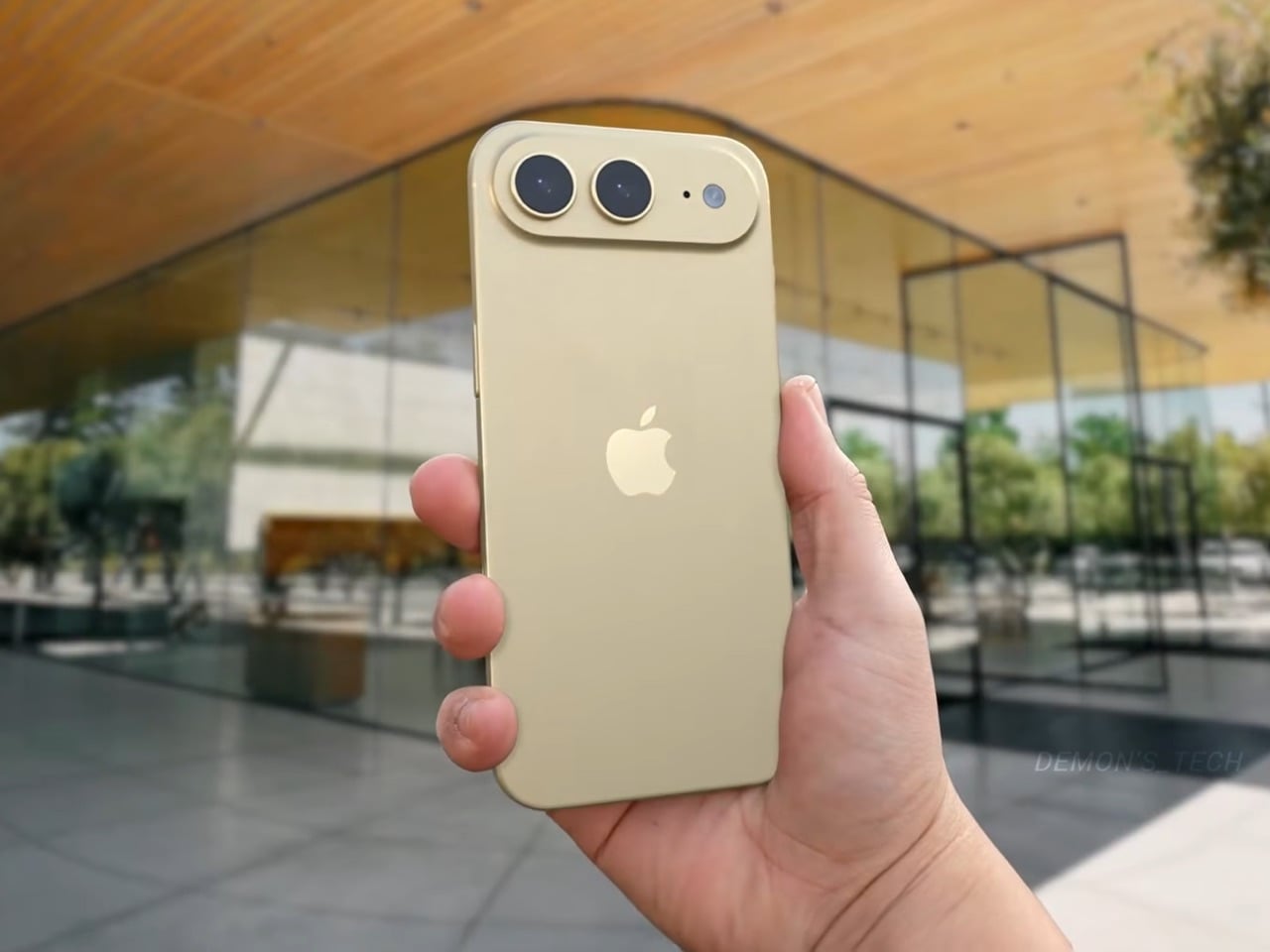
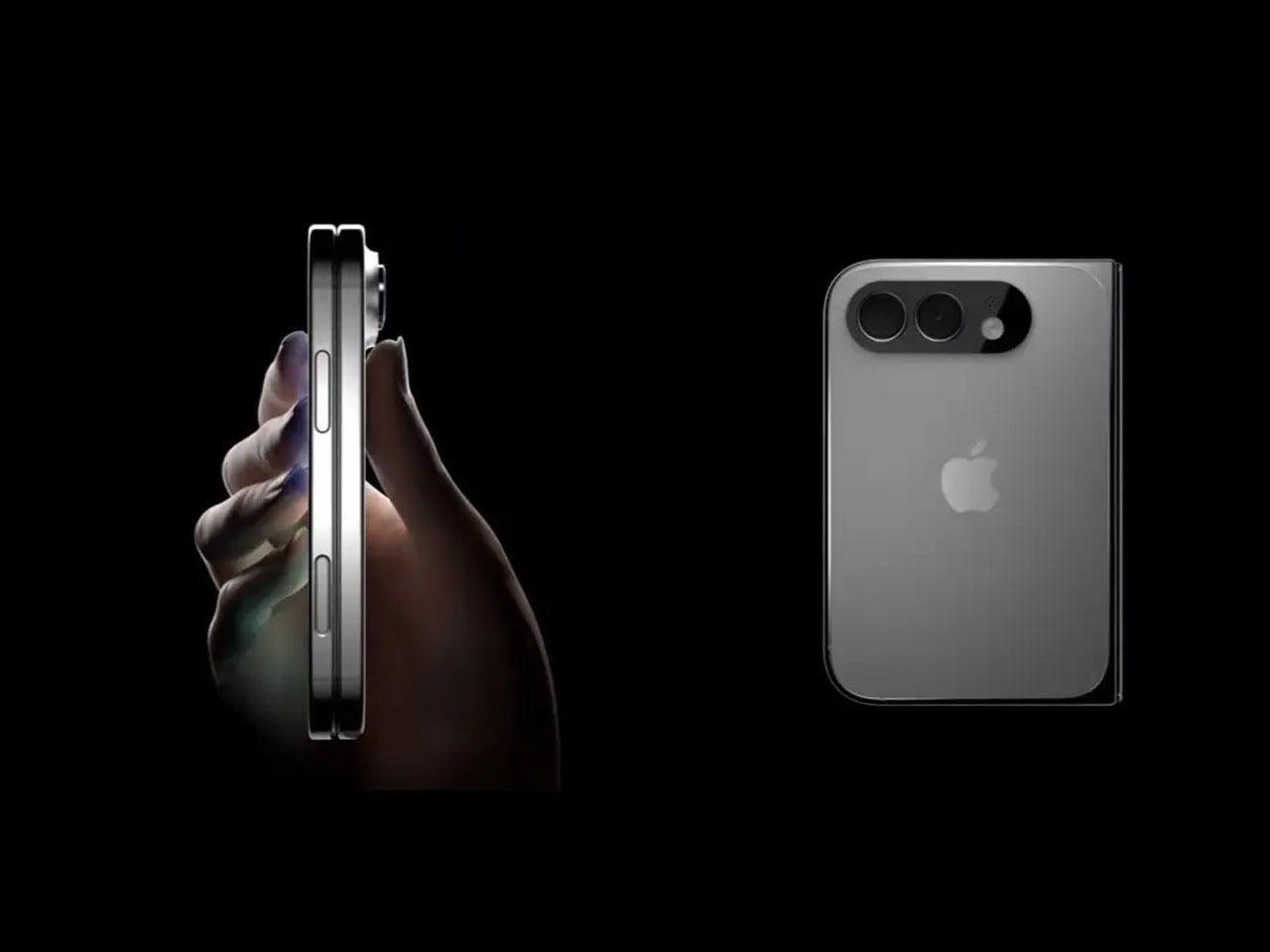
Designer Michal Dufka’s iPhone iFold is built on restraint. Rather than reinventing the iPhone’s entire identity, it applies a clamshell fold to the form factor people already love, drawing direct inspiration from the MotoRAZR and Samsung Galaxy Z Flip. The phone closes into a compact, pocketable square and opens into a full iPhone experience with a generously large display. For anyone who has quietly missed a phone that actually fits in a jeans pocket, this concept speaks to that feeling.

What sets the iFold apart is the secondary display placed beside the camera bump. When the phone is closed, that smaller screen surfaces notifications, time, and essential stats without requiring you to open the device at all. It functions almost like an Apple Watch built into the back of the phone. With Apple’s always-on display technology mature enough for this kind of ambient use, the dual-display setup feels less like speculation and more like a logical next step.

What We Like

  • The secondary display mirrors Apple Watch notification behavior, making glanceable information genuinely useful without ever opening the phone
  • The clamshell format makes the iPhone pocket-friendly for the first time in years without sacrificing screen size when it matters

What We Dislike

  • The clamshell form limits overall screen real estate compared to the expanded tablet surface that a book-style foldable provides
  • Hinge durability over sustained daily use is entirely unexplored here, and it remains the most critical engineering question for any clamshell design

2. iPhone Fold Ultra by 4RMD — When the Specs Match the Ambition

Design studio 4RMD’s iPhone Fold Ultra is grounded in credibility. Built directly from reported leaks rather than pure creative license, the concept presents a book-style foldable with dual 48MP rear cameras, a 24MP ultra-wide front camera, and the A20 Pro chip running on a 2nm process. Three color options appear across the renders: White, Black, and Deep Purple. At an estimated $2,299, this concept sits at the very top of Apple’s lineup with total conviction.

That Deep Purple colorway deserves its own moment. It is a deliberate callback to the iPhone 14 Pro’s most celebrated finish, and it lands differently on a book-style foldable. Something about that color on a device this ambitious reads as genuinely luxurious, the kind of finish that reframes a $2,299 price tag from a shock into a statement. 4RMD clearly understands Apple’s visual grammar, and this concept shows what happens when research and aesthetics share the same design space.

What We Like

  • Specs pulled from verified leaks give this concept real credibility, making it feel like a preview of what is actually coming rather than pure speculation
  • The Deep Purple colorway is a smart, crowd-pleasing callback to one of Apple’s most recognized and beloved finishes

What We Dislike

  • The “Ultra” label sets an expectation that demands exceptional build quality, and no concept can fully address whether the real device will deliver on that promise
  • Crease visibility across the inner display remains unaddressed, which continues to be the most persistent criticism of every book-style foldable on the market

3. iPhone Fold by Svyatoslav Alexandrov — The One That Replaces Two Devices

Svyatoslav Alexandrov’s iPhone Fold concept, created for the YouTube channel ConceptsiPhone, thinks in bigger terms than anything else on this list. Starting as a standard smartphone with a 6.3-inch outer display, it unfolds into a squarish 8-inch tablet that sits clearly in iPad Mini territory. This is not a phone with a bonus screen bolted on. It is a device designed to make carrying both an iPhone and an iPad feel genuinely redundant.

Alexandrov replaces Face ID with a full-display Touch ID fingerprint sensor, keeping the front notch minimal and clean. The rear carries the iPhone 12 Pro’s complete camera array: wide, ultra-wide, telephoto lenses, a LiDAR scanner, and flash. MagSafe compatibility and 5G readiness are already confirmed in the concept, adding meaningful weight to its productivity pitch. Whether the device supports the Apple Pencil is left open, but given an 8-inch inner display, its absence would feel like a missed opportunity.

What We Like

  • The full-display Touch ID is a clean and creative solution that keeps the front uncluttered while solving Face ID’s known complications on foldable form factors
  • The iPad Mini-sized inner screen makes a practical, real-world case for consolidating two devices into one without any meaningful compromise

What We Dislike

  • Removing Face ID eliminates one of the iPhone’s most seamless and trusted authentication features, which most users rely on dozens of times every day
  • Leaving Apple Pencil support unconfirmed weakens what should naturally be this concept’s strongest argument for productivity

4. iPhone Fold by Mechanical Pixel — The Foldable That Doesn’t Actually Fold

Mechanical Pixel’s concept takes the most unconventional approach on this list, and the reasoning is worth understanding. Rather than bending the iPhone itself, the design keeps the main body completely rigid and attaches a separate foldable display to the rear panel instead. The core phone experience remains exactly as people know it, maintaining the familiar dimensions and feel that iPhone users already rely on. That additional screen only enters the picture when a larger surface is specifically needed.

That rear foldable panel sits raised on a platform above the phone’s back, unfolding outward into a larger, squarish tablet surface when required. The layered profile is clearly visible from the side, giving the device a deliberately experimental and modular quality. The camera module remains in its standard position, completely unaffected by the additional display layer. The logic is unconventional, but the core argument of preserving the primary iPhone experience from any foldable compromise is genuinely hard to dismiss.

What We Like

  • Keeping the main body rigid entirely sidesteps the crease and long-term hinge durability problems that define every conventional foldable on the market today
  • The modular approach means the everyday iPhone experience is never degraded or compromised by the mechanics of the foldable element

What We Dislike

  • The raised rear platform creates an unrefined, layered side profile that sits well outside anything Apple’s design language has ever produced or endorsed
  • The prototype-like aesthetic makes it very difficult to imagine this direction surviving Apple’s notoriously demanding and detail-oriented product design process

5. iPhone V — The One Someone Actually Built

Every concept on this list exists as a digital render. The iPhone V is different. A YouTuber modder physically dismantled an iPhone X, extracted its internal components, and rebuilt the entire device inside a Motorola Razr chassis. The result is a working, folding iPhone that runs real iOS, carries a Retina-quality display, and folds in half like a classic flip phone. As a proof of concept, it is extraordinary. As a finished product, every question comes flooding in.

What makes the iPhone V genuinely compelling is not fit, finish, or polish, because it has none in any conventional sense. It is the straightforward fact that someone cared enough to prove the idea could actually work using parts that already exist. The folding mechanism and device thickness still need serious refinement. A working clamshell iPhone running authentic iOS is, in the end, a more persuasive argument for this form factor than any polished render has managed to be.

What We Like

  • The iPhone V is the only entry on this list that is fully functional, running real iOS inside an actual working clamshell device
  • Its physical existence proves the clamshell iPhone concept is viable using genuine Apple hardware, well beyond anything a render can demonstrate

What We Dislike

  • The repurposed Motorola Razr chassis produces a build that falls far short of consumer-grade fit, finish, and structural refinement
  • Hinge mechanism quality and overall device thickness remain significant engineering challenges that the mod cannot resolve, and they are exactly what Apple needs to solve

The Concepts That Made the Wait Worthwhile

Fifty years in, Apple is still the company that makes you wait. The iPhone Fold concepts here are not just exercises in creative imagination — they are a record of what designers and makers have been asking for, year after year. Some nailed the form factor. Others got the specs exactly right. A few did both. Together, they have shaped the entire conversation around a device that already feels utterly inevitable.

When the real iPhone Fold arrives, it will be measured against each of these visions. That is the power of concept design — it sets the bar before the product ships. Apple turning 50 while holding back its most ambitious device is pure theater. The design community has been writing this script for years. The only question is whether the real thing can live up to what the imagination has already built.

The post Apple Turns 50, and Its Most Ambitious Phone Hasn’t Even Launched Yet — 5 iPhone Fold Concepts first appeared on Yanko Design.

Leaked iPhone 18 Pro Screen Protector Shows A 35% Smaller Dynamic Island

Par : Sarang Sheth
1 avril 2026 à 00:30

Four years is a long time in smartphone design, long enough for entire product categories to rise, peak, and fade. Samsung has cycled through multiple foldable generations. Google has rebooted its Pixel lineup twice. Nothing has gone from startup curiosity to legitimate contender. Apple, meanwhile, has kept the Dynamic Island exactly where it was when it debuted with the iPhone 14 Pro, same width, same height, same visual footprint. Leaked screen protectors for the iPhone 18 Pro, sourced from Weibo, suggest that Apple has finally decided four years is long enough.

According to the leak, the infrared flood illuminator that powers Face ID is moving under the display on the iPhone 18 Pro, leaving only the infrared camera requiring a physical cutout alongside the front-facing lens. The result is a Dynamic Island roughly 35% smaller than what ships on the iPhone 17 Pro today. Apple is also expected to pair this with its first 2nm chip, the A20 Pro, along with a variable aperture system on the main camera. The 20th anniversary iPhone in 2027 is widely expected to go further with a fully clean display, but the 18 Pro represents the clearest signal yet that Apple is working its way there on a deliberate schedule.

Image Credits: Weibo

The size reduction is more significant than the percentage suggests when you look at the two side by side. The iPhone 17 Pro’s Island is a wide, commanding presence even at rest. The 18 Pro’s leaked cutout reads almost delicate by comparison, a narrow pill sitting unobtrusively at the top of the screen. Apple will still need to revisit four years of Live Activities design and the entire interaction vocabulary built around the existing Island’s dimensions, which is a reasonable explanation for why this transition is taking as long as it is.

Android manufacturers have shipped under-display cameras for years, with visible quality tradeoffs that Apple’s user base simply would not accept on a thousand-dollar phone. Holding the line until the technology meets the standard, rather than shipping it to win a spec sheet argument, is the kind of call that frustrates people in the short term and builds loyalty over time. The iPhone 18 Pro may read as a modest update on paper. That smaller pill tells a different story.

The post Leaked iPhone 18 Pro Screen Protector Shows A 35% Smaller Dynamic Island first appeared on Yanko Design.

Apple Prepares Siri for Multi-Step AI Requests in iOS 27

Par : Liz Ticong
1 avril 2026 à 14:17

Apple is testing a Siri upgrade for iOS 27 that could handle multiple requests in a single command, as part of its broader overhaul of the assistant.

The post Apple Prepares Siri for Multi-Step AI Requests in iOS 27 appeared first on TechRepublic.

❌
❌