Vue normale

Il y a de nouveaux articles disponibles, cliquez pour rafraîchir la page.
À partir d’avant-hierFlux principal

Spellcasters Chronicles : le studio derrière Star Wars Eclipse qui veut concurrencer League of Legends

22 mars 2026 à 09:44
Spellcasters Chronicles est un jeu d'action-stratégie en 3v3 développé par Quantic Dream, le studio en charge de Star Wars Eclispe.. Le gameplay repose sur un système de deckbuilding permettant de choisir parmi plus de 50 sorts et invocations issus de sept écoles de magie différentes, afin de définir...

The Shargeek 300 is a Cyberpunk-style Power Bank that can charge two MacBook Pros

Par : Sarang Sheth
21 mars 2026 à 01:45

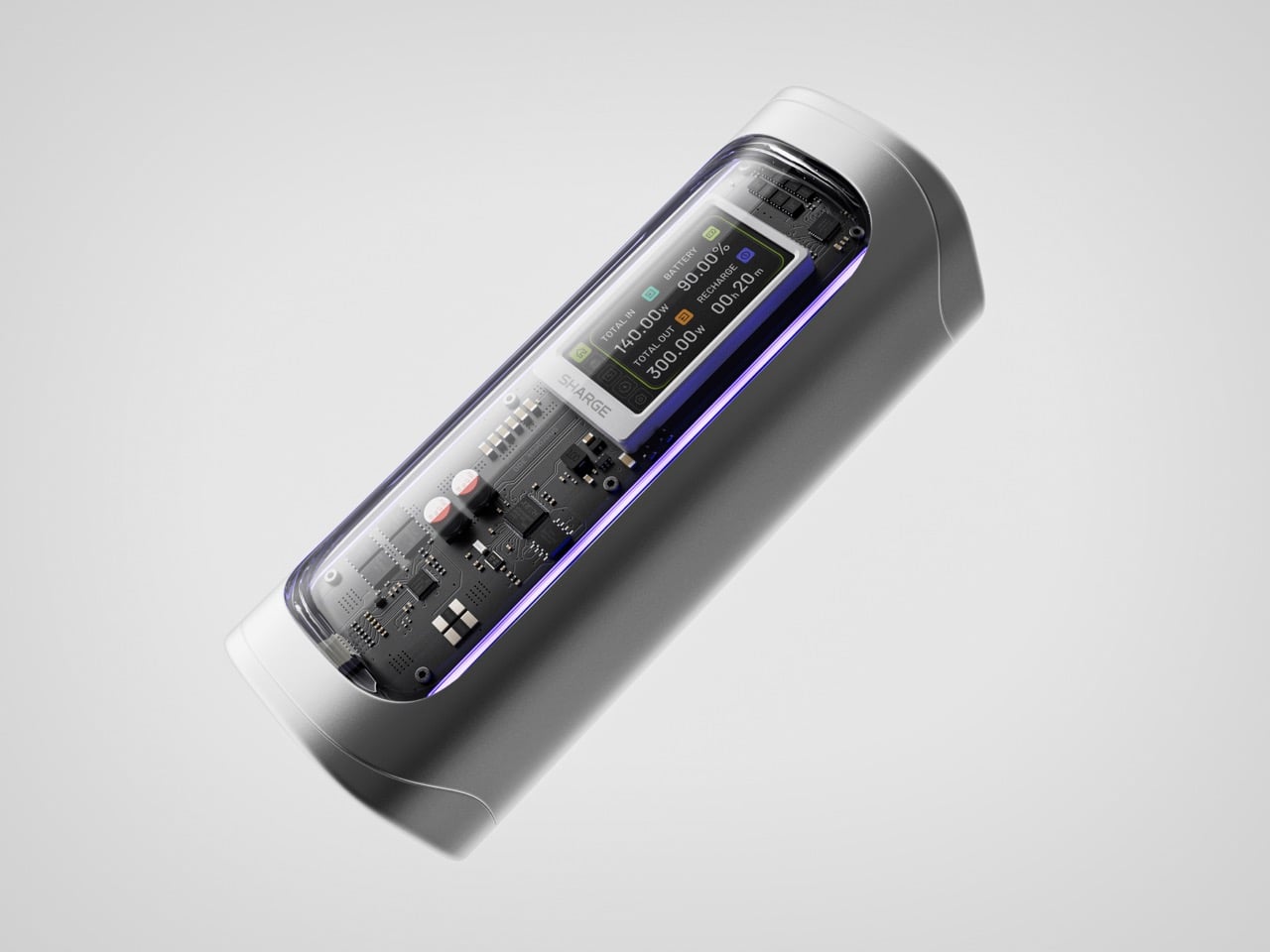
Power banks have spent years being boring on purpose. Black rectangles, white rectangles, the occasional textured finish. The category settled into a kind of utilitarian invisibility, as if the industry collectively decided that anything carrying electrons should look like a bar of soap. SHARGE never got that memo. The Shargeek 300 looks like a prop from a near-future thriller, with transparent panels revealing glowing circuitry beneath, RGB light bars running along its flanks, and a CNC aluminum body that catches light the way expensive things tend to. It belongs on a desk you’d actually want to show people.

Founded in 2020, SHARGE built its identity around the conviction that charging hardware deserves the same design attention as the devices it powers. The original Shargeek 100, launched in 2021, was the proof of concept: a transparent, display-equipped power bank with DC charging that found a devoted audience almost immediately. The Shargeek 300 is what four years of that bet looks like fully cashed in. It pushes 300 watts of total output, enough to charge two 16-inch MacBook Pros simultaneously while still fast-charging a smartphone on a third port. The 24,000mAh battery lands at 86.4Wh, sitting just under the 100Wh threshold airlines enforce for carry-on batteries. Recharge time from flat to full is 75 minutes with a 140W input. The whole unit is roughly the size of a 330ml can of cola. SHARGE spent 40 months getting here, and the result makes most rivals in the category look underprepared.

Designer: Sharge

Click Here to Buy Now: $159 $199 ($40 off) Hurry! Only 6 days left.

That meticulous attention to detail is most obvious in the physical construction. The main body is a matte silver CNC aluminum frame, which is then given a 180-grit sandblasted, anodized finish for a smooth, premium feel. The company’s head of production is even quoted as personally comparing the feel of every unit to an iPhone to ensure they are equally premium. The signature transparent casing is not just a window, but a piece of safety equipment, made from V0 flame-retardant, UL94-certified polycarbonate that resists both scratches and heat. The dual RGB light bars are fully customizable, allowing users to adjust brightness, change colors, and cycle through effects via the onboard display, turning a functional object into a piece of personalized desk art.

Inside that striking shell is technology that sets a new benchmark for portable power. The Shargeek 300 is the first power bank to use the same Full-Tab Battery Cell technology pioneered by Tesla. This design significantly lowers internal resistance compared to conventional cells, a change that unlocks faster charging speeds, higher sustained output, and superior heat dissipation. This internal efficiency is the key to how a device this compact can safely manage a 300W total output without overheating or degrading quickly. The advanced battery structure results in a longer-lasting, more stable power source that can handle the demanding, continuous power draws required by high-performance laptops and other professional equipment, putting truly next-generation power in your hands.

This power is routed through a versatile array of four output ports designed to handle nearly any device. The stars of the show are the two USB-C ports, both of which support the Power Delivery 3.1 standard to deliver a massive 140W of power each. This is what allows the Shargeek 300 to simultaneously fast-charge two 16-inch MacBook Pros at their maximum charging speed. A third USB-A port provides up to 20W for legacy devices and smartphones. The fourth and most unique port is the adjustable DC barrel port, a feature carried over from the Shargeek 100. It now supports up to 140W and its voltage can be manually set between 5V and 28V, unlocking compatibility with a world of gear that USB-C cannot serve, from professional camera equipment to high-performance drones. The 24,000mAh capacity provides enough energy for approximately one full charge of a modern MacBook Pro, six charges for an iPhone 16 Pro, or two charges for an iPad Pro.

The user experience is managed through a 1.9-inch IPS display, which is 60% larger than the screen on the previous model. It provides a level of control that is unheard of in this category. Beyond showing real-time input and output wattage, the display allows you to monitor battery health, track charging cycles, and check internal temperatures. You can use it to precisely adjust the DC output voltage, set a custom welcome message, and configure the RGB lighting. This smart display transforms the power bank from a simple battery into an intelligent power hub. This intelligence extends to its handling of delicate electronics. A dedicated Low-current Mode ensures that devices like earbuds, smartwatches, and fitness trackers receive a safe, optimized charge, preventing the overcharging that can damage the small batteries in those devices.

This combination of raw power and intelligent control is backed by a comprehensive suite of safety features, including overvoltage, undervoltage, short-circuit, and real-time temperature protection. This commitment to safety extends to its travel-readiness. Crucially, the power bank’s 24,000mAh capacity is engineered to a rating of 86.4Wh, keeping it comfortably under the 100Wh limit imposed by airlines for carry-on luggage. This makes it one of the most powerful charging solutions that can be legally carried onto a plane, a critical detail for mobile professionals. The low standby power consumption is another practical benefit, allowing the Shargeek 300 to retain over 90% of its charge after 15 days of inactivity. For anyone who has pulled a power bank from a bag after weeks only to find it unexpectedly dead, this is a genuinely valuable feature.

The Shargeek 300 starts at $199 but is available at a discounted $159 price for earlybird backers. Cobble together $209 and you can get the power bank along with its companion Pixel 140W PD 3.1 wall charger from Sharge with its adorable pixel-matrix display. The Shargeek 300 comes with a 12-month warranty, and ships globally as early as May 2026.

Click Here to Buy Now: $159 $199 ($40 off) Hurry! Only 6 days left.

The post The Shargeek 300 is a Cyberpunk-style Power Bank that can charge two MacBook Pros first appeared on Yanko Design.

Après le poker de Balatro, TOKENS réinvente le deckbuilding avec ses jetons recto-verso

17 mars 2026 à 12:33
TOKENS est un jeu de stratégie de type deckbuilder roguelike où le joueur utilise des jetons à la place des cartes traditionnelles. Chaque jeton possède deux faces affichant des caractéristiques spécifiques : une couleur, un nombre et un symbole. La progression repose sur un système de combinaisons appelé...

Meta Is Turning Its Smart Glasses Into A Mass Surveillance Tool… And You Can’t Stop It

Par : Sarang Sheth
15 mars 2026 à 23:30

If not Palantir, why Palantir-shaped??

Palantir builds spy tech for the CIA, DHS, and ICE. It aggregates data, maps your life, and tells governments who to watch. Meta is building something with the same bones. It’s called Name Tag, a facial recognition feature coming to Ray-Ban smart glasses that lets a wearer look at a stranger in public and have an AI identify them in real time, pulling their name and profile directly from Facebook and Instagram. The surveillance hardware is a $300 fashion accessory, the database was built by 3 billion people tagging photos for free, and the targets are anyone, anywhere, who never agreed to any of it.

A leaked internal memo from May 2025, obtained by The New York Times, laid out the full scope: the feature is planned for every pair of Meta’s glasses, from Ray-Bans to the Oakley Meta HSTN sports line. Meta’s official response was a practiced non-denial: “we’re still thinking through options and will take a thoughtful approach if and before we roll anything out.” Companies that aren’t building something just say they’re not building it. Meta is not saying that.

The Database Was Being Built Before the Glasses Existed

Facebook turned on automatic photo tagging in 2010 with zero opt-in, and for eleven years, every time you tagged a friend’s face in a photo, you were feeding their facial recognition model. When Meta “deleted” over a billion faceprints in 2021 under lawsuit pressure, they kept the photos. They kept the social graph. They kept the engineers who built the whole thing. Name Tag isn’t a new product concept; it’s a previously mothballed capability getting a second run, this time with a camera on your face instead of a server in Menlo Park.

Anyone with a public Instagram account is immediately a potential target (it’s not like making your account private makes you any safer), which covers hundreds of millions of people who signed up to share photos, not to be enrolled in a real-world biometric identification system. Remember Portal, Meta’s smart home display with a face-tracking camera? It launched in 2018 right in the middle of the Cambridge Analytica fallout, and consumers collectively declined to put a Facebook camera in their living room. Meta discontinued it by 2022. The lesson they apparently took wasn’t “don’t build surveillance hardware.” It was “make sure the camera comes in wearing someone else’s face.”

They Know Exactly How We’ll React

“We will launch during a dynamic political environment where many civil society groups that we would expect to attack us would have their resources focused on other concerns.” That’s a sentence directly from an official internal planning document from Meta’s Reality Labs, dated May 2025, reviewed by The New York Times. The company was explicitly planning to exploit civic chaos as a launch window, timing the rollout of a mass surveillance feature to coincide with another crisis-event that occupies our mind so we’re distracted. Sleight of hand, with a dash of corporate evil. There’s no ethical framework in which that sentence represents good-faith product development.

Their original rollout plan was to debut Name Tag at a conference for the blind, wrapping a mass-surveillance tool in the language of accessibility before expanding it to the general public. That plan was eventually shelved, but the thinking behind it is the more revealing part. The accessibility framing was a softening mechanism, a way to generate human-interest coverage before the obvious misuse cases took over the conversation. Privacy advocates, abuse charities, and civil liberties groups were going to come for this feature regardless. The strategy was never to address their concerns. It was to buy a news cycle of goodwill first.

Your Face Is Being Reviewed in a Nairobi Office Park Right Now

Swedish newspapers Svenska Dagbladet and Göteborgs-Posten tracked Meta’s data pipeline from Ray-Ban glasses worn in Western homes to a company called Sama, operating out of an office park in Nairobi, Kenya. Workers there are paid to watch footage captured by glasses users and label what they see, teaching Meta’s AI to understand and interpret the visual world. The footage includes people on the toilet, naked bodies, couples in bed, bank card details accidentally filmed, and intimate conversations being had by people who had no idea they were being recorded, let alone reviewed by a contractor on another continent.

Meta’s defense was to point at a clause buried in their terms of service permitting “manual (human)” review of AI interactions, which is technically accurate and practically worthless as a justification, because no person buying a pair of fashion-forward smart glasses understands that clause to mean workers in Kenya are watching them undress. The April 2025 privacy policy update for the glasses silently expanded Meta’s right to use all captured photos, videos, and audio for AI training, with no prominent notification to existing owners. A class action lawsuit filed in San Francisco federal court in March 2026 argues this constitutes consumer fraud, given that Meta’s own marketing described the glasses as “designed for privacy, controlled by you.” The UK’s Information Commissioner’s Office wrote to Meta characterizing the situation as “concerning,” which in British regulatory language lands somewhere between “deeply troubled” and “genuinely alarmed.”

$2.1 Billion in Fines and Still Going

The fine history reads like a repeat offender’s rap sheet. Meta paid $650 million to settle an Illinois class action over collecting facial geometry without consent through Facebook’s “Tag Suggestion” feature. They paid another $68.5 million for the same BIPA violation in 2023. In 2024, Texas extracted $1.4 billion from them for capturing biometric data on millions of Texans “for commercial purposes” without informed consent, with the lawsuit specifically alleging Meta was disclosing that data for profit. That’s over $2.1 billion in biometric privacy penalties across four years, all for variations of the same violation, against the same company, building the same technology.

None of it changed the product roadmap. The Texas settlement of $1.4 billion represents roughly one percent of Meta’s $134 billion in 2023 revenue. The Electronic Privacy Information Center has filed complaints with the FTC calling Name Tag a direct facilitator of “stalking, harassment, doxxing and worse.” The EU’s AI Act classifies real-time remote biometric identification in public spaces as high-risk AI and prohibits it for most commercial applications. The fines and the regulatory pressure are clearly baked into Meta’s planning rather than functioning as deterrents. They paid $2.1 billion to establish what a decade of biometric data collection actually costs, looked at that number next to their revenue, and decided it wasn’t a fine. It was an investment.

The Glasses Are Just the Beginning

Name Tag as currently designed still requires the wearer to deliberately trigger an identification query. The next product removes even that minimal friction. Internal documents describe “super sensing” glasses with always-on cameras and microphones that record continuously for the entire duration they’re worn, feeding an unbroken stream to an AI assistant that builds a fully searchable log of the wearer’s day. The surveillance model shifts from opt-in query to permanent ambient default. Every person who passes within the glasses’ field of view gets their face processed, regardless of whether they’ve opted out, regardless of whether they even know the technology exists.

The threat model was demonstrated in 2024 by two Harvard students, AnhPhu Nguyen and Caine Ardayfio, using nothing but current, available hardware. They connected Ray-Ban Meta Gen 2 glasses to PimEyes, a commercial facial recognition engine, alongside LLM data extraction tools, FastPeopleSearch, and Cloaked.com for social security lookups. Streaming the feed to Instagram Live, they identified strangers on the Boston subway and pulled names, home addresses, phone numbers, and social security numbers in seconds. They approached a woman on the street, told her they’d met at a Cambridge Community Foundation event, and she believed them. They told a female student her Atlanta home address and her parents’ names; she confirmed they were right. Name Tag doesn’t make this possible. It already is possible. Name Tag just makes it Meta’s official product.

What “Opt-Out” Actually Means

Meta’s proposed safeguards rely on limiting identification to connected contacts or public accounts, and offering an opt-out toggle buried in Instagram settings. The connected-contacts restriction doesn’t address the most statistically common danger. Stalkers, abusers, and harassers overwhelmingly target people they already know. Limiting the feature to existing connections doesn’t reduce the risk to the most vulnerable users; it focuses it on them. Domestic abuse charities in the UK raised this point directly, noting that abusers could use Name Tag to locate survivors who have relocated, changed their appearance, or created entirely new digital identities to stay safe.

The opt-out toggle is available to Instagram’s roughly 2 billion monthly active users, almost none of whom will encounter it organically. Privacy protections that require the potential victim to proactively locate and activate a setting are not privacy protections. They are liability documentation. Abuse survivors, journalists, political dissidents, undocumented individuals, people in witness protection: these are the people with the highest stakes, and also the people with the least bandwidth to hunt through app settings on the off chance that facial recognition has been added to a device they don’t even own. The toggle protects Meta in a courtroom. It protects its users in no meaningful sense at all.

We Were Free Labor All Along

Twenty years of tagging photos, liking posts, following accounts, and uploading selfies. Every interaction trained the model. Every tagged face sharpened the database. Meta framed all of it as self-expression and social connection, and it was, but it was also free labor on the world’s largest biometric mapping project. The glasses are the hardware layer that connects that digital registry to the physical world. The data collection phase is largely complete. The deployment phase is now.

Reddit ran the same playbook with text and nobody stopped them either. In early 2024, Reddit signed a $60 million-per-year deal with Google to license user-generated content for AI training, then struck a separate deal with OpenAI estimated at $70 million annually. Two decades of forum posts, niche expertise, personal advice, and community-built knowledge that users created for each other got packaged and sold to the highest bidder. Users built the database. Reddit sold it. The users got nothing except the knowledge that their words now live inside a model they don’t control. Meta’s version is identical in structure and more intimate in substance, because the asset being extracted isn’t something you typed. It’s your face, your home, and the faces of everyone in your immediate vicinity.

While all of this unfolds on the hardware and data side, Meta is simultaneously stripping privacy from the software side. End-to-end encryption for Instagram DMs dies on May 8, 2026. Meta’s stated justification is that “very few people” were using it, which is a direct consequence of never making it the default and never promoting it. After May 8, Meta retains full technical access to message content, which means any contractor, government request, or legal process with sufficient leverage can access it too. The feature was specifically extended to users in Ukraine and Russia during the war as a safety measure for people in genuine danger. Those users are now being told to download their chats before the cutoff. The facial recognition is the front door. The unencrypted message access is the unlocked safe. At some point the question stops being “is Meta building a surveillance company?” and starts being “why are we still acting like it isn’t one?”

The post Meta Is Turning Its Smart Glasses Into A Mass Surveillance Tool… And You Can’t Stop It first appeared on Yanko Design.

Nearby Glasses - L'app qui détecte les lunettes caméra Meta

Par : Korben
26 février 2026 à 14:41

Les Ray-Ban Meta, c'est quand même le gadget parfait pour les voyeurs technophiles. Ce sont quand même des lunettes qui filment, prennent des photos et diffusent en live... le tout sans que PERSONNE autour ne s'en rende compte (ou presque). Alors forcément, quelqu'un a fini par coder une app pour les détecter !

Nearby Glasses , c'est une application Android développée par Yves Jeanrenaud qui scanne en permanence les signaux Bluetooth Low Energy autour de vous. Chaque appareil BLE diffuse en fait des trames pour s'annoncer avec un identifiant constructeur et les lunettes caméra de Meta utilisent les IDs 0x01AB et 0x058E (Meta Platforms) ainsi que 0x0D53 (Luxottica/Ray-Ban). Donc cette app écoute ces identifiants et vous balance une alerte dès qu'elle en capte un.

La détection repose sur le RSSI, en gros la puissance du signal reçu et par défaut, le seuil est à -75 dBm, soit environ 10-15 mètres en extérieur et 3-10 mètres en intérieur. Donc c'est pas foufou non plus mais c'est configurable, évidemment. Vous pouvez donc le durcir un peu pour ne choper que les lunettes vraiment proches, ou l'assouplir pour ratisser large (au prix de faux positifs en pagaille).

Les faux positifs, parlons-en d'ailleurs... Les casques Meta Quest utilisent les mêmes identifiants constructeur, du coup ça ne marche pas à tous les coups. Par exemple, si votre voisin joue en VR, votre téléphone va sonner ! L'app détecte aussi les Snap Spectacles (0x03C2)... pour les trois personnes qui en portent encore ^^.

Ah et l'app est UNIQUEMENT pour Android. La version iOS serait "on the way" selon le développeur... faut donc pas être pressé mais au moins c'est open source (AGPL-3.0), du coup n'importe qui peut vérifier ce que l'app fait de vos données Bluetooth.

Si le sujet vous parle, vous connaissez peut-être Ban-Rays , un projet hardware à base d'Arduino et de LEDs infrarouges qui détecte les Ray-Ban Meta via infrarouge et Bluetooth ! Hé bien Nearby Glasses, c'est l'approche 100% logicielle plutôt que hardware, ce qui est plus accessible mais forcément plus limitée... pas besoin de fer à souder, cela dit ^^.

C'est une rustine mais bon, c'est mieux que de se retrouver à poil sans permission sur le web.

Source

Custom-built 96,000mAh power bank charges your laptop, phone, and even runs small appliances off-grid

Par : Gaurav Sood
19 février 2026 à 16:20

For power users loaded with a laptop, tablet, drone, a robot, and, of course, a smartphone, the ordinary power bank options do not make the cut. The amount of power required to keep these gadgets juiced up is considerable, especially when on the go. The only solution is a custom-made power bank that suffices all the needs of your power-hungry gadgets.

A custom-built portable power station offers a high-capacity solution for people who need to run multiple devices without reliable access to wall power. Standard consumer power banks are often too limited for users carrying a laptop, phone, tablet, router, and other gear at the same time, especially in remote or mobile situations. To solve this problem, creator Luq1308 developed the Omnibus 4×8, a DIY backpack-friendly power bank with enormous capacity and flexible output options.

Designer: Luq1308

The heart of this project is a dense battery pack made from 32 brand-new 18650 lithium-ion cells arranged in a 4S8P configuration. Each cell is rated at 3000 mAh, and when assembled into the pack and scaled for usable voltage, the complete system delivers roughly 96,000 mAh, equivalent to about 345 watt-hours (Wh) of stored energy. This substantial capacity makes it suitable for powering a range of electronics for prolonged periods without recharging. Critical to the build is a battery management system (BMS) rated for 4S and 30 amps. The BMS monitors and balances the individual cells, prevents overcharging and deep discharge, and includes multiple safety fuses. The system also draws very little power at rest, with a standby current of less than 400 microamps, helping to preserve stored energy when the unit is not in active use.

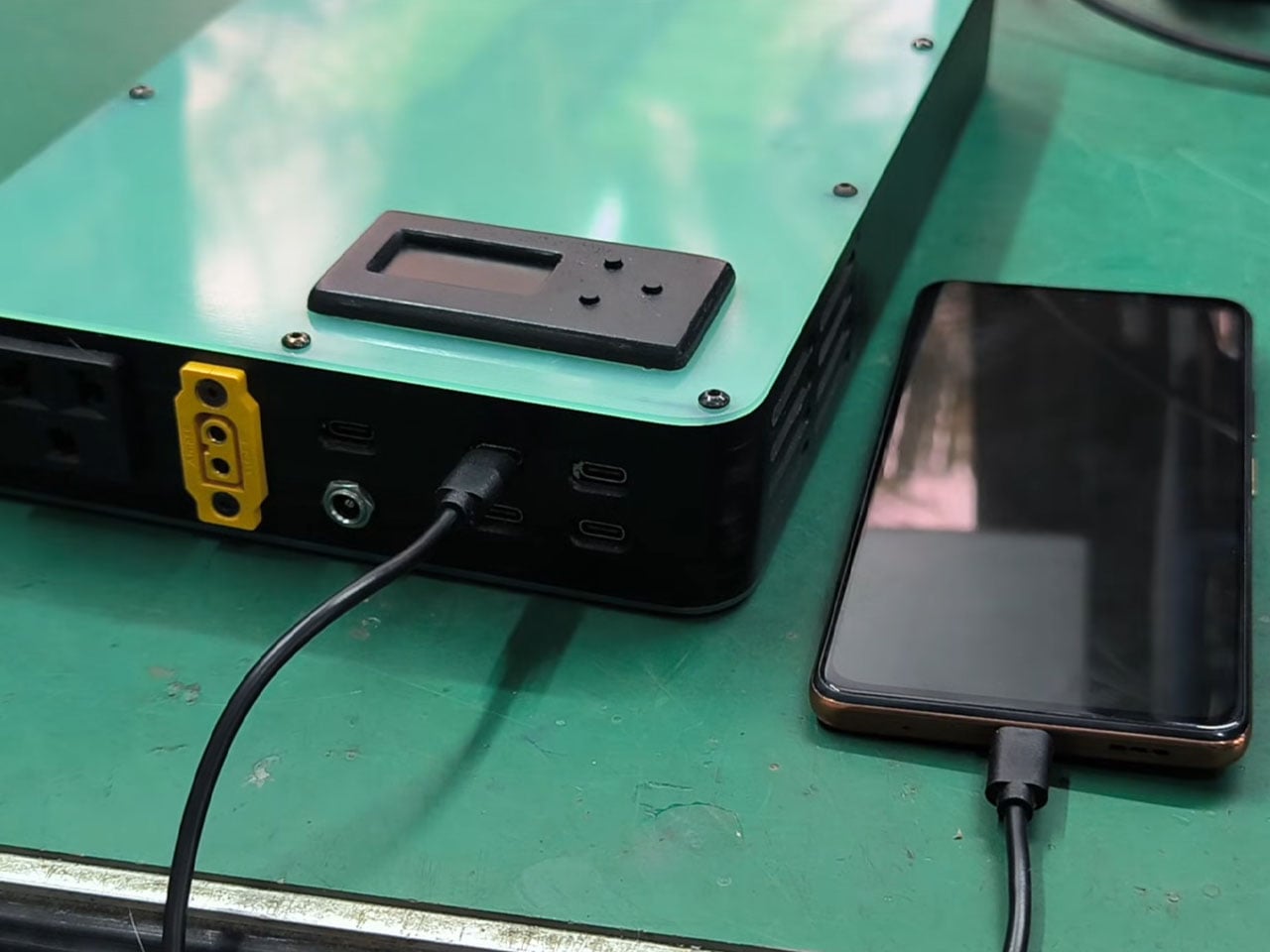
The Omnibus 4×8 offers a wide range of outputs to suit both everyday gadgets and more demanding equipment. There are four USB-C ports, each capable of delivering up to 36 watts, which is enough to charge phones and tablets simultaneously. A 100 W bidirectional USB-C port supports fast laptop charging and can also accept power input from compatible charging sources. For broader custom needs, a DC jack provides adjustable outputs between 2.7 V and 20 V, and a high-wattage XT60 connector can handle loads exceeding 400 W. A dedicated 150 W AC outlet enables the use of small appliances through an inverter, expanding the range of devices that can be supported.

Inside the power station, an ESP32-C3 microcontroller oversees system operations. It reads real-time data such as voltage, current, and temperature from sensors and displays this information on a 1.3-inch OLED screen with simple navigation buttons. Four temperature sensors monitor the battery pack, heatsinks, and inverter, and dual 40 mm cooling fans are triggered as needed to manage heat during high loads. Custom aluminum heatsinks with thermal pads are included to further reduce thermal stress.

The enclosure combines hand-cut G10 fiberglass plates for strength with 3D-printed ABS plastic sides in a subdued matte black finish. Brass spacers and mesh vents enhance airflow and protect internal components while maintaining a rugged aesthetic suitable for outdoor use. Internally, thick-gauge silicone wiring and a perfboard distribution bus with fuses connect the various modules safely and efficiently.

One notable feature of this DIY build is its adaptability. The inverter was modified to work across the full battery voltage range, and the system can accept solar input with maximum power point tracking (MPPT) for efficient off-grid recharging. All design files have been made open source on GitHub, allowing others to replicate or expand on the concept.

The post Custom-built 96,000mAh power bank charges your laptop, phone, and even runs small appliances off-grid first appeared on Yanko Design.

This Air Purifier Concept Looks Like Scandinavian Audio Gear

Par : JC Torres
18 février 2026 à 17:20

Air purifiers tend to look like medical equipment and come with apps you didn’t ask for. They arrive with dashboards, push notifications, and Wi-Fi setup rituals that turn “cleaner air” into another thing to manage on a phone. Most of them sit in corners behind plants because they look clinical, and no one wants to acknowledge the white plastic box while having guests over for dinner.

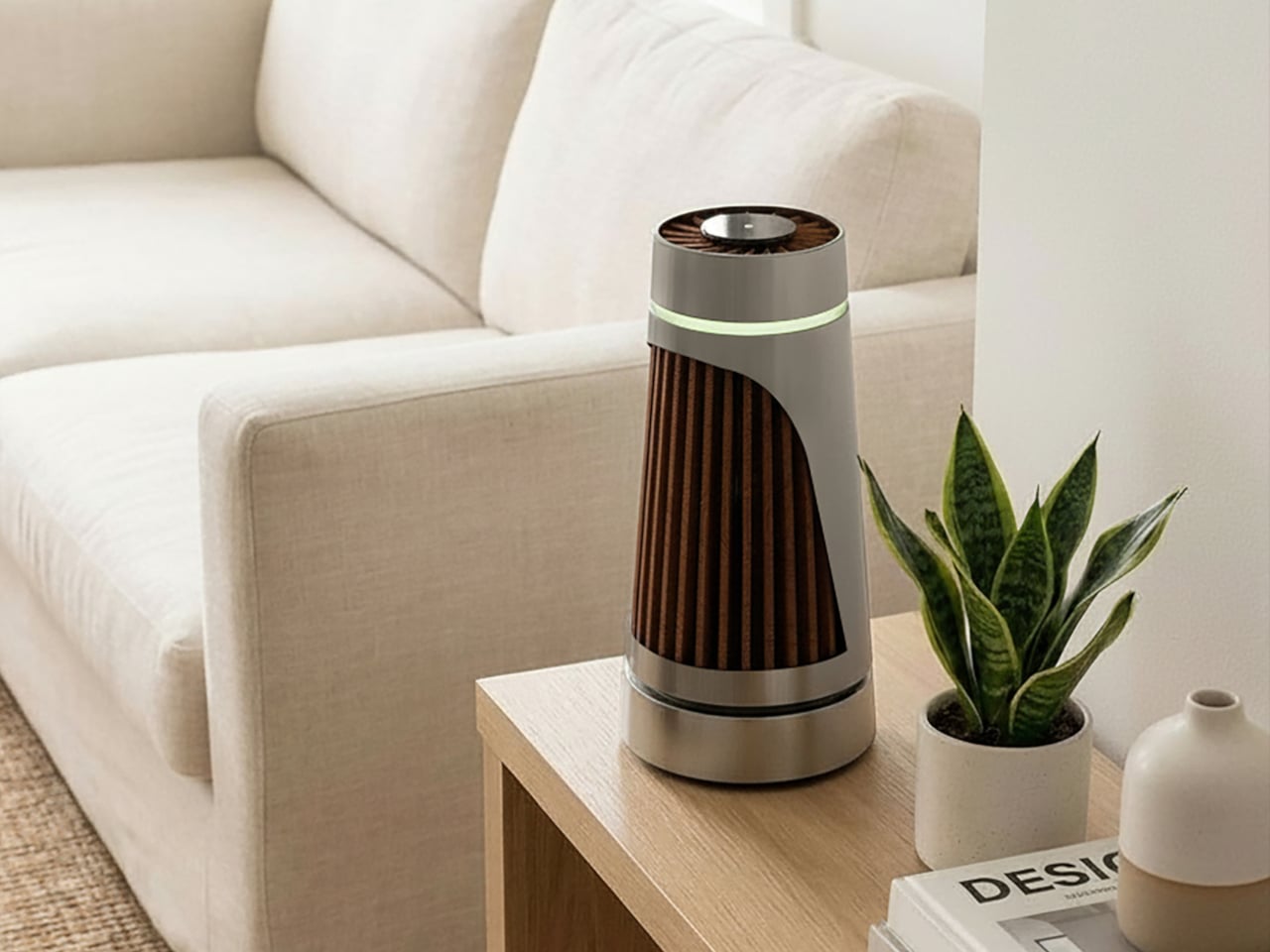
The Beolab Air 1 is a concept air purifier designed to sit in a room without announcing itself. It was developed as a student project and draws inspiration from the calm, material-driven design language of Bang & Olufsen’s Beolab line, though it’s not affiliated with the company in any way. The goal was to see what happens when you apply that kind of sculptural thinking to clean air, instead of just adding another screen to the wellness toolkit.

Designers: Ahaan Varma, Malhar Gadnis, Michelle Sequeira, Sharanya Karkera

The most refreshing part of the concept is the interaction model. A single button press is all it takes to start, with no app pairing, no IoT setup, and no onboarding routine. The project frames this as “digital detox,” which is a reasonable description when most purifiers try to sell you sensor graphs and weekly air quality reports. You turn it on the way you’d turn on a lamp or a speaker, then leave it to work.

The materials do a lot of the talking. Angled teak wooden ridges wrap the body and function as vents for filtered air, so the aesthetic choice also serves a purpose. Textured aluminum handles the rest of the exterior. The project’s own critique of the category is blunt: plastic yellows and looks cheap over time, while wood and metal age better. A purifier built to look like a piece of considered furniture has a better chance of earning a spot on a sideboard than one that resembles a hospital accessory.

Under the surface, there’s a plausible engineering stack. A high-efficiency BLDC fan delivers strong airflow while staying quiet, a HEPA filter handles particulate capture, and an MQ135 gas sensor pairs with PM2.5 sensing to monitor air quality without forcing anyone into an app. The concept keeps the monitoring internal and the feedback subtle, a soft ambient light band that changes gently rather than a display demanding attention.

Of course, that ambient feedback is the whole point. Clean air is invisible and usually silent, and a purifier that communicates the same way feels more appropriate than one with a scrolling PM2.5 count on a bright panel. You can check in when you feel like it, and the rest of the time it just works.

The concept calls out a genuine gap in the category: people want wellness that integrates quietly into a room, not hospital aesthetics, and yet another app. Whether or not Beolab Air 1 ever gets built, asking what a purifier looks like when treated with the same care as a premium speaker is a question the category probably needed someone to ask.

The post This Air Purifier Concept Looks Like Scandinavian Audio Gear first appeared on Yanko Design.

World’s Slimmest AC Power Bank Can Run Appliances And Charge Your Laptop At Just 0.6 Inches Thick

Par : Sarang Sheth
2 février 2026 à 02:45

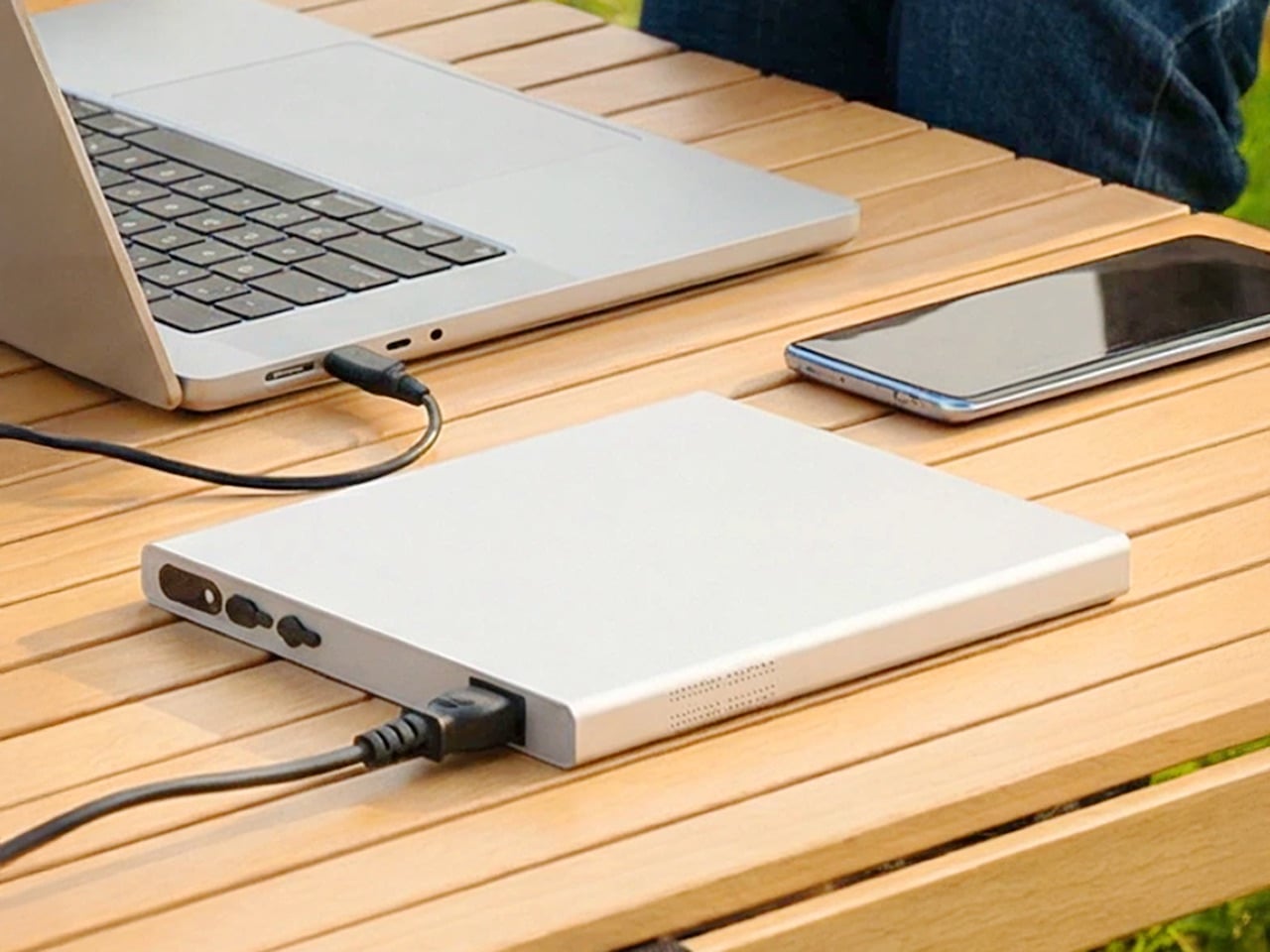
Digital nomads, field photographers, and mobile creatives share a common frustration: needing wall outlet power in places that don’t have walls. USB power banks handle phones and tablets, but cameras, projectors, and portable monitors still demand actual AC power. The world’s slimmest AC power bank exists because someone finally asked the right question: why do portable power stations look like car batteries instead of something you’d actually pack? The Noomdot N1 brings 70W of pure sine wave AC output to a device thin enough to slip into the laptop sleeve of a standard backpack.

At 16mm thick, it’s built around portability rather than maximum runtime. The semi-solid-state battery delivers approximately 40 minutes of continuous output at full 70W load, or several hours for lower-draw devices like LED lights or camera batteries. That’s not camping-weekend capacity, it’s designed for day trips, flights, and situations where outlets exist but aren’t convenient. The unit stays flight-safe under 100Wh limits, recharges in 90 minutes, and includes both USB-C PD output and pass-through charging. It’s live on Kickstarter at early pricing before the $259 retail launch.

Designer: PB-ELE

Click Here to Buy Now: $169 $259 ($90 off) Hurry! Only 17 of 200 left.

Years ago, a company called Memobottle had a brilliant, simple idea: since our bags are full of flat things like books and laptops, why are our water bottles round? The Noomdot N1 is the Memobottle of portable power, born from that same flash of spatial intelligence. It abandons the dense, pocket-bulging brick in favor of a slim slab of milled aluminum designed to slide into the forgotten spaces of a laptop sleeve or document pouch. This design is not an aesthetic choice; it is a fundamental understanding of the modern carry ecosystem. The N1 is engineered to be a good citizen in a world of flat devices, integrating seamlessly rather than demanding you build your bag around its awkward shape.

The use of a semi-solid-state battery is what enables this form factor without compromising on safety or longevity. While not a true solid-state cell, this hybrid chemistry significantly reduces the amount of volatile liquid electrolyte, leading to better thermal stability and a much slower rate of degradation. The claim of retaining 99% capacity after 100 full charge cycles is a direct benefit of this technology. For anyone who has felt the disappointment of a lithium-ion pack that barely holds a charge after a year, this focus on durability is a welcome and practical innovation. It reframes the device as a lasting piece of essential kit.

The main event is, of course, the 70W AC outlet. Its pure sine wave inverter is the kind of detail that professionals appreciate, ensuring clean, stable power that will not harm sensitive electronics. This is what separates it from cheaper, modified sine wave alternatives that can introduce electrical noise or even damage delicate circuits in cameras and audio gear. The inclusion of a 60W USB-C PD port is a nod to modern workflows, allowing it to charge a laptop directly or be slowly recharged itself. For a quick turnaround, the dedicated DC input remains king, refueling the entire 20,000mAh capacity in a scant 90 minutes.

Packing an inverter into a 16mm-thin chassis is a thermal challenge, and the N1 addresses this with a feature I’ve never seen in a power bank: an active cooling fan. An internal 6000 RPM fan kicks in during AC output to pull heat away from the core components, ensuring the device can sustain its peak performance without overheating. It is a pragmatic, if slightly brute-force, solution. The tradeoff is acoustics. While the fan is likely tuned to be as quiet as possible, it will not be silent… but that’s honestly a tiny price to pay for running a bunch of appliances or charging gadgets off a ‘wall-less power outlet’.

The N1 is a tool for a very specific mission: bridging the gap when AC power is needed for a short, critical period. It is for the wedding photographer who needs to juice up strobe batteries between the ceremony and reception. It is for the consultant who needs to run a projector for a 30-minute pitch in a conference room with no available outlets. Its 40-minute runtime at maximum load defines its purpose clearly. This is not an off-grid power solution for a weekend in the woods; it is a mobile professional’s get-out-of-jail-free card, ensuring a dead battery never becomes a single point of failure.

An IPX4 rating means it can shrug off a sudden rain shower, and passing a 1-meter drop test suggests it can survive being fumbled out of a backpack. These are not features one typically finds on power banks, and they speak to an understanding of the chaotic nature of travel and fieldwork. Combined with its TSA-friendly sub-100Wh capacity, the N1 is one of the few AC power sources truly designed from the ground up to leave the house and see the world, legally and safely.

You get to choose between two variants – 110V and 220V (depending on the country you live in and the rated voltage its appliances operate on). The Noomdot N1 ships along with a DC adapter for charging it, at a fairly discounted price of $169 ($90 less than its MSRP of $259). The device ships globally starting May 2026.

Click Here to Buy Now: $169 $259 ($90 off) Hurry! Only 17 of 200 left.

The post World’s Slimmest AC Power Bank Can Run Appliances And Charge Your Laptop At Just 0.6 Inches Thick first appeared on Yanko Design.

Banjo-Kazooie - Le portage PC 4K est dispo

Par : Korben
28 janvier 2026 à 07:19

Si contrairement à moi, vous avez grandi avec la Nintendo 64, vous avez forcément passé des heures à collecter des Jiggies et à insulter cette sorcière de Gruntilda . Ceux qui savent, savent... Mais ceux qui ne savent pas hé bien préparez-vous aussi à prendre une claque de nostalgie en 4K, car Banjo-Kazooie vient de débarquer sur PC en version 100% native !

Comme d'hab, c'est de la recompilation statique et pas une ROM émulée. C'est le même type de procédé magique qui nous a déjà offert le portage de Zelda Majora's Mask (via N64: Recompiled) ou encore Sonic Unleashed récemment (via XenonRecomp).

En gros, le projet Banjo-Kazooie: Recompiled utilise l'outil N64: Recompiled pour traduire le code original du jeu en une application PC native. Comme ça le jeu tourne sans l'overhead de l'émulation CPU traditionnelle, ce qui nous permet de profiter d'un framerate débloqué (fini les petits ralentissements de l'époque), d'un support pour les écrans ultra-larges, et d'une fluidité absoluuuue.

Et surtout, ce portage intègre le moteur de rendu RT64. Pour l'instant, ça sert surtout à lisser tout ça et à gérer les hautes résolutions, mais le moteur est techniquement capable de gérer le Ray Tracing, ce qui laisse rêveur pour les futures mises à jour. Je vous laisse imagine la fameuse Montagne de Spirale avec des éclairages ultra réalistes... ça va être quelque chose !

Bref, voici ce qu'on retrouve dans ce portage :

  • Support natif du clavier/souris et des manettes modernes.
  • Sauvegarde des notes : Plus besoin de ramasser toutes les notes d'un niveau en une seule fois sans mourir (le traumatisme de mon enfance, je vous jure).
  • Temps de chargement quasi-instantanés.
  • Support des mods et des packs de textures.

Alors comment on y joue ?

C'est assez simple en fait. Comme pour les autres projets de ce style, les dév ne fournissent aucun asset illégal. Vous devez donc posséder votre propre ROM de Banjo-Kazooie. Attention par contre, il faut impérativement la version NTSC 1.0 (US), sinon ça ne passera pas lors de l'extraction. Ensuite, au premier lancement, l'outil va extraire les textures, les modèles et les sons de votre ROM pour construire le jeu PC.

Il y a même un support pour le Steam Deck et Linux via Flatpak, donc vous pouvez emmener l'oiseau et l'ours partout avec vous (sauf sous l'eau, évidemment ^^).

A vous maintenant de foncer récupérer le launcher sur GitHub .

Nintendo peut bannir votre Switch 2 à vie et vous devrez les supplier de vous pardonner

Par : Korben
21 décembre 2025 à 22:18

Y'a des fois où je me dis que certaines entreprises font vraiment tout pour qu'on les déteste. Et Nintendo vient de passer un cap dans le mépris de ses clients.

La Free Software Foundation vient de publier un article au vitriol sur les nouvelles conditions d'utilisation de la Switch 2. En fait, Nintendo s'arroge désormais le droit de rendre votre console "définitivement inutilisable en tout ou en partie" s'ils estiment que vous avez violé leurs conditions. Oui, vous avez bien lu... Vous achetez une console, vous la payez plein pot, et si Nintendo soupçonne que vous avez fait un truc qui leur plaît pas, ils peuvent vous bannir des services en ligne à vie. La console reste utilisable hors-ligne, mais bon courage pour jouer à quoi que ce soit de récent sans téléchargements ni mises à jour.

Et attendez, c'est pas fini car les motifs de bannissement sont d'une largeur hallucinante. Modifier votre console c'est ban, jouer à des jeux de backup c'est ban, utiliser une flashcart c'est ban. Et le pire : acheter un jeu d'occasion peut vous valoir un bannissement !! U n mec a acheté une cartouche sur une marketplace, et sa console a été bannie parce que le précédent proprio avait peut-être cloné le jeu. Certains ont quand même réussi à faire lever le ban en prouvant que leur achat était légitime, mais faut voir la procédure de zinzin... c'est à vous de prouver votre innocence, et surtout pas à Nintendo de prouver votre culpabilité.

Les conséquences peuvent donc être permanentes et sont liées à la console elle-même, et pas à votre compte. Plus d'eShop, plus de téléchargements, plus de mises à jour de sécurité, plus de jeux en ligne. Vos jeux numériques déjà téléchargés restent jouables hors-ligne, et ceux liés à votre compte peuvent être récupérés sur une autre console. Mais si vous revendez la console, le nouveau propriétaire héritera du ban. Sympa pour le marché de l'occasion.

D'ailleurs, quelqu'un a acheté une Switch 2 reconditionnée en pensant faire une bonne affaire... et s'est retrouvé avec du matériel parfaitement fonctionnel mais inutilisable pour les services en ligne et la plupart des jeux récents. Nintendo avait banni la console avant qu'elle soit remise en vente.

Le pire dans tout ça c'est que les conditions d'utilisation incluent une clause d'arbitrage obligatoire. Cela veut dire que vous renoncez à votre droit de poursuivre Nintendo en justice, de participer à un recours collectif, ou même d'avoir un procès avec jury. Il existe un opt-out dans les 30 jours suivant l'achat, mais qui lit vraiment les CGU d'une console de jeu ?

Heureusement, tout le monde n'accepte pas ces conneries puisque le Brésil vient d'ouvrir une enquête contre Nintendo car Procon-SP, l'organisme de protection des consommateurs de Sao Paulo, considère que cette politique viole les droits des utilisateurs à accéder aux services qu'ils ont payés. En Europe, le droit de la consommation offre aussi des protections que les Américains n'ont pas.

Bref, Nintendo continue de prouver qu'on peut faire des jeux exceptionnels tout en traitant ses clients comme des criminels, alors la prochaine fois que vous hésitez entre une Switch et une Steam Deck, pensez-y.

Source

File-Hunter - L'archive MSX qui aurait rendu fou votre moi de 1985

Par : Korben
16 décembre 2025 à 12:02

Vous vous souvenez du MSX, cette machine 8 bits des années 80 qui a fait rêver toute une génération avant que le PC ne vienne tout écraser ? Hé bien y'a un site qui a décidé de préserver absolument TOUT ce qui existe pour cette plateforme, et quand je dis tout, c'est vraiment tout.

File-Hunter , c'est le projet d'un gars passionné, Arnaud de Klerk , qui depuis 1999 (oui, ça a 25 ans ce truc) archive méticuleusement chaque fichier, chaque jeu, chaque démo, chaque magazine lié à l'écosystème MSX. Le site existe même depuis l'époque où FONY créait encore du contenu pour les systèmes 8-bit . Donc autant dire que c'est une vraie institution de la préservation rétro.

Le site propose au téléchargement pas moins de 24 catégories de contenu. Des jeux évidemment (MSX1, MSX2, MSX2+, Turbo-R), mais aussi des démos, des disk-magazines, des émulateurs, des polices, des systèmes d'exploitation, des ROMs système, du contenu technique, des manuels, des livres, des magazines numérisés, de la musique, des programmes, du code source... Bref, si ça concerne le MSX et que ça existe quelque part sur Terre, y'a de fortes chances que ce soit archivé ici.

Côté formats, c'est la fête du slip vintage ^^ puisqu'on y trouve des fichiers DMK pour les disquettes, des TSX et CAS pour les cassettes, des conversions ROM, des fichiers VHD pour les disques virtuels, et même des trucs en LaserDisc. Y'a aussi des versions modifiées de jeux, des traductions anglaises, des cheats, des maps, des sauvegardes... C'est vraiment le genre de collection qui fait baver n'importe quel collectionneur.

Et le truc cool c'est que vous pouvez jouer directement dans votre navigateur sans rien installer . En effet, le site propose une plateforme de jeux MSX et même Amiga jouables online, optimisée pour téléphones et tablettes. Et pour ceux qui préfèrent tout récupérer d'un coup, pas la peine de tout scraper (vous finiriez pas vous faire bannir votre IP), car y'a un torrent complet disponible et même une appli Android. Le fichier allfiles.txt pèse plus de 3 Mo, ce qui vous donne une idée de l'ampleur du bazar.

Bref, si vous avez un petit coup de nostalgie MSX ou si vous voulez découvrir ce que c'était que le gaming avant que tout devienne du photorealistic next-gen, File-Hunter est votre destination du jour. Et comme d'hab, un grand merci à Lorenper pour le partage !

Ban-Rays - Les lunettes qui détectent les smart glasses

Par : Korben
29 novembre 2025 à 06:42

De nos jours, quand un mec chelou avec des lunettes cheloues nous fixe, on ne sait plus si c’est parce qu’il nous trouve irrésistible ou s’il est en train de balancer notre tronche à une IA pour savoir qui on est. Bon, pour vous, la question se pose peut-être moins, mais vous voyez l’idée ^^.

Heureusement, pour lutter contre ça, y’a maintenant un projet open source pour détecter ces petits curieux équipés de Ray-Ban Meta ou d’autres lunettes-caméras. Ce projet s’appelle Ban-Rays (jeu de mots avec “banned”, roh roh roh) et le but c’est de créer des lunettes capables de repérer les smart glasses équipées de caméras.

Et pour arriver à cela, le dev derrière ce projet utilise deux approches complémentaires.

La première, c’est l’approche optique basée sur un principe physique assez marrant. En effet, mes capteurs CMOS des caméras ont la particularité de renvoyer la lumière infrarouge directement vers sa source. C’est ce qu’on appelle l’effet “cat-eye” ou rétro-réflectivité, du coup, en balançant des impulsions IR vers une paire de lunettes suspecte et en analysant le signal réfléchi, on peut théoriquement détecter la présence d’une caméra. Et les capteurs produisent des pics de signal bien nets et rapides, contrairement aux surfaces réfléchissantes classiques qui génèrent des ondes plus longues.

Pour le moment, les tests avec les Ray-Ban Meta montrent des résultats un peu inconsistants à courte distance (genre 10 cm), mais le principe est là et ça s’améliore. Ah oui et le matos utilisé c’est un Arduino Uno, des LEDs infrarouges (940nm et 850nm), une photodiode et un transistor. Rien de bien méchant donc niveau budget.

Et la deuxième approche, c’est côté réseau avec la détection Bluetooth Low Energy. Les Ray-Ban Meta utilisent un identifiant fabricant spécifique (0x01AB pour Meta) et un Service UUID bien particulier (0xFD5F). Le souci c’est que pour le moment, ça ne détecte les lunettes que pendant l’allumage ou le mode appairage. Pour une détection continue pendant l’utilisation normale, faudrait du matos plus costaud genre modules nRF pour sniffer les paquets CONNECT_REQ. Mais bon, ça viendra puisque c’est dans la roadmap du projet.

Alors oui, vous allez me dire que les Ray-Ban Meta ont une petite LED qui s’allume quand elles filment, donc c’est pas discret. En théorie oui auf que cette LED est tellement minuscule que la Data Privacy Commission irlandaise a carrément remis en question son efficacité comme protection de la vie privée. Et surtout, un bidouilleur propose maintenant de désactiver cette LED pour une soixantaine de dollars. Meta a bien prévu une protection qui empêche les lunettes de fonctionner si on couvre la LED avec du scotch, mais le gars a trouvé comment contourner ça et sa liste de clients s’allonge…

Et l’autre truc que j’ai remarqué avec ces lunettes connectées, c’est qu’elles se déclenchent tout le temps pour tout et n’importe quoi. Comme ça écoute en permanence pour répondre aux commandes vocales, impossible d’avoir une conversation normale sans que le machin réagisse à un mot qui ressemble vaguement à “Hey Meta”. C’est encore pire que Siri ou Alexa qui font déjà des déclenchements intempestifs. Perso, c’est pour ça que je ne veux pas de ce genre de lunettes, même si je reconnais que c’est pratique pour photographier ou filmer des choses (dans le cadre de mon boulot hein…)

Et les inquiétudes sont d’autant plus justifiées qu’une étude de 2024 a montré qu’en combinant des Ray-Ban Meta hackées avec de la reconnaissance faciale en temps réel, on pouvait identifier des inconnus dans la rue. Encore plus récemment, l’Université de San Francisco a dû alerter ses étudiants après qu’une personne mystérieuse ait utilisé ces lunettes pour filmer des femmes sur le campus et partager les vidéos en ligne. Sympa l’ambiance de parano.

Bref, si vous êtes inquiet par ça (ou juste soucieux de votre vie privée), le projet Ban-Rays est sur GitHub avec tout le code en C++, Python et un peu de C. C’est encore expérimental mais les deux approches sont prometteuses et si vous voulez contribuer, y’a plein de trucs à améliorer comme les patterns de balayage IR, la fusion des données multi-longueurs d’onde, l’interrogation active BLE…

Source

Batman Dark Age - Et si Batman oubliait d'être Batman ?

Par : Korben
16 novembre 2025 à 14:45
– Article en partenariat avec Urban Comics –

Urban Comics vient sortir Batman Dark Age (lien affilié), et ça me fait plaisir de vous en parler car vous connaissez mon amour pour Batman ! C’est mon seul vrai héros préféré depuis toujours car il a ce côté sombre, cette souffrance, cette humanité que j’adore et qui le met tellement au dessus des autres, et surtout, il n’a aucun super pouvoir ! (Mais un gros paquet de pognon c’est vrai…).

Et ce qui est cool avec cet album, c’est que les auteurs sont partis de ce constant simple : Et si Batman perdait la mémoire ?

On est donc en 2030 et Bruce Wayne est vieux, grabataire, et enfermé dans une maison de retraite. Du coup, pour ne pas tout oublier, il se raccroche à ses souvenirs. Notamment cette nuit de 1957 où tout a basculé, quand ses parents se sont fait descendre, avec un changement majeur par rapport à l’origine classique, c’est que lui n’était pas là. Le bouquin suit alors ses débuts de justicier, son adolescence en colère, l’armée, le rôle important d’Alfred et de Lucius Fox et toute la construction du mythe Batman mais vue depuis le regard d’un vieux bonhomme.

C’est un angle que je trouve vraiment dingue parce qu’on connaît tous l’origine de Batman par cœur, ais là, Russell la revisite totalement en la faisant passer par le prisme de la vieillesse et de la mémoire qui flanche où Batman oublie d’être Batman.

Le scénario est signé Mark Russell (lien affilié) qui a été nominé pour le prix Eisner du meilleur scénariste en 2023. Il a déjà bossé sur Superman Space Age avec les mêmes dessinateurs, une série nominée aux Eisner également. D’ailleurs Batman Dark Age partage le même univers temporel que Superman Space Age, où les événements historiques réels coexistent avec les super-héros DC. On est dans les années 60, en pleine Guerre Froide, mouvement des droits civiques, conquête spatiale…etc et petit Batman grandit dans ce contexte explosif.

Et visuellement, c’est Mike Allred qui gère les dessins, avec sa femme Laura Allred aux couleurs. Si vous connaissez pas le style Allred, imaginez du pop art années 60 qui rencontre Jack Kirby . Des lignes épurées, du dynamisme, des couleurs pétantes… Mike Allred (lien affilié), c’est surtout le mec derrière Madman, iZombie, X-Statix et son style colle parfaitement à cette époque charnière des années 60 où Batman évolue dans cette histoire.

Et là, le fait de passer par la mémoire d’un Bruce Wayne sénile ajoute une couche de mélancolie et d’urgence car il doit se souvenir avant qu’il ne soit trop tard. Le bouquin fait 264 pages et est vendu 25 euros chez Urban Comics dans la collection DC Black Label, qui regroupe les œuvres DC les plus matures et d’un bloc. Batman Dark Age compile en effet les 6 numéros de la série sortie en 2024 aux États-Unis.

Bref, j’ai passé un super bon moment avec cette lecture. Pour ceux qui aiment Batman autant que moi, c’est vraiment le cadeau de Noël idéal. Vous en aurez pour votre argent vu l’épaisseur du bouquin et la qualité du récit et je trouve que Russell et Allred forment un duo très créatif !

D’ailleurs, ce Batman Dark Age fait partie d’une trilogie que Russell et les Allred sont en train de créer chez DC. Après Superman Space Age sorti en début d’année et ce Batman Dark Age (liens affiliés), ils bossent également sur un Wonder Woman qui complétera le tout. Donc si comme moi, vous aimez voir vos héros revisités avec beaucoup d’intelligence et de style, je pense que vous allez vous régaler.

Découvrez Batman Dark Age chez Urban Comics .

PictureMe - Plus besoin de Photoshop pour vous refaire la gueule

Par : Korben
29 septembre 2025 à 11:31

Si vous aimez les IA génératives, je pense que vous n’êtes pas passé à côté de Nano Banana, le nouveau générateur d’images de Google. Ce truc est incroyable ! On peut vraiment faire des choses très réalistes et qui respectent le sujet initial… Plus besoin de Photoshop avec ce truc. Suffit d’avoir une idée et de lui donner.

Mais si on n’a pas d’idée, qu’est ce qu’on peut faire ? Hé bien un dev a codé une app Google Gemini qui permet de transformer votre photo en ce que vous voulez…

Soit en dessin, soit vous donner un look années 70 / 80 / 90, soit changer votre coupe de cheveux, soit même vous mettre dans situations cheloues voire faire de vous un gros tas de Mac&Cheese bien dégoutant.

Je vous laisse avec mes essais plus ou moins sympas :

Pour vous amuser, suffit donc d’aller ici , d’uploader votre photo ou d’activer votre webcam pour en prendre une bien fraiche et de choisir ce que vous voulez comme résultat.

Et le code est complètement ouvert, donc vous pouvez aussi le récupérer et le modifier pour ajouter par exemple de nouveaux prompts ou modifier les prompts existants.

Et si vous voulez encore d’idées ou tout simplement voir les possibilités de Nano Banana, rendez-vous ici, y’a des dizaines de prompts que vous n’avez plu qu’à copier coller !

Merci à Lorenper pour le partage !

Delphi-2M - L'IA qui prédit les maladies que vous aurez dans quelques années

Par : Korben
20 septembre 2025 à 05:42

Hakuna Matata les amis ! Pas de soucis, pas de stress, pas d’angoisse sur ce qui va arriver, on prend la vie comme elle vient sans inquiétude…

Pas vrai ?

Et bien, Hakuna Matata va se prendre un coup dans la gueule car des chercheurs européens ont créé Delphi-2M, une IA qui peut vous dire exactement quelles maladies vous allez développer dans les 20 prochaines années. C’est donc un modèle GPT modifié (oui, comme ChatGPT, mais en blouse blanche) qui analyse vos données médicales, votre âge, sexe, IMC et habitudes de vie pour prédire l’arrivée ou non de 1258 maladies différentes dans votre life.

Les chercheurs de l’EMBL, du Centre allemand de recherche sur le cancer et de l’Université de Copenhague sont derrière cette petite merveille et ils ont entraîné leur outil sur 400 000 participants de la UK Biobank et validé que ça fonctionnait bien sur 1,9 millions de Danois.

Et vous vous en doutez, Delphi-2M ne fait pas que prédire… Non non, cette IA génère littéralement des “trajectoires de santé synthétiques”. En gros, elle crée des versions virtuelles de vous qui vivent des vies parallèles avec différentes maladies, un peu comme un multivers médical personnel.

L’outil peut ainsi générer des millions de ces vies synthétiques, créant des données médicales qui n’ont jamais existé mais qui sont statistiquement cohérentes.

Le nom Delphi-2M n’est pas non plus anodin. C’est en clin d’oeil à l’oracle de Delphes dans la Grèce antique qui donnait des prophéties ambiguës qui se réalisaient toujours, peu importe l’interprétation. Et là, cette IA fait pareil puisqu’elle ne vous donne pas UN futur, mais une probabilité statistique basée sur des patterns.

Delphi-2M fonctionnerait particulièrement bien pour les maladies qui suivent des schémas prévisibles, comme certains cancers, par contre, elle ne capture que la première occurrence d’une maladie. Donc si vous avez un cancer, puis une rémission, puis une récidive, l’IA ne voit que le premier épisode.

Truc marrant (ou pas), l’IA a également été entrainée sur des données de personnes dont certaines sont mortes depuis le recrutement initial en 2006-2010. Elle ressuscite donc numériquement ces gens pour créer des vies plus longues que les vraies et ainsi, ces morts virtuels qui vivent plus longtemps que quand ils étaient vivants, servent à prédire l’avenir des vivants actuels. Si ça c’est pas de la science-fiction…

Après, à vous de voir si vous voulez savoir ou pas… D’un côté, savoir qu’on a 73% de chances de développer un cancer du poumon dans 15 ans pourrait pousser à arrêter de fumer mais de l’autre, vivre avec cette épée de Damoclès au-dessus de la tête pendant 15 ans, merci mais non merci.

Et comme Delphi-2M est capable de générer de travailler à partir de données synthétiques, les chercheurs l’ont aussi transformé en usine à épidémies virtuelles. Ils peuvent ainsi créer des scénarios de santé publique impossibles à tester dans la réalité du genre, “et si tout le monde fumait 3 paquets par jour pendant 10 ans ?” ou “que se passerait-il si on combinait obésité et alcoolisme sur 20 ans ?”. C’est un labo virtuel infini pour tester des tonnes d’hypothèses médicales sans tuer personne (enfin, sauf virtuellement).

Par contre, petite précision importante, les données UK Biobank surreprésentent les personnes blanches, âgées et en bonne santé. Les enfants et adolescents sont par exemple quasi absents. Du coup, si vous êtes jeune, non-blanc ou pas britannique, les prédictions de Delphi-2M seront beaucoup moins fiables…

Delphi-2M n’est de toute façon pas encore prête pour une utilisation clinique. C’est plus un outil de recherche qu’un Nostradamus médical mais j’imagine que dans quelques années, quand on ira chez le médecin, il lancera Delphi-jesaispascombien, et il vous sort : “Bon, vous allez avoir de l’arthrite en 2043, un AVC en 2051, et mourir d’un cancer du pancréas en 2063. Des questions ?

Ça fait flipper non ?

Non, moi ce qui me fait vraiment flipper c’est quand les assurances santé mettront la main dessus. “Ah, Delphi dit que vous avez 82% de chances de développer du diabète ? Ça fera 500€ de plus par mois, merci” ou pire, votre employeur : “Désolé, on ne peut pas vous embaucher, l’IA dit que vous serez en arrêt maladie dans 3 ans”.

Bref, Delphi-2M c’est impressionnant techniquement, mais également un poil flippant… A-t-on vraiment envie de connaître notre avenir médical ?

Moi oui, mais ce n’est peut-être pas le cas de tout le monde.

Allez, Hakuna Matata les copains !

❌
❌