Vue normale

Il y a de nouveaux articles disponibles, cliquez pour rafraîchir la page.
Aujourd’hui — 19 mars 2026Flux principal

This classic 1979 LEGO computer brick hides a fully functional Mac mini workstation inside

Par : Gaurav Sood
18 mars 2026 à 19:15

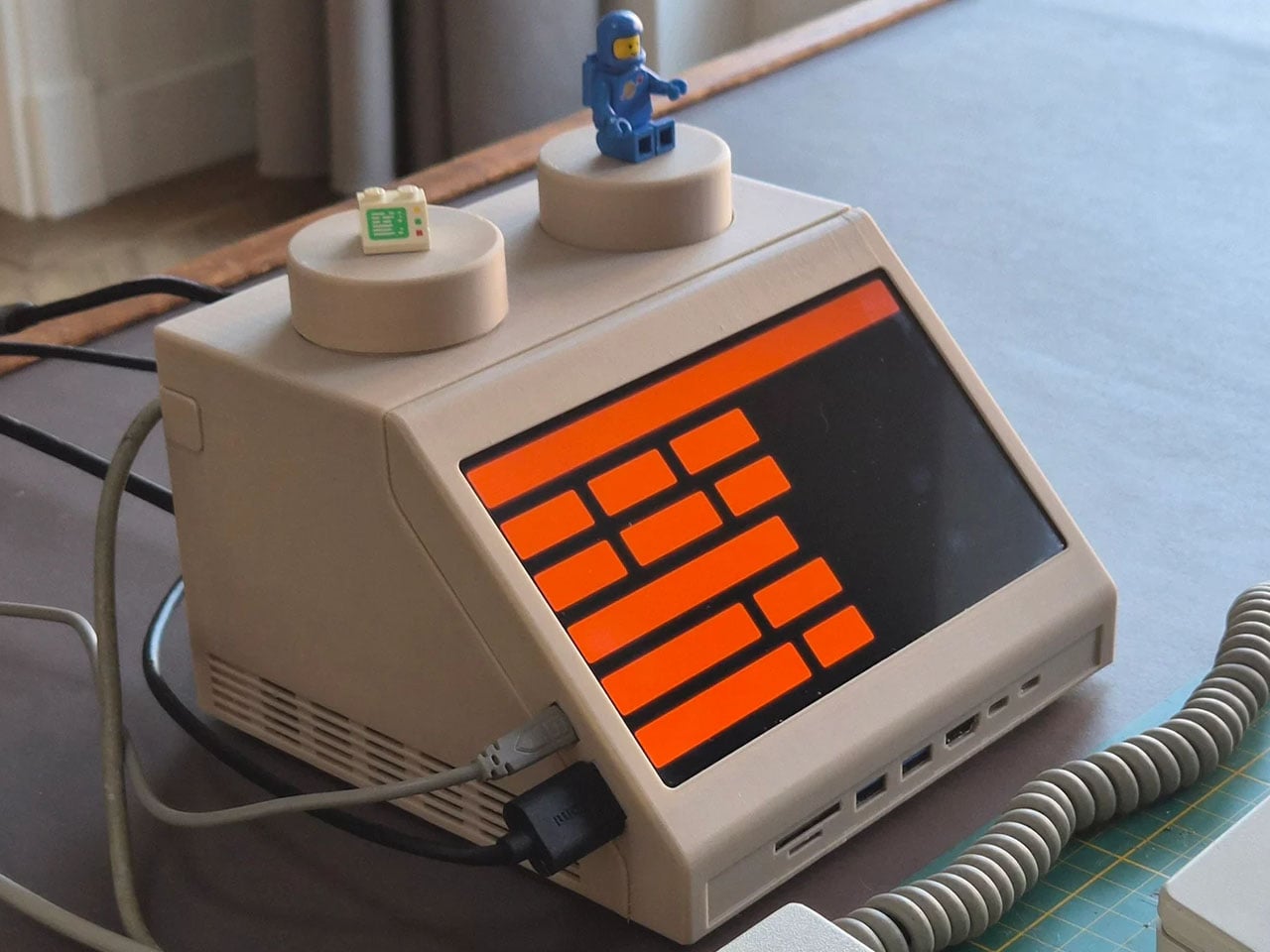
Retro designs often carry a sense of nostalgia, but occasionally they evolve into something more functional and imaginative. The M2x2 workstation by Watt IV is a good example with the inventive reinterpretation of a classic LEGO element transformed into a fully working desktop computer. Created by Dutch designer Paul Staal, the device takes inspiration from the iconic sloped LEGO computer brick introduced in 1979 and scales it up into a practical workstation powered by a modern Mac mini.

The DIY centers around the familiar wedge-shaped Slope 45 2×2 LEGO piece, a part historically used in LEGO space-themed sets as a representation of computer terminals inside spacecraft cockpits. Staal enlarged this element to roughly ten times its original size, turning it into a functional housing that blends retro toy aesthetics with contemporary computing power. Inside the oversized brick sits an Apple Mac mini equipped with Apple’s M4 chip, transforming the playful concept into a capable desktop system.

Designer: Paul Staal

Rather than serving as a simple decorative shell, the M2x2 integrates several practical features that enhance its usability as a workstation. A slanted 7-inch IPS touchscreen is embedded in the front face of the structure, echoing the display graphic printed on the original LEGO piece while providing real functionality. The compact screen acts as a secondary interface, often used for quick system information or dashboards. Staal, for instance, uses it primarily to monitor and control his smart home through a Home Assistant interface while working on a larger external display.

The case includes front-facing ports enabled through a USB-C hub, along with an SD card reader for easy access to external storage and accessories. This arrangement ensures the device remains practical for everyday use despite its playful form factor. The system also retains portability elements inspired by early Apple computers, including a built-in handle at the back that makes the unit easy to move around a desk or workspace. While the M2x2 works as a self-contained computer, it is typically paired with a larger external monitor for full productivity. In everyday use, the Mac mini handles the heavy computing tasks while the built-in display functions as a control panel or status screen.

Perhaps the most creative detail lies in the oversized LEGO studs on top of the case. Instead of being purely decorative, these studs are designed to perform useful functions. One of them operates as a rotary control that can adjust volume or media playback, while the other conceals a wireless charging bay capable of powering devices such as AirPods or an Apple Watch. The studs themselves remain compatible with standard LEGO elements, allowing users to attach minifigures or bricks for a playful finishing touch.

The M2x2 is largely built from 3D-printed components, making it accessible to enthusiasts who want to build their own version. Staal modeled the structure in CAD software and designed it as a modular system consisting of multiple printable parts. Aside from the Mac mini itself, the required materials are relatively simple, including PLA filament, a small touchscreen display, screws, and a USB-C hub. Assembly instructions and downloadable files are available, allowing makers to replicate or modify the design to suit their needs.

The post This classic 1979 LEGO computer brick hides a fully functional Mac mini workstation inside first appeared on Yanko Design.

À partir d’avant-hierFlux principal

Perplexity veut transformer votre Mac mini en agent IA permanent

Par : Korben
12 mars 2026 à 10:43

Perplexity vient de présenter Personal Computer, un agent IA qui tourne en continu sur un Mac mini et qui accède à vos fichiers, vos applications et vos sessions. Réservé aux abonnés Max à 200 dollars par mois, le service est pour l'instant sur liste d'attente.

Un assistant qui ne dort jamais

L'idée est plutôt simple sur le papier : installer un agent IA sur un Mac mini qui reste allumé en permanence, connecté à vos données locales et aux serveurs de Perplexity. L'annonce de ce produit a été faite en grande pompe lors de la conférence Ask 2026, dédiée aux développeurs et organisée directement par Perplexity.

Cet agent IA permet de rédiger des mails, préparer des briefs quotidiens, trier et renommer des fichiers, ou analyser des documents, sans intervention de votre part. Tout se pilote depuis Perplexity directement, même à distance.

Histoire d'éviter les problèmes et débordements, des garde-fous ont quand même été mis en place.

Les actions les plus sensibles doivent obligatoirement être validées par l'utilisateur (vous donc, un vrai humain a priori), chaque session est consignée dans un journal d'audit et vous avez même un bouton d'arrêt d'urgence, pour reprendre le contrôle dès que vous le souhaitez. Selon Perplexity, le dispositif est bien plus sécurisé qu'OpenClaw.

Le choix du modèle

L'un des aspects les plus intéressants de Personal Computer, c'est que vous pouvez choisir le modèle d'IA qui fait tourner l'agent. Claude, Gemini ou Grok : à vous de voir lequel colle le mieux à vos besoins.

L'accès est réservé aux abonnés Perplexity Max, facturé 200 dollars par mois, avec 10 000 crédits de calcul inclus. C'est Mac uniquement pour le moment, et il faut passer par une liste d'attente avant de pouvoir essayer.

En parallèle, Perplexity a aussi dévoilé Computer for Enterprise, une version destinée aux professionnels qui connecte l'agent aux outils comme Snowflake, Salesforce ou HubSpot. Et puis une plateforme API avec quatre briques : recherche, agent, sandbox et embeddings. Le tout accompagné de Perplexity Finance, un outil avec plus de quarante sources de données financières en temps réel.

Le choix du Mac mini comme machine hôte n'a rien d'un hasard. Apple l'utilise déjà pour son Private Cloud Compute, et la machine commence à être fabriquée aux États-Unis cette année.

Perplexity surfe sur cette tendance et propose quelque chose d'assez différent des chatbots classiques : un agent ancré dans votre environnement local, pas juste une fenêtre de chat dans un navigateur.

Source : Blog du modérateur , 9to5Mac

❌
❌