Vue normale

Il y a de nouveaux articles disponibles, cliquez pour rafraîchir la page.
À partir d’avant-hierFlux principal

This Hermès x Bialetti Moka Pot Concept Has No Business Looking This Good

Par : Ida Torres
19 février 2026 à 18:20

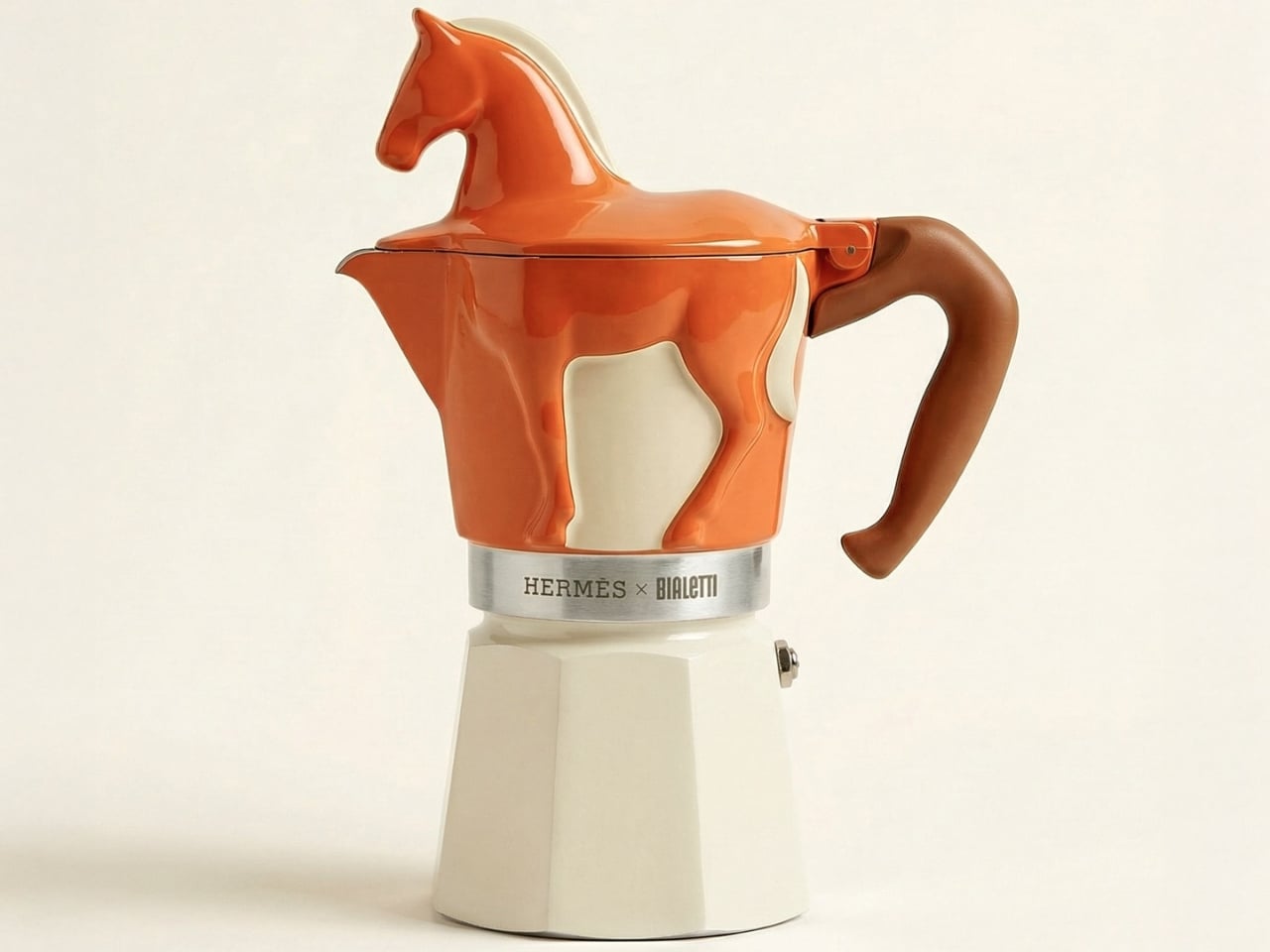
If you follow concept design on social media, there’s a good chance you’ve already stumbled across Jane Morelli’s work. She’s the designer behind that Lacoste x Bialetti moka pot that went viral not too long ago, and now she’s back with something that somehow manages to feel even more covetable. For the Year of the Horse, she has created a concept coffee set that imagines what a Hermès x Bialetti collaboration could look like, and the result is genuinely breathtaking.

To be clear, this is not a real product. It’s a speculative design concept, an unofficial creative exploration that Morelli put together entirely on her own. Neither Hermès nor Bialetti has signed off on it, and there’s no indication it will ever hit shelves. But that hasn’t stopped the internet from losing its collective mind over it, and once you see it, you’ll understand why.

Designer: Jane Morelli

The concept draws on two things that already go together better than most people realize. Hermès has deep equestrian roots. The brand was originally founded as a harness and saddle workshop, and the horse has been central to its identity ever since. That iconic logo featuring a horse-drawn Duc carriage pays homage to the brand’s equestrian beginnings and still appears on every box and ribbon the brand produces today. So when a designer decides to celebrate the Year of the Horse, Hermès is a natural fit.

Bialetti, meanwhile, has its own kind of cult status. The Moka Express, invented by Alfonso Bialetti in 1933, completely changed how people made coffee at home. That eight-sided stovetop brewer became one of the most recognizable objects in design history, sitting comfortably in the same conversation as the Eames chair or the Anglepoise lamp. It’s Italian, it’s timeless, and it’s on millions of kitchen counters around the world.

Morelli’s concept merges both worlds with a detail-oriented love for both brands that really shows. The moka pot gets the full Hermès treatment: a rich burnt orange body with a cream horse silhouette painted on its side, and a three-dimensional horse figurine standing on top of the lid in place of the usual knob. It’s playful without being loud, sculptural without being impractical. The color palette, that signature Hermès orange paired with warm cream and a cognac brown handle, feels completely at home on a stovetop.

The espresso cup might be the most charming piece of the set. A sculpted horse head forms the top of the handle, with the body flowing down into a ribbed, flowing tail that curves back up to meet the cup. The saucer takes the shape of a horseshoe, with the spoon resting neatly in the groove on one side. Every element has been thought through, which is what sets a great concept apart from a quick render.

The whole set comes presented in a walnut wooden box lined with cream fabric, with “Hermès x Bialetti: Year of the Horse” inscribed on the inside of the lid. Even the packaging looks like something you’d want to display on a shelf rather than throw away. It’s the kind of unboxing experience that luxury brands have mastered, and Morelli has translated that into her concept with impressive accuracy.

What makes this design so compelling is how it sits at the intersection of craft, culture, and storytelling. The Year of the Horse in the Chinese zodiac is associated with energy, freedom, and elegance, all qualities that feel right at home in both the Hermès and Bialetti universes. Morelli didn’t just slap two logos together and call it a day. She built a visual language that feels native to both brands, which is no small feat. It’s a concept, yes. But the best concepts do exactly what this one does: they make you want something that doesn’t exist yet, and they make you wonder why nobody has done it already.

The post This Hermès x Bialetti Moka Pot Concept Has No Business Looking This Good first appeared on Yanko Design.
This Wooden Basket Becomes a Low Table When You Flip It Upside Down

Par : JC Torres
19 février 2026 à 17:20

There’s a familiar moment that happens when you carry food, cups, and random essentials to a park, balcony, or floor seating setup and then realize you still need a stable surface to put any of it on. Most people improvise with a bag or a corner of a blanket. Small-space living and casual gatherings reward objects that can do two jobs without taking up twice the storage, but most furniture is still designed around one fixed purpose.

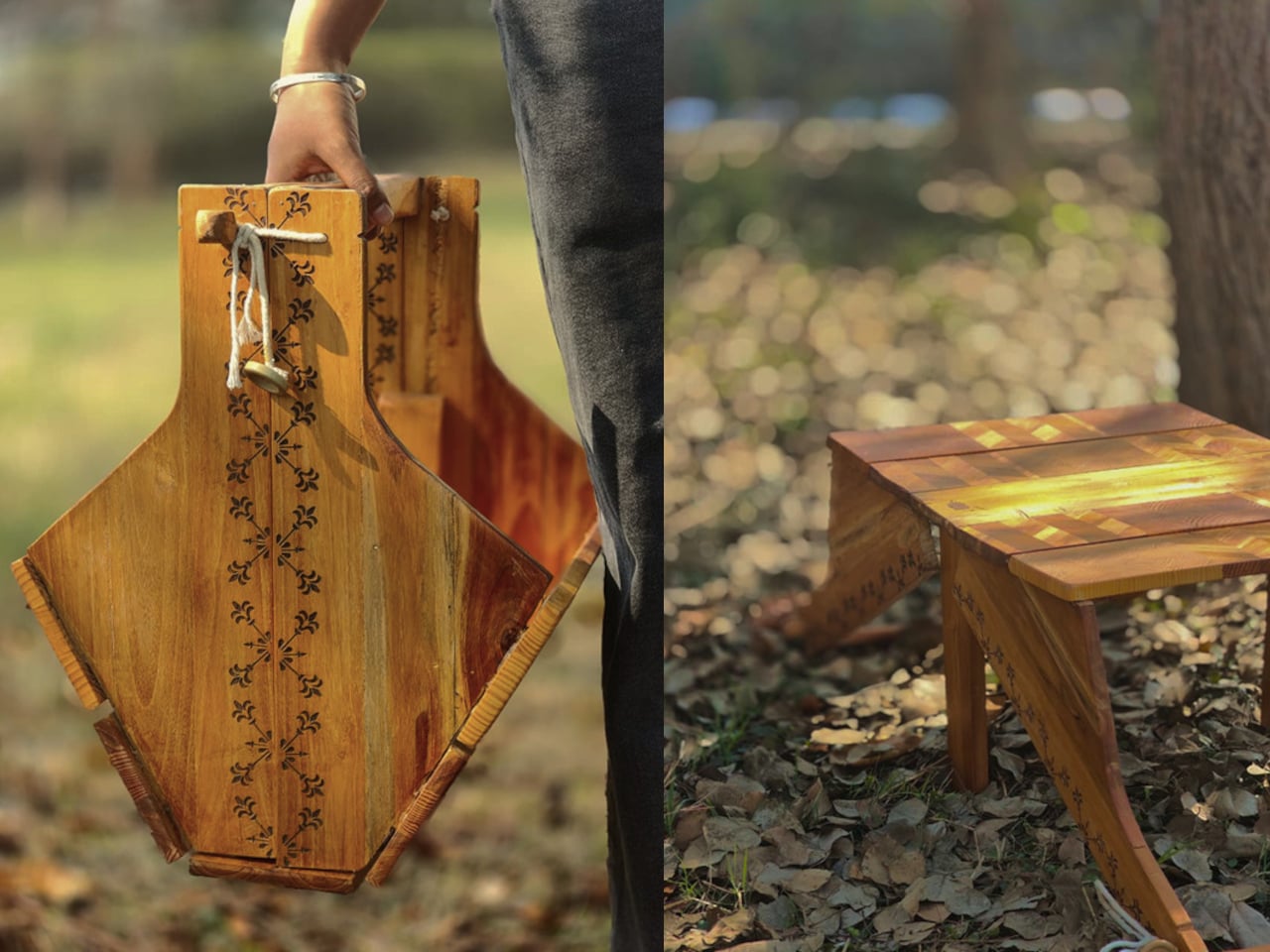
This Convertible Basket Table concept works as both a carry basket and a low table in one form. By simply inverting it, the basket becomes a stable table surface suitable for picnics or casual indoor use. The design combines storage, portability, and easy transformation, making it ideal for relaxed gatherings and compact living spaces.

Designer: Siya Garg

In basket mode, the structured wooden body has a built-in handle and a container that can hold the messy mix of picnic items, fruit, napkins, a book, or a small speaker. The form feels sturdy rather than floppy, carrying like a proper object with a clear handle instead of a tote that collapses when you set it down. That sturdiness is what makes the flip transformation credible. It’s definitely not a soft bag pretending to be furniture.

Once inverted and unfolded, it becomes a low table that works with floor cushions, outdoor blankets, or a casual living room setup. Low tables are the unsung heroes of flexible spaces. They work as coffee tables, game surfaces, or quick work perches, but they’re rarely portable. This one travels in your hand and arrives as a surface, which is a surprisingly underexplored idea.

A square knot side lock keeps the form secure when needed. It’s a rope-based closure that tightens the sides without complicated latches, click mechanisms, or hardware that will eventually strip or break. The whole thing is quiet, tool-free, and easy to replace if the rope wears out, which fits the picnic vibe better than snapping plastic clips would.

The build draws on traditional woodworking throughout. Pattern making involved pine wood in alternating grain directions and a chevron pattern using alternating teak and pine strips. Assembly relies on mortise and tenon joints and sliding mortise and tenon joints to hold the structure together without screws, so the connections are strong enough to handle the repeated flipping and carrying that the concept demands.

The design doesn’t ask you to change how you live, it just quietly accommodates the way you already move through the day. A basket when you’re going somewhere, a table when you arrive, and a warm wooden object that looks like someone actually made it rather than assembled it from a flat pack.

The post This Wooden Basket Becomes a Low Table When You Flip It Upside Down first appeared on Yanko Design.

This Air Purifier Concept Looks Like Scandinavian Audio Gear

Par : JC Torres
18 février 2026 à 17:20

Air purifiers tend to look like medical equipment and come with apps you didn’t ask for. They arrive with dashboards, push notifications, and Wi-Fi setup rituals that turn “cleaner air” into another thing to manage on a phone. Most of them sit in corners behind plants because they look clinical, and no one wants to acknowledge the white plastic box while having guests over for dinner.

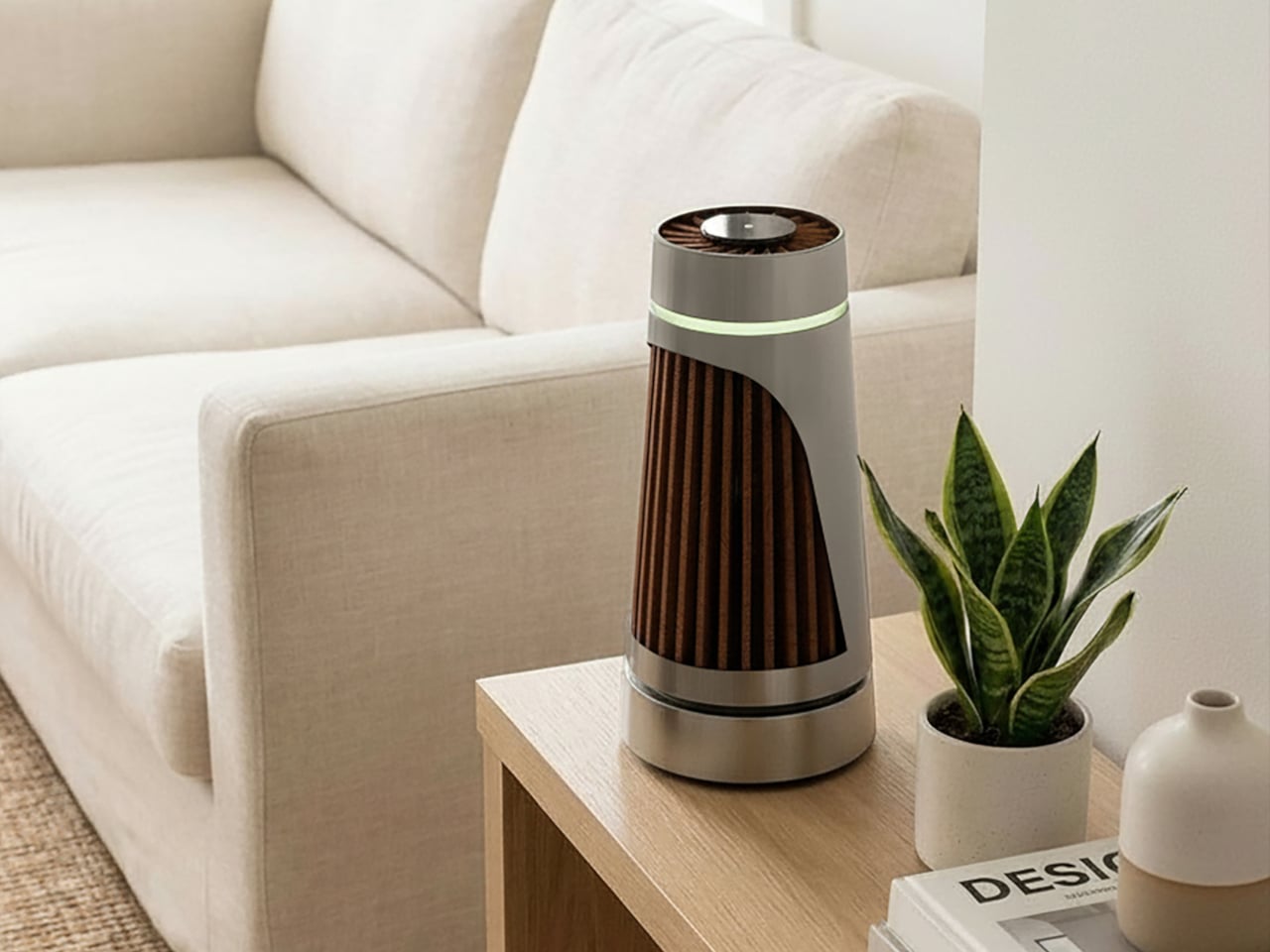
The Beolab Air 1 is a concept air purifier designed to sit in a room without announcing itself. It was developed as a student project and draws inspiration from the calm, material-driven design language of Bang & Olufsen’s Beolab line, though it’s not affiliated with the company in any way. The goal was to see what happens when you apply that kind of sculptural thinking to clean air, instead of just adding another screen to the wellness toolkit.

Designers: Ahaan Varma, Malhar Gadnis, Michelle Sequeira, Sharanya Karkera

The most refreshing part of the concept is the interaction model. A single button press is all it takes to start, with no app pairing, no IoT setup, and no onboarding routine. The project frames this as “digital detox,” which is a reasonable description when most purifiers try to sell you sensor graphs and weekly air quality reports. You turn it on the way you’d turn on a lamp or a speaker, then leave it to work.

The materials do a lot of the talking. Angled teak wooden ridges wrap the body and function as vents for filtered air, so the aesthetic choice also serves a purpose. Textured aluminum handles the rest of the exterior. The project’s own critique of the category is blunt: plastic yellows and looks cheap over time, while wood and metal age better. A purifier built to look like a piece of considered furniture has a better chance of earning a spot on a sideboard than one that resembles a hospital accessory.

Under the surface, there’s a plausible engineering stack. A high-efficiency BLDC fan delivers strong airflow while staying quiet, a HEPA filter handles particulate capture, and an MQ135 gas sensor pairs with PM2.5 sensing to monitor air quality without forcing anyone into an app. The concept keeps the monitoring internal and the feedback subtle, a soft ambient light band that changes gently rather than a display demanding attention.

Of course, that ambient feedback is the whole point. Clean air is invisible and usually silent, and a purifier that communicates the same way feels more appropriate than one with a scrolling PM2.5 count on a bright panel. You can check in when you feel like it, and the rest of the time it just works.

The concept calls out a genuine gap in the category: people want wellness that integrates quietly into a room, not hospital aesthetics, and yet another app. Whether or not Beolab Air 1 ever gets built, asking what a purifier looks like when treated with the same care as a premium speaker is a question the category probably needed someone to ask.

The post This Air Purifier Concept Looks Like Scandinavian Audio Gear first appeared on Yanko Design.

Someone Finally Made Video Meetings Look Like a Game Console

Par : Ida Torres
8 février 2026 à 20:15

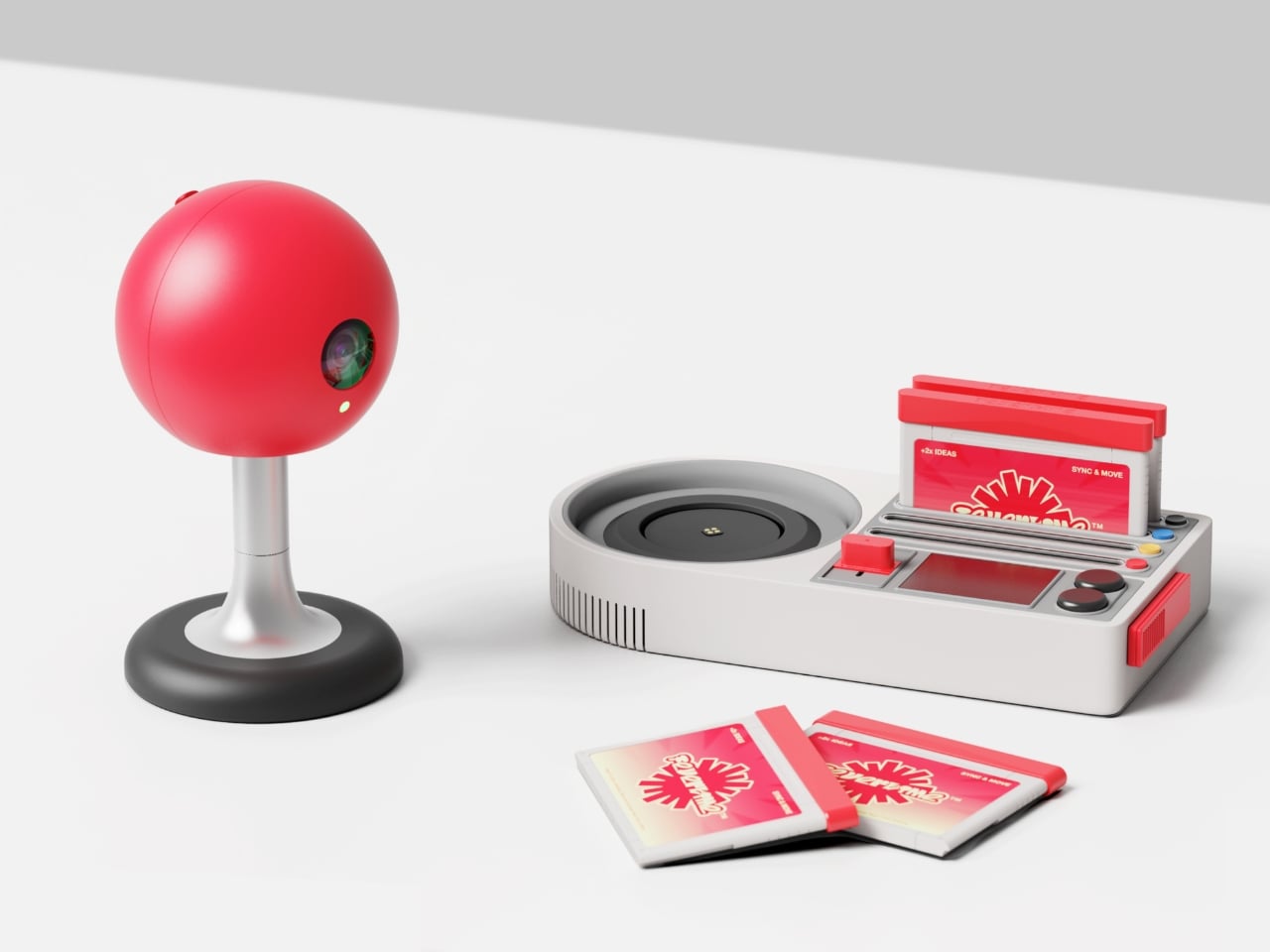
There’s something deeply satisfying about watching designers take a swing at corporate boredom. Fevertime, a recent collaboration by Dugyeong Lee, Gyeong Wook Kim, MyeongHoon Cheon, and Dayong Yoon, does exactly that by transforming the typical video conference setup into something that looks like it belongs in a mid-80s arcade.

The concept is deceptively simple: what if meetings felt less like mandatory Zoom rectangles and more like gathering around a shared screen? The team created a physical meeting system inspired by retro game consoles, complete with a bright red spherical camera perched on a stand like some cheerful robot companion, and a base unit that wouldn’t look out of place next to your old Nintendo. There are even cartridge-style slots and that unmistakable game controller aesthetic, all rendered in a palette of scorched red, neon accents, and soft grays.

Designers: Dugyeong Lee, Gyeong Wook Kim, MyeongHoon Cheon, dayong Yoon

But this isn’t just nostalgia bait. The designers identified a real problem with modern collaboration tools: everyone staring at their own screens creates this weird isolation, even when you’re supposedly “together” in a virtual room. Fevertime flips that script by projecting content onto a shared surface, encouraging actual eye contact and spatial awareness. The physical device becomes a focal point, something to gather around rather than disappear behind.

The system lets users set up meetings in advance, defining time, participants, and structure before anyone logs on. When the session starts, participants can instantly share content from their personal devices onto the collective display. Everything stays synced and visible to everyone simultaneously. No more “Can you see my screen?” or fumbling through share settings while everyone waits. The interface shows meeting cards, schedules, and project data in a clean, modular layout that feels more like organizing a playlist than managing corporate logistics.

What makes Fevertime visually compelling is how committed it is to the gaming metaphor. The red sphere isn’t trying to look sleek or invisible like most tech hardware. It wants to be noticed. It practically begs to be the conversation starter in the room. The cartridge system for what appears to be different meeting modes or templates plays into that collectible, tactable quality that made physical media so satisfying. You’re not just clicking through digital menus; you’re handling objects, sliding things into slots, physically engaging with the technology.

The UI design carries that same energy. Bright pink highlight screens pop against neutral backgrounds. Typography is bold and condensed, channeling the space constraints of old arcade cabinets where every pixel counted. Cards and modules feel like game level selects or achievement screens. There’s a playful confidence in the branding, with the Fevertime logo rendered in that wavy, almost melting typography that suggests heat and intensity without being aggressive.

The designers describe the project as capturing “a single moment of high-intensity creative output,” that fever state when an idea finally clicks and everything flows. That philosophy shows up in the pulsing, breathing quality of the custom lettering, where font weights fluctuate to create visual rhythm. It’s design that refuses to sit still, much like the creative process it’s trying to facilitate.

From a product design perspective, Fevertime sits in that interesting space between speculative concept and plausible near-future tech. The physical components look production-ready, with thoughtful details like ventilation ridges on the base unit and a weighted stand for the camera sphere. But there’s also a conceptual boldness here, a willingness to say “what if meeting technology looked completely different from what we’re used to?”

The team used Adobe’s creative suite to develop the project, combining Photoshop and Illustrator for the identity work with After Effects for motion elements. That mix of static and animated content gives Fevertime a kinetic presence even in still images. You can imagine the interface cards sliding, the logo pulsing, the whole system humming with that arcade-ready energy.

Whether Fevertime ever makes it to market is almost beside the point. As a design exercise, it asks useful questions about how we physically and emotionally experience collaboration technology. It challenges the assumption that workplace tools need to look serious and minimal. And it demonstrates how pulling from gaming culture can make even something as mundane as meeting software feel fresh and approachable. Sometimes the best design projects are the ones that make you think, “Wait, why doesn’t everything look like this?”

The post Someone Finally Made Video Meetings Look Like a Game Console first appeared on Yanko Design.

This Chair Looks Skeletal But That’s Exactly the Point

Par : Ida Torres
8 février 2026 à 14:20

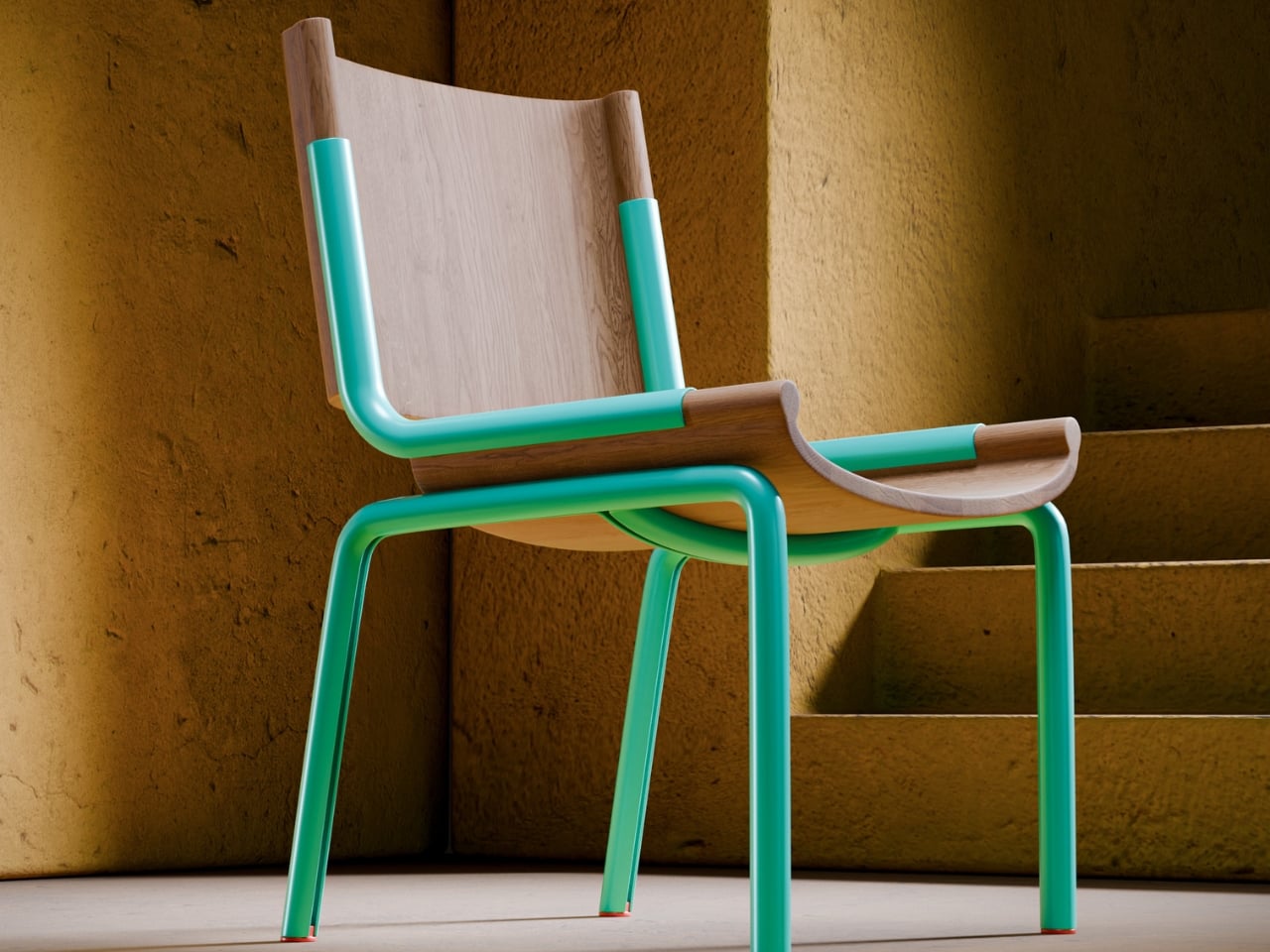
There’s something satisfying about watching minimalism meet function in furniture design, and Denis Zarembo’s Insero Chair does exactly that with an unexpected twist. Based in Moscow, Zarembo has created a piece that challenges how we think about sitting, proving that sometimes the most interesting designs come from playing with basic shapes in not-so-basic ways.

The Insero Chair isn’t trying to reinvent the wheel. Instead, it’s reimagining the seat, backrest, and frame through a lens of geometric precision that feels both contemporary and surprisingly timeless. What makes this design stand out on Behance, where it’s already racked up dozens of appreciations and hundreds of views, is how it balances visual lightness with structural integrity.

Designer: Denis Zarembo

At first glance, the chair appears almost skeletal. Clean lines intersect at deliberate angles, creating a framework that looks like it could have been sketched in a single, confident stroke. But look closer and you’ll notice the thoughtfulness behind each junction point, each curve, each decision about where material exists and where it’s been carved away. This isn’t minimalism for minimalism’s sake. It’s reduction with purpose.

The name “Insero” comes from Latin, meaning “to insert” or “to place within,” which gives us a clue about Zarembo’s design philosophy. The chair seems to explore the relationship between positive and negative space, between what’s there and what’s deliberately absent. The seat appears to nestle within the frame rather than simply sit on top of it, creating an integrated whole that feels more like sculpture than traditional furniture.

What’s particularly clever is how the design manages to look both delicate and sturdy. The slender proportions suggest lightness and mobility, which is increasingly important in our flexible living spaces where furniture needs to work harder and move more freely. Yet the geometric construction hints at strength, with forces distributed through the frame in ways that are as much about engineering as aesthetics.

The chair exists at that sweet spot where industrial design meets art object. You could absolutely see it in a modern apartment or a minimalist office, but you could just as easily imagine it cordoned off in a design museum, being studied for its formal qualities. That dual nature is what makes pieces like this so compelling. They don’t just serve a function; they start conversations.

Zarembo’s work fits into a larger tradition of designers who understand that chairs are never just chairs. They’re statements about how we live, how we work, how we relax. From Charles and Ray Eames to contemporary makers pushing digital fabrication techniques, chair design has always been a proving ground for new ideas. The Insero Chair continues that lineage while speaking in a distinctly current visual language.

The rendering quality also deserves mention. The way Zarembo has presented the chair on Behance shows it from multiple angles, letting viewers appreciate how the geometry shifts depending on perspective. Sometimes it looks almost two-dimensional, like a line drawing come to life. From other angles, the complexity reveals itself, showing depth and dimension you might not initially expect. This careful presentation isn’t just about showing off. It’s essential for understanding how the piece actually works in three-dimensional space.

There’s no information yet about whether the Insero Chair will move into production, but that’s almost beside the point. Concept furniture serves an important role in pushing the conversation forward, in asking “what if?” even when “when?” remains unanswered. These designs influence other makers, spark ideas, and gradually shift our collective sense of what’s possible.

For anyone interested in where contemporary furniture design is heading, pieces like the Insero Chair offer valuable clues. We’re seeing a move away from bulky, overwrought designs toward cleaner silhouettes that don’t sacrifice comfort or functionality. We’re seeing digital tools enable precision that would have been difficult or impossible with traditional methods. And we’re seeing designers like Zarembo who understand that good design doesn’t shout. It speaks clearly, confidently, and leaves room for you to fill in the meaning yourself.

Whether the Insero Chair ends up in living rooms or remains in the realm of conceptual exploration, it’s already doing what good design should: making us look twice, think differently, and reconsider something as everyday as where we choose to sit.

The post This Chair Looks Skeletal But That’s Exactly the Point first appeared on Yanko Design.

This Concept Makes Reading a Physical Ritual, Not an App Reminder

Par : JC Torres
31 janvier 2026 à 23:30

The intention to read a physical book more often usually gets buried under phones, streaming, and vague guilt about never finishing that stack on the nightstand. Reading is not just opening a book; it is a whole arc from deciding to start to actually making it through chapters without drifting away. Lead is a small family of objects designed to sit around a book and quietly support that arc.

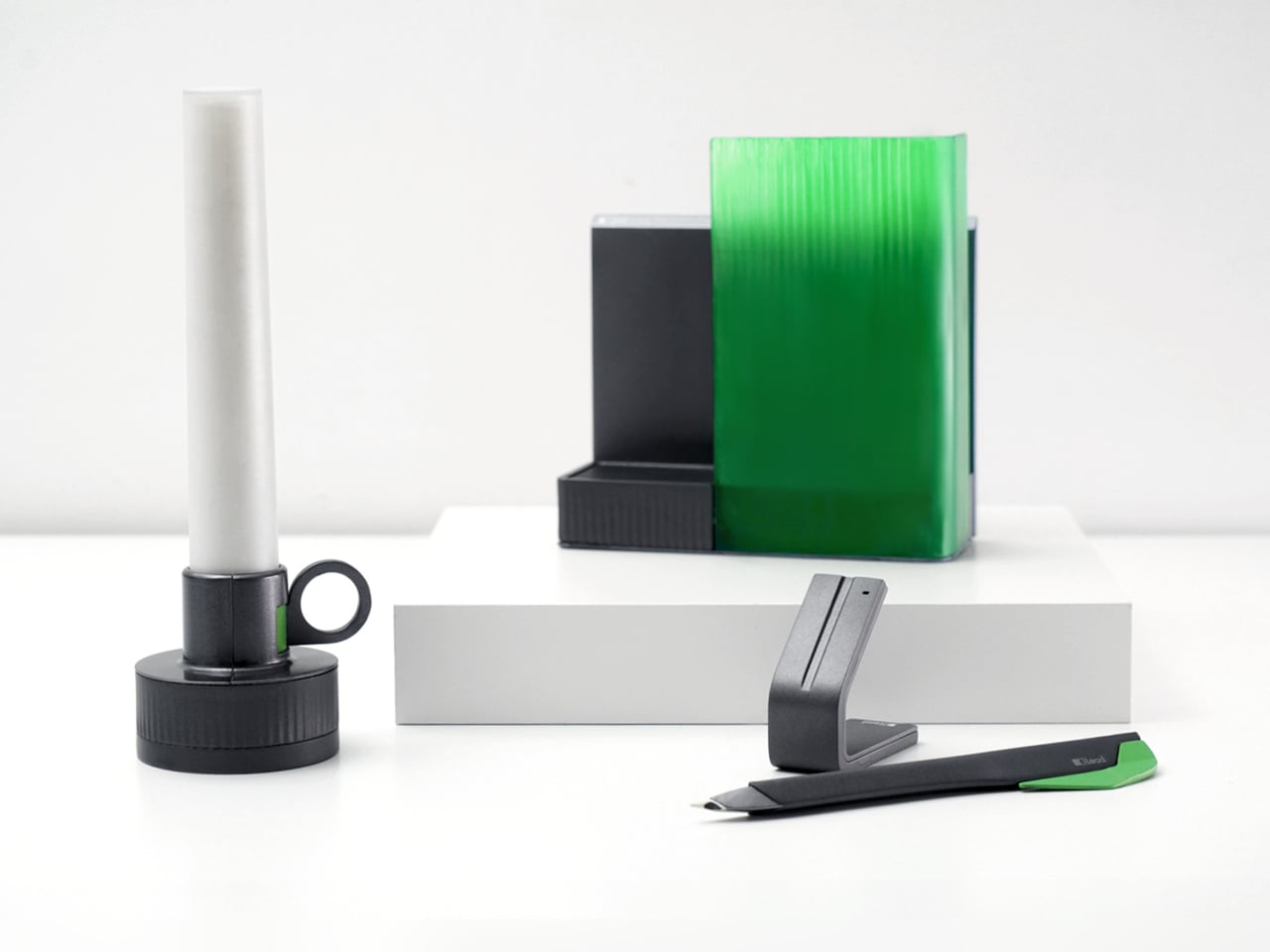
Lead is a design concept that treats reading as a story with a beginning, rising action, climax, and resolution. The name is a contraction of “Let’s read” and the first word of the slogan “lead back to the era of reading,” and the system uses three products, Bookeeper, Candle, and Quill, to give each phase of a reading session its own physical cue instead of relying on app notifications you will probably dismiss.

Designers: Yoo Chaeyeon, Kwon Eui Hwan, Yang Jinoo, Lee Sooyeon, Ha Seongmin

Coming home, you drop your book into Bookeeper, where it sits hidden behind a calm green panel. Earlier, you set a time to read, and as that moment approaches, the base lifts and the book slowly emerges from behind the screen. Instead of a phone notification buzzing and vanishing, the book itself appears, a quiet reminder that this is the slot you promised yourself you would actually use.

Candle is a slim vertical light that links to Bookeeper by default, then switches into timer mode with a twist of its ring. Before you dive into the pages, you set how long you want to read, and Candle becomes both atmosphere and clock. As you move through chapters, you can sense how your pace matches the time you set, adjusting speed without feeling chased by a digital countdown ticking in the corner.

When a line or idea sticks, Quill is a smart pen that lets you write by hand in a notebook or margin, then flip into scan mode to store that text on a device later. It has two main modes, transcription and scan, so you can copy favourite phrases, jot down reflections, and then capture them without breaking the flow. A bookmark element on the back lets Quill rest in the book when you pause.

All three objects share dark bases and a calm, translucent green for the parts that move or light up, so they feel like a family without shouting for attention. The interactions are borrowed from analog reading rituals, taking a book off a shelf, lighting a candle, picking up a pen, but layered with just enough technology to guide habit without dragging you back to a screen.

Lead is less about adding gadgets to the reading table and more about designing a gentle structure around a physical book. Bookeeper brings you back at the right time, Candle holds the space and the clock, and Quill helps you remember why the session mattered. When reading often gets squeezed between notifications and feeds, a trio of objects that simply lead you back to the page feels like a quietly radical idea.

The post This Concept Makes Reading a Physical Ritual, Not an App Reminder first appeared on Yanko Design.

HOVSTEP Helps ADHD Focus with Helicopter Missions That Actually End

Par : JC Torres
31 janvier 2026 à 21:45

Modern work and study days are chopped into tiny fragments, with multiple tabs, apps, and timers all competing for attention. Even well-intentioned plans fall apart because time feels abstract and slippery, especially if you lean toward ADHD or time-blindness. Checking the clock becomes another interruption instead of a guide. HOVSTEP is a concept that tries to make time feel like one clear mission instead of a background anxiety.

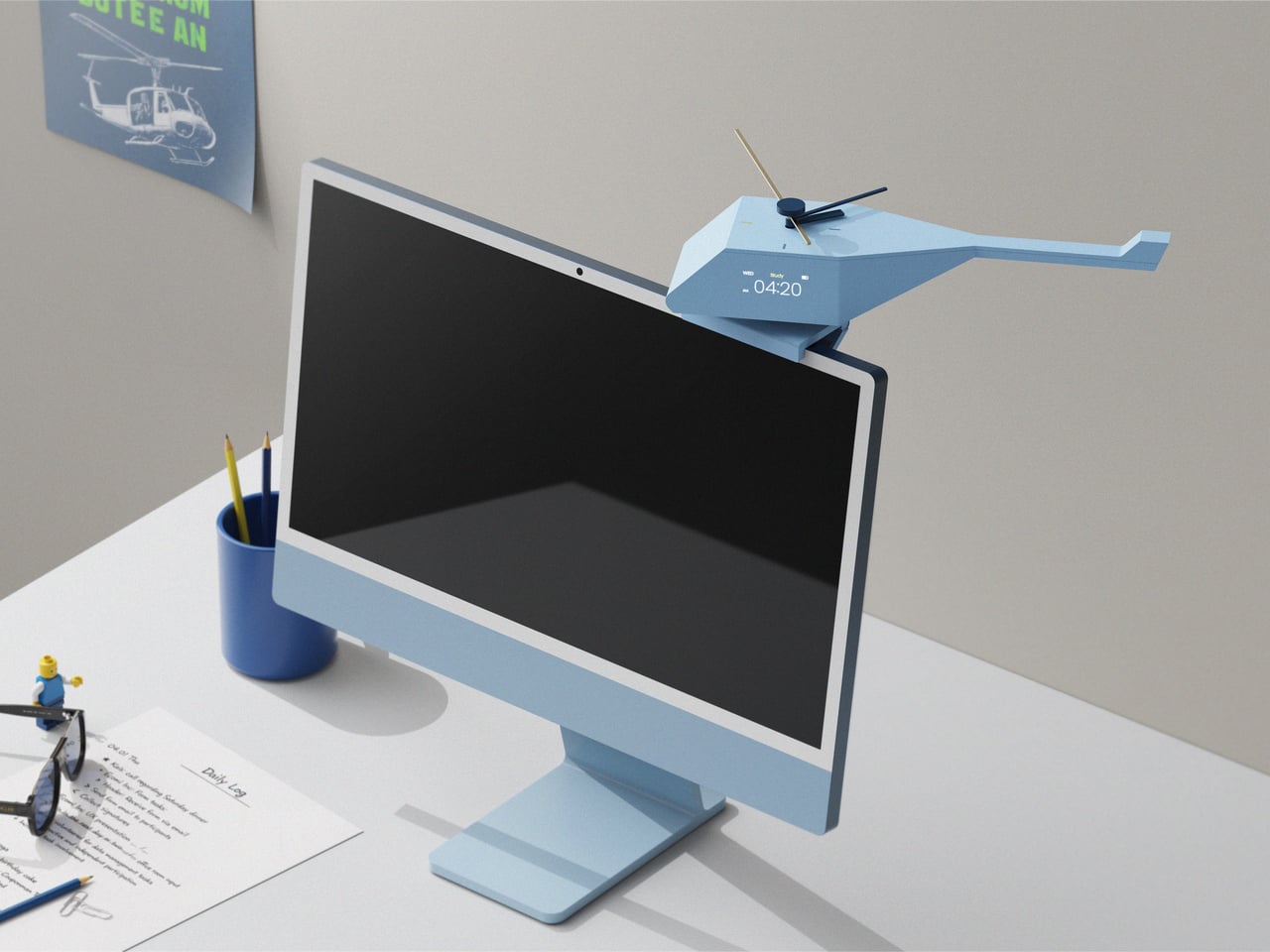
HOVSTEP treats each block of time like a helicopter mission. It is both a physical clock and an app-linked timer, inspired by how a mission helicopter takes off with one purpose, completes it, and returns. The idea is to help you see a study session, assignment, or break as a single mission you dispatch and then bring home, with a beginning, middle, and end that are all visible at once.

Designer: Ho joong Lee, Ho taek Lee

Opening the app in the morning, you drop studies, tasks, breaks, and games into short mission slots across the day. The app shows your routine by time zone, then switches to an analog view where each mission has a clear start, end, and remaining time. When a mission starts, a little helicopter icon descends, and the activity timer kicks in with an alarm, making the transition feel deliberate.

HOVSTEP shows time passing with a yellow hand that appears on the clock face when a mission begins, rotating once around the dial and showing how much of that block is left. It is framed as the helicopter being dispatched, flying its route, and returning when the hand lands back at 12. You are watching a mission unfold and trying to stay with it until the end.

The object itself is a small helicopter-shaped clock that can sit on a monitor or hang on a wall. A rotor on top acts as the analog hand, a digital display shows timer information, and side buttons let you adjust volume and timer details. A center button on top turns the clock on and starts missions manually, so you can run a quick focus block without opening the app.

The design is grounded in research about how people with ADHD often respond better to movement, change, and short time units than to static digits. By turning each activity into a dispatched mission with a visible arc and clear end, HOVSTEP reduces the need to constantly check the clock. You get a sense of flow, knowing that as long as the yellow hand is moving, you are still inside the mission.

The project’s line, “One mission completed, one step closer to focus,” captures the spirit. Instead of promising to fix attention with another app, HOVSTEP reframes time as a series of small, winnable missions. Sometimes the most helpful tools for focus are the ones that make progress visible and finite, one flight at a time, instead of asking you to manage an infinite stream of minutes.

The post HOVSTEP Helps ADHD Focus with Helicopter Missions That Actually End first appeared on Yanko Design.
Rotating Kitchen Cubes Make Wasting Food Actually Impossible

Par : Ida Torres
14 décembre 2025 à 14:20

We’ve all been there. You buy fresh produce with the best intentions, tuck it away in the fridge or pantry, and then discover a wilted mess two weeks later. It’s frustrating, wasteful, and honestly, it happens way more often than we’d like to admit. But what if your storage system actually worked with you instead of against you?

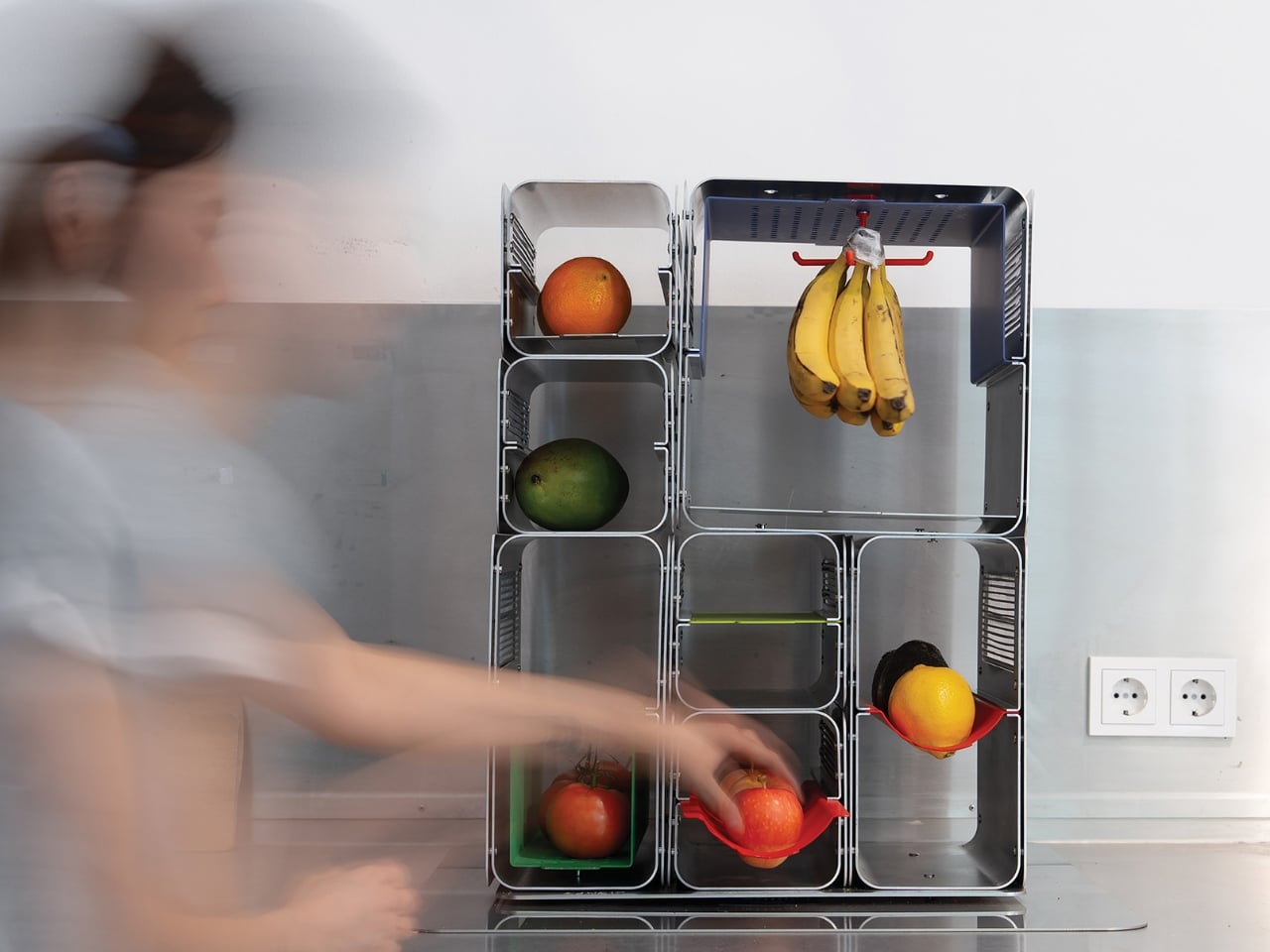
Enter Saveit, a modular food storage concept by designer Yerin Kim that’s making me rethink everything about how we organize our kitchens. At first glance, it looks like something straight out of a design museum with its sleek metal boxes, perforated panels, and pops of color. But the real magic happens when you actually use it.

Designer: Yerin Kim

The system is built around a brilliantly simple idea: rotating storage that follows the FIFO principle (first in, first out). You know how grocery stores stock their shelves so older items move to the front? That’s exactly what Saveit does for your home. The modules feature these clever two-way rotating structures, so when you add new food from one side, the older items naturally move toward the exit point. No more mystery tomatoes rotting in the back of your produce drawer.

What makes this system feel genuinely different is how modular and adaptable it is. The stackable metal units can be configured in countless ways, kind of like edible Tetris. Need more space for root vegetables this week? Rearrange. Stocking up on citrus? Adjust accordingly. The colored sliding trays and hanging hooks accommodate everything from loose potatoes to bunches of bananas, and each component is designed to maximize airflow through those perforated backs, keeping produce fresher longer.

The aesthetic is industrial meets playful, with that brushed metal finish that feels both serious and approachable. Those bright red, green, blue, and yellow accents aren’t just for looks either. They help you quickly identify different food categories or rotation systems at a glance. It’s functional design that doesn’t sacrifice personality.

But here’s what really sold me on this concept: every single part slides out and pops into the dishwasher. Anyone who’s ever tried to clean a traditional produce basket or drawer knows that trapped dirt and sticky residue situation. Saveit eliminates that headache entirely. The removable design means you can actually keep your storage clean without contortionist-level flexibility or a dedicated scrub brush.

The environmental angle here is significant too. Food waste is a massive problem. We’re talking about roughly a third of all food produced globally ending up in the trash, which contributes to greenhouse gas emissions and represents billions of dollars thrown away annually. While Saveit won’t solve food waste entirely, it tackles one of the root causes: poor visibility and organization at home. When you can actually see what you have and the system naturally prioritizes older items, you’re far more likely to use everything before it goes bad. There’s something refreshing about design that solves real problems without overcomplicating things. Saveit doesn’t require an app, doesn’t need to be plugged in, and doesn’t come with a subscription service. It’s just smart, thoughtful design applied to an everyday challenge. The kind of thing that makes you wonder why storage hasn’t worked this way all along.

Yerin Kim’s creation sits at this interesting intersection of sustainability, functionality, and visual appeal that feels very now. It’s the type of design that tech enthusiasts appreciate for its systematic approach, that eco-conscious consumers love for its waste-reduction potential, and that design lovers simply want to display on their countertops. It transforms a mundane task (food storage) into something that actually feels considered and intentional. Whether Saveit moves from concept to production remains to be seen, but it represents a shift in how we think about kitchen organization. Storage shouldn’t be something you work around. It should work for you, making sustainable choices easier and more intuitive. And if it looks this good while doing it? Even better.

The post Rotating Kitchen Cubes Make Wasting Food Actually Impossible first appeared on Yanko Design.
This Doughnut Chair Has One Bite Missing, and That’s Your Seat

Par : JC Torres
13 décembre 2025 à 23:30

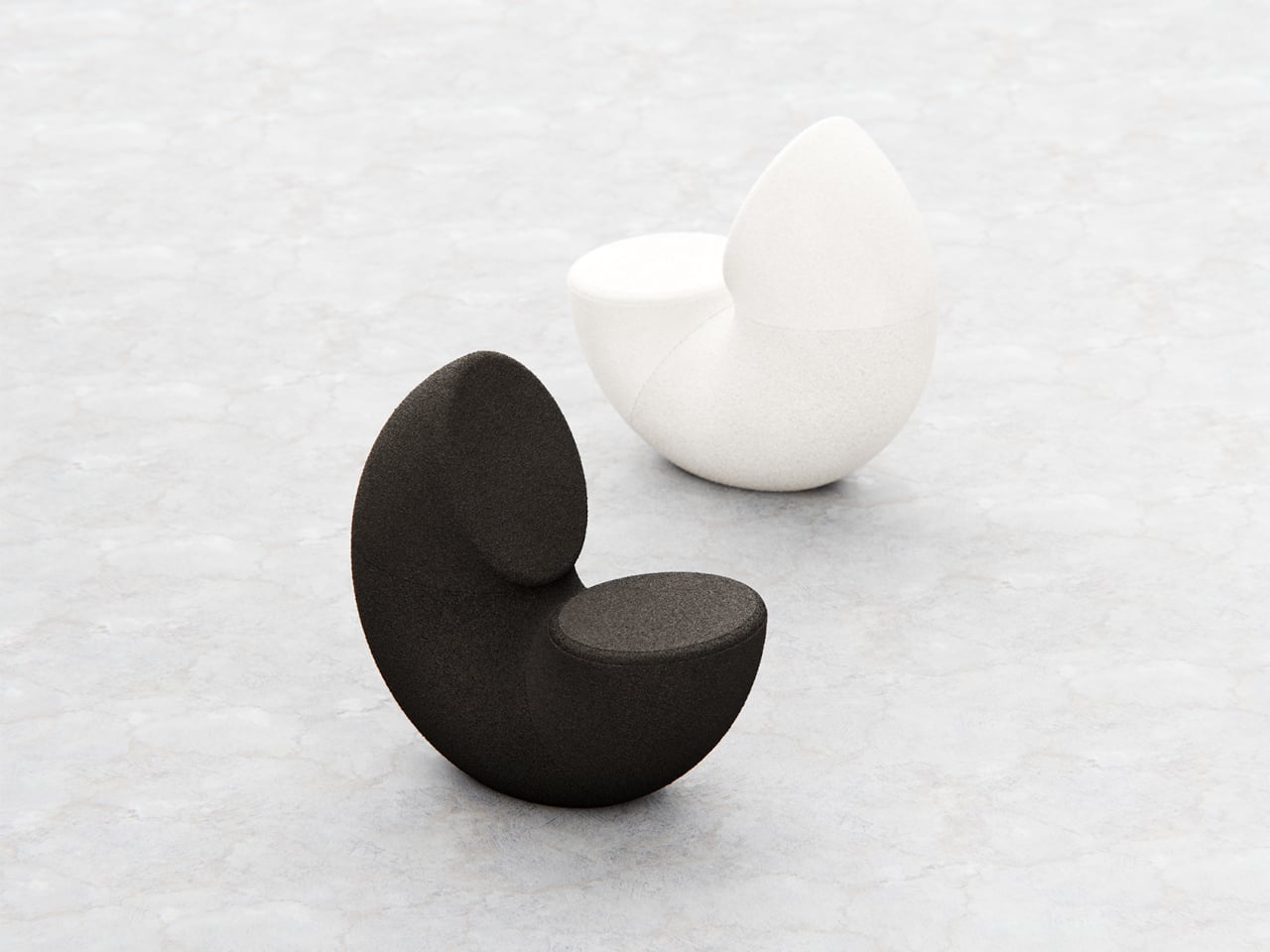
Most chairs are clearly assembled objects, with legs, a seat, and a backrest, all stacked and joined together. Sculptural lounge pieces sometimes flip that script and feel more like a single volume that has been carved or sliced. Chunk is a concept that leans into that second approach, imagining seating as a doughnut with a bite taken out rather than a frame with cushions bolted on, treating furniture as something you edit rather than assemble.

The designer imagined a chair that looks like a doughnut with a chunk removed. The missing piece becomes the seat and the opening for the backrest, while the rest of the ring wraps around in a continuous loop. The concept is less about novelty and more about seeing how far a single looping form can be pushed into something you can actually sit in, where the absence of material defines the place for the body.

Designer: Liam de la Bedoyere

Both the seat and backrest share the same oval cross-section, but as the base curves up to become the backrest, that oval quietly swaps its length and width. It is wide and low where you sit, then gradually becomes tall and narrow as it rises behind you. The section never breaks; it just morphs along the path, which gives the chair a sense of motion even when it is still and empty.

The “bite” creates a bowl-like seat that cradles the hips and thighs, while the rising loop offers a relaxed backrest rather than a rigid upright. The proportions suggest a low, lounge-style posture, closer to a reading chair or a corner piece in a living room than a dining chair. The continuous curve encourages you to lean back and sink in, not perch on the edge ready to stand again.

A near-cylindrical form can look like it might roll away, but the geometry and internal structure are tuned to keep the center of gravity low and slightly behind the seat. The base is subtly flattened, and a denser core at the bottom would keep it from tipping forward when someone leans back. The result is a chair that looks precarious from some angles but behaves like a grounded lounge piece once you sit.

The monolithic upholstery, a textured fabric that wraps the entire volume without obvious breaks, reinforces the idea of a single chunk of material. The form reads differently as you move around it, sometimes like a shell, sometimes like a curled leaf, sometimes like a coiled creature. It is the kind of chair that anchors a corner or gallery-like space, inviting you to walk around it before you decide to sit down and settle in.

Chunk uses subtraction as its main design move, starting from a complete ring and then removing just enough to create a place for the body. For a category that often defaults to adding parts, there is something satisfying about a chair that feels like it has been edited down to a single, looping gesture, with one decisive bite turning an abstract volume into a place to rest, read, or just sink into for a while.

The post This Doughnut Chair Has One Bite Missing, and That’s Your Seat first appeared on Yanko Design.
When Your Desk Lamp Becomes Your Study Partner: Check Mate

Par : Ida Torres
13 décembre 2025 à 21:45

We’ve all been there. You’re three hours into a study session, hunched over your desk with tabs multiplying like rabbits, your phone buzzing with notifications, and that nagging feeling that you’re not actually retaining anything. Digital learning promised us flexibility and endless resources, but sometimes it feels more like drowning in information while learning nothing at all.

A new concept design called Check Mate is tackling this exact problem, and it’s making waves in the design community for all the right reasons. Created by a team of seven designers (Dongkyun Kim, Jaeryeon Lee, Eojin Jeon, Noey, Jaeyeon Lee, Jagyeong Baek, and Jimin Yeo), this concept reimagines what a study companion could look like if we actually designed for how people learn in the digital age. While you can’t buy it yet, the ideas behind it are definitely worth paying attention to.

Designers: Dongkyun Kim, Jaeryeon Lee, Eojin Jeon, Noey, Jaeyeon Lee, Jagyeong Baek, Jimin Yeo

Create your own Aesthetic Render: Download KeyShot Studio Right Now!

The name itself is clever. “Check Mate” borrows from chess, evoking that decisive moment of victory, but it’s also wonderfully literal. This concept envisions a device that genuinely acts as your learning mate, checking in on your progress and helping you actually achieve those goals instead of just feeling busy. The design language speaks to this dual nature with a clean, minimalist aesthetic in soft gray tones, punctuated by shots of energizing yellow that feel like highlighting the important bits in a textbook.

What makes this concept compelling is that the designers didn’t just jump to solutions. They actually did their homework (pun intended) by researching what digital learners need and where current methods fall short. Their field research identified some uncomfortable truths: digital learning can create passive attitudes, make us susceptible to misinformation, and ironically, despite all our access to information, contribute to declining literacy levels. We’re getting really good at searching and depending on AI, but are we actually learning?

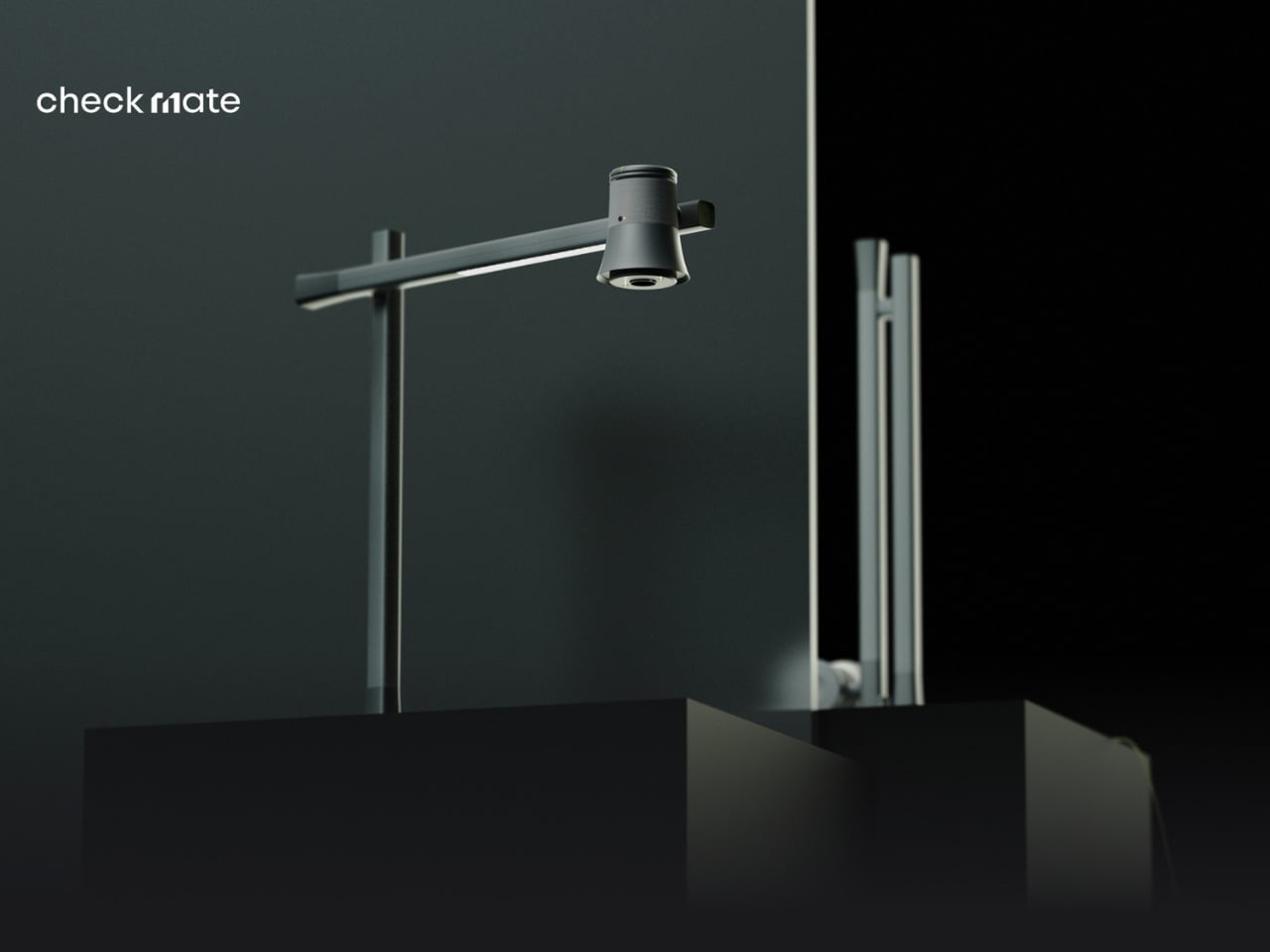
The proposed device looks deceptively simple. At first glance, it’s an elegant desk lamp with an adjustable arm and a cylindrical head wrapped in fabric, giving it a softer, more approachable vibe than your typical tech gadget. But the concept goes deeper, packing some serious multitasking capabilities into that minimal form. The lamp head would rotate and adjust, there appears to be a projection or camera system integrated into the design, and the base doubles as a wireless charging pad. Those yellow accents aren’t just for looks either, they’re envisioned as tactile interaction points that make the technology feel more human and less intimidating.

Where Check Mate really shines as a concept is in how it reimagines the learning experience. The visualization shows it functioning as a projection device that could display educational content, video calls with instructors, or interactive annotations directly onto your workspace or wall. Imagine highlighting text on actual paper and having that integrate with your digital notes, or being able to project your screen large enough to actually see what you’re working on without squinting at a laptop.

The concept addresses one of digital learning’s biggest weaknesses: that narrow, passive relationship we have with our screens. By proposing a way to bring information into your physical space and allowing for more natural interaction, it suggests learning could feel less like staring into the void and more like an active, engaging process. You wouldn’t just be consuming content, you’d be working with it in a space that feels comfortable and personal.

The packaging design in the concept presentation deserves a mention too. Everything is shown organized in a beautifully designed kit with that signature yellow and gray color scheme. It’s the kind of unboxing experience that would make you feel like you’re opening something important, not just another gadget. There’s a psychological element to that. When something looks and feels intentional, we treat it more seriously. As a concept, Check Mate represents the kind of forward thinking we need more of in the education technology space. It pushes conversations forward about how we should be designing for learning, how technology could support rather than distract, and what the future of education might actually look like when we stop thinking about it as just “Zoom, but make it fancier.”

The reality is that digital learning isn’t going anywhere. Remote work, online courses, and hybrid education models are here to stay. So maybe concepts like Check Mate can inspire the tools we actually need, devices designed for this reality instead of just adapting what we already have. The best part? It suggests that the answer isn’t more screens or more apps, it’s smarter integration of digital and physical spaces, and technology that adapts to how we naturally learn rather than forcing us to adapt to it.

The post When Your Desk Lamp Becomes Your Study Partner: Check Mate first appeared on Yanko Design.
A Cordless Kitchen Processor Soft Enough to Leave Out All Day

Par : Ida Torres
1 décembre 2025 à 17:20

If you cook in a small kitchen, you already know the choreography. The toaster gets shoved into a cabinet so the kettle can come out. The air fryer lives on the floor of a pantry. Power cords drape across the counter like tripwires. It is domestic Tetris, and it rarely looks good.

That is the quiet problem the Food Sitter Cooking Processor, designed by Qi Liu, is trying to solve. On paper it is a cordless, multifunctional food processor that chops, blends, and whisks. In reality it feels more like a friendly little gadget that wants to restore some visual calm to your kitchen.

Designer: Qi Liu

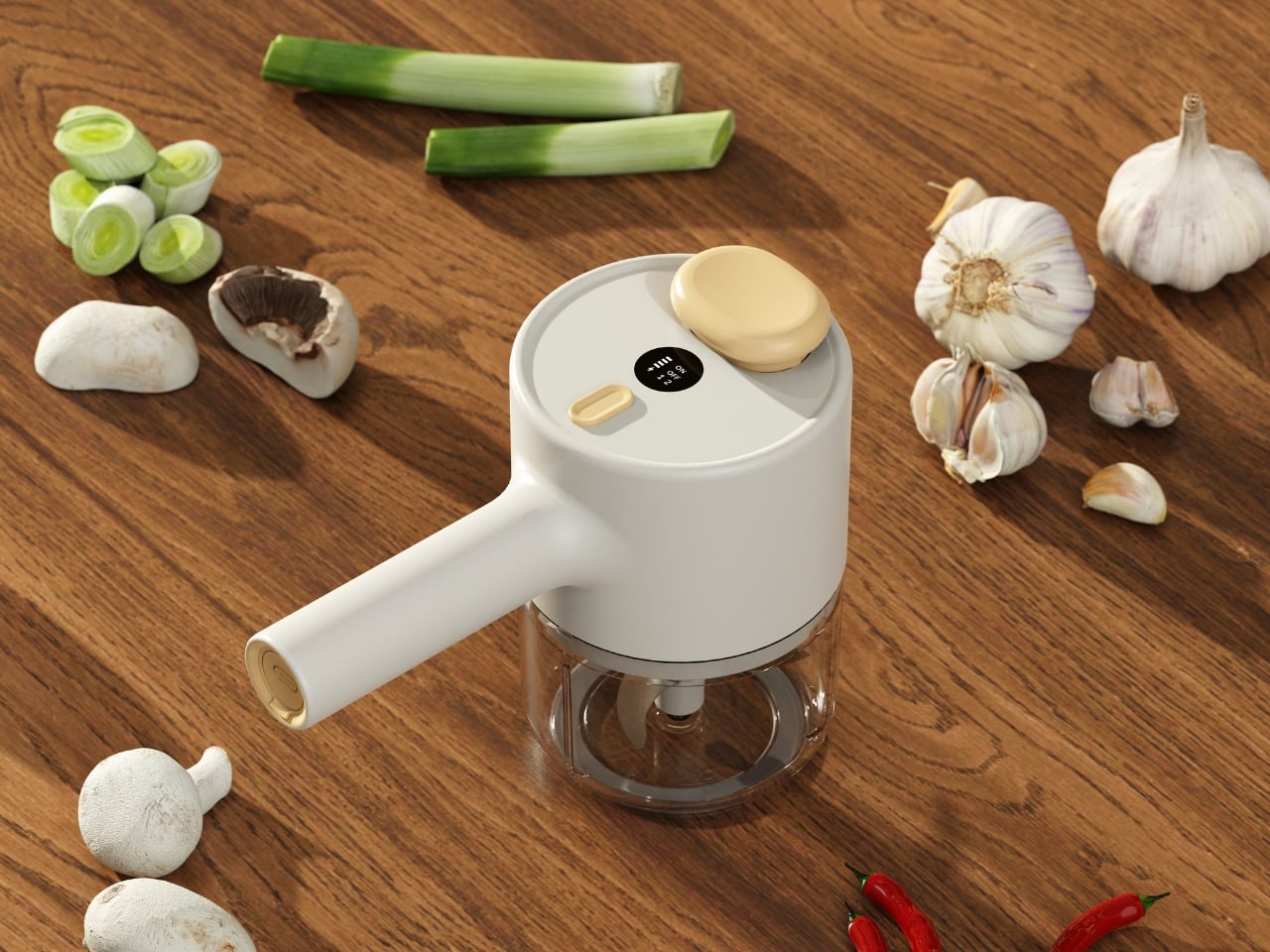
The first thing that stands out is the form. Instead of the usual squat base with a forest of buttons, this processor reads almost like a compact handheld vacuum crossed with a milk frother. A clean cylinder holds the motor and battery, with a straight handle projecting from the side and a clear jar below. The lines are smooth and rounded, and the whole object looks soft without being cute for the sake of it.

Color does a lot of the emotional work here. The palette of cream white, gentle gray, and lemon yellow is closer to lifestyle accessories than industrial appliances. These are the kinds of colors you expect from a Scandinavian lamp or a wireless speaker, not a device that pulverizes garlic. That choice is intentional. Food Sitter positions itself as a Korean kitchen lifestyle brand with the motto “Less Effort, More Joy,” and the processor fits that promise. It is designed to sit out in the open without visually shouting.

Cordless power is the other big shift. The processor has a built in battery and charges via USB, which instantly changes how and where you use it. No cord means you can move from counter to dining table to balcony without hunting for an outlet. It is easy to imagine it on a picnic table, pureeing salsa next to a portable speaker, or on a camping trip where it turns into a tiny off grid prep station. The portability feels closer to a tech gadget than a traditional kitchen tool, and that is part of the appeal.

Functionally, the product leans into modularity. Interchangeable blades and accessories cover three core jobs chopping, blending, and whisking. In design terms it is a single platform with multiple behaviors. Instead of owning a separate chopper, mini blender, and hand whisk, you swap attachments on one compact base. That reduces clutter and, importantly, visual noise. One small cylinder on your shelf looks a lot better than three unrelated appliances with three different design languages.

The interaction details are refreshingly straightforward. There is a clear top hole for feeding ingredients, paired with a small stick that nudges food down toward the blades. It is almost analog in spirit. You are still present in the process, but the tool does the heavy lifting. The controls are minimal, with a small display for on off and speed, and a single main button. It feels closer to using a simple audio player than programming a blender.

Cleaning, the step that often kills our enthusiasm for kitchen gadgets, is handled with the same clarity. Every food contact part is designed to come apart quickly. Blade, jar, and lid separate for a rinse under the tap, no awkward crevices or trapped onion pieces. That kind of invisible design work is what makes a product move from novelty to daily habit.

What makes this project interesting beyond the kitchen is how it merges three worlds. From a design perspective, it borrows the soft minimalism of contemporary home objects. From tech, it adopts battery power, portability, and a restrained interface. From pop culture, it taps into our current love of “tiny living” and curated domestic aesthetics. It is the kind of object you can imagine on Instagram next to a latte and a stack of cookbooks, but it also has the chops to justify its presence.

For modern homeowners especially those living in apartments or shared spaces that blend work, life, and cooking into one room this balance matters. We want tools that earn their footprint. The Food Sitter Cooking Processor feels like a response to that desire. It is compact, visually calm, and flexible enough to support both weekday meal prep and weekend kitchen experiments. In the end, this is not just another food processor. It is a small argument for a different kind of kitchen where technology is cordless and quiet, aesthetics are part of function, and the tools that help you cook are pleasant enough to leave out in plain sight.

The post A Cordless Kitchen Processor Soft Enough to Leave Out All Day first appeared on Yanko Design.
This Card Holder Has Magnetic Pens, a Ruler, and Hidden Compass

Par : JC Torres
23 octobre 2025 à 17:00

Most of us have been caught without a pen when inspiration strikes or a quick note needs jotting down. Carrying a full pencil case feels clunky for everyday life, but going without means missing out on spontaneous sketches, reminders, or ideas that slip away before you get home to your desk.

The Gifted concept reimagines everyday writing tools as a slim, modular set that fits in your pocket. Designed by Mingzhou Gu, this card holder blends writing instruments, a ruler, and magnetic modularity into a single, minimalist accessory that’s always ready when creativity calls or practical needs arise.

Designer: Mingzhou Gu

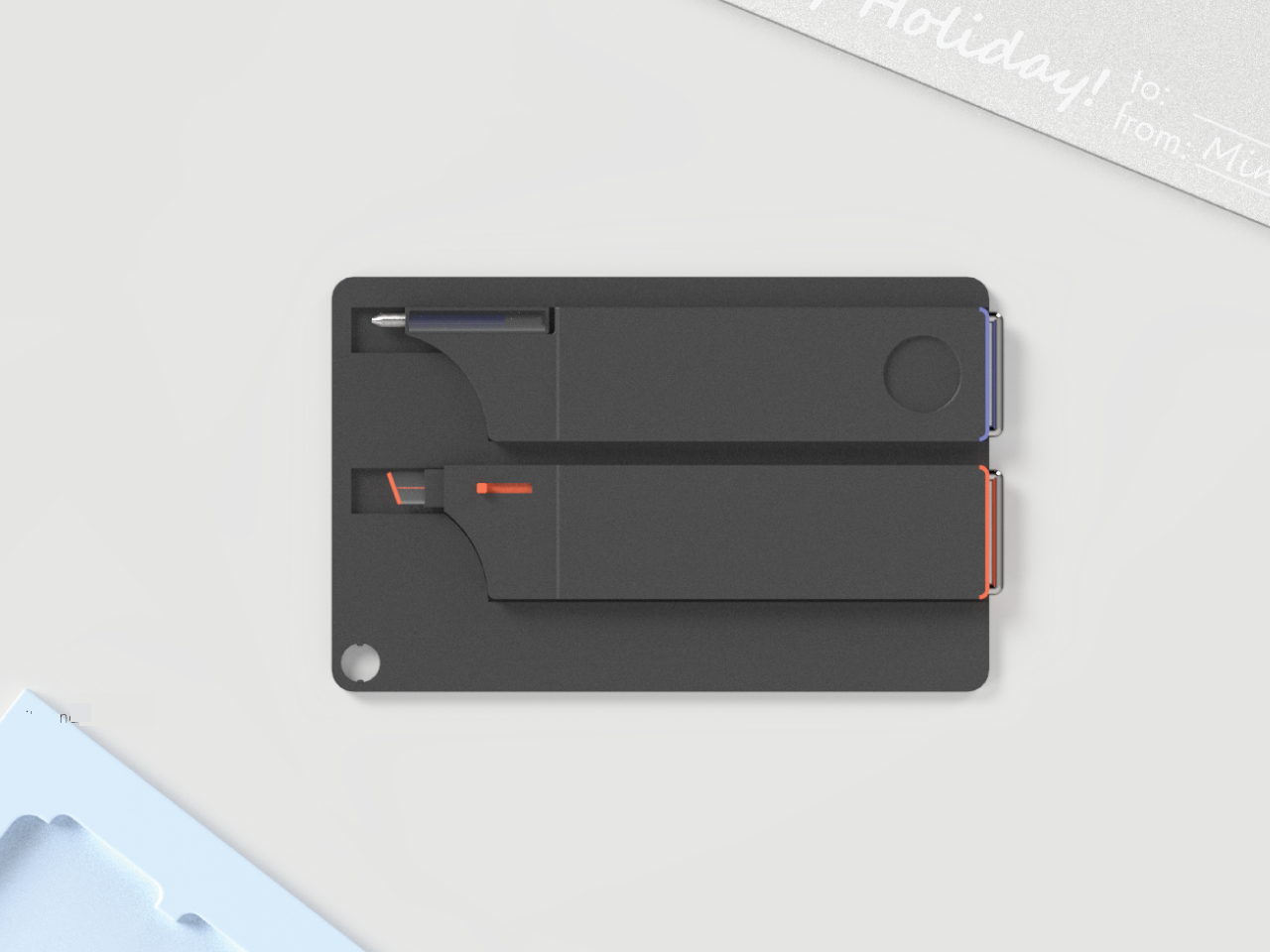
Gifted’s design centers on flexibility and simplicity through thoughtful modularity. The slim card holder features two magnetic slots on the back, each holding a writing tool that slides out easily when needed. You can choose between a pen, pencil, or marker depending on your daily tasks, swapping modules to match your workflow.

Some writing tool modules hide a foldout compass inside their bodies, adding a subtle layer of utility for sketching diagrams, navigating, or just satisfying the inner adventurer. This clever detail speaks to users who appreciate when functional objects contain small surprises that enhance their usefulness without adding bulk or complexity.

The card holder doubles as a straightedge, with ruler markings along one edge for quick measurements or drawing straight lines on the fly. The brown leather or vegan leather pocket holds several cards securely, while a pull-tab makes access effortless even when your hands are full or you’re juggling multiple items.

The compact form slips easily into any pocket, bag, or jacket without creating annoying bulk. A keychain loop allows you to attach Gifted to your backpack, purse, or keys, making it part of your everyday carry without requiring a dedicated storage spot or constantly hunting through bags.

Material choices balance durability with tactile appeal. The case is crafted from lightweight metal or high-quality plastic, with the tactile brown pocket providing visual and physical contrast. The orange accent adds personality without overwhelming the minimalist aesthetic, making the design feel considered and refined.

Available in both black and white finishes, Gifted adapts to different personal styles and environments. The understated design means it blends into professional settings, creative studios, or outdoor adventures without looking out of place. Whether you’re sketching in a notebook, leaving a note, or measuring a quick dimension, everything you need is right there.

The concept targets creatives, professionals, and adventurers who value being prepared without carrying excessive gear. The clean presentation and thoughtful details make it an ideal gift for writers, designers, or anyone who appreciates clever everyday carry solutions that combine multiple functions without feeling overwrought or complicated.

Gifted turns writing essentials into a pocket-sized, modular accessory that encourages spontaneous creativity and organization. For anyone who loves to write, sketch, or stay prepared on the go, this concept offers a clever take on what everyday carry can be when design and functionality receive equal attention.

The post This Card Holder Has Magnetic Pens, a Ruler, and Hidden Compass first appeared on Yanko Design.

SUSA is a visionary AI-powered companion device concept for ASUS

Par : Ida Torres
6 octobre 2025 à 17:00

SUSA is a bold new concept in AI-powered companion devices, designed by Future Facility as a visionary project for ASUS. In a world where artificial intelligence is becoming an integral part of our daily routines, SUSA emerges as a thoughtful reimagining of what it means to live with technology that truly understands and supports its users.

Unlike typical smart speakers or digital assistants, SUSA is designed to serve as an intelligent and emotionally responsive companion. Developed as a conceptual project for ASUS, the device leverages advanced AI to learn routines, preferences, and contexts, adapting its responses to suit the individual. With SUSA, the focus isn’t just on automating tasks or providing answers but on creating a meaningful and intuitive relationship between user and device.

Designer Name: Future Facility

One of SUSA’s most innovative features is its emphasis on emotional intelligence. The device is engineered to recognize subtle cues in voice and behavior, allowing it to respond empathetically. Whether it’s offering calming support during stressful moments or celebrating your achievements, SUSA’s goal is to provide a sense of understanding and companionship that goes beyond typical digital interactions.

The physical design of SUSA reflects the same commitment to user experience. Future Facility has crafted a device that blends seamlessly into any living space, with a minimalist and inviting aesthetic. The interface relies on voice, soft lighting cues, and gentle movements, making interactions feel natural and unobtrusive. This approach ensures that SUSA is not only easy to use but also enhances the atmosphere of the home rather than detracting from it.

SUSA’s conceptual platform is also designed for openness and adaptability. It can connect with a wide range of services, manage schedules, control smart home devices, and deliver reminders, all while learning and evolving to fit a user’s unique lifestyle. Accessibility is at the forefront, with features that ensure people with different needs can benefit from SUSA’s capabilities, making technology more inclusive for everyone.

Privacy and security are fundamental to SUSA’s design. The device incorporates strong data protection measures and gives users control over their information. With capabilities for local processing, sensitive conversations and interactions can remain private, building trust between the user and their AI companion. SUSA represents a new direction for ASUS and Future Facility, showing how AI can move beyond functionality to foster genuine emotional connections. It highlights a future where technology doesn’t just work for us. It works with us, enriching our well-being and supporting us both practically and emotionally.

The post SUSA is a visionary AI-powered companion device concept for ASUS first appeared on Yanko Design.

How the Kirigami Parachute Concept Could Change Drone Deliveries

Par : Ida Torres
6 octobre 2025 à 16:20

Drone delivery technology is advancing quickly, and one of the most intriguing new concepts comes from the Mechanical Engineering department at Polytechnique Montreal. Their design, known as the kirigami parachute, offers a fresh take on how packages might be safely delivered from the sky in the future. Inspired by the Japanese art of kirigami, which involves folding and cutting paper to create patterns and structures, this innovative idea could help solve some familiar challenges in aerial deliveries.

Traditional parachutes have been a staple for many airborne tasks, but they can struggle to control descent in windy or unpredictable conditions. The kirigami parachute concept introduces a clever network of holes and slits, arranged in specific patterns, to regulate airflow and keep the parachute stable. These patterns are designed to help prevent packages from swinging or spinning as they descend, even when the wind picks up.

Designer Name: Mechanical Engineering department at Polytechnique Montreal

What makes the kirigami parachute concept stand out is its potential for highly accurate deliveries. In drone logistics, getting a package to land exactly where it’s supposed to is crucial. A missed drop can lead to damaged goods or safety issues. Early tests and simulations suggest that the kirigami design could help packages land closer to their intended targets compared to traditional round parachutes, thanks to its improved stability.

Another appealing aspect of this concept is how compact it can be. Kirigami parachutes are designed to fold flat, making them easy to store within the limited cargo space on drones. This could make them especially useful for commercial drone delivery systems, where every bit of space and weight matters. Plus, the design is flexible enough to be adapted for different sizes of packages, from small medical shipments to bigger consumer deliveries.

Environmental impact is a growing concern for all delivery systems, and the kirigami parachute concept addresses this as well. By using less material without sacrificing strength or functionality, it has the potential to be more eco-friendly than traditional parachutes. This could help make widespread drone delivery services more sustainable in the long run.

It’s important to note that the kirigami parachute is still a concept, not yet a commercial product. The team at Polytechnique Montreal is continuing to refine their design, and it has caught the eye of both researchers and industry leaders looking for improved solutions for drone deliveries. As interest in fast and contactless delivery services continues to grow, innovative ideas like this could play an important role in shaping the future of package transportation.

The post How the Kirigami Parachute Concept Could Change Drone Deliveries first appeared on Yanko Design.
Concept exercise bike brings minimalist fitness to your space

Par : Ida Torres
2 octobre 2025 à 17:00

I’ve been meaning to look at exercise equipment that I can add to my living space in order to finally, officially start my fitness journey. However what’s in the market, or rather, what’s within my budget, is either too big or too bulky. I’m still on the lookout for something that’s minimalist but also has what I need to encourage me to actually start exercising inside my house.

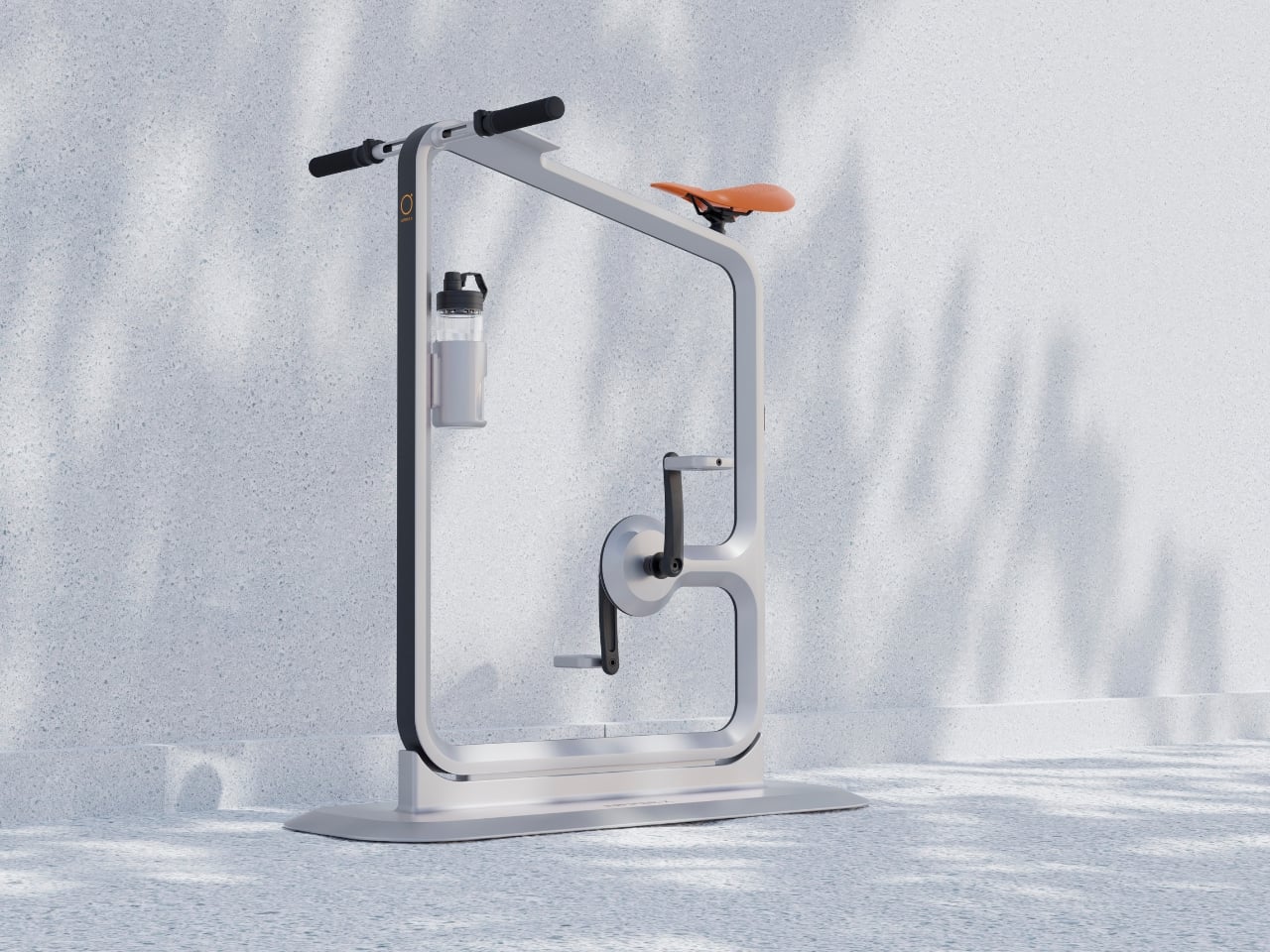
Jupiter X, even though it remains a concept design for now, seems to be turning a few heads. Created by Alexandr Zhukouski, Jupiter X is a modern minimalistic exercise bike envisioned to combine elegance, durability, and practicality for home or office use. With its sleek, compact form and intuitive features, this concept takes a fresh approach to how we think about workout devices and interior aesthetics.

Designer Name: Alexandr Zhukouski

The hallmark of Jupiter X is its sophisticated yet understated appearance. The frame boasts smooth, unbroken lines and a compact silhouette, making it a natural fit for a variety of modern interiors. Unlike many bulky exercise bikes that dominate a room, Jupiter X is designed to blend seamlessly into its surroundings. Whether placed in a living room, a home gym, or even a stylish office, this bike adds a touch of refinement rather than visual clutter.

Durability is also at the forefront of Jupiter X’s concept. The proposed use of high-quality materials ensures both longevity and a premium feel. The sturdy construction is intended to withstand daily use, while the minimalist design keeps maintenance straightforward and hassle-free. This attention to material choice not only supports the bike’s functionality but also enhances its visual appeal, promising a piece of equipment that looks as good as it performs.

Functionality is thoughtfully integrated into every aspect of the Jupiter X design. Intuitive controls are a key feature, allowing users to adjust resistance and settings without interrupting their workout flow. The clean interface means there are no unnecessary distractions, just smooth operation and an effective exercise experience. This user-friendly approach makes Jupiter X suitable for everyone, from fitness beginners to seasoned enthusiasts.

Compactness is another strength of this concept. With space often at a premium in modern homes and offices, the small footprint of Jupiter X makes it an attractive choice for those who want to stay fit without sacrificing valuable real estate. Its lightweight profile suggests easy repositioning, so users can move it as needed to accommodate changing layouts or routines.

Although Jupiter X is not yet available for purchase, its concept is most likely attractive to design fans and fitness lovers alike. If brought to market, Jupiter X could set a new standard for exercise equipment that merges high performance with minimalist elegance. As home-based and flexible fitness solutions continue to rise in popularity, concepts like Jupiter X highlight the growing demand for products that are both functional and aesthetically pleasing.

The post Concept exercise bike brings minimalist fitness to your space first appeared on Yanko Design.
Potrik concept reimagines urban mobility and personal delivery

Par : Ida Torres
2 octobre 2025 à 16:20

Have you ever experienced leaving the house with just one bag but throughout the day, you seem to be carrying more and more stuff? It’s probably okay if you’re moving around with a car but for those of us who commute, it can be a hassle. And as someone who can’t seem to just bring a small bag around, I do a lot of heavy lifting so to speak which can be a pain to my back and arms.

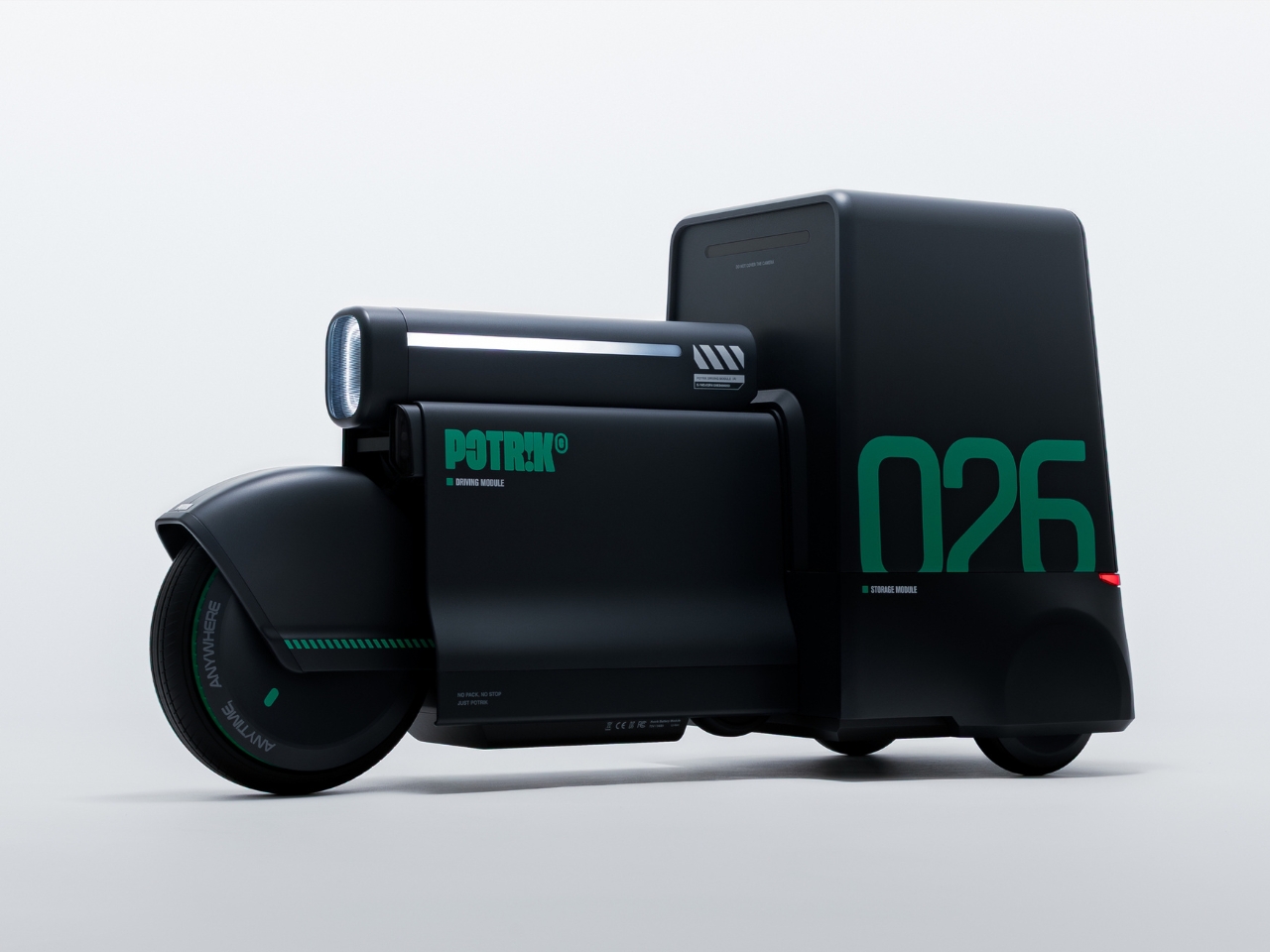
POTRIK is an innovative concept that reimagines how we move our belongings in the city. Designed by Yungwon Kang, Jueun Lee, Hyeonji Yang, Hyeongjoon Joo, and Hyogyeong Park, this concept tackles the hassle of carrying heavy shopping bags, making last-minute stops after errands, or picking up second-hand finds. With this modular sharing mobility system, you can enjoy lighter hands and more freedom every day, as POTRIK takes care of the heavy lifting for you.

Designers: Yungwon Kang, Jueun Lee, Hyeonji Yang, Hyeongjoon Joo, and Hyogyeong Park

At its core, POTRIK is a modular, detachable delivery mobility designed to move seamlessly between roads and sidewalks. The system is made up of two primary components: the Driving Module and the Storage Module. When you need to send something, a simple request through the POTRIK app sets everything in motion. The Driving Module, waiting at a city charging station, connects with the loaded Storage Module at your chosen departure point. Together, they form a single mobility unit that quickly transports your baggage along the road.

Upon reaching your destination, the Storage Module detaches and navigates sidewalks and building entrances autonomously. This means your items are delivered directly to you—no need to trek to a pick-up point or wait outside. With this system, quick and secure delivery is always within reach, whether you’re running errands or need to send something across town. POTRIK’s user experience is designed for simplicity and control.

You can track your belongings in real time through the POTRIK app, and with the 24H PASS, the system stays ready to respond at any hour, moving between strategically placed charging stations. When your delivery arrives, a tap with NFC opens the Storage Module so you can access your items instantly and securely.

The process is as easy as three steps: Send, Move, and Receive. Just set your pick-up and drop-off locations, and POTRIK handles the rest. This new delivery system is not just about moving things from place to place. It’s about making the process smarter and more personal. Whether you’re managing busy days packed with errands or need reliable help with heavy loads, POTRIK promises a lighter, more flexible way to get things done.

Though still a concept, POTRIK’s vision points to a new era of personalized, on-demand delivery. With POTRIK, your belongings arrive exactly where and when you need them, freeing you up to enjoy the city with lighter hands and a more liberated routine.

The post Potrik concept reimagines urban mobility and personal delivery first appeared on Yanko Design.
Loop chair concept brings together minimalism and comfort

Par : Ida Torres
2 octobre 2025 à 14:20

If you’re searching for a concept that blends artful design with functional vision, the LOOP Chair by Dntigrco Graphics is sure to catch your eye. Presented as a design concept on Behance, this striking chair explores the possibilities of seating for the modern home or office, combining minimalist style with ergonomic thinking.

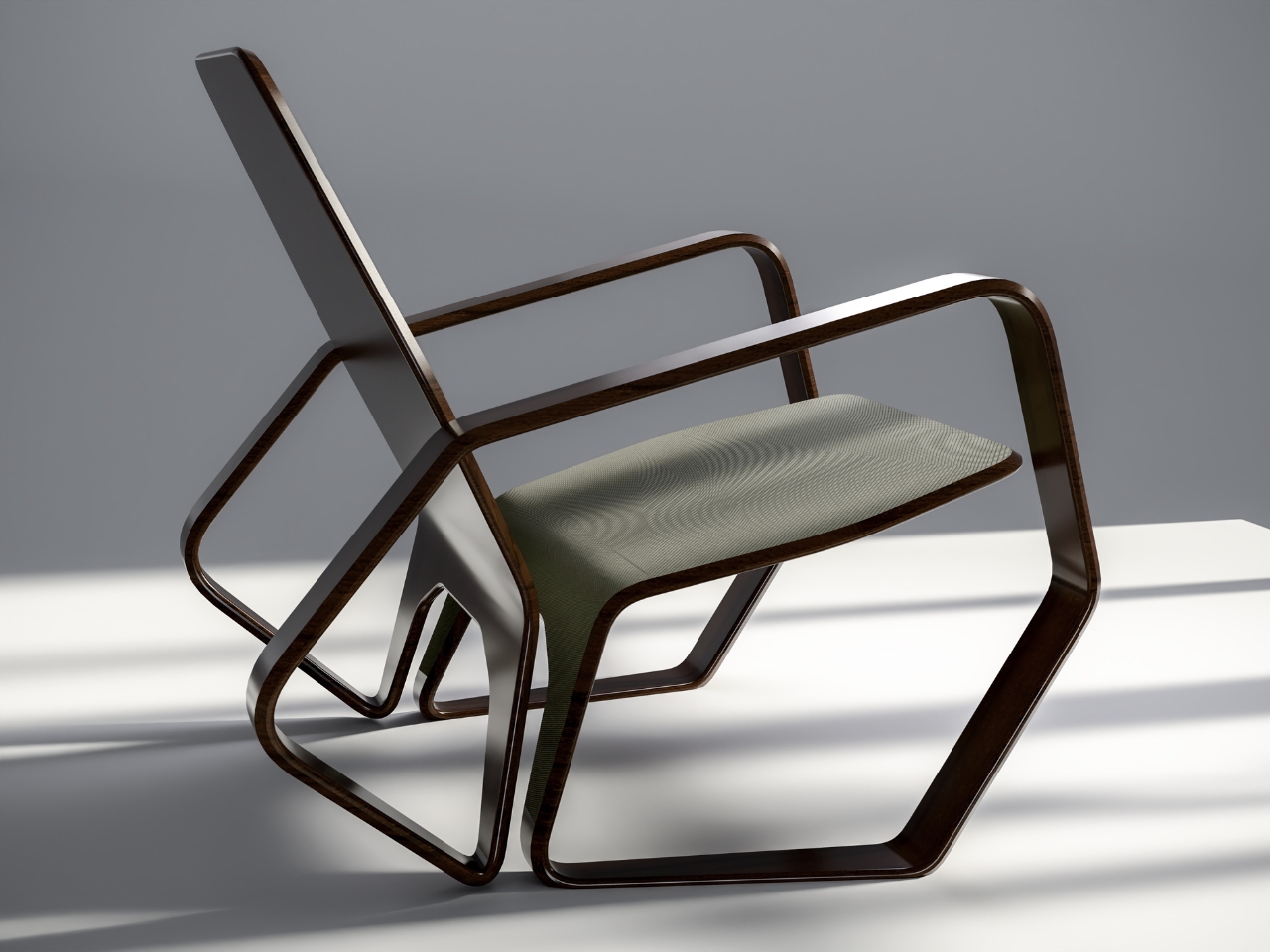
The LOOP Chair concept impresses with its bold, angular frame that feels both dynamic and airy. The designer set out to create a continuous, flowing form, imagining a seat that almost “loops” around the sitter. This unique vision means the chair isn’t just a functional object, but a sculptural experience. The proposed frame, envisioned in walnut wood veneer with options for ash, oak, or black-stained finishes, serves as both a structural support and an artistic centerpiece. Its geometry is the result of careful sketching and creative exploration, balancing soft curves for comfort with sharp angles for a modern, architectural feel.

Designer Name: Dntigrco Graphics

The LOOP Chair concept stands out for its ability to suggest motion even while stationary. Its sculptural frame creates an intriguing play of light and shadow, making it a visual highlight in any room. Whether imagined in a contemporary office, a stylish lounge, or a refined living space, the chair’s form is designed to spark conversation and admiration.

Comfort is central to the chair’s conceptual design. The seat and backrest are imagined with high-density foam, wrapped in either premium fabric or leather upholstery available in a range of colors. This approach ensures that the concept delivers not only visual appeal but also a vision for supportive comfort from every angle. The upholstery options allow for further customization, so the chair could be tailored to complement a variety of interior styles.

Every aspect of the LOOP Chair has been thoughtfully detailed in its concept stage. The base is pictured as CNC-milled wood with a matte finish for durability and elegance, while anti-slip rubber pads are integrated into the feet for floor protection and stability. These features ensure that, if realized, the LOOP Chair would be as practical as it is beautiful.

Ultimately, the LOOP Chair is more than just an idea for furniture. It’s a harmonious exploration of minimalist design, ergonomic comfort, and customizable elegance. For design enthusiasts, collectors, or anyone interested in the future of interior design, it offers a fresh perspective on what seating can be.

The post Loop chair concept brings together minimalism and comfort first appeared on Yanko Design.
Luminate Lily helps reduce chemotherapy-induced hair loss

Par : Ida Torres
16 septembre 2025 à 10:07

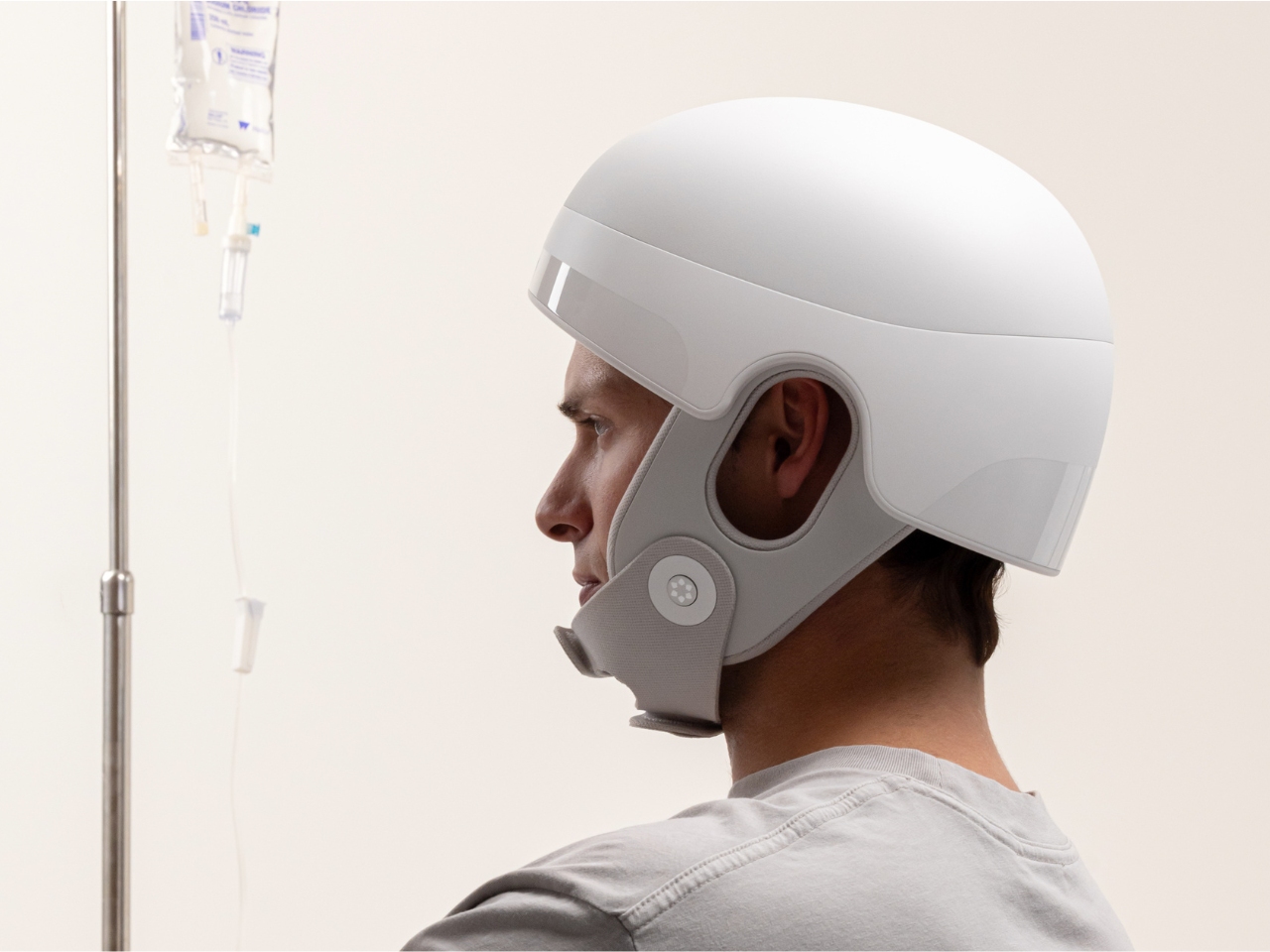
Luminate, a healthcare company focused on at‑home solutions for cancer patients, has introduced Lily. It’s a wearable device that uses gentle scalp compression to lessen hair loss caused by chemotherapy. The technology is built into a discreet, helmet‑like structure that can be worn at home or in a clinic, offering patients a sense of control over one of the most emotionally challenging side effects of treatment. Research shows that fear of losing hair can discourage some individuals from starting or completing therapy, making Lily’s approach both medically and psychologically valuable.

The design work was commissioned to BLOND, a studio known for blending functionality with aesthetic appeal. Their task went beyond polishing the device’s appearance; they also created a soft, recyclable PET‑felt carry case and refined the user experience to feel intuitive and dignified. The result is a product that looks more like a lifestyle accessory than a piece of clinical equipment, helping users feel comfortable wearing it in public and even proud to own it.

Designer: BLOND Ltd

Key to Lily’s success is its inclusive design. The helmet is lightweight and softly contoured to accommodate a wide variety of head shapes. Adjustable Velcro straps, which magnetically reattach, make fitting quick and easy, while a removable antimicrobial chin strap ensures hygiene. A subtle capacitive touch interface lets users start or stop treatment without fiddling with buttons, and discreet orientation markers guide correct placement. All of these features were tested through multiple prototypes, each iteration improving comfort, fit, and usability while meeting strict regulatory standards for medical devices.

Beyond the hardware, Lily’s carry case reflects the same thoughtful approach. Made from soft, recycled PET felt, the case protects the device and adds a touch of elegance, reinforcing the idea that medical tools can be both functional and beautiful. This attention to material sensitivity aligns with Luminate’s broader mission to reduce side effects through at‑home solutions that fit seamlessly into daily life. By drawing inspiration from everyday objects, the team ensured Lily feels less clinical and more personal, turning a therapeutic aid into an empowering accessory.

For patients, Lily offers more than a reduction in hair loss; it provides a psychological boost that can improve adherence to chemotherapy regimens. For healthcare providers, the device adds a non‑invasive option that can be prescribed alongside standard treatments, expanding the toolkit for managing side effects. As the healthcare industry continues to prioritize patient‑centered care, innovations like Lily demonstrate how design and technology can work together to make cancer treatment less daunting.

The Luminate Lily device combines cutting‑edge medical engineering with thoughtful, lifestyle‑led design. Its lightweight, discreet form, user‑friendly interface, and elegant carry case create a holistic solution that addresses both the physical and emotional challenges of chemotherapy‑induced hair loss, helping patients feel more in control and confident throughout their treatment journey.

The post Luminate Lily helps reduce chemotherapy-induced hair loss first appeared on Yanko Design.
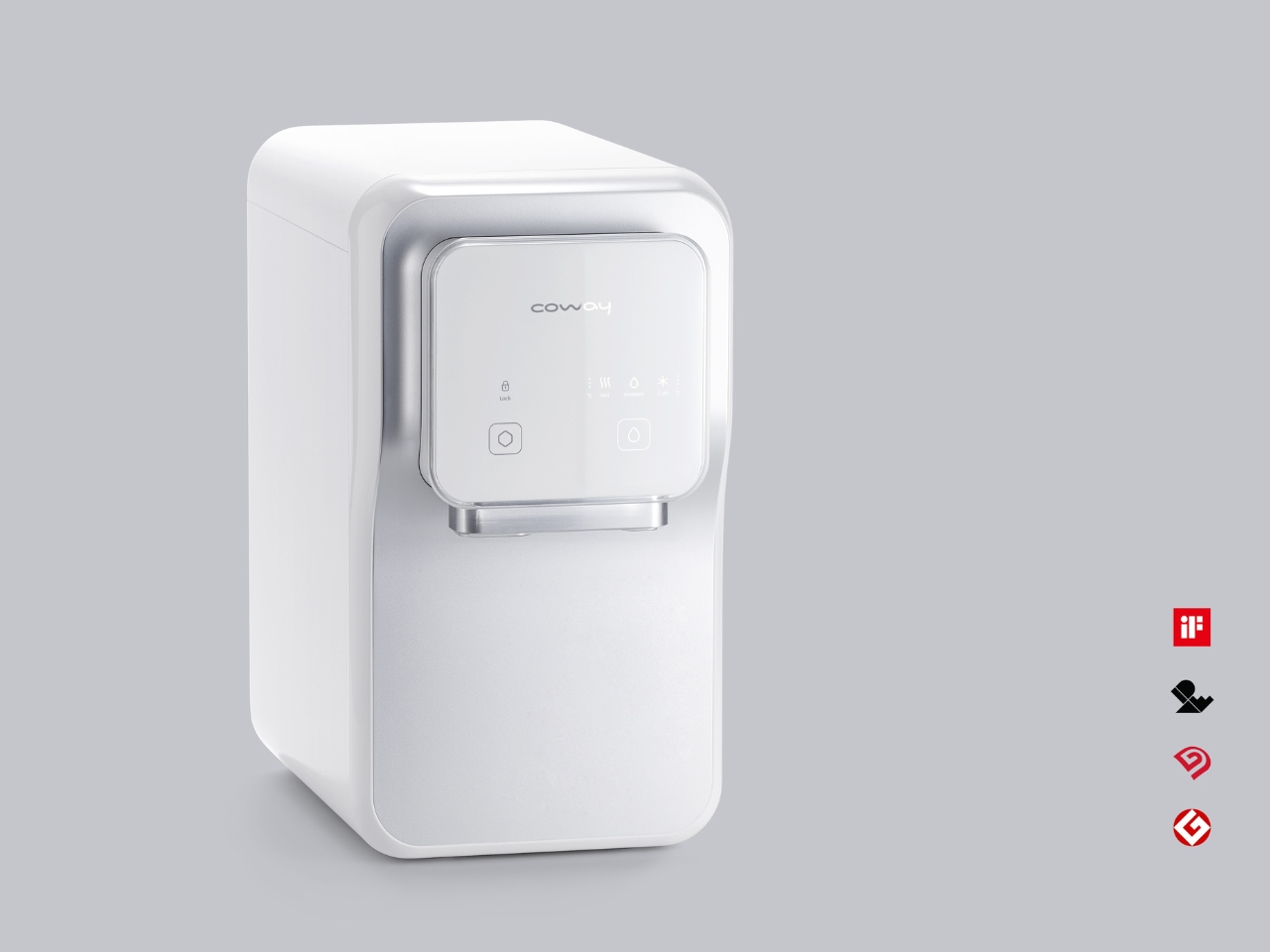
Water purifier and ice maker in one is space-saving and single-touch convenient

Par : Ida Torres
11 septembre 2025 à 17:00

VLND has introduced a sleek appliance that combines two kitchen staples into one compact unit: a water purifier and an ice maker. Designed for modern homes where countertop space is at a premium, the device delivers hot, cold, and filtered water along with clear, clean ice with just a single press of a button. Its streamlined appearance and intuitive controls make it a practical addition for anyone who wants reliable hydration and ice without cluttering the kitchen.

The first thing that catches the eye is the minimalist front panel. A square box rests on a smooth surface, echoing the image of an ice cube floating on gently rippled water. This visual cue is more than decorative; it reinforces the product’s core promise of pure water and pristine ice. The divided face of the unit creates an optical illusion that the machine is smaller than it actually is, helping it blend seamlessly into tight spaces such as narrow countertops, pantry shelves, or even office break rooms.

Designer: VLND Studio

Inside the compact shell lies a sophisticated filtration and ice‑making system. Despite the advanced technology, VLND has stripped away any unnecessary components, resulting in a clean layout with only a few essential buttons. Each button is distinctly labeled and produces a unique audible click when pressed, allowing users to confirm their selection without looking. This sound‑based feedback is especially useful in busy environments where a quick glance at the panel might be inconvenient.

Operation is straightforward. A single touch dispenses hot water for tea or coffee, cold water for instant drinks, and filtered water for cooking or drinking straight from the tap. For ice, the same touch releases a batch of crystal‑clear cubes that have been formed using purified water, ensuring that the ice is free from off‑flavors or impurities. The system’s temperature controls are calibrated to work efficiently year‑round, providing hot water in winter and refreshing cold water or ice during the summer months.

Maintenance has also been simplified. The removable water tank and ice storage compartment can be taken out for cleaning without the need for specialized tools. The filter replacement indicator alerts users when it’s time to change the cartridge, preventing a drop in water quality and extending the life of the appliance. Because the unit is designed to minimize moving parts, it operates quietly, making it suitable for open‑plan living spaces or office environments where noise can be a distraction.

From a design perspective, VLND’s approach aligns with current trends that favor clean lines, multifunctionality, and sustainability. By merging two essential kitchen appliances, the company reduces the need for separate devices, cutting down on both electricity consumption and countertop clutter. The single‑touch interface encourages users to stay hydrated and enjoy ice without the hassle of juggling multiple machines.

The post Water purifier and ice maker in one is space-saving and single-touch convenient first appeared on Yanko Design.

❌
❌