Anthropic says Claude helped migrate its Messages API from Python to Rust, cutting CPU use by 70%. But getting the AI-generated code ready for production took months of testing and human review.
The post Anthropic Says Claude Helped Rebuild Its API in Rust, Cutting CPU Use by 70% appeared first on TechRepublic.
Anthropic says Claude helped migrate its Messages API from Python to Rust, cutting CPU use by 70%. But getting the AI-generated code ready for production took months of testing and human review.
Batch tools, live Excel takeoffs, and drawing comparison help AEC teams get through revisions faster in Revu.
The post Bluebeam Revu Complete Takes the Busywork Out of Drawing Revisions appeared first on TechRepublic.
The European Commission has approved more than 20 semiconductor state-aid decisions supporting over €33 billion in public and private investment. Here's where the funding is going and what it means for chip production.
The post EU Chips Act Unlocks €33B in Semiconductor Investments: What’s Being Built? appeared first on TechRepublic.
The European Commission has approved more than 20 semiconductor state-aid decisions supporting over €33 billion in public and private investment. Here's where the funding is going and what it means for chip production.
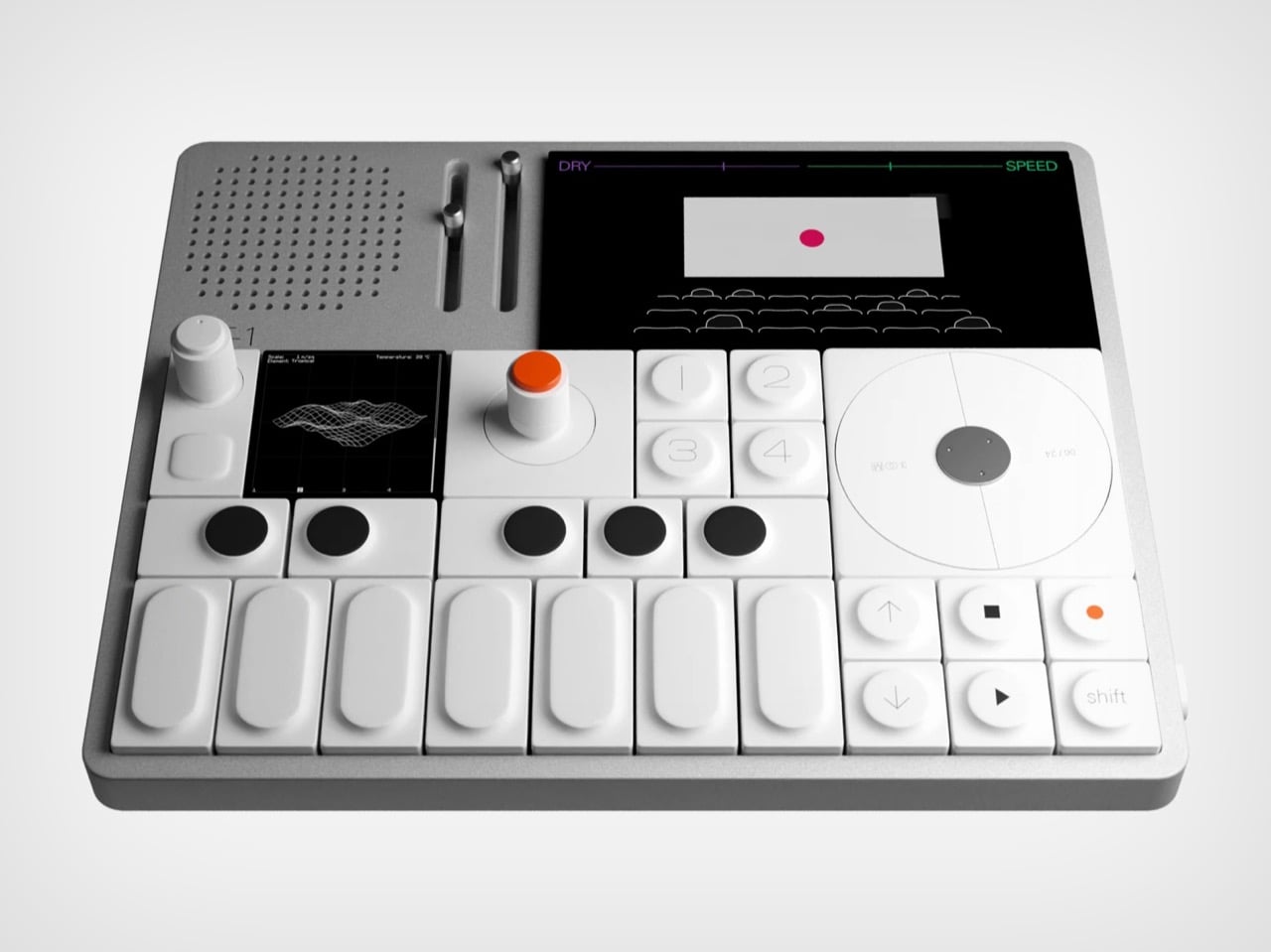
Jesper Kouthoofd said in a recent interview that Teenage Engineering is done making synths, which is a bit like Lay’s announcing it’s done with potatoes. Naturally, the internet started guessing what comes next. Designer Quentin Stamenov already has an answer, and it involves popcorn. His ACT-1 is a fan-made Teenage Engineering concept built for people who make sound for movies. The design puts controls for surround mixing, film editing, and environment design onto one slab that looks like it w
Jesper Kouthoofd said in a recent interview that Teenage Engineering is done making synths, which is a bit like Lay’s announcing it’s done with potatoes. Naturally, the internet started guessing what comes next. Designer Quentin Stamenov already has an answer, and it involves popcorn. His ACT-1 is a fan-made Teenage Engineering concept built for people who make sound for movies. The design puts controls for surround mixing, film editing, and environment design onto one slab that looks like it walked straight out of the Stockholm studio. Honestly, I’d buy a ticket just to watch someone use it.
What if a Dolby Atmos mixing stage fit in your backpack? ACT-1’s surround interface shows a tiny cinema, with a little pink dot representing a sound you could move around the room. An editing mode includes chapters, scenes, timecode, and two cartoon film reels for good measure. A third proposes an acoustic landscape, letting you pick a desert and crank the temperature to 42 degrees Celsius, which is roughly 108 degrees Fahrenheit and also my apartment in July. Wrapped around all that are white keys, an orange knob, and a jog wheel that looks borrowed from the TP-7.
Designer: Quentin Stamenov
Dolby Atmos, Shrunk Down to a Pink Dot
Big-budget movie sound runs on Dolby Atmos, which can treat sounds as objects with coordinates instead of feeds assigned to particular speakers. A cinema Atmos mix can carry up to 128 tracks, and each theater’s processor decides in real time which of its speakers plays what. Mixers usually steer all this through plugins in Pro Tools or a console that costs more than my car. ACT-1 boils the idea down to a top-down auditorium on its main screen and a single magenta dot for positioning sound between the rows. Two physical faders beside the speaker grille look tailor-made for the DRY and SPEED values running across the top of that screen.
Steenbeck flatbed tables, built in Hamburg since the 1950s, ran picture and sound across flat motorized plates and stayed the editing default until digital took over in the 1990s. ACT-1’s editing table mode borrows their name and nods to them with two reel icons, chapter and scene markers, a running timecode, and color-coded lanes for each audio layer. Topology is the nerdiest mode, showing a wireframe terrain at roughly 16 feet (5 meters) per grid square, with a desert setting and a temperature readout. There’s a physical basis for that last detail: sound travels faster through hot air, so temperature could matter in an acoustic simulation. Whether the concept would model that behavior is another question.
OP-1 Body, TP-7 Soul, and One Very Orange Knob
Physically, ACT-1 borrows the OP-1 field’s look, a light aluminum tray with white keys dropped into it. A perforated speaker grille owns the top left, surrounded by two faders and two knobs, and only one knob gets the orange cap, because TE always lets a single control hog the spotlight. Long pill-shaped keys run across the lower half, topped in places with black dome buttons. The star sits bottom right, a big circular platter that recalls the Steenbeck’s plates and the reel on TE’s $1,499 TP-7 recorder. Even the transport keys use TE’s lowercase “shift” label, and the full render looks like a leaked product page.
Teenage Engineering has built cinema hardware before. In 2024 it designed B-1, the console behind Gary Hustwit’s generative documentary Eno, which assembled a fresh cut at every live screening while its makers tweaked the audio for each theater. Stamenov staged ACT-1 in a launch studio straight out of that world, a white room lined with rounded acoustic panels, four speakers, and a big screen. A portable film-sound rig from TE’s real field system means a TP-7, a $1,999 OP-1 field, and a TX-6 mixer, and none of them speak Atmos. If Kouthoofd really is moving past synths, a tool for the people who make movies sound enormous seems like a pretty great next act.
Apple faces a French trial over iPhone repair restrictions affecting 24 models, putting its parts-pairing practices under legal scrutiny.
The post Apple’s iPhone Repair Restrictions Head to Trial in France, With 24 Models at Issue appeared first on TechRepublic.
Ring introduces flying and wheeled security cameras for homes and businesses. Compare US prices, shipping dates, subscriptions, privacy controls, and limits.
The post Ring Introduces Drone and Rover Cameras for Homes and Businesses appeared first on TechRepublic.
Ring introduces flying and wheeled security cameras for homes and businesses. Compare US prices, shipping dates, subscriptions, privacy controls, and limits.
This secure storage platform uses open source code, zero-knowledge file systems, and end-to-end encryption to keep your online data truly private.
The post Get Secure Cloud Storage on a 2TB Lifetime Plan with Internxt for $90 appeared first on TechRepublic.
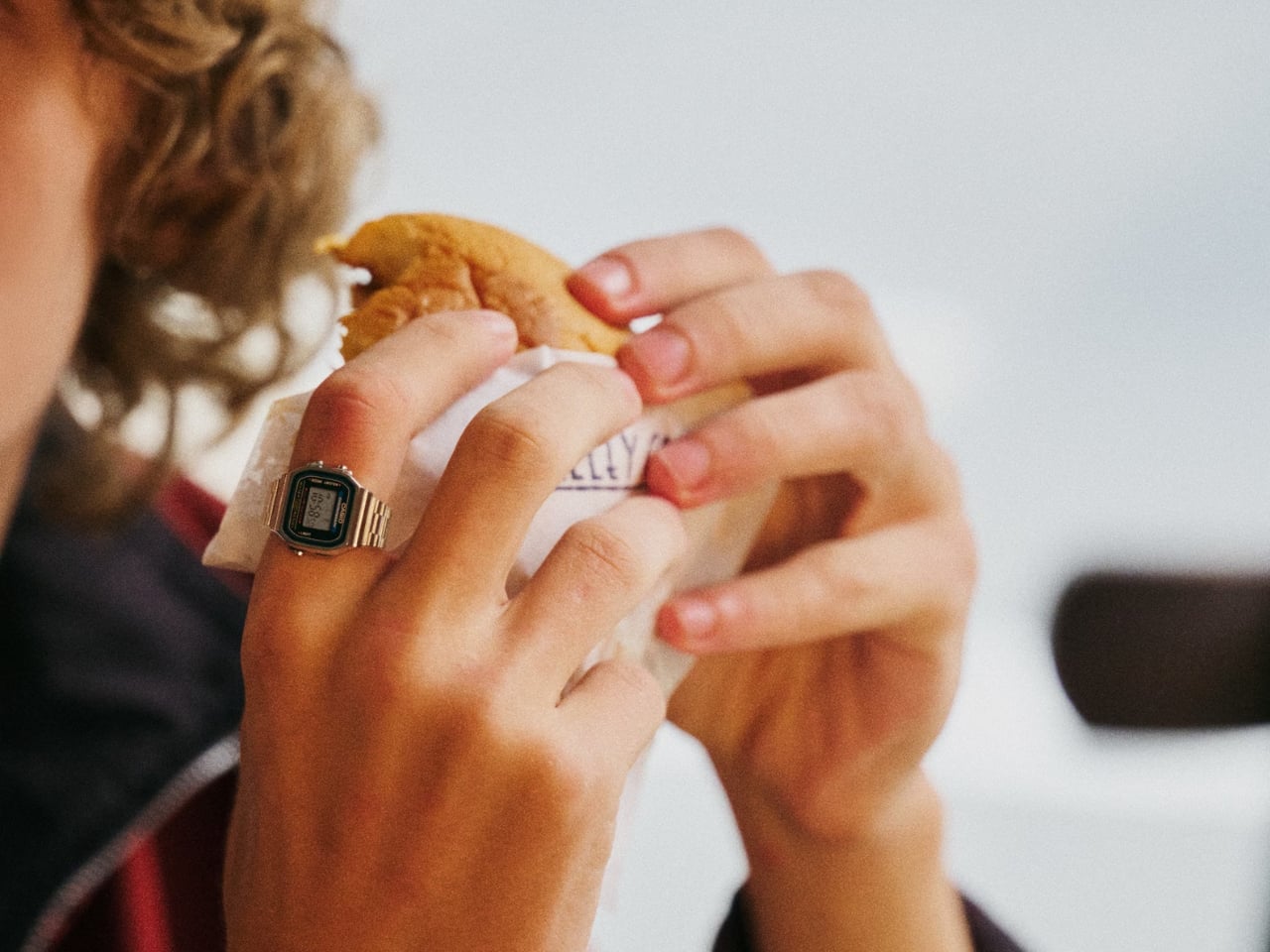
I’m so used to wearing a watch, whether as a health tracker or just a way to tell time without looking at my phone. But sometimes I wish I could wear something that isn’t on my wrist. There are times I’d rather wear a bracelet instead or just keep my wrist free and unencumbered. There are ring health trackers available now, but I’d still want a watch or something that resembles one. If you’re a fan of the Casio A168, you’ll be happy to know that Casio has made a version for your finger.
The Cas
I’m so used to wearing a watch, whether as a health tracker or just a way to tell time without looking at my phone. But sometimes I wish I could wear something that isn’t on my wrist. There are times I’d rather wear a bracelet instead or just keep my wrist free and unencumbered. There are ring health trackers available now, but I’d still want a watch or something that resembles one. If you’re a fan of the Casio A168, you’ll be happy to know that Casio has made a version for your finger.
The Casio CRW-002 Ring Watch is a finger-scale version of the iconic A168, so you can wear it as a piece of jewelry while still keeping many of the original watch’s features. It’s an alternative for those who prefer something smaller but still want familiar watch functions, especially telling time.
Designer: Casio
Casio used metal injection molding, or MIM, to reproduce the intricate case and band shapes in stainless steel. The glossy case contrasts with the matte-finished band, carrying over details that make it recognizable as a tiny Casio. I like that the design keeps the look of a watch bracelet rather than turning the display into a plain metal ring.
The electronics are a separate part of that shrinking process. Casio says high-density mounting technology and a miniature battery make the module approximately one-tenth the size of a standard watch module. It’s still able to retain three buttons and a six-digit display that shows hours, minutes, and seconds. You also get dual time, an automatic calendar, a 12/24-hour format, and a 1/100-second stopwatch.
The case measures 25.2 × 18.2 × 6.2 mm, and the ring weighs 15 grams. Those numbers give you an idea of the scale, although they don’t tell us how comfortable it will be throughout the day. I’d want to know how the case feels against neighboring fingers and how easy those tiny buttons are to use.
There’s also an LED backlight and a Time Flash feature that produces a subtle pulse at a preset time or at the top of every hour. Casio describes Time Flash as entertainment rather than a dependable alert, and the light may be difficult to see in bright conditions. It’s a playful detail, but I wouldn’t rely on it for reminders.
You don’t lose water resistance entirely, but its limits matter. Casio rates it for daily-use water resistance, while the manual specifically excludes handwashing, swimming, and water-related work. You’ll need to remove it before washing your hands or using soap and detergent. That might seem like a small inconvenience for something like this, but it’s worth thinking about if you want a ring you can put on and forget about.
Fit is another thing to check before buying. The ring comes in a US size 10.5, with a 20 mm inner diameter. Two included spacers reduce that diameter to 19 mm or 18 mm. The bracelet-like detailing doesn’t mean you can adjust it like a wristwatch, so those three fit options won’t necessarily work for everyone. That’s something I’d want to try in person rather than guess from measurements.
Casio estimates approximately two years of battery life, so there’s no regular charging routine. The battery is replaceable, although the manual says replacement requires special tools and should be handled by the original retailer or an authorized Casio service center. For the US, Casio announced November 2026 availability, with the silver version priced at $135 and the gold-tone version at $155.
For me, the appeal is still being able to leave my wrist free without giving up a watch face. I’d need to get the fit right and decide whether taking it off at the sink would become annoying. But I do like the idea of choosing a bracelet for my wrist and letting a miniature Casio handle the timekeeping on my finger.
Google Health now brings blood pressure readings and glucose trends together, with new charts showing how meals, sleep, and exercise fit into the picture.
The post Google Health Adds Blood Pressure Logging — and a New Way to Track Glucose appeared first on TechRepublic.
Google Health now brings blood pressure readings and glucose trends together, with new charts showing how meals, sleep, and exercise fit into the picture.
Galaxy Ring owners in the US can now screen for sleep apnea risk, but eligibility depends on their phone, software, location, and medical history.
The post Samsung Galaxy Ring Gets FDA-Cleared Sleep Apnea Screening — But Not for Everyone appeared first on TechRepublic.
Aina’s $399 AI ring lets users approve tasks with a thumb flick. Check iPhone and Mac compatibility, shipping plans, and key considerations for IT teams.
The post Aina’s $399 AI Ring Turns Your Thumb Into an AI Approval Button appeared first on TechRepublic.
Aina’s $399 AI ring lets users approve tasks with a thumb flick. Check iPhone and Mac compatibility, shipping plans, and key considerations for IT teams.
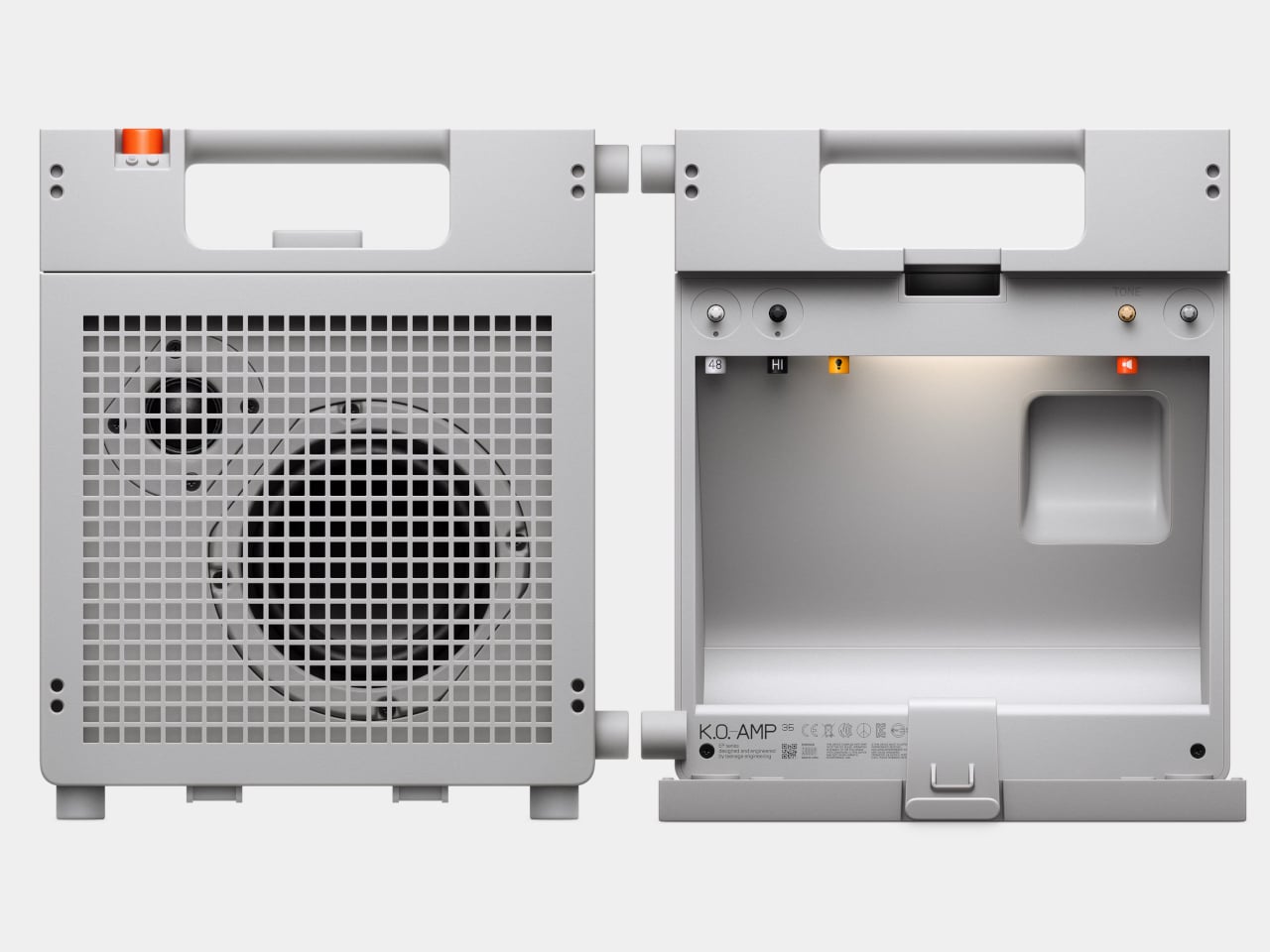
The back of Teenage Engineering’s EP-35 opens to reveal a compartment for cables and accessories. It’s a wonderfully unglamorous feature to put on a music gadget. An amp can look perfectly composed in a product photo, but taking it anywhere means figuring out where the supporting cast goes. Giving those loose pieces a home inside the speaker feels like an acknowledgment of how people actually use their equipment.
That practical streak extends beyond storage. Listed for sale at $399, the EP-35 c
The back of Teenage Engineering’s EP-35 opens to reveal a compartment for cables and accessories. It’s a wonderfully unglamorous feature to put on a music gadget. An amp can look perfectly composed in a product photo, but taking it anywhere means figuring out where the supporting cast goes. Giving those loose pieces a home inside the speaker feels like an acknowledgment of how people actually use their equipment.
That practical streak extends beyond storage. Listed for sale at $399, the EP-35 combines a portable speaker, an instrument amplifier, and a USB audio interface. It accepts guitar, microphone, line-level, Bluetooth, and USB audio, with multiple sources able to play together. The problem it addresses is straightforward: playing guitar over a backing track, or adding vocals, shouldn’t require assembling a small equipment department. Here, those connections meet in one box.
Visually, the EP-35 has the charm of equipment that might belong in a very stylish school science lab. Its gray body, square grille, integrated handle, and orange accents are deliberately matter-of-fact. I like that the speaker drivers remain visible behind the grid. They give the front a slightly awkward, almost characterful expression. Nothing about the proportions suggests an object desperate to disappear into your decor, which is part of its appeal.
The controls make a similar impression. There are physical dials for choosing effects and adjusting their intensity, with eight presets each for guitar and microphone. That’s an approachable arrangement: select a sound, turn a control, hear what changes. I’d rather see that direct relationship on something intended for casual playing than a screen full of options. The microphone effects even include presets called “robo choir” and “frog,” which gives you a fair idea of the intended mood.
The USB audio interface is less visually entertaining but potentially more useful. Connect the EP-35 to a computer and it can serve as a recording interface, giving the same object a role at a desk after it comes home. That continuity makes sense to me. A portable device earns its shelf space more easily when it doesn’t become redundant the moment you’re near a power outlet and a laptop.
Inside the storage compartment, Teenage Engineering has also included a small camp light. It can illuminate the compartment automatically when opened, stay on, or react to incoming audio in disco mode. Tilting the speaker backward makes those LEDs display the battery level. Some of this is useful, some is cheerfully unnecessary. I’m happy with that balance. Checking a battery through a small physical gesture is a more memorable interaction than another tiny percentage readout.
Portability does need a little perspective, though. At about seven pounds, the EP-35 is something you carry by its handle, not casually toss into a small shoulder bag. Teenage Engineering rates battery life at 12 hours with the volume set to five, so that figure shouldn’t be treated as an all-day guarantee at any loudness. It’s also splash-resistant rather than waterproof. Those distinctions matter if the appealing camp light has you mentally packing it for a weekend outdoors.
There’s room to expand the setup, too. Two EP-35s can play Bluetooth audio in stereo through broadcast mode. Teenage Engineering’s instructions let you assign left and right channels by tilting each speaker before starting that mode. Connected instruments take a different route: linking their sound between speakers requires a line-out-to-line-in cable. That’s worth understanding before imagining a completely wireless mini stage. The wireless convenience applies specifically to Bluetooth playback.
For me, the $399 price makes the most sense if those musical connections will get regular use. Someone who only wants background listening would be paying for considerable capability they might never touch. Sound quality still needs a listening test; clever packaging can’t settle that question. But I appreciate the attention paid to what happens between sessions. The music stops, the cables come out, and the EP-35 gives you somewhere to put them. That’s a modest design decision with a very recognizable payoff.
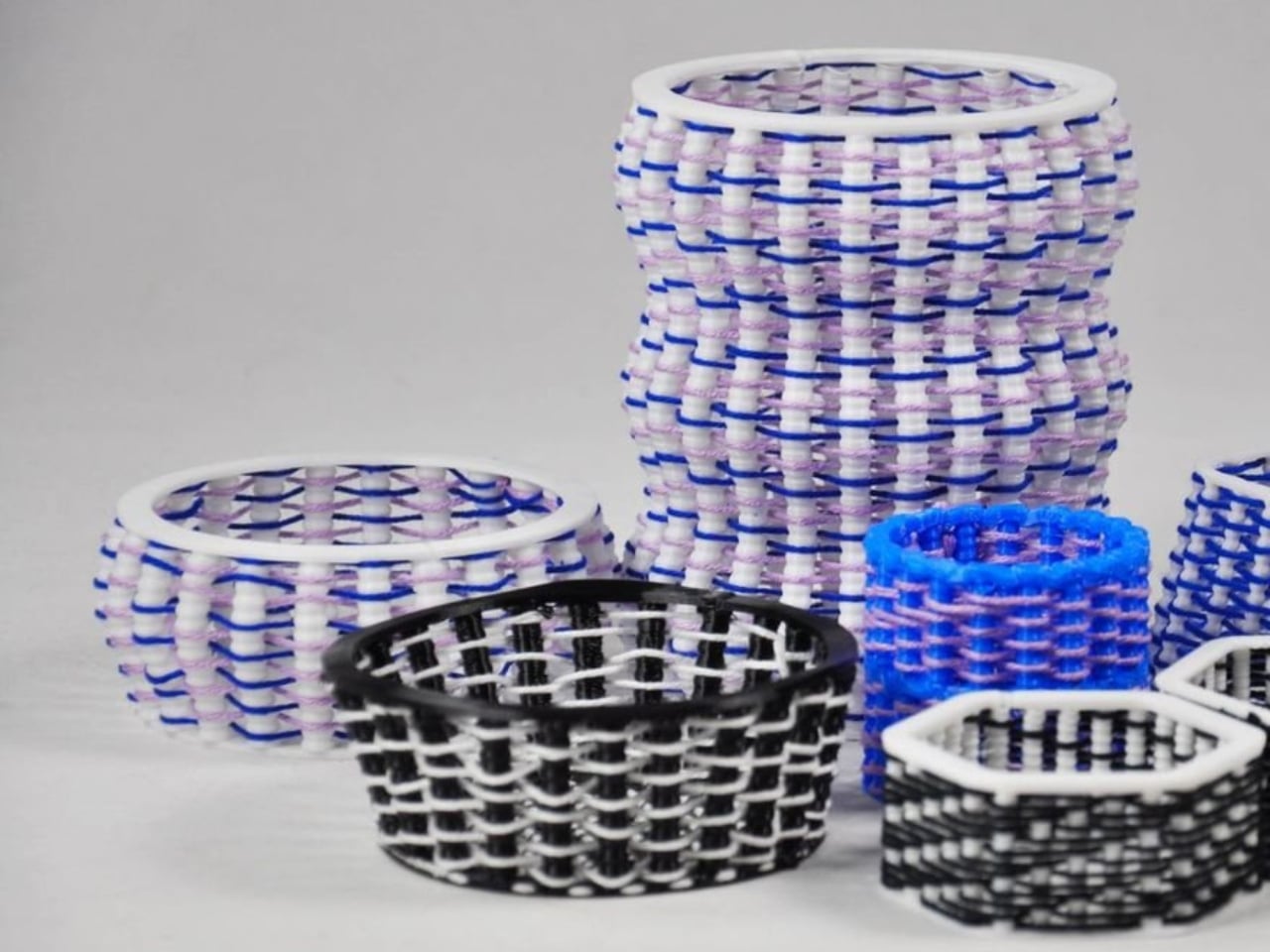
Blue and lilac yarn snakes through white plastic ribs in one of FilaLoom’s samples, giving the object a basketlike appearance that makes me want to pick it up. The appeal is easy to understand: intricate geometry only gets you so far when you want an object with a textile character. FilaLoom brings actual yarn into the process, letting the fibers remain visibly, unapologetically themselves.
Developed by industrial and computational designer Joram de Haas for his master’s thesis in Integrated Pr
Blue and lilac yarn snakes through white plastic ribs in one of FilaLoom’s samples, giving the object a basketlike appearance that makes me want to pick it up. The appeal is easy to understand: intricate geometry only gets you so far when you want an object with a textile character. FilaLoom brings actual yarn into the process, letting the fibers remain visibly, unapologetically themselves.
Developed by industrial and computational designer Joram de Haas for his master’s thesis in Integrated Product Design at TU Delft, FilaLoom lets a desktop 3D printer automatically weave yarn into printed objects. It addresses a practical fabrication problem: combining printed structures with thread without making yarn placement a separate manual task. It’s a working research project, with DIY files available, rather than a finished consumer accessory.
Designer: Joram de Haas
The prototype uses a Bambu Lab A1 fitted with a yarn-depositing tool and a parking station. The printer builds plastic anchor points, picks up the tool, and guides yarn between them. It then parks the tool and resumes printing, securing the yarn where needed. That alternating sequence allows the structure and its textile elements to develop together, rather than requiring someone to thread a completed plastic skeleton afterward.
I like the restraint in the mechanism. FilaLoom uses the printer’s existing movement system, with no additional electronics. A mechanical coupling handles tool changes, while a spring-loaded spool provides adjustable yarn tension. The machine already knows how to move precisely; this attachment gives that movement another useful job.
Visually, the blue-and-lilac sample is a persuasive introduction. Its white vertical elements remain clearly legible, while the colored yarn establishes a contrasting horizontal rhythm. Neither material disappears into the other. To my eye, that makes the construction more interesting than a uniformly textured surface. You can follow the relationship between the ribs and the thread, which gives the pattern a purpose beyond decoration. It looks assembled through its own making.
The thesis also explores soft yarn textures and cable-driven interactions, extending the idea beyond basketlike objects. That range matters because a recognizable woven pattern could easily become the project’s entire identity. I’d be more interested in seeing designers use the process to decide where an object should bend, where it needs structure, or where a different surface character would be welcome. Those are design questions worth experimenting with.
The DIY format gives curious makers somewhere to start. De Haas’s GitHub repository provides printable component files and Grasshopper scripts for generating compatible GCode, the instructions that direct the printer’s movements. Still, that’s a more involved proposition than downloading a decorative planter file and pressing print. For a general audience, the useful distinction is that FilaLoom is an invitation to experiment with a fabrication method, not a ready-made home gadget.
There are physical compromises, too. The researchers report that the attachment reduces the A1’s usable combined printing-and-weaving volume to 54% of its original build volume. Yarn tension also needs care: too much can deform a print or pull it off the build plate. These constraints make the prototype more convincing to me, because its expanded capabilities come with clearly described boundaries.
I wouldn’t judge this project by how quickly it might replace a familiar manufacturing process. Its more immediate value is giving designers a way to test combinations they might otherwise have to assemble by hand. Even a small sample can help answer whether a pattern deserves to become a larger object. That feels like an appropriately useful ambition for a research tool.
For me, the strongest outcome would be an object whose form genuinely needs both materials. The yarn shouldn’t have to justify itself as a decorative flourish, and the plastic shouldn’t merely serve as a bulky substitute for thread. FilaLoom makes that relationship available for exploration. I’d happily trade another perfectly smooth printed vase for an experiment that leaves a little more to discover under your fingertips.
Send unlimited files with real-time tracking, custom branding, and GDPR-compliant infrastructure — no fees.
The post Transfr Pro Replaces WeTransfer With a Single $64 Payment appeared first on TechRepublic.
REA
, pour "Reverse Engineer Anything", c'est un serveur MCP qui buzze ces derniers jours et qui permet de connecter votre agent IA (Claude Code, Codex, Cursor...) sur Ghidra, Hopper ou IDA, et sur des analyseurs pour les applis Electron, .NET ou les sites web.
Vous repérez ainsi une fonction qui vous plaît dans une appli, puis l'agent la décortique sans le code source et vous en code une version toute fraiche...
Tiens ça me rappelle quelque chose...
Comme je voula
REA
, pour "Reverse Engineer Anything", c'est un serveur MCP qui buzze ces derniers jours et qui permet de connecter votre agent IA (Claude Code, Codex, Cursor...) sur Ghidra, Hopper ou IDA, et sur des analyseurs pour les applis Electron, .NET ou les sites web.
Vous repérez ainsi une fonction qui vous plaît dans une appli, puis l'agent la décortique sans le code source et vous en code une version toute fraiche...
Tiens ça me rappelle quelque chose...
Comme je voulais voir ce que ça donnait, je me suis donc monté un petit banc d'essai à l'arrache sur mon ordi avec Claude Code en Opus 5.5, REA 6.4.0 comme seul serveur MCP et Ghidra comme moteur.
Mes tests se découpent donc en 4 exercices : un keygen, un patch, une fonction d'appli à recréer ainsi que des codes de triche. Pour les deux premiers, j'ai bien sûr compilé des programmes maison avec un faux système de licence afin de ne pas sombrer dans l'illégalité en codant un vrai keygen ou un crack (et au passage me faire delete mon compte Anthropic ^^).
rea doctor valide Ghidra 12.1.4
Mon crackme, c'est donc une fausse app nommée "PixelNote Pro" qui réclame un nom d'utilisateur et une clé d'activation, compilé pour Mac ARM.
Une fois que je lui ai dis ce que je voulais faire, l'agent a donc ouvert le binaire dans Ghidra via REA, lu le pseudo-code, l'a recoupé avec l'assembleur là où le décompilateur écrivait une rotation de bits sous une forme peu lisible, et m'a pondu un keygen en Python en 2 minutes chrono pour un coût API de Claude 50 centimes. J'ai ensuite fait tourner son générateur sur 479 noms tirés au hasard et le binaire les a tous acceptés.
Le crackme ouvert à la main dans Ghidra : la fonction entry et son pseudo-code
La boucle de calcul de la clé, dans le pseudo-code que REA sert à l'agent
Le patch, c'est le plus bluffant j'ai trouvé. Le petit utilitaire que je me suis fait a pour mission de compter les lignes et les mots d'un fichier texte. C'est très basique. Et j'ai donc voulu faire un patch pour qu'il affiche aussi les caractères. Comme REA, avec Ghidra, ne touche pas aux octets de l'exécutable, l'agent a donc dû faire le reste à la main... il a logé ses instructions dans une zone remplie de zéros de la partie exécutable, détourné trois instructions d'origine vers elles, puis re-signé le binaire pour que macOS le lance :
Le compteur d'origine, sa version patchée par l'agent, puis le keygen du crackme accepté par le binaire
Pour mon 3ème exercice, je me suis dit que j'allais cloner la fonction d'
Amphetamine
qui garde mon Mac éveillé tant qu'une appli donnée est ouverte. Via Ghidra, malheureusement REA a refusé le binaire universel Intel et ARM d'Amphetamine, alors l'agent en a extrait lui-même la partie ARM. Il a alors trouvé qu'Amphetamine posait une assertion d'énergie du système et surveillait la liste des applis lancées. Et magie de l'IA, il a ensuite codé en Swift un petit outil qui fait tout pareil. J'ai testé avec la Calculatrice, ça marche, à condition de lui donner le nom de l'appli dans la langue du système, ou son identifiant.
pmset ne montre l'assertion d'éveil que pendant que la Calculatrice est ouverte
Et le dernier, c'est Wolfenstein 3D (j'ai pris la version shareware 1.4) dont l'exécutable DOS est compressé. L'agent a donc écrit son propre décompresseur, puis retrouvé dans le code le raccourci clavier pour tricher (c'est M+L+I qui met santé à 100, munitions, clés, mitrailleuse... et score remis à zéro), le paramètre goobers qui, avec Maj gauche + Alt + Retour arrière, débloque les touches de debug comme le mode Dieu, et même un juke-box caché. Tout correspond au code source publié depuis par id Software.
Par contre, ses logs montrent qu'il cherchait ces codes par leur nom avant de les avoir vus. Je me suis donc fait avoir puisque le modèle les connaissait déjà. Par contre, il les a bien retrouvé dans le binaire.
Début de partie du shareware 1.4 dans DOSBox, lancé avec le paramètre goobers
Les trois occurrences de goobers dans l'exécutable décompressé
Alors, REA est-il indispensable ?
Hé bien pour le savoir, j'ai relancé les quatre exercices avec le même modèle, les mêmes fichiers et les mêmes consignes, mais avec REA en moins... juste Claude Code qui pilote Ghidra. Hé bien Claude tout nu a tout réussi lui aussi, mais en écrivant quand il en avait besoin ses propres scripts Ghidra en Java, là où REA lui servait le pseudo-code et l'assembleur sur un plateau.
Bref, ce que je peux vous dire avec mes tests, c'est que REA ne fait pas mieux qu'un Claude à qui on demande d'installer Ghidra et de l'utiliser. Par contre, REA a été plus rapide sur le keygen (2 minutes 22 contre 2 minutes 48 pour Claude), sur Amphetamine (9 minutes contre 16 minutes pour Claude) et sur Wolfenstein (10 contre 14 pour Claude), mais plus lent sur le patch (7 minutes et demie contre un peu plus de 2 pour Claude).
A voir ce que ça donnerait avec un modèle local genre Qwen (débloqué avec
Heretic
, alleeeez)...
REA est sous licence MIT et l'analyse tourne en local (même si ses résultats partent quand même chez le fournisseur de votre modèle, donc évitez d'y passer un binaire confidentiel), et Hopper comme IDA restent des outils commerciaux dont REA ne fournit aucune licence.
Notez aussi que son créateur exclut le contournement de licences et la fabrication de patchs pour les jeux, d'où encore une fois mon crackme fait maison et les codes qu'id a lui-même mis dans Wolfenstein ^^.
Autre précaution à prendre si vous vous lancez et qui touche cette fois à la fiabilité de ce que l'agent IA peut vous raconter : Des chercheurs ont publié fin mai un préprint montrant qu'un binaire piégé peut
donner ses propres ordres à l'IA qui l'analyse
. Pour cela, il suffit d'y glisser des chaînes de texte sans effet à l'exécution, qui se retrouvent ensuite dans le code décompilé et soufflent de fausses instructions au modèle, pour lui faire mal interpréter le programme. Je n'ai pas testé REA là-dessus, mais le principe vaut a priori pour tout agent branché sur Ghidra, donc faites bien attention avant de donner un échantillon suspect à votre agent IA préféré.
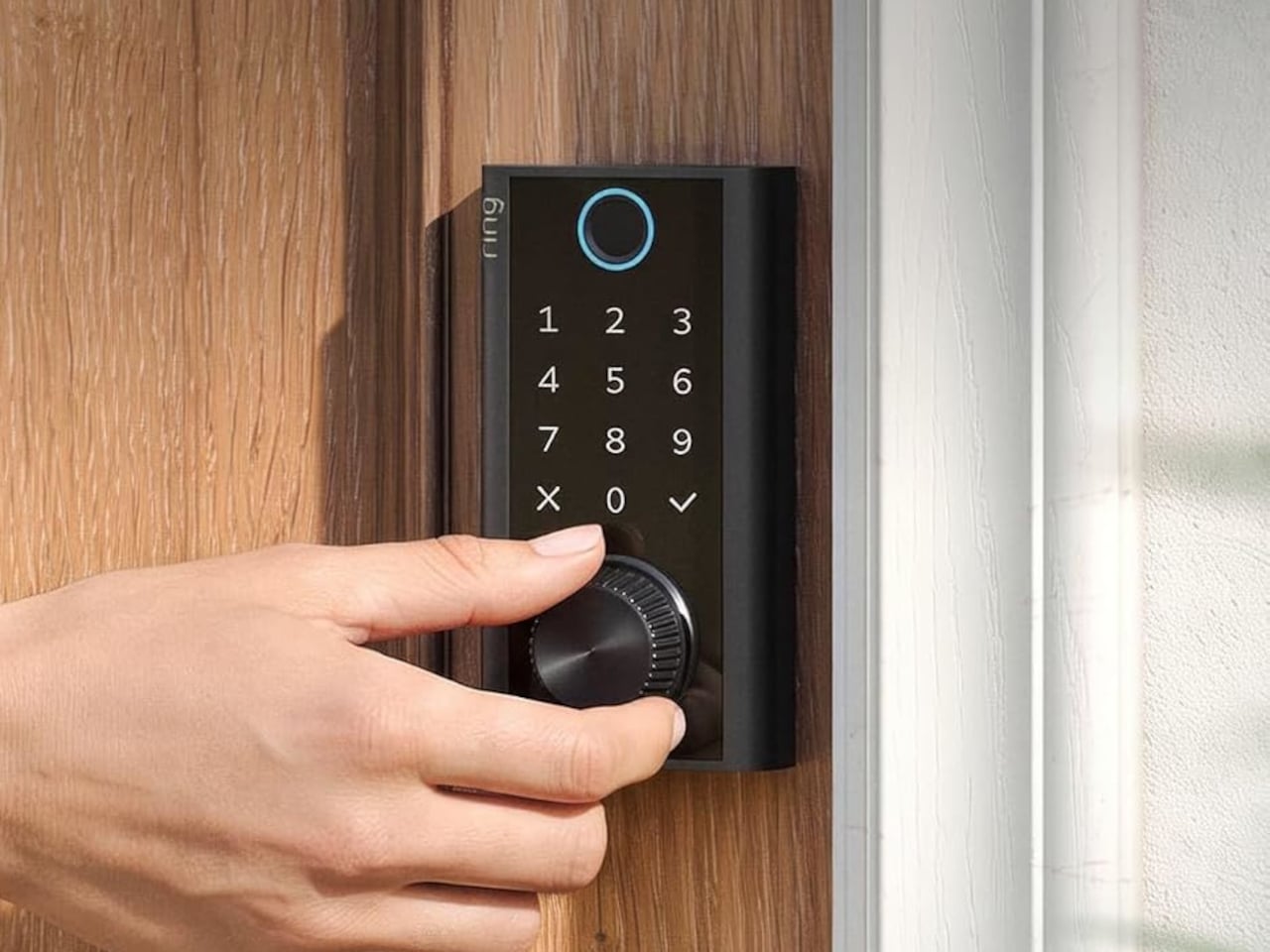
Smart locks sound like the future until you’re standing outside with groceries and the lock won’t wake up because of a dead battery. Although there are different methods to address that, Ring’s first-ever Smart Lock has a rather ingenious solution: an almost literal crank. Simply turn a dial a few times to power the keypad just long enough to key in your code.
It’s simple yet effective, and it doesn’t require you to fumble for a cover to replace the battery. The knurled dial sits beneath the b
Smart locks sound like the future until you’re standing outside with groceries and the lock won’t wake up because of a dead battery. Although there are different methods to address that, Ring’s first-ever Smart Lock has a rather ingenious solution: an almost literal crank. Simply turn a dial a few times to power the keypad just long enough to key in your code.
It’s simple yet effective, and it doesn’t require you to fumble for a cover to replace the battery. The knurled dial sits beneath the backlit touchscreen keypad, with a circular fingerprint reader topping them all. All in all, the design looks more like a stack of controls instead of a deadbolt with electronics just bolted on.
Designer: Amazon
On regular days or nights, you can simply touch the fingerprint reader instead of digging for keys in your bag or pocket. You can also give a visitor a PIN that only works during a set time window. The Ring app also offers yet another way to let you in, and it also allows you to check the lock remotely, including Alexa voice control. These are the typical features you’d expect from a smart lock, but Ring does one better.
Most keyless locks require a cable or a spare battery before they even wake up, which isn’t exactly the fastest or the easiest when you only have one hand free. Ring puts that backup in that same free hand, figuratively. Simply turn the dial to “charge” the lock, almost like cranking some lever for power. It’s an almost comical analogy, but it gets the job done.
Of course, you don’t charge the Ring Smart Lock by turning the dial endlessly. That’s what the Quick Release Ultra Battery Pack is for. That battery is rechargeable, which means you don’t need to worry about extra wiring or hardware when installing the Smart Lock. It works with a standard single-cylinder deadbolt, making it immediately compatible with many doors.
One thing to note is that remote features depend on Amazon Sidewalk rather than your home Wi-Fi. That could spare you a trip back to check whether the door locked, or let you admit someone while you’re away, provided there’s coverage where you live. Ring says unlocking at the door happens locally, but Sidewalk remains a requirement for the connected functions. It’s a condition beneath the promise of convenience.
The lock can share the Ring app’s activity feed with Ring’s other products such as doorbell, cameras, and alarms, so you get a more holistic view of everything that happens at home even when you’re away. That said, it doesn’t have a camera of its own, which is a subtle nudge to get a Ring doorbell, too.
Black, silver, and brass finishes are planned, with a $249 price and U.S. availability expected in early 2027, pending regulatory authorization. For now, some details about the Ring Smart Lock have yet to be fully disclosed, including battery life. Regardless, it’s an interesting and low-tech solution to a high-tech problem that makes you feel you’re in control, even in such an emergency.
Microsoft is continuing its major Xbox restructuring, with another 268 roles being eliminated across Xbox’s first-party studios, Halo Studios, and its central management and support functions. The latest changes were announced by Xbox executive Matt Booty in a September 22 message to employees titled “Continuing Our Reset.” Booty said the changes are part of the […]
Microsoft is continuing its major Xbox restructuring, with another 268 roles being eliminated across Xbox’s first-party studios, Halo Studios, and its central management and support functions. The latest changes were announced by Xbox executive Matt Booty in a September 22 message to employees titled “Continuing Our Reset.” Booty said the changes are part of the […]
Mighty DOOM, le petit shoot roguelite que Bethesda avait sorti sur mobile en mars 2023, tourne de nouveau !! Alors bien sûr pas sur les serveurs officiels, qui sont éteints depuis deux ans, mais sur un serveur monté et hébergé par des fans, qui ont refait tout le boulot à la main.
Mais avant, pour ceux qui ont raté un épisode, en fait, le jeu est mort parce
Mighty DOOM, le petit shoot roguelite que Bethesda avait sorti sur mobile en mars 2023, tourne de nouveau !! Alors bien sûr pas sur les serveurs officiels, qui sont éteints depuis deux ans, mais sur un serveur monté et hébergé par des fans, qui ont refait tout le boulot à la main.
Mais avant, pour ceux qui ont raté un épisode, en fait, le jeu est mort parce que Microsoft a fermé Alpha Dog Games, le studio qui le développait, en mai 2024, c'est-à-dire en même temps qu'Arkane Austin et Tango Gameworks (le studio de Redfall et celui de Hi-Fi Rush... tout ça le même jour, l'hécatombe). Et ce qui devait arriver arriva, puisque trois mois plus tard, le 7 août 2024, les serveurs de Mighty DOOM se sont arrêtés.
Et ce n'est pas rien parce que le jeu avait quand même été téléchargé 7,6 millions de fois sur mobile...
C'est pour ça que le projet
Mighty Resurrection
a décidé de redistribuer lui-même un APK Android du jeu. Il nécessite Android 10 minimum et il pointe directement sur le serveur de la communauté, dont le compteur annonçait déjà au moment d'écrire ces lignes, 449 comptes enregistrés.
Au-delà de l'APK "client", ce qui est cool, c'est qu'en face, il y a un logiciel serveur
dont le code est public
et que vous pouvez également lancer chez vous, si vous le souhaitez.
Ce qui est impressionnant surtout, c'est le taf. Parce qu'il a fallu régler l'authentification, les chapitres du jeu, l'inventaire des objets, les talents, la boutique, le battle pass, et même tout ce qui était achats intégrés et gestion de l'identité Xbox. En gros, chaque morceau que le jeu Android réclamait au serveur officiel, il a fallu entièrement le recoder.
Le truc un peu fou, c'est qu'Alpha Dog Games a retrouvé son indépendance cet été. Le studio est donc de nouveau entre les mains de ses fondateurs, sauf que la licence DOOM, elle, ne lui appartient pas. Donc impossible pour eux de rallumer leur propre jeu. Par contre, ils ont les sources, donc je me dis que s'ils étaient un petit peu sympas, ils pourraient aider les développeurs de Mighty Resurrection en leur offrant le code.
Après quatre ans de travail, le bidouilleur canadien DiscoStarslayer
a annoncé
que son firmware du MechaCon était enfin sorti ! Si vous ne connaissez pas le MechaCon, c'est la puce de sécurité que Sony avait posée en 1999 dans les premières PlayStation 2, et c'était encore jusqu'à aujourd'hui, l'un des derniers composants de la console dont personne n'avait pu obtenir le code...
Ce MechaCon tire son nom de la mécanique qu'il surveille, à savoir le lecteur optique et la mémoire fl
Après quatre ans de travail, le bidouilleur canadien DiscoStarslayer
a annoncé
que son firmware du MechaCon était enfin sorti ! Si vous ne connaissez pas le MechaCon, c'est la puce de sécurité que Sony avait posée en 1999 dans les premières PlayStation 2, et c'était encore jusqu'à aujourd'hui, l'un des derniers composants de la console dont personne n'avait pu obtenir le code...
Ce MechaCon tire son nom de la mécanique qu'il surveille, à savoir le lecteur optique et la mémoire flash, sauf que ces petits malins de Sony lui ont confié bien plus que ça... En effet, cette bestiole sais déchiffrer les cartes mémoire MagicGate, et surtout c'est elle qui décide si le disque que vous venez d'insérer est authentique ou pas. Donc une PS2 dont le MechaCon est raide mort, ça devient une jolie brique
La puce, soudée sur une carte mère Sony de 1999 (
Source
)
Pour aller lire dedans, il a fallu y aller à la manière forte... La puce a donc été ouverte chimiquement pour mettre le silicium à nu, puis lue au microscope. C'est une opération délicate qui consiste à recopier optiquement le contenu de la ROM directement depuis le circuit. C'est lent, et c'est source d'erreur, mais ces dumps crasseux n'étaient pas le but, mais plutôt le moyen... En effet, Libby, un autre hacker qui a collaboré au projet, y a trouvé une faille exploitable, et c'est cette faille qui a ensuite permis de sortir le contenu de la puce via logiciel.
Comme ça, plus besoin de sacrifier une console pour en lire une.
Le firmware extrait, ouvert dans un éditeur hexadécimal : les chaînes laissées par le développeur Sony sont encore dedans (
Source
)
Après attention, il s'agit pour le moment uniquement du premier MechaCon, c'est à dire de celui des PS2 d'avant les SCPH-500xx. Celui des modèles suivants, un ARM que Sony avait baptisé Dragon, était déjà tombé au combat, et c'est de ce dump-là qu'était sorti par la suite
l'exploit MechaPwn
. Donc ni les Slim ni les dernières Fat ne sont concernées ici par ce nouvel exploit.
Alors qu'est-ce que ça débloque ?
TechPowerUp
écrit qu'il y a de bonnes chances que ça finisse par permettre un vrai émulateur de lecteur optique, un de ces boîtiers qui remplacent le bloc optique par une carte SD, ce que les fans réclament depuis des années. Sauf qu'un des développeurs qui ont participé au reverse
est allé démentir ça sur Hacker News
: les dumps seuls ne donnent pas assez d'informations pour fabriquer un tel boîtier. En effet, il manque de quoi rejouer le dialogue côté lecteur, et c'était justement ça la partie difficile.
Après pour lancer des copies de jeux non plus, il n'y a rien de neuf là-dedans puisqu'on les lance déjà depuis une carte mémoire, un disque dur ou l'exploit du lecteur DVD. Ce qui devient envisageable par contre, c'est une puce qui prendrait la place du MechaCon en laissant le processeur de signal de la console continuer à lire les disques. Autrement dit, une console que son MechaCon a brické pourrait être réparée au lieu de finir à la poubelle.
Et ça, je trouve que c'est plutôt une bonne nouvelle même si la méthode d'extraction écrit énormément dans la NVRAM de la console, et ça use le matériel.
Ahet il n'y a pas que des consoles de salon dans l'affaire puisqu'on retrouve également le MechaCon dans des cartes d'arcade à base de PS2, dont les Namco System 246 et System 256.
Quoiqu'il en soit, ces dumps serviront aussi à l'émulation, parce que toute la sécurité des cartes mémoire et des exécutables signés passe par cette puce. Ça devrait être bien utile !
Every idea deserves somewhere to go, and for a lot of 3D printing hobbyists, that place has been missing. ELEGOO wants to change that with ELEGOO DAY 2026, launching September 10, its annual celebration built around bringing creators together on Nexprint. This year folds in a creator fund, a design contest, new model generators, and a sale, all pointing toward one goal: getting more people to create, share, and be part of a growing community.
Most of that action happens on Nexprint, ELEGOO’s op
Every idea deserves somewhere to go, and for a lot of 3D printing hobbyists, that place has been missing. ELEGOO wants to change that with ELEGOO DAY 2026, launching September 10, its annual celebration built around bringing creators together on Nexprint. This year folds in a creator fund, a design contest, new model generators, and a sale, all pointing toward one goal: getting more people to create, share, and be part of a growing community.
Most of that action happens on Nexprint, ELEGOO’s open-source 3D model platform, built on the belief that creation should be open to anyone with an idea. Think of it as the hub tying everything together: models get uploaded, tools get discovered, and creators get a real reason to keep contributing. That shift is slowly turning ELEGOO from a printer maker into a community built around making.
The centerpiece is the new $1,000,000 Creator Fund, ELEGOO’s way of recognizing and rewarding people for sharing 3D models on Nexprint, not just paying for output but investing in the community itself. Rewards start with your very first submission, no waiting for likes or rankings to climb first. Individual models can earn up to $100, and stacking incentives push that ceiling to $300 per model.
There’s more structure built in too. Extra rewards unlock at 3, 5, 10, 20, and 50 submissions, so consistency pays off as much as any single hit model. Monthly rankings hand exclusive prizes to the top five creators, including actual ELEGOO printers, while a new bonus-card mechanism can push individual payouts even higher. It feels less like a marketing gimmick and more like a system built to grow alongside its creators.
From September 10 to October 30, ELEGOO runs the MakeItReal contest on Nexprint, and the premise couldn’t be simpler: take a flat idea, in whatever form it takes, and give it dimension, no design background required. There’s no theme to chase, just that shift from flat to physical. Winning entries will be picked and announced on November 20, each earning up to $300 in ELEGOO coupons for the trouble.
The idea behind it is almost sentimental for a hardware company, echoing ELEGOO’s belief that 3D printing works best as a creative outlet, not a manufacturing shortcut. A photo on your phone or a doodle in a notebook can end up as something you actually hold, not just imagine. Creators don’t need advanced modeling skills to compete, either. Nexprint’s upcoming Text and Image to 3D Generator lets anyone shape a contest entry straight from a photo or a written description, no CAD needed.
That generator is one of three new tools ELEGOO just added to Nexprint, alongside a Vase Generator and a Nameplate Generator, each built to make creation easier for beginners and veterans alike. All three do the same basic job: they take a drawing, a photo, or a few typed words and turn it into a printable model within minutes. None of it replaces real design skill, but it removes the blank-page problem that stops many from starting.
Put it together, and the loop makes sense. Someone sketches an idea, runs it through a generator, shares the result on Nexprint, enters it into MakeItReal, and picks up Creator Fund rewards along the way. None of those steps demand deep technical skill. This is the connected ecosystem ELEGOO keeps referencing, not a slogan, but an actual sequence anyone can walk through starting today.
All this activity lines up with the ELEGOO DAY Sale, with discounts of up to 54% on selected products, running September 8 through 29 with regional pricing, ELEGOO’s way of putting that ecosystem into more hands. The Saturn 4 Ultra 16K brings high-resolution resin printing for detailed sculptures, jewelry prototypes, and miniatures. The Centauri Carbon 2 Combo handles multicolor prints for home décor and personalized gifts. The Mars 5 Ultra offers a smaller resin option with sharp detail for tight workspaces.
What stands out about ELEGOO DAY 2026 isn’t any single feature; it’s the shape of the whole thing. A hardware company built its business on printers, then quietly built systems for sharing, competing, and earning that turn a machine into a habit. For ELEGOO, that’s what building an ecosystem means: more chances for people to create, connect, and turn ideas into something real.

 Connexion