Vue normale

Il y a de nouveaux articles disponibles, cliquez pour rafraîchir la page.
À partir d’avant-hierFlux principal

This $2,999 Device Turns Your Desktop Into A Custom Apparel Printing Factory (With Air Purification)

Par : Sarang Sheth
6 août 2026 à 01:45

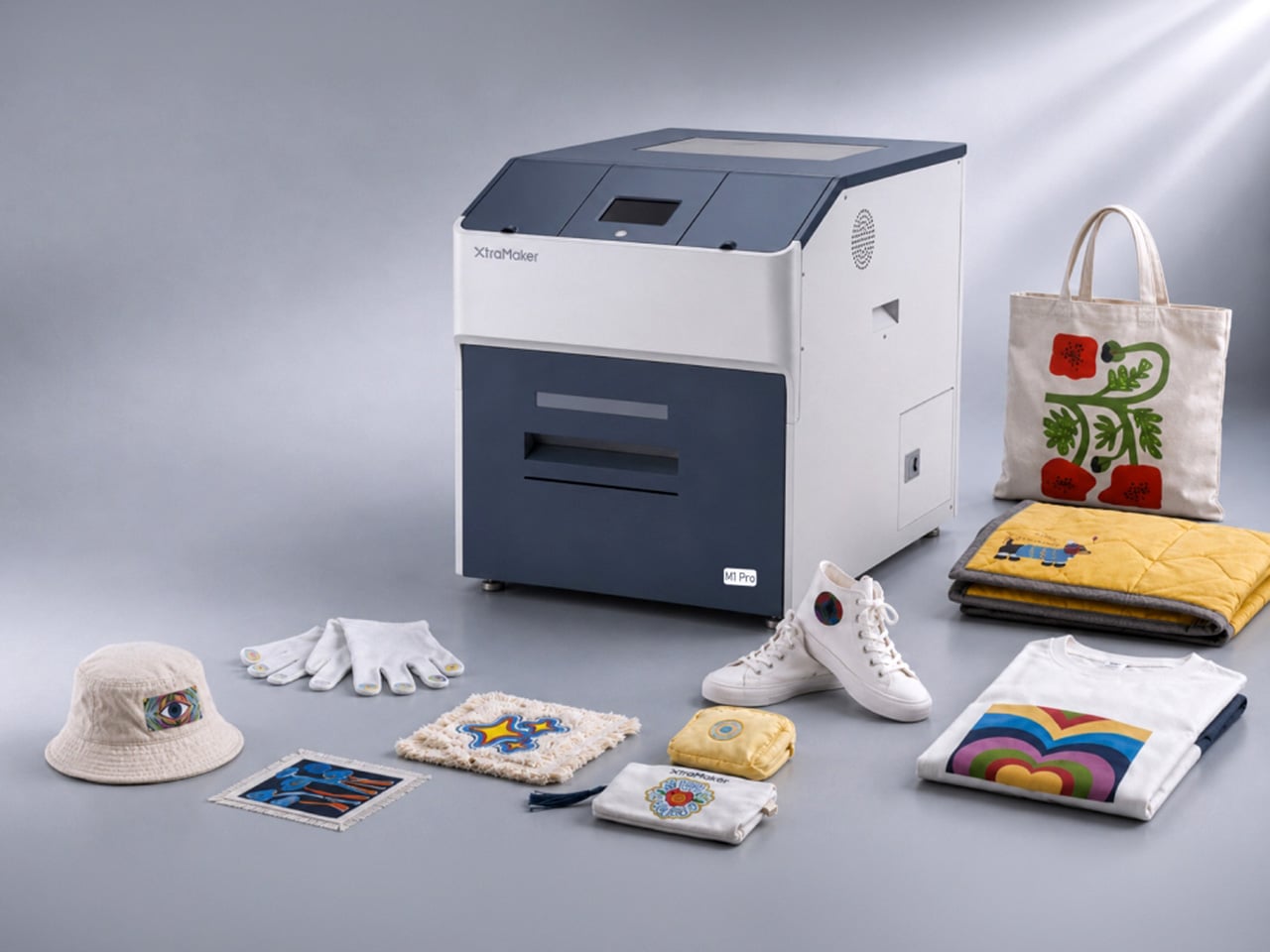
Let’s talk about the math for starting a small apparel brand. You have the designs, the drive, and a growing list of people who want to buy your stuff. Then you look up the gear. Aside from the thousands in hardware, materials, and a good air-purification system (because breathing is generally a good thing), you’re also looking at a massive space investment. Suddenly, you’re nearly $10k in, and need an entire garage for something the XtraMaker M1 Series offers in a tabletop format for a fraction of the price. With a modular printhead design no less, allowing for customization all within the form factor of a large microwave oven.

This is where the XtraMaker M1 Series finally brings apparel creation into the desktop factory era. It takes that sprawling, expensive production line and collapses it into a single, self-contained unit for $2,999. This is the micro-factory for fabric we’ve been waiting for, handling everything from printing the transfer to curing the adhesive inside a fume-filtered system that fits on a desk. It’s the machine that makes the business plan finally make sense, shrinking the startup cost by two-thirds and proving that the next big apparel brand doesn’t need an industrial loan to get started; it just needs a desktop.

Designer: XtraMaker

Click Here to Buy Now: $2999 $6499 ($3500 off). Hurry, only 38/50 left! Raised over $331,000.

The M1’s core innovation is condensing the entire five-step DTF relay race into a single, autonomous sprint. It prints, powders, shakes, cures, and purifies its own air without any manual handoff between stages. This integrated workflow is critical for a desktop machine, as it eliminates the mess and fumes that make traditional DTF printing impossible in a home or small studio. The enclosed system uses a multi-layer filter to capture stray adhesive powder and neutralize the chemical smell from the curing process, keeping the workspace clean and breathable. This turns what was once a multi-machine, garage-only operation into a clean, one-click process you can run from a spare room.

Print quality is anchored to commercial standards, with G7 Master-certified color accuracy ensuring that on-screen RGB designs translate faithfully to the final CMYK print. At a resolution of 1440×1440 DPI, the M1 Series produces sharp, detailed transfers where fine lines and photo-realistic gradients come through cleanly. The resulting prints are just 0.5mm thick, allowing them to blend seamlessly with the fabric’s texture rather than sitting on top like a stiff, plastic patch. This professional-grade output works across a huge range of materials, from cotton, denim, and polyester to more delicate fabrics like silk, giving creators a massive canvas for their ideas.

XtraMaker’s engineers clearly obsessed over reliability, building in a suite of defensive systems to prevent common failures. The most notorious issue in DTF printing, white ink clogging, is addressed by the LoopMaster™ system, which uses automatic 15-minute circulation cycles and continuous cartridge stirring to keep the dense ink from settling and drying in the lines (the white ink circulation system operates with zero ink consumption too). Even more impressive is the built-in UPS battery. If power cuts out, the battery instantly triggers a flush, replacing the ink with a protective fluid to save the printhead from drying out. The UPS battery also powers the printer’s auto-maintenance system while the machine is on standby or powered off. This enables the machine to automatically fill the ink channels with moisturizing liquid and keep the white ink stirring continuously for up to 30 days. Combined with over 20 sensors that monitor the machine’s health and ink levels in real-time, all this creates a system that actively works to prevent the most expensive and frustrating problems before they happen.

The entire package is tailored for small business growth, from the software to the hardware options. The XtraMaker Studios app includes a cost estimation tool that calculates ink and film usage, giving you a precise per-print cost so you can price your products profitably. A 3D preview feature also lets you see how a design will look on a finished garment, saving time and materials. The M1 itself comes in two sizes: the standard M1 for A4-sized prints, perfect for logos and chest graphics, and the larger M1 Pro, which handles A3+ prints for full-back designs on hoodies and jackets. This gives a growing brand a clear upgrade path as their product line and ambitions expand.

XtraMaker’s M1 Series is aimed squarely at the new wave of creators: Etsy sellers, independent streetwear labels, and craft fair operators who need professional output without the industrial overhead. While other desktop DTF printers exist, none integrate the entire five-step workflow, the advanced anti-clog and power-loss protection, and the built-in air purification into a single unit at this price. It’s a machine that understands that for a small business, the real costs are complexity, downtime, and mess.

Click Here to Buy Now: $2999 $6499 ($3500 off). Hurry, only 38/50 left! Raised over $331,000.

The post This $2,999 Device Turns Your Desktop Into A Custom Apparel Printing Factory (With Air Purification) first appeared on Yanko Design.

This 3D-Printed Lamp Has a Shell That Opens and Closes to Shape Light

Par : JC Torres
2 mai 2026 à 19:15

The 3D printing community has spent years trying to prove that a printer can produce more than desk trinkets and cable organizers. Lighting has always been the harder sell, where aesthetics and function have to work together in ways that cheap plastic usually undermines. The better designers in that space have been quietly closing that gap, and the results are starting to look like things you’d want to live with.

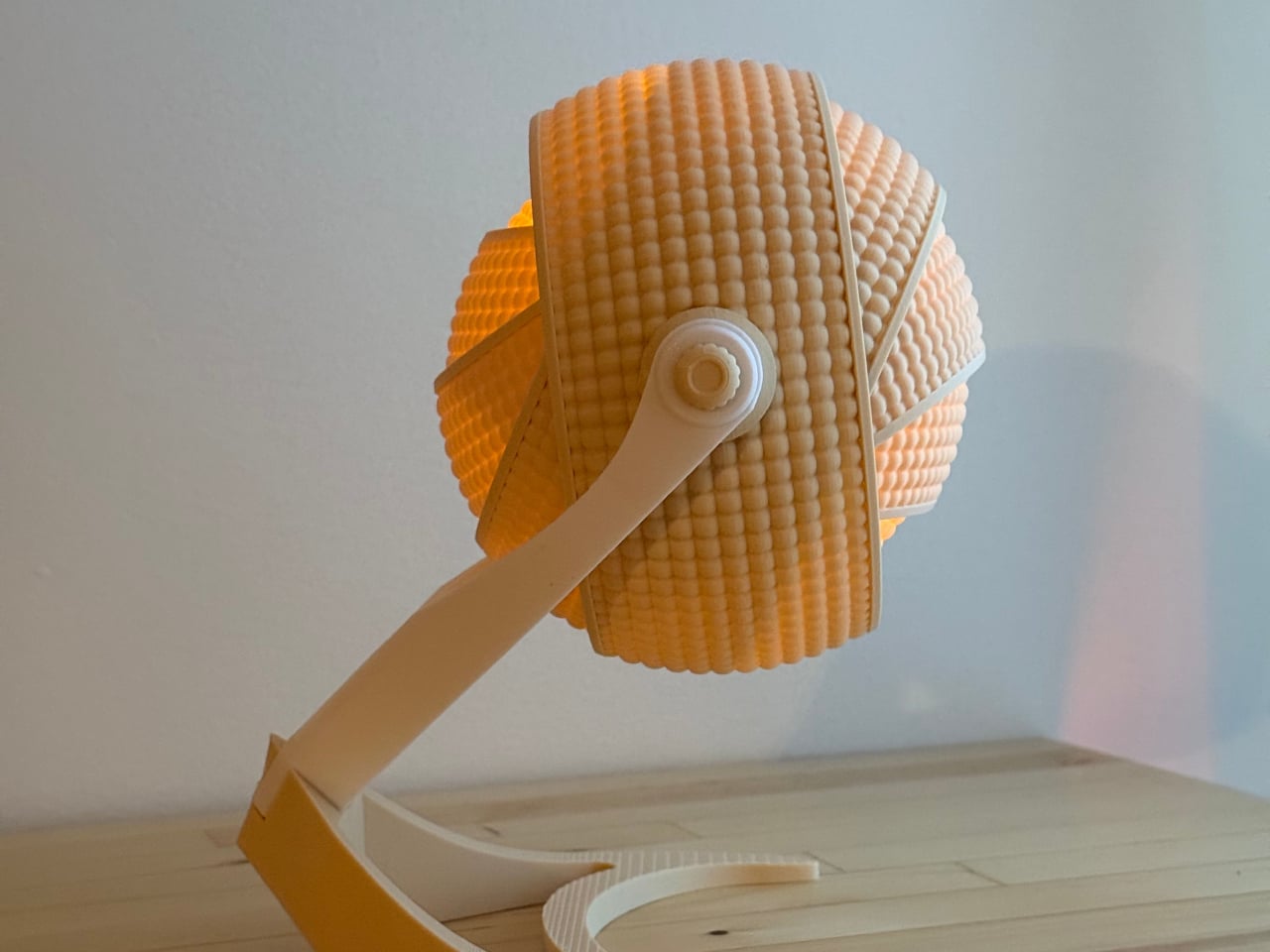
OHR Design, a Canadian 3D printing studio, is a good example of what that progress looks like. Its Armadillo series takes inspiration from one of nature’s most recognizable shapes, the segmented, overlapping bands of the armadillo shell, and turns it into a lamp shade that adjusts depending on how much, or how little, light you want in a room. And it all started from a tea light holder.

Designer: OHR Design

The original Armadillo grew from an earlier OHR Design called the OHRB, and it’s since inspired a whole family of spin-offs. True to its origins, the Armadillo wraps a tea light in a series of concentric rings that tilt forward to close the shade down or pull back to widen it. At 240mm tall, it’s compact enough for a bedside table or a bookshelf without demanding much real estate.

For those who want the same aesthetic energy at a bigger scale, the Armadillo XL scales the concept up into a proper desk lamp. At 373.8mm tall and 283.9mm wide, it makes a statement on a desk without being overwhelming. It accepts a real light bulb rather than a tea light, making it far more practical for anyone who actually needs their lamp to pull its weight.

What gives both versions their character is the adjustable ring system. The segmented shade isn’t just decorative; opening and closing the rings changes how the light spreads through the room, softening the glow when the rings are fully open or concentrating it when they’re pulled shut. It’s the kind of thing that turns a simple on/off appliance into something you keep reaching over to tweak.

What’s equally interesting is how OHR Design sells these. You aren’t buying a finished lamp; you’re buying the STL files to print one yourself. The original Armadillo fits on a 180mm × 180mm print bed, making it accessible on smaller machines like the Prusa Mini or Bambu Lab A1 Mini. The Armadillo XL, being larger, requires a 256mm × 256mm build volume.

The filament choice is entirely yours, which means the lamp can be as neutral or as bold as you want. OHR Design has been spotted using Overture’s Super PLA+ in various colors, from muted naturals to vivid hues, all of which change how the diffused light reads. Not many lamps invite you to physically shape the light they cast, and fewer still can be reimagined entirely based on the color spool you have on hand. The Armadillo family puts creative control squarely in the hands of whoever prints it, and that’s a genuinely refreshing place to land.

The post This 3D-Printed Lamp Has a Shell That Opens and Closes to Shape Light first appeared on Yanko Design.

Une faille IndexedDB permettait de relier toutes vos identités Tor

Par : Korben ✨
23 avril 2026 à 06:12

Bon, les amis, si vous utilisez Tor Browser pour faire du sérieux, faut que vous sachiez un truc. Le bouton "New Identity", censé vous donner une nouvelle identité vierge à chaque clic... bah il laissait filer, jusqu'à il y a peu de temps, un identifiant stable tant que Firefox tournait.

Deux chercheurs de Fingerprint ont en effet trouvé comment une fonction toute bête du navigateur se transformait en empreinte unique de votre browser, partagée entre tous les sites que vous visitiez.

Il faut donc dès à présent faire la mise à jour vers Firefox 150 ou l'ESR 140.10.0 (la version long-terme utilisée par Tor Browser), ainsi que la dernière version de Tor Browser qui récupère le patch. Si vous voulez en savoir plus, la CVE c'est CVE-2026-6770 , classé comme sévérité modérée par Mozilla.

Le truc marche en vase clos mais traverse les murs.

Mais avant, IndexedDB c'est quoi ?

En gros c'est une mini-base de données que les sites web peuvent créer dans votre navigateur, pour stocker des trucs en local (du cache, des données offline, l'état d'une app web). Chaque site peut y ranger plusieurs bases nommées, et une petite fonction JavaScript indexedDB.databases() permet au site de demander la liste de ses bases.

Rien de foufou sur le papier. Sauf que dans Firefox en navigation privée, le navigateur renomme en coulisse chaque base avec un identifiant aléatoire (UUID), et range tout ça dans une seule grosse table interne. Et le gros problème, c'est que cette table est partagée entre tous les sites ouverts, et pas cloisonnée site par site.

Et là, ça devient croustillant puisque quand un site redemande la liste de ses bases, Firefox la renvoie sans la trier, dans un ordre qui dépend de la structure interne de cette table partagée. Du coup, deux sites totalement différents qui créent chacun seize bases dans le même ordre récupèrent exactement la même suite en retour. Pas l'ordre de création donc mais une permutation bizarre, genre g,c,p,a,l,f,n,d,j,b,o,h,e,m,i,k.

Je vous passe les détails mais ça fait dans les 17 000 milliards de combinaisons possibles. Donc largement de quoi distinguer votre navigateur parmi des millions, comme une empreinte digitale qui colle au doigt !

Et ce qui pique vraiment c'est que cet identifiant survit à la fermeture de toutes vos fenêtres privées. Tant que le process Firefox tourne en arrière-plan, l'ID reste. Un site peut donc vous reconnaître après que vous ayez fermé vos onglets privés, rouvert une session pensée comme neuve, et revisité le site. Pour le user, c'est une session fraîche alors que pour le serveur c'est clairement le même navigateur qu'il y a dix minutes.

Côté Tor Browser c'est pire puisque le bouton "New Identity" a pour mission explicite de couper tout lien avec ce que vous faisiez avant. Il ferme les onglets, efface l'historique, vide les cookies, tire de nouveaux circuits Tor. La promesse officielle, c'est "empêcher votre activité future d'être liée à ce qui précède".

Sauf que cette fameuse table interne, elle, ne bouge pas. Le New Identity reset donc tout sauf ce qu'il ignore. C'est comme changer de fringues dans le même ascenseur... en gardant le même parfum. Techniquement vous êtes différent, mais reconnaissable en deux secondes. Bref, c'est assez grave car un site capable d'exploiter la faille peut lier votre session avant-New-Identity à votre session après-New-Identity.

Tant qu'on n'a pas redémarré Firefox complètement, l'ID persiste.

Les chercheurs disent avoir fait une divulgation responsable, directement à Mozilla et au Tor Project avant publication donc c'est nickel, et les deux équipes ont poussé les patches avant de communiquer sur quoi que ce soit. Donc les utilisateurs à jour sont tout simplement protégés contre cette faille précise.

Après si vous êtes du genre parano, pensez à redémarrer complètement votre Tor Browser entre deux sessions vraiment sensibles. Ça coupe le process Firefox, ça vide cette fameuse table, et ça évite ce genre de surprise pour d'autres leaks similaires qu'on n'aurait pas encore trouvés.

A bon entendeur, salut !!

Source

Ils transforment un tapis de course en imprimante 3D pour faire des impressions infinies

Par : Korben
16 avril 2025 à 04:11

Je ne suis pas nerd de l’impression 3D même si j’adore ma Bambulab parce qu’elle fonctionne à tous les coups sans me demander 3h de réglages. Et je sais aussi reconnaitre quand une idée est cool et c’est le cas ici avec cette imprimante 3D qui utilise un tapis de course comme plateau, ce qui lui permet d’imprimer de longues pièces.

On appelle ça une imprimante à bande et dans le commerce c’est vendu par exemple par Creality pour un peu plus de mille euros… Mais la faire soi-même avec du matériel de sport, c’est quand même plus cool. Surtout quand on trouve des tapis de course sur Leboncoin à 50 balles, abandonnés par leurs propriétaires après trois sessions de cardio et une prise de conscience que Netflix et les M&M’s c’est quand même bien plus sympa que de transpirer.

❌
❌