❌

Vue normale

  • ✇Yanko Design
  • 8 Best Gear & Gadgets of October 2026 That Turn Any Living Room Into Game Day Central
    Football season turns living rooms into something closer to a clubhouse for a few hours every weekend. The right gear makes that shift effortless, pulling together sound, screen, food, and drink into one setup that actually works for a full slate of games rather than falling apart by halftime. None of these eight picks are trying to reinvent the sport itself. They’re solving the real logistics of hosting: the can that never pours right, the cooler that goes warm by the second quarter, the speak
     

8 Best Gear & Gadgets of October 2026 That Turn Any Living Room Into Game Day Central

12 octobre 2026 à 07:40

Football season turns living rooms into something closer to a clubhouse for a few hours every weekend. The right gear makes that shift effortless, pulling together sound, screen, food, and drink into one setup that actually works for a full slate of games rather than falling apart by halftime.

None of these eight picks are trying to reinvent the sport itself. They’re solving the real logistics of hosting: the can that never pours right, the cooler that goes warm by the second quarter, the speaker setup that can’t keep up with a packed room full of noise.

1. DraftPro Top Can Opener

There’s a reason the first pour matters so much on game day. DraftPro removes the entire top of a can instead of just puncturing it, turning a beer or sparkling water into something closer to a glass pour, aroma included. Designed by Shu Kanno and built in Japan, the motion is smooth and controlled, with a clean edge that’s safe to drink from directly. For you, that means handing a guest a can that actually tastes like it was poured properly, without reaching for a single glass all game.

It works for more than beer too. Drop ice straight into the can for instant chilling when the cooler’s running warm, or mix a quick cocktail right inside it with zero cleanup. Compatible with domestic and international cans, it travels well between the kitchen and the couch, and the clean cut even lets you repurpose empties into planters or pen holders once the game’s over.

Click Here to Buy Now: $60.00

What We Like

  • Removes the entire top for a smooth, glass-like drinking experience
  • Works as a makeshift cocktail shaker with no extra dishes to wash

What We Dislike

  • Only a handful of units were listed in stock at the time of writing
  • Limited to cans, so bottles need a separate opener nearby

2. PhaseTherma

A great drink setup falls apart the moment the ice turns to water. Freezill solves that with PhaseTherma, a phase-change cooling core that keeps ice solid for up to 150 hours without any external power source. For you, that means setting up the drink station once before kickoff and not thinking about it again until the final whistle of a doubleheader weekend, no refills, no plugging anything in.

At $149, it reads less like a cooler and more like premium travel gear that happens to double as game day equipment. The zero power draw also means it works just as well on a porch or in a garage as it does parked next to the couch, so the setup goes wherever the crowd ends up sitting.

What We Like

  • PhaseTherma core keeps ice solid for up to 150 hours
  • Needs zero external power to maintain its cooling performance

What We Dislike

  • $149 is a real investment for what is, at its core, a cooler
  • Premium design means it’s built for care, not for rough outdoor use

3. Battery-free Amplifying iSpeakers

Every other speaker in the room needs something: a charge, a pairing sequence, a Wi-Fi password. This one needs nothing but your phone. Designed by Ooi Masato and machined from Duralumin, the same vibration-resistant aluminum alloy used in aircraft, it amplifies a smartphone’s built-in speaker purely through acoustic geometry. For you, that means setting it down on a side table and having sound fill the room without a single cable in sight.

The chamber’s proportions were shaped using the golden ratio, which is less a gimmick and more the reason the sound comes out as focused as it does. No app, no Bluetooth, no battery to die mid-game. Just a slot for the phone and a noticeably louder room a second later.

Click Here to Buy Now: $179.00

What We Like

  • Needs zero power, batteries, or pairing to work
  • Golden ratio proportions make it as much a desk object as a speaker

What We Dislike

  • Volume ceiling is naturally lower than a powered Bluetooth speaker
  • Only works with a phone placed inside it, not as a standalone unit

4. Xiaomi Redmi Projector 5 Pro

The screen is where game day actually lives, and this one makes a big one affordable. Native 1080p scales up to 120 inches, backed by 1,000 CVIA lumens, HDR10, and a 120Hz refresh rate running at just 5ms of latency. For you, that means a crisp, responsive picture that can fill an entire wall for less than the cost of a year of streaming subscriptions combined.

A metal gimbal arm swings 150 degrees, so the projector adjusts to whatever angle the room demands without needing a dedicated mount or stand. Dual HDMI and Wi-Fi 6 round out the connections, meaning a streaming box, a console, and a laptop can all stay hooked up at once without a single cable getting swapped out between games.

What We Like

  • 120-inch scaling at $281 undercuts most home theater setups by a wide margin
  • Gimbal arm adjusts 150 degrees without needing a separate mount

What We Dislike

  • 1080p native resolution means it’s not a true 4K experience
  • HDR10 support only goes so far without a properly darkened room

5. LG xBoom Stage 501

Halftime needs its own kind of energy, and this speaker is built specifically for that shift in mood. Up to 220W of output runs through dual 2.5-inch woofers and Peerless tweeters, loud enough to carry a packed room without distortion. For you, that means the moment the game pauses, the room doesn’t go quiet; it just changes gears.

The real party piece is AI Karaoke Master, which strips vocals from any song in real time using deep learning trained on more than 10,000 songs. Built around what LG calls late-night living-room chaos, it turns a halftime break into its own event, no separate karaoke machine or backing track search required.

What We Like

  • 220W output with dedicated tweeters handles a full room without strain
  • AI Karaoke Master removes vocals from any song on the spot

What We Dislike

  • At $499.99, it’s a serious commitment for occasional halftime use
  • Karaoke feature works best with a crowd actually willing to sing

6. Death Star Popcorn Maker

Snacks are half of game day, and this one earns its spot by being genuinely good at the one thing it does. A hot air vortex pops corn with close to a 98 percent success rate, no oil or butter required, while the whole unit folds back into a Death Star display piece once the popping’s done. For you, that means a snack station that’s actually fun to look at sitting on the counter between rounds, not just a plastic appliance shoved in a cabinet.

It’s a lighter note in the lineup, a conversation starter as much as a kitchen tool, and a reminder that not every piece of game day gear needs to be purely functional to earn its place in the rotation.

What We Like

  • Close to a 98 percent popping success rate without oil or butter
  • Folds back into a display piece instead of looking like leftover kitchen clutter

What We Dislike

  • Novelty shape won’t appeal to everyone’s kitchen aesthetic
  • Limited to popcorn, so it’s a single-purpose appliance taking up cabinet space

7. Took Foldable Chair

Every host eventually runs out of couch space before they run out of guests. This chair collapses into a compact case about the size of a soundbar, with a strap handle and a one-touch hinge mechanism that opens it in seconds. For you, that means extra seating that lives in a closet the rest of the week and shows up the moment the guest list grows past what the furniture can hold.

It closes the lineup on a practical note: the kind of object that doesn’t need to be clever so much as ready, there when the room fills up and out of the way the second it empties back out.

What We Like

  • Folds to the footprint of a soundbar for easy storage
  • One-touch hinge means setup takes seconds, not a wrestling match

What We Dislike

  • A folding chair will never match a couch for comfort over a long game
  • Durability of the hinge mechanism depends on how often it gets folded and unfolded

8.WiiM Bar Soundbar

For the games that deserve real sound, not just loud sound, this soundbar fills that gap. True 3.0.2 Dolby Atmos runs through an eight-driver array, three front mid-woofers, three front tweeters, and two upward-firing full-range drivers, backed by four passive radiators for low end that doesn’t need a separate subwoofer. For you, that means commentary, crowd noise, and the snap of a tackle all land with the kind of separation a standard TV speaker can’t touch.

A 2.1-inch round touch display sits embedded in the bar’s front face, giving quick access to inputs and volume without digging for a remote between plays. It sits under the TV rather than competing for space, built for the room rather than announcing itself as the centerpiece.

What We Like

  • Eight-driver array delivers genuine Dolby Atmos without a subwoofer
  • Touch display built into the bar simplifies control mid-game

What We Dislike

  • A setup this capable asks for a TV and source worth the upgrade
  • Four passive radiators still can’t fully replace a dedicated subwoofer in a large room

The Setup That Covers the Whole Afternoon

None of these eight pieces are trying to be the loudest thing in the room. The projector and the two speaker options handle the screen and the sound, the cooler and the can opener handle the drinks, and the popcorn maker and the folding chair round out the food and seating without asking for much space in return.

What makes this lineup work isn’t novelty; it’s that each piece solves one real problem well. A host doesn’t need everything to be smart or connected. Sometimes the best upgrade is a can that pours like a glass, or a chair that disappears into a closet until the room needs it most.

The post 8 Best Gear & Gadgets of October 2026 That Turn Any Living Room Into Game Day Central first appeared on Yanko Design.
  • ✇Yanko Design
  • Meet the electric beach wagon with smart assist, remote control, and underglow
    I have a theory that the beach wagon was invented by someone who never actually took one to the beach. On pavement it’s a dream, then the sand starts and you’re dragging a shopping cart through oatmeal. BougeRV’s new DuneRover is an electric wagon built around that exact misery. It folds, it hauls up to 198 pounds while moving, and it rolls on wide airless wheels with two motors doing the work. Soft sand is the whole design brief, and every part of the machine answers to it. The handle is the s
     

Meet the electric beach wagon with smart assist, remote control, and underglow

11 octobre 2026 à 21:45

I have a theory that the beach wagon was invented by someone who never actually took one to the beach. On pavement it’s a dream, then the sand starts and you’re dragging a shopping cart through oatmeal. BougeRV’s new DuneRover is an electric wagon built around that exact misery. It folds, it hauls up to 198 pounds while moving, and it rolls on wide airless wheels with two motors doing the work. Soft sand is the whole design brief, and every part of the machine answers to it.

The handle is the smartest thing about it, and it responds to your walking instead of a throttle. Sensors measure how hard you pull and multiply that effort, so a gentle tug gets a gentle nudge and a brisk stride gets a brisk wagon. Head down a dune and it brakes for you, and the moment you let go, it holds its position. Detach the control unit and the wagon becomes a remote-controlled beach truck, rolling ahead from up to 328 feet away. BougeRV, the Houston outdoor brand known for portable fridges and solar panels, built the whole thing.

Designer: BougeRV

Click Here to Buy Now: $539 $899 (40% off). Hurry, only 120 units left! Raised over $40,000.

Airless foam wheels that float instead of dig

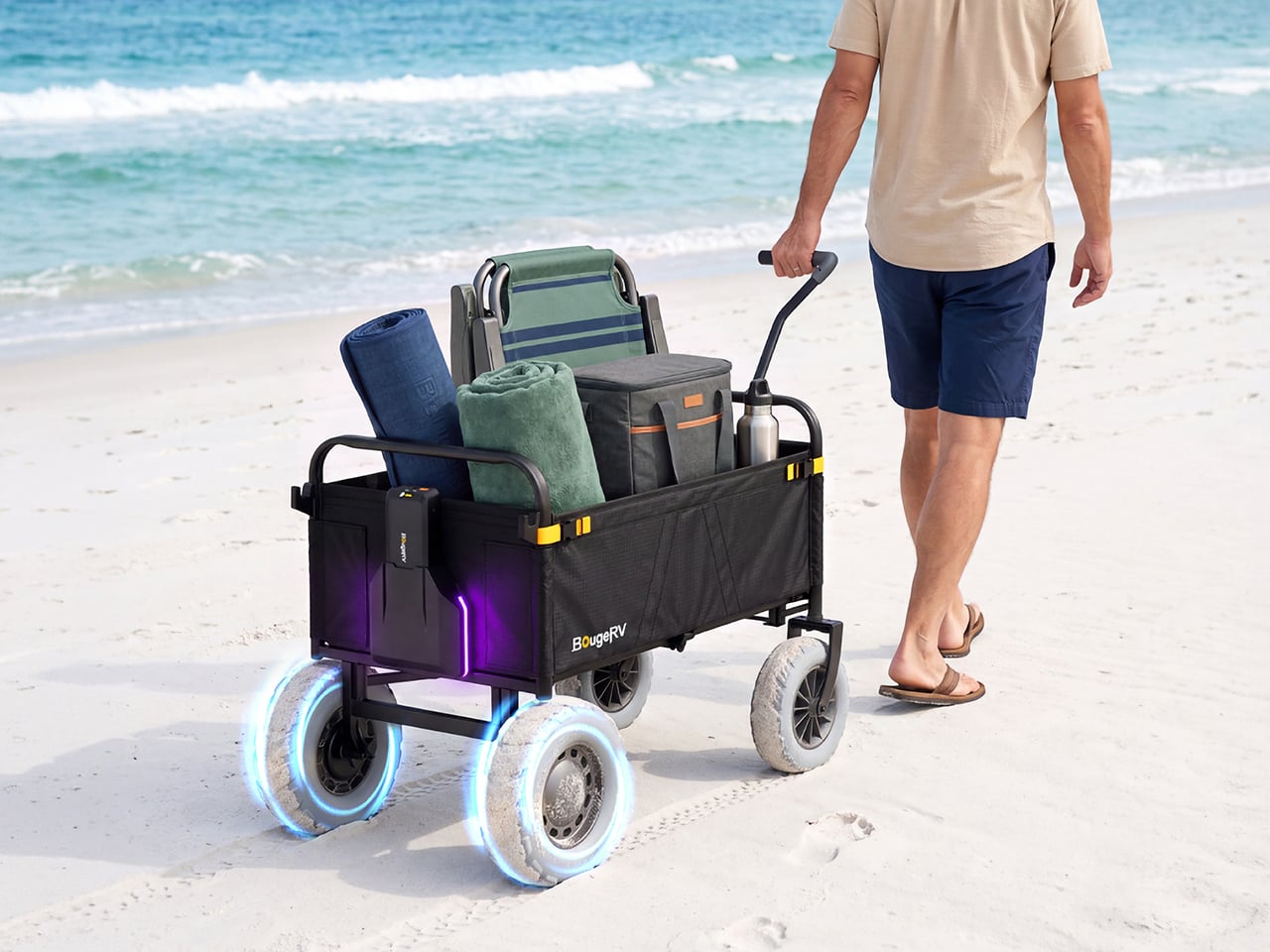
The rear drive wheels measure 12 by 4 inches and are made of low-density PU foam, with no air inside. That means no flats, no pressure checks, and no tire coming off the rim halfway across the beach. A patented tread spreads the load across a wide footprint, rolls smoothly, sheds water, and treats turf gently. The front pair are 10-inch airless wheels in the same material. Wide contact area is the old trick for staying on top of sand, and here it comes with motors attached.

Two brushless geared motors deliver 66 N·m of combined torque, fed by a battery with 880W of peak output. Raw power can be a problem on sand, because spinning wheels just dig a trench. DuneGrip TCS, the wagon’s traction control system, watches for wheel slip and trims torque within milliseconds to stop it. A one-tap beach mode on the handle switches it on. Top speed is 3.7 mph, a relaxed walking pace, and the range runs 5 miles or more with a 165-pound load.

A handle that multiplies your pull and brakes without being asked

BougeRV calls the system RoverDrive Dynamic Assist, and it runs on what the company calls a Multiplicative Assist Algorithm. The handle measures your pulling force in real time and scales the motors in proportion, which is why there is no throttle, no gear shifting, and no direction switch to think about. Accelerate and the wagon accelerates with you. The dockable handle houses a power button, a mode switch, and an indicator light. A trigger-release design lets you empty out the sand that inevitably works its way into the control unit.

Uphill, the wagon holds its speed without extra effort from you, and it is rated for 15-degree slopes (a 26.8% grade) even at full load. Downhill, it brakes on its own. Release the handle on a slope and fail-safe electronic braking engages instantly. That covers a toddler sprinting toward the surf, a dropped pair of sunglasses, and any moment you stop to snap a photo. I like that the safe state is also the default, so letting go is always the right move.

Remote steering from 328 feet and an app with underglow

Undocking the control unit takes one step, and it becomes a 2.4 GHz remote with a range of up to 328 feet. Point it where you want the wagon to go, which frees you to carry the surfboard while the wagon carries everything else. If the signal drops or the remote disconnects, the wagon brakes and holds itself in place. Docking the unit back onto the handle returns you to assisted pulling automatically. There is zero setup and zero menu toggling in either mode.

Through the BougeRV app, you get real-time wagon status, battery levels for both the wagon and the remote, a mileage tracker, and system health monitoring. Firmware updates arrive over the air, and you can pair the remote, set speed and mode, and drive the wagon from your phone. Then there is the underglow, a customizable ambient lighting setup. One tap switches between preset scene modes. A glowing wagon on the sand at sunset is a ridiculous feature, and I would still turn it on.

A 2-pound battery that also charges your phone

The detachable UPP-88 battery weighs 2.06 pounds and measures 7.68 by 3.58 by 1.57 inches, about the size of a large power bank. Capacity is 24,000mAh, or 88.8Wh, which keeps it under 100Wh and airline-approved, with no prior declaration needed. It can discharge at up to 10C, enough to feed the 880W peak output. Fast charging runs through USB-C or XT60 ports at up to 100W. A multi-stage vent and flame-arresting labyrinth are meant to keep a single failing cell from setting off the rest, and the pack carries an IP66 rating.

The battery doubles as a power bank. BougeRV’s figures list up to 4.2 phone charges, 3.4 gaming device charges, 2.2 tablet charges, or 1.1 laptop charges. USB-C output reaches 100W and there is a USB-A port too. A built-in MPPT solar regulator tops it up on the move through an XT60 input that accepts 11 to 28V at up to 100W. BougeRV’s flexible portable panels are compatible, but the panel is sold separately. So the same pack that hauls the cooler can keep the phones alive until sunset.

Storage, folding, and pricing

The bed holds 161.7 quarts (153 liters) inside 600D Oxford fabric, with a side frame that opens to take longer gear like surfboards, secured with an elastic cargo net. Pockets are covered too: a front pocket, inner front and back pockets, and utility hooks. The wagon weighs 50.7 pounds (23 kg) and opens to 41.5 by 23.7 by 47.5 inches. Folded, it shrinks to roughly 23.7 by 12.2 by 28.7 inches, small enough for an SUV cargo area. IPX6 protection covers the whole vehicle, motors and control hub included, so a hose-down ends the day.

BougeRV lists the DuneRover at an MSRP of $899, with launch pricing running from $396 to $539 depending on the offer. A bundle with an extra detachable battery runs $603 against a $1,097 MSRP. The box holds the wagon, battery, remote, charging cable, two wheels, and a manual. Shipping is planned for the US, EU, UK, Canada, Australia, Japan, and Hong Kong, with deliveries expected to start in February 2027. Nobody packs lighter for the beach, so a wagon that keeps your pace is the sensible fix.

Click Here to Buy Now: $539 $899 (40% off). Hurry, only 120 units left! Raised over $40,000.

The post Meet the electric beach wagon with smart assist, remote control, and underglow first appeared on Yanko Design.

  • ✇Yanko Design
  • 8 Japanese Stationery That Make US Back-to-School Supplies Look Boring
    Japan has a stationery obsession, and the rest of the world is finally catching on. The country treats writing tools and paper goods the way it treats everything else: with an almost unreasonable level of care, precision, and quiet restraint. What looks simple in the hand rarely is. These eight pieces are proof that back-to-school shopping has a ceiling, and most of us haven’t come anywhere close to hitting it. Every item on this list earns its place for the same reason: it solves something. No
     

8 Japanese Stationery That Make US Back-to-School Supplies Look Boring

11 octobre 2026 à 19:30

Japan has a stationery obsession, and the rest of the world is finally catching on. The country treats writing tools and paper goods the way it treats everything else: with an almost unreasonable level of care, precision, and quiet restraint. What looks simple in the hand rarely is. These eight pieces are proof that back-to-school shopping has a ceiling, and most of us haven’t come anywhere close to hitting it.

Every item on this list earns its place for the same reason: it solves something. Not in a Swiss-Army-knife way, but in a quietly elegant way that makes you wonder why the version you’ve been using for years never worked this well. Stock up your stationery collection with these unique essentials, and feel the difference they make to your everyday routine.

1. MagBoard Clipboard

Most clipboards are an afterthought, a plastic spring hinge you buy simply because you had to. The MagBoard is different in the way that good Japanese design tends to be: the function is unchanged, but the thinking behind it is completely rebuilt. A magnet and lever mechanism holds up to 30 sheets of paper in place without the usual clip aggression, and the hardcover backing is stiff enough to write on comfortably while standing, no desk surface needed at all.

The surface is water-resistant and easy to wipe clean, which matters when it travels between meetings, job sites, or a classroom. At A5, it fits in most bags without crowding them, and the cover opens completely flat so there’s no awkward curl mid-note. For anyone who moves through their day between different spaces and needs to take legible notes rather than just keep a surface dry, this is the clipboard that actually earns a permanent spot in the bag.

Click Here to Buy Now: $45.00

What we like

  • The magnet-and-lever mechanism replaces spring clip tension without sacrificing hold, managing up to 30 sheets at once
  • Water-resistant surface makes it genuinely travel-ready, not just desk-ready

What we dislike

  • A5 format won’t accommodate US letter-size paper without folding, which won’t work for everyone
  • At $45, it’s a significant premium over what most people expect to spend on a clipboard

2. Sonic Kakusta Portable Pen Stand

The Kakusta looks like a soft pencil case until you set it on a desk. Unzip it, fold the lid back, and the whole thing becomes a stand that props your pens at a 60-degree angle, everything visible, everything reachable in one motion. Sonic, the Japanese stationery brand behind it, didn’t add a separate stand component. The fold itself is the stand. That kind of thinking, where the packaging is the product, is what separates it from anything you’d find at Target.

The triangular cross-section when open isn’t accidental. It creates a stable base that doesn’t tip or slide even on slightly uneven surfaces, and when class or the workday ends, everything folds back into the case in seconds. For students who shift between desks, libraries, and coffee shop tables, not having to manage a separate pen holder is genuinely useful. The Kakusta doesn’t ask you to change how you work. It just eliminates one more thing to carry and set up.

What we like

  • Case-to-stand transformation happens in one fold, no extra components to lose
  • The 60-degree angle keeps every pen visible rather than buried at the bottom of a flat case

What we dislike

  • Capacity is on the smaller side, so larger pen collections won’t fit comfortably
  • The fabric exterior picks up lint faster than a hard-shell case would

3. Stalogy Editor’s Series 365 Days Notebook

The 365 Days Notebook wasn’t designed for bullet journaling that requires stickers and color-coded spreads. It was designed for editors: people who use a notebook to capture ideas, track timelines, make lists, and sketch rough diagrams all in the same session, sometimes on the same page. The cream-toned dot grid is subtle enough that it doesn’t compete with what you’re writing, and at A6 the whole thing fits in a coat pocket without any compromise.

With 368 pages, it holds a full year of daily writing without exhausting itself by October. The binding opens completely flat without tension, which means pages stay where you put them rather than creeping closed between entries. For someone who writes in transit, between calls, or at lunch, a notebook that opens flat and stays flat is worth more than any feature list could describe. This one simply gets out of your way.

What we like

  • 368 pages comfortably handle a full year of daily use across writing, planning, and sketching
  • Lays completely flat when open without needing a hand to hold the page in place

What we dislike

  • A6 is small for anyone who writes in long form or needs room to sketch at scale
  • Cream-toned paper, while easy on the eyes, shows ink colors less vividly than bright white

4. Levitating Pen

The Levitating Pen stands upright on its base without batteries, electronics, or tricks. It balances vertically through a precisely calibrated magnetic pedestal that holds the pen in a stable position, and the whole arrangement is quiet enough that it reads as a desk object rather than a gadget. Picking it up takes a half-second more than reaching for a pen lying flat on a desk, but that pause changes how you think about the act of writing. It feels deliberate in a way that cheap ballpoints never do.

Write with it, and the ballpoint performs exactly as expected: smooth, consistent, without drama. The benefit isn’t in the ink delivery. It’s in what the pen does to the space around it. A desk with a Levitating Pen on it looks considered, and that visual cue tends to set a tone for the work that follows. For someone who moves between focused writing sessions and longer thinking stretches, having a tool that signals “this is where the work happens” is worth more than most productivity hacks.

Click Here to Buy Now: $79.00

What we like

  • Balances upright through a magnetic pedestal with no electronics or batteries required
  • Functions as a smooth ballpoint and a distinctive desk object in equal measure

What we dislike

  • The base adds desk footprint that might not suit a minimal or already-crowded setup
  • The levitation effect can become a distraction in a shared or open-plan workspace

5. King Jim Visual Bar Timer (VBT10)

Most timers count up or display numerals. The King Jim VBT10 does something simpler and more useful: it shows a row of large LCD segments representing remaining time, and as the countdown progresses, segments disappear from right to left. No digits to read, no beeping at intervals, just a visual progress bar legible from across a room at a glance. It’s the kind of design decision that seems obvious once you see it, but that no Western manufacturer thought to build first.

For anyone who works in timed blocks, whether that’s the Pomodoro method, writing sessions, or class periods, having a physical timer rather than a phone or laptop notification means focus stays on the task rather than the device. The VBT10 sits on a desk without demanding attention, and the countdown is readable enough to track peripherally. For students and remote workers who need structure without constantly checking a screen, this is a more disciplined option than anything most productivity apps currently offer.

What we like

  • Visual bar display reads instantly from a distance without requiring you to parse numerals
  • Physical format keeps attention off screens during timed work or study sessions

What we dislike

  • Pricing and availability vary outside Japan, and shipping times can stretch considerably
  • LCD has limited visibility in direct sunlight or high-glare environments

6. Shachihata Consolidated Number Stamp

Shachihata makes the Consolidated Number Stamp as a set of individual pieces: 31 dates and 7 days of the week that snap together along two different axes to build any calendar configuration you need. The stamps connect cleanly, ink together evenly, and produce a compact, legible date block that a printed sticker or pre-made date stamp can’t match, because those are fixed and this one isn’t. You build the date you need, stamp it, then rearrange for the next entry.

It’s a genuinely analog solution to a problem most people solve with digital tools or pre-printed labels, and it’s more satisfying than either. For planners, journal keepers, and anyone who archives physical documents by date, having a stamp that adapts rather than repeating the same fixed format is a meaningful upgrade. The ink is self-contained in each piece, and the stamps align precisely enough that the resulting date block looks intentional rather than assembled. That precision is classic Shachihata, and it shows.

What we like

  • Modular design lets you configure any date on demand without a fixed preset format
  • Self-inking pieces snap together and align precisely, producing clean, legible date blocks every time

What we dislike

  • Keeping 38 individual stamp pieces organized requires more discipline than a single fixed stamp would
  • Not suited for high-volume stamping where speed matters more than customization

7. Lihit Lab Firm Book End

A book end that holds books upright when neighbors are present is not a remarkable product. One that lets a single book stand on its own without leaning against anything is. The Lihit Lab Firm Book End achieves this through a gravity-activated stopper that flips down when the book end is upright, supporting the book from behind. Remove the book and the stopper lifts back up, held out of the way by the book end’s own weight. Nothing to adjust manually.

The mechanism means you can remove a single book from a shelf without the rest collapsing, a small but real frustration that anyone who uses bookshelves regularly will recognize immediately. At A4 scale, it handles textbooks and binders as well as standard books, making it useful for student desks and office shelves alike. For people who work daily with physical reference materials and are tired of the toppling-book routine, this is one of those objects that solves a problem so quietly you forget it ever existed before it arrived.

What we like

  • Gravity-activated stopper lets a single book stand independently without any manual adjustment
  • Handles books, binders, and textbooks up to A4 scale across home, office, and student setups

What we dislike

  • Availability outside Japan is currently limited to the brand’s own site, adding shipping time and cost
  • The stopper mechanism can feel stiff during early use before it settles into regular operation

8. ITO BINDERY × YANKO DESIGN Drawing Pad

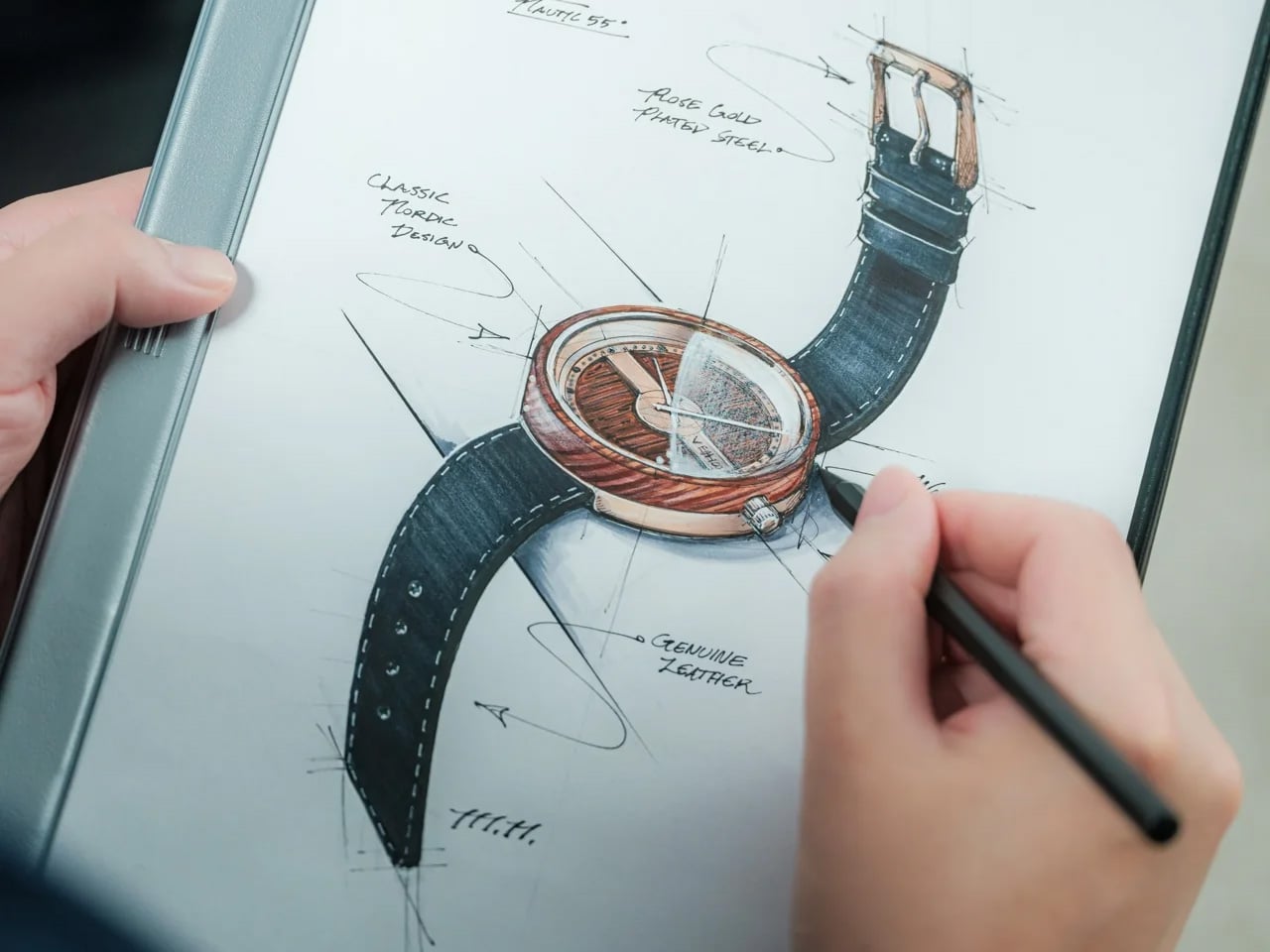
ITO Bindery has been making books by hand in Hachioji, Tokyo since 1938. The Drawing Pad that came out of its collaboration with Yanko Design carries that lineage in the details: binding glue applied by hand with a specialized brush, microperforations inspected sheet by sheet by experienced craftspeople, and a construction that holds through daily use without stiffening at the spine. Each size is limited to 100 individually numbered pads, available exclusively through YD Select, making it as much a document of craft as a writing surface.

Each sheet tears away cleanly along the microperforation, leaving the page intact and ready to pin up, share, or arrange alongside other work in progress. For designers, illustrators, or anyone who treats drawing as a thinking tool rather than a performance, a pad that separates cleanly and doesn’t fight the process is exactly the right kind of equipment. The paper handles pencil, pen, and light marker work without bleed-through. At this build quality and limited-edition scale, $40 is an argument for paying more attention to where your tools come from.

Click Here to Buy Now: $40.00

What we like

  • Hand-crafted by ITO Bindery, founded in 1938, with construction quality visible from the very first page
  • Microperforated sheets tear cleanly without damaging the sketch, making each page easy to display or share

What we dislike

  • Limited to 100 numbered pads per size means stock won’t last once the list picks up attention
  • Not suited for wet media or heavy-wash work; designed for dry and light-marker use only

Buy Less. Buy Better.

What makes Japanese stationery worth attention isn’t the aesthetic. It’s the reasoning. Every product here started with a specific problem and arrived at a solution that feels like it was always obvious, even when it clearly wasn’t. The attention to material, mechanism, and user behavior that goes into something as ordinary as a clipboard or pen stand reflects a standard of care that changes what you expect from your tools.

None of these require a lifestyle overhaul or a dedicated setup. They slot into how you already work and make that work feel slightly more resolved. Back-to-school season is usually about quantity: more notebooks, more pens, more highlighters. These eight argue for the opposite. One good clipboard beats five bad ones. One pad that holds together properly lasts longer than anything that falls apart by Thanksgiving. Buy less. Buy better.

The post 8 Japanese Stationery That Make US Back-to-School Supplies Look Boring first appeared on Yanko Design.

  • ✇Yanko Design
  • Your Small Room Secretly Needs Fewer Lamps, Not More
    A small room rarely gets to do just one thing. The table that holds your laptop during the day might host dinner a few hours later, while the chair beside it becomes your reading spot before bed. The problem is that lighting often stays fixed while everything else changes. An overhead fixture can feel harsh at dinner, and a decorative table lamp may be lovely but useless when you need to see what you’re doing. That is a more interesting way to look at the Infinite Solas Lamp than simply calling
     

Your Small Room Secretly Needs Fewer Lamps, Not More

11 octobre 2026 à 16:45

A small room rarely gets to do just one thing. The table that holds your laptop during the day might host dinner a few hours later, while the chair beside it becomes your reading spot before bed. The problem is that lighting often stays fixed while everything else changes. An overhead fixture can feel harsh at dinner, and a decorative table lamp may be lovely but useless when you need to see what you’re doing.

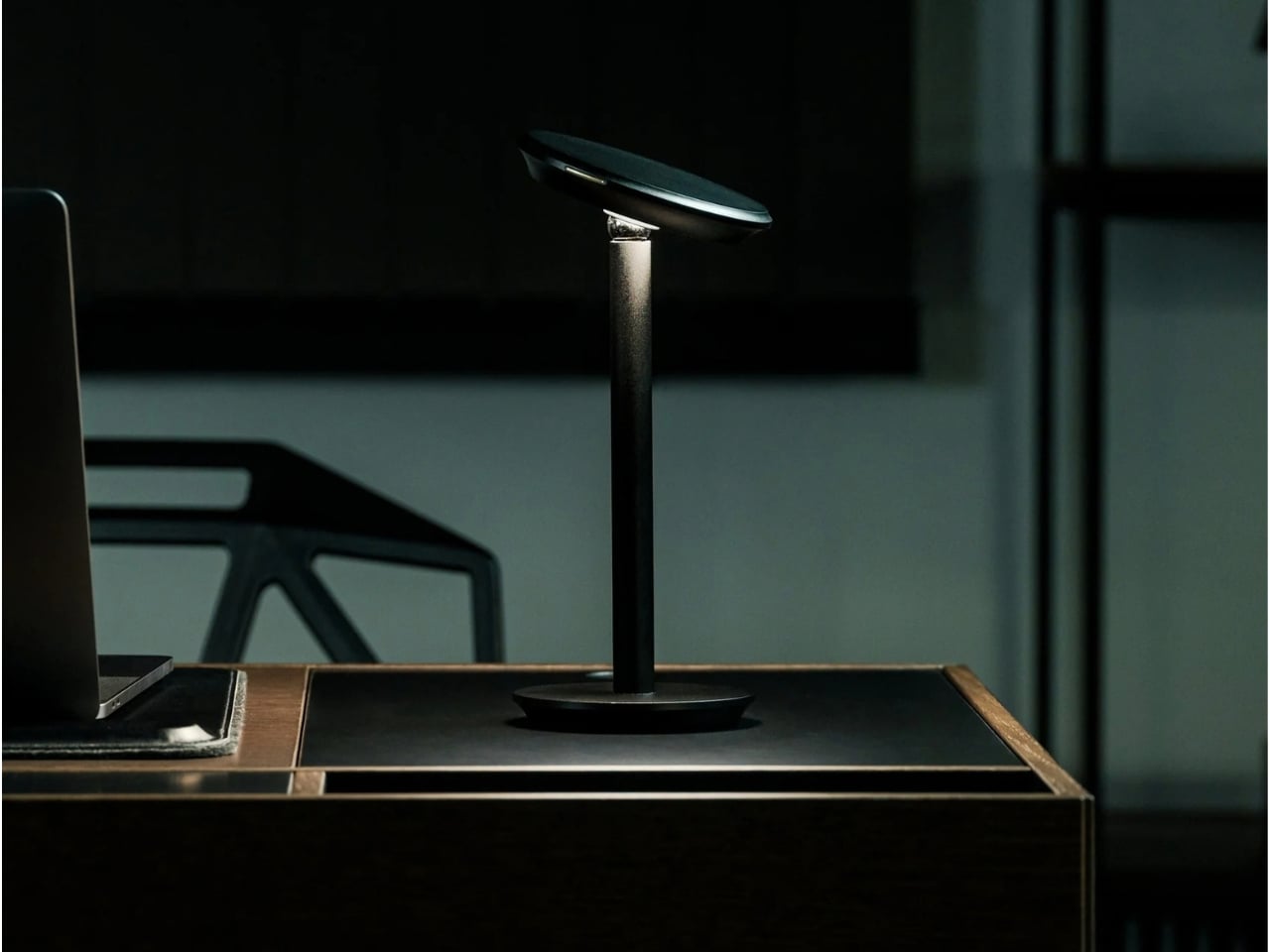
That is a more interesting way to look at the Infinite Solas Lamp than simply calling it a cordless desk lamp. Its height, direction, brightness, and color temperature are adjustable, so the same object can play different roles as a room changes throughout the day. I like the idea of a lamp that adapts to the space you have, rather than asking you to find space for another lamp.

Click Here to Buy Now: $325

Picture a table on a weekday morning. You pull the Solas taller and angle its head toward a notebook or the project in front of you. Later, you lower it and soften the light for dinner. By evening, it can move beside a chair and become a reading light. None of those uses is particularly dramatic on its own. Together, they make a persuasive case for a lighting object that doesn’t belong to one corner of the home.

The mechanics behind that flexibility are pleasantly straightforward. The Solas adjusts from 8.9 to 19.7 inches tall, while a magnetic ball-joint head lets you redirect the beam without shifting the whole lamp. Its LED light can be dimmed, with color temperature adjustable from 2500K to 4000K. Those choices matter because a change in angle can be just as useful as a change in brightness. Sometimes you want to see the pages in front of you. Sometimes you want the room to feel a little softer.

I also appreciate that the design doesn’t insist on looking like equipment. Machined aluminum with an anodized finish gives it a composed, minimal shape, and it comes in black or warm champagne. Either could sit on a shelf or side table without making the room feel like an office. That matters in a smaller home, where every object tends to be visible from almost everywhere else. A lamp can be useful, but you still have to enjoy looking at it when it’s off.

Of course, movable lighting is not a new idea. IKEA has helped make portable table lamps feel familiar as everyday home accessories. The Solas asks for a more specific kind of attention: not just where you can carry a lamp, but how much you can change its height, aim, and warmth once you set it down. I wouldn’t say that makes it the right choice for everyone. If all you want is a gentle glow on a shelf, a simpler lamp may do the job beautifully. The Solas makes more sense when one surface has several jobs.

That flexibility does come at a considered-object price. The Solas is listed at $325, which is a lot to spend on a lamp if you need light in only one place. It also still needs charging: the listed runtime is six to seven hours at full brightness, or up to 70 hours at its lowest setting, with a recharge taking approximately four hours via USB-C. Those numbers are worth knowing before imagining it as a fixture you can leave on indefinitely.

For me, the appeal isn’t the promise of owning one lamp and never buying another. It’s the smaller, more believable improvement of having one good lamp that can follow the way a room is actually used. When furniture has to work harder, lighting should be allowed to change its job too. The Infinite Solas Lamp understands that a home doesn’t hold still from morning to night. Its best trick is making those transitions feel a little easier.

The post Your Small Room Secretly Needs Fewer Lamps, Not More first appeared on Yanko Design.

  • ✇Yanko Design
  • This $70 Plate Is for People Who Refuse to Let Fried Food Sit in Its Own Oil
    Now that I’m learning to cook more, I’m pretty excited to experiment with dishes I see online. The results aren’t always ready for other people to try. I still have a lot to figure out. On some days, though, I keep it simple and fry something. That brings up a familiar problem: getting rid of excess oil before the food reaches my plate. Usually, I move it from the pan to a rack or paper towel, then transfer it again when I’m ready to eat. What if I could skip one of those transfers? The Half-Mo
     

This $70 Plate Is for People Who Refuse to Let Fried Food Sit in Its Own Oil

8 octobre 2026 à 07:40

Now that I’m learning to cook more, I’m pretty excited to experiment with dishes I see online. The results aren’t always ready for other people to try. I still have a lot to figure out. On some days, though, I keep it simple and fry something. That brings up a familiar problem: getting rid of excess oil before the food reaches my plate. Usually, I move it from the pan to a rack or paper towel, then transfer it again when I’m ready to eat. What if I could skip one of those transfers?

The Half-Moon Plate is more than a nicer way to serve food for a photo. It pairs a ceramic plate with a half-moon-shaped rack that sits over one side. You can place fried food on the rack to let excess oil and moisture drain away while leaving the other side available for a salad, vegetables, rice, or another side dish. Instead of draining food in one place and serving it in another, the plate brings those steps together.

Click Here to Buy Now: Starting at $70

That arrangement matters when timing is everything. If you’ve made tempura, fried chicken, or crispy potatoes, you probably don’t want them sitting in a puddle of oil while you finish getting dinner ready. Elevating the food gives the oil somewhere to go and may help it stay crisp until you eat. You still need to give freshly fried food time to drain; the plate simply gives you a way to do it at the table or as part of your final plating.

I also like that the design doesn’t make the rack the whole story. The open half of the plate leaves room for the rest of the meal, so the fried food doesn’t have to take over. You can see everything together before you sit down, rather than juggling a cooling rack, paper towels, and a separate serving dish. For someone cooking in a small kitchen, or someone who just wants fewer things on the counter, that’s an appealing idea.

The half-moon shape gives the plate its visual identity, but it also creates a natural division between the main dish and its sides. If you’re trying to be more mindful of portions, that division may be a useful visual cue. It won’t measure a balanced meal for you, and draining surface oil doesn’t make fried food automatically healthy. What it can do is encourage you to think about what else belongs on the plate alongside your crispy favorite.

Compared with an everyday dinner plate from a big brand such as IKEA, the Half-Moon Plate asks a little more of its design. A conventional plate gives you one uninterrupted surface and works with almost any meal. This one is more specialized: the rack makes the most sense when food needs to drain or when you want to keep it elevated before eating. That makes it less of an all-purpose replacement for your existing dishes and more of an addition for meals where its distinctive layout earns its place. The plate is listed starting at $70.

Of course, a plate like this won’t eliminate every step. You’ll still need to handle hot food carefully, wait for it to drain, and wash the rack afterward. Those are worth considering if you’re looking for the quickest possible cleanup. But if you already make fried food regularly, combining a draining surface and a serving plate could make the trip from pan to table feel more organized. When you don’t need the rack, you can lift it off and use the ceramic plate on its own. That flexibility is important: a design meant for one kind of meal is easier to justify when it can still be useful on other days. I’d reach for the rack when I’m making something crisp and use the plate by itself when dinner calls for a simpler presentation.

The Half-Moon Plate won’t make me a better cook overnight. I’ll still have to get the timing, seasoning, and frying right. But it does address one small frustration I know well: watching something come out of the pan beautifully crisp, only to wonder where to put it while I finish the meal. If it helps me serve dinner with fewer transfers and a little less fuss, that’s a design choice I can appreciate.

The post This $70 Plate Is for People Who Refuse to Let Fried Food Sit in Its Own Oil first appeared on Yanko Design.
  • ✇Yanko Design
  • This $175 Wii-style Smart paddle turns your TV into a pickleball court
    Pickleball has officially escaped the court. At some point in the last two years, it stopped being ironic and became a lifestyle: parking lots of suburban rec centers filled up, TikTok feeds followed, then came the celebrity investors, the professional leagues, the branded paddle drops, and the kind of mainstream saturation that tells you a sport has officially graduated from niche to undeniable. Getting turned into a Wii-style digital pastime is, at this point, a rite of passage for any sport
     

This $175 Wii-style Smart paddle turns your TV into a pickleball court

7 octobre 2026 à 21:45

Pickleball has officially escaped the court. At some point in the last two years, it stopped being ironic and became a lifestyle: parking lots of suburban rec centers filled up, TikTok feeds followed, then came the celebrity investors, the professional leagues, the branded paddle drops, and the kind of mainstream saturation that tells you a sport has officially graduated from niche to undeniable. Getting turned into a Wii-style digital pastime is, at this point, a rite of passage for any sport that has truly made it. Tennis got there. Golf got there. Boxing, baseball, bowling. MegaShot Pickl+ is the moment pickleball collects that particular badge, and it does so with an actual sensor-embedded pickleball racket for authentic gameplay, not some generic rectangular controller.

The smart paddle pairs with your phone, tablet, or laptop over Bluetooth and sends the game to your TV (via an included cable) for big-screen play, mimicking your real swing movements on screen and firing haptic feedback through the handle on every hit. A split-screen mode lets you play multiplayer on the same screen too, making it a great family entertainer. No court reservation, no weather to negotiate with. The Wii taught an entire generation that swinging something in your living room could feel surprisingly real. Pickl+ is betting that a generation raised on that premise is ready to do it again, this time for the sport that has genuinely taken over the world, and without an extra console to add to the mix. The Starter Edition is on Kickstarter now for $175, down from a planned retail price of $249 and the campaign has been backed 500% in just 24 hours! Pickl+ will be compatible with sports like tennis, ping pong, and badminton with more racket sports planned for the same smart-paddle platform.

Designer: MegaShot

Click Here to Buy Now: $175 $249 (30% off). Hurry, only a few left!

Under the hood, Pickl+ is built around a 9-axis sensor that reads the angle, speed, and arc of every swing for precise motion tracking. The haptic feedback responds distinctly to different kinds of hits, making the on-screen action feel genuinely tied to what your arm is actually doing. The paddle weighs around 300 grams, carries a 2000 mAh battery rated for up to five hours of continuous play, and charges over USB-C. Bluetooth 5.2 handles the wireless pairing, while an MHL cable connects your phone to the TV when the living room demands a proper screen. The app runs on Android 14+, iOS 18+, Windows, and macOS. Setup is as minimal as it sounds: download, charge, pair, connect, play. Unlike the Wii, Switch, or the Meta Quest, no extra console or hardware needed.

Most gaming hardware asks you to adapt to the machine: learn the buttons, the gestures, the control scheme. Pickl+ goes the other direction. You know how to hold a paddle, and you know what a swing feels like. Rather than turning a conventional controller into a sports accessory, Pickl+ turns the sports object itself into the controller. The technology is essentially trying to disappear into the physical experience, which is part of what makes it a more interesting object than just a clever game controller.

Ten-plus game modes ship at launch, including Streak, Practice, Split Mode, Career, Local Multiplayer, Target, and Beach Mode, with more already in the pipeline. VIP unlocks exclusive virtual courts, daily bonus challenges, glowing paddle effects, custom ball trails, and profile cosmetics.

Before the Kickstarter campaign went live, the beta version of the paddle was showcased at New York Toy Fair, where people across different age groups, including gaming enthusiasts and industry experts, got hands-on time with the motion tracking, gameplay, etc. It gave MegaShot an early real-world read on how quickly people understood and enjoyed the experience. Motion gaming can look impressive in a controlled demo; the real test is whether someone can pick up the paddle, understand what to do, and immediately have fun. New York Toy Fair gave MegaShot that read before asking anyone to back the campaign.

MegaShot arrived at this with receipts. Before Pickl+, the company built a smart bat, which sounds hyperlocal until the numbers land: 100,000+ units sold worldwide, 2,700+ Amazon reviews, and ratings above 4.5 across Google, Amazon, the Play Store, and iOS. The Smart Bat earned the team a spot on Shark Tank India, coverage across major publications, and placement on Walmart shelves. Cricket was a demanding proving ground, the kind of sport where precision hardware lives or dies by real player feedback. That foundation gave MegaShot a validated tech stack, a battle-tested supply chain, and the track record that earns trust going into a bigger, more globally ambitious launch.

Pickleball is the entry point for something larger. The same paddle hardware is designed to eventually support tennis, badminton, table tennis, and squash, with the VIP Pass carrying across sports as they are added. That roadmap turns Pickl+ from a single-sport product into a platform for multiple racket-sport experiences, which changes the value calculation considerably. The most globally accessible racket sport of this decade is also, as it turns out, the perfect vehicle for a company that built its credibility in one market and is now ready to find out how far a smart paddle can travel.

The Starter Edition, one smart paddle and an MHL cable, is available at its $175 Kickstarter launch price, versus a planned $249 retail price. Duo packs start at $275 for two paddles with a cable, while the Starter VIP Duo Pack, which throws in a VIP Pass, runs $315.

The Signature Edition, the premium single-paddle option, comes in at $349. The Signature Duo Edition bundles two premium paddles with cables, a VIP Pass, and protective sleeves for $499. Worldwide shipping begins in early 2027, covering the US, Canada, the UK, Germany, Australia, New Zealand, UAE, and India.

Click Here to Buy Now: $175 $249 (30% off). Hurry, only a few left!

The post This $175 Wii-style Smart paddle turns your TV into a pickleball court first appeared on Yanko Design.

  • ✇Yanko Design
  • This $20 Thank-You Card Just Solved Saying Thanks Without Overcomplicating It
    Giving out thank-you cards after a wedding or another event is not automatic anymore. Plenty of people still keep the custom alive, but others send a group email, post a message on social media, or simply move on to the next thing. I, for one, like receiving thank-you notes, whether they are personalized or not. They give me something to remember the occasion by, and I might even tuck one into my journal. When a note comes with a small gift, it feels all the more thoughtful. It tells me the sen
     

This $20 Thank-You Card Just Solved Saying Thanks Without Overcomplicating It

7 octobre 2026 à 19:30

Giving out thank-you cards after a wedding or another event is not automatic anymore. Plenty of people still keep the custom alive, but others send a group email, post a message on social media, or simply move on to the next thing. I, for one, like receiving thank-you notes, whether they are personalized or not. They give me something to remember the occasion by, and I might even tuck one into my journal. When a note comes with a small gift, it feels all the more thoughtful. It tells me the sender wanted to give me something I could enjoy after the event was over.

That is the idea behind the AromaCandle Thank You Card. It pairs a greeting card with a scented candle, turning a familiar gesture into something the recipient can read, display, and light. The written message delivers the thank-you, while the candle gives that message a little more time to linger. Even if someone eventually parts with the card because they do not like keeping paper around, they can still enjoy the candle. Well, until it burns out, of course.

Click Here to Buy Now: $20. Hurry, only 2 left!

At its heart, the design brings together two things people already give separately: a card with a personal message and a small gift. That combination is what makes it useful. You do not have to hunt for a candle that suits the occasion and then find a card to go with it. You still have room to write something specific, whether you are thanking a guest for attending your wedding or a friend for helping you move. The product is made in Japan, but its most appealing design choice is simple: it makes the card and candle feel like parts of the same gesture.

You have three options when it comes to the star, or rather, the flame of the show, which is the candle: Sakura (pink), Yuzu (yellow), and Green Tea (green). All three scents are associated with Japanese culture, even though the scents themselves were developed by artisans in Paris and New York. The smells and the colors as well can evoke the feeling of calm, freshness, and serenity once the receiver lights it up. It comes in a minimalist and elegant form and is shaped like a mini bottle with the actual words “Thank You” etched onto it directly.

For comparison, you could buy a Hallmark thank-you card and pair it with a Yankee Candle. That approach gives you more freedom to choose the exact card and candle you want, which might matter if you know your recipient’s favorite fragrance. The AromaCandle Thank You Card offers a different kind of convenience: the two elements are already designed to go together. At its $20 price tag, it is an option for someone who wants to give more than a card without shopping for a separate present. It is not a replacement for a larger candle, but it does make a small thank-you feel more complete.

That makes it especially appealing for occasions when a gift feels appropriate but a large one would feel excessive. You could give it to someone who hosted dinner, looked after your pet, or helped make an event run smoothly. It also offers an alternative to sending a quick text when you want to acknowledge someone’s effort more personally. The candle is a pleasant extra, but it does not have to carry the sentiment on its own. A few sincere, handwritten lines are what will make the gift feel like it came from you.

The AromaCandle Thank You Card solves a small but familiar problem: wanting to say more than “thanks” without making the gesture complicated. Its card gives you space to put your gratitude into words, and its candle gives the recipient something to enjoy afterward. Neither needs to be grand to be meaningful. Sometimes the most memorable part of a gift is simply knowing that someone took a moment to choose it, write a note, and hand it to you.

The post This $20 Thank-You Card Just Solved Saying Thanks Without Overcomplicating It first appeared on Yanko Design.
  • ✇Yanko Design
  • MERACH’s new W60 Plus walking pad boasts 12 incline levels, RGB lights, and a built-in Bluetooth speaker
    The under-desk treadmill had its moment, arriving as the perfect sidekick for our sudden work-from-home lives (can you believe it’s been six whole years?). It was the simple, brilliant answer to hitting a step count between calls and emails, and products like the original WalkingPad and the WalkingPad S1 were among the early heroes of that era. We all got one, or knew someone who did, turning home offices into miniature gyms where productivity and light cardio could finally coexist. The problem
     

MERACH’s new W60 Plus walking pad boasts 12 incline levels, RGB lights, and a built-in Bluetooth speaker

4 octobre 2026 à 21:45

The under-desk treadmill had its moment, arriving as the perfect sidekick for our sudden work-from-home lives (can you believe it’s been six whole years?). It was the simple, brilliant answer to hitting a step count between calls and emails, and products like the original WalkingPad and the WalkingPad S1 were among the early heroes of that era. We all got one, or knew someone who did, turning home offices into miniature gyms where productivity and light cardio could finally coexist. The problem was that a lot of those machines, true to their budget price tags, started dying after six months of use. Walking pads got a reputation for being disposable, which was a shame, because the core concept was always worth taking seriously.

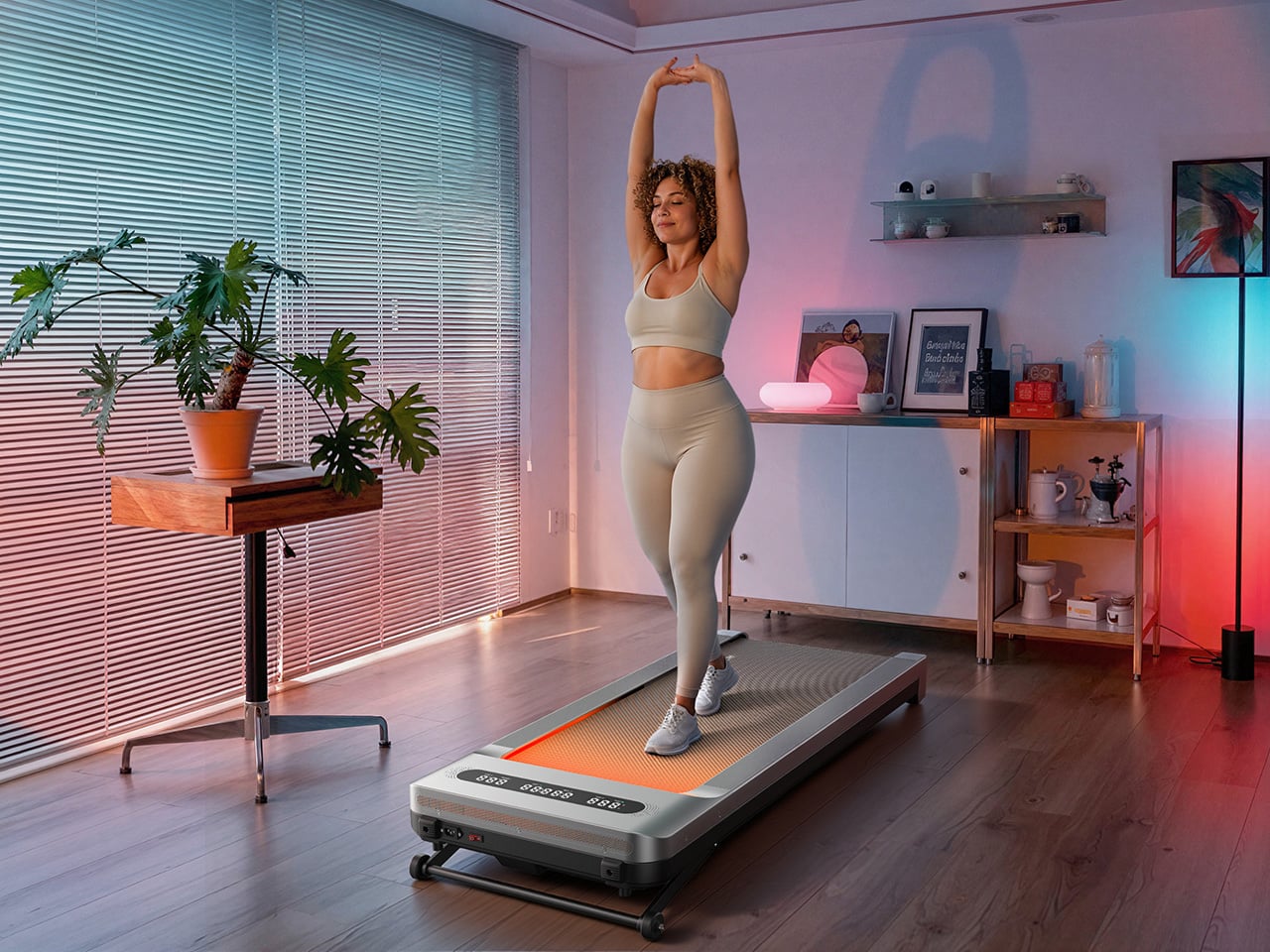
The UltraWalk W60 Plus is the clearest expression of what MERACH is building toward: a walking pad engineered with permanence at its core. When we caught the brand at IFA 2026, their first major trade show appearance despite an already loyal following built through e-commerce, the walking pad lineup stood out for build quality at a price most competitors couldn’t match. The W60 Plus has 12 automatic incline levels, a third-party SGS-certified motor, and a weight capacity that would make a full-size treadmill raise an eyebrow. Mood lighting and a Bluetooth speaker come along too, which sounds ridiculous until you realize how much more likely you are to use a machine that’s genuinely fun to be around.

Designer: MERACH

Click Here to Buy Now: $288 $499.99 ($211.99 off, use coupon code “MERACHW60”). Hurry, deal ends in 48-hours!

A 3.5 HP Brushless Motor, SGS-Certified Performance, and a Frame Rated for 330 Lb

The W60 Plus runs on a 3.5 HP peak / 1.25 CHP brushless motor with a 42mm diameter and a Hall sensor for precision feedback. Brushless motors are generally more efficient and longer-lasting than brushed ones, and MERACH claims a lifespan of up to 15,000 hours here, which the brand puts against the 300 to 800-hour lifespans typical of budget walking pad motors. The weight capacity sits at 330 lbs under SGS-certified testing conditions. The heavy-duty steel frame doesn’t wobble under a real walking load, which matters more than most spec sheet comparisons. That stability is what separates a machine you’ll want to use from one you’ll come to resent.

The W60 Plus passed SGS’ performance specs evaluation with flying colors. The noise testing came back at under 54 dB at medium speed with a 75 kg test load, which sits comfortably below the ambient volume of a normal conversation. At maximum speed that figure climbs to 60 dB with load, and 55 dB without, meaning the machine stays apartment-friendly even when it’s working hard. There’s also a one-touch mute function for those moments when you absolutely need silence (hello, important video calls). That noise profile lets you walk and watch TV simultaneously without either experience suffering, which is, honestly, the whole point of this category.

Twelve Auto-Incline Levels, a 16.5-Inch-Wide Deck, and a Speed Range Built for Walking

Twelve levels of automatic incline is the feature that separates the W60 Plus from the flat-and-boring competition, and for a machine in this price tier, it’s genuinely unusual. At the highest setting, it shifts from a gentle recovery walk to something that meaningfully elevates your heart rate, particularly through the posterior chain. The speed range of 0.6 to 4.0 MPH keeps things firmly in walking and light jogging territory, and that 4 MPH ceiling is worth acknowledging: this machine won’t satisfy runners. What it will do is make a 3 MPH incline walk feel like real exercise, which for most desk-workers is entirely the point. Incline transitions between levels automatically and smoothly, a detail that matters when you’re trying to maintain a rhythm.

The running deck measures 16.5 inches wide by 41.3 inches long, which MERACH puts at roughly 33% wider than the category standard. That extra width makes for a more natural gait and stride, particularly for taller users or anyone with broader hips. The non-slip surface handles uphill walking and light jogging without issue, and the length means you’re not constantly worrying about the back edge. Team USA heptathlete Annie Kunz has been using the W60 Plus for active recovery and step accumulation, describing it as a way to “jump on here and there when I feel a burst of energy.” Multi-event athletes log enormous volumes of low-intensity cross-training, and a 12-level incline walking pad fits that workflow more naturally than a flat surface ever could.

Sound-Reactive RGB Lighting, a 5W Bluetooth Speaker, and Triple-Platform App Integration

MERACH’s RGB lighting system reacts to step frequency and syncs to audio rhythm, creating a feedback loop between movement, sound, and visual stimulus that turns a walking session into something engaging. A walking pad that’s boring ends up under the sofa permanently, and MERACH clearly treats engagement as a design constraint, not an afterthought. The lighting pairs with a built-in 5W Bluetooth speaker that fills a home office without headphones, which matters when you’re walking through calls or podcasts. The whole feature cluster borrows from the cozy cardio playbook, acknowledging that for most users, habit formation is a bigger obstacle than physical capability. Make the machine enjoyable to use, and the steps take care of themselves.

Full app integration spans MERACH’s own platform, Apple Health, and Google Fit, with real-time tracking of speed, incline, calories, distance, time, and step count across all three. The MERACH app adds guided routines and custom workout programs, which pushes the W60 Plus into territory where it can coach you through a session rather than simply hosting it. An 8-button magnetic remote handles speed, incline, lighting, mute, start/stop, and program selection, and it docks magnetically to the frame when not in use. The LED display gives you a live readout of key metrics without having to pull out your phone. None of it requires a subscription, which at this price is a genuinely welcome detail.

Zero Assembly, 80 Percent Less Floor Space, and a Price That Makes Sense

The W60 Plus ships fully ready to use: unbox it, plug it into a standard 110V outlet, and step on. No assembly means no instruction booklet, no leftover mystery bolts, and no 45-minute YouTube tutorial that’s supposed to take 10 minutes. When you’re done, the vertical folding support stand lets the machine stand upright, which MERACH says cuts the floor-space footprint by up to 80%. The enlarged front transport wheels make it manageable to move even over carpet, which is where most budget transport wheel designs tend to give up. At 67.7 lbs, the W60 Plus isn’t light, so those wheels are doing real work every time you slide this thing out from under the desk.

The UltraWalk W60 Plus launched on May 26, 2026, and is available now through MERACH’s official website in a Grey finish, with the list price marked at $499.99 and the current sale price at $329.99. MERACH is also offering an extra discount code, MERACHW60, which drops the checkout price to $264.00 with free shipping, a much more aggressive number than this category usually sees for a 12-level auto-incline walking pad. The product page also offers optional accident protection from $29.99. Warranty details are not clearly surfaced in the material provided, so that part is best verified directly on MERACH’s store before publication.

Click Here to Buy Now: $288 $499.99 ($211.99 off, use coupon code “MERACHW60”). Hurry, deal ends in 48-hours!

The post MERACH’s new W60 Plus walking pad boasts 12 incline levels, RGB lights, and a built-in Bluetooth speaker first appeared on Yanko Design.
  • ✇Yanko Design
  • This Expandable LEGO Frame System Finally Solves the Collector Storage Nightmare
    Somewhere in a closet, a perfectly good LEGO minifigure is staring through a plastic bag at the back of a cardboard box. It has a tiny printed face, a surprisingly elaborate hat, and absolutely no audience. Every serious LEGO collector knows the feeling: shelves fill up fast, display cases sell at fixed sizes, and at some point the collection starts living in labeled ziplock bags rather than anywhere it can actually be seen. LEGO has released over 775 Collectible Minifigures across 51 series si
     

This Expandable LEGO Frame System Finally Solves the Collector Storage Nightmare

4 octobre 2026 à 19:30

Somewhere in a closet, a perfectly good LEGO minifigure is staring through a plastic bag at the back of a cardboard box. It has a tiny printed face, a surprisingly elaborate hat, and absolutely no audience. Every serious LEGO collector knows the feeling: shelves fill up fast, display cases sell at fixed sizes, and at some point the collection starts living in labeled ziplock bags rather than anywhere it can actually be seen. LEGO has released over 775 Collectible Minifigures across 51 series since 2010, with new figures arriving three times a year, which makes the storage problem a permanent one for anyone collecting seriously. Stephen Peaple, a British-born collector now based in Perth, Australia, had thousands of them and spent four years building the solution he could not find anywhere.

Finity Frames puts a collection on the wall in a clean white grid. A single frame carries 16 spaces, but removable dividers let you make room for bigger figures or pack in a crowd. When the collection grows, connected frames share edges so the display extends as one continuous piece without visual seams or doubled-up borders. Your next minifigure gets a spot without requiring a complete wall makeover. The system is injection-molded ABS, ships flat-packed, and the connection method that makes all of it work is patented.

Designer: Stephen Peaple

Click Here to Buy Now: $55. Hurry, only 5/16 left!

A Display System That Grows With Your LEGO Collection

Every Finity Frame is built around a seamless edge connection where neighboring frames share a single border, eliminating the doubled-up edge and any visual gap at the join. This is the core innovation that solves the fixed-size problem inherent in every other display case on the market. It means you can start with a single frame for one series of figures and expand outward in any direction, at any time, without having to replace your original investment. The aesthetic is clean and continuous, looking like a single, cohesive unit no matter how large it gets.

This design approach also makes the system more efficient as it grows. Peaple makes the math explicit: the first frame measures 312mm across, and each connected frame adds just 298mm, because one edge is always shared. This reduces material waste and lowers the cost per additional frame. A 2×2 Collector, for instance, cannot be broken apart into four 1×1 Starters, since it doesn’t include the extra pieces. For context, the most prominent fixed-case competitors max out around 190 minifigures. The Finity Frames Showcase holds 1,056, and two of them together can display over 2,100 figures as a single, unified piece.

Built for Customization and Creative Play

Each Finity Frame ships with three horizontal and three vertical internal slats, forming a standard 4×4 grid. This sixteen-space layout is not arbitrary; it maps exactly to one complete Collectible Minifigures series, which traditionally ships with 16 unique figures. The slats are removable in any combination, yielding 64 different internal layouts. You can pull the vertical dividers out, double-stack figures with jumper plates, and a 1×1 Starter can hold up to 88 minifigures. This flexibility lets you create custom spaces for dioramas, larger vehicles, or oversized figures like the Hulk who need a little extra room.

The system’s dimensions are precisely calibrated to the LEGO System of Play. Internal slats are exactly one brick wide, and the frame edges are exactly two bricks wide. Each compartment accepts a 6×8 LEGO plate or four 3×4 minifigure plates, the same stands that come with CMF packs. This means removing the acrylic cover turns the frame into a wall-mounted baseplate where builds can bridge continuously across spaces and frames. Peaple calls this “bridging,” a feature that turns a static display into a creative canvas. Every horizontal slat even has a built-in row of six studs for securing figures or small builds.

Designed for Collectors of All Kinds

A magnetic Perspex acrylic cover protects the collection from dust and removes in a single pull. It’s made from UV-stable material with built-in absorbers to block harmful light, preventing the slow fading that can damage valuable figures over time. The frame itself is a gallery-white, UV-treated ABS plastic, a color choice meant to disappear behind the collection rather than compete with it. Everything is designed to last, preserving the collection while keeping it easily accessible. The magnetic attachment is secure but quick, so you can get to your figures without fussing with clips or latches.

Flipping the horizontal slats 180 degrees turns the studded surfaces into flat shelves, opening the frame to almost any small-scale collectible. A single 64x64x49mm space can hold Funko Pocket POPs, Be@rbricks, Sonny Angels, or even shot glasses. Removing dividers creates double-height spaces for larger items like vintage Kenner 3¾” figures, Super7 ReAction figures, Playmobil sets, or graded collectible cards in their hard cases. It’s a true cabinet of curiosities, designed for a LEGO collection but adaptable enough for just about anything else that deserves a spot on the wall.

Five Sizes, Starting at $65 USD

The five frame sizes run from the 1×1 Starter at 12.3×12.3 inches (up to 88 minifigures) to the 4×3 Showcase at 47.4×35.7 inches (up to 1,056), with the 1×2 Duo, 2×2 Collector, and 3×2 Lifestyle filling in between. All frames run 55mm deep without the cover, 61mm with, and production units are estimated at 0.9 to 1.1kg for the 1×1 (roughly 2 lbs).

Retail pricing starts at AU$99 (roughly US$65) for the Starter and reaches AU$835 (roughly US$550) for the Showcase. Any size can be extended later through a Frame Extender on finityframes.com, where you input what you already own and order only the additional sets required. The system ships flat-packed globally, with US distribution in place through the manufacturing partner.

Click Here to Buy Now: $55. Hurry, only 5/16 left!

The post This Expandable LEGO Frame System Finally Solves the Collector Storage Nightmare first appeared on Yanko Design.

  • ✇Yanko Design
  • 5 Best EDC-Style Gadgets Designed to Get You Through Hurricane Season
    Hurricane season has a way of exposing which of your belongings are actually useful and which ones just take up drawer space. When the power goes out and the forecast turns ugly, the difference between a stressful night and a manageable one often comes down to a handful of well-designed objects rather than a garage full of supplies. We pulled together five pieces that cover every real need during an outage, from staying informed to staying lit to staying organized. Each one earns its spot by so
     

5 Best EDC-Style Gadgets Designed to Get You Through Hurricane Season

4 octobre 2026 à 18:30

Hurricane season has a way of exposing which of your belongings are actually useful and which ones just take up drawer space. When the power goes out and the forecast turns ugly, the difference between a stressful night and a manageable one often comes down to a handful of well-designed objects rather than a garage full of supplies.

We pulled together five pieces that cover every real need during an outage, from staying informed to staying lit to staying organized. Each one earns its spot by solving a specific problem without asking you to sacrifice good design along the way.

1. Clip&Go Radio

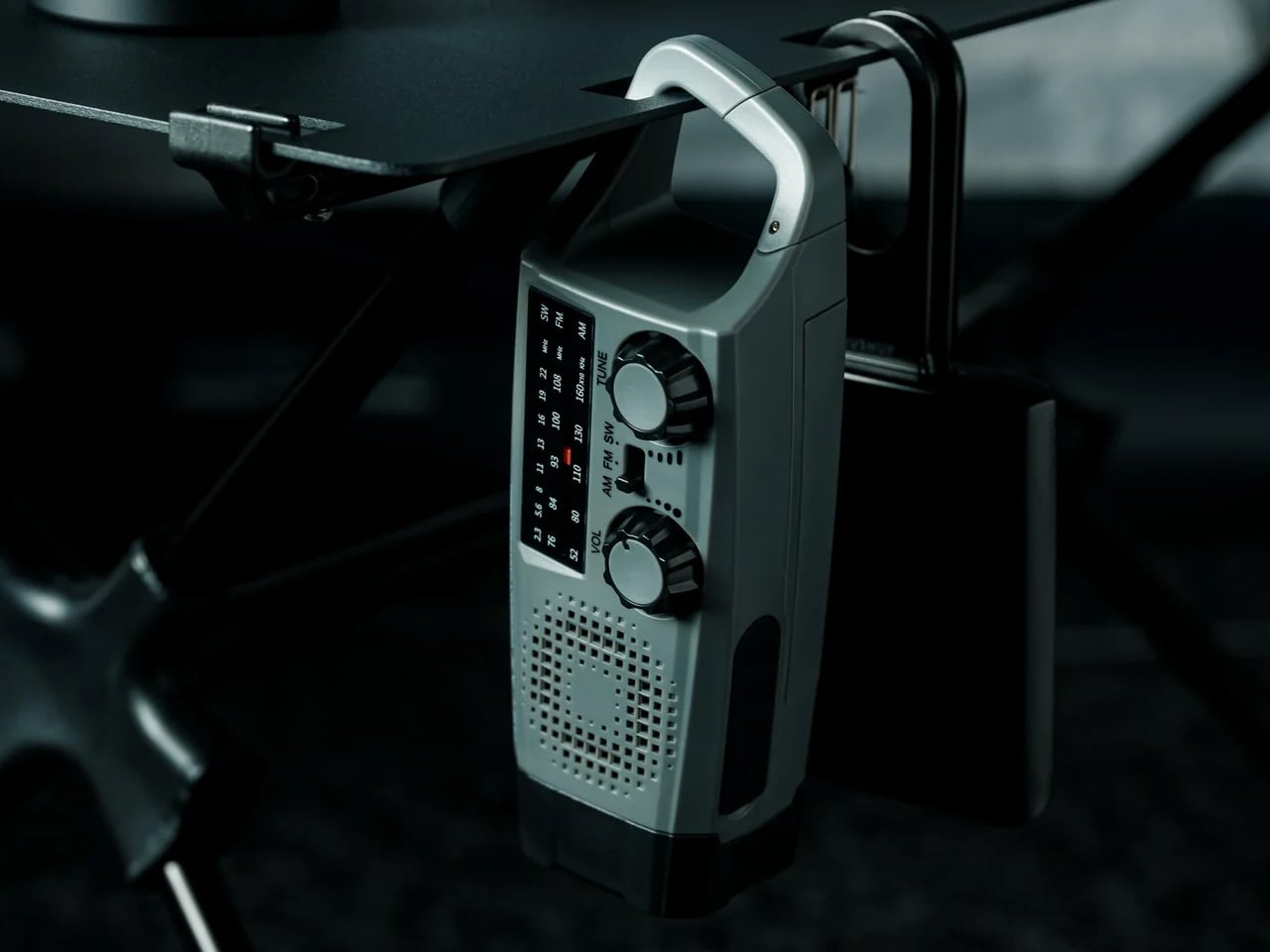
The Clip&Go Radio treats emergency information as something you should never have to search for. Its clip-on form factor means it attaches directly to a bag strap, a belt loop, or a shelf edge, staying within reach the moment a storm warning appears on your phone. It removes the radio from the back of a drawer and puts it exactly where your hand already goes.

For you, this changes what the first ten minutes of an outage actually feel like. Instead of fumbling through boxes for batteries or a charger, you already know where your radio is because it has been clipped to your bag the whole time. That small shift in habit is the difference between calm preparation and last-minute panic when the sky turns dark.

Click Here to Buy Now: $60.00 

What we like:

  • The clip mechanism means it travels with you instead of sitting forgotten until an emergency reminds you it exists
  • Its compact form factor means carrying it never feels like an inconvenience

What we dislike:

  • A clip-on build limits how much space is available for larger speaker components or extended battery life
  • It also means less room for the kind of display or dial controls bigger radios can offer

2. JOAT Titanium Multitool

The JOAT earns its name, Jack Of All Trades, by packing six functions into a titanium body just 80mm long and weighing 1.8 ounces. Its keychain loop means it rides alongside your house keys rather than sitting in a toolbox, ready the instant a storm exposes a jammed latch, a loose screw, or a cut strap.

For you, this is the tool that handles the small mechanical failures a storm tends to create without warning. A door that swells shut in the humidity, a tarp that needs tying down, a package that needs opening in a hurry. Because it lives on your keychain, you are never without it, which matters most in the moments you did not think to plan for.

What we like:

  • Titanium construction resists rust and rough handling far better than standard steel builds
  • Its keychain-ready size means it requires zero extra thought about where to store it

What we dislike:

  • At 80mm, it is not built for demanding cutting tasks that a larger blade would handle more easily
  • Some users may miss a locking mechanism that a compact format like this does not include

3. Blackout Beam Tactical Flashlight

Light disappears first in a storm and gets missed the most. The Blackout Beam Tactical Flashlight is built specifically for that gap, a rugged beam designed to cut through total darkness rather than the soft glow of a phone screen running on its last bar of battery.

For you, this is about confidence more than convenience. Walking through a dark house to check on a leak, moving through a flooded yard, or signaling for help outside all become far less stressful with a flashlight built for exactly that job. It turns a genuinely unsettling situation into a manageable one, simply by giving you a beam you can trust.

Click Here to Buy Now: $90.00

What we like:

  • Its tactical housing feels built for genuine outdoor and emergency conditions rather than casual bedside use
  • The focused beam design prioritizes distance and clarity over soft ambient light

What we dislike:

  • Tactical styling makes it bulkier and less discreet than a slim everyday carry flashlight
  • Depending on the build, rugged housings can add extra weight to a bag already carrying other gear

4. NESTOUT Solar Charger

Stored battery power only lasts as long as its charge, but the NESTOUT Solar Charger keeps working as long as the sun does. Its four-panel design folds down into a compact carry format built from rugged, tan colored fabric that feels closer to durable field gear than typical consumer electronics, unfolding into a genuine power source wherever daylight reaches.

For you, this turns a short-term fix into a sustainable one during an extended outage. Instead of watching a power bank slowly drain with no way to refill it, every sunny break in the clouds becomes a chance to top your devices back up. It is the piece that keeps your kit relevant on day three of an outage, not just day one.

What we like:

  • The folding four-panel design packs down small enough to disappear into a bag without adding real weight
  • Its fabric build and neutral tone feel purpose-made for outdoor durability rather than delicate electronics

What we dislike:

  • Solar charging depends entirely on weather and daylight hours, which makes it unreliable during extended cloud cover
  • It also charges more slowly than a wall outlet, so patience becomes part of the process

5. Rux Gear Box

None of the gear above stays useful for long if it ends up scattered across drawers instead of ready to grab. The RUX Gear Box solves that with a collapsible body made from TPU-coated nylon that resists weather and wipes clean easily, plus a separate waterproof insert built to keep wet and dry items apart.

For you, this is the piece that turns four individual objects into one coherent system. Instead of hunting for a radio in one room and a flashlight in another while a storm closes in, everything lives in a single box that compresses flat when not in use and expands the moment you need it. It is the difference between a kit and a pile.

What we like:

  • The collapsible design means it takes up almost no storage space until an emergency actually calls for it
  • Its waterproof insert keeps sensitive gear like electronics separated from anything damp

What we dislike:

  • A soft-sided collapsible build offers less rigid protection than a hard shell case would
  • Its flexible material also means it will not stack as neatly as a traditional box-style container

Good Design Doesn’t Skip a Storm

Put together, these five objects cover the four things a real outage actually demands. Information, light, utility, and the power to keep going once the first two days have passed. None of them ask you to sacrifice good design to get there, which is exactly the point.

Hurricane season will keep arriving whether we are ready for it or not, but the objects we choose to meet it with do not have to look like they came from an emergency supply closet. These five prove that being prepared and having good taste were never mutually exclusive to begin with.

The post 5 Best EDC-Style Gadgets Designed to Get You Through Hurricane Season first appeared on Yanko Design.

  • ✇Yanko Design
  • 9 Best Gifts for the Person Who Turned Their Living Room Into a Sports Bar
    Some people watch the game. Others build a whole experience around it. The living room becomes the venue, the couch becomes the seat, and somehow the right gift makes the whole setup feel intentional rather than assembled over years of impulse buys. These nine picks span every corner of the room, from the screen to the sound to the table that keeps the energy going long after the final whistle blows and nobody is ready to leave just yet. A great game-day room is not really about having the bigg
     

9 Best Gifts for the Person Who Turned Their Living Room Into a Sports Bar

2 octobre 2026 à 07:40

Some people watch the game. Others build a whole experience around it. The living room becomes the venue, the couch becomes the seat, and somehow the right gift makes the whole setup feel intentional rather than assembled over years of impulse buys. These nine picks span every corner of the room, from the screen to the sound to the table that keeps the energy going long after the final whistle blows and nobody is ready to leave just yet.

A great game-day room is not really about having the biggest TV. It is about having a room that works. Sound that fills the space without fighting for attention. A screen that earns its place on the wall even when the game is not on. A table that gives the energy somewhere to go at halftime. These gifts solve real problems in that space, and each one carries enough design thinking behind it to feel like a genuinely considered choice rather than a last-minute add to cart.

1. Portable CD Cover Player

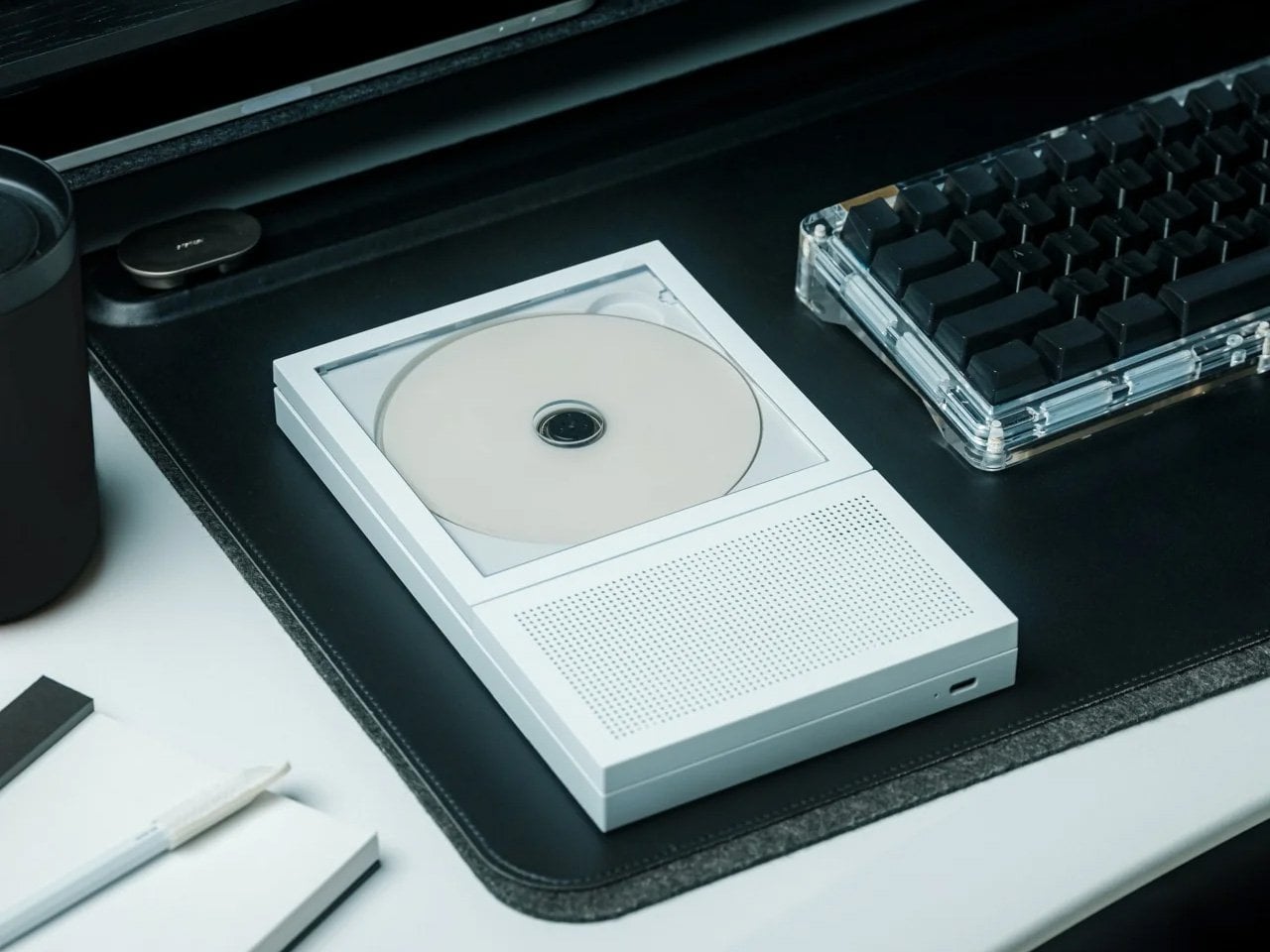
Most pregame rituals revolve around a playlist nobody agreed on. The Portable CD Cover Player changes the format entirely, looking exactly like a CD jewel case standing on edge, which means it earns its shelf spot before anyone presses play. For someone who has put real money into making their living room feel right, a music player that doubles as a sculptural object is the kind of gift that holds its ground in the room long after the season ends and the decorations come down for good.

Beyond the form, it delivers. Slot a disc in and the music plays back with the kind of warmth a streaming service on a phone speaker simply does not replicate. It reads as the pregame companion: the thing that sets the tone before the screen takes over and the broadcast audio fills the room. For the host who treats game day like an event rather than a habit, this is the detail that tells everyone in the room that the person running the setup actually thought it through from the first quarter to the last.

Click Here to Buy Now: $199.00

What We Like

  • The form is genuinely surprising without being gimmicky, earning a permanent shelf spot rather than a junk drawer after the novelty wears off in the first week.
  • At from $199 on YD Select, it sits in a gift tier that feels considered without crossing into impractical territory for most budgets.

What We Dislike

  • Physical media is a deliberate commitment, and someone who has moved entirely to streaming will need to rebuild a CD library, which is either a feature or a friction point depending entirely on who is receiving it.
  • Pricing for different color or finish variants beyond the base entry price is not confirmed on the current listing.

2. Hisense U6SF Pro

The U6SF Pro solves the problem most living rooms never fully address: glare. Sunlight through a window, a lamp left on during an afternoon game, the overhead light nobody turned off before kickoff. A standard panel washes out and flattens the image before halftime arrives, but Hisense’s anti-reflection, glare-free coating treats the room’s actual conditions as part of the design brief. Tom’s Guide’s reviewer noted they never once had to adjust the room lights during a full testing session with this panel in a real living room.

At $699, down from its original launch price of $1,099, the U6SF Pro puts a 1,200-nit Mini LED panel with a native 144Hz refresh rate and a built-in subwoofer into a price bracket that used to feel out of reach for this level of picture performance. That combination of brightness ceiling, motion handling, and built-in bass makes it the natural anchor for a game-day living room that is serious about the setup without being unreasonable about what the whole thing should realistically cost.

What We Like

  • The glare-free anti-reflection coating is a tested, real-world differentiator in rooms that are not dedicated dark home theaters, which describes most living rooms where the game actually gets watched.

What We Dislike

  • The built-in subwoofer is a convenient feature, but committed audio setups will likely still want a dedicated soundbar or speaker pair running alongside it for full-range coverage.
  • Available in larger screen sizes that may not suit every living room layout, so confirming dimensions before committing to this as a gift is worth the extra step.

3. XGIMI MoGo 4

The second-screen problem- where does the overflow crowd watch when the main room fills up- never gets planned for until it is actively happening. The XGIMI MoGo 4 is the answer that does not require buying a second television. A 1080p portable projector with 450 ISO Lumens, a 360-degree adjustable stand, Google TV with licensed Netflix built in, and dual 6W Harman Kardon speakers, it throws up to a 200-inch image from a cylinder compact enough to sit on a coffee table without commanding the room.

The 71.28Wh built-in battery delivers up to 2.5 hours of playtime, covering most games without needing a wall outlet nearby. Running on Wi-Fi 5 and Bluetooth 5.1, the setup is entirely wireless from start to finish. For a host who wants a backyard overflow screen, a garage viewing option, or a second room covered on playoff day, this is the projector that pulls all of that off without a permanent installation, a ceiling mount, or a second cable subscription attached to the monthly bill.

What We Like

  • The 360-degree adjustable stand means it can project onto a ceiling, a garage door, or a blank wall with the same minimal setup effort every single time.
  • Google TV with licensed Netflix built in removes the need for an external streaming stick or any additional device running alongside it out of the box.

What We Dislike

  • At 450 ISO Lumens, bright-room performance has real limits, and this works best in a controlled-light environment rather than a fully sunlit afternoon kickoff.
  • 2.5 hours of battery life covers a standard game comfortably but falls short for overtime-heavy playoff marathons without a power source kept nearby.

4. Come Together

Come Together Adds Rolling Speaker and Mini Fridge to Your Couch

Most game-day setups eventually arrive at the same friction point: someone has to get up to restock the drinks, and that person misses the play everyone is going to be talking about for the next ten minutes. Come Together is a three-piece robotic system designed specifically around that problem. The Tower sits as a calm black cylinder until it is needed, then rises to reveal a built-in mini fridge capable of holding up to five cans, with a tray on top that swaps in for snacks when the cooling function is not the priority.

The Base handles the sound half of the equation. It is a circular spatial audio unit that maps the room, figures out where people are sitting, and positions itself for the best possible coverage without anyone adjusting a thing. A Qi2 wireless charging pad keeps phones topped off through a long game without anyone leaving the couch to find a cable. For the host who has optimized everything else and still loses someone to the kitchen every twenty minutes, this is the piece that quietly closes that gap.

What We Like

  • The Qi2 wireless charging integration solves the dead-phone problem during long games without adding another cable to a setup that is already managed tightly.
  • A spatial audio unit that actively repositions itself for the room’s seating layout is a genuinely considered detail for a couch-forward, game-first viewing environment.

What We Dislike

  • Five cans is comfortable for one or two people but runs short for a full game-day group without a refill run, which somewhat undercuts the core convenience premise.
  • Consumer purchase availability should be confirmed before gifting, as this was covered at the concept-design stage and current retail status should be verified against the original coverage.

5. RetroWave 7-in-1 Radio

The RetroWave 7-in-1 Radio has the look of a vintage Japanese radio and the utility of something designed entirely for now. Behind the tactile tuning dial and compact body, measuring 5.04 inches wide and 3.86 inches tall in ABS resin and iron, it pulls in FM, AM, and shortwave stations, streams music over Bluetooth, plays MP3s via TF card, and carries a built-in flashlight and SOS alarm. For a game-day room, it earns its shelf spot the moment it arrives. Nobody in that room mistakes it for an afterthought.

During a game, its job is focused: fill the room with the pre-broadcast energy, the live radio commentary, or the kind of ambient music that does not demand a playlist decision before kickoff. When the power cuts out, and at some point it does, the radio keeps going in a way a smart speaker or a streaming device simply cannot promise without a signal. At $89, it is the gift that reads as a design object on the shelf and earns the label of genuine essential in the room and well beyond it.

Click Here to Buy Now: $89.00

What We Like

  • Seven real functions in one compact body, covering speaker, MP3, radio, flashlight, clock, power bank, and SOS alarm, with no redundancy in how each one actually gets used.
  • The retro Japanese design language means it lives on a shelf and looks like it belongs there rather than sitting out like a piece of tech that never found a proper home.

What We Dislike

  • The compact dimensions mean speaker output suits ambient listening and pregame music rather than filling a large room at full volume when the crowd gets loud.
  • Shortwave reception quality will vary by location and atmospheric conditions, meaning not every station is equally accessible in every US market throughout the season.

6. IKEA x Xbox YXSTABY Collection

IKEA and Xbox’s YXSTABY furniture collection makes gaming feel more at home

The IKEA and Xbox YXSTABY collection is nine pieces of furniture designed around the specific reality of a living room that doubles as a gaming and viewing setup. The rolling TV stand, the thumbstick-shaped stool, the D-pad cushion: each piece reads clearly as part of the same visual language while functioning as real, everyday furniture rather than themed décor that announces itself too loudly. It is the first time a gaming identity has been built into a living room collection at this level of design seriousness, and the craftsmanship reflects it.

For the person whose living room already functions as a game-day headquarters, these pieces solve the organizational and seating problems that quietly accumulate around a serious setup over time. The rolling TV stand keeps equipment mobile without the floor clutter of static furniture that never quite sits right. The stools double as extra seating the moment the couch fills up before kickoff. Launched in IKEA stores October 1, 2026, the collection ties the room together rather than adding another device to a pile that is already complicated enough.

What We Like

  • Nine coordinated pieces mean gifting one item or several works without the room looking inconsistent, since everything belongs to the same design system from day one.
  • The rolling TV stand solves the real logistical problem of rearranging a viewing setup without unplugging and re-routing every cable in the process.

What We Dislike

  • The gaming-identity aesthetic is deliberate and visible, which suits the target audience perfectly but narrows the appeal for someone who prefers a more neutral living room look throughout their space.
  • Availability in specific IKEA markets should be confirmed before purchasing, since not every location will carry the full nine-piece range at launch without advance stock checks.

7. Department of Play 3-in-1 Table

One Table, 3 Games, Nobody Needs a Game Room

Sanne’s Department of Play table does the math that most game-room setups never quite solve: one table, three games, and no dedicated room required. It converts between pool, ping pong, and dining configurations, which means it earns its square footage in a normal-sized living room rather than demanding a basement or a spare room nobody actually has. For the person who has maxed out the screen and sound side of their setup, this is the piece that extends the experience past the final whistle into the rest of the evening.

Halftime has a specific energy problem. The game pauses, but the room does not settle with it. A table that converts to pool or ping pong in a few steps gives that energy somewhere productive to go rather than everyone drifting toward their phones and losing the thread of why they came over in the first place. It is also the one item on this list that earns equal weight during the offseason, which makes it the most defensible large-format gift in the group by a considerable margin.

What We Like

  • Three fully functional game configurations in one piece means it does not feel like a compromise on any of the three: pool, ping pong, and dining each hold up entirely on their own.
  • It earns its keep in the offseason in a way that purpose-built game-day furniture rarely manages once the season wraps up and the schedule clears.

What We Dislike

  • The footprint is significant, and the room should be measured carefully before committing, especially if the living room already has an established furniture layout that functions well as-is.
  • Converting between configurations takes time and some physical effort, which feels less appealing mid-game when a quick round between plays was the actual goal going in.

8. Hisense CanvasTV

The CanvasTV solves the problem most televisions ignore entirely: what the screen looks like when the game is not on. A 4K QLED Google TV wrapped in a teak frame, it ships with an UltraSlim wall mount already included in the box, letting the panel hug the wall closely enough to read as a framed painting rather than a floating screen. A Hi-Matte anti-glare panel and an RGB light sensor allow it to adapt to the room’s actual lighting conditions throughout the day without anyone touching a setting.

When no one is watching, the Motion Detector blanks the display, cutting to a neutral screen the moment the room empties and switching back to art the moment someone returns. Access to more than 1,000 curated artworks comes built in at no extra subscription cost. At $1,997.99, it is the top-of-list anchor gift for someone whose living room already performs during the game and deserves a screen that holds its own for the other twenty-two hours of the day when the broadcast is off, and the room still needs to look right.

What We Like

  • The UltraSlim wall mount included in the box removes the most common installation friction point and makes the all-in price considerably more honest than it first appears.
  • Over 1,000 curated artworks with no subscription fee attached is a genuine differentiator against competitors that charge a monthly rate for access to their art libraries.

What We Dislike

  • The teak frame aesthetic is specific and intentional, working beautifully in the right interior but unlikely to suit every room style with the same effortless ease.

9. Side A Cassette Speaker

The Side A Cassette Speaker is the easiest item on this list to explain and the hardest to put down once it is in your hands. A Bluetooth speaker shaped and sized exactly like a cassette tape, it sits on a shelf, a coffee table, or a windowsill and reads as a found object rather than a piece of tech left out between uses. For a room that has been carefully assembled piece by piece, it is the kind of small detail that signals genuine taste without demanding any attention at all from the people in the room.

At $49 on YD Select, it functions as the natural lower-budget pick in this lineup: the item that rounds out a larger gift or works entirely on its own when the occasion calls for something thoughtful rather than extravagant. It plays music with enough clarity to carry the room before the main screen takes over, and it does so while looking like something that was always meant to be there rather than something plugged in and forgotten in the corner when the season gets busy and the setup expands.

Click Here to Buy Now: $49.00

What We Like

  • At $49, it sits comfortably in the easy-yes gift tier: specific enough to feel genuinely considered and affordable enough to give without second-guessing the price once it is wrapped.
  • The form is the function. It looks like a cassette, plays music clearly, and earns a permanent shelf spot in a room that has been put together with real care and intention over time.

What We Dislike

  • Speaker output is proportional to its size. It is a pregame and ambient-listening companion rather than a replacement for a dedicated Bluetooth speaker when volume becomes the actual priority of the room.
  • The cassette format is a deliberate nod to a specific era of nostalgia, which works well for the right recipient but may feel too referential for someone who prefers a forward-facing, minimal design language throughout their space.

The Room That Works All Season

A game-day room is really just a room with strong opinions about what it needs to do well. The right screen, the right sound, the right table for when the final whistle goes, and nobody is ready to pack up and head home. Every pick on this list earns its place by solving a real problem in that room rather than adding noise to a setup that is already working well enough on its own without it.

The best part of giving something to the person who has already built the room is that they will actually use it, week after week, throughout the season and past it. These are not conversation pieces or shelf fillers added for their own sake. They are objects that get switched on, picked up, sat in, and genuinely appreciated in real time during a game that matters to the people in that room, and that kind of usefulness is harder to gift than it looks.

The post 9 Best Gifts for the Person Who Turned Their Living Room Into a Sports Bar first appeared on Yanko Design.
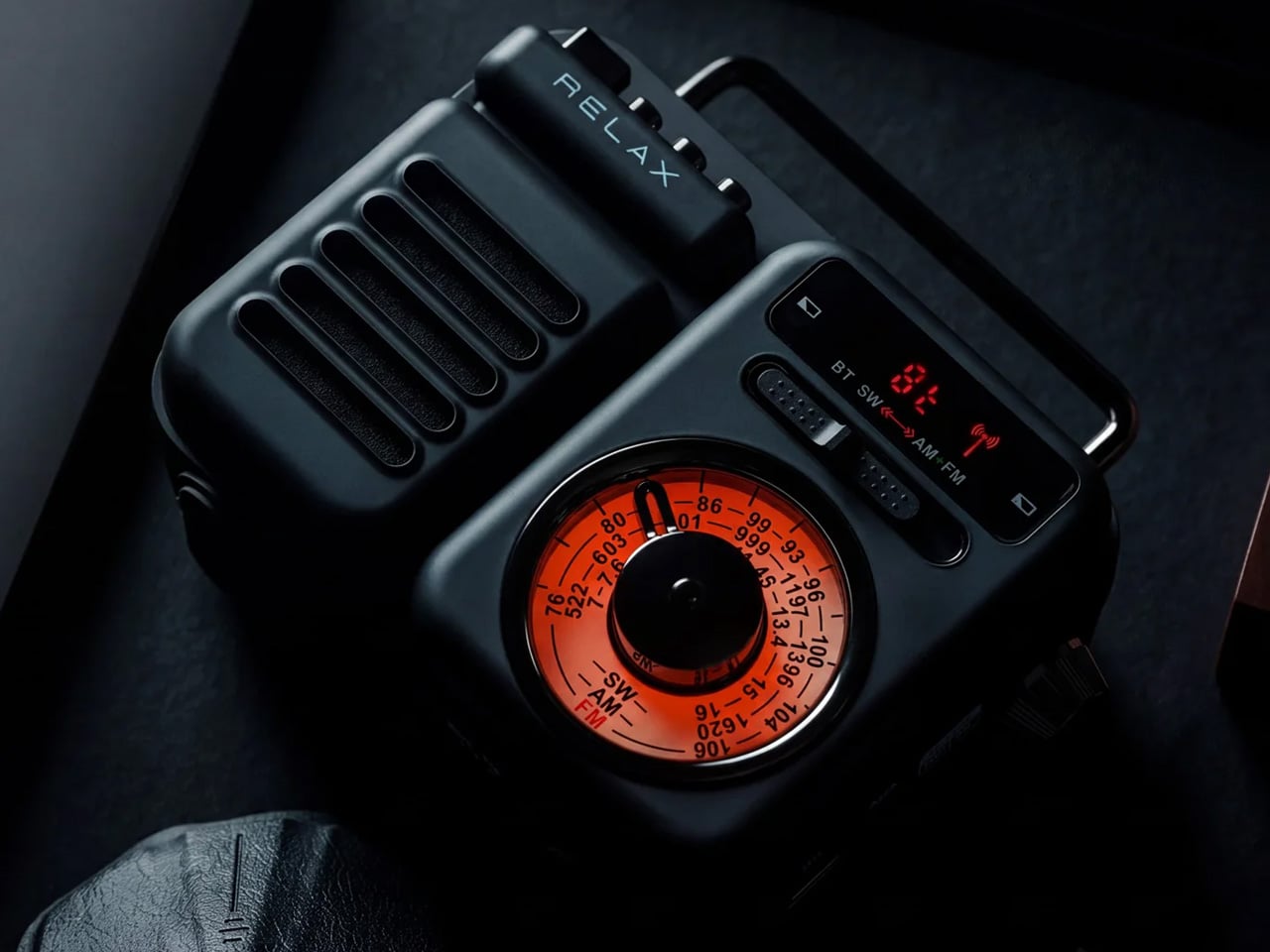
  • ✇Yanko Design
  • The VIVIFoCAL S1 Glasses Focus Themselves So Your Eyes Don’t Have To
    Your phone focuses by firing an invisible laser pulse at whatever you’re aiming it at, timing the bounce, and telling a tiny motor to move some glass. The whole loop finishes in a few hundredths of a second and nobody has thought about it since roughly 2017. VIVIFoCAL has taken that identical hardware recipe, a time of flight sensor, a microcontroller and an actuator, and bolted it onto a pair of glasses pointed at the world instead of at your brunch. The S1 measures how far away the thing you’
     

The VIVIFoCAL S1 Glasses Focus Themselves So Your Eyes Don’t Have To

1 octobre 2026 à 21:45

Your phone focuses by firing an invisible laser pulse at whatever you’re aiming it at, timing the bounce, and telling a tiny motor to move some glass. The whole loop finishes in a few hundredths of a second and nobody has thought about it since roughly 2017. VIVIFoCAL has taken that identical hardware recipe, a time of flight sensor, a microcontroller and an actuator, and bolted it onto a pair of glasses pointed at the world instead of at your brunch. The S1 measures how far away the thing you’re looking at is, works out the optical power your eyes need, and mechanically shifts the lenses into position in under 0.1 seconds. It’s autofocus, except the sensor is on your face.

Dr. Zhao, who earned his doctorate at a world-leading university and previously ran an optical R&D laboratory at a major optics company, built VIVIFoCAL around a piece of physics that has not yet been widely adopted by the general public. The S1 uses Alvarez lenses, two complementary freeform elements that change optical power when one slides sideways across the other. Nobel laureate Luis Alvarez patented the principle, and it was then stranded for decades because somebody had to do the sliding. A motor does it now. The result covers 8 inches to infinity in a 40 gram frame, and it launches with VIP pricing from $289.

Designer: VIVIFoCAL

Click here to Reserve Now: $10 (VIP pricing from $289).

A laser, a motor, and the 1967 patent working in the background

Three sensors do the work rather than one. A time of flight laser reads distance, a G-sensor tracks head posture, and an infrared wear detection sensor tells the glasses whether they’re on a face at all, which is how the battery survives being pushed up onto your head mid-conversation. The microcontroller sits between them, converting a distance reading into a lens position and commanding the motor in a single pass. The lenses simply change optical power to match whatever distance you’re looking at, the same job your eyes handle on their own before presbyopia kicks in. VIVIFoCAL calls that loop Instant Focus, and the same time of flight hardware we’ve watched migrate into phones, robot vacuums and door locks is what makes it affordable in eyewear.

Fitting a moving lens assembly, a rangefinder, a motion sensor, a microcontroller, a motor and a battery into something that still reads as eyewear is the harder half of this product. VIVIFoCAL has pushed the electronics into the brow bar and the temple arms, keeping the optical stack shallow enough that the frame sits on a face instead of announcing itself as hardware. The 160.5 x 160 x 43.5mm envelope is ordinary spectacle territory, which is the entire argument. Every packaging decision is downstream of one goal, helping the wearer see clearly across distances without thinking about the machine doing it.

Progressive lenses ask you to tilt your chin… this doesn’t

Presbyopia is projected to affect 2.1 billion people by 2030, and the standard answer for most of them is a progressive lens with three prescriptions blended into one lens, near at the bottom, distance at the top, intermediate smeared between. Finding the right part of the glass means tilting your chin, and the tradeoff is the narrow tunnel vision that progressive wearers describe, with softness creeping in toward the edges. VIVIFoCAL calls its answer Full-Lens Clarity, where the Alvarez lenses deliver one consistent optical power across the whole lens at every setting instead of splitting it into zones. There is nothing to hunt for and less peripheral distortion to work around. I’ve watched that chin-tilt dance play out for years, so the appeal is obvious.

Progressive glasses are generally built around everyday reading tasks, and for closer or more detailed work plenty of wearers still reach for a second pair or a magnifier. S1’s focusing range starts at 8 inches, which brings fine detail inside the same lens handling everything else. VIVIFoCAL demoed the glasses at WonderFest 2026 against a 1/35 scale miniature, the sort of precision hobby work that has kept optical visors and loupes in business for a century, and the testers who work with their hands responded the way you’d expect. One early tester shared that using S1 in a data center was a productivity gain and a huge plus, because he could walk past equipment and read tiny serial numbers without interrupting his workflow to take out extra readers, switch to other glasses, or use additional visual aids. He no longer carries multiple pairs when he leaves the house.

Forty grams, three nose pad sizes, and all-day power

VIVIFoCAL designed around the fact that head sizes and nose bridge heights vary far more than eyewear brands usually admit, which is why S1 ships with flexible spring hinges and three sizes of interchangeable nose pads to adapt across face shapes. The frame lands at 40 grams bare and 50 with the magnetic front clip, built on TR90 temples, the same material that has quietly taken over lightweight frames and wearable arms across the industry. Those numbers matter because forgetting you’re wearing them is the whole point of automating focus in the first place. A 250mAh battery holds up through 8 hours of constant refocusing and refills over USB-C in about an hour, with normal use stretching to a full day. Glasses that can run flat is still a new idea to make peace with.

A separate pair of lenses attaches behind the Alvarez elements, so one pair carries your prescription to see near and far. Magnetic polarized sunglass lenses snap onto the front for outdoor use with adaptive focus still running underneath. The polycarbonate lenses carry anti-reflective and anti-smudge coatings, transmit more than 90 percent of light, and sit inside a field of view above 110 degrees. The app adds a ±0.5D fine-tuning range on top of the automatic correction, which is how the glasses absorb the slow drift of a presbyopic prescription instead of being replaced. Presbyopia correction tops out at 3.5D, so the deepest cases fall outside what S1 can currently handle.

The bet VIVIFoCAL is making on moving glass

The company isn’t chasing this idea alone. Other teams are working on adaptive focus through liquid crystal lenses or eye tracking instead of a mechanical shift, and the category is young enough that the approaches are still diverging. VIVIFoCAL is betting on the refractive route, real glass moving to change optical power rather than a pixelated layer simulating it, and that bet buys the two things that matter most in eyewear you keep on your face all day. S1 holds above 90 percent light transmittance and a field of view past 110 degrees, which is why the image through it behaves like a lens instead of a screen.

Alvarez lenses have been a lab curiosity since 1967 for one reason, which is that the sliding had to be automated by something small enough to live inside a temple arm. Sensors, motors and microcontrollers have finally shrunk far enough to make that trivial, which makes S1 a triumph of packaging, and packaging is where most wearables actually get decided. Autofocus earned its invisibility in cameras by working so fast nobody noticed it, and 0.1 seconds across 8 inches to infinity puts the same disappearing act in front of your eyes. S1 ships with a 1-year warranty, and a refundable $10 deposit locks in VIP pricing at $289 ahead of the official launch, with either the prescription lens service or the sunglass lens bundle included depending on which one you need. Sixty years is a long time for a good idea to wait for its motor.

Click here to Reserve Now: $10 (VIP pricing from $289).

The post The VIVIFoCAL S1 Glasses Focus Themselves So Your Eyes Don’t Have To first appeared on Yanko Design.
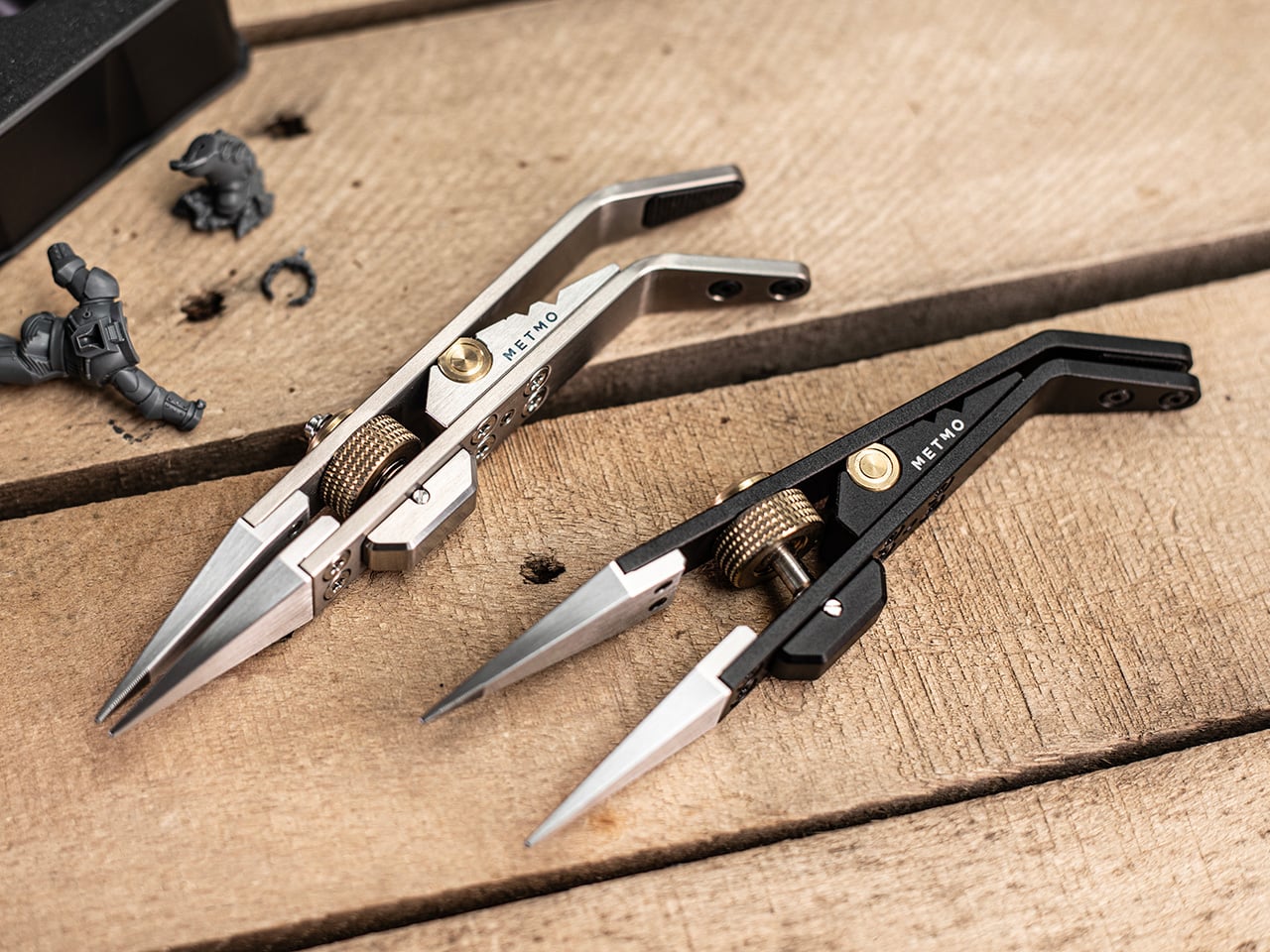
  • ✇Yanko Design
  • This Tabletop Fireplace Does What Solo Stove Doesn’t: Burn Indoors
    Fall is when the appeal of an open flame reasserts itself. The air turns crisp, and everyone wants that fireplace glow back in their evenings. The trouble is that most homes, especially rentals and apartments, were never built to give it to them. Adding a real fireplace means a gas line, a flue, a permit, and a contractor’s schedule that eats up far more than the one free weekend anybody actually has for it. That gap between wanting fire and being able to install it is exactly what the Harmony
     

This Tabletop Fireplace Does What Solo Stove Doesn’t: Burn Indoors

28 septembre 2026 à 18:30

Fall is when the appeal of an open flame reasserts itself. The air turns crisp, and everyone wants that fireplace glow back in their evenings. The trouble is that most homes, especially rentals and apartments, were never built to give it to them. Adding a real fireplace means a gas line, a flue, a permit, and a contractor’s schedule that eats up far more than the one free weekend anybody actually has for it.

That gap between wanting fire and being able to install it is exactly what the Harmony Flame Lamp solves. It is a brass tabletop fireplace that runs on bioethanol, sits on any flat surface you own, and produces a genuine flame with no ventilation, no gas hookup, and nothing built into a wall. You light it the way you’d light a candle, except what comes back is heat and light with real presence.

Click Here to Buy Now: $240

What sets it apart from most decorative objects claiming craftsmanship is who actually makes it. The Harmony Flame is built by hand by artisans who normally work on brass instruments, the kind of metalworkers who shape tubas and French horns for a living. That background is not a marketing footnote. Instrument-grade brass has to hold precise acoustic properties and structural integrity, and those same qualities happen to make it excellent at containing and reflecting a flame. The polished surface catches the fire and throws it back in shifting patterns of light and shadow, which is a much harder effect to fake than most LED “flame” gadgets ever manage.

Practically, the lamp behaves the way fall entertaining actually works. It moves from the dining table to the patio to a reading corner without any setup beyond a refill of fuel. Bioethanol burns clean, without smoke or odor, so there’s no lingering campfire smell on your jacket the next morning and no soot to wipe off afterward. The brass itself develops a patina with use, which means the lamp you buy in October will look different, and honestly better, by the time next fall rolls around.

It’s worth putting this next to the fire pit most Americans already know, which is Solo Stove. Solo Stove built an entire category around smokeless backyard fires, and it deserves credit for that. But it’s a wood or pellet-burning outdoor unit, sized for a patio and not meant to come inside. The Harmony Flame is working a different scale entirely. It’s small enough for a dinner table, quiet enough for a bedroom, and refined enough that it reads as a design object first and a heat source second. One is built for a backyard gathering. The other is built for the room you’re actually sitting in on a Tuesday night in November.

At $240, it isn’t an impulse buy, and I don’t think it’s trying to be one. You’re paying for hand-finished brass and a fuel system that skips every complication a real fireplace usually demands, and that combination is genuinely rare at this price. Compare it to a high-end bioethanol fireplace from a home goods brand and you’ll often pay two or three times as much for something with none of the instrument-making pedigree behind it.

The part that sold me is how ordinary the ritual feels once you own it. You strike a match, the brass catches the light, and the room changes temperature and mood at the same time. The Harmony Flame Fireplace is the kind of object that quietly becomes the centerpiece of a dinner party without anyone having to point it out. Fall has a way of making people want warmth and atmosphere they can control themselves, and this lamp answers that without asking for a renovation in return. If you’ve spent the last few autumns wishing your apartment had a fireplace, this is about as close as you’ll get without knocking down a wall.

The post This Tabletop Fireplace Does What Solo Stove Doesn’t: Burn Indoors first appeared on Yanko Design.

  • ✇Yanko Design
  • 5 Tailgate Speakers Built to Survive a Full Saturday Outdoors
    A parking lot does not care how good your speaker sounded in the store. Too quiet for an open sky, too fragile for a cooler lid, too generic to earn a second look from anyone walking by. These five are built differently. Each earns its place in the setup before you even hit play, and holds it comfortably long after the sun disappears behind the stadium. The best tailgate speaker is not the loudest one or the most expensive one. It is the one that handles the full arc of a Saturday outdoors with
     

5 Tailgate Speakers Built to Survive a Full Saturday Outdoors

28 septembre 2026 à 07:40

A parking lot does not care how good your speaker sounded in the store. Too quiet for an open sky, too fragile for a cooler lid, too generic to earn a second look from anyone walking by. These five are built differently. Each earns its place in the setup before you even hit play, and holds it comfortably long after the sun disappears behind the stadium.

The best tailgate speaker is not the loudest one or the most expensive one. It is the one that handles the full arc of a Saturday outdoors without asking you to manage it. Good battery life, real weather resistance, and a design identity strong enough to start a conversation are the only criteria that matter when the truck is parked, and the grill is on. These five clear all three.

1. RetroWave 7-in-1 Radio

The RetroWave is not trying to look vintage. It simply does, because the people who designed it understood that warm tones and a tactile tuning dial carry a feeling that modern hardware cannot replicate on its own. For you, that distinction matters at a tailgate, where every object on the truck bed shapes the atmosphere of the whole setup whether you intended it to or not. The RetroWave earns its spot before a single note plays.

Seven functions live inside a body that reads as a single cohesive object, not a spec sheet assembled into hardware. AM/FM and shortwave radio, Bluetooth streaming, a USB charging port, and a built-in flashlight all coexist without crowding the design or complicating the interface. For you, that means one piece of gear that moves cleanly from pre-game energy to late-night wind-down without ever needing to swap anything out. It carries the whole day without announcing it.

Click Here to Buy Now: $89.00

What we like:

  • Analog character translates immediately in outdoor settings
  • Seven functions in one body removes the need to bring anything else

What we dislike:

  • The retro aesthetic will not appeal to everyone
  • Battery life under sustained outdoor use has not been independently verified at publication

2. Brane X

Most portable speakers fake their bass. They boost the low end digitally and call it sub-bass, and it fools you indoors but gets swallowed by open air the moment you step outside. The Brane X does not fake anything. Its proprietary Repel-Attract Driver cancels internal air pressure to deliver genuine sub-bass from a body barely nine inches wide. For you, that means a speaker that actually fills a parking lot instead of politely suggesting it could.

Five drivers and four class-D amplifiers push past 200 watts combined, backed by a 72-watt-hour battery rated for twelve hours of runtime. IP57 waterproofing handles rain and the inevitable cooler spill without breaking stride. Wi-Fi streaming and Bluetooth 5.3 cover both strong and spotty signal scenarios across a large lot. For you, the ability to group up to eight units means the sound scales with the size of your crowd rather than capping out at the wrong moment.

What we like:

  • Genuine sub-bass output from a compact enclosure
  • Twelve-hour battery life clears even the longest tailgate

What we dislike:

  • Two hundred-plus watts at full volume will cut into runtime considerably
  • Wi-Fi streaming depends on stable network access in the parking lot

3. Beosound Explore

Bang & Olufsen built the Beosound Explore from hard-anodized aluminum instead of the polycarbonate most competitors default to, and that single decision changes how the speaker ages. Polycarbonate scratches and scuffs into a reading of neglect. Aluminum picks up honest wear and keeps looking considered. For you, that means a speaker that still belongs in your setup on its twentieth outing, rather than one that starts looking disposable before the season is halfway through.

Twenty-seven hours of battery life removes the anxiety that follows every other portable speaker through a long weekend outdoors. Dual full-range drivers produce True360 sound with no preferred listening axis, so there is no bad seat at your tailgate. IP67 water resistance covers submersion up to one meter for thirty minutes, handling every realistic outdoor scenario without fuss. For you, the carabiner strap means it travels without ceremony and arrives looking like it belongs wherever you set it down.

What we like:

  • Twenty-seven hours of runtime covers a full day and night without a second thought
  • Hard-anodized aluminum ages honestly with outdoor use

What we dislike:

  • The Bang & Olufsen premium is real and unavoidable
  • 360-degree output reduces directional volume control in loud open environments

4. Battery-Free Amplifying iSpeakers

The premise sounds like a trick: a speaker that amplifies sound without drawing a single watt of power. The iSpeaker uses passive acoustic geometry instead of electronics, channeling audio through a precisely shaped horn that physically increases volume without a battery or Bluetooth chipset. For you, that means zero charging anxiety at a tailgate where outlets are not a given. It works the moment you set your phone inside it and keeps working until you leave.

The design reads as furniture as much as audio hardware, which earns it a different kind of presence at a tailgate than a traditional plastic cylinder would. It sits on the table as a deliberate object, not a forgettable gadget. For you, that matters because it communicates something about the setup before a single note plays. No cords, no app, no pairing ritual. You place it, drop your phone in, and the afternoon takes care of itself from there.

Click Here to Buy Now: $179.00

What we like:

  • Zero battery dependency removes the most common outdoor-speaker anxiety
  • Passive horn amplification produces real volume with no electronics involved

What we dislike:

  • Output ceiling is physically limited by the horn geometry
  • Works only with phones that fit the cradle dimensions

5. Muzen Wild Mini

The Muzen Wild Mini looks like it was pulled from a gear locker rather than designed for a product page, and that is exactly the point. The all-metal body carries a military character that communicates durability before you ever pick it up. For you, that matters in a setting where gear gets moved, stacked, and occasionally dropped between the cooler and the truck bed. The Wild Mini does not ask to be handled carefully, which means you never have to think about it.

Bluetooth 5.0 handles the streaming, and a built-in flashlight with three lighting modes earns its place once daylight fades on the lot. A single charge delivers six hours of runtime at full volume, covering the core of a game-day schedule without needing a top-up. For you, the clip system means it attaches to a bag, a belt loop, or a tent frame with equal ease, keeping the speaker accessible without requiring a dedicated surface to set it on.

What we like:

  • All-metal build shrugs off drops and rough handling
  • The built-in flashlight adds genuine utility once the sun goes down

What we dislike:

  • Six hours is the shortest runtime in this group
  • The compact body limits total output volume compared to the larger enclosures here

The Right Speaker Makes the Saturday

None of these five ask you to compromise. The RetroWave brings analog warmth to a setting that usually defaults to generic plastic. The iSpeaker removes the charging question entirely. The Brane X delivers the bass a parking lot actually requires. The Beosound Explore brings luxury-grade materials to outdoor conditions they were genuinely built for. The Wild Mini goes anywhere without asking permission. Each pulls its weight differently, and that range is exactly the point.

A good tailgate speaker is the one you stop noticing because it never gives you a reason to worry about it. The battery holds, weather is not a factor, the sound fills the space, and the object earns a second look from whoever walks by. All five of these clear that bar. Pick the one that fits how your Saturdays actually run, and it will handle the rest without asking for much in return.

The post 5 Tailgate Speakers Built to Survive a Full Saturday Outdoors first appeared on Yanko Design.

  • ✇Yanko Design
  • MetMo turned a 1912 mechanism into the perfect hands-free tweezers for hobbyists and craftsmen
    If the name MetMo rings a bell, that’s because this small Leeds outfit has built its reputation out of taking old mechanical ideas nobody else bothered reviving and turning them into objects people genuinely want to own. We’ve covered the MetMo Driver reworking the mid-century ratchet screwdriver, the Fractal Vise shrinking industrial clamping logic down to desktop scale, and the Pocket Grip channeling a century-old patent into nearly half a million dollars of Kickstarter support. The catalog r
     

MetMo turned a 1912 mechanism into the perfect hands-free tweezers for hobbyists and craftsmen

27 septembre 2026 à 21:45

If the name MetMo rings a bell, that’s because this small Leeds outfit has built its reputation out of taking old mechanical ideas nobody else bothered reviving and turning them into objects people genuinely want to own. We’ve covered the MetMo Driver reworking the mid-century ratchet screwdriver, the Fractal Vise shrinking industrial clamping logic down to desktop scale, and the Pocket Grip channeling a century-old patent into nearly half a million dollars of Kickstarter support. The catalog reads like a museum of mechanisms reimagined with modern metallurgy and CNC precision. Now they’re circling back to something smaller, more delicate, and more universally frustrating than anything they’ve tackled before. Their next target is the humble tweezer.

The Precision Grip is calibrated for a different job than MetMo’s earlier clamping tools, the kind of featherlight, controlled pressure needed to hold a model part without crushing it. Where the Pocket Grip chased 21kg of clamping force for daily carry tasks, this one maxes out at 5kg, by design. It runs on a miniaturized drive screw borrowed from precision machining equipment, so you set your grip force once and the jaws hold that position without assistance. That’s the core limitation tweezers can never escape: they hold via sustained finger pressure, and the moment that wavers, the part is gone. For anyone who has ever sacrificed a miniature to the carpet gods, that last sentence is the whole pitch.

Designer: Sean Sykes & James Whitfield (MetMo)

Click Here to Buy Now: $129 $143.33 (10% off). Hurry, only 19/1050 left! Raised over $579,000.

For decades, precision hobbyists have been improvising with tools from completely different disciplines. Jewelers raid surgical supply catalogs. Electronics hobbyists use soldering tongs that launch parts across the room the moment grip pressure drops. Model painters hold tiny figures between their fingers and simply hope for the best. MetMo’s position is that these people deserve something built specifically for the job, and the Precision Grip’s lightly textured jaw tips are designed to grip without marking or damaging delicate surfaces, a distinction that no repurposed dental or electrical tool reliably delivers.

The mechanism at the center of all this is a miniaturized version of the drive screw used in high-precision machining equipment, a category of hardware that lives and dies by tolerance accuracy. A solid barrel hinge keeps both jaws in perfect alignment during clamping, preventing the sideways drift and tip-twist you’d get from a conventional pivot, and that dimensional stability is what makes the needle-nose tips usable for genuinely pinpoint work rather than approximations of it. Turn the knurled screw, the jaws close to exactly where you set them, and they hold there with up to 5kg of clamping force. The underlying mechanism traces back to 1912, which MetMo has made into a design tagline for a reason. It’s a genuinely good mechanism.

The jaw tips carry a patent-pending micro-grip texture that MetMo calls “The Gecko’s Finger,” a name that is slightly ridiculous and also completely on point. Small smooth parts get just enough extra friction at the contact surface to stay put without the jaws needing to clamp any harder, which is the right problem to solve when you’re working on something fragile. Beyond the standard needle-nose stainless steel nibs, the system accepts silicone soft inserts for delicate surfaces, round clamp heads for gripping a part’s inner cavity rather than its outer face, and even custom 3D-printed nippers for shapes no off-the-shelf tip could reach. Individual nibs swap out independently when damaged, without touching the body.

Set the jaws slightly open and a spring-loaded mechanism activates, giving you conventional tweezer behavior for quick sorting tasks without engaging the screw-drive lock every time. When you need both hands free, the Precision Grip clamps into a quick-release mount and becomes a miniature desk vice, holding your part steady while you solder, file, or paint. Three V-grooves machined into the body let you form wire or prop the tool as a makeshift stand, keeping parts right where you left them when you step away. The whole setup is fully ambidextrous, which sounds minor until you’re a lefty who has spent years buying tools that don’t think about you. All of that function lives in a body that measures 134mm (5.3 inches) long, 29mm wide, and 16mm deep.

Aerospace-grade hard-anodized aluminum (70.3g), Grade 5 titanium (83.3g), and surgical stainless steel (114.5g) are the three material variants, and each one maps to a different kind of user. The aluminum is the nimble everyday choice, the titanium balances weight savings and durability for more demanding environments, and the surgical stainless is autoclave-rated and built from high-chromium steel throughout, making it viable for medical and laboratory settings. All three are fully user-serviceable, strippable to individual components for maintenance or repair, with high-tensile screws throughout rather than whatever was cheapest to source. MetMo talks about a 200-year product goal, and the fully serviceable construction is what gives that ambition actual credibility.

Pricing for the Precision Grip runs at £89 ($118 USD) for the Aluminum version, while the Stainless Steel variant is priced at £119 or $157 USD. For serious hobbyists and EDC collectors, the Titanium Precision Grip is priced at £179 or $237 USD. The Precision Grip ships worldwide from the UK and comes with the 200-year repairability guarantee that you could possibly only expect from a company as obsessed with detail and quality as MetMo. MetMo balanced the weight distribution around fine writing instrument ergonomics, giving the body a contour that doesn’t tire your hand across long sessions. It also looks genuinely purposeful doing nothing, like an intricate ornament that earns questions from people passing your desk, which MetMo treats as part of the design brief rather than a happy byproduct.

Click Here to Buy Now: $129 $143.33 (10% off). Hurry, only 19/1050 left! Raised over $579,000.

The post MetMo turned a 1912 mechanism into the perfect hands-free tweezers for hobbyists and craftsmen first appeared on Yanko Design.
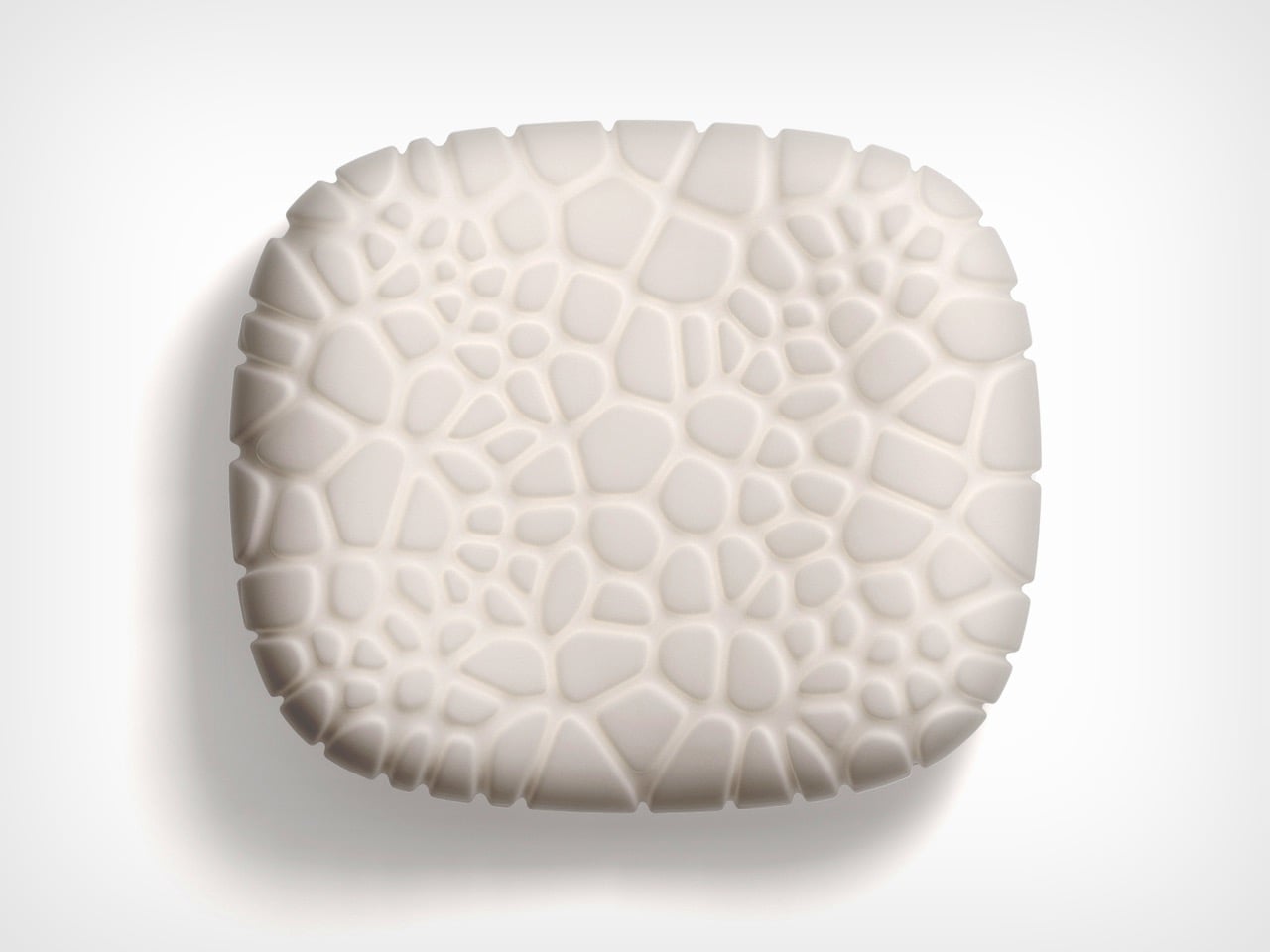
  • ✇Yanko Design
  • 7 Reasons Non-Artists Need a Drawing Pad on Their Desk
    I’ve established in my previous articles that I’m not an artist and can only draw stick figures, or maybe follow paint-by-numbers-style sketches. That hasn’t stopped me from buying and collecting drawing pads and notebooks of all kinds, though. Of course, I’m not hoping I’ll eventually learn to draw or become the next Andy Warhol or anything like that. I like having these writing surfaces because I have a lot of things to write down, whether it’s for productivity, as part of my numerous journal
     

7 Reasons Non-Artists Need a Drawing Pad on Their Desk

27 septembre 2026 à 19:30

I’ve established in my previous articles that I’m not an artist and can only draw stick figures, or maybe follow paint-by-numbers-style sketches. That hasn’t stopped me from buying and collecting drawing pads and notebooks of all kinds, though. Of course, I’m not hoping I’ll eventually learn to draw or become the next Andy Warhol or anything like that. I like having these writing surfaces because I have a lot of things to write down, whether it’s for productivity, as part of my numerous journaling tools, or just somewhere to randomly write or sketch things out.

The Japanese Drawing Pad, despite having “drawing” in its name, isn’t just an art tool for artists, architects, and other visual creatives. It’s a blank, tactile surface that can be useful for anyone who likes to write, think, plan, or organize. And in a world that’s becoming an increasingly digital-analog hybrid, having a tool like this by your side whenever you need it is always a plus. It’s not just a regular drawing pad, though. It’s simply designed, but expertly crafted by masters in the bookbinding and papermaking industries, giving you paper that helps you create your own masterpiece, whether visual or written.

Click Here to Buy Now: Starting at $40. Get Everlasting All-metal Pencil Free ($19.95 Value). Hurry, this is a limited-time launch gift.

So if you’re like me and don’t need it for actual drawing, here are a few ways to get your money’s worth out of the Japanese Drawing Pad. No drawing skills needed.

Brain-dump Your To-Do List

For those times when you just need to mindlessly dump out all your tasks, lists, and thoughts, this is the perfect place to do it. It doesn’t have a cover, so you get straight to the blank page you need. The tear-away pages make it easy to toss the list once you’re done, or stick it somewhere you’ll actually see it.

Create a Mood Board

The drawing pad can also serve as your analog Pinterest board. Use it to brainstorm a trip itinerary, visualize an outfit for an upcoming event, or build a vision board for your next few months. The microperforated pages tear easily and cleanly, so you can arrange them side by side on a wall or corkboard.

Take Notes in a Meeting (Without a Boring Notebook)

Meetings can drag on forever, but having a unique tool to take notes with can make them feel a little less like a slog. The Drawing Pad’s gray paper and black base give it a sleeker, more distinctive look than your average notepad, so pulling it out mid-meeting feels less like a chore and more like an upgrade.

Mind-mapping and Brainstorming

Having a freeform space without any lines is ideal for when you need to jot down branching ideas, bubbles, and connections. It also comes in different sizes (A6, A5, and A4), so you can choose how much space you need for these brainstorming sessions, even if the meeting is just with yourself.

Journaling

Whether you need a space for habit tracking, junk journaling, or creative writing prompts, the premium feel of the paper will make your journaling ritual more satisfying. If you tear off the pages, you can attach them to your other journals or use the loose-leaf sheets to build a journal of your own.

Teaching Kids (or Yourself) Letters, Numbers, and Shapes

The pad can also double as a lesson space for kids who are still learning to write their letters, numbers, or shapes, offering a low-pressure surface with no stakes attached. And if you’re learning a new language that uses characters different from what you’re used to, it can be your practice space, too.

Doodling to De-stress

Even if you’re not an artist who can draw well, there may be times when you just want to doodle your stress away. Whether you’re sketching the meal you just ate, dreaming up an imaginary creature to fight off boredom, or scribbling whatever abstract shapes come to mind, the pad puts no pressure on you to be “good.” It’s simply a tactile stress outlet.

Beyond what’s already been covered, the Japanese Drawing Pad has a few more details worth knowing. Every pad is handmade by ITO Bindery, a Japanese bookbindery that’s been at it since 1938. The binding glue is still brushed on by hand, and each microperforation is checked for consistency by trained craftspeople rather than left entirely to machines. The pages themselves are premium paper (81.4 g/m²) mounted on a sturdy, recycled cardboard base, and each sheet tears away cleanly without leaving any strays behind on the page. This particular edition is also limited to just 100 individually numbered pads per size, which makes the pad feel less like a disposable notepad and more like a small, functional collectible.

At the end of the day, you don’t need to be able to draw to justify owning something this well made. A design like the ITO BINDERY × YANKO DESIGN Drawing Pad earns its keep simply by being there, ready on your desk for the next to-do list, doodle, or half-formed idea you don’t want to lose. And that’s really the beauty of building an analog habit into an otherwise digital life: it doesn’t ask much of you, just a pen, a blank page, and a few free minutes. Whether it ends up full of to-do lists, mind maps, or terrible stick-figure doodles, this drawing pad might just become one of those small, everyday objects you didn’t know you needed until it’s part of your routine.

The post 7 Reasons Non-Artists Need a Drawing Pad on Their Desk first appeared on Yanko Design.

  • ✇Yanko Design
  • This $899 golf launch monitor tracks your swing in 3D and tells you how to fix it
    A decent golf lesson can cost anywhere from $80 to $200 an hour, but the bigger issue usually kicks in after the lesson ends. You leave with a fix, spend the next two weeks practicing on your own, and somehow manage to rehearse the exact mistake you were trying to get rid of. Golf has a funny way of doing that. More practice does not always mean better practice. Launch monitors helped by giving everyday golfers access to shot data that used to live in pro fittings, but numbers alone can still
     

This $899 golf launch monitor tracks your swing in 3D and tells you how to fix it

19 septembre 2026 à 21:45

A decent golf lesson can cost anywhere from $80 to $200 an hour, but the bigger issue usually kicks in after the lesson ends. You leave with a fix, spend the next two weeks practicing on your own, and somehow manage to rehearse the exact mistake you were trying to get rid of. Golf has a funny way of doing that. More practice does not always mean better practice. Launch monitors helped by giving everyday golfers access to shot data that used to live in pro fittings, but numbers alone can still feel like homework. NeoPace’s G10 Pro tries to close that gap by pairing launch monitor stats with an AI coaching layer that explains what happened and what to work on next.

NeoPace, based in Irvine, California, built the G10 Pro around a triple-camera system and a 24 GHz Doppler radar. Two cameras capture the impact zone at up to 480 frames per second, while a third records the full swing at 120fps. The setup feeds into what NeoPace calls TrainerIQ™, an AI system that traces a bad shot through a Body to Club to Ball chain, connecting ball flight to club delivery and then back to the body movement that caused it. That matters because most golfers do not need more raw data, they need help turning data into action. The G10 Pro also rebuilds each swing in 3D, so you can replay it from multiple angles instead of squinting at a flat video and pretending you know what your hips are doing.

Designer: Neopace

Click Here to Buy Now: $899 $1499.99 (40% off). Hurry, only 875/1000 left! Raised over $286,000.

The G10 Pro tracks 22 ball and club metrics, plus 27 body-related metrics covering chest rotation, pelvis movement, wrist angles, elbow flexion, knee sway, and more. That is a pretty wild amount of information for a portable unit that costs $899, especially when most devices in this range focus mainly on ball flight and club numbers. NeoPace also made setup refreshingly simple, with auto alignment and support for both face-on and down-the-line placement. So whether you’re practicing at home, on the range, in the backyard, or sneaking in some swing diagnostics before a round, the G10 Pro feels built for golfers who want coaching-grade feedback without hauling around a tour van full of gear.

Every swing gets captured and rebuilt in full 3D, replayable from any angle, at any moment, from face-on, top-down, and down-the-line, all from a single device you placed once before you started. Most launch monitors give you flat video from a single fixed angle. The stereo camera pair locks the ball at 480 frames per second while the third follows the swing at 120fps, double the impact capture rate of most competing devices. Seeing your own swing from directly above mid-follow-through is the kind of analysis angle instructors have always wanted to show students but rarely had a clean portable way to deliver. NeoPace claims the 3D Replay™ is a first in portable consumer launch monitors at any price, and from everything visible in the current market, that claim holds up.

TrainerIQ™ analyzes your swing and body movement, identifies the likely cause of a miss, and suggests a targeted drill to help you improve. It does not just flag that the face was open at impact and leave you to figure out why. The analysis goes deeper: face 2 degrees open, heel contact, smash factor 1.35, and the root cause is that the body stopped rotating so the hands stepped in to carry the load. That kind of layered breakdown is exactly what a teaching pro walks you through after watching your swing, and the G10 Pro compresses it into automated real-time output after each shot. Golfers can also directly ask TrainerIQ™ questions about their swing and receive personalized, actionable guidance on what to work on next, which makes the system feel less like a stat engine and more like an interactive training partner. TrainerIQ™ then prescribes specific drills based on the diagnosis, closing the loop between data, understanding, and actual practice.

Twenty-seven body-related metrics track how your body moves through every swing, turning posture, timing, and rotation into data you can act on. The tracked parameters span the chest and pelvis in five axes each, lead and trail knee sway and flexion, mid-hands sway and lift, head movement, X-Factor and Sway Gap, lead and trail elbow flexion, wrist angle, shaft angle, and kinetic sequencing factors: Core Gain, Shoulder Gain, Wrist Gain, and Release Factor. Any coach reading that list will recognize it as the full biomechanical picture that motion capture setups in pro training facilities chase. Inside TrainerIQ™, it becomes the evidence base connecting a ball that lands 13 yards short and right to a chest that stopped rotating halfway through the downswing. That translation from raw biomechanics to actionable coaching is where the G10 Pro genuinely earns its price.

Getting the G10 Pro into a session takes three steps: set it down, auto align, and take your shot. That might sound like marketing language, but auto-alignment is a genuine quality-of-life upgrade over monitors that require precise manual positioning every single time. The pan-and-tilt gimbal covers a 120-degree pan range and a 40-degree tilt range, so near-correct placement is close enough. The unit itself measures 217.5 × 47.25 × 44.5 mm without the tripod, compact enough to slide into a range bag without reorganizing everything else in it. The 3,300mAh/7.2V battery runs for four hours with a 1.5-hour fast charge at 15W, which covers a full morning session with room to spare. For golfers who want to practice or play indoors, the G10 Pro is compatible with GSPro and Creative Golf, with additional major simulator platforms currently in development.

NeoPace also says there is no unlock fee or subscription required for simulator connectivity itself, though third-party simulator software fees may still apply. The companion app works with iOS (14.0 and above) and Android (10.0 and above) smartphones and tablets. NeoPace also says the core feature set does not require a subscription. D Swing Analysis and TrainerIQ™ Analysis share an allowance of up to 5 AI-analyzed shots per month, while Premium AI increases the shared allowance to up to 1,000 shots per month and adds features such as Ask TrainerIQ™, Performance Insights, Personalized Drills, Practice Goals, and Cloud Storage.

At $899, the G10 Pro goes toe to toe with the Rapsodo MLM2PRO, its most direct camera-based competitor at the same price. The MLM2PRO does solid work on ball flight data and video, but offers no body tracking, no 3D reconstruction, no AI coaching chain, and face-on-only placement. Stepping further up the market, ball/club/body motion analysis at this depth typically lives in systems costing several times more, usually requiring separate wearables or dedicated motion capture rigs. Honestly, the fact that NeoPace has packed 3D reconstruction, 27 body metrics, and an AI coaching brain into a $899 portable device feels like it should be harder to pull off than it apparently is, and that is the most compelling thing about the G10 Pro.

Click Here to Buy Now: $899 $1499.99 (40% off). Hurry, only 875/1000 left! Raised over $286,000.

The post This $899 golf launch monitor tracks your swing in 3D and tells you how to fix it first appeared on Yanko Design.
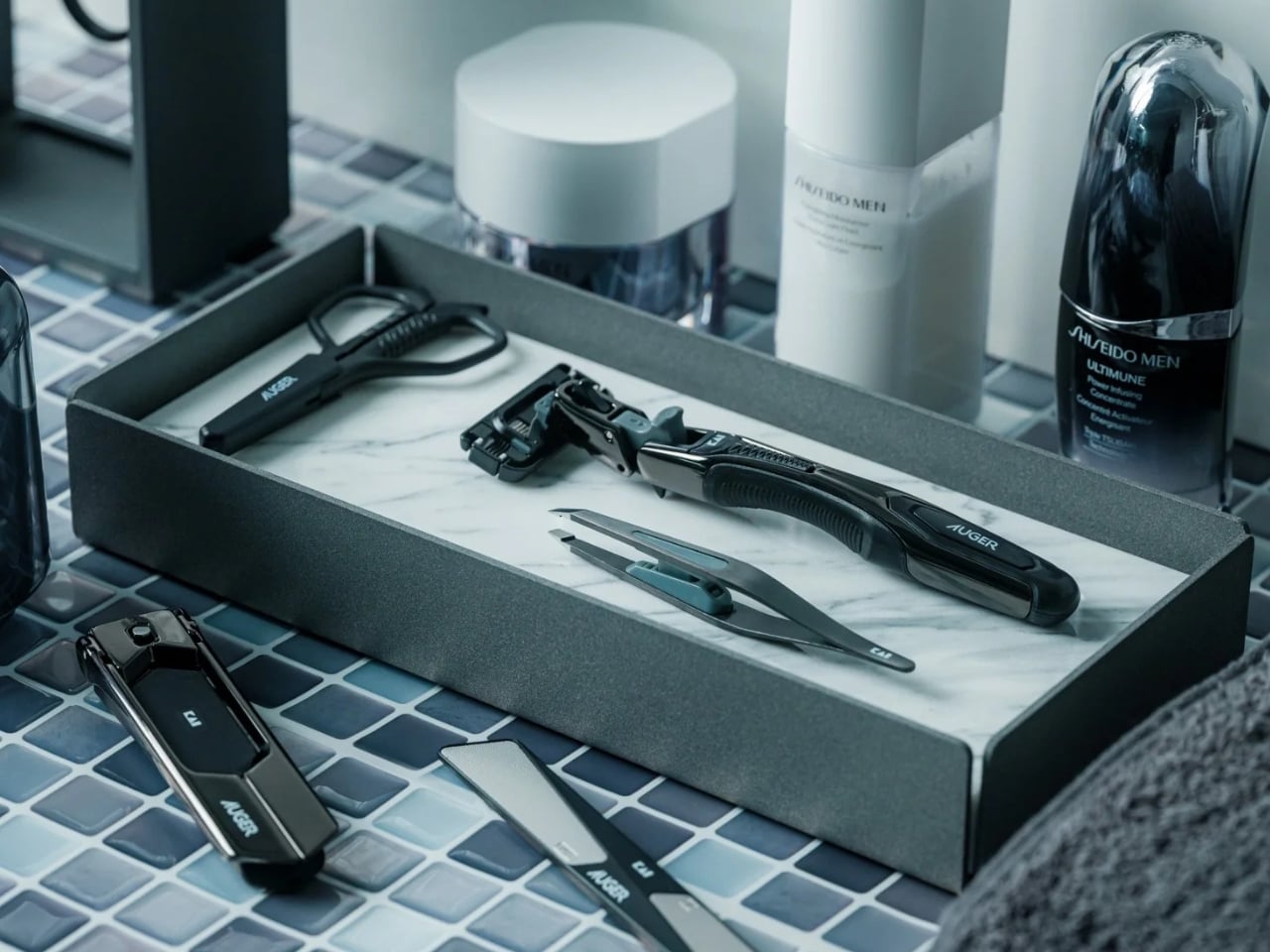
  • ✇Yanko Design
  • 5 Camping Gear Picks Built for the Last Warm Weekends of the Year
    September camping arrives with a specific quality that July doesn’t have. The mornings carry an edge, the light sits lower, and every good weekend feels like one of the last ones worth using properly. What earns a spot in the car changes. It stops being about what’s most impressive and starts being about what actually works when the temperature drops and the fire needs to stay going longer than planned. This list covers five pieces of gear built for car camping and overlanding weekends: a radio
     

5 Camping Gear Picks Built for the Last Warm Weekends of the Year

19 septembre 2026 à 07:40

September camping arrives with a specific quality that July doesn’t have. The mornings carry an edge, the light sits lower, and every good weekend feels like one of the last ones worth using properly. What earns a spot in the car changes. It stops being about what’s most impressive and starts being about what actually works when the temperature drops and the fire needs to stay going longer than planned.

This list covers five pieces of gear built for car camping and overlanding weekends: a radio, a grill, a shelter, a power source, and a pillow. Each one was chosen for the same reason — not because it leads its category on a spec sheet, but because it solves a specific friction point that camping has quietly accepted for too long as part of the deal.

1. Camp Napper

Inflatable camping pillows fail in a consistent pattern: they sound like pool floats each time you shift, lose pressure by 3 a.m., and pack into a shape that takes up more space than it deserves. Designer Chen Xu, working for RestBase, treated the camping pillow as an engineering problem instead. The Camp Napper’s surface geometry is derived from fungal spore texture, mapped through Voronoi polygon modelling across real pressure data from volunteer sleepers. Trypophobia alert: the surface is visually distinctive.

The internal structure mirrors hollow plant stem geometry, shedding mass without losing the ability to hold form under repeated compression. Total weight is 400 grams. Packed size is roughly the dimensions of a water cup. Memory foam conforms to different sleepers without nightly pressure adjustments, and anti-slip rubber particles on the base keep it in place across sleeping pads, camp chairs, and car seats equally. Note: retail price was not confirmed at time of writing — verify before purchasing.

What we like

  • Voronoi-modelled surface and bionic internal structure represent engineering at a level the camping pillow category hasn’t previously applied
  • 400 grams compressed to water-cup dimensions is genuinely packable, not just marketed as such

What we dislike

  • The cellular surface texture warrants a trypophobia alert before gifting or introducing to someone who hasn’t seen it
  • Retail price was unconfirmed at the time of writing; verify availability before purchasing

2. RetroWave 7-in-1 Radio

The RetroWave earns its place not through specifications but through atmosphere. It’s a 7-in-1 radio with solar charging and a hand-crank backup, both of which keep it running off-grid without a charged battery or a Bluetooth pairing screen. It simply works when it’s turned on, which is a lower bar than it sounds and one that a surprising amount of audio gear fails to clear by the second day of a trip.

The solar panel handles afternoon charging on any reasonable day. The hand crank handles everything else. Shortwave reception varies with terrain, so dense forest or mountain valleys will limit broadcast range — worth knowing before the trip rather than during it. For weather, local stations, and background sound that makes a campsite feel inhabited rather than silent, it performs without hesitation.

Click Here to Buy Now: $89.00

What we like

  • Solar and hand-crank charging eliminate any dependency on outlets or other devices’ battery reserves
  • Seven band frequencies in one object requiring no phone, no app, and no pairing sequence to operate

What we dislike

  • Shortwave reception degrades noticeably in heavily forested or mountainous terrain
  • The retro form tends to read as decorative to first-time buyers who haven’t yet used it in the field

3. Puffer Tent

The standard camping shelter setup involves a sequence of separate problems: tent, sleeping pad, sleeping bag, and then the 2 a.m. realignment when everything shifts. The Puffer tent collapses that sequence into a single bag. It’s an inflatable A-frame with the mattress built into the structure — shelter and bed arriving together, packed into 10 × 25 × 10 inches, with firmness adjustable from soft to firm to hard.

Founder Sam Peery spent five years prototyping this, which explains why the details feel intentional rather than approximate: valve placement, pressure labeling, pump connection. At 18.2 pounds, it’s a car camper and overlander’s tent, not a backpacker’s — a distinction the brand makes honestly. Priced at $649.99 with the electric pump included, the more instructive comparison is against a rooftop tent setup, not a $40 nylon shelter from a big box store.

What we like

  • Tent and mattress in a single integrated system removes the multi-piece setup sequence that opens most camping trips
  • Adjustable firmness from soft to hard gives sleepers real control over the sleeping surface

What we dislike

  • At 18.2 pounds, it’s unsuitable for backpacking trips where pack weight is a primary constraint
  • The $649.99 price requires genuine commitment from anyone who already owns a functional shelter

4. All-in-One Grill

Skewers of meat and green onions grilling on a small portable charcoal grill with a metal insert holding a glass bottle.

Bar grates collect residue from the first meal and carry it into every meal that follows. Cleaning them properly requires time and water that aren’t always conveniently available between the fire and the food. The All-in-One Grill’s flat tabletop surface removes that problem entirely — no gaps, no angles, nothing for debris to settle into. On a two-day trip with multiple meals, that difference compounds into something genuinely useful by Sunday morning.

Surface area fits two people cleanly, which covers the most common camping scenario without unnecessary bulk. Cooking for four or more requires staggering meals, adding real time to every camp dinner. There’s also no heat source included — this is a cooking surface that sits above a fire or stove, not a replacement for one. Within those parameters, it does its job at $449 with the kind of simplicity that makes a camp kitchen feel considered.

Click Here to Buy Now: $449

What we like

  • Flat surface cleans in a fraction of the time a traditional bar grate requires, a gain that compounds across a multi-meal trip
  • Tabletop sizing matches the most common two-person camping scenario without adding unnecessary pack weight

What we dislike

  • Cooking for groups larger than two requires staggering meals, adding real time to every camp dinner
  • No integrated heat source means it functions as a companion to a fire or stove, not a standalone cooking solution

5. Blavor PN-W43 Power Station + Camping Lantern

Most power stations are rectangular, featureless, and indifferent to the environment they’re meant to operate in. The Blavor PN-W43 builds a 4W LED lantern directly into the body, producing a 64,000mAh device barely larger than a tall water bottle that covers light and power from a single object. Five charging pathways — solar, AC, car adapter, USB-C, and micro USB — handle both off-grid and in-transit scenarios without adapter juggling.

At $135, it replaces two separate items, a lantern and a power bank, that together would cost more and occupy more space. It pairs naturally with the RetroWave Radio in this list: the radio’s solar charging handles daytime audio independently, while the Blavor manages device charging and nighttime light without overlap. At 236.8Wh, it’s sized for a weekend trip, not an extended off-grid expedition — which is exactly the use case this article is built around.

What we like

  • Integrated 4W lantern eliminates a separate light source without adding meaningful size or weight to the kit
  • Five charging pathways, including solar and AC, cover off-grid and in-transit scenarios without separate adapters

What we dislike

  • 236.8Wh capacity suits two to three night trips; longer off-grid expeditions will need more headroom than this provides
  • The cylindrical form sits awkwardly alongside flat gear in a structured pack and requires deliberate placement

The Trips You Actually Remember Are the Ones You Showed Up For

September has a way of making outdoor trips feel more deliberate than they do in the middle of summer. The season is moving and the weekends are numbered, which concentrates attention on what actually matters about being outdoors. The gear that earns a place in that context isn’t the most technically advanced option in its category. It’s the piece that makes the trip slightly better without making it harder to plan.

Each of these five picks does something specific. The RetroWave sets the tone without needing a phone. The All-in-One Grill removes the cleanup that makes cooking feel like a chore by day two. The Puffer Tent reduces setup to a single bag. The Blavor handles light and power as one object. The Camp Napper delivers actual sleep. None of them require the whole kit to change. Any one of them is enough of a reason to go.

The post 5 Camping Gear Picks Built for the Last Warm Weekends of the Year first appeared on Yanko Design.

  • ✇Yanko Design
  • MAKERphone 2.0 Assembles Like LEGO, Calls Like a Real 4G Phone
    Most phones arrive finished, sealed behind glass before you open the box. MAKERphone 2.0 flips that script. It ships as loose parts that only become a phone once you build it yourself: no soldering iron, no electronics background, just a screwdriver and about two hours. Once assembled, it’s a working 4G device that makes real calls and sends texts over a live network. The build is what really sells the design. Every piece, from the board to the display to the numpad and to the joystick, clicks
     

MAKERphone 2.0 Assembles Like LEGO, Calls Like a Real 4G Phone

Par : JC Torres
18 septembre 2026 à 21:45

Most phones arrive finished, sealed behind glass before you open the box. MAKERphone 2.0 flips that script. It ships as loose parts that only become a phone once you build it yourself: no soldering iron, no electronics background, just a screwdriver and about two hours. Once assembled, it’s a working 4G device that makes real calls and sends texts over a live network.

The build is what really sells the design. Every piece, from the board to the display to the numpad and to the joystick, clicks or screws into place. The entire endeavor is guided by an illustrated manual that reads like a LEGO instruction booklet, with video walkthroughs for anyone who gets stuck. By the time you finish, you’ve seen the processor, the modem, and the battery close, not used them.

Designer: CircuitMess

Click Here to Buy Now: $129 $160 (24% off). Hurry, only a few left! Raised over $300,000.

Pop in a nano-SIM and the phone comes alive on 4G networks, handling calls and texts like any device off a shelf. There’s a music player, a photo and video gallery, a calendar, notes, and a handful of retro games loaded onto that small color screen. What’s missing says as much: no app store, no social feed, nothing designed to keep anyone scrolling past bedtime.

That absence is the whole appeal for anyone shopping for a kid’s first phone. It calls and texts the people a child needs to reach, without opening the door to an internet’s worth of distraction. When a kid wants a new app or game, the answer isn’t downloading one; it’s building it. Screen time stops being something to limit and starts being something to spend making.

That building happens inside VibeBoy, the phone’s companion coding studio that runs on a computer. Describe an idea in plain English, like a taco dodging falling pickles, and the AI writes code sent to the phone with one click. The goal isn’t to let AI do all the thinking but to let VibeBoy teach users to read that code, question it, and eventually rewrite it.

That teaching happens across four stages built into the same app. Beginners describe what they want and watch it appear on-screen, before moving on to reading and tweaking the Python code the AI generates. Eventually, they write their own Python and C++ from a blank file. Nobody stays at one skill level long; the ladder is designed so most people climb it faster than expected.

Six snap-on modules turn the phone into something closer to a small hardware platform than a single-purpose device. A camera module captures pixelated stills and video, a bigger speaker adds volume, and a flashlight adds utility. An environment sensor reads temperature and humidity, an infrared module controls other devices, and a bare perforated board lets anyone solder a custom circuit and plug it in.

A companion smartwatch called MAKERband follows the same idea, arriving as a kit to assemble rather than a sealed gadget. Once built, it pairs with the phone over Bluetooth and also works with iOS and Android, running 15 watchfaces and five mini-games out of the box. It connects to VibeBoy, so a custom watchface, say, a pixel cat that naps after 9 PM, is a prompt away.

The company behind it, CircuitMess, has spent years building kits like this from a small studio in Croatia. It has shipped hundreds of thousands of units to customers across more than 100 countries, developed dozens of products, and earned coverage from outlets like Wired and The Verge. Just as important, the MAKERphone 2.0 isn’t a rendering or an early prototype: the hardware is finished and ready for production.

What sticks with you isn’t any single spec but the sequence. A pile of components turns into a working phone, and that phone turns into whatever its owner decides to code next. Somewhere between the last screw and the first successful call, the device stops feeling like something you bought and starts feeling like something you actually built, one working call at a time.

Click Here to Buy Now: $129 $160 (24% off). Hurry, only a few left! Raised over $300,000.

The post MAKERphone 2.0 Assembles Like LEGO, Calls Like a Real 4G Phone first appeared on Yanko Design.

  • ✇Yanko Design
  • The Japanese Grooming Kit That Actually Makes Sense
    Most guys have a drawer like this: a razor with a blade that’s gone slightly dull but not dull enough to justify tossing, tweezers that pinch skin as often as hair, and a nail clipper that crushes more than it cuts. None of it is broken exactly. It just quietly underperforms every single day, and most of us have stopped noticing because we’ve never used anything better. That’s the actual gap the Auger PrecisionMaster Grooming Set is built to close. It’s a five-piece kit from Kai Corporation, th
     

The Japanese Grooming Kit That Actually Makes Sense

18 septembre 2026 à 19:30

Most guys have a drawer like this: a razor with a blade that’s gone slightly dull but not dull enough to justify tossing, tweezers that pinch skin as often as hair, and a nail clipper that crushes more than it cuts. None of it is broken exactly. It just quietly underperforms every single day, and most of us have stopped noticing because we’ve never used anything better.

That’s the actual gap the Auger PrecisionMaster Grooming Set is built to close. It’s a five-piece kit from Kai Corporation, the Japanese company that’s been making blades since 1908, and it bundles a razor, tweezers, curved scissors, a nail file, and a nail clipper into one matte black collection that costs $150. The pitch isn’t flashy. It’s the opposite. The whole set is designed around the idea that grooming tools should just work, consistently, without you having to think about them.

Click Here to Buy Now: $150.00

The razor is the standout piece, and it’s worth explaining why. It has a 30-degree adjustable pivoting head and a five-blade system, which sounds like spec-sheet noise until you realize what it actually solves: the awkward angles under the jaw or around the nose that force most razors into a compromise. The tweezers use a patented stopper mechanism so the tips close with the same pressure every time instead of slipping at the worst moment. Even the nail clipper has a rotating lever built to cut thicker nails without the hand strain that comes from cheap versions. None of this is revolutionary engineering. It’s just engineering that was actually done, instead of skipped because grooming tools are treated as an afterthought category.

That’s really the argument for buying Kai over the brands most Americans grab without thinking. Gillette and Harry’s have made razors a subscription commodity, cheap, replaceable, and optimized for margin rather than feel. A Gillette Fusion refill pack runs you close to $20 for four cartridges you’ll toss in a month, and a Harry’s starter set lands around $25 with plastic that feels exactly like what it costs. Kai isn’t playing that game. It’s a company that’s spent over a century making blades for barbers and kitchens, and the Auger set is what happens when that expertise gets pointed at your bathroom counter instead of a professional’s toolkit. You’re not paying for a brand name stamped on plastic. You’re paying for a company that actually knows what a blade is supposed to do.

Is $150 a lot for tweezers and a nail file? Sure, if you’re comparing it to what’s sitting in a drugstore bin. But that comparison misses the point a little. This set isn’t for someone who wants the cheapest option that technically works. It’s for someone who’s tired of tools that almost work, who wants their morning routine to feel less like maintenance and more like something they actually control. The all-black finish and the total absence of loud branding fit that mindset too. Nothing about this set is trying to impress anyone else. It’s built for the person using it, not the person watching.

I’ll admit I’m a sucker for products that solve a problem nobody bothers to name out loud, and the Auger PrecisionMaster Grooming Set is exactly that kind of product. Bad grooming tools are one of those small frustrations we’ve all just agreed to tolerate, the same way we tolerated bad headphones before good ones existed. The Auger set won’t change your life. But it might change your morning, and for $150, that’s a fair trade for never reaching for a dull blade again.

The post The Japanese Grooming Kit That Actually Makes Sense first appeared on Yanko Design.

❌