Vue normale

Il y a de nouveaux articles disponibles, cliquez pour rafraîchir la page.
Hier — 3 mai 2026Flux principal

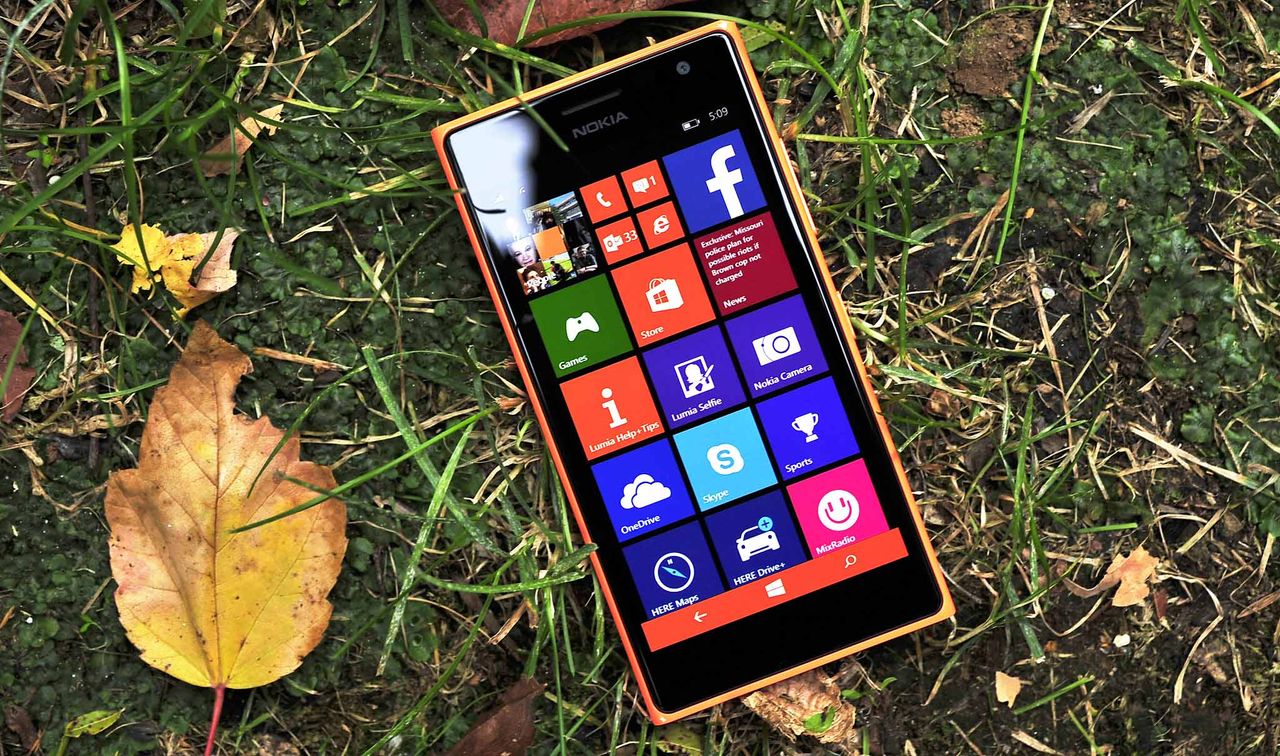
Windows Phone 8 is getting a second life thanks to 8Marketplace, patched Twitter app, and more

Windows Phone 8 is seeing a surprising revival through community efforts like 8Marketplace, which restores app downloads, alongside patched apps that connect to modern services like Bluesky.

Nokia Lumia 735 in orange on grass with autumn leaves

Promotional image for 8Marketplace, giving Windows Phone a new life in 2026.

Discord on Windows Phone 7 in 2026? This fan-made app is a surprising moment of revival for a long-forgotten platform

A fan has brought Discord to Windows Phone 7 using unofficial apps, showcasing ongoing community support for the discontinued platform in 2026.

Hand holding a red Nokia Lumia smartphone displaying the Discord logo against a bright screen. Background shows a blurred room with large windows.

Fans bring Discord to Windows Phone 7 using self-made apps.

Japan Airlines teste des robots humanoïdes pour charger les bagages

1 mai 2026 à 11:33

Japan Airlines va confier la manutention des bagages à des robots humanoïdes sur les pistes de l'aéroport Haneda. Le test démarre en mai 2026, dure deux ans, et implique pour commencer deux machines posées au milieu des bagagistes humains.

L'opération est pilotée par JAL Ground Service avec GMO AI & Robotics. Les robots viennent de Chine : un Unitree G1 d'environ 1m30 et un Walker E d'UBTECH.

Le programme est découpé en plusieurs étapes (cartographie du site, simulations en environnement reconstitué, puis tarmac réel), avec à terme l'idée de leur faire transporter les containers de fret, manipuler les leviers de verrouillage et même nettoyer les cabines une fois les avions vides. L'autonomie annoncée est de 2 à 3 heures, avant qu'il ne faille recharger la machine.

Sauf que la première démo publique a calmé tout le monde. Le G1 a tapoté un colis sur le tapis roulant et fait coucou à un humain, mais personne ne l'a vu soulever quoi que ce soit.

La presse anglo-saxonne a gentiment moqué la chose : démarche hésitante, gestes cosmétiques, et surtout aucune preuve de capacité à porter une valise standard.

Le Japon n'a pas le choix. Population vieillissante, faible immigration, et tourisme record qui sature les infrastructures : les aéroports japonais galèrent à recruter des bagagistes, et la situation ne va pas s'arranger dans les prochaines années.

Du coup, plutôt que d'investir dans des bras articulés industriels qui demandent de repenser tout le poste de travail, JAL parie sur des humanoïdes capables de s'intégrer dans un poste conçu pour des humains. 

En pratique, on est encore loin du compte. Une valise standard pèse entre 20 et 30 kg. Un humanoïde d'environ 35 kg sur deux jambes qui tient à peine debout, ce n'est pas vraiment l'outil idéal pour balancer du Samsonite à la chaîne pendant huit heures. JAL le sait.

D'où les deux ans de test prévus avant tout déploiement réel, et l'envie d'observer ce qui marche, ce qui casse, et ce qui finira aux oubliettes. Les deux fournisseurs choisis ne sont d'ailleurs pas des inconnus : Unitree et UBTECH se positionnent comme les gros chinois de l'humanoïde, face à un Tesla Optimus encore largement scénarisé.

Vous l'avez compris  on est plus dans la com' que sur de l'efficacité pure. Faire coucou à un bagage, ça ne le met toujours pas en soute.

Source : ARS Technica

Hadopi : le Conseil d'État éteint la riposte graduée après 17 ans

1 mai 2026 à 08:01

Fin de partie pour la riposte graduée. Le Conseil d'État a déclaré illégale, le 30 avril 2026, la phase la plus dure du dispositif anti-piratage Arcom, héritier de la Hadopi.

La décision s'applique immédiatement et décapite le système après 17 ans de chasse aux téléchargeurs sur les réseaux peer-to-peer. La Quadrature du Net, qui pilote le contentieux depuis 2019, a publié dans la foulée un bilan intitulé "Hadopi (2009-2026)".

Concrètement, deux failles ont été retenues. La juridiction a constaté que le décret de 2010 n'oblige nulle part les opérateurs à stocker les adresses IP dans "un compartiment totalement isolé", comme l'avait pourtant exigé la Cour de justice de l'Union européenne en avril 2024.

Et surtout, la troisième étape de la riposte graduée, celle qui transmet votre dossier au procureur après deux avertissements ignorés, ne prévoyait aucune autorisation judiciaire préalable. Du coup, les sanctions pénales, jusqu'à 1 500 euros d'amende et 3 000 euros en cas de récidive, ne peuvent plus être déclenchées.

Les deux premiers étages tiennent quand même encore debout. Si vous récupérez un torrent illégal demain, l'Arcom peut toujours vous envoyer un email d'avertissement, puis une lettre recommandée. Mais l'arme dissuasive, le passage devant le juge, exige désormais qu'un magistrat valide d'abord l'identification de l'abonné, et que les données aient été stockées dans le respect du droit européen.

Côté Arcom, l'institution prépare déjà une bascule sur le blocage de sites pirates et le déréférencement, c'est-à-dire la pression sur les intermédiaires plutôt que sur vous, particuliers.

Pour rappel, Hadopi a été lancée en 2009 sous le gouvernement Sarkozy, puis fusionnée avec le CSA en 2021 pour devenir l'Arcom. Le bilan ? Environ 13 millions d'avertissements envoyés et seulement 500 jugements rendus en 17 ans.

Soit un taux de conversion qui ferait glousser n'importe quel directeur commercial. La Quadrature, qui a mené le contentieux avec FDN et Franciliens.net, parle aujourd'hui d'une "victoire" pour les droits fondamentaux et appelle à ne pas ressusciter le dispositif sous une autre forme.

La Quadrature rappelle que le dispositif a surtout servi à criminaliser le partage culturel non-marchand entre internautes, sans jamais améliorer la rémunération des artistes ni endiguer le piratage à grande échelle.

Le streaming illégal, les plateformes IPTV, les sites de direct download : tout ça a continué à prospérer pendant que l'Autorité s'acharnait sur les utilisateurs de torrents. À côté, l'industrie culturelle a fini par s'adapter avec Spotify, Deezer ou Netflix, sans qu'on ait eu besoin de surveiller les abonnés de manière excessive.

Bref, on aura mis 17 ans à constater que ficher massivement les internautes sans contrôle judiciaire, c'est illégal, mais on s'en est toujours douté.

Source : La Quadrature du Net

vivo X300 FE Review: The Compact Flagship That Earns Its Keep

Par : JC Torres
2 mai 2026 à 15:20

PROS:


  • Compact, comfortable, and premium design

  • Powerful 50MP main and telephoto cameras

  • Large battery with fast wired and wireless charging

  • Long-term software support

CONS:


  • Mediocre 8MP ultra-wide camera

  • Uncommon horizontal camera design

  • A bit pricier than most "small flagships"

RATINGS:

AESTHETICS
ERGONOMICS
PERFORMANCE
SUSTAINABILITY / REPAIRABILITY
VALUE FOR MONEY

EDITOR'S QUOTE:

The vivo X300 FE proves that a compact phone doesn't have to feel like a lesser one.

Premium smartphones have been trending bigger, heavier, and more visually imposing for years. It’s reached the point where “flagship” is almost synonymous with large, and carrying one all day feels less like convenience and more like a commitment. The compact phone hasn’t disappeared, but finding one that doesn’t sacrifice performance, battery life, or camera quality in exchange for a smaller footprint has been genuinely difficult.

That’s the gap the vivo X300 FE is aiming to fill. It pairs a 6.31-inch flat display with a Snapdragon 8 Gen 5 chipset, a 6,500 mAh battery, and a ZEISS co-engineered camera system, all within a compact design that stays remarkably light for its class. On paper, it reads like a phone that shouldn’t be this compact. But does it actually work in practice? We give it a spin to find out.

Designer: vivo

Aesthetics

The X300 FE follows a flat-design language that’s become increasingly standard among more expensive flagships. There aren’t any curved glass edges or aggressively contoured surfaces, just a clean, rectangular form with ultra-narrow bezels, an aerospace-grade aluminum frame, and a front face that looks symmetrical and composed. The centered punch-hole is small and unobtrusive, and those slim borders give the display a neat, purposeful presence that doesn’t need theatrics to feel premium.

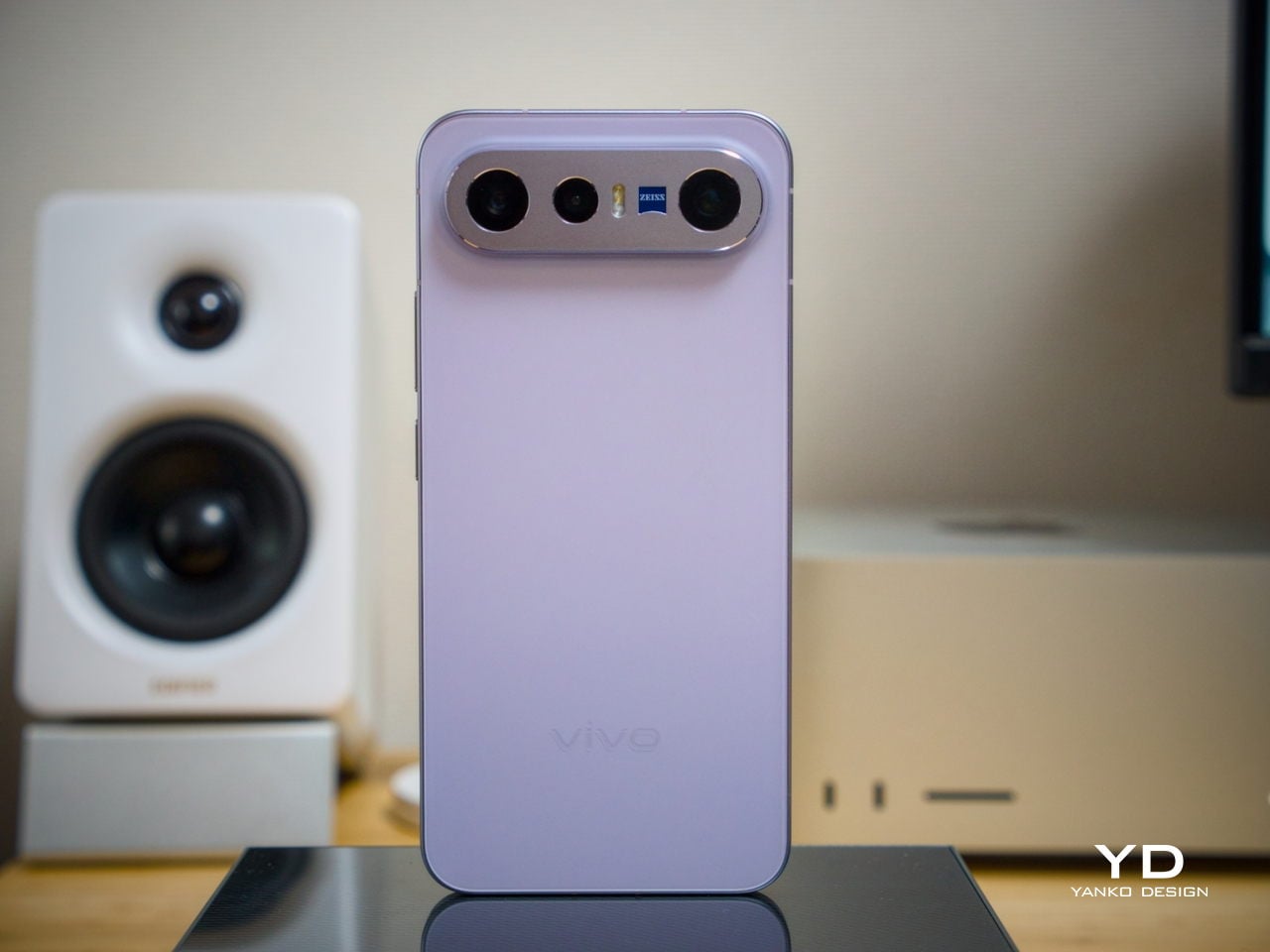
Our review unit came in white, which turns out to be a great choice for a phone this carefully considered. The matte rear panel uses vivo’s Metallic Sand AG glass treatment, giving it a soft, slightly chalky texture that resists fingerprints well and picks up ambient light in a way that shifts subtly between warm and cool tones. It doesn’t try to be eye-catching; it just looks well-made.

The flat aluminum frame wraps cleanly around the body, with edges that make it comfortable to grip without feeling sharp or slippery. The white model measures 8.10mm thick and weighs 192g, a hair more than the other colorways, but those differences don’t register in hand. What does register is the overall sense of a phone that’s been assembled with genuine attention to detail.

The camera module deserves its own mention. Rather than going for the oversized circular island that’s become visual shorthand for “serious camera phone,” vivo opted for a horizontal bar that spans the upper portion of the back. Three lenses are arranged neatly across it, with a ZEISS badge centered between them. It’s recognizable and distinctive without domineering the rest of the design. Admittedly, it’s going to be a divisive design, but it at least lets the vivo X300 FE easily stand out from the competition.

Ergonomics

At 150.83mm tall and 71.76mm wide, the X300 FE sits firmly in one-handed territory. It isn’t trying to be a miniature phone. It’s simply sized more sensibly than most flagships on the market. You can reach across the screen without adjusting your grip, slip it into a front pocket without thinking, and hold it for extended periods without the wrist fatigue bigger phones tend to bring.

The 192g weight for the white model falls in a range that feels present without being burdensome. There’s enough substance here to reinforce the premium feel of the materials, but not so much that you’re constantly aware of it. The 8.10mm profile isn’t exactly wafer-thin, though that’s a reasonable trade-off for a 6,500 mAh cell packed inside a frame this compact.

The flat-sided frame also contributes more to the ergonomic experience than it might seem. It gives your palm a stable, consistent surface to press against during typing and scrolling, which feels more controlled than on rounded-edge designs. The compact footprint, flat back, and balanced weight distribution all work together to make this a phone that feels designed around how it’s actually used.

Performance

The Snapdragon 8 Gen 5 inside doesn’t need much introduction. It’s a flagship-class mobile processor, and the X300 FE puts it to good use. The 12GB RAM, expandable with another 12GB taken from the generous 512GB storage, clearly marks it as a class above your typical mid-tier compact phone. It runs Origin OS 6, based on the current Android 16 release, embracing a more minimalist and flat aesthetic that perfectly matches the phone’s design.

Day-to-day tasks feel completely effortless, from switching between apps and browser tabs to occasional gaming sessions, and nothing about the experience suggests the compact body is in any way holding the hardware back. Thermals are pretty impressive, given the vivo X300 FE’s size, but its compact form factor might work against it when it comes to how you hold it during those long periods.

Thankfully, the display backs that up well. It’s a 6.31-inch LTPO AMOLED panel with an adaptive refresh rate of 1 to 120 Hz, a 1.5K resolution at 460 PPI, and a local peak brightness of 5,000 nits. The 2,160 Hz PWM dimming also makes prolonged reading and scrolling noticeably more comfortable on the eyes, a detail that matters far more than most spec sheets would have you believe.

Then there’s the battery, arguably the X300 FE’s most impressive engineering accomplishment. A 6,500 mAh cell in a phone this slim and light isn’t something you see every day, and in practice, that capacity means genuine all-day endurance with room to spare. The 90W wired and 40W wireless charging mean you’re rarely stuck waiting long when it runs low, at least with the appropriate chargers.

The camera system is led by a 50 MP ZEISS main camera and a 50 MP ZEISS super-telephoto camera, with an 8 MP ultra-wide rounding out the rear. The main and telephoto cameras handle portraits, street photography, and concert scenes with real confidence. An optional telephoto extender accessory also exists for those who want extended reach, though it’s firmly in niche territory.

The results are impressive, especially when starting to zoom in on subjects. Even without the telephoto extender, you can enjoy clear and detailed shots, even at night. The 8MP ultra-wide, though usable, is a bit of a letdown, but vivo had to cut some corners to bring down the price and differentiate this model from its more powerful and more expensive siblings. You do have a ton of settings to tweak to get your perfect shot, but even the defaults are good enough to make fleeting moments more memorable.

Sustainability

The X300 FE carries IP68 and IP69 dust and water resistance ratings, alongside an SGS five-star drop resistance certification, giving it a reassuring level of durability for daily use. It also carries an SGS five-star drop resistance certification, which gives it more formal durability credentials than most phones in its class. Together, those ratings make a convincing case for a phone built to survive daily life without requiring any particularly careful handling.

Software longevity is where the X300 FE makes its strongest long-term case. On that front, vivo is committing to five years of OS upgrades, seven years of security maintenance, and a five-year smooth experience promise. That support window is competitive with the best in the Android space, and it signals that this phone is meant to be genuinely used for years, not replaced the moment something newer comes along.

Value

At around €1,000, The X300 FE isn’t a budget phone, and it doesn’t try to be. It competes in the premium compact flagship space, where the particular combination it offers is harder to find than you’d expect. A current-generation chipset, a genuinely large battery, fast wired and wireless charging, ZEISS-branded imaging, and a durable premium build in a package that remains notably light for a flagship is a rare and coherent offering.

The person this phone is designed for isn’t shopping for the biggest or most spec’d-out device available. It’s someone who wants a phone that keeps pace with their life without dominating it, one that fits in a jacket pocket, lasts a full day, and still takes genuinely good photos. Frequent travelers, urban commuters, and anyone who’s tired of unwieldy flagships will feel right at home here.

Verdict

The vivo X300 FE is the kind of compact flagship that doesn’t feel like a compromise once you’re actually using it. The design is restrained and coherent, the battery is frankly impressive for the size, the chipset handles everything you throw at it, and the camera does its best work in exactly the situations most people find themselves in, out in the world rather than on a lab bench.

What the X300 FE offers is a phone that’s easy to carry, genuinely long-lasting, and capable enough for the photography and day-to-day demands you’ll actually encounter. It’s well built, well supported, and clearly designed with a specific kind of person in mind. That clarity of purpose is refreshing, and for the right buyer, it’s exactly what makes this phone worth serious consideration.

The post vivo X300 FE Review: The Compact Flagship That Earns Its Keep first appeared on Yanko Design.

5 Over-Ear Headphones That Look as Good When They’re Around Your Neck as When They’re on Your Head

2 mai 2026 à 11:40

The headphone has become something it was never originally designed to be: a silhouette. Worn around the neck on a subway platform or draped over a chair at a coffee shop, a great pair of over-ears communicates taste in much the same way a watch or a well-chosen bag does. The best ones are now designed with that resting moment in mind, not as an afterthought, but as a deliberate part of the brief.

What separates a good headphone from a great one is increasingly less about frequency response and more about how the object behaves when it’s not in use. The five pairs on this list earn their place on both counts. Worn on the head, they deliver. Worn around the neck, they still look like they were built by people who thought carefully about that exact resting moment, collarbone and all.

1. StillFrame Headphones

Most headphones achieve lightness by sacrificing material quality somewhere along the way. StillFrame achieves it by rethinking the entire structure from scratch. At 103 grams, it sits on your head with the kind of effortless presence most pairs spend an entire product page trying to claim. The ultra-minimal design, clean lines, no exposed hardware, and no decorative flourish anywhere on the frame is the kind of restraint that reads as confidence rather than budget constraint.

Around the neck, StillFrame does what minimal design always promises and rarely delivers: it disappears into your outfit rather than competing with it. The 24-hour battery means you’ll reach for these in the early morning and still have charge well into the evening without thinking about a cable. For anyone who wants headphones that age well, that look as right in three years as they do today, this is where the search ends.

Click Here to Buy Now: $245.00

What We Like

  • At 103 grams, this is one of the lightest over-ear headphones available without any sacrifice in build integrity, and the weightlessness is felt the moment you put them on
  • A 24-hour battery life means this pair genuinely runs from morning to night on a single charge, removing the low-battery anxiety that comes with most wireless headphones on the market

What We Dislike

  • Minimal colorway options are a direct consequence of the same design restraint that makes the StillFrame look this considered, and that trade-off is real and visible
  • With so little on the frame to grab visual attention, this pair asks you to commit fully to its design language, which rewards patience but does not suit every aesthetic

2. Meze Audio Strada

Romanian audio atelier Meze has spent two decades treating headphones as craft objects, and the Strada makes that philosophy fully explicit. Hand-carved walnut and ebony ear cups, each unique in grain and tone, sit alongside a magnetic ear pad system that snaps on and off cleanly, making them the first pair that genuinely anticipates its own aging. The leather headband drapes naturally against the collarbone. At $799, you’re investing in the idea that daily objects deserve this level of material care.

Worn around the neck, the Strada does something genuinely rare: it makes you look considered rather than plugged in. Those hand-carved wood cups catch light in a way that aluminum never quite manages, and the closed-back design delivers warmth and isolation without the clinical precision of most audiophile gear.

What We Like

  • The hand-carved wood ear cups make every unit genuinely one-of-a-kind, an unusual distinction in a product category that typically prizes consistency and uniformity above everything else
  • The magnetic ear pad system solves a real longevity problem that most headphone manufacturers still choose to ignore, making the Strada feel genuinely built for the long term from the start

What We Dislike

  • The warm, closed-back tuning leans toward intimacy over accuracy, which won’t satisfy listeners who prefer a flat, analytical sound profile for critical or reference listening sessions
  • No active noise cancellation at $799 is a deliberate aesthetic choice, but it will not suit everyone who regularly listens in open, noisy, or busy urban environments

3. Bang & Olufsen Beoplay H95

 Bang & Olufsen has been designing objects that make a room better simply by existing in it since 1925. The Beoplay H95 carries that logic to your ears. Brushed aluminum arcs support lambskin ear cushions with the quiet authority of something that was never trying to impress anyone. Custom 40mm titanium drivers deliver an expansive, unhurried soundstage, and 38 hours of battery life with ANC active means you rarely need to think about charging. At $1,250, it reads as inevitable rather than expensive.

Around the neck, the H95 makes its strongest case. The slim profile rests cleanly against the collarbone, the aluminum catches light without glare, and the lambskin ages into something better than what you started with. Vogue Scandinavia named it the headphone that pairs best with the softest cashmere roll-neck and a cocooning wool coat, which is not exactly a mid-range endorsement. The tactile control dial and hard carrying case complete the picture of a brand that hasn’t needed to shout for a century.

What We Like

  • Lambskin ear cushions and brushed aluminum give the H95 a material quality that makes every other pair on this list look like it is working a little harder to impress you
  • 38-hour ANC battery life is class-leading and genuinely difficult to match at any price point, making this the pair most likely to outlast a long-haul journey without any hesitation

What We Dislike

  • At $1,250, this is a significant investment for a product category where $400 already delivers very strong audio performance from multiple well-regarded and respected manufacturers
  • The control dial is elegant but carries a subtle learning curve that takes several days of regular use to feel completely intuitive and second-nature in the hand

4. Bowers & Wilkins Px8 S2

The Px8 S2 looks like it was designed by someone who spent too much time around luxury automobiles and not enough time worrying about what people thought. Diamond-quilted Nappa leather ear cups sit inside angular aluminum driver housings that don’t apologize for taking up space. Bowers & Wilkins built their reputation on speaker cabinets in British living rooms, and that obsession with material quality is fully present in the Px8 S2. At $799, it’s the most visually assertive pair on this entire list.

Worn on the head, the 40mm Carbon Cone drivers deliver a focused sound that rewards careful listening. Worn around the neck, the quilted leather and aluminum geometry create a silhouette that reads closer to jewelry than consumer electronics.

What We Like

  • The diamond-quilted Nappa leather ear cups are a genuinely distinctive design move that no other headphone brand at this price point is executing with this level of craft and conviction
  • 40mm Carbon Cone drivers bring the kind of focused sound detail that makes streaming audio feel like it might be holding something back, consistently rewarding attentive listeners on every session

What We Dislike

  • The angular form does not fold into a compact carry position, making the included case noticeably bulkier than most direct competitors when packed into a bag for daily commuting use
  • The firm clamping force is necessary for the acoustic seal, but it makes itself felt during extended listening sessions, which matters for anyone who wears headphones for several consecutive hours at a time

5. Sonos Ace

Sonos spent two decades being the most thoughtfully designed speaker company in the world before ever touching headphones. The Ace is what happens when a brand famous for restraint and material quality finally commits to an entirely new product category. Stainless steel arms, memory foam ear cushions, and a clean form in Midnight or White carry the same quiet authority as Sonos’s best home equipment. At $449, it sits below the B&O and B&W while fully matching them on design character and material coherence.

What makes the Ace genuinely stand out is what you don’t notice: no visible seams on the headband, no mismatched materials, no hardware that apologizes for itself. Active noise cancellation and a 30-hour battery complete a pair that wears as well around a neck as it sounds through the drivers, making it the most versatile pick on this list.

What We Like

  • The material cohesion across every surface, every finish, and every seam speaks one consistent and considered design language, which is an unusually disciplined achievement at the $449 price point
  • Active noise cancellation combined with a 30-hour battery puts the Ace ahead of most competitors on the two specifications that matter most for daily and travel listening

What We Dislike

  • The body is predominantly high-quality plastic rather than metal, which is a material trade-off that some buyers will feel at this price point relative to the B&O and B&W alternatives
  • Head-tracking spatial audio is most effective when paired with a Sonos home speaker system, limiting the feature’s full appeal for listeners who don’t already own Sonos hardware at home

The Best Headphones Are the Ones You Never Want to Take Off

What all five of these pairs share is a seriousness of intent that goes well beyond frequency response. They were built by companies that think about how objects live in the world, not just during a listening session, but on a train platform, at a desk, hanging around a neck. That’s a harder problem to solve than noise cancellation, and the brands that crack it tend to stay relevant far longer than those that don’t.

The range here runs from $449 to $1,250, but the price gaps matter less than they appear at first. What you’re really choosing between is design language: Romanian craft warmth, Scandinavian restraint, British precision, speaker-first material thinking, or clean minimalism that genuinely disappears. Any of these pairs earns the right to hang around your neck. The question is which one earns it in a way that feels made for how you actually move through the world/

The post 5 Over-Ear Headphones That Look as Good When They’re Around Your Neck as When They’re on Your Head first appeared on Yanko Design.

À partir d’avant-hierFlux principal

What Is Square? Pricing, Features & How It Works

Par : Agatha Aviso
23 avril 2026 à 07:00

Square is a payment processing platform with built-in POS and business management tools for in-person and online sales. Here’s how it works, what it costs, and its ideal use cases.

The post What Is Square? Pricing, Features & How It Works appeared first on TechRepublic.

On a laissé 180 tonnes de bazar sur la Lune

23 avril 2026 à 16:02

Environ 180 tonnes d'objets fabriqués par l'homme sont déjà posés sur la Lune, dont une grosse partie datant des missions Apollo. 

e site Hackaday vient de publier un recensement assez complet, qui rappelle que l'exploration lunaire n'a pas laissé que des traces de pas dans le régolithe.

Côté matériel technique, il y a les étages de descente des modules lunaires, quelques rovers, des instruments scientifiques et surtout sept réflecteurs optiques encore utilisés aujourd'hui par les astronomes pour mesurer précisément la distance Terre-Lune au laser, avec une résolution de quelques millimètres.

C'est la partie noble de l'inventaire. À côté, il y a tout le reste : des gants, des surchaussures, des caméras abandonnées, des chariots à outils, des morceaux de mission laissés sur place après usage.

Et puis il y a les déchets organiques. Les missions Apollo ont laissé 96 sacs de déchets humains sur la surface, urine incluse, pour économiser du poids au retour.

Oui, une grosse partie de nos premiers voyages lunaires a consisté à déposer nos excréments sur un autre corps céleste, en même temps que le drapeau. Bienvenue dans l'histoire.

Plus touchant, on trouve aussi des objets personnels déposés par les astronautes. Un patch de la mission Apollo 1, en mémoire des trois astronautes morts dans l'incendie de la capsule pendant l'entraînement, a été laissé sur place.

Charles Duke, sur Apollo 16, a posé une photo encadrée de sa famille au sol lunaire. Et quelque part, les cendres du géologue Gene Shoemaker reposent dans un cratère, ce qui en fait le seul humain enterré sur la Lune à ce jour.

Il y a aussi des curiosités plus bizarres. Une plume de faucon apportée par David Scott sur Apollo 15 pour tester en direct la loi de la chute libre de Galilée devant les caméras. Un disque de silicium gravé avec des messages de bonne volonté venus de 73 pays, largué par Apollo 11.

Une tuile en céramique sur laquelle des artistes dont Andy Warhol auraient gravé leurs œuvres, glissée en douce sur un train d'atterrissage d'Apollo 12.

Avec Artemis et toutes les missions chinoises, indiennes, émiraties ou luxembourgeoises qui s'annoncent, le rythme de dépôt va grimper. Il y a de plus en plus de gens qui pensent qu'il faudrait un jour classer certains de ces sites comme patrimoine, avant qu'une autre mission ne roule dessus par inadvertance.

Bref, on raconte toujours l'exploration lunaire en images héroïques, et c'est quand même plus parlant de se rappeler que le premier héritage humain là-haut, c'est 96 sacs d'excréments.

Source : Hackaday

Loi séparatisme - Le blocage sans juge gagne du terrain

Par : Korben ✨
22 avril 2026 à 15:59

Mis à part son auteur, y'a un truc qui sent pas bon dans l'avant-projet de loi de Laurent Nuñez sur le séparatisme et l'entrisme. Au milieu des mesures sur la dissolution d'assos et l'interdiction d'ouvrages, le texte prévoit en effet d'étendre fortement les pouvoirs de blocage administratif des sites web en France. Et quand je dis "administratif", ça veut dire sans juge.

Bah ouais, ça servirait à quoi alors qu'il suffit d'un bon vieux coup de tampon de l'administration, et votre site peut disparaître de l'internet français.

Concrètement, le texte vise l'article 6-1 de la LCEN. Ce truc-là, c'est le bouton rouge que Pharos et l'ARCOM peuvent pousser depuis 2014 pour faire retirer un contenu. Aujourd'hui ça couvre le terrorisme, la pédopornographie, la vente de stupéfiants et les images de tortures.

Demain, le projet veut y rajouter l'apologie des crimes de guerre, les provocations à la haine ou à la discrimination, et surtout un motif tellement flou que c'en est vertigineux : les contenus "susceptibles de créer un trouble grave pour l'ordre public".

Et c'est là que ça coince. Car "Trouble grave à l'ordre public", vous savez ce que ça veut dire ? Moi oui ! Ça veut dire exactement ce que le préfet en charge veut bien que ça veuille dire. C'est le genre de formule qu'on met dans une loi quand on sait très bien qu'on en fera plus tard un usage BEAUCOUP PLUS LARGE que l'intention affichée initialement.

Et c'est là que ça me colle des boutons, parce qu'on a déjà vu ce film je ne sais combien de fois !!

2014, Cazeneuve, article 6-1 créé pour le terrorisme. 2020, loi Avia retoquée par le Conseil constitutionnel . 2021, extension aux stupéfiants. 2024, loi SREN et vérification d'âge. 2026, apologie crimes de guerre plus haine plus "trouble grave à l'ordre public". À chacune de leur itération, le périmètre s'élargit, les motifs deviennent encore plus flous, et le juge disparaît encore un peu plus du décor.

C'est ça le vrai sujet en fait. C'est pas la question de savoir si bloquer l'apologie des crimes de guerre est légitime (ça l'est). La vraie question c'est : Qui décide ?

Car pendant des siècles en France, seul un juge pouvait ordonner à un éditeur de se taire. Mais depuis 2014, c'est devenu la fête du slip puisque l'administration peut le faire toute seule, et Ô comme c'est bizarre, chaque loi qui arrive ensuite, élargit son, déjà trop grand, terrain de jeu. Alors bien sûr, le juge, on peut éventuellement le saisir après coup, en référé, avec un bon avocat mais dans l'intervalle, votre site a été déréférencé, votre trafic est en EEG plat, et votre asso par exemple, a claqué.

Surtout que la formulation "trouble grave à l'ordre public" est tellement élastique qu'elle peut demain couvrir à peu près n'importe quel sujet qui gêne. C'est pratique hein ? Un dossier sur les violences policières ? Un article sur les manifs ? Une tribune un peu incendiaire ? Allez hop, on coupe TOUT et on retourne sucer des feutres en réfléchissant à la prochaine loi liberticide !!

Vu que le texte part au Conseil d'État avant d'arriver au Conseil des ministres fin avril, le périmètre exact peut encore bouger donc je vous invite à suivre ça du coin de l'œil. Et si vous avez un site ou une asso qui risque de matcher, le bon réflexe c'est La Quadrature du Net . Eux savent contester ces trucs, et ils l'ont déjà fait pour Avia et SREN.

Bref, on se retrouve dans dix ans ou moins, et je vous parie qu'on rediscutera ENCORE d'une nouvelle extension de l'article 6-1, cette fois au nom d'une menace qu'on n'avait pas encore vu venir. L'effet cliquet, ça se déclenche toujours dans le même sens, malheureusement.

Source

❌
❌