
❌

Vue normale

  • ✇Yanko Design
  • Razer’s New Gaming Keypad Puts 31 Customizable Controls Right Under Your Hand
    A keyboard can give you plenty of keys, but when you’re gaming, you rarely use all of them. What matters is having the right controls exactly where your hand needs them. That is the idea behind Razer’s new Tartarus V2 Pro, a one-handed gaming keypad that packs 31 programmable controls into a much smaller footprint while adding a proper analog thumbstick, something most keypads don’t have. The thumbstick is one of the more interesting bits of the accessory. It uses TMR technology with anti-drift
     

Razer’s New Gaming Keypad Puts 31 Customizable Controls Right Under Your Hand

18 septembre 2026 à 20:30

A keyboard can give you plenty of keys, but when you’re gaming, you rarely use all of them. What matters is having the right controls exactly where your hand needs them. That is the idea behind Razer’s new Tartarus V2 Pro, a one-handed gaming keypad that packs 31 programmable controls into a much smaller footprint while adding a proper analog thumbstick, something most keypads don’t have.

The thumbstick is one of the more interesting bits of the accessory. It uses TMR technology with anti-drift positioning and sits alongside three dedicated thumb buttons, giving the left hand a combination of keyboard and controller-style controls. The stick can handle movement, but it can also be assigned to other commands, making it useful for games that rely heavily on shortcuts, radial menus, or multiple simultaneous inputs.

Designer: Razer

Razer has also moved beyond the usual mechanical-switch approach, as Tartarus V2 Pro uses second-generation Analog Optical Switches that can recognize how far a key is pressed. Their actuation point can be adjusted anywhere between 0.1 and 4.0 mm, allowing the keys to be tuned for either quick, light presses or a more deliberate response. Rapid Trigger goes further by detecting upward movement as small as 0.1 mm, which can make repeated inputs feel considerably more immediate. Razer rates the switches for up to 100 million keystrokes.

There is plenty of control over how those inputs behave as well. Razer’s Advanced Input Control features include Snap Tap, Snap Flex, Dual-Keypress Priority, and Dynamic Keystroke. These allow players to change the way directional inputs work, prioritize simultaneous key presses, or assign different actions depending on how far a key is pressed. The wrist rest can slide outward and rotate from side to side, so the position of the hand can be adjusted instead of forcing it into one fixed angle. The keypad uses textured doubleshot PBT keycaps and a 5052 aluminum alloy top plate, with Chroma RGB lighting adding the familiar Razer touch.

True 8000 Hz HyperPolling is built in, while Razer Synapse handles deeper customization. Players can create up to 24 keymaps across three onboard profiles, with actuation and Rapid Trigger settings adjustable to suit different games. An onboard LED array also provides visual feedback without needing the software open.

At 211 × 159 × 49 mm and 486 grams, Tartarus V2 Pro takes up far less desk space than a conventional keyboard. Priced at $199.99, the gaming accessory changes how the player’s hand interacts with a game. Instead of reaching across a keyboard for commands, movement, and shortcuts, the controls are gathered into one compact surface designed specifically around that hand.

The post Razer’s New Gaming Keypad Puts 31 Customizable Controls Right Under Your Hand first appeared on Yanko Design.

  • ✇Yanko Design
  • Bose Ultra Open 2nd Gen and Sport Open spice-up the clip-on earbuds options
    After almost two years of a lull, Bose has finally released a new version of the Ultra Open Earbuds, along with a new pair of fitness-focused open earbuds. While I’m still a sucker for ANC earbuds that isolate me from the ambient world for deep focus moments, Bose’s new Open earbuds are tempting enough to consider for my walks and outdoor activities. The hardware for the second-generation Open Ultra has been updated for better audio, while the all-new Sports Open Earbuds explore new territory f
     

Bose Ultra Open 2nd Gen and Sport Open spice-up the clip-on earbuds options

18 septembre 2026 à 10:20

After almost two years of a lull, Bose has finally released a new version of the Ultra Open Earbuds, along with a new pair of fitness-focused open earbuds. While I’m still a sucker for ANC earbuds that isolate me from the ambient world for deep focus moments, Bose’s new Open earbuds are tempting enough to consider for my walks and outdoor activities.

The hardware for the second-generation Open Ultra has been updated for better audio, while the all-new Sports Open Earbuds explore new territory for hardcore active individuals who trust the brand with their audio requirements. Both these open-ear audio accessories take on the competition with a strong set of specifications, features, and pricing to keep everyone interested.

Designer: Bose

The timing of this release is perfect, as the open-ear earbuds are trending amongst individuals who need to be aware of the environment and, more importantly, suffer from occlusion triggered by ANC earbuds. Sure, those buds have transparency mode for situations where you need to hear what’s happening around, but the open-ear options are ideal for runners, cyclists, or public transport users. The two of them will support Bluetooth 5.4 multipoint connectivity for two devices and Google Fast Pair. Both these open-ear buds will be available for pre-order from 19 September, and available from October 1 in Black and White Smoke along with other respective limited edition colors.

Ultra Open Earbuds 2nd Gen

The flagship Ultra Open Earbuds arrive in the second generation to create “more listening moments across active pursuits and everyday life.” The buds are reengineered with better drivers to deliver deeper bass and a higher volume compared to the outgoing version. This has been the major complaint of existing users, and Bose has listened to the feedback and delivered the fix. The look and feel of the buds have been upgraded as they get a refined metallic cap with a beveled finish, while the case also benefits from a renewed design that makes them stand upright. As a welcome addition, the case is now wireless charging compatible. On the buds, you’ll now get 9 hours of battery life, with an additional 19.5 hours on the case. The buds support quick charge to deliver two hours of playback with just 10 minutes of quick charge.

High-quality audio is the main USP, as the open-ear buds get the aptX Adaptive codec and Snapdragon Sound support. For a better calling experience, the buds benefit from the Speech Clarity tech to adjust the listening volume automatically based on the environmental noise. Of course, this is AI-driven to smoothly transition the volume step. For those who love to watch movies and shows in surround sound, there is the Cinema mode that employs Bose’ TrueSpatial tech to envelope you in a 3D sound capsule. Ultra Open Earbuds (2nd Gen) will arrive in limited-edition Olive Green, Cherry Chocolate, and Sky Pink colors for $299.

Sport Open Earbuds

The new kid on the block is the Bose Sport Open Earbuds, which are designed for a secure fit and rated IP54 for dust and splash resistance. Compared to the big brother, these clip-on earbuds sport a more roundish hinge to stay in place even with the most rigorous activities like playing sports, running, or working out in the gym. According to Bose, the Sport Open Earbuds stay in place even with headshakes, cartwheels, and other activities.” For these open-ear wireless earbuds, Bose has opted for the tactile physical buttons since fiddling for touch controls is not practical.

For a sportier design, the earbuds get a translucent case lid that is textured for better grip. Each of the buds weighs 10 grams for all-day wearing comfort and touts 7 hours of listening time, with 29 hours total with the case. The Sport Open Earbuds will be available for $199 in limited-edition Eucalyptus Green, along with the aforementioned color options.

The post Bose Ultra Open 2nd Gen and Sport Open spice-up the clip-on earbuds options first appeared on Yanko Design.

  • ✇Yanko Design
  • Retroid Pocket Duo makes dual-screen gaming feel fresh again with its modern clamshell design
    There is something immediately satisfying about a handheld that refuses to make two screens behave like one. Retroid’s new Pocket Duo takes that idea and builds it into a modern clamshell, giving Nintendo DS and 3DS-style gaming a form factor that feels considerably more natural than squeezing both displays onto a single screen. The Pocket Duo puts a 5.5-inch 16:9 OLED display above a smaller 4.5-inch 4:3 OLED screen, with both running at 120Hz. Rather than treating the second display as an aft
     

Retroid Pocket Duo makes dual-screen gaming feel fresh again with its modern clamshell design

10 septembre 2026 à 14:20

There is something immediately satisfying about a handheld that refuses to make two screens behave like one. Retroid’s new Pocket Duo takes that idea and builds it into a modern clamshell, giving Nintendo DS and 3DS-style gaming a form factor that feels considerably more natural than squeezing both displays onto a single screen.

The Pocket Duo puts a 5.5-inch 16:9 OLED display above a smaller 4.5-inch 4:3 OLED screen, with both running at 120Hz. Rather than treating the second display as an afterthought, Retroid has designed the handheld around the way dual-screen games were originally meant to be played. The company has already demonstrated 3DS titles running at 4x resolution, along with DS games through melonDS.

Designer: Retroid

Under the hood, the Duo has Qualcomm’s Dragonwing Q-7790 – an IoT-focused chip based on the Snapdragon 7 Gen 4 – mated to Adreno 722 graphics. Active cooling helps keep the hardware running under load, while a 6,000mAh battery handles power. The device runs Android 16 and weighs 350g, with a 180-degree free-stop hinge allowing the two displays to be positioned at different angles. Retroid has also paid attention to the physical controls. The thumbsticks sit symmetrically in recessed positions, while the ABXY buttons use tactile clicks. The shoulder buttons are stacked, giving the Duo a layout that is intended to feel like a proper gaming handheld rather than a phone with an extra screen attached.

The Pocket Duo Lite takes the same dual-screen concept and makes some straightforward changes to bring the price down. Its upper display remains 5.5 inches, but switches from OLED to a 60Hz IPS LCD, while the lower screen is slightly smaller at 4.2 inches. Both displays retain their respective 16:9 and 4:3 formats. The Lite also steps down to Qualcomm’s Dragonwing QCS6125 processor with Adreno 610 graphics and runs Android 15.

The handheld uses in-line shoulder triggers instead of the stacked controls found on the regular Duo. Despite those compromises, it retains the 180-degree free-stop hinge, symmetrical recessed thumbsticks, active cooling and a 6,000mAh battery. There are two Lite configurations: 4GB RAM with 64GB storage and 6GB RAM with 128GB storage. It comes in Black, GC, 16Bit, Ice Blue and Clear Purple, matching the colour choices of the standard model.

For anyone who grew up with dual-screen handhelds, the Pocket Duo is an intriguing modern interpretation of a familiar idea. Instead of mere recreation of the classic era, Retroid is giving the format a faster display and contemporary hardware. The Lite, however, makes the same unusual design considerably easier to justify.

The pricing also makes the Lite particularly compelling. The 4GB/64GB version starts at $135 during pre-orders and will retail for $149, while the standard Pocket Duo is priced at $250 during pre-orders and $270 at retail. There is no official release date, though.

The post Retroid Pocket Duo makes dual-screen gaming feel fresh again with its modern clamshell design first appeared on Yanko Design.

  • ✇Yanko Design
  • Aston Martin’s 130-HP road-legal bike brings its luxury design language to two wheels
    Aston Martin has finally put its name on a road-ready motorcycle. Developed with Brough Superior, the AMB 002 Roadster is the first street-legal bike from the partnership, fusing Aston Martin’s sculptural design language and Brough Superior’s highly specialized approach into motorcycle engineering. Limited to just 300 individually built examples, it is intended for collectors and street riders alike. Unlike the earlier AMB 001 and AMB 001 Pro bikes, which were created exclusively for track use,
     

Aston Martin’s 130-HP road-legal bike brings its luxury design language to two wheels

10 septembre 2026 à 11:20

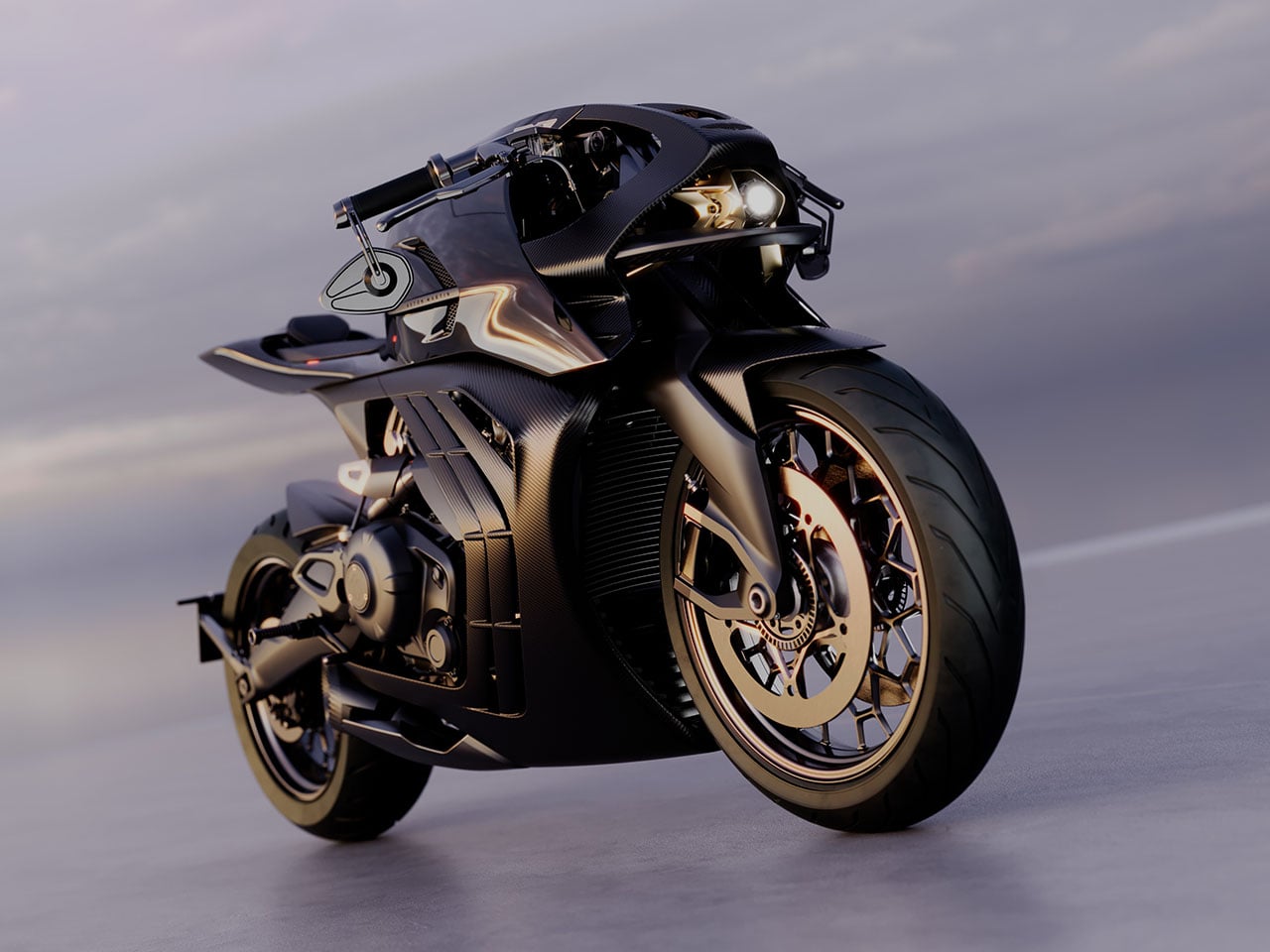
Aston Martin has finally put its name on a road-ready motorcycle. Developed with Brough Superior, the AMB 002 Roadster is the first street-legal bike from the partnership, fusing Aston Martin’s sculptural design language and Brough Superior’s highly specialized approach into motorcycle engineering. Limited to just 300 individually built examples, it is intended for collectors and street riders alike.

Unlike the earlier AMB 001 and AMB 001 Pro bikes, which were created exclusively for track use, the AMB 002 has been developed from the ground up for road riding. Aston Martin’s design studio has given it a compact, forward-biased silhouette, with smooth carbon-fiber surfaces broken up by crescent-shaped cooling vents along the sides. The bodywork rises around the rider, while slim, stalk-like mirrors and an exposed mechanical structure keep the motorcycle visually light.

Designer: Aston Martin

There are also deliberate references to Aston Martin’s cars. The brand’s signature side-strake has been reinterpreted around the headlamp, while the twin oval exhausts feature ribbed heat sinks inspired by the exhaust finishers used on models including the Vanquish, DB12 S and DBX S. At the rear, thin light blades borrow their visual character from the Aston Martin Vulcan, Valkyrie and Valhalla. Even smaller details, including the backlit ignition button, keyless operation and hand-crafted saddle leather seat pads, reinforce the connection between the motorcycle and Aston Martin’s road cars.

Underneath that carefully shaped bodywork is an all-new 1,083cc water-cooled V-twin producing 130 hp and 110 Nm of torque. Rather than chasing an extreme peak-power figure, the engine has been tuned around strong low- and mid-range torque, giving the roadster a more usable character for winding roads. The engine is CNC-machined from billet and built in-house at Brough Superior’s Toulouse facility, where the motorcycle is also machined and assembled.

The engineering gets particularly interesting around the chassis. A titanium structural frame is milled from a solid billet and weighs only 5 kg. It forms the backbone of the motorcycle while helping achieve a 50:50 weight distribution. Carbon-fiber body panels and the fuel tank help keep the center of gravity low, contributing to a total weight of 190 kg. Up front, the AMB 002 uses Brough Superior’s Fior fork, a double-wishbone system evolved from the setup used on the AMB 001 Pro. By separating steering and braking forces, the arrangement is designed to maintain front-end geometry under hard braking while improving steering precision. Its anti-dive characteristics are particularly useful when braking while leaned into a corner.

The result is an unusually focused road motorcycle where materials and mechanical architecture are as important to the experience as outright performance. Brough Superior will build each AMB 002 by hand in Toulouse, with first deliveries scheduled for the third quarter of 2027. Orders are already being accepted, making this less a conventional new motorcycle launch and more a limited production exercise in Aston Martin’s design language beyond four wheels.

The post Aston Martin’s 130-HP road-legal bike brings its luxury design language to two wheels first appeared on Yanko Design.

  • ✇Yanko Design
  • This Porsche 911 was lifted and rebuilt into a Chicago-ready urban safari car
    What happens when a Porsche 911 stops worrying about staying low to the ground? Tangent Design Group has an answer. Lift it three inches, widen its stance, add chunky off-road tires, and turn one of Stuttgart’s most recognizable sports cars into something that looks ready to escape the city rather than attack a racetrack. Built in Chicago, the Urban Safari 911 is an unusual exercise in rethinking what a modern Porsche can be. The project began in 2019, when the Chicago-based industrial design s
     

This Porsche 911 was lifted and rebuilt into a Chicago-ready urban safari car

9 septembre 2026 à 20:30

What happens when a Porsche 911 stops worrying about staying low to the ground? Tangent Design Group has an answer. Lift it three inches, widen its stance, add chunky off-road tires, and turn one of Stuttgart’s most recognizable sports cars into something that looks ready to escape the city rather than attack a racetrack. Built in Chicago, the Urban Safari 911 is an unusual exercise in rethinking what a modern Porsche can be.

The project began in 2019, when the Chicago-based industrial design studio decided to build a Porsche without the constraints of a conventional client brief. Tangent eventually started with a 2021 Porsche 911 Carrera 4, chosen for its all-wheel-drive platform. Finished in Porsche’s Paint-to-Sample Black Olive with a tan interior, the car already had a distinctive character before the transformation began.

Designer: Tangent Design Group

Tangent approached it like a product-development exercise. The original 992 was digitally scanned, including its bumpers, fenders, wheel wells, rocker panels, and rear engine cover. That data became the foundation for developing new components that could properly integrate with the factory body and its increasingly complex electronics. Full-scale parts were then 3D-printed and physically fitted to the car to refine proportions and attachment points before final production.

The most significant change sits underneath the body. Tangent developed a bespoke three-inch lift system while retaining the Porsche’s stock suspension architecture and avoiding software errors. The additional clearance makes room for larger off-road tires and fundamentally changes the stance of the 911. On a truck, three inches might be unremarkable; on a low-slung sports car, it transforms the proportions completely. Something similar to what Vagabund Moto did in collaboration with NINE ELEVEN OUTLAW and DakarGarage to transform a Porsche 924 S into an off-road-worthy ride.

The wheels received the same level of attention. Tangent designed them in-house and worked with Brixton Forged to produce bespoke forged aluminum wheels. Full-scale printed versions were used during development to judge how the design sat against the widened body before the final wheels were manufactured. Visually, the Urban Safari combines wide fender extensions, revised rocker panels, a custom front bull bar and a pronounced ducktail-style rear wing. Auxiliary lighting and roof-mounted adventure equipment reinforce its rally-inspired character, while the graphics package borrows from historic Porsche rally liveries without simply recreating one.

That distinction is important. Tangent’s project predates Porsche’s factory 911 Dakar, having been conceived in 2019, but it draws from the same broader history of Porsche competition cars built for surfaces far removed from a racetrack. Instead of copying a classic rally car or dressing the 992 in retro cues, Tangent has created something that feels contemporary and purpose-built.

The result is currently a one-off, but Tangent is accepting inquiries about the Urban Safari kit, leaving open the possibility that its design language could eventually find its way onto other 992-generation cars.


The post This Porsche 911 was lifted and rebuilt into a Chicago-ready urban safari car first appeared on Yanko Design.

  • ✇Yanko Design
  • SteelSeries Aeon Pro switches between PC and console without re-pairing
    There is something slightly ridiculous about having a PC and an Xbox sitting on the same desk, then needing to re-pair a gaming controller every time you move from one to the other.  SteelSeries thinks the controller should simply know where it needs to go. That is the idea behind the Aeon Pro. The new wireless gamepad is built around a QuickSwitch Dock that can stay connected to both a PC and an Xbox. Instead of disconnecting one system, pairing with the other, and repeating the process later,
     

SteelSeries Aeon Pro switches between PC and console without re-pairing

9 septembre 2026 à 11:20

There is something slightly ridiculous about having a PC and an Xbox sitting on the same desk, then needing to re-pair a gaming controller every time you move from one to the other.  SteelSeries thinks the controller should simply know where it needs to go. That is the idea behind the Aeon Pro.

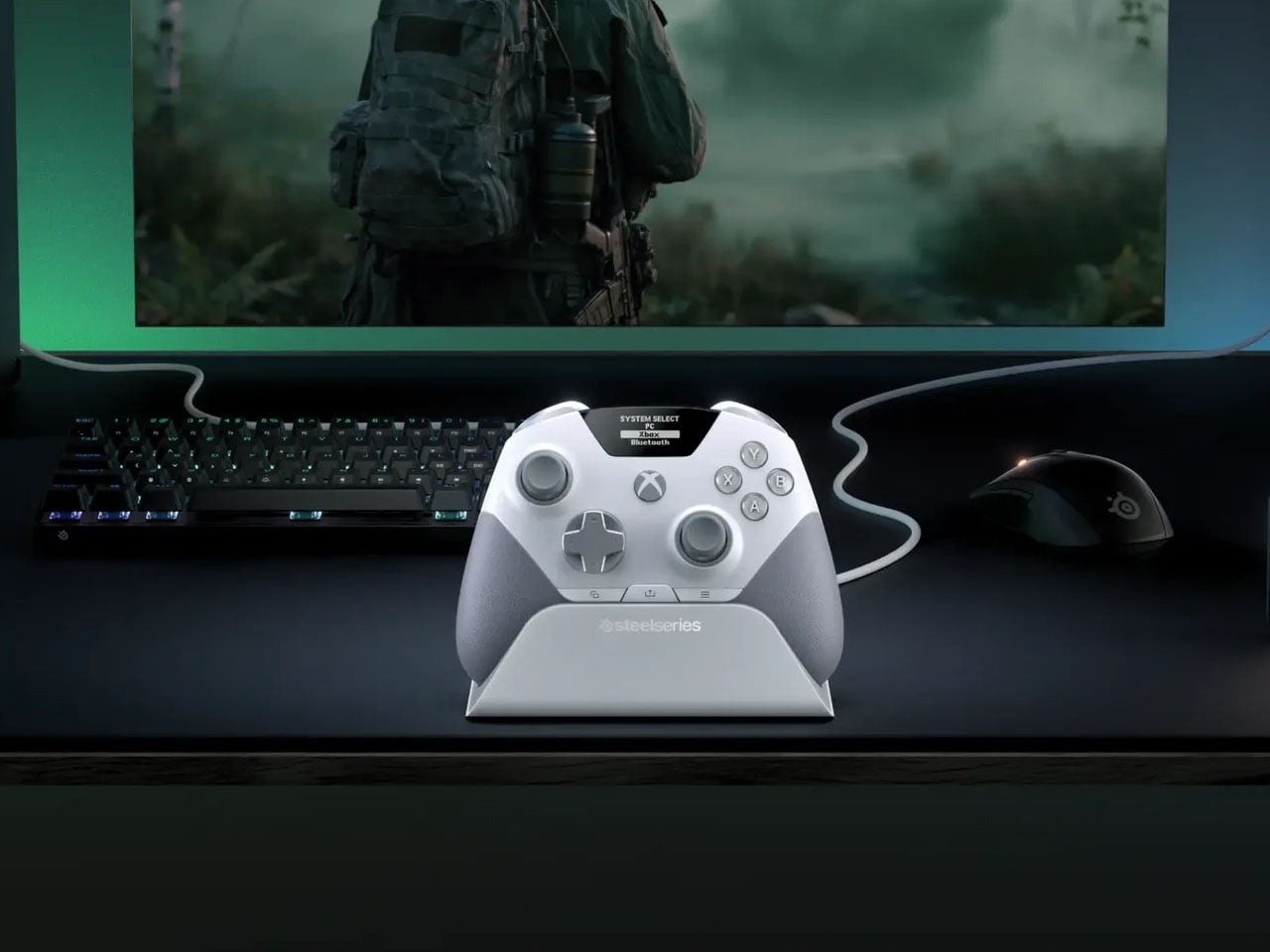
The new wireless gamepad is built around a QuickSwitch Dock that can stay connected to both a PC and an Xbox. Instead of disconnecting one system, pairing with the other, and repeating the process later, the controller can switch between them from the dock. SteelSeries says the system is patent-pending and describes it as the first of its kind for Xbox and PC.

Designer: SteelSeries

The dock is also where the Aeon Pro gets its other unusual trick. It holds a second battery while the first one is being used in the controller. When that battery runs low, it can be swapped for the charged one rather than plugging the controller into a cable and waiting. The batteries are the same type used in SteelSeries’ Arctis Nova Pro headsets, which makes the system particularly interesting for anyone already invested in that ecosystem. SteelSeries calls this its Infinite Power System. The numbers are up to 25 hours over 2.4GHz wireless or 28 hours over Bluetooth, although those figures account for the combined use of the two batteries rather than one battery lasting that long on its own. The Aeon Pro can also connect through USB-C and Bluetooth, and supports mobile devices alongside Xbox and PC.

The controller itself follows the now-familiar premium gamepad formula, but pushes it fairly far. Its thumbsticks use Hall-effect sensors, while the triggers can switch between full travel and a shorter hair-trigger setting. There are 18 mechanical switches across the controller and four programmable rear paddles, giving players plenty of ways to alter how they interact with a game. SteelSeries has also avoided burying every adjustment inside an app. A small OLED display built into the controller can show the active device, battery status, and profiles, while letting users remap controls and change settings directly.

PC players can go deeper through SteelSeries GG, including trigger and button configuration, rumble adjustments, and software profiles. Then there are the smaller touches. The thumbsticks are interchangeable, with different shapes and heights supplied in the box, and the spare pieces can be stored in the dock. A textured grip runs around the controller, while its 310-gram weight makes it considerably heavier than a standard Xbox controller, though still lighter than Microsoft’s Elite model.

The catch is the $259.99 price tag. The Aeon Pro costs more than most premium gamepads, including Microsoft’s own Elite-class controller in many markets. That makes the QuickSwitch dock and battery system more than clever conveniences. They are the features that need to justify why this particular controller deserves a permanent spot on a gaming desk.

The post SteelSeries Aeon Pro switches between PC and console without re-pairing first appeared on Yanko Design.

  • ✇Yanko Design
  • This $500 Wearable Tracks Your Brain All Day, Even While You’re Moving
    Our brain is still a mystery, of which only a small part has been completely understood. Every single decision we make, every move in stressful situations, and the ability to plan way ahead of time can be attributed to the grey matter between the ears. While most wearables want to bring the prowess of advanced medical-grade brain monitoring to everyday life, the strings attached nullify the comprehensive level of scanning required for deeper insight. Atlas Mankind, a startup, wants to change th
     

This $500 Wearable Tracks Your Brain All Day, Even While You’re Moving

2 septembre 2026 à 16:30

Our brain is still a mystery, of which only a small part has been completely understood. Every single decision we make, every move in stressful situations, and the ability to plan way ahead of time can be attributed to the grey matter between the ears. While most wearables want to bring the prowess of advanced medical-grade brain monitoring to everyday life, the strings attached nullify the comprehensive level of scanning required for deeper insight.

Atlas Mankind, a startup, wants to change that with a $500 wearable that sticks to the back of your ears to function in the background as we go on with our daily lives. That’s a leap from other similar wearable gadgets, which require the wearer to stay still or only function while you are asleep. Dubbed Atlas 1.0, the advanced EEG gadget monitors electrodermal activity, voice patterns, and head movements throughout the day to make precise readings of what your brain is doing.

Designer: Atlas Mankind

According to Atlas Mankind, the compact EEG tracker doesn’t restrict the wearer’s movement or only function in certain situations, thereby making it a more natural and unbiased instrument for understanding the internal state of the wearer. It creates a longitudinal record of the brain’s activity in real-life situations, “which is much more meaningful than a single test or isolated brain scan.” The wearable functions in conjunction with the compatible app to track three metrics, which are Presence, Stress, and Energy Burn. That is much more comprehensive than having the half-baked metrics of your stress levels, heart rate, skin temperature, sleep analysis, and generic brain activity that other advanced wearables tout.

Coming back to the three main metrics on which Atlas 1.0 excels – Presence represents whether your attention is inwards or outwards. For instance, during a conversation with your friend, how engaged you actually were. This is done by analyzing the speech patterns and the hemisphere of the brain that was activated during that time. Then there is the Stress tracking, which keeps a very close tab on your physiological stress in the background. The last one is Energy Burn that identifies the activities that were most taxing during the course of the day.

In conjunction with the app that connects to your calendars, event logs, and schedules, the wearable determines the level of shift in these metrics for an in-depth analysis of the brain state over a period of time. The patterns revealed can help the user identify which habits and activities are worth taking up and which ones are better avoided if possible. Atlas 1.0 sticks to the skin behind the ears on an adhesive pad and records the brain waves, as well as voice patterns (not the actual speech for data safety) and movement 24×7. With a dataset of more than 50,000 brain recordings to power the advanced algorithm, the prospects here are exciting.

According to Ana Montero, co-founder & chief executive officer, “For the first time, some of the most important moments in a human life are becoming measurable.” This is supported by André Marques-Smith, PhD: co-founder & chief technology officer, who says, “commitment to accuracy makes ATLAS a tool for genuine mastery and personal science, not just measurement and vanity metrics.” He adds that the engineering challenge of capturing “research-grade data while in motion” is what makes Atlas 1.0 special.

The company is already taking pre-orders for the non-invasive wearable, and it does come with a $30 monthly subscription to keep going. It’ll be interesting to see how accurate the wearable turns out to be, since it is not cheap and you’ll have to keep paying a monthly subscription to make it relevant.


The post This $500 Wearable Tracks Your Brain All Day, Even While You’re Moving first appeared on Yanko Design.

  • ✇Yanko Design
  • Mattel’s 1:1 brick-built Xbox is a 3,509-piece tribute to gaming’s early 2000s era
    The original Xbox is turning 25, and Mattel is marking the occasion with a collector’s piece that transforms Microsoft’s first gaming console into a 1:1-scale building set. Created under the premium Mattel Brick Shop, the Microsoft Xbox Building Toy Kit recreates the chunky 2001 console from 3,509 pieces, complete with its oversized Duke controller and a surprisingly elaborate interior. At first glance, the model is designed to look remarkably close to the original hardware. The familiar black
     

Mattel’s 1:1 brick-built Xbox is a 3,509-piece tribute to gaming’s early 2000s era

23 août 2026 à 15:15

The original Xbox is turning 25, and Mattel is marking the occasion with a collector’s piece that transforms Microsoft’s first gaming console into a 1:1-scale building set. Created under the premium Mattel Brick Shop, the Microsoft Xbox Building Toy Kit recreates the chunky 2001 console from 3,509 pieces, complete with its oversized Duke controller and a surprisingly elaborate interior.

At first glance, the model is designed to look remarkably close to the original hardware. The familiar black rectangular body, recessed side grilles, front controller ports, X-shaped top panel, and central green Xbox logo are all recreated in brick form. The accompanying Duke controller is also buildable and connects to the console, with working buttons, a D-pad, and movable analog sticks. It is a display model rather than a functional gaming machine, but the physical interaction is part of what makes the set more than a static replica.

Designer: Mattel

The set also follows a growing interest in turning gaming hardware into physical building objects. A few years ago, we covered a LEGO Xbox Series S concept that treated the console itself as a customizable canvas for brick-built artwork. Mattel’s new creation takes a detour from the conventional brick-building approach, though, as it employs bricks to personalize a console, using thousands of them to recreate an entire piece of gaming history.

The more interesting details are hidden inside the console. Opening the model reveals three removable dioramas inspired by some of the original Xbox’s most recognizable games: Halo: Combat Evolved, The Elder Scrolls III: Morrowind, and Psychonauts. Each scene comes with small NanoWorld figures representing characters from the games, with 12 figures included across the set. The dioramas can also be removed and displayed independently, giving the enormous console a modular quality rather than making its interior purely decorative.

Mattel has also given the model a modest interactive layer. Pressing buttons on the connected Duke controller activates four different light-and-sound sequences, including the original Xbox opening sequence and effects associated with the three game-inspired scenes. A concealed button combination triggers an additional lighting sequence, adding a small Easter egg for builders who spend time exploring the finished model.

The choice of games is particularly evocative. Halo helped define Xbox as a gaming platform, while Morrowind and Psychonauts represent different sides of the console’s early library. Rather than simply reproducing the hardware, Mattel has effectively turned the console into a compact museum of its formative years, with the games physically embedded into the machine they helped make memorable.

For anyone who remembers the original Xbox as a piece of hardware rather than simply a platform, that distinction is significant. The finished model is essentially a life-size nostalgia object, one that preserves the proportions and visual language of Microsoft’s first console while hiding miniature worlds from its games inside.

The set is intended for builders aged 17 and above and is positioned firmly as a premium collector display rather than a conventional toy. It is currently available for preorder through select retailers, with a US price of $324.

The post Mattel’s 1:1 brick-built Xbox is a 3,509-piece tribute to gaming’s early 2000s era first appeared on Yanko Design.

  • ✇Yanko Design
  • Heart Aerospace X1 takes flight as the world’s largest battery-electric aircraft
    Electric aviation has reached a milestone that once seemed reserved for much smaller aircraft. Heart Aerospace’s X1 demonstrator has completed its first flight, becoming the largest battery-electric aircraft ever to take to the skies. The aircraft flew from Plattsburgh International Airport in upstate New York on August 12, marking a significant step toward bringing electric propulsion to the scale of regional air travel. The X1 is not intended to become a passenger aircraft itself. Instead, it
     

Heart Aerospace X1 takes flight as the world’s largest battery-electric aircraft

17 août 2026 à 15:15

Electric aviation has reached a milestone that once seemed reserved for much smaller aircraft. Heart Aerospace’s X1 demonstrator has completed its first flight, becoming the largest battery-electric aircraft ever to take to the skies. The aircraft flew from Plattsburgh International Airport in upstate New York on August 12, marking a significant step toward bringing electric propulsion to the scale of regional air travel.

The X1 is not intended to become a passenger aircraft itself. Instead, it is a full-scale technology demonstrator for Heart Aerospace’s ES-30, a 30-seat hybrid-electric regional aircraft currently under development. Its purpose is to validate the propulsion system, aerodynamics, flight performance, and other technologies that will eventually be carried into the production aircraft.

Designer: Heart Aerospace

For a prototype, the X1 is quite substantial. It has a 106-foot wingspan, measures 76 feet from nose to tail, and weighs more than 25,000 pounds at takeoff. Four electric motors provide propulsion, drawing their energy entirely from onboard batteries during the test flight. The maiden flight lasted 27 minutes and included taxiing, takeoff, climb, maneuvering, and landing. The aircraft reached 1,100 feet above ground while its electric propulsion system delivered more than one megawatt of power. The test was conducted under an FAA Special Airworthiness Certificate in the Experimental Category, with the flight kept within a controlled test envelope.

Perhaps the most striking detail is the reported energy cost. Heart Aerospace says the flight used approximately $5 worth of electricity. That figure covers the battery-powered flight operation, while some reporting notes that electricity consumed during ground taxiing would need to be considered separately. Even with that distinction, the demonstration offers a tangible illustration of the potential operating-cost advantage of electric propulsion over conventional aircraft fuel.

The limitations, though, have still to be kept in mind, as batteries still cannot provide the energy density required for longer regional flights. That is why the production ES-30 will use a hybrid-electric architecture rather than relying entirely on batteries. Heart Aerospace is targeting an all-electric range of about 124–125 miles, while hybrid operation is expected to extend the range to roughly 497–500 miles. The aircraft is designed to carry 30 passengers and has a battery recharge time of around 30 minutes.

Heart expects the ES-30 to reduce operating costs by more than 40 percent compared with legacy regional aircraft, combining lower energy costs with simpler electric propulsion, reduced maintenance requirements, and potentially greater reliability and aircraft availability. Airlines including United Airlines and Air Canada have committed to the program, with total customer commitments reported at $9.4 billion.

The first pre-production ES-30 is already being developed at Heart Aerospace’s Los Angeles pilot manufacturing plant, with flight testing scheduled for 2028 and entry into service targeted for 2031. The X1’s 27-minute flight does not make electric commercial aviation a finished proposition, but it unearths something more fundamental. Battery-powered propulsion can now lift an aircraft approaching regional-airliner scale off a runway and enable a controlled flight. That is a feat in itself!


The post Heart Aerospace X1 takes flight as the world’s largest battery-electric aircraft first appeared on Yanko Design.

  • ✇Yanko Design
  • Ruka Studio’s TD-1 Vertical Turntable Turns Your Vinyl Collection Into Stunning Part of Your Room
    For a very long time, the world was fixated on horizontal vinyl players that took up a premium space on a table. Just recently, the tide has started shifting in favor of vertical record players that are designed to stand out instead of blending in. The new entrant in the category already explored by designer Fatih Demirci, CoolGeek, and Dutch Hi-Fi maker Miniot, is Ruka Studio – a Los Angeles-based company that was founded in 2024. Relatively new in its existence, Ruka makes its presence felt w
     

Ruka Studio’s TD-1 Vertical Turntable Turns Your Vinyl Collection Into Stunning Part of Your Room

17 août 2026 à 11:20

For a very long time, the world was fixated on horizontal vinyl players that took up a premium space on a table. Just recently, the tide has started shifting in favor of vertical record players that are designed to stand out instead of blending in. The new entrant in the category already explored by designer Fatih Demirci, CoolGeek, and Dutch Hi-Fi maker Miniot, is Ruka Studio – a Los Angeles-based company that was founded in 2024.

Relatively new in its existence, Ruka makes its presence felt with the wealth of experience that forms the DNA of the brand. Reportedly, Ruka Studio was founded by a group of former Apple engineers and designers, so a high-end turntable with a premium finish would be a given. But that’s not where it’s stopping; the company has launched its first vertical turntable called the TD-1.

Designer: Ruka Studio

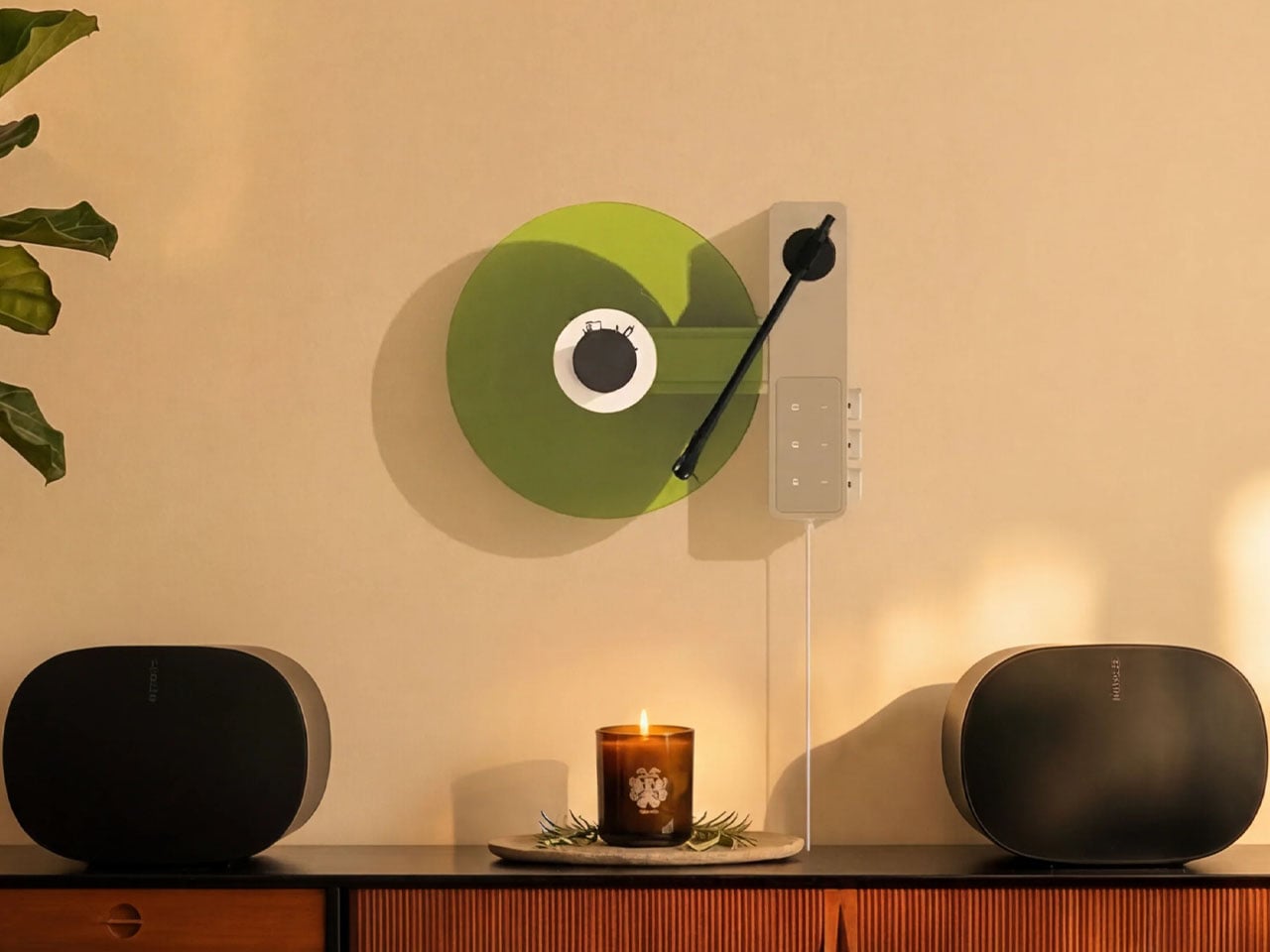
Designed as a turntable that mounts vertically on the wall, or stands upright on a floor stand, it becomes part of the room instead of taking over a table. The TD-1 can spin a vinyl record vertically, which is a treat to the eye and food for thought for your mind. The design is pretty seamless, and you’re left wondering how the giant disk is actually spinning without gravity acting upon it.

If you’re someone who holds your record collection dear and as a reflection of who you are. The TD-1 is conceived with the idea of enhancing that experience like no other has done before. Yes, there have been vertical record players we have seen in our time, but the Ruka’s model is a standout, thanks to its aluminum body and visibly enticing mechanical switches and knobs that turn and click to control playback, adjust the record’s rotational speed, and also to pair the device with a speaker system over Bluetooth. It also comes with wired output to connect with a hi-fi system.

When everyone is trying to integrate AI and convenient remote control via dedicated apps, the TD-1 remains as analog as the record playing was meant to be. The most it gets away from the analog commitment is to stream your vinyl records to a wireless Bluetooth speaker or compatible earbuds.

To make how it looks placed vertically more exciting, the TD-1 arrives with a rubber-coated magnetic plate that holds the record against the wall to appear as if it were floating in mid-air. To ensure you are not hassled with getting the placement straight, it comes with a built-in spirit level. The player features a swappable moving-magnet cartridge, which the company says should allow users to select the cartridge they want, of course for an additional cost from the device itself. The TD-1 turntable itself is belt-drive. The motor has been de-coupled from the acrylic platter to minimize vibration, ensuring smoother and quieter playback.

Ruka Studio TD-1 is available to preorder now starting at a reserve price of $100 on the company’s website. It is priced at $1,399, and preordered models are expected to ship in 2027. The $100 credit is fully refundable or will be adjusted in the final price when a device is shipped.

The post Ruka Studio’s TD-1 Vertical Turntable Turns Your Vinyl Collection Into Stunning Part of Your Room first appeared on Yanko Design.

  • ✇Yanko Design
  • JCB Hydromax sets a new hydrogen land speed record at 406.320 mph
    A pair of hydrogen-powered engines developed for construction machinery has just been pushed into territory normally reserved for purpose-built speed machines. JCB’s Hydromax has reached an astonishing 406.320 mph (653.6 km/h) at Utah’s Bonneville Salt Flats, becoming the fastest hydrogen-powered vehicle of any kind and setting a new world land speed record for a hydrogen internal-combustion car. The 32-foot-long streamliner is powered by two production-based JCB hydrogen combustion engines, ea
     

JCB Hydromax sets a new hydrogen land speed record at 406.320 mph

12 août 2026 à 16:30

A pair of hydrogen-powered engines developed for construction machinery has just been pushed into territory normally reserved for purpose-built speed machines. JCB’s Hydromax has reached an astonishing 406.320 mph (653.6 km/h) at Utah’s Bonneville Salt Flats, becoming the fastest hydrogen-powered vehicle of any kind and setting a new world land speed record for a hydrogen internal-combustion car.

The 32-foot-long streamliner is powered by two production-based JCB hydrogen combustion engines, each tuned to produce 800 horsepower for a combined 1,600 bhp. Rather than using hydrogen in a fuel cell to generate electricity, Hydromax burns hydrogen directly in its internal-combustion engines. The engines are manufactured at JCB’s factory in Foston, Derbyshire, and are based on the same production engines powering JCB machines in the UK.

Designer: JCB

Its record-setting run was completed under FIA rules, requiring two passes in opposite directions within an hour. Driven by Wing Commander Andy Green OBE, Hydromax recorded 400.623 mph on its first run and 412.135 mph on the return, producing the official average of 406.320 mph. The result comfortably surpassed the previous FIA-officiated hydrogen internal-combustion record of 185.5 mph, set by the BMW H2R in 2004. It also moved beyond the 303 mph hydrogen fuel-cell record, making Hydromax the fastest hydrogen-powered vehicle in history. The record remains subject to formal FIA ratification.

According to project lead, JCB Engineering Director Ryan Ballard, “This record belongs to the engineering team which took a hydrogen digger engine and made it the fastest of its kind on earth. This has been an amazing challenge from the outset, with it being set in February last year. We came here fully prepared, and the car delivered.”

The achievement follows an earlier milestone at the 2026 Bonneville Speed Week, where Hydromax averaged 368.347 mph over two runs to establish an SCTA record in the Blown Gas Streamliner class. Its first run reached 367.141 mph, followed by 369.554 mph on the return. That result surpassed the previous 348.342 mph class benchmark, while giving JCB an important test of the car before its FIA attempt.

Much of the car’s engineering focuses on making extreme speed controllable. Hydromax drives all four wheels through twin transmissions and clutches, while its body was shaped around aerodynamic efficiency and stability. JCB says the suspension, traction control, aerodynamics and camera placement were all stress- and simulation-tested before the attempt. Prodrive handled the car build, Ricardo worked on engine tuning and Xtrac supplied the transmission expertise.

The record also carries a strong sense of continuity for JCB. Exactly 20 years after Andy Green drove the JCB Dieselmax to a 350.092 mph diesel land speed record at Bonneville, he has returned to the same salt flats to establish an even faster mark using hydrogen. The Hydromax project was conceived in 2025 as a demonstration of JCB’s hydrogen combustion technology, turning engines developed for working machines into a record-breaking powertrain.


The post JCB Hydromax sets a new hydrogen land speed record at 406.320 mph first appeared on Yanko Design.

  • ✇Yanko Design
  • Casio upgrades the classic F-91W watch with smart functions, and it’s already sold out in Japan
    Without a doubt, the Casio F-91W is a legendary timepiece that is still available to buy for $20. While the digital watch has retained its nostalgic charm all these years, it is indeed a little left behind when it comes to smart functionality. Casio is set to change that now with the F-B100W timepiece, which adapts the modern functions expected in a smart timekeeper. The classic 1980s digital watch in the rectangular silhouette, upgraded with the goodness of step counting – I’ll take that any d
     

Casio upgrades the classic F-91W watch with smart functions, and it’s already sold out in Japan

12 août 2026 à 11:20

Without a doubt, the Casio F-91W is a legendary timepiece that is still available to buy for $20. While the digital watch has retained its nostalgic charm all these years, it is indeed a little left behind when it comes to smart functionality. Casio is set to change that now with the F-B100W timepiece, which adapts the modern functions expected in a smart timekeeper. The classic 1980s digital watch in the rectangular silhouette, upgraded with the goodness of step counting – I’ll take that any day!

On the outside, this Casio timepiece looks like the trusted F-91W, but inside it has more to offer, making it a sweet deal. For now, the watch is available in Japan for ¥8,800 (around $55), and it’s not surprising it has already been sold out, at least for now. That’s almost double the price tag of the original, which is still up for $22, but you’ll also have to factor in the generational leap in smart features this new model touts.

Designer: Casio

Most of the F-B100W’s functions are fairly straightforward, and the specifications are also very close to the original, measuring 41.9 × 38.1 × 8.8 mm and weighing 26 grams. The timepiece retains features including an amber LED backlight with adjustable glow, water resistance, an hourly time signal, and five daily alarm options. For improved comfort during long hours, the bio-based plastic strap now has improved ventilation slits. Major changes come in the form of a watch battery (as opposed to a rechargeable cell), which lasts for almost two years.

What’s making this Casio timepiece a big buzz already is the inclusion of Bluetooth, which automatically syncs time or toggles the alarms or dual time display. In the mix is the phone finder feature, which can be a really useful addition without all the unwanted nuances. What I’m most excited about is the addition of the step counter and lap split time function, which can be directly synced to your phone with the companion app. You can set goals, record up to 200 laps, and monitor the progress on the watch screen as well. For times when you get too engrossed in work, the F-B100W also sends an inactivity alert via a beep and on-screen prompt. Of course, that is an optional feature that can be turned off as well.

It doesn’t have any other smartwatch features like a heart rate monitor, sleep diagnosis, or even BP monitoring, but that’s the point. The retro-modern Casio watch has all the timekeeping functions, and the most essential smart features without making the wearer too finicky about the vitals. F-B100W comes in three color variants: 1AJF, 1BJF, and 3AJF, which have a black case with a positive LCD and retro blue, red, and yellow dial accents, and all black with a negative display and gray text, respectively.

The post Casio upgrades the classic F-91W watch with smart functions, and it’s already sold out in Japan first appeared on Yanko Design.

  • ✇Yanko Design
  • The new Timex Retroware Digital Watch Just Rekindled My Childhood Memory
    When I was growing up in the 1990s, there was a Timex I would kill for. If you remember the Timex Men’s Ironman Triathlon, you’d know what I mean. Not only was it the first to introduce the Indiglo backlight, but it was also the dominant sports watch, slayed with its rugged resin case. I owned one briefly before my brother, who had more muscle than me back then, coerced it out of my wrist to his advantage one day. I had, in the last three decades, almost forgotten about it, but the moment the n
     

The new Timex Retroware Digital Watch Just Rekindled My Childhood Memory

6 août 2026 à 11:20

When I was growing up in the 1990s, there was a Timex I would kill for. If you remember the Timex Men’s Ironman Triathlon, you’d know what I mean. Not only was it the first to introduce the Indiglo backlight, but it was also the dominant sports watch, slayed with its rugged resin case. I owned one briefly before my brother, who had more muscle than me back then, coerced it out of my wrist to his advantage one day.

I had, in the last three decades, almost forgotten about it, but the moment the new Timex Retroware Digital showed up on my screen this morning, some memories were definitely rekindled. Thriving on the old digital sports watch charm of the ‘90s, the Retroware Digital is nowhere close to the Ironman for me, but it has its own retro vibe, which will find takers. Me… maybe, maybe not!

Designer: Timex

Taking nothing away from the new Timex sports watch, let me walk you through what’s changed in approach for the company and how this one, with retro looks, has a way forward to chime with Gen Z. It starts right at the bold and oversized display featuring huge, curved numerals that occupy the larger part of the dial. And this display we are talking about is not small by any means. It’s set in a 46 mm lightweight resin case. The size gives the watch a strong wrist presence, while the curved numerals remain arguably easy to read.

The Retroware Digital watch has a large case, but it’s not very thick, even for not-so-big wrists. It measures only 11 mm high and the 46 mm case ensures the distance from lug-to-lug is a large 50 mm. So, you definitely have a great Timex you’re dealing with. That said, it’s packed with features you’d appreciate whether you’re an ‘80s kid or a young athlete setting pace on a 400-meter track.

The watch is equipped with a chronograph and has a timer to make sure you’re never late for practice. The retro charm on the dial is rekindled by the Indiglo backlight. For the unaware, INDIGLO (how it’s stylized) was developed by Timex in 1992 for the, yes, Ironman Triathlon. It is an electroluminescent blue-green night light onboard that allows a wearer to tell the time in low light conditions with the push of a button.

The large display of the Timex Retroware perpetually ticks with the power of a quartz digital movement inside, which is driven by a CR2025 battery under the hood. The watch is 50-meter water-resistant, so you can definitely take it for a light swim in the pool or to shower later. Don’t go deep diving with it or try and set the stopwatch underwater. If you’re interested, Timex offers the Retroware Digital watch in two colors, blue and green-gray, with matching resin straps for $149.

The post The new Timex Retroware Digital Watch Just Rekindled My Childhood Memory first appeared on Yanko Design.

  • ✇Yanko Design
  • Storyteller’s new GXV Wild is built for luxury off-grid camping without compromise
    Storyteller Overland added Global Expedition Vehicles (GXV) under its umbrella in 2022. The tale for the two adventure camper and overland rig manufacturers, respectively, has been around about on the same lines. Continuing in a combined form factor now, the new 2027 GXV Wild is introduced to upscale the idea of overland living from Storyteller’s lens. The adventure truck is based on the Ram 3500 single-cab chassis. That leaves the Wild catering to only a couple on the road. It can, we will lea
     

Storyteller’s new GXV Wild is built for luxury off-grid camping without compromise

29 juillet 2026 à 16:32

Storyteller Overland added Global Expedition Vehicles (GXV) under its umbrella in 2022. The tale for the two adventure camper and overland rig manufacturers, respectively, has been around about on the same lines. Continuing in a combined form factor now, the new 2027 GXV Wild is introduced to upscale the idea of overland living from Storyteller’s lens.

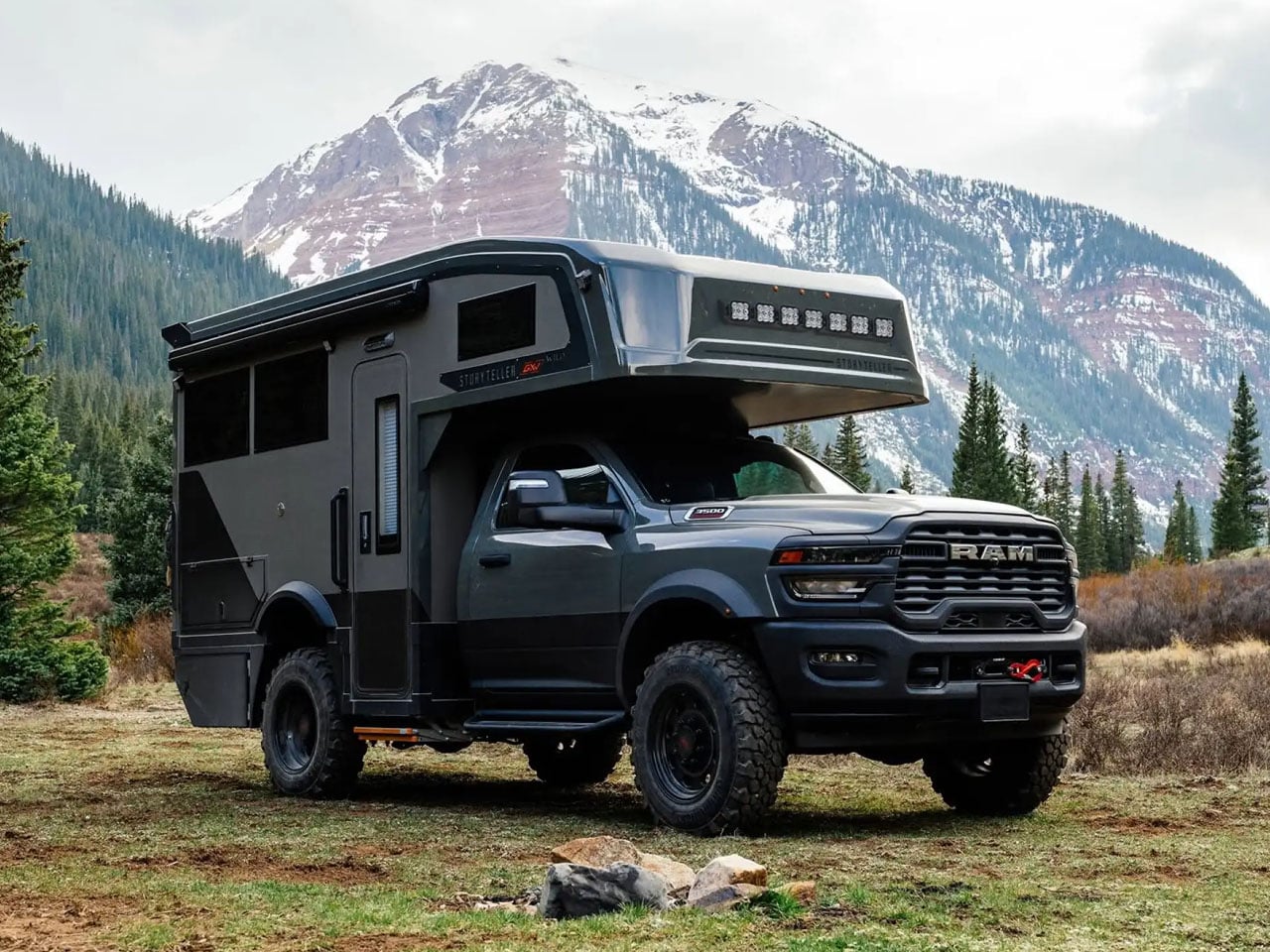
The adventure truck is based on the Ram 3500 single-cab chassis. That leaves the Wild catering to only a couple on the road. It can, we will learn later how, accommodate up to four people at camp. But what’s actually fascinating about the truck, beyond the overlanding compatibility and off-grid preparedness, is how the interior is designed to permit a congenial harmony between the inside and outside.

Designer: Storyteller Overland

Built on the Ram chassis, which draws power from a 6.4L HEMI V8 engine delivering 375 hp and 429 lb-ft of torque, you already have a capable machine. To keep it performing at its best, Storyteller has kept it lightweight but tweaked it to add an AEV suspension kit with a 3-in lift and forged-aluminum wheels wrapped in all-terrain tires. The camper part is made using laminated insulated fiberglass walls and floor. The roof uses insulated panels, and windows feature dual panes (again for better insulation), ensuring year-round operability.

With the modifications to the chassis, the rig – measuring 23 feet long and 11.3 feet high – has a payload capacity of 1,000 lbs and a 14,000-lb GVWR. The Stroyteller GXV Wild can also tow up to 10,000 lb. if you have additional cargo to cargo, in the FlipOut Deck. Some of the truck campers this size we have seen compromise with bathroom space, but that’s the difference with the Wild. It has a dedicated bathroom, next to the alcove. It features a cassette toilet, sink, and a shower that gets water from the 189 L fresh tank and also has a 76 L gray water tank onboard.

Opposite the bathroom, you have the kitchen with a portable induction cooker, a stainless steel sink, and a flip-up counter space extension. 116-L Vitrifrigo fridge/freezer, microwave and other appliances are aligned next to the convertible four-seat dinette with leather seating. When you want a little more space, the FlipOut Deck drops down and opens up your camp. On the far side is the main bed in the cabover loft. Together with the convertible dinette bed, you can have a sleeping space for four people in the Wild.

GXV Wild maintains off-grid convenience with the 400W of solar panels (expandable up to 800W), 12-kWh electrical system, and a 4,500W inverter. For all-season convenience, the insulated interior is furnished with a 13.5K-BTU rooftop air conditioner and a 14K-BTU hydronic heating system. Storyteller Overland is planning to sell the 2027 GXV Wild starting at $299,898. What do you think?


The post Storyteller’s new GXV Wild is built for luxury off-grid camping without compromise first appeared on Yanko Design.

  • ✇Yanko Design
  • This One-Wheel robot could patrol your property while you stay away
    Most security robots are designed like small autonomous cars, with a bulky body and enough room for all the fancy tech. 1ROLLO, however, adapts a radically different approach. Developed by Estonian startup Rollo Robotics, this autonomous security robot balances on a single large wheel, turning an unusual piece of robotics into a practical patrol machine for large properties. The 1ROLLO is built around a vertically oriented spinning flywheel housed inside its main wheel. Gyroscopic forces help t
     

This One-Wheel robot could patrol your property while you stay away

29 juillet 2026 à 11:20

Most security robots are designed like small autonomous cars, with a bulky body and enough room for all the fancy tech. 1ROLLO, however, adapts a radically different approach. Developed by Estonian startup Rollo Robotics, this autonomous security robot balances on a single large wheel, turning an unusual piece of robotics into a practical patrol machine for large properties.

The 1ROLLO is built around a vertically oriented spinning flywheel housed inside its main wheel. Gyroscopic forces help the bot remain upright while moving, while the internal mechanism allows it to lean and change direction. The result is a remarkably narrow robot that can move independently through spaces that might be less accessible to larger wheeled security platforms.

Designer: Rollo Robotics

Despite its unconventional appearance, the 1ROLLO surveillance robot is designed for serious security work. Its autonomous navigation system combines 360-degree computer vision with RTK GNSS positioning, allowing the robot to follow mapped patrol routes while navigating around obstacles. It can detect movement and objects, record video, recognize license plates, and monitor for potentially dangerous gases, including carbon monoxide. The idea is to shift routine security patrols from people to machines without completely removing human oversight. This is estimated to save up to 80 percent of the cost that would otherwise be incurred using manual methods.

When the robot detects something unusual, it can alert a remote operator over 4G, 5G, or Wi-Fi. The operator can then access a live video feed, speak to people near the robot using its microphone and speaker, or dispatch a human guard if the situation requires intervention. A cloud-based management platform is intended to make the system scalable, allowing one operator to monitor multiple robots simultaneously. That could make the 1ROLLO particularly useful for expansive sites where continuously patrolling every corner would require significant manpower.

The robot measures approximately 60 x 60 x 140 centimeters and weighs around 35 kilograms according to the company’s specifications, while more recent reporting has described a 45-kilogram version with a higher top speed of up to 30 km/h. The company has also stated a battery runtime of up to eight hours, after which the robot can autonomously return to a charging station. Its IP65-rated enclosure protects against dust and water jets, supporting outdoor operation.

Rollo Robotics sees potential applications across airports, data centers, industrial facilities, corporate campuses, manufacturing sites, hospitals, hotels, and critical infrastructure. The robot could also find a role in environments such as mining operations, construction sites, oil and gas facilities, and gated communities, where autonomous monitoring could complement existing security teams.

Rollo Robotics plans to offer the surveillance robot through a Robotics-as-a-Service model. Customers would pay for access to the system while receiving maintenance, software updates, support, and future hardware upgrades as part of the service. The 1ROLLO is still evolving, with the company working to improve its performance in challenging weather and busy environments. Commercial availability is expected in 2027, but its single-wheel architecture already makes it an intriguing alternative to the increasingly familiar fleet of four-wheeled security robots.


The post This One-Wheel robot could patrol your property while you stay away first appeared on Yanko Design.

  • ✇Yanko Design
  • Explorer camping trailer is designed with comfort, convenience, and adventure in mind
    We all have different adventure needs. If your lifestyle requires you to go beyond the paved roads and into the wild, you need a capable setup that’s designed with comfort and convenience to go where you want it to. A new entrant among the likes of Adventure Pro Mini 2.0 or the Polydrops P21X is the Fortress Explorer camping trailer that is built for genuine off-grid comfort. The explorer gains off-grid capabilities without having to compromise on its comfort or the capability at any point. New
     

Explorer camping trailer is designed with comfort, convenience, and adventure in mind

26 juin 2026 à 20:30

We all have different adventure needs. If your lifestyle requires you to go beyond the paved roads and into the wild, you need a capable setup that’s designed with comfort and convenience to go where you want it to. A new entrant among the likes of Adventure Pro Mini 2.0 or the Polydrops P21X is the Fortress Explorer camping trailer that is built for genuine off-grid comfort.

The explorer gains off-grid capabilities without having to compromise on its comfort or the capability at any point. New Zealand-based Fortress Trailers says their trailers are “designed for Kiwi tradies who need a setup that works as hard as they do.” But this one is different; it’s designed to be tough and secure, always configurable to be more than a utility trailer: an adventure trailer!

Designer: Fortress Trailers

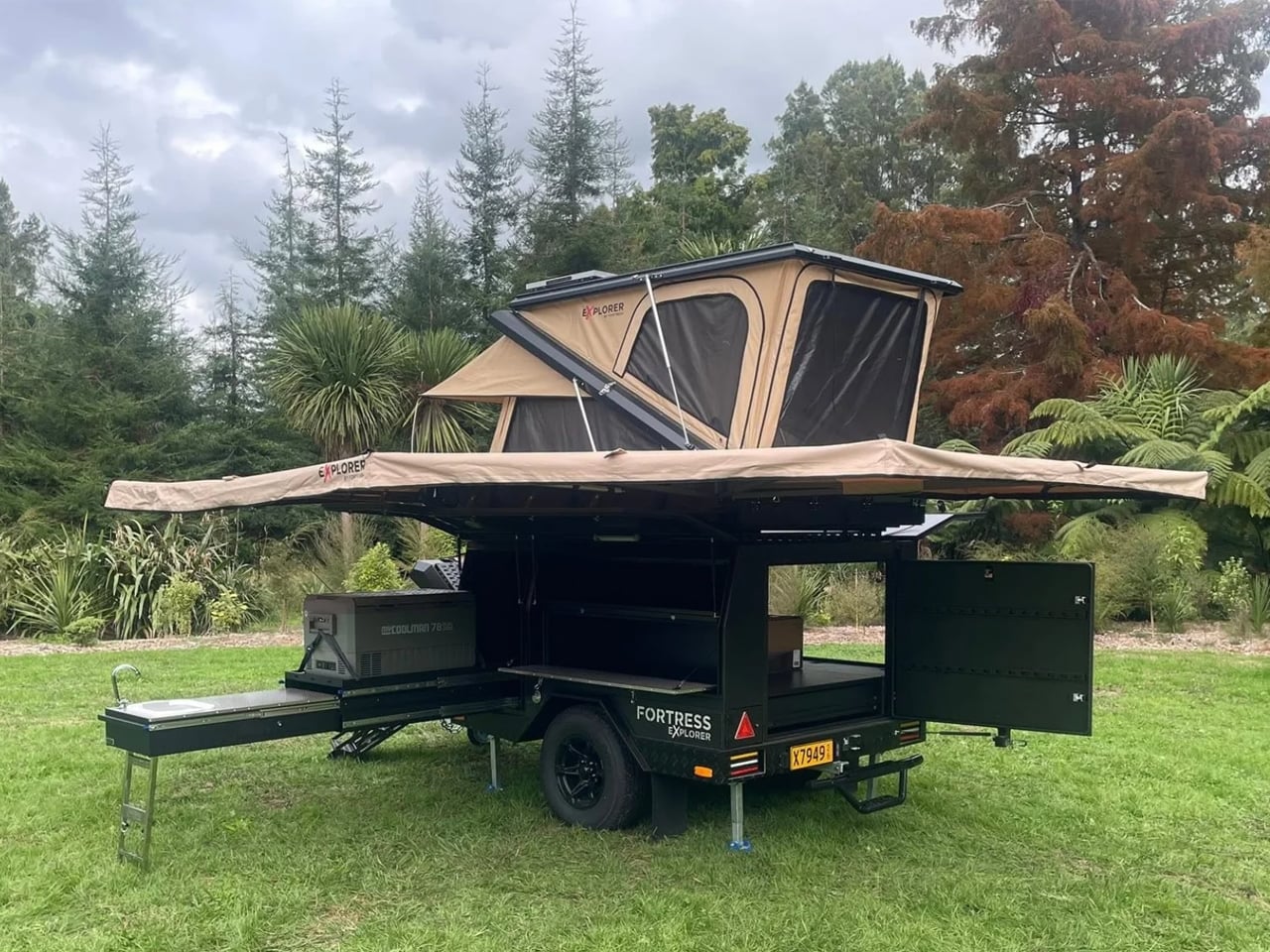
Over the years, Fortress has been developing very secure and rugged utility trailers. To be the mobile workstation you have always wanted, for the first time, the company has developed an outdoor trailer. The Explorer is built using aluminum panels and finished in scratch-resistant paint, as opposed to a steel body that other Fortress trailers are built with. The camping trailer, however, retains the hot-dipped galvanized steel chassis.

Measuring about 13.5 feet long, the Explorer makes for 6.9-foot headroom inside, and it rides comfortably on 15-inch wheels, ready to go just about anywhere. A great combination of convenience, adventure, and comfort, the Fortress Explorer camping trailer features a spacious rooftop tent to increase the sleeping capacity and offers a fully equipped slide-out kitchen with a 90L fridge, bench space, and storage for cooking essentials.

Packed with all the amenities that you need to be in the great outdoors, whether for a short weekend or for a slightly longer stay. It comes with a 270-degree awning to extend the living space beyond the interior, comprising a spacious queen-size memory foam bed. To take care of your living comfort like at home – away from home and far away from the grid – the Explorer features a 120W solar charging setup paired with a 100Ah battery, and a 1000W inverter.

The trailer with a 100L water tank features a DC-DC charger for powering 12V lighting and USB ports via the tow vehicle. Priced at NZ $42,990 (approximately $25,000), the trailer has a huge slide-out drawer for easy organization of camping gear and storage under stairs leading to the rooftop tent. The fuel is stored in a 9kg gas bottle and a pair of jerry cans. For that price, you also get, along with the Explorer, a shower tent for privacy and convenience.

Fortress Trailers, we learn, added the Explorer to its tradesman utility trailer lineup a few months ago. It is available now for the adventurers in New Zealand, but we have yet to hear whether the Explorer camping trailer will make it to North America or not.

The post Explorer camping trailer is designed with comfort, convenience, and adventure in mind first appeared on Yanko Design.

  • ✇Yanko Design
  • Anbernic RG 55G1 is a Switch Lite inspired handheld powered by the Snapdragon SoC
    Anbernic has slowly clawed its way into the Android handheld market with stellar offerings that have excellent build, quality, a nostalgic design language, and powerful guts that can play AAA games without breaking a sweat. The shell options and the freedom to choose from a variety of form factors, right from tiny pocket devices to Nintendo-inspired designs, make their handheld gaming consoles special. Now the Guangdong-based gaming accessories maker has just revealed the RG 55G1 handheld, whic
     

Anbernic RG 55G1 is a Switch Lite inspired handheld powered by the Snapdragon SoC

19 juin 2026 à 11:20

Anbernic has slowly clawed its way into the Android handheld market with stellar offerings that have excellent build, quality, a nostalgic design language, and powerful guts that can play AAA games without breaking a sweat. The shell options and the freedom to choose from a variety of form factors, right from tiny pocket devices to Nintendo-inspired designs, make their handheld gaming consoles special.

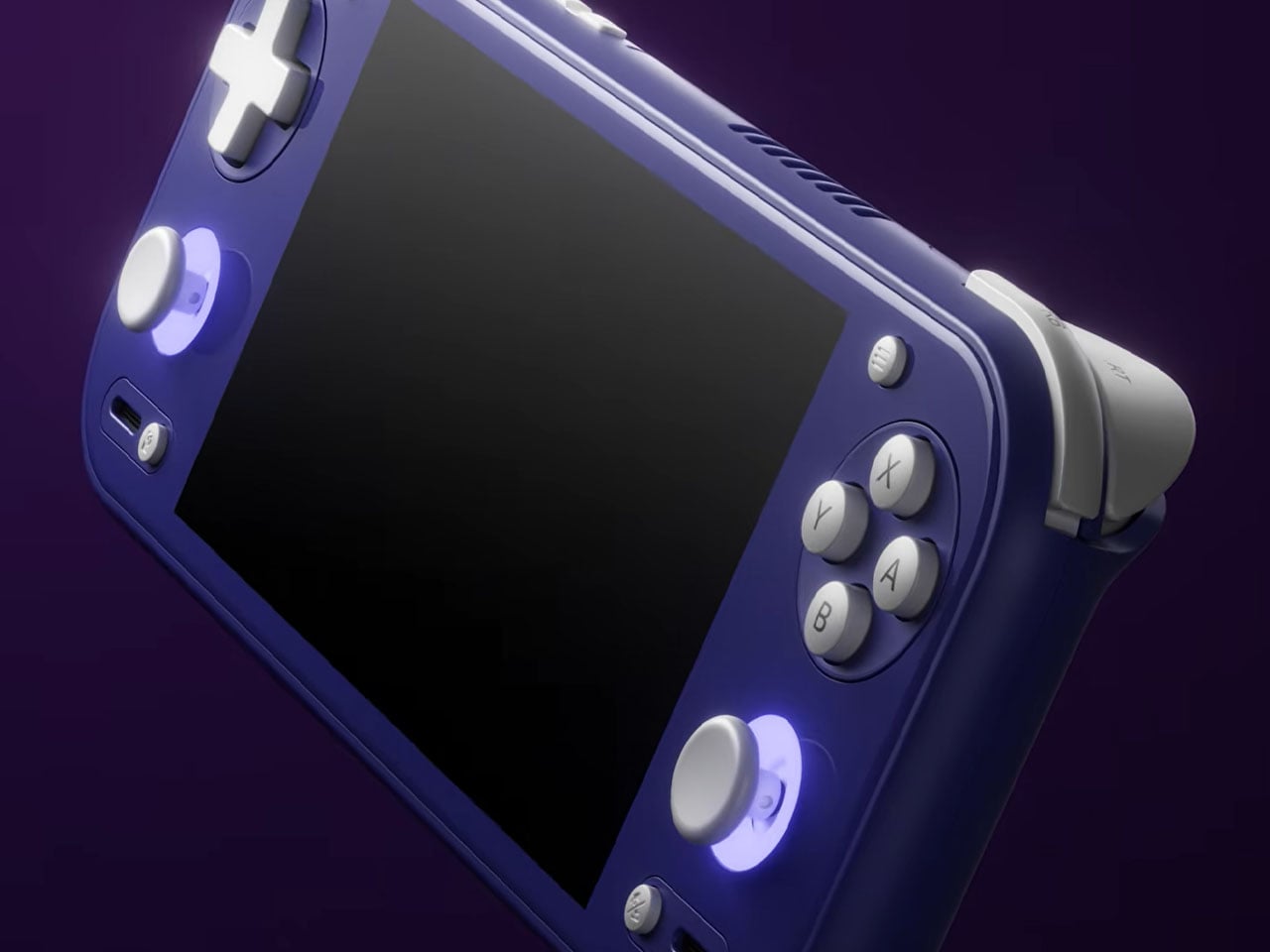
Now the Guangdong-based gaming accessories maker has just revealed the RG 55G1 handheld, which has more of the Nintendo-style layout. There were rumors in the air that the company was working on a couple of handhelds based on the discontinued Nintendo devices, but for now, the maker has announced just one of them. This is the Anbernic RG 55G1 handheld, which gives off the Nintendo Switch Lite vibes. If I compare it to the existing models, the new handheld does look pretty similar to the Retroid Pocket 6.

Designer: Anbernic

While on the superficial level, the handheld is inspired by the Switch Lite, on a closer look, it has some key differences. The device has “double shot” face buttons teased in the video trailer. While I don’t exactly have an idea what that means, it could be the buttons being made out of dual layers of molded plastic – one for the button functionality and the other for text function. Glass on the handheld is gently curved at the edge, and Anbernic calls it the 2.5D glass design. Predictably, the handheld gets the Hall-Effect joysticks and triggers, along with the USB-C port and SD card slot to complete the functionality set.

The horizontal orientation handheld is speculated to have a 5.5-inch display and could most likely be powered by the Snapdragon G1 Gen 2 SoC. If the latter is true, this will be the first time an Anbernic handheld will have a Qualcomm processor, as opposed to the MediaTek or RockChip processors in previous versions. These two speculations stem from the fact that the naming convention usually gives away the device’s specifications, as with the previously released versions. If the handheld has this hardware, playing PlayStation 2 games should be a breeze on this retro-futuristic device.

For now, there is no revelation about the other hardware specs, nor is there any hint of the release date or the pricing. The only thing conclusive is the color options that the RG 55G1 will be released in – Indigo, Retro Gray, and Black. This is the second handheld announcement this week, along with the AYANEO Pocket Micro 2 powered by a Snapdragon chip, on which we’ll have more in the coming days.


The post Anbernic RG 55G1 is a Switch Lite inspired handheld powered by the Snapdragon SoC first appeared on Yanko Design.

  • ✇Yanko Design
  • LUV1 modular bike replaces your car for daily errands with 120L storage and swappable batteries
    Most electric motorcycles still behave like motorcycles first and utility machines second. They chase performance numbers, oversized displays, or aggressive styling while ignoring a simple reality: most urban riders just want something practical enough to replace short car trips. The ANY LUV1 approaches the problem differently. Instead of behaving like a sportbike with batteries attached, it feels more like a compact urban tool designed around everyday life. Created by Belgian startup ANY Mobil
     

LUV1 modular bike replaces your car for daily errands with 120L storage and swappable batteries

16 mai 2026 à 11:20

Most electric motorcycles still behave like motorcycles first and utility machines second. They chase performance numbers, oversized displays, or aggressive styling while ignoring a simple reality: most urban riders just want something practical enough to replace short car trips. The ANY LUV1 approaches the problem differently. Instead of behaving like a sportbike with batteries attached, it feels more like a compact urban tool designed around everyday life.

Created by Belgian startup ANY Mobility, LUV1 is sandwiched somewhere between an electric scooter, cargo bike, and lightweight motorcycle. The company calls it a “Life Utility Vehicle,” and the name makes sense once you look beyond the styling. Nearly every part of the vehicle revolves around usability, whether that means carrying groceries, office gear, camera equipment, or handling the kind of short-distance errands people usually default to using a car for.

Designer: ANY Mobility

That practicality starts with its packaging. The integrated cargo compartment offers 120 liters of storage, which is significantly more useful than the tiny under-seat compartments found on most scooters. It is large enough to carry shopping bags, delivery equipment, or a backpack and helmet without forcing riders to strap everything externally. Front and rear cargo racks expand that flexibility further, while configurable dividers allow owners to organize storage depending on the task at hand.

The modular approach is where the concept becomes genuinely interesting. Instead of locking owners into one fixed setup, the LUV1 can be customized with interchangeable body panels, seating layouts, storage accessories, and optional weather protection. One configuration can prioritize cargo hauling during the week while another leans toward casual commuting on weekends. It follows the same logic that made modular furniture and adaptable workspaces appealing: people increasingly want products that evolve with their routines rather than forcing routines around the product.

Visually, the bike avoids the exaggerated “future mobility” look many startups lean on. The clean bodywork and restrained surfacing come from Granstudio, the Italian design firm led by former Pininfarina design director Lowie Vermeersch. That design pedigree shows in the proportions and detailing. Even functional components like the storage compartments and structural frame feel integrated into the design rather than added as an afterthought.

Underneath the bodywork sits a modular aluminum chassis produced using high-pressure die-casting, a manufacturing method more commonly associated with larger automotive companies. The setup helps reduce complexity while providing the platform with enough flexibility to support various accessories and future configurations. Power comes from an 11 kW rear hub motor paired with dual swappable lithium-ion battery packs totaling 6.5 kWh. ANY Mobility claims a range of 68 to 87 miles, depending on use, while the top speed is rated at 62 mph, making the bike suitable for both dense city streets and suburban commuting. Charging the batteries through a standard 220V outlet reportedly takes under four hours.

The LUV1 also keeps accessibility in mind. It weighs around 352 pounds and features a relatively approachable 30.9-inch seat height, making low-speed maneuvering less intimidating for newer riders and shorter commuters alike. According to reports, the company expects pricing to fall between €7,000 and €10,000 (approximately $8,150 – $11,600) depending on configuration, and reservations have already opened ahead of production plans.

What makes the ANY LUV1 stand out is not raw performance or futuristic gimmicks, but how realistically it understands modern urban mobility. Most people are not looking for an electric motorcycle to replace weekend entertainment. They are looking for something convenient enough to replace unnecessary car usage, and the LUV1 feels designed precisely around that idea.

The post LUV1 modular bike replaces your car for daily errands with 120L storage and swappable batteries first appeared on Yanko Design.
  • ✇Yanko Design
  • This pocket-sized cyberdesk built inside Altoids Tin is a portable workstation for geeks
    What do you do with your Altoids tins after devouring the mints? Maybe for keeping your coins, hand it over to your mom for storing the sewing accessories, for keeping handy a first aid, or perhaps keep the watercolor paint for your little niece. DIYer “Exercising Ingenuity,” however, has a very unique use for the aluminium container. The inventive YouTuber wanted to build a fully functional Cyberdesk inside of the Altoids tin. Sounds bizarre? Surely it is, given the size of the thing. In his v
     

This pocket-sized cyberdesk built inside Altoids Tin is a portable workstation for geeks

12 mai 2026 à 11:20

What do you do with your Altoids tins after devouring the mints? Maybe for keeping your coins, hand it over to your mom for storing the sewing accessories, for keeping handy a first aid, or perhaps keep the watercolor paint for your little niece. DIYer “Exercising Ingenuity,” however, has a very unique use for the aluminium container.

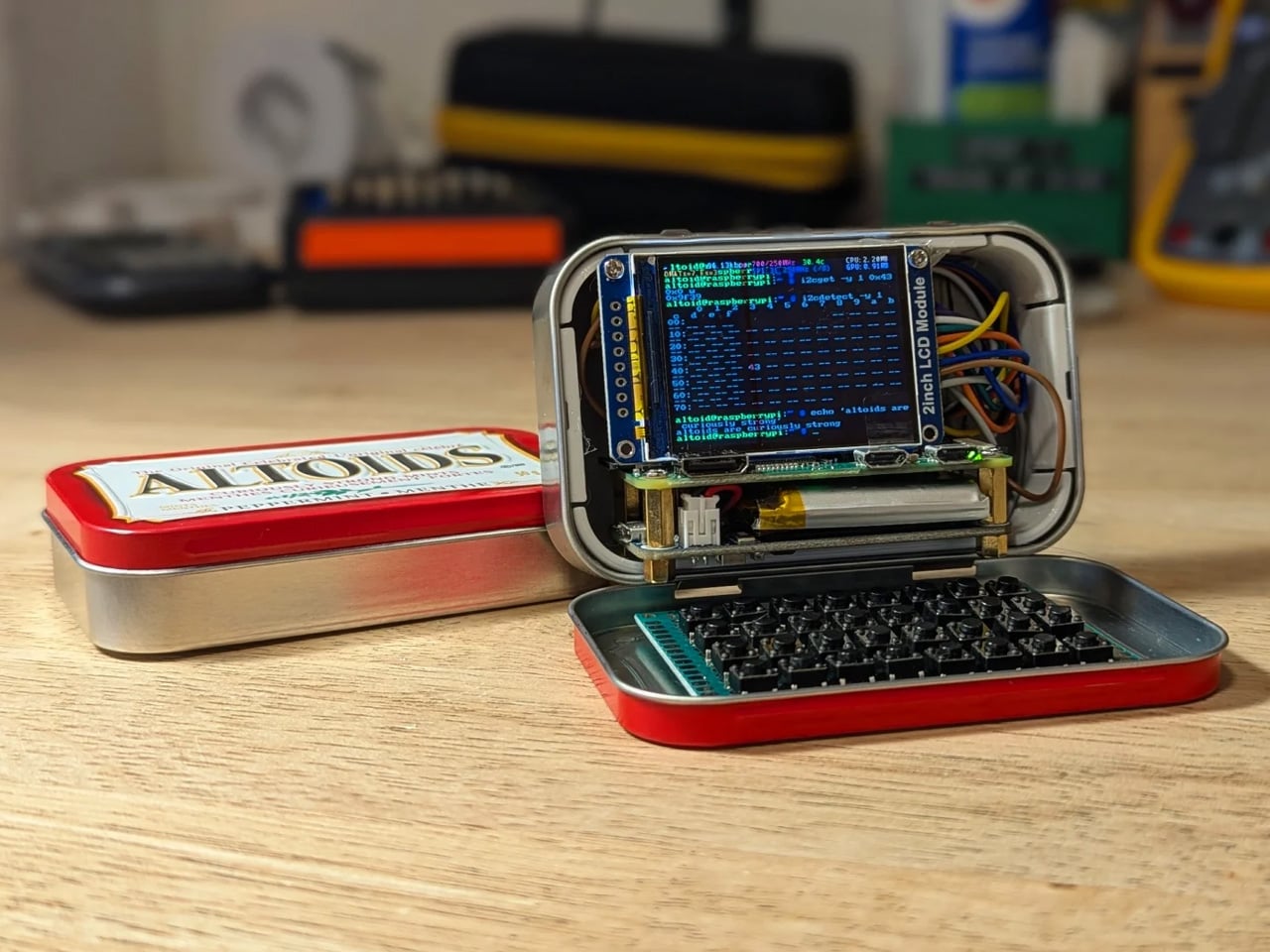
The inventive YouTuber wanted to build a fully functional Cyberdesk inside of the Altoids tin. Sounds bizarre? Surely it is, given the size of the thing. In his video, he asked himself, “That looks like a tiny computer?” It was clear from the outset that the assembly would require the utmost level of detail and sourcing all the hardware inside the tiny housing. While it might not be the most powerful machine you can own, it surely is ultra-portable and quite nice nonetheless.

Designer: Exercising Ingenuity

Normally, Cyberdesks are built inside ammo cans, rugged Pelican cases, or anything that has a boxy form factor. The machines piqued in popularity during the 1980s after the science fiction novel Neuromancer. Altoid tins have all these attributes, just the smaller size makes them a very odd proposition in the Cyberdesk world. That said, he set out anyway on putting together the hardware. For the CPU, he used the Raspberry Pi Zero W he had lying around, and a 2-inch LCD from another unfinished project. The power comes from a 750mAh lithium-ion polymer battery.

The real challenge was to find the tiny mechanical keyboard and fit it inside the small space. According to him, this was the most enjoyable part of the project, even though the video suggests it was a difficult one. It required learning how to construct the diode matrix for configuring the input, along with the assembling and soldering methodology of each of the keys. The final step here involved painting the keys with a white ink pen. Once this bit was taken care of, the DIY headed into the moderate level difficulty (at least for us). The next step was to create a 3D-printed frame to keep all the components inside the tin in place.

Wiring had to be kept to a minimum, and soldering of other components had to be done efficiently, as space was a premium. As a last step to make more room for components like the UPS HAT board and the display, the original hinge was extended with another Altoids tin hinge for a makeshift, slightly bigger replacement. Once all the hardware components were secured properly inside the tin, it was just a matter of running the system using the software. To make the thing look and feel like a vintage desktop computer, the DIYer painted the front panel beige.

The post This pocket-sized cyberdesk built inside Altoids Tin is a portable workstation for geeks first appeared on Yanko Design.

  • ✇Yanko Design
  • This Expandable Popup Micro Camper Turns Your EV Into a Fully Equipped Tiny Home for Off-Grid Escapes
    Wheelhome is a budding compact camping solutions enterprise in the United Kingdom. It is changing the way camping is perceived and how all-electric camping trips can be made more convenient. First, it launched the electric rooftop camper for the Tesla’s popular Model 3, and now it is offering other lighter vehicle owners an alternative for solo or two-person camping with the new Dashaway ECT micro camping trailers. Designed for efficient electric camping trips, the Dashaway ECT trailer comes in
     

This Expandable Popup Micro Camper Turns Your EV Into a Fully Equipped Tiny Home for Off-Grid Escapes

10 mai 2026 à 15:15

Wheelhome is a budding compact camping solutions enterprise in the United Kingdom. It is changing the way camping is perceived and how all-electric camping trips can be made more convenient. First, it launched the electric rooftop camper for the Tesla’s popular Model 3, and now it is offering other lighter vehicle owners an alternative for solo or two-person camping with the new Dashaway ECT micro camping trailers.

Designed for efficient electric camping trips, the Dashaway ECT trailer comes in two variants: a solo version and a two-person model. The campers are packed with all the amenities and facilities one needs, from a lounge to beds and a toilet to a kitchen, so they can be fully packed for all sorts of camping requirements.

Designer: Wheelhome

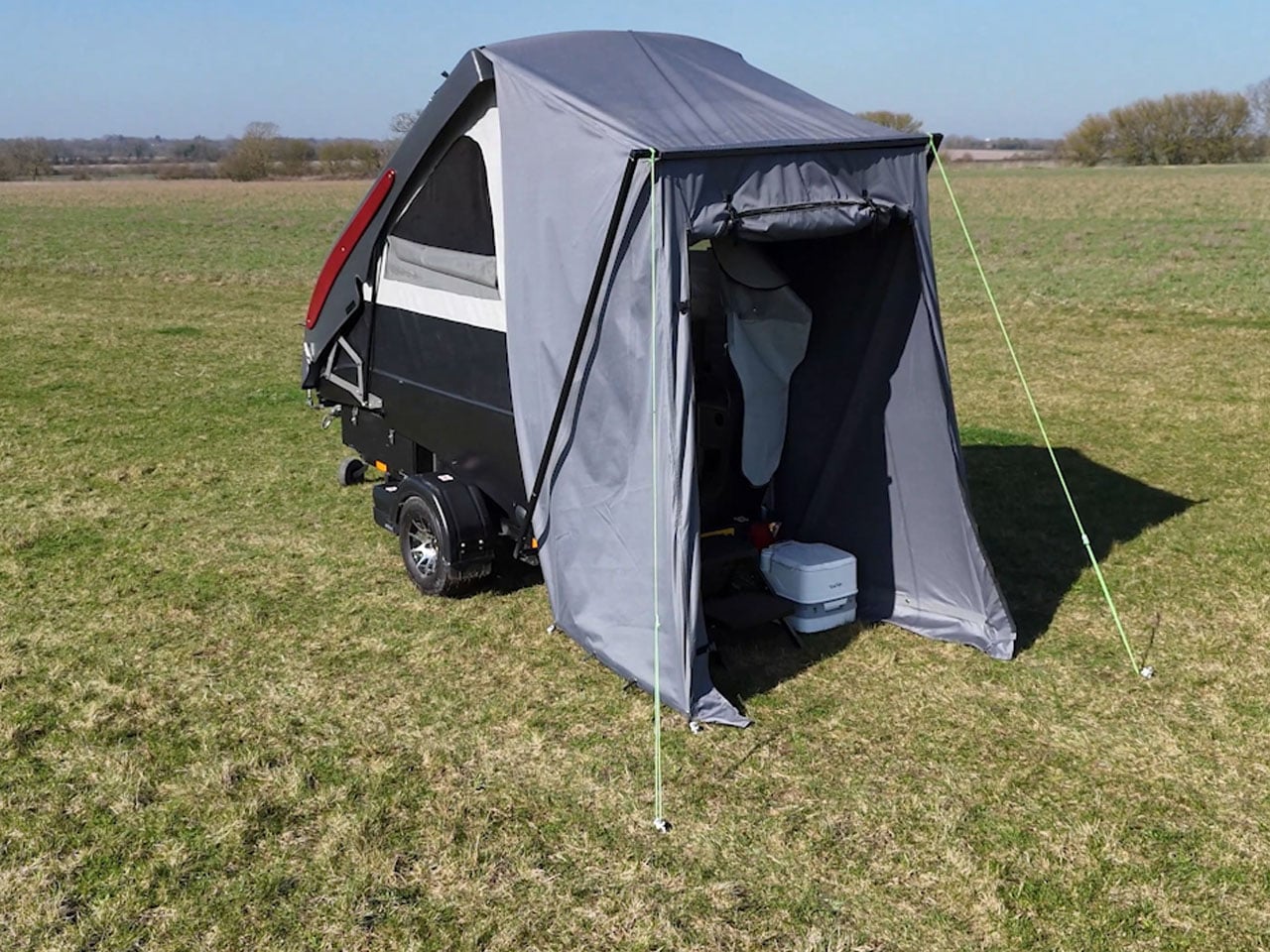
A provided awning is one of the major highlights of the Dashaway ECT series. It is part of the trailer and delivers an additional outer space that can be used for a portable toilet. Of course, it is optional, but with awning rolled up on the front of the trailer when riding, you have the option of expanding the living space. It can unfurl easily and attach to the roof and two side poles to create a sizable space. Besides the awning, the trailer is otherwise similar to the other options on the market, measuring 12.5 feet long and about 5.3 feet wide, but it differentiates itself in the convenience campers can have inside.

When in drive mode, the Dashaway ECTS one berth and the ECT 2 two berth pack down to a height of 3.8 feet. At the camp, both models can pop up to the height of 6 feet. Setting up the trailers is as easy as it can get. No additional tools or any specific training is necessary. The process takes a few minutes. First, using a motorized mover the trailer can be positioned using a remote control, without even the tow vehicle. When in place, the stabilizer legs are lowered and the roof can be lifted up using a gas strut-assisted crank and the fabric side-walled camp is ready to live.

However, before you start living, you can access the camper via single rear entry and layout the furniture and furnishing inside (which folds down when the camper is packed for the road). The interior has the kitchen setup at the entrance complete with an induction hob, kettle, air fryer, and microwave, and then is the seating lounge facing outward, toward the camp entry. The seat also accommodates a 12L fridge underneath. The lounge – depending on the berth configuration you have picked – is either one seat or two. the seats flatten down into a single or double bed at night. The sides are provided with large windows covered with mesh, which light up the interior.

Wheelhome provides the ECT series with ample storage cabinets and compartments under the seat(s). The trailer features a 3-kWh lithium battery, 200-watt rooftop solar panel connected to a 3,000 W inverter. Dashaway ECTS is available for a starting price of £19,750 (roughly $26,000), and the ECT2 is priced at £26,225 (about $35,000).

The post This Expandable Popup Micro Camper Turns Your EV Into a Fully Equipped Tiny Home for Off-Grid Escapes first appeared on Yanko Design.

❌