Vue normale

Il y a de nouveaux articles disponibles, cliquez pour rafraîchir la page.
À partir d’avant-hierFlux principal

Ce smartphone Android fait tourner Red Dead Redemption 2 et Cyberpunk 2077 en local

Par : Korben
6 avril 2026 à 06:23

Le Red Magic 11 Golden Saga Edition est un téléphone Android capable de faire tourner des jeux PC Windows en local, sans connexion internet et sans cloud gaming. Red Dead Redemption 2 tourne à plus de 40 images par seconde, GTA V dépasse les 60, et Cyberpunk 2077 est jouable. Le tout dans la poche.

Comment ça marche

Red Magic utilise un outil appelé GameHub, qui fait tourner des jeux Windows directement sur Android grâce à une couche d'émulation basée sur Wine et Proton (les mêmes technologies que Valve utilise sur le Steam Deck pour faire tourner des jeux Windows sous Linux).

Pas besoin de streaming, pas besoin de serveur distant. Le jeu s'exécute en local sur le téléphone, avec les fichiers installés sur le stockage interne.

Le Red Magic 11 Golden Saga Edition embarque un Snapdragon 8 Elite Gen 5 avec 24 Go de RAM LPDDR5T et 1 To de stockage UFS 4.1 Pro.

Il y a aussi un système de refroidissement actif avec ventilateur, des chambres à vapeur dorées et de l'argent dans le circuit de dissipation thermique. L'écran fait 6,85 pouces, 144 Hz, en AMOLED, et la batterie est de 7 500 mAh.

Les performances en jeu

Red Dead Redemption 2 tourne autour de 40 à 50 images par seconde en moyenne, avec des pointes à 60 dans les intérieurs. GTA V monte jusqu'à 100 images par seconde en intérieur et reste autour de 65 en ville.

Cyberpunk 2077, le plus gourmand, tient au-dessus de 30 images par seconde en 720p avec les paramètres au minimum et le FSR activé. C'est jouable, mais on est loin du confort d'un PC.

Par contre, le téléphone chauffe beaucoup. Des tests ont montré que le processeur pouvait atteindre 100 degrés en charge prolongée sur Cyberpunk 2077. Le ventilateur tourne à fond, et l'autonomie en prend un coup.

Le prix du jouet

Le Red Magic 11 Golden Saga Edition est affiché à 1 500 euros. A ce tarif, on peut acheter un PC gaming portable correct ou un Steam Deck OLED avec encore pas mal de marge. Le public visé est très spécifique : les passionnés de gaming mobile qui veulent jouer à des jeux PC sans avoir de PC.

Bon maintenant on ne va pas de mentir, pour bien moins cher, un Steam Deck OLED fait largement mieux, avec un écran plus grand et une bien meilleure ergonomie pour jouer.

Source : Techspot

This $299 Android Phone Says Glowing Screens Are Already Obsolete

Par : JC Torres
1 avril 2026 à 08:45

For most people, the smartphone screen is where focus goes to die. Even when you pick one up with a purpose, the bright OLED glare, the notifications, and the endless scroll have a way of pulling you elsewhere. Screen fatigue is real, blue light is a genuine concern, and the push for digital wellness has grown loud enough that even tech companies have started quietly acknowledging it.

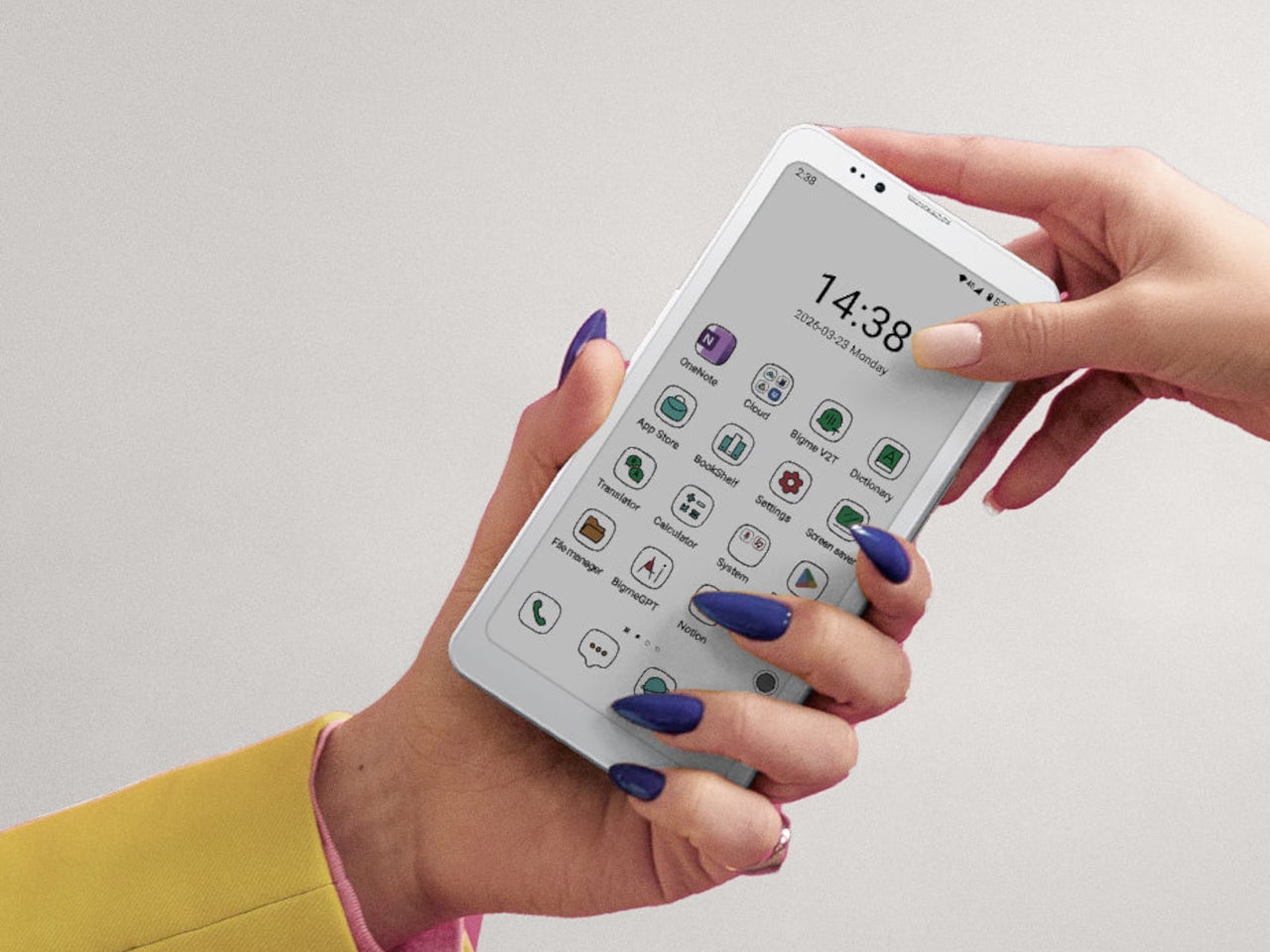
The Bigme HiBreak Plus takes a different approach to the smartphone entirely. Built around a 6.13-inch E Ink Kaleido 3 color display, it runs on Android 14 with full Google Play support and connects via dual 4G SIM, making it a genuinely functional phone. But unlike everything else in your pocket, it defaults to a mode that’s easier on the eyes and harder to mindlessly abuse.

Designer: Bigme

E Ink displays on smartphones have always had one obvious weakness: the refresh rate. Previous devices refreshed so slowly that casual scrolling felt like a real chore. The HiBreak Plus addresses that with a remarkably high 52 FPS refresh rate for an E Ink display, making it responsive enough for reading, annotating, and light browsing without the ghost-image flicker that dogged earlier E Ink phones.

The display’s advantages don’t stop at being easy to look at. E Ink panels are naturally readable under direct sunlight without any brightness cranked up, which means you can check maps, take notes outdoors, or read in the afternoon light without squinting. There’s no backlight shining toward your face either, just a soft, paper-like surface that reflects the ambient light around it.

A front light with 36 brightness levels handles the dimmer end of things. It reads the surrounding environment and automatically calibrates brightness and color temperature, going from a cool, crisp tone for morning work to a warm amber glow at night. There’s no digging through menus or manually adjusting sliders; the phone handles it quietly in the background, adapting to wherever you happen to be.

Handwriting support, via an optional stylus, adds another layer to what the phone can do. Writing directly on the E Ink surface feels closer to putting pen to paper than tapping on glass. It makes the HiBreak Plus a natural fit for jotting down thoughts during a commute, capturing ideas in a meeting, or working through a long reading session with annotations in the margins.

The rest of the specs are functional rather than flashy: an octa-core processor, 4GB of RAM, 64GB of storage, GPS, a fingerprint sensor in the power button, and a 4500 mAh battery that should comfortably outlast most conventional smartphones thanks to the energy-efficient E Ink display. The whole package weighs just 193g, light enough to slip into a shirt pocket without a second thought.

Of course, there are some downsides as well, ones that go beyond the screen refresh rate and color vibrancy. Although not exactly outdated, 4G LTE caps data speed significantly, and the rather modest RAM and storage capacity don’t do it any favors either. That said, at a $299 price point ($249 on pre-order), you are getting a pocket-sized color e-reader that can also make calls and connect to the Internet, without the usual distracting trappings of a smartphone.

The post This $299 Android Phone Says Glowing Screens Are Already Obsolete first appeared on Yanko Design.

Samsung’s Galaxy A Phones Now Get IP68 and 6-Year Updates From $449

Par : JC Torres
26 mars 2026 à 08:45

Mid-range smartphones have been getting very good, very quickly. Most now check the boxes for performance, camera quality, and even design, but the compromises tend to show up later. Software support runs out too soon, water resistance gets downgraded to save costs, or the storage fills up faster than expected. It’s a category where the spec sheet looks promising right up until the parts that actually matter start falling short.

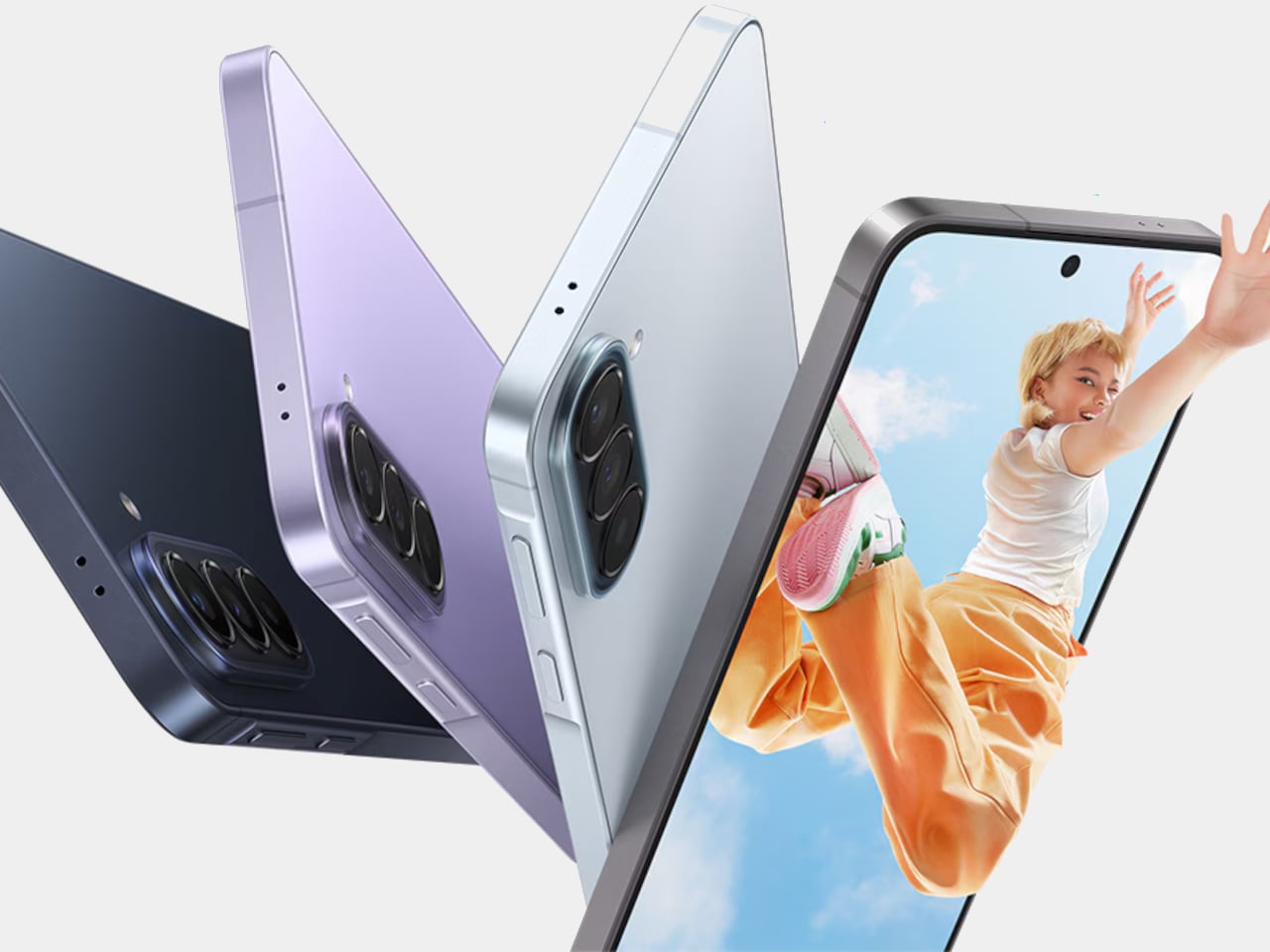
Samsung’s Galaxy A57 5G and Galaxy A37 5G tackle those exact issues. Rather than simply refreshing the hardware, these two phones address the pain points that tend to sour long-term ownership, from shorter software cycles to inadequate protection from the elements. Samsung describes both as the most capable Galaxy A devices yet, and for once, that kind of claim holds up when you look at what’s actually new.

Designer: Samsung

The Galaxy A57 5G leads with a noticeably slimmer build, now at just 6.9mm and 179 grams. A 13% larger vapor chamber helps keep the new Exynos 1680 processor running cool through long gaming sessions or extended recordings. The display also gets slimmer bezels and a bright Super AMOLED+ panel with Vision Booster, so the screen stays readable whether you’re inside at your desk or standing in direct sunlight.

Storage is where the A57 5G makes history for the Galaxy A line. It’s the first A-series phone to offer a 512 GB option, a welcome change for anyone managing a large photo library or shooting high-resolution video regularly. The triple-camera setup, led by a 50 MP main sensor with a 12 MP ultrawide and a 5 MP macro, handles everything from wide-angle landscapes to fine close-up detail.

The Galaxy A37 5G takes a different route to earn its upgrade. Its primary camera now uses a larger 50 MP sensor with support for 10-bit HDR video recording, improving low-light performance and color depth over its predecessor. More significantly, the durability rating jumped from IP67 to IP68, and it now ships with Gorilla Glass Victus+ on both the front and back, which is a notable step up at this price.

Both phones run One UI 8.5 with a broader set of Awesome Intelligence (get it? “AI”?) features. The camera uses AI-based subject and scene recognition to balance skin tones and create cleaner background separation automatically. Circle to Search has also been updated with multi-object recognition, so you can search an outfit, its accessories, and the surrounding backdrop all at once, rather than hunting for each element separately or toggling between searches.

What gives both phones long-term value is Samsung’s commitment to six generations of Android OS updates and six years of security support. Add to that 5,000 mAh batteries and IP68-rated protection across both models, and these are phones clearly meant to outlast the typical mid-range upgrade cycle. The Galaxy A57 5G starts at $549.99 and the Galaxy A37 5G at $449.99 in the US, with availability beginning April 9, 2026.

The post Samsung’s Galaxy A Phones Now Get IP68 and 6-Year Updates From $449 first appeared on Yanko Design.

Google Translate May Be Building a Pronunciation Coach

24 mars 2026 à 15:45

A hidden Google Translate feature could turn translated phrases into guided speaking practice, complete with scoring and corrective feedback.

The post Google Translate May Be Building a Pronunciation Coach appeared first on TechRepublic.

Google Quietly Changed Gemini on Android — And It Feels Completely Different

Par : Nayan
21 mars 2026 à 18:07
Google just made a small change to Gemini on Android… but it might completely change how you use AI on your phone. Spotted in a recent test build, this update tweaks how Gemini appears on screen — and surprisingly, less is actually more. 📱 What Changed in Gemini? A new UI behavior has been seen in testing: […]

Android 17 va bloquer les apps qui abusent des services d'accessibilité

Par : Korben
17 mars 2026 à 16:19

Google durcit le ton avec Android 17. La prochaine version de l'OS mobile va empêcher les applications non certifiées d'accéder aux services d'accessibilité, une API très puissante et régulièrement détournée par les malwares pour espionner les utilisateurs et vider des comptes bancaires.

Ce qui change avec Android 17

La nouveauté est apparue dans la Beta 2 d'Android 17, repérée la semaine dernière. Quand le mode Advanced Protection est activé, le système bloque automatiquement l'accès à l'API AccessibilityService pour toutes les apps qui ne sont pas de vrais outils d'accessibilité.

Seules les applications qui portent le marqueur technique isAccessibilityTool restent autorisées : lecteurs d'écran, outils de saisie vocale, systèmes d'entrée par contacteur et applications braille.

Les autres, et la liste est longue, sont mises de côté : antivirus, outils d'automatisation, assistants, nettoyeurs système, gestionnaires de mots de passe et lanceurs alternatifs.

Et si une de ces apps avait déjà l'autorisation, Android 17 la révoque automatiquement au moment où le mode Advanced Protection est activé. L'utilisateur ne peut pas non plus forcer l'accès manuellement tant que la protection est active.

Pourquoi c'est un vrai sujet ?

L'API AccessibilityService est l'une des plus sensibles d'Android. Elle permet de lire le contenu de l'écran, d'intercepter les frappes clavier, de cliquer sur des boutons à la place de l'utilisateur et d'accorder des autorisations sans que personne ne s'en rende compte.

Les malwares bancaires l'exploitent depuis des années pour voler des identifiants et vider des comptes. Google a longtemps fermé les yeux sur le problème, ou en tout cas laissé la porte grande ouverte. Avec ce mode, c'est un peu le retour à la raison.

Le mode Advanced Protection, lancé avec Android 16, regroupe aussi d'autres verrous : blocage du sideloading (l'installation d'apps en dehors du Play Store), restriction des transferts de données par USB et scan obligatoire via Google Play Protect.

Android 17 ajoute donc cette brique supplémentaire sur l'accessibilité. Côté développeurs, Google met à disposition une API AdvancedProtectionManager qui permet aux apps de détecter si le mode est actif et d'adapter leur comportement en conséquence.

On ne va pas se mentir, quand on utilise un iPhone, ce genre de problème ne se pose pas vraiment puisque iOS a toujours été bien plus restrictif sur ce que les apps peuvent faire en arrière-plan. Mais pour les utilisateurs Android, c'est une avancée qui était attendue depuis un moment. Le revers de la médaille, c'est que des apps tout à fait légitimes vont se retrouver bloquées.

Un émulateur de Dynamic Island comme dynamicSpot ne fonctionne plus avec le mode activé, et c'est le genre de petite frustration qui risque de pousser pas mal de monde à désactiver la protection. On espère que Google trouvera un juste milieu entre la sécurité et la flexibilité qui fait la force d'Android, en tout cas pour le moment ce n'est pas encore tout à fait ça.

Source : The Hacker News

Google veut vérifier l'identité de tous les développeurs Android, et ça menace F-Droid

Par : Korben
16 mars 2026 à 15:19

Google va obliger tous les développeurs Android à s'enregistrer avec une pièce d'identité et à payer 25 dollars, même ceux qui distribuent leurs apps en dehors du Play Store. F-Droid, le dépôt d'applications open source qui existe depuis quinze ans, dit que c'est une menace pour sa survie.

Une inscription obligatoire dès septembre

L'été dernier, Google a annoncé que toutes les applications installées sur des appareils Android certifiés devront obligatoirement être liées à un compte développeur vérifié. Cette obligation entrera en vigueur dès le mois de septembre prochain au Brésil, en Indonésie, à Singapour et en Thaïlande. Le reste du monde suivra quatre mois plus tard.

Pour s'enregistrer, il faut fournir une pièce d'identité officielle, accepter les conditions de Google et payer 25 dollars. Et ça concerne tout le monde : les développeurs qui publient sur le Play Store, mais aussi ceux qui passent par des stores alternatifs, par F-Droid, ou qui proposent leurs apps en téléchargement direct depuis un site web.

F-Droid ne peut pas s'adapter

F-Droid héberge plus de 3 000 applications open source, sans pub et sans trackers. Le problème, c'est que F-Droid signe lui-même les apps qu'il distribue avec sa propre clé, et Google impose désormais une seule signature par application.

Ça casse tout le modèle : si l'app est déjà signée par le développeur sur le Play Store, la version F-Droid ne peut plus exister. Et F-Droid ne peut pas non plus forcer des centaines de contributeurs bénévoles à s'enregistrer chez Google et à fournir leurs papiers.

37 organisations ont signé une lettre ouverte contre ce projet, dont l'Electronic Frontier Foundation, la Free Software Foundation et Vivaldi. Une pétition sur Change.org a rassemblé 64 000 signatures de développeurs.

Le lien avec le procès Epic Games

Ce durcissement arrive juste après l'accord entre Google et Epic Games sur la distribution d'apps Android. Les deux entreprises ont annoncé un programme de stores enregistrés qui permet le sideloading, mais sans obliger Google à intégrer des stores tiers dans le Play Store. 

Certains y voient une manoeuvre : si les tribunaux n'obligent pas Google à ouvrir le Play Store, la vérification des développeurs lui donne quand même un contrôle indirect sur toute la distribution Android.

Google, de son côté, dit que c'est une question de sécurité et que ça permet de bloquer les développeurs malveillants plus rapidement. Les distributions Android alternatives comme LineageOS ou GrapheneOS ne sont pas concernées.

Google invoque la sécurité, mais le Play Store lui-même laisse régulièrement passer des apps malveillantes, donc l'argument ne tient pas tant que ça.

Obliger un développeur bénévole qui publie un petit outil open source à fournir ses papiers d'identité à Google, c'est quand même un peu naze. On verra si la mobilisation des 37 organisations et des 64 000 développeurs suffira à faire bouger les choses, mais pour l'instant le calendrier est maintenu.

Sources : Android Authority , F-Droid

Oppo Find N6 Review: The Best Foldable Phone Right Now

Par : Aki Ukita
17 mars 2026 à 12:00

PROS:


  • Excellent multitasking experience

  • Nearly invisible and undetectable crease

  • Slim and light form factor for a book-style foldable

  • Powerful performance

CONS:


  • Camera system is good for a foldable, but not truly flagship-level

RATINGS:

AESTHETICS
ERGONOMICS
PERFORMANCE
SUSTAINABILITY / REPAIRABILITY
VALUE FOR MONEY

EDITOR'S QUOTE:

The OPPO Find N6 is one of the few foldables that trades novelty for genuine polish, delivering a device that feels as complete as it does considered.

The Oppo Find N6 arrives at a moment when foldables can no longer rely on novelty alone to justify their place in the premium market. Buyers now expect these devices to feel as polished and dependable as any top-tier flagship, while still delivering the sense of occasion that only a folding design can offer. That is what makes the Find N6 so interesting, because it is not simply trying to look futuristic. It is trying to feel complete.

That question lands differently for me because the Oppo Find N5 has been my daily driver for most of the time since its launch. Living with that phone has given me a clear sense of what Oppo already does exceptionally well in this category, from hardware refinement to the balance between portability and immersion. It also means I came to the Find N6 with real expectations rather than fresh curiosity alone. More than anything, I wanted to see whether Oppo had merely polished an already strong formula or taken a meaningful step forward.

Designer: OPPO

Aesthetics

The Oppo Find N6 does not stray far from the design language established by the Find N5, but it feels like a more polished and disciplined evolution of that formula. The overall look is largely unchanged, yet the Find N6 comes across as more minimalistic and more refined, with a cleaner visual identity that feels calmer and more mature. Rather than chasing a dramatic redesign, Oppo has focused on tightening the details, and that gives the phone a stronger sense of cohesion.

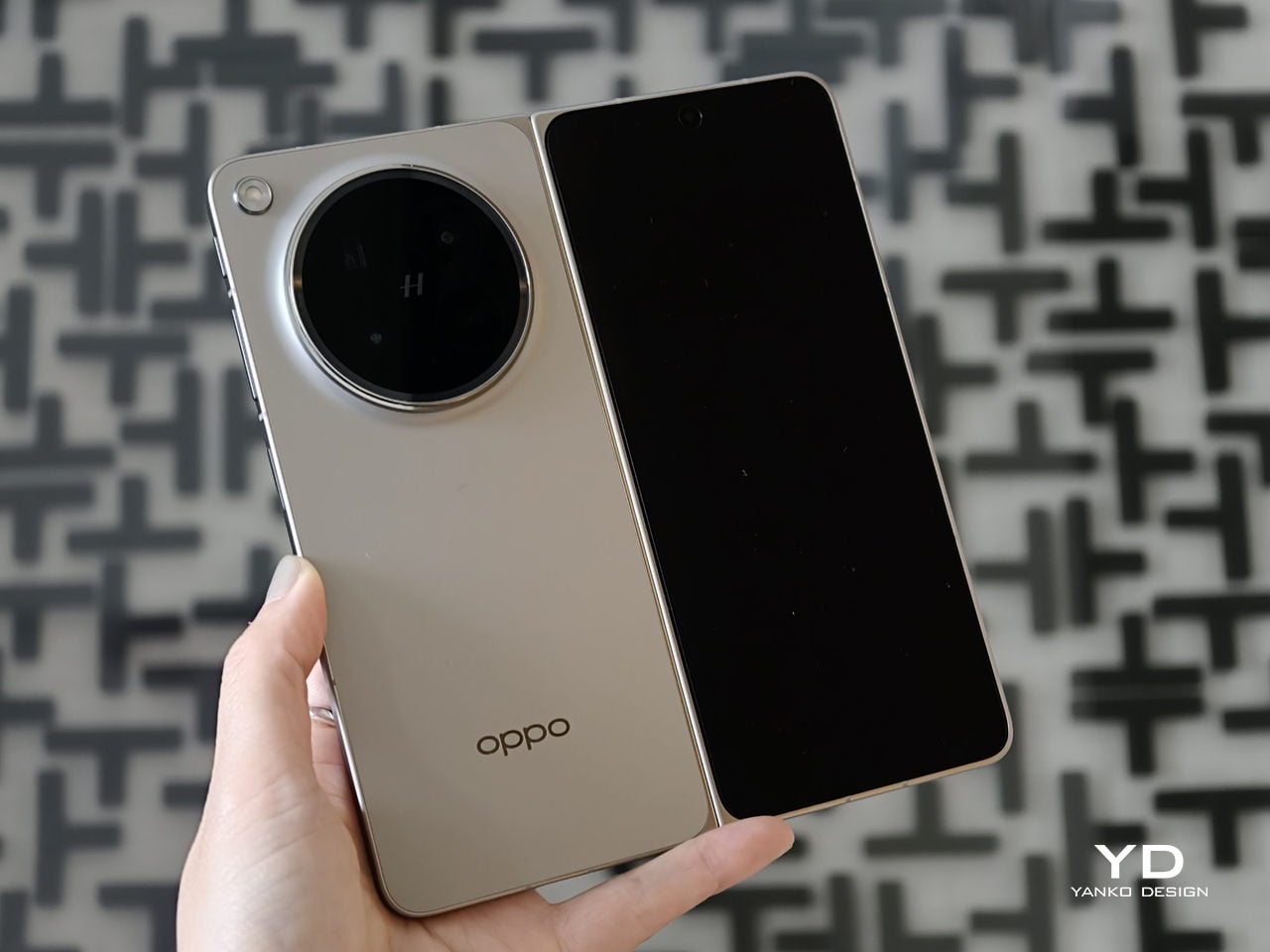
The biggest improvement is in the rear camera treatment. The refined Cosmos Ring camera deco looks more elegant and less ornamental, while the individual camera elements feel more integrated into the overall composition instead of standing apart from it. This makes the back of the phone look tidier and more resolved, which suits the Find N6’s more minimal direction. It still has the visual presence expected of a flagship foldable, but it carries that presence with greater restraint.

What also stands out is Oppo’s color choice. For the first time on one of its foldables, the company is offering a much bolder orange finish, which Oppo calls Blossom Orange, alongside a more classic Stellar Titanium, and the timing does not feel accidental. Ever since the iPhone 17 Pro series introduced orange into the flagship conversation, it feels like other brands have been quick to follow Apple’s lead, and the Find N6 is part of that wave. Even so, the orange works well here, giving the phone more personality, while the gray remains the safer and more traditional option.

Ergonomics

The generous screen real estate of a foldable usually comes with familiar compromises. Thickness, weight, and the crease are often treated as the unavoidable price of admission. The Oppo Find N6, however, feels designed to challenge that assumption in a way that is noticeable the moment you pick it up.

At 8.3 mm when folded and 225 g, the Find N6 feels surprisingly close to a premium flagship bar phone in everyday use. It does not come across as awkwardly bulky or excessively heavy, which makes it more approachable than many devices in this category. That balance matters over time, whether you are using it one-handed, slipping it into a pocket, or simply carrying it through a long day.

That does not mean the form factor is free of trade-offs. If I rest some of the phone’s weight on my pinky, the lower edge can still dig in a bit, especially when the device is open. It is less noticeable than on the Find N5, but not completely gone.

Perhaps the most impressive detail, though, is the crease, or more precisely, how little of it remains. I have never been particularly bothered by creases on foldables, and I was already satisfied with the subtle crease on the Find N5. Even so, the Find N6 feels like a meaningful refinement rather than a minor iteration.

Visually, the crease is practically nonexistent in normal use and only becomes noticeable if the screen is off and viewed from a very specific angle. More impressive still, it also feels nearly absent under the finger when swiping across the display. Our fingertips are quick to pick up even slight ridges or shallow dents, which makes the Find N6’s smooth, uninterrupted surface especially impressive in daily use.

That sense of appreciation only grows once you look at how Oppo arrived at this result. The company refined the hinge architecture itself and paired it with state-of-the-art 3D scanning and 3D printing technologies, a combination that helps explain why the Find N6 feels so polished in the hand.

That same attention extends to the physical controls. In place of the OnePlus-style alert slider on the upper left, Oppo now uses the customizable Snap Key, first introduced on the Find X9 series and now positioned on the upper right side. It can be mapped to quick actions such as launching the camera, turning on the flashlight, starting a voice memo, or opening translation, giving it a broader role than the slider it replaces.

Just below sit the fingerprint reader and volume rocker, both placed lower than they were on the Find N5. That may sound like a minor adjustment, but it makes the controls easier to reach and better aligned with the way the phone naturally rests in the hand. It is a subtle refinement, though one that proves genuinely useful in everyday use.

Performance

With foldables, the screens have to justify the form factor. The Find N6 uses a 6.62-inch cover display and an 8.12-inch inner screen, both with 120Hz LTPO panels. That is the expected hardware at this level, so the more interesting part is how Oppo tries to improve the experience around visibility, comfort, and immersion.

According to Oppo, both displays can reach 1,800 nits in outdoor use, with peak HDR brightness topping out at 3,600 nits on the cover screen and 2,500 nits on the inner panel. In practice, both displays are bright enough to remain comfortably usable even under harsh sunlight. They also support Dolby Vision and HDR Vivid, and content looks rich and vibrant across both panels.

The Find N6 is powered by Qualcomm’s Snapdragon 8 Elite, and it has no trouble keeping up with the kind of multitasking a foldable encourages. Apps open quickly, navigation feels immediate, and even with several windows open at once, the phone stayed smooth and responsive. I also edited a short video on the device, specifically an unboxing of the Find N6 and AI Pen Kit, and the experience was smooth and free of noticeable stutter.

That matters because a device like this only really makes sense if it can handle more than the usual phone workload without feeling strained. Oppo’s software does a good job of making that extra screen space feel useful. Free-Flow Window lets you open up to four apps at once in floating windows, and in practice, it feels less fiddly than it sounds.

Boundless View adds even more flexibility, and the gestures linking the two work naturally enough that moving between layouts never feels like a chore. Resizing windows, shifting focus, and juggling multiple apps all feel smooth and seamless, which makes the Find N6 genuinely effective as a productivity device rather than just a phone with a bigger screen.

Even under sustained use, the phone remained smooth and reasonably controlled, and I also did not notice any stutter while playing Genshin Impact. Gaming feels more like a bonus here than the main point of the device, but the large inner display still gives it a more immersive, almost tablet-like feel than a standard phone can offer.

That same focus on utility extends to the AI Pen Kit, which is one of the more interesting hardware additions. The Oppo AI Pen supports 4,096 levels of pressure sensitivity and works on both the inner and outer displays, which makes the Find N6 more versatile for note-taking, annotation, and quick sketching. Because it connects over Bluetooth, the pen can also double as a remote shutter for both photos and video, which adds a genuinely useful layer of flexibility.

Oppo has also handled the practical side fairly well. The dedicated case gives the pen a proper place to live and keeps it charged through reverse wireless charging from the phone itself. That kind of integration is important because accessories like this are only useful if they are easy to carry and ready when you need them.

The software support around the pen is also fairly thoughtful. Quick Note lets you start writing quickly, a double press switches between writing and erasing, and global annotation makes it possible to mark up content across the interface and export it as an image or PDF afterward. There are also a few more specialized tools, including handwriting optimization, a handwriting calculator, and a Laser Pointer mode for presentations. Not all of these will be essential, but together they make the pen feel more genuinely useful than most stylus add-ons tend to.

Camera

The camera system performs well by foldable standards, but it is not on the level of the best camera-focused flagships. In practice, it feels closer to a solid upper mid-range setup, which is respectable enough for a device like this.

The rear camera system includes a 200MP main camera with a 21mm-equivalent focal length, a 1/1.56-inch ISOCELL HP5 sensor, an f/1.8 aperture, and OIS, a 50MP telephoto at 70mm equivalent with an ISOCELL JN5 sensor, an f/2.7 aperture, and OIS, and a 50MP ultra-wide at 15mm equivalent with another ISOCELL JN5 sensor, an f/2.0 aperture, and autofocus.

In daylight, the Find N6 delivers good detail, pleasing dynamic range, and generally accurate color, even if images tend to run slightly bright. The telephoto and ultra-wide are serviceable, while low light is where the limitations become more obvious, especially when there is movement in the scene.

XPan Mode

Oppo does at least include a healthy set of features, including log video recording and XPan mode. There are also two 20MP selfie cameras, one on the outer display and one on the inner screen, though they feel more useful for video calls than for anything else. Video is also fairly capable, with all three rear cameras supporting up to 4K 60fps Dolby Vision HDR, while the main camera can go up to 4K 120fps Dolby Vision.

Battery and charging

The Find N6 packs a 6,000mAh battery, and in practice, it delivers strong battery life. Unless you are using the camera heavily, it can easily last a full day and more, which is a very good result for a foldable with two high-refresh-rate displays.

Charging is strong as well. The phone supports 80W wired and 50W wireless charging, which makes it easier to top up quickly when needed. That only adds to the sense that the Find N6 is easier to live with day to day than many foldables.

Sustainability

For a foldable, the Find N6 makes a fairly strong durability case. It carries IP56, IP58, and IP59 ratings, and Oppo also points to stronger materials and a more robust hinge design as part of the broader durability story. More importantly, it feels reassuringly solid in hand, which goes a long way in making the device seem built to last.

That is matched by fairly solid long-term support. The phone is TÜV Rheinland certified for one million folding cycles and has minimized crease performance after 600,000 folds, while Oppo promises five years of Android updates and six years of security patches. That may not fully define sustainability, but it does give the Find N6 a more convincing case for longevity.

Value

At a starting price of around $1,440 for 12 GB/256GB configuration ($1,580 for 16 GB/512GB and $1,730 for 16 GB/1TB), the Find N6 is firmly in premium territory, but it also makes one of the strongest value cases in the foldable market. The design is slim and polished, the crease is impressively well controlled, battery life is strong, and the multitasking experience makes the larger display feel genuinely useful. More importantly, it feels like a foldable that gets the fundamentals right rather than relying on novelty alone.

The price is still high, and the camera system does not quite match the best camera-focused flagships, so there are limits to how broadly its value can be argued. But within the foldable category, the Find N6 feels unusually complete and easier to justify than many of its rivals if you already know this is the form factor you want.

Conclusion

After spending time with the Find N6, I came away feeling that Oppo has done more than just refine the formula. This is one of the few foldables that feels designed around everyday use rather than the novelty of unfolding into a larger screen. The ergonomics are better than expected, the crease is remarkably well controlled, battery life is strong, and the software makes the larger display feel genuinely useful.

It is still an expensive device, and the camera system does not quite reach the level of the best camera-focused flagships. Even so, the more I used the Find N6, the more complete it felt. There is a level of polish here that remains rare in this category, and it makes a very strong case for itself as one of the best all-around foldables available right now.

The post Oppo Find N6 Review: The Best Foldable Phone Right Now first appeared on Yanko Design.

❌
❌