Vue normale

Il y a de nouveaux articles disponibles, cliquez pour rafraîchir la page.
Aujourd’hui — 19 mars 2026Yanko Design

Stop Adjusting Your Office Chair. The LiberNovo Omni Adjusts to You Instead

Par : Sarang Sheth
19 mars 2026 à 01:45

Spring cleaning has a branding problem. Every year, the ritual circles back to the same tired playbook: declutter the shelves, reorganize the desk, maybe splurge on a new monitor arm. What never makes the list is the thing your body has been arguing with for eight hours a day, five days a week. The chair. It sits there, static and indifferent, while you shift and squirm through another afternoon of accumulated spinal resentment. LiberNovo’s Spring Refresh campaign, running now through April 15 across North America, is built on a premise the rest of the furniture industry still hasn’t internalized: the most important thing in your workspace is the one holding your skeleton together.

We’ve been fans of the LiberNovo Omni pretty much since day one (and the chair even secured an iF Design Award this year) because it rejected the foundational assumption behind almost every ergonomic seat on the market. Traditional chairs treat sitting as a problem to be solved with the right fixed position. The Omni treats it as a continuous, dynamic event. Its Bionic FlexFit backrest uses 16 spherical joints and eight elastic panels to create a responsive S-curve that maintains full spinal contact as you move, lean, and fidget through your day. Rather than locking you into an ideal posture and hoping for the best, it follows you. LiberNovo calls this “Support by Motion,” and after three rounds of coverage, it remains the most honest description of what the chair actually does.

Designer: LiberNovo

Click Here to Buy Now: $848 $1099 ($251 off). Hurry, deal ends in 48-hours!

What the Spring Refresh edition brings into focus is the Moss Green colorway, and the design rationale runs deeper than seasonal window dressing. Office furniture has defaulted to clinical grays and matte blacks for decades because they read as serious and professional, but that palette does nothing for the visual fatigue that compounds over a long work session. The Moss Green option is a low-saturation, earth-toned hue informed by biophilic design principles, which connect sustained exposure to natural tones with measurable psychological restoration. The short-pile velvet surface introduced with this variant reinforces that effect tactilely, rated to withstand over 50,000 wear cycles while remaining breathable against skin. It is a quieter, more grounded presence than the existing Midnight Black and Space Grey options, and it suits the growing cohort of professionals who want their workspace to feel less like a server room.

The four recline modes map to distinct cognitive and physiological states that anyone logging long creative or technical sessions will recognize. The 105° Deep Focus position keeps the body alert and slightly forward, suited for concentrated output where posture and attention run in parallel. The 120° Solo Work setting is where most of a professional day actually happens, steady and supported without any sense of being locked in place. At 135°, the chair shifts into active recovery territory, appropriate for long calls or the kind of diffuse thinking that does not look like work but frequently is. The 160° Spine Flow position, combined with the OmniStretch motorized stretch function, delivers a five-minute spinal decompression cycle that reframes the mid-afternoon energy crash as something addressable rather than just inevitable.

The Spring Refresh pricing is tiered across both US and Canadian markets for the duration of the campaign. In the US, the Omni starts at $848, with Spring Refresh bundles discounted up to 30% off. Orders over $800 receive a $15 instant checkout discount, orders above $900 include the Eco Comfort Set comprising a silk eye mask, eco tote bag, and StepSync mat, and orders over $1,000 unlock the Ultimate Perks Pack with a branded cap, sticker set, tote bag, and limited-edition fridge magnet. Canadian pricing starts at CA$1,292, with bundles up to 34% off and parallel tier thresholds at CA$1,200, CA$1,400, and CA$1,500 respectively. The promotion runs through April 15 in both regions.

The broader argument LiberNovo is making this season is worth sitting with. Most workspace upgrades stop at the surface: a new desk pad, better cable management, the kind of organization that photographs well but does not change how your body feels at 4pm. The Omni, particularly in the Moss Green edition, pushes toward a different category of improvement, one that treats the workspace as health infrastructure rather than aesthetic backdrop. That is a less immediately gratifying pitch than a fresh coat of paint on the home office, but for anyone who has spent enough time in a bad chair to understand what a good one actually costs, it is the more compelling one.

Click Here to Buy Now: $848 $1099 ($251 off). Hurry, deal ends in 48-hours!

The post Stop Adjusting Your Office Chair. The LiberNovo Omni Adjusts to You Instead first appeared on Yanko Design.

Philips Moving Sound line-up impresses with retro chunky form and peppy colors

Par : Gaurav Sood
18 mars 2026 à 23:30

Philips is going all in with the retro vibe of 80s, because why not? The era was signified by bold colors and freedom of expression that somehow got lost in the craving for clean designs. The Dutch multinational wants to bring back that classic feel with its Moving Sound line-up that’ll have you drooling over. That pure magnetism of the retro-futuristic design sense, paired with the bright hues, is enough to get the party started.

The new range is a modern reinterpretation of the 1980’s Philips Moving Sound design, and on the inside, there is technology of modern times. This audio accessory lineup is headed by two portable Bluetooth speakers, a pair of headphones, and cheeky earbuds that are hard to resist. All of them come in attractive color combinations for a nostalgic feel. Most importantly, sustainability is at the core of the range, featuring replaceable batteries, extensive use of RCS-certified plastics, and FSC-certified plastic-free packaging.

Designer: Philips

The Tube (MS80) and The Roller (MS60) Speaker

Philips has brought two portable Bluetooth speakers to the fore, which overshadow any other option on the market for their bold retro feel. The €349.99 (approximately $402) Tube (MS80) speaker is a boxy option with the bright yellow hue contrasted well with the matte black and the LED lighting around the speaker ring. It is not all looks as the IP67 rated speaker produces 140W of thumping sound via the two five-inch woofers, two tweeters, and a dual passive radiator setup. The Tube (MS80) retains the nostalgia with a color display showing the looping cassette animation. The speaker has a 24-hour battery life, which will obviously depend on the volume levels at which it is played. Modern connectivity options like Bluetooth 5.5, Auracast, and USB make this a true audio lover’s accessory.

On the other hand, The Roller (MS60), priced at €179.99 (approximately $208), is similar to the Tube (MS80) with a smaller footprint and more contoured look. The stereo layout comprises woofers, tweeters and passive radiators, and for low-end addicts, the bass can be tuned up using the Bass+ feature. The IP67 speaker generates 60W sound and comes with the same modern connectivity options as the big brother. Since it generates less wattage, it is also rated at 24-hour battery life. You can also utilize the speaker as a battery bank for power-hungry gadgets.

The Buds (MS3) Earbuds

These are one of my favorites in the lineup for their cheesy appeal. The IP54-rated Buds (MS3) wireless earbuds come with a round case that has a touchscreen display on top to show the current playing track and an option to toggle the next or previous tracks. The hues on this are purely magical with the yellow, teal and neon pink splattered in perfect proportions. The buds boast six microphones in total for hybrid ANC, and come with Spatial Audio, multipoint connectivity, Swift Pair support, and Auracast. The promised battery life of 42 hours with ANC off is quite impressive, and a 10-minute quick charge lasts for two hours. For €79.99 (approximately $92) The Buds (MS3) are an absolute steal.

Ringo Duo (MS1) Headphones

Philips was not going to miss out on the retro feel of on-ear headphones for this line-up. They have the telltale nostalgic look and feel, reminding me of the Back to the Future flick. They are lightweight and will take you back to the golden era if you pair them with music from the 80s. Audio quality from these is impressive courtesy of the 40mm drivers, and the promised 26 hours battery life should last you a couple of days of pure music bliss. You can connect them via Bluetooth or a wired connection, making them well-suited for daily driving. You won’t get anything better than the Ringo Duo (MS1) headphones priced at €34.99 (approximately $40).

The post Philips Moving Sound line-up impresses with retro chunky form and peppy colors first appeared on Yanko Design.

Low, Linear, and Deeply Considered: The Osolo Long Seating Unit

Par : Ida Torres
18 mars 2026 à 22:30

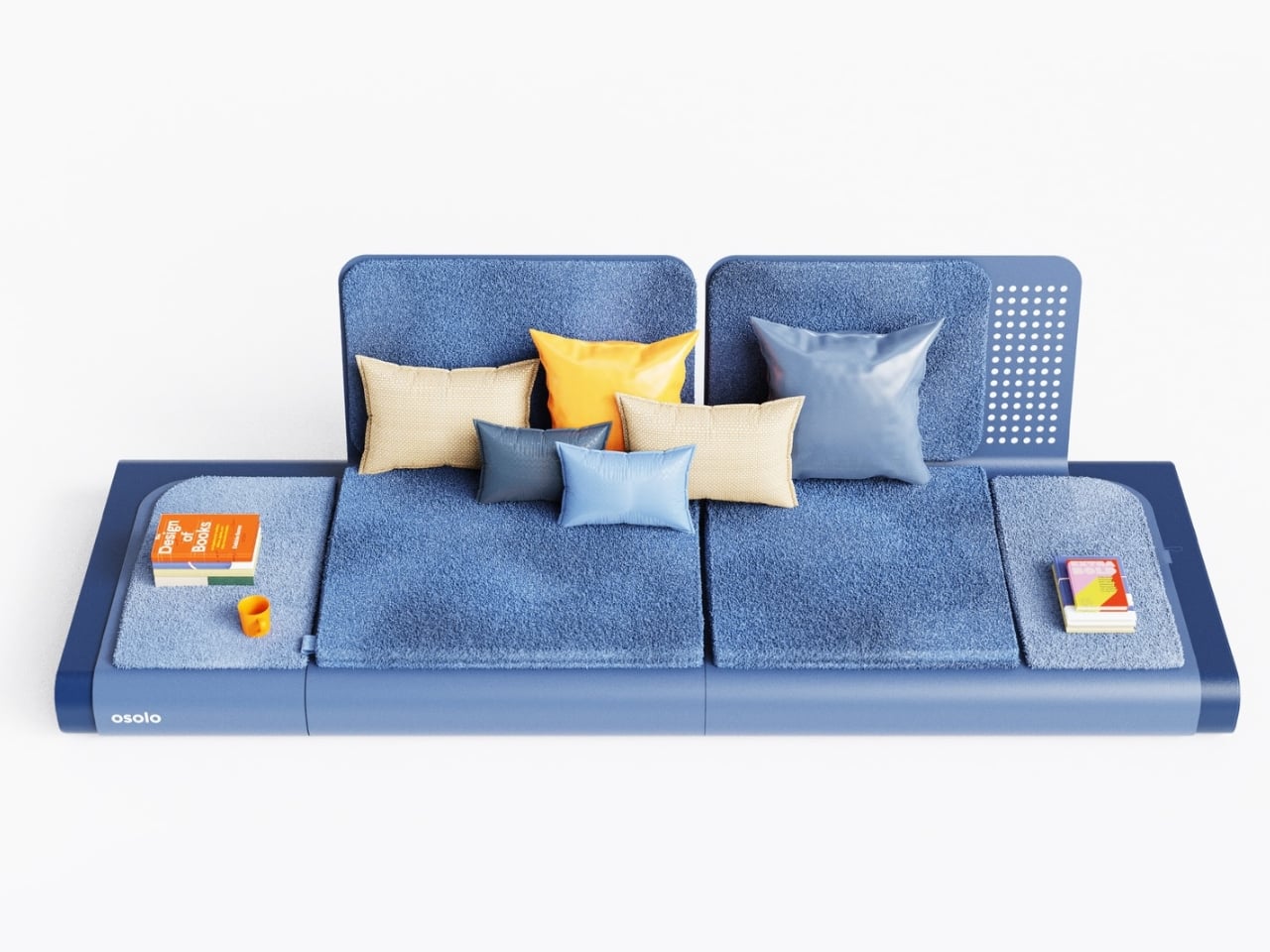
Most furniture asks you to adapt to it. You locate the armrests, figure out where your back is supposed to land, and quietly accept that the cushions are more decorative than functional. The Osolo Long Seating Unit by Turkish designer Gökçe Nafak doesn’t work that way. It hands you the structure and invites you to decide the rest. That’s not vagueness. It’s a very deliberate design stance, and once you see it, it’s hard to unsee.

The Osolo Long Seating Unit is part of a broader series that Nafak has been developing, all of which share one defining characteristic: a single-piece folded metal body that functions as both the structural frame and the visual foundation of the entire piece. That single decision is doing enormous work here. The folded metal isn’t just holding the cushions up. It defines the silhouette, creates an open cavity underneath for books, magazines, or small objects, and gives the piece a kind of architectural confidence that most upholstered furniture simply doesn’t have. When you look at it from the side, the curve of metal bending upward from the floor reads more like a building detail than a furniture leg. That’s not a coincidence.

Designer: Gökçe Nafak

The low-to-the-ground profile is where the cultural reference kicks in. The Osolo series draws from the tradition of the sedir, a built-in seating form that was central to the traditional Turkish home. The sedir was placed along the walls of a room, built directly into the architecture, and upholstered with cushions and bolsters. It was low, linear, and multifunctional long before multifunctional furniture became a trend. What’s worth noting is that the sedir was largely displaced during the 19th century as Western furniture styles, including sofas, armchairs, and dining sets, moved into Ottoman homes and reshaped the way interiors were organized and experienced. Nafak seems to be making a quiet argument that something worth having was lost in that exchange. I happen to agree.

The modular structure of the Osolo unit reinforces that idea of flexibility and communal use that the sedir originally embodied. Independent backrest elements can be positioned wherever they’re needed. Modular cushions tile the platform in varying configurations. You can run a single unit in a compact space or connect multiple modules into one continuous seating arrangement that stretches the full length of a wall. The piece adapts to its context rather than demanding that the room adapt to it, which is exactly what good furniture should do and rarely does.

My honest opinion is that the real achievement here is visual restraint. The renderings show a deep blue finish, a sharp choice because it amplifies how clean and resolved the geometry actually is. The folded metal edges are smooth without being fussy. The modular backrests carry just enough surface texture to break up what could have easily tipped into something flat and institutional. The scattered cushions in orange, tan, and silvery blue add warmth without softening the structural clarity underneath them. There’s a stack of books and a coffee mug sitting on the platform, and they look completely at home there. That might be the most honest thing a product render can show you.

What I keep coming back to is how the Osolo Long Seating Unit manages to feel both familiar and entirely new at the same time. Culturally, it connects to a seating tradition that is centuries old. Formally, it looks like something from a studio that hasn’t made peace with anything conventional yet. That combination is genuinely rare. Most furniture that reaches back into cultural history for inspiration ends up producing a romanticized version of the past. The Osolo doesn’t do that. The folded metal body grounds it firmly in contemporary manufacturing and contemporary aesthetics. The inspiration is present, but it isn’t wearing a costume.

Whether the Osolo Long Seating Unit makes it from concept to production is something worth keeping an eye on. Right now it reads as a very confident, very resolved piece of design thinking. Gökçe Nafak is building a coherent design language with this series, and the long seating unit makes a strong case that language has something real to say.

The post Low, Linear, and Deeply Considered: The Osolo Long Seating Unit first appeared on Yanko Design.

This $130 Mario Kart Racing Wheel for the Switch 2 Has Seven Sensitivity Levels for Throwing Banana Peels

Par : Sarang Sheth
18 mars 2026 à 20:30

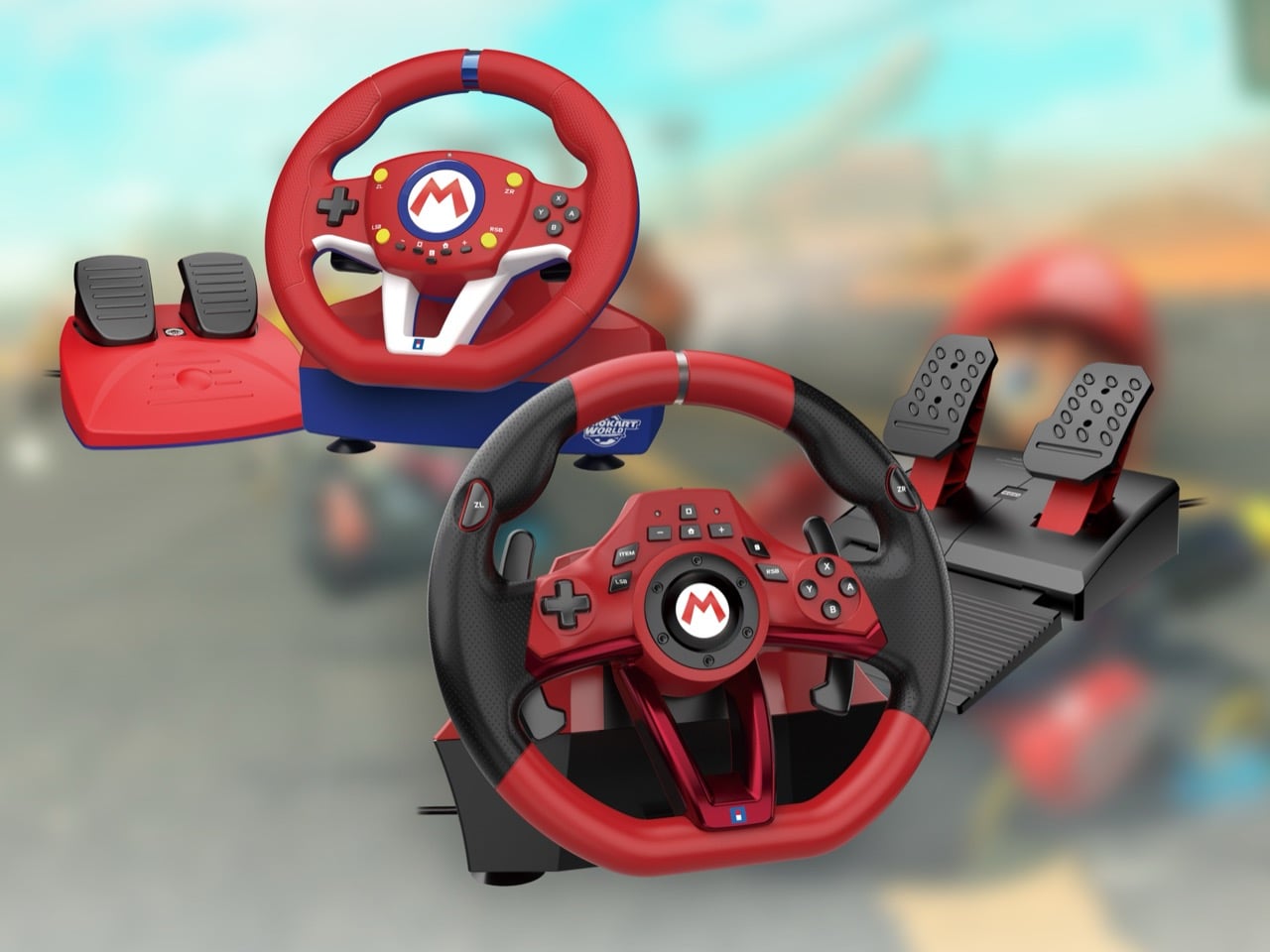
Nobody sits down to play Mario Kart and thinks “what this experience needs is a force feedback wheel, a pedal set, and a clamp-mounted desk rig.” And yet here we are, with Hori releasing two officially licensed racing wheels for the Switch 2, timed to launch alongside Mario Kart World on March 23. The Deluxe has an 11-inch wheel, a full pedal set, seven sensitivity levels, an adjustable dead zone, and a Quick Handling Mode that toggles steering output between 270 and 180 degrees. That last feature exists so you can more precisely navigate a rainbow-colored highway while a cartoon turtle throws a shell at you.

To be fair, the wheels look genuinely good. The Deluxe goes for a dark, almost aggressive red-and-black motorsport aesthetic, while the Mini leans fully into Mario’s red-blue-white color scheme with the Mario Kart World logo stamped on the base. Both add a C button for Switch 2’s GameChat, connect via a 9.8-foot USB-A cable, and work with the original Switch and OLED too. The Deluxe is $129.99, the Mini is $79.99, and both are available for pre-order now.

Designer: Hori

Click Here to Buy Now

The two wheels are closer in spec than the price gap suggests. Both have textured rubber grips, ZL and ZR buttons, racing paddles, programmable buttons, and the same ZL hold function that lets you drag items behind your kart in Mario Kart 8 Deluxe. That hold function is disabled in Mario Kart World, which handles item use differently, so if World is the primary reason you’re buying one of these, that particular feature is decorative. The Mini’s 8.6-inch wheel is smaller but not dramatically so, and for a game where precision steering matters about as much as knowing when to deploy a star, the size difference probably won’t register mid-race. Both also carry the Nintendo/PC toggle on the back, which is new to the Switch 2 versions and means you can run either wheel through a PC racing title if the Mario Kart novelty wears off.

The Mini, with its Fischer-Price aesthetic, attaches via suction cups only, which works fine on a smooth desk but becomes a liability if you’re the type to slam the wheel hard into a corner. The Deluxe, on the other hand, adds a physical clamp mount, a meaningful upgrade for anyone who takes their banana peel delivery system seriously. The dead zone adjustment and the 180/270 degree toggle are also Deluxe-only, and those matter more than they sound: dialing in the dead zone tightens center response considerably, and 180-degree mode makes the wheel feel snappier in arcadey conditions where full-rotation sim behavior would actively work against you.

The Deluxe reads like a peripheral that wants to be taken seriously, with perforated black leather-look grip material, metallic red spokes, and a fairly restrained button cluster around the center M logo. The Mini abandons that restraint completely: solid red rim, blue and white spokes, yellow accent buttons, Mario Kart World branding on the base. They’re aimed at different buyers within the same audience, and the visual split is deliberate enough that you wouldn’t mistake one for the other in a product lineup.

Both wheels connect over USB-A, which is worth flagging because the Switch 2 uses USB-C natively. You will need an adapter or a hub, and Hori ships neither in the box. The 9.8-foot cable is generous in length, but the connector mismatch is a friction point on a product designed specifically for a new console, and it’s the kind of thing that should have been sorted at the design stage rather than left to the buyer.

Hori has been the default answer for Switch racing wheels since the original console launched, and these Switch 2 versions do not reinvent that position. The older Switch wheels already work on the Switch 2, so this is really a product for new Switch 2 buyers rather than existing Hori customers looking to upgrade. For that audience, $79.99 for the Mini is a reasonable ask, $129.99 for the Deluxe is justified by the clamp mount and calibration options alone, and both are about as good as a wired USB wheel built around Mario Kart is ever going to get. Whether you need one is a separate question, but if you’re going to sit down with a dedicated racing rig to hurl banana peels at a go-kart driven by a plumber, at least Hori has given you two good ways to do it.

Click Here to Buy Now

The post This $130 Mario Kart Racing Wheel for the Switch 2 Has Seven Sensitivity Levels for Throwing Banana Peels first appeared on Yanko Design.

This classic 1979 LEGO computer brick hides a fully functional Mac mini workstation inside

Par : Gaurav Sood
18 mars 2026 à 19:15

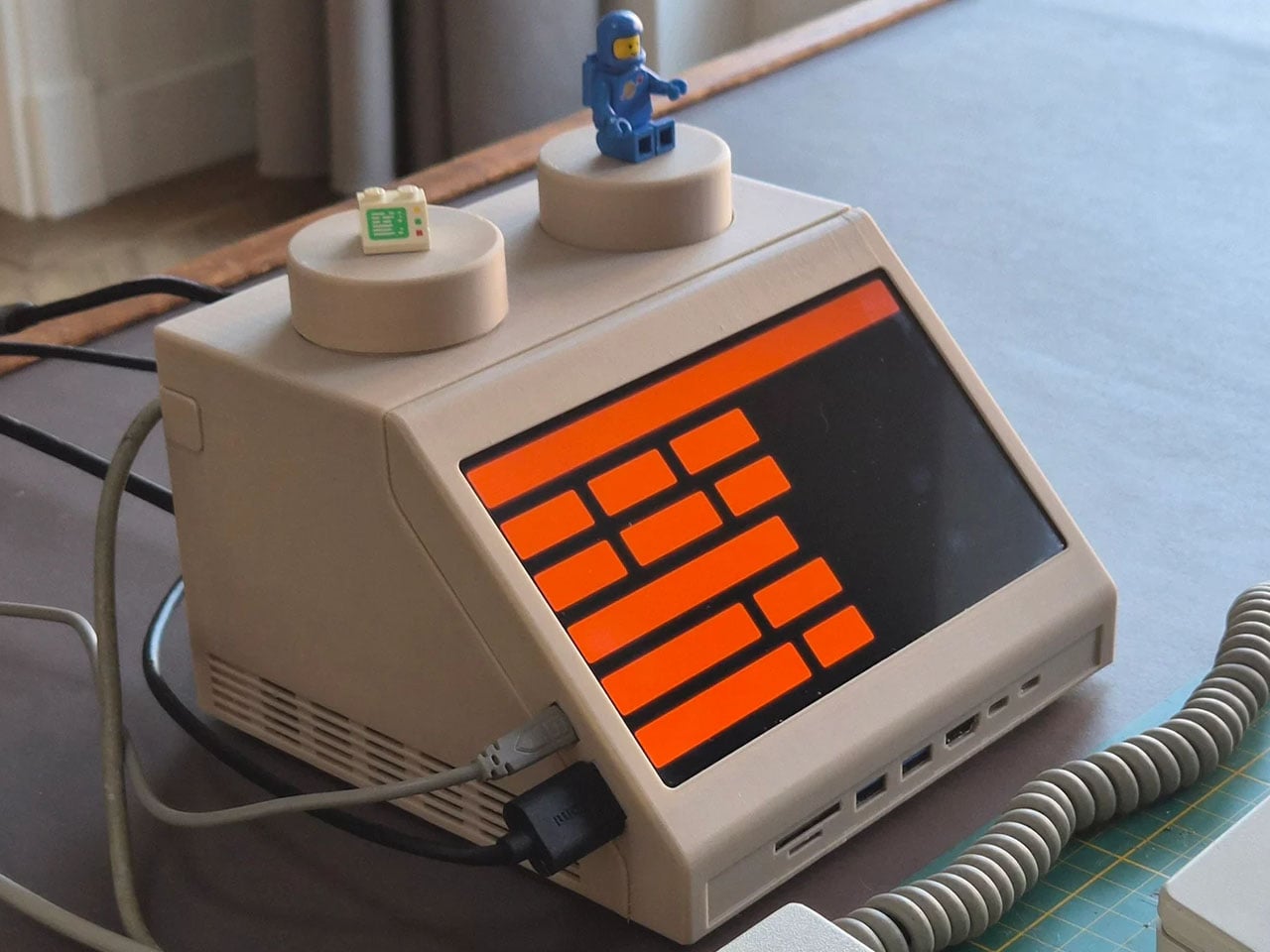
Retro designs often carry a sense of nostalgia, but occasionally they evolve into something more functional and imaginative. The M2x2 workstation by Watt IV is a good example with the inventive reinterpretation of a classic LEGO element transformed into a fully working desktop computer. Created by Dutch designer Paul Staal, the device takes inspiration from the iconic sloped LEGO computer brick introduced in 1979 and scales it up into a practical workstation powered by a modern Mac mini.

The DIY centers around the familiar wedge-shaped Slope 45 2×2 LEGO piece, a part historically used in LEGO space-themed sets as a representation of computer terminals inside spacecraft cockpits. Staal enlarged this element to roughly ten times its original size, turning it into a functional housing that blends retro toy aesthetics with contemporary computing power. Inside the oversized brick sits an Apple Mac mini equipped with Apple’s M4 chip, transforming the playful concept into a capable desktop system.

Designer: Paul Staal

Rather than serving as a simple decorative shell, the M2x2 integrates several practical features that enhance its usability as a workstation. A slanted 7-inch IPS touchscreen is embedded in the front face of the structure, echoing the display graphic printed on the original LEGO piece while providing real functionality. The compact screen acts as a secondary interface, often used for quick system information or dashboards. Staal, for instance, uses it primarily to monitor and control his smart home through a Home Assistant interface while working on a larger external display.

The case includes front-facing ports enabled through a USB-C hub, along with an SD card reader for easy access to external storage and accessories. This arrangement ensures the device remains practical for everyday use despite its playful form factor. The system also retains portability elements inspired by early Apple computers, including a built-in handle at the back that makes the unit easy to move around a desk or workspace. While the M2x2 works as a self-contained computer, it is typically paired with a larger external monitor for full productivity. In everyday use, the Mac mini handles the heavy computing tasks while the built-in display functions as a control panel or status screen.

Perhaps the most creative detail lies in the oversized LEGO studs on top of the case. Instead of being purely decorative, these studs are designed to perform useful functions. One of them operates as a rotary control that can adjust volume or media playback, while the other conceals a wireless charging bay capable of powering devices such as AirPods or an Apple Watch. The studs themselves remain compatible with standard LEGO elements, allowing users to attach minifigures or bricks for a playful finishing touch.

The M2x2 is largely built from 3D-printed components, making it accessible to enthusiasts who want to build their own version. Staal modeled the structure in CAD software and designed it as a modular system consisting of multiple printable parts. Aside from the Mac mini itself, the required materials are relatively simple, including PLA filament, a small touchscreen display, screws, and a USB-C hub. Assembly instructions and downloadable files are available, allowing makers to replicate or modify the design to suit their needs.

The post This classic 1979 LEGO computer brick hides a fully functional Mac mini workstation inside first appeared on Yanko Design.

Buddy’s Wind-Up Mood Lamp Is the Anti-App We All Need

Par : Ida Torres
18 mars 2026 à 17:20

Think about the last time you had to download an app just to turn on a light. Or pair a Bluetooth device, wait for it to connect, tap through a settings menu, and finally get it to do the one thing you actually wanted: cast a soft glow across your room. At some point, the technology built to make things simpler started adding more steps than it removed.

Chevy Chanpaiboonrat had a different idea. The Bangkok-born, New York-based industrial designer behind Buddy Design created a portable mood lamp with exactly one control: a single mechanical winding key, positioned at the back of the lamp body. No app. No voice commands. No wireless pairing required. Just a key, a twist, and light.

Designer: Chevy Chanpaiboonrat for Buddy Design

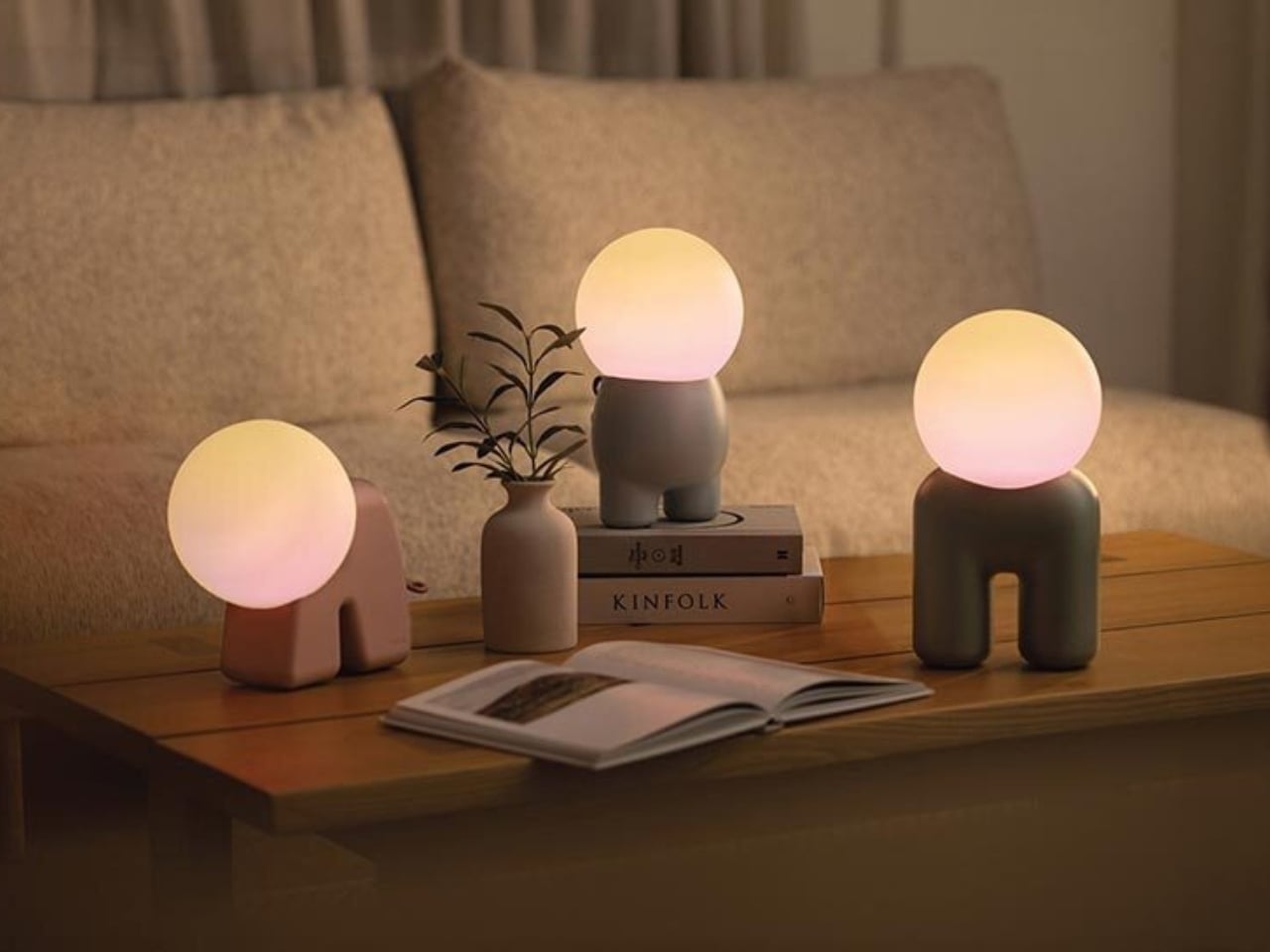
The Buddy lamp collection, which includes soft, animal-like forms named Puppy and Teddy, started as a thesis project at Parsons School of Design, where Chanpaiboonrat graduated with the School of Constructed Environment Honors award in 2023. That origin matters. The concept wasn’t rushed to market; it was worked through carefully, with the tactile interface emerging from the design process itself. The lamps offer eight science-informed gradient light modes, each grounded in color psychology and designed to support calm, focus, or better sleep. And the way you access all of that is the small key placed exactly where a tail would sit on the lamp’s animal-like body, a detail that manages to be both genuinely functional and quietly delightful.

Both Puppy and Teddy share the same core design language: soft, rounded silhouettes, a matte finish, and a compact footprint that sits comfortably on a nightstand or desk without demanding attention. Puppy leans slightly slimmer and more upright, while Teddy carries a rounder, more settled form. The proportions are deliberately drawn from classic wind-up toys, which gives each lamp a familiarity that’s hard to place at first. They don’t look like tech products. They look like objects you’d pick up and hold, and that instinct turns out to be exactly the point.

The interaction follows the form. Pressing and holding the key turns the lamp on. A short press cycles through three brightness levels. Rotating it transitions smoothly between the eight gradient light colors, moving from warm amber and soft pink through to cooler blues and greens. Each lamp runs up to ten hours on a full charge via USB-C, and the whole thing weighs just over a pound, making it genuinely portable rather than portable in name only. The physical proportions, the matte texture, the placement of that key: none of it feels accidental. The design is doing the emotional work that most products outsource to a companion app.

The brand describes itself as a tactile companion for overstimulated minds, which is a phrase that lands a little harder the more you think about it. The lighting is rooted in color psychology and wellness research, but what makes Buddy feel different isn’t the science. It’s the ritual. Winding the key is a small, physical action that no other object in your apartment is likely asking you to do. Every other device in your space wants your engagement through a screen. This one asks for something older and more direct.

Chanpaiboonrat has been running Buddy Design as a solo female founder since graduating from Parsons, and the brand has since earned the iF Design Award 2026, appeared at Wanted Design in New York, and found stockists including Lumens. For a one-person studio built on the premise that a winding key beats a smartphone app as an interface, that kind of traction is meaningful. It suggests the market is responding to the same exhaustion the product was designed around.

Part of what makes this feel timely is that Buddy isn’t trying to lead a revolution. It’s making a small, specific correction. A suggestion that not everything needs to be connected to everything else, and that lighting a room doesn’t require a subscription or a firmware update. Sometimes a winding key is exactly enough, and the fact that that feels like a refreshing thought is probably worth paying attention to.

The post Buddy’s Wind-Up Mood Lamp Is the Anti-App We All Need first appeared on Yanko Design.

This Baby Walker Grows With Your Child for 6 Years in 4 Different Ways

Par : JC Torres
18 mars 2026 à 16:20

Most baby walkers have a shelf life measured in months. A 7-month-old wobbles through the living room gripping the handle, and by the time that same child turns two, the walker is already in a closet somewhere. The furniture cycle in a home with small children tends to follow that rhythm: buy, use briefly, replace with something else entirely.

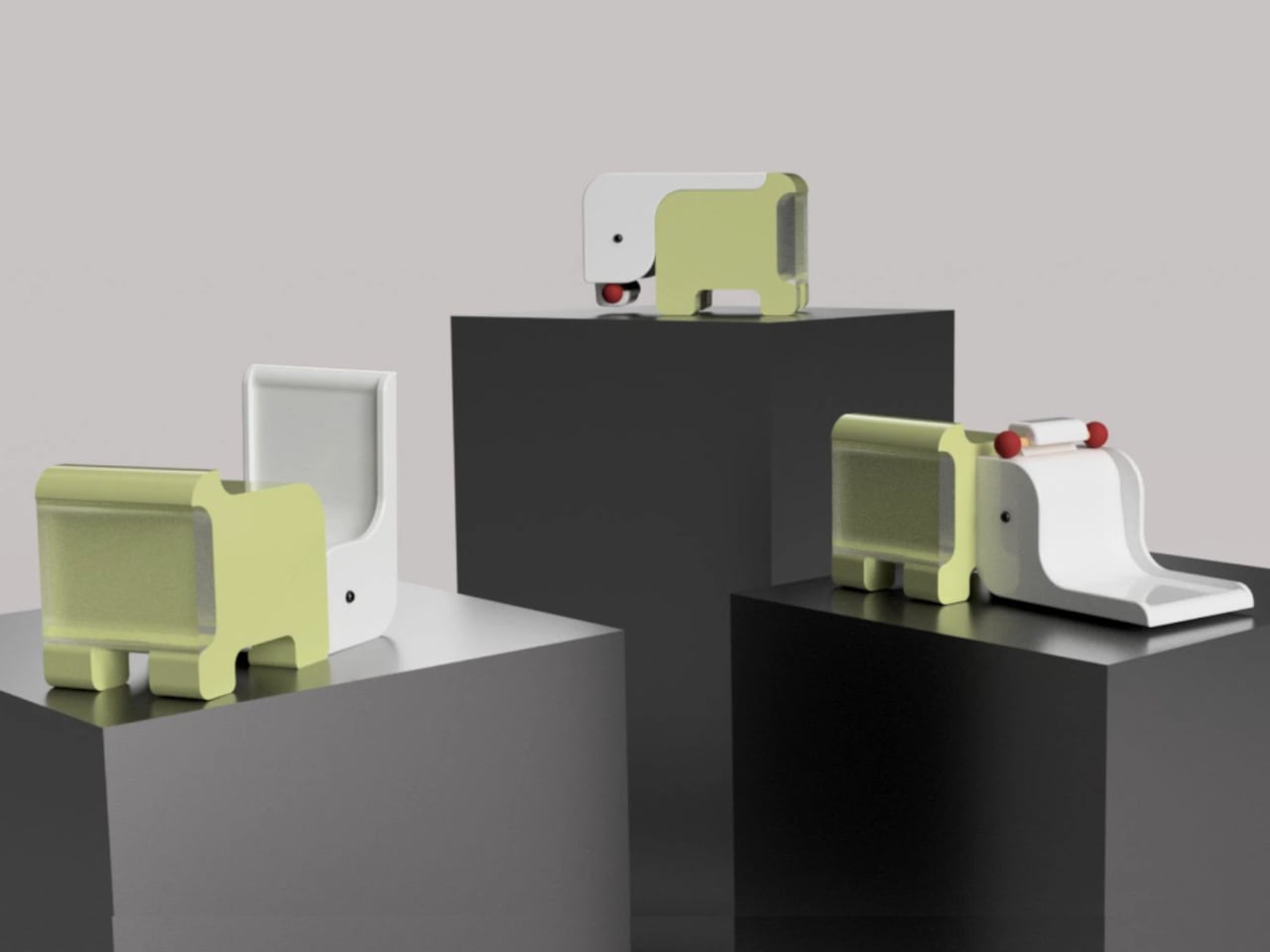
The Safari Multifunctional Kids Furniture concept tries to interrupt that pattern by designing one piece that stays useful across the first six years of a child’s life. The name “Step-N-Play” gives away two of its functions without mentioning the third or fourth. It is, depending on the child’s age and the day’s agenda, a walker, a climbing unit, a play table and chair, and a toy storage solution.

Designer: Bharti Upadhyay

At its earliest stage, the walker is built for children between 6 and 18 months, with a frame measuring approximately 600 x 400 x 500 mm. The structure combines wood, ABS plastic, and soft silicone grips, with a 95-degree backrest angle designed for infants who are not yet seated with full stability. An anti-tip base and anti-pinch safety gaps cover the more obvious hazards of putting a barely mobile child in contact with a moving object.

As the child grows into the 1-to-3 age window, the same structure becomes a climbable stair unit. From ages 2 to 6, it transitions again into a play table and chair. A built-in storage compartment for toys and books operates across all configurations. The manufacturing approach pairs CNC-cut wood with injection-molded ABS plastic, a combination suited to years of contact with small hands and the occasional harder object.

The safari animal inspiration shows up in organic silhouettes and surface language rather than in literal animal sculptures attached to the frame. Smooth curves, generous fillets, and chamfered grooves define the form. The pastel color palette, wooden handles, and textured sensory balls read as a considered aesthetic choice rather than an afterthought, which matters in a living space where parents also have to look at the thing.

Safari is a student concept at this stage, so the harder questions remain open. How the ergonomics hold across such a wide age range, how the mechanical transitions between configurations actually work in practice, and whether a single object can genuinely serve a 7-month-old and a 6-year-old with equal competence rather than adequacy are things a physical prototype would need to answer.

The post This Baby Walker Grows With Your Child for 6 Years in 4 Different Ways first appeared on Yanko Design.

BMW turns 2025 April Fools’ joke into a Nürburgring-bound M3 touring race car

Par : Gaurav Sood
18 mars 2026 à 15:20

What began as a playful internet prank has evolved into a genuine motorsport project. The racing version of the BMW M3 Touring 24H will compete at the legendary 24 Hours of Nürburgring in 2026, turning an April Fools’ joke into a unique moment for endurance racing. Built by BMW M Motorsport, the car will take on the infamous Nürburgring Nordschleife (often called the “Green Hell”), bringing a wagon body style (rarely seen in modern motorsport) to one of the world’s most demanding circuits.

The idea originated on April 1, 2025, when BMW shared images of a supposed race-ready M3 Touring on social media as part of its annual April Fools’ tradition. The concept depicted a full-blown GT-style race car based on the performance wagon, complete with aggressive aerodynamic components and racing livery. While initially intended as a joke, the reaction from fans was overwhelmingly positive. Enthusiasts embraced the idea of a high-performance wagon competing on the track, prompting BMW engineers to explore whether the concept could become reality.

Designer: BMW Group

That fan enthusiasm ultimately led to the creation of the BMW M3 Touring 24H, a competition-ready machine developed specifically for endurance racing at the Nürburgring. The car is scheduled to make its racing debut at a round of the Nürburgring Langstrecken-Serie (NLS) before appearing at the 24-hour race itself in May 2026. The event will mark a rare sight in modern motorsport: a long-roof station wagon battling alongside purpose-built race cars in one of the world’s toughest endurance competitions.

Visually, the M3 Touring 24H transforms a practical family wagon into a striking track weapon. The bodywork incorporates wide fenders, a deep front splitter, aerodynamic side panels, and a large rear wing mounted above the tailgate. A racing diffuser and enlarged air intakes help optimize airflow and cooling during long stints on track, while the overall stance mirrors the aggressive proportions of BMW’s GT race cars. The familiar Touring silhouette remains intact, giving the car a distinctive appearance that blends practicality with pure racing performance.

Although detailed technical specifications for the race version remain limited, the project draws inspiration from the performance credentials of the road-going BMW M3 CS Touring. That high-performance wagon uses a 3.0-liter twin-turbocharged inline-six engine producing around 543 horsepower and 650 Nm of torque, paired with an eight-speed transmission and BMW’s M xDrive all-wheel-drive system. The result is a wagon capable of accelerating from 0 to 62 mph in about 3.5 seconds and reaching a top speed of approximately 186 mph.

The Nürburgring itself has long been central to BMW M’s development and racing activities. The 12.9-mile circuit features more than 70 corners and dramatic elevation changes, making it one of the most challenging tracks in the world. BMW M vehicles have achieved numerous successes there over the years, including multiple victories in the 24-hour race, reinforcing the brand’s deep connection to the track. The debut of the BMW M3 Touring 24H represents more than just a novelty. It highlights how fan enthusiasm and digital culture can influence real-world automotive projects, especially when a playful idea resonates strongly with enthusiasts.

When the M3 Touring 24H lines up on the grid at the Nürburgring in 2026, it will stand out among the field not only for its unusual body style but also for the story behind its creation.

The post BMW turns 2025 April Fools’ joke into a Nürburgring-bound M3 touring race car first appeared on Yanko Design.

A Student Built a Pocket Planet Tracker That Works Without Your Phone

Par : JC Torres
18 mars 2026 à 14:20

Most of us have looked up at the night sky at some point and felt that brief, humbling recognition that there is an enormous universe out there, and we have no idea what is happening in it. Then a notification comes in, and the moment passes. Lumen Orbit, a student concept from CEPT University, is a small handheld accessory designed to keep that awareness alive without requiring a telescope, a star chart, or a dedicated app.

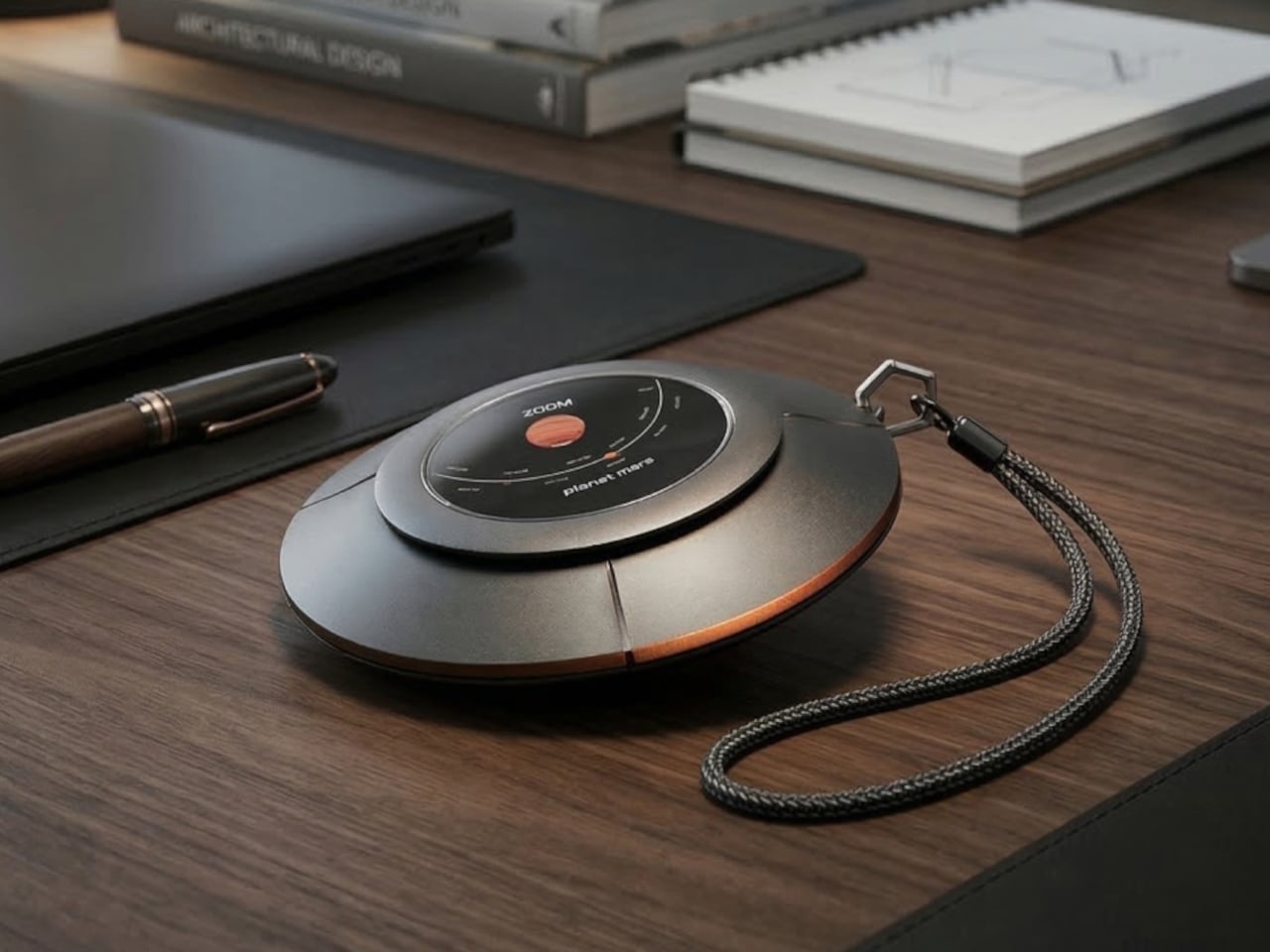
The device is disc-shaped and roughly palm-sized, with a two-part body split along its equator by a copper-toned accent band. The upper half is a polished silver-gray cap; the lower sits wider and shallower in a dark matte gunmetal finish. A woven braided lanyard with a hexagonal metal clasp attaches to the body, making it something you can loop around a wrist, hook to a bag, or hang using a built-in fold-out carabiner.

Designer: Kinshuk Agarwal

The primary face carries a circular display showing real-time planetary positions: which planet is currently visible, where it sits in the sky relative to your location, and when it rises and sets. Flip the device over, and a second, smaller screen on the reverse offers a close-up planetary render. The UI uses pixel-art-style graphics for its planet illustrations, landing somewhere between retro charm and deliberate restraint.

The interaction model is equally considered. A flip gesture switches between the two display modes, squeezing the body cycles through planets, and haptic vibration signals astronomical events such as meteor showers, eclipses, and alignments. The idea is that information about the cosmos arrives the same way a text message does, as a quiet nudge rather than something you have to actively seek out.

What the concept is really proposing is a dedicated single-purpose ambient device for astronomical awareness. Smartphones can technically do all of this through apps, but a specialized physical object changes the relationship to the information entirely. Carrying something whose only purpose is to connect you to the solar system is a genuinely different proposition than opening an app between emails.

The open questions are substantial. How the real-time tracking handles connectivity, how the device charges, and how positional accuracy works without confirmed GPS integration are things the concept leaves unspecified. The form is confident, and the interaction logic is coherent. The more interesting problem is whether a working version could fit into a jacket pocket for easy access.

The post A Student Built a Pocket Planet Tracker That Works Without Your Phone first appeared on Yanko Design.

Coleman’s $200 Cooler Chills for 2 Days, Folds Flat in 10 Seconds

Par : JC Torres
18 mars 2026 à 13:20

Coolers are great until the trip ends. Then they become a large, oddly shaped object that takes up the entire trunk on the way home, sits on the garage floor for a month, and eventually gets shoved into whatever corner will take it. For apartment dwellers especially, owning a full-sized hard cooler is less a convenience and more a spatial negotiation that rarely ends well.

Coleman’s Snap ‘N Go is a hard-sided cooler with a patent-pending collapsible design that compresses to one-third of its open volume in under 10 seconds. The mechanism borrows logic from folding storage crates: the body panels snap down in sequence, and the removable interior liner folds flat and stows inside the lid. What was a full-sized cooler becomes a flat slab thin enough to slide under a bed or stand upright on a shelf between uses.

Designer: Coleman

The construction is hard polypropylene, which matters more than it sounds. Soft collapsible coolers already exist, but they sacrifice insulation to achieve that flexibility. The Snap ‘N Go maintains a fully insulated lid and body, rated to hold ice for up to 64 hours. That’s two full days of cold retention from something that, an hour later, disappears into a closet, which is a combination the soft-sided category has never managed.

1

Setup works in reverse, just as quickly. From flat storage to loaded and latched takes under 10 seconds, and the removable liner handles watertight containment once the body is expanded. The liner also makes post-trip cleanup more manageable, since it pulls out separately rather than requiring the whole cooler to be rinsed out and dried upright somewhere. It’s a small detail, but one that addresses one of the more tedious parts of cooler ownership.

Three sizes cover most group sizes: 35 qt at $200, 45 qt at $220, and 55 qt at $240. The 55-qt model holds up to 93 cans without ice and supports 200 lbs. when expanded, though Coleman is careful to note it isn’t intended as a seat. Handles are designed to accommodate both carry orientations, vertical when the cooler is collapsed flat and horizontal when it’s fully open and loaded.

The one question the design raises, and doesn’t fully answer yet, is how the collapsible mechanism ages. The hinges, panel connections, and liner attachment points are all doing repetitive work that a standard molded cooler body never has to perform. Coleman backs it with a three-year limited warranty, which covers the expected lifespan question in practical terms but doesn’t tell you much about what happens in year four after a few dozen collapse cycles on a tailgate.

The post Coleman’s $200 Cooler Chills for 2 Days, Folds Flat in 10 Seconds first appeared on Yanko Design.

À partir d’avant-hierYanko Design

8 Best Japanese Spring Home Upgrades That Make Tiny Rooms Feel Like a Wabi-Sabi Sanctuary

17 mars 2026 à 17:20

Spring in Japan is not a season of accumulation. It is a season of editing, of noticing what was already there, of letting a single branch in a ceramic vessel do the work of an entire floral arrangement. The Japanese approach to domestic space has always understood something Western interiors still struggle with: that less does not mean empty, it means deliberate. And in a tiny room, deliberation is everything.

We have rounded up eight products that carry this philosophy without turning it into a marketing exercise. These are not trendy minimalism props or aspirational mood-board fillers. They are functional objects rooted in Japanese craft traditions, seasonal awareness, and the kind of spatial intelligence that makes a 300-square-foot apartment breathe like a room twice its size. Spring is the perfect excuse to start.

1. Fire Capsule Oil Lamp

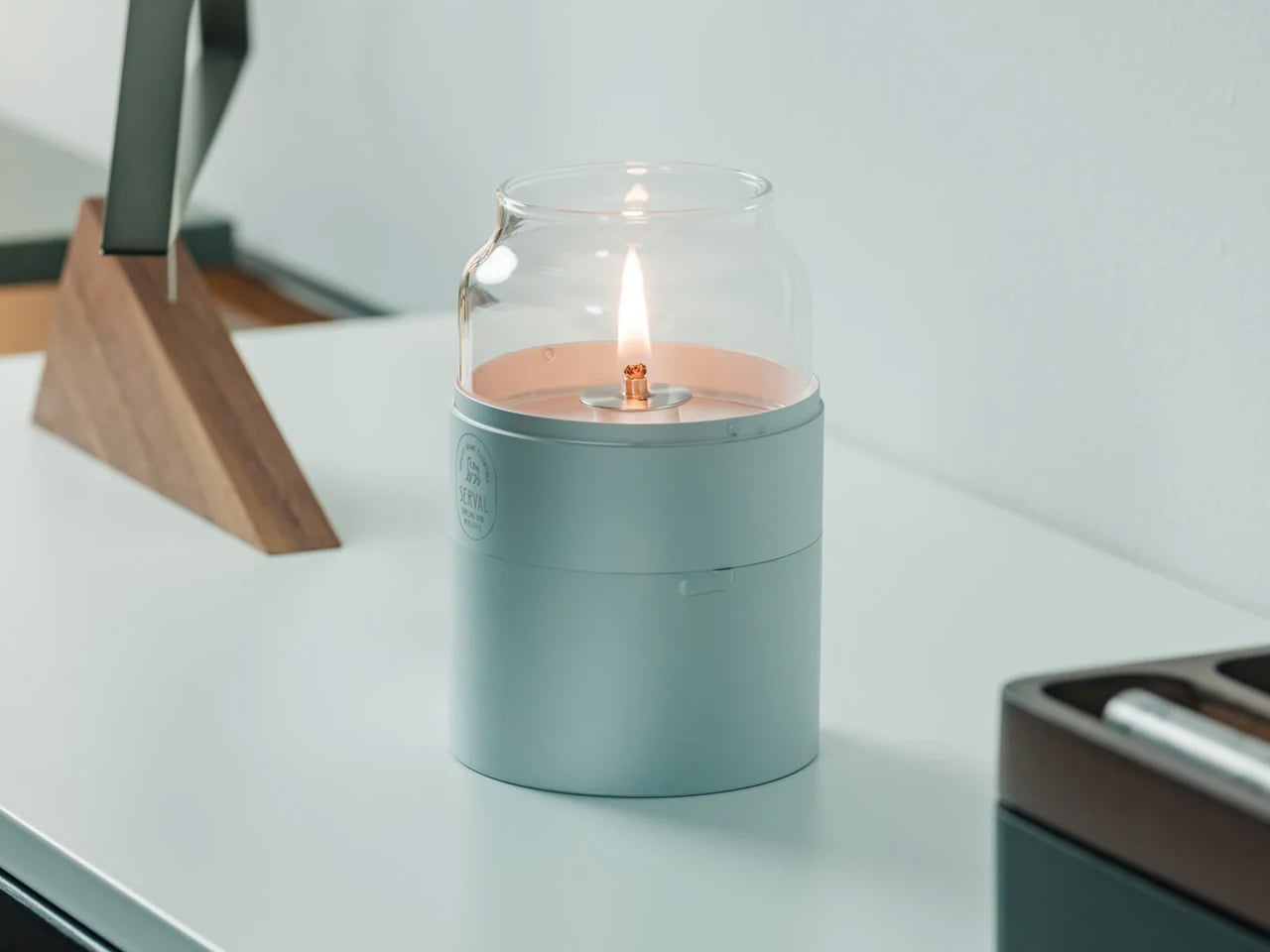
Most ambient lighting products try too hard. They pile on features, app connectivity, color-changing LEDs, and lose the one thing that makes warm light feel warm: simplicity. The Fire Capsule oil lamp goes the other direction entirely. It is a cylindrical glass-and-metal lamp with an 80ml fuel capacity, good for up to 16 hours of continuous flame.

The precision-engineered lid keeps the glass chimney clean between uses, which is a small detail that solves a persistent annoyance with oil lamps (dust settling on the glass and clouding the glow over time). An included aroma plate lets the flame double as a scent diffuser, and the flat-topped design means multiple units stack for storage. The cylindrical form ships with a drawstring pouch for portability, so it works just as well on a campsite as it does on a bedside shelf. In a small room, a single real flame on a low table changes the entire atmosphere without any electrical infrastructure.

Click Here to Buy Now: $89.00

What we like

  • 16-hour burn time from a single 80ml fill is generous enough for an entire evening gathering or a long weekend of ambient use.
  • Stackable design and included carrying pouch make storage painless in apartments where every drawer counts.

What we dislike

  • Open flame in a tiny apartment with limited ventilation requires careful placement and awareness, especially around curtains and textiles.
  • Paraffin oil refills are not always easy to source locally, and the lamp does not work with standard candle wax or tea lights.

2. Kyoto Yusai Linen Noren

A doorway without a door is just a gap. A doorway with a noren is a conversation between two rooms that never quite ends, a soft boundary that lets light, air, and movement pass through while still giving each space its own identity. This linen noren from Kyoto Yusai, printed with a dogwood motif, does precisely that.

What makes the noren so effective in small apartments is its relationship with ma, the Japanese concept of meaningful negative space. The fabric hangs in split panels with intentional gaps, and those gaps become part of the composition. Light filters through. Silhouettes soften at the edges. In a narrow studio where the sleeping area bleeds into the kitchen, a well-placed noren restructures how the whole room reads without touching the floor plan. Swap it seasonally, and it becomes a rotating design object with zero storage cost.

What we like

  • Splits the room without blocking airflow or natural light, which is rare for any room divider at this price point.
  • Seasonal swapping means the interior changes character four times a year with no permanent commitment.

What we dislike

  • Linen wrinkles easily after washing, so it needs careful steaming to maintain that clean drape.
  • The standard sizing may not fit non-Japanese doorframes without minor alterations or a tension rod swap.

3. Brass Ikebana Kenzan


Ikebana looks effortless. A single stem angled just so, a branch suspended at an improbable tilt, a few leaves arranged with the kind of negative space that makes the whole composition feel like a held breath. The kenzan is the hidden mechanism that makes all of it possible, a heavy brass pin frog that sits at the bottom of a shallow vessel and grips stems in place with rows of sharp, fixed needles.

This particular kenzan comes from Sanjo, Niigata Prefecture, a city with metalworking lineage stretching back to the 17th century. The artisans behind it have over 50 years of experience, and the difference shows in the needle sharpness and base weight. Cheap kenzans tip under a heavy branch. This one stays put. The removable rubber gasket protects the vase from scratches and keeps the unit from sliding, and the brass construction means it will outlast the disposable floral foam it replaces entirely. No chemical waste, no single-use plastic, just a solid chunk of metal that holds flowers upright and keeps the water clean longer.

What we like

  • Brass construction from veteran Sanjo artisans means this will last decades without bending, rusting, or losing needle sharpness.
  • Eliminates floral foam, which is a meaningful environmental upgrade for anyone who arranges flowers regularly.

What we dislike

  • A 3.5-inch round kenzan is suited to small-to-medium arrangements only; larger branches or tall statement pieces need a bigger base.
  • Sharp needles require careful handling and storage, especially in households with children or pets.

4. ClearFrame CD Player

Physical media has a specific gravity that streaming cannot replicate. The act of choosing a disc, sliding it into a tray, and watching it spin is a ritual, not a convenience. The ClearFrame CD player leans into that completely, housing the mechanism inside a crystal-clear polycarbonate shell that frames each album cover like a miniature art exhibit, while the black circuit board sits fully exposed behind it.

Bluetooth 5.1 support and a 7-hour rechargeable battery mean it works wirelessly on a shelf, a desk, or mounted on a wall. Multiple playback modes handle full albums and single-track loops. The square silhouette reads more like a design object than consumer electronics, which is the entire point: in a small room, every object occupies visual real estate, and the ClearFrame earns its shelf space by being something worth looking at even when it is not playing. The exposed circuitry is a deliberate aesthetic choice that shares DNA with the wabi-sabi appreciation of process, of letting the inner workings be part of the beauty rather than hiding them behind a seamless shell.

Click Here to Buy Now: $199.00

What we like

  • Wall-mountable and wireless, so it does not consume any surface area in a room where counter space is precious.
  • Transparent body turns the CD cover into wall art and the circuitry into a visual feature, doubling the object’s function.

What we dislike

  • CD collections are increasingly niche, and anyone without a back catalog will need to start buying physical media to get real value from this.
  • Polycarbonate scratches over time, and a transparent shell means every scuff and fingerprint is visible.

5. Oboro Silver Moon Calendar

Wall calendars are usually the first thing to look dated in a room. They pile up with scribbled appointments, faded ink, and a design sensibility that peaked in the office supply aisle. The Oboro moon calendar, a limited-edition 10th-anniversary piece by Japanese brand Replug, operates on an entirely different register. It tracks the lunar cycle on greige paper with reflective silver foil phases and embossed moon textures that shift with the light.

The name comes from “oboro” (朧), a Japanese word evoking the soft, hazy glow of a partially obscured moon. It is a wall piece that functions more like a meditative object than an organizational tool. The silver foil catches and transforms ambient light throughout the day, so the calendar looks different at dawn than it does at midnight. The embossed texture invites touch, which turns checking the date into something tactile and grounding. In a small room, a single well-chosen wall object can set the tone for the entire space, and the Oboro does that with restraint rather than volume.

Click Here to Buy Now: $69.00

What we like

  • Reflective silver foil creates dynamic light play that changes throughout the day, making it feel alive rather than static.
  • Embossed lunar texture adds a tactile dimension that most wall decor completely ignores.

What we dislike

  • A lunar calendar is not a practical replacement for a standard date calendar, so this supplements rather than replaces existing scheduling tools.
  • Limited-edition status means availability is unpredictable, and replacement for the following year is not guaranteed.

6. Pop-up Book Vase

A vase that is also a book. Open the cover and a three-dimensional paper cutout rises from the page, forming a vessel shaped to hold fresh stems. Three different designs sit on successive pages, so flipping through the book changes the vase silhouette and the entire presentation of the arrangement. Turn the whole thing upside down, and the perspective shifts again.

Made from 100% natural pulp with a water-resistant coating, the construction is more durable than it first appears. The paper engineering behind each pop-up is precise enough to support a real bouquet without collapsing, and the book form factor means it folds flat for storage or travel. In a tiny room, where a traditional ceramic vase competes for shelf space with everything else, a vase that disappears into a closed book when not in use is a spatial gift. The playfulness of the form also cuts against the sometimes austere reputation of Japanese-inspired interiors, a reminder that wabi-sabi is not allergic to delight.

Click Here to Buy Now: $39.00

What we like

  • Three vase designs in a single book mean variety without needing three separate vessels taking up shelf space.
  • Folds completely flat when not in use, which is a storage advantage no ceramic or glass vase can match.

What we dislike

  • Water-resistant coating has limits, and prolonged contact with water will eventually degrade the paper over repeated uses.
  • The whimsical form factor may clash with more austere or serious interior styles that lean heavily into earth tones and raw materials.

7. Tosaryu Hinoki Bath Stool

Japanese bathing is not a quick rinse. It is a seated, deliberate process where the stool is as important as the water. Tosaryu’s hinoki cypress bath stools are made by woodworkers in the mountains of Kochi who have been refining their craft since the 1970s. The wood is dried naturally for three to six months without chemical agents, which preserves the aromatic oils that give hinoki its distinctive calming scent.

Place one of these stools in a bathroom, shower room, or home sauna, and the scent fills the space every time steam or warm water contacts the wood. The antibacterial properties of hinoki resin mean the stool resists mold and bacteria without coatings or treatments. Three sizes are available: the Umezawa (10.5 x 7 x 9 inches), the short sauna stool (10.5 x 9 x 11.75 inches), and the tall stool (13.75 x 9.75 x 15.75 inches). Tosaryu operates as stewards of local forests and lakes, using sustainable harvesting methods. In a small bathroom, the stool replaces the generic plastic shower seat with something that smells like a forest and ages like furniture.

What we like

  • Natural hinoki oils provide antibacterial protection and aromatherapy without any chemical treatments or synthetic fragrances.
  • Sustainable production by Tosaryu’s Kochi-based woodworkers means the stool comes with genuine craft lineage, not just marketing copy about nature.

What we dislike

  • Hinoki requires proper drying between uses to prevent cracking; bathrooms without good ventilation will shorten its lifespan.
  • The high stool incurs a $25 shipping surcharge due to its size and weight, which adds to an already premium price.

8. Kintsugi Repair Kit

Kintsugi is the Japanese practice of mending broken ceramics with lacquer and powdered gold, turning the fracture into a visible seam that becomes part of the object’s history rather than a flaw to hide. Poj Studio’s kit packages this tradition into a hands-on experience, providing the materials and master-class guidance needed to repair a chipped or broken plate at home.

The philosophy behind kintsugi aligns with wabi-sabi at its most literal: the acceptance of imperfection, the beauty of age, and the idea that damage does not diminish value. In practice, the kit turns a broken mug or cracked bowl into something more interesting than it was before the accident. For anyone living in a small space where every dish and vessel matters (both functionally and visually), the ability to restore rather than replace is both economical and aesthetically resonant. The gold seams catch light in a way that flat, unblemished surfaces cannot, adding character to a kitchen shelf that could otherwise feel monotonous.

What we like

  • Transforms breakage into a design feature, which fundamentally changes the relationship with fragile objects in a small household.
  • Master-class guidance makes the repair process accessible to beginners, not just experienced ceramicists.

What we dislike

  • Urushi lacquer requires careful handling and curing time, so this is not a quick afternoon fix; patience is part of the process.
  • The standard kit is designed for chips and clean breaks; items with missing fragments need the separate advanced kit.

Where spring takes us from here

The thread running through all eight of these products is not minimalism as deprivation, but minimalism as attention. A noren does not block a doorway. It choreographs how light and bodies move through it. A kenzan does not just hold flowers. It holds the space around them. A kintsugi kit does not fix a broken cup. It reframes what broken even means.

Spring in a tiny room does not need a renovation, a new furniture set, or a Pinterest board full of aspirational layouts. It needs a few well-chosen objects that understand the difference between filling a space and inhabiting it. These eight do that, each in a way that respects the room, the season, and the craft tradition it comes from. The smallest upgrades, when they come from the right place, tend to change the most.

The post 8 Best Japanese Spring Home Upgrades That Make Tiny Rooms Feel Like a Wabi-Sabi Sanctuary first appeared on Yanko Design.

This Panda-Faced Action Camera Might Finally Get Kids Off Their Tablets

Par : JC Torres
17 mars 2026 à 16:20

Kids are natural documentarians. Long before anyone hands them a camera, they’re narrating adventures out loud, pointing at bugs, dragging adults toward things worth seeing. The problem is that nothing currently bridges that instinct and an actual usable device. Smartphones are too distracting. Adult action cameras have interfaces that assume familiarity with exposure menus. Yashas Verma’s Cubix concept starts not with specs, but with a face.

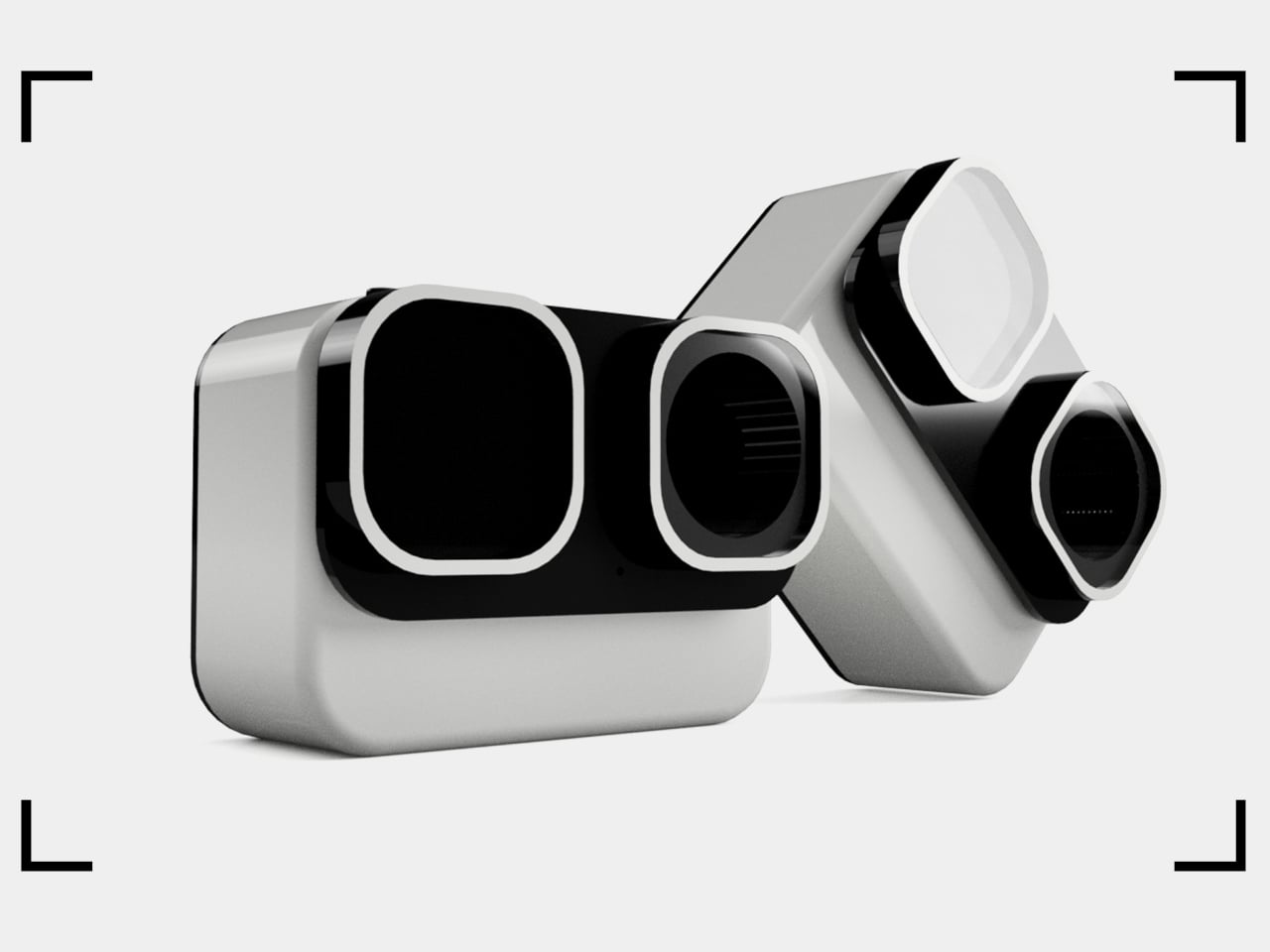
The panda reference is obvious and, more importantly, immediately likable. Two large “squircle” apertures dominate the front, one housing the lens and the other a screen, arranged side by side like a pair of wide-set eyes. The body is white with a matte finish, and the front panel is glossy black. That contrast reads less like a colorway decision and more like a character, which is entirely the point.

Designer: Yashas Verma

Verma’s design moodboard places the concept on a spectrum between “tech” and “cute,” and the finished form lands firmly in the middle. Minimal enough to avoid looking like a toy, warm enough not to feel clinical. The rounded-square geometry carries through from the front apertures to the body corners, giving the whole object a visual consistency that student concept work often skips over in favor of surface polish.

The dual-screen setup solves a genuine behavioral problem. Action cameras for adults assume a single rear screen because operators rarely need to see themselves. Kids, who tend toward vlogging more than action sports, want to check the frame constantly. The front screen handles selfie framing, the rear touch screen manages settings and playback. Removing that guesswork is the single most child-appropriate decision in the entire design.

The body is sized for smaller hands, with one-handed operation as the stated goal. That matters when the other hand is holding a bike grip, a climbing hold, or a very interesting stick. Waterproofing and durability are mentioned in the concept brief, though no specific ratings are given. A child’s definition of waterproof tends to involve full submersion and zero warning, and the gap between those expectations and a modest splash rating has disappointed parents before.

The packaging carries the panda-eye graphic, the same black-and-white palette, and the tagline “Climb. Roll. Capture.” The box also shows an age rating of 10+, which quietly shifts the target older than the concept language implies. A ten-year-old and a seven-year-old are very different grip sizes, and the design’s success depends heavily on which end of that range it was actually built for.

The post This Panda-Faced Action Camera Might Finally Get Kids Off Their Tablets first appeared on Yanko Design.

Chess Hasn’t Looked Like This in a Thousand Years

Par : Ida Torres
17 mars 2026 à 15:20

Chess has been redesigned hundreds of times. Most attempts stay within the same visual vocabulary: carved figures, medieval references, stylized horses and crowns. The king still wears his crown, even when the designer strips everything else away. That iconography is stubborn. It follows the game everywhere it goes. Seoul-based designer Lee Jinwook decided not to follow it.

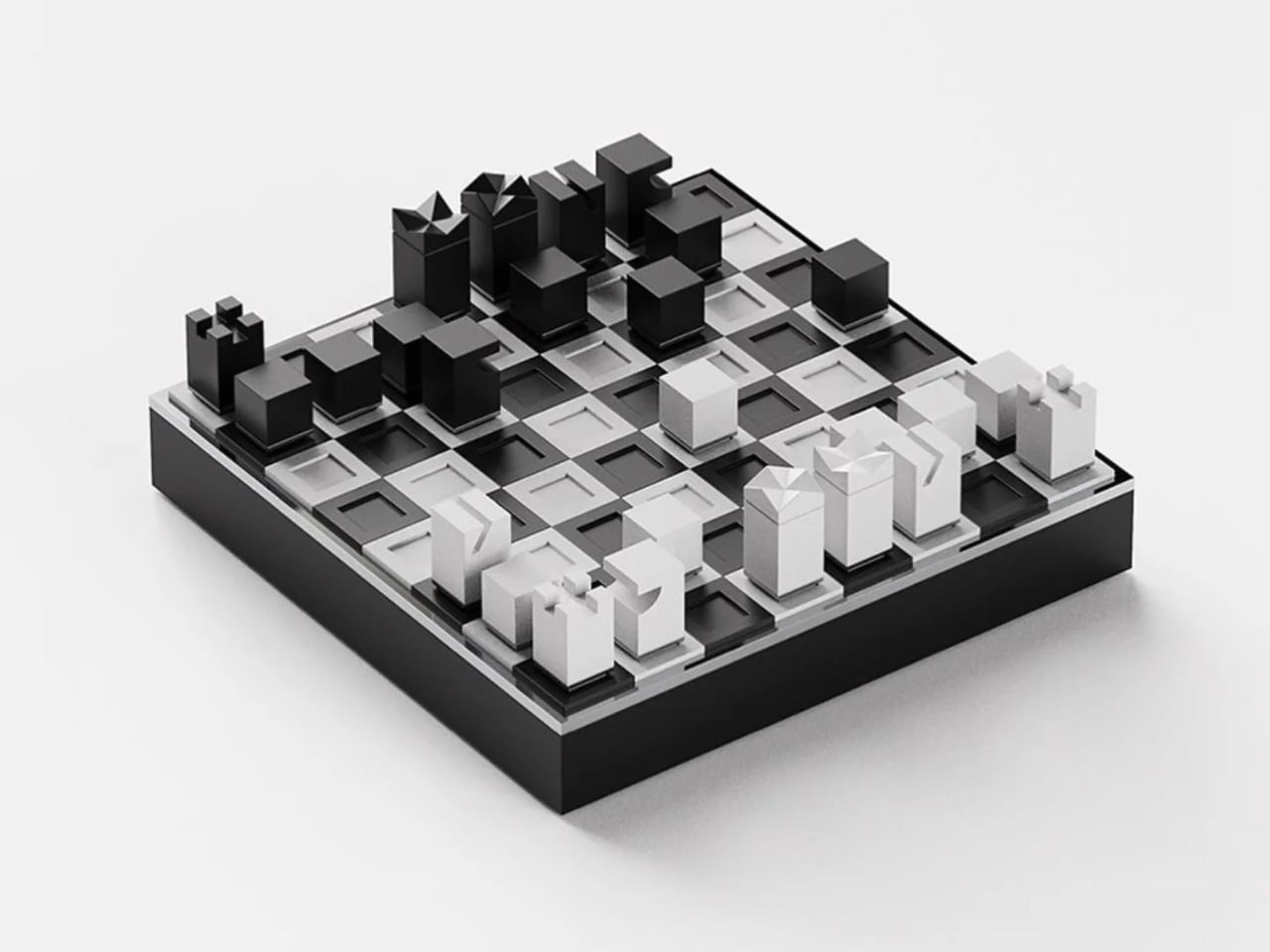
His Chess Matt Edition doesn’t borrow from that history. It doesn’t nod to it, deconstruct it, or pay ironic homage to it. Each piece is reduced to its essential geometric form, differentiated only by the minimal cuts and angles that distinguish one from another. The king wears a notched crown-like geometry, but it reads more like a Brutalist building than a monarch. The bishop has a diagonal slice through its block. The knight, traditionally the most ornamental piece on any board, is just a rectangle with a curved indent. You’d know each piece by its shape, and you’d know each shape by nothing but itself.

Designer: Lee Jinwook

That restraint is genuinely hard to achieve, and it’s rarer than it looks. Plenty of minimal chess sets still carry the weight of nostalgia by leaning on proportions that echo traditional forms. Lee’s approach feels more rigorous, like the design equivalent of starting with a blank document and refusing to import anything from a previous draft.

The Matt Edition is part of a series, each version produced in a different material. This one uses powder-coated pieces with brushed metal accents along the base. The contrast between the matte surface and the slim metallic band at the bottom of each piece is subtle, but it matters. It gives the set a quiet luxury without announcing it. The board itself doubles as the case cover when flipped, and the entire set packs down into a 115mm cube. That last detail sounds like a footnote but it’s actually the whole point. It means you can take it somewhere. It means the design serves life, not the other way around.

When the pieces are set up and no one is playing, the board looks like a miniature city. A grid of black and white geometric forms at different heights, each one casting its own small shadow. The intention was for the set to read as sculpture between moves, and it absolutely does. The photograph of it mid-game is more compelling than most things sold specifically as decorative objects.

I’ll admit I’m skeptical of design objects that prioritize aesthetics at the cost of function. A beautiful chair that isn’t comfortable is just a sculpture with pretensions. But this set doesn’t ask you to choose. The geometric forms are readable. The scale feels right for actual play. The packaging is considered down to the way the board flips over. The aesthetics and the utility are working in the same direction, which is what good design is supposed to do, and which a lot of objects in this category fail to deliver.

What Lee has also built, whether intentionally or not, is a quiet argument about chess itself. The game doesn’t need its medieval costume to function. Strip away the kings and queens and rooks and what remains is a grid, a set of movement rules, and the cognitive pleasure of solving something in real time. The Chess Matt Edition reminds you of that. It separates the game from its accumulated mythology and puts the focus back on the act of playing.

That’s worth paying attention to right now. The design world is saturated with products that perform a cultural identity rather than express one. This chess set doesn’t perform anything. It just is what it is: precise, considered, and fully confident in its own logic. When you see it sitting on a shelf, black pieces against a white board, matte surface catching a little natural light, it earns the space it occupies. Everything fits into a 115mm cube. The whole set sits in your hand. Not everything that fits in your hand deserves to be considered art, but this one comes close.

The post Chess Hasn’t Looked Like This in a Thousand Years first appeared on Yanko Design.

Oppo Find N6 Review: The Best Foldable Phone Right Now

Par : Aki Ukita
17 mars 2026 à 12:00

PROS:


  • Excellent multitasking experience

  • Nearly invisible and undetectable crease

  • Slim and light form factor for a book-style foldable

  • Powerful performance

CONS:


  • Camera system is good for a foldable, but not truly flagship-level

RATINGS:

AESTHETICS
ERGONOMICS
PERFORMANCE
SUSTAINABILITY / REPAIRABILITY
VALUE FOR MONEY

EDITOR'S QUOTE:

The OPPO Find N6 is one of the few foldables that trades novelty for genuine polish, delivering a device that feels as complete as it does considered.

The Oppo Find N6 arrives at a moment when foldables can no longer rely on novelty alone to justify their place in the premium market. Buyers now expect these devices to feel as polished and dependable as any top-tier flagship, while still delivering the sense of occasion that only a folding design can offer. That is what makes the Find N6 so interesting, because it is not simply trying to look futuristic. It is trying to feel complete.

That question lands differently for me because the Oppo Find N5 has been my daily driver for most of the time since its launch. Living with that phone has given me a clear sense of what Oppo already does exceptionally well in this category, from hardware refinement to the balance between portability and immersion. It also means I came to the Find N6 with real expectations rather than fresh curiosity alone. More than anything, I wanted to see whether Oppo had merely polished an already strong formula or taken a meaningful step forward.

Designer: OPPO

Aesthetics

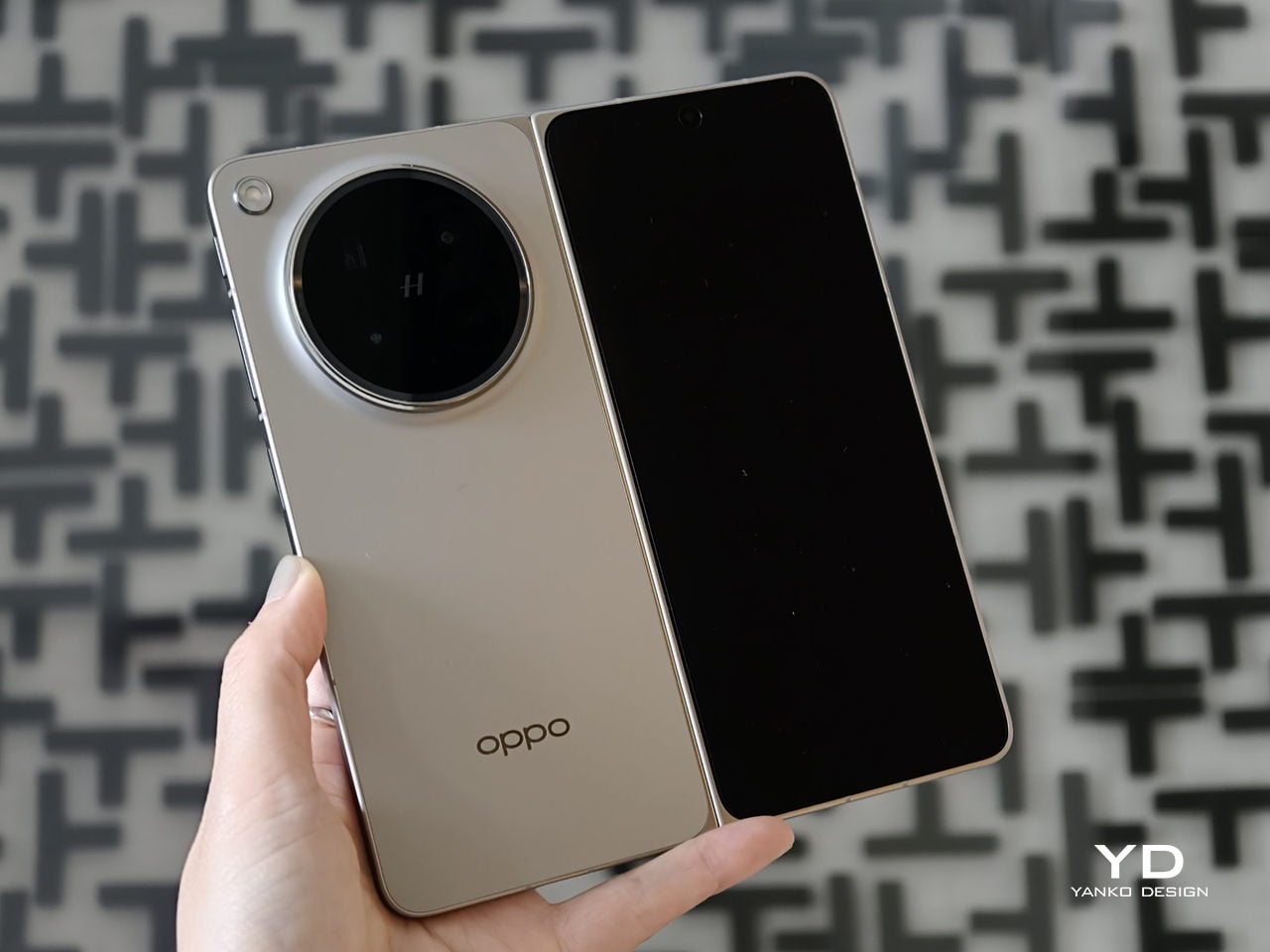
The Oppo Find N6 does not stray far from the design language established by the Find N5, but it feels like a more polished and disciplined evolution of that formula. The overall look is largely unchanged, yet the Find N6 comes across as more minimalistic and more refined, with a cleaner visual identity that feels calmer and more mature. Rather than chasing a dramatic redesign, Oppo has focused on tightening the details, and that gives the phone a stronger sense of cohesion.

The biggest improvement is in the rear camera treatment. The refined Cosmos Ring camera deco looks more elegant and less ornamental, while the individual camera elements feel more integrated into the overall composition instead of standing apart from it. This makes the back of the phone look tidier and more resolved, which suits the Find N6’s more minimal direction. It still has the visual presence expected of a flagship foldable, but it carries that presence with greater restraint.

What also stands out is Oppo’s color choice. For the first time on one of its foldables, the company is offering a much bolder orange finish, which Oppo calls Blossom Orange, alongside a more classic Stellar Titanium, and the timing does not feel accidental. Ever since the iPhone 17 Pro series introduced orange into the flagship conversation, it feels like other brands have been quick to follow Apple’s lead, and the Find N6 is part of that wave. Even so, the orange works well here, giving the phone more personality, while the gray remains the safer and more traditional option.

Ergonomics

The generous screen real estate of a foldable usually comes with familiar compromises. Thickness, weight, and the crease are often treated as the unavoidable price of admission. The Oppo Find N6, however, feels designed to challenge that assumption in a way that is noticeable the moment you pick it up.

At 8.3 mm when folded and 225 g, the Find N6 feels surprisingly close to a premium flagship bar phone in everyday use. It does not come across as awkwardly bulky or excessively heavy, which makes it more approachable than many devices in this category. That balance matters over time, whether you are using it one-handed, slipping it into a pocket, or simply carrying it through a long day.

That does not mean the form factor is free of trade-offs. If I rest some of the phone’s weight on my pinky, the lower edge can still dig in a bit, especially when the device is open. It is less noticeable than on the Find N5, but not completely gone.

Perhaps the most impressive detail, though, is the crease, or more precisely, how little of it remains. I have never been particularly bothered by creases on foldables, and I was already satisfied with the subtle crease on the Find N5. Even so, the Find N6 feels like a meaningful refinement rather than a minor iteration.

Visually, the crease is practically nonexistent in normal use and only becomes noticeable if the screen is off and viewed from a very specific angle. More impressive still, it also feels nearly absent under the finger when swiping across the display. Our fingertips are quick to pick up even slight ridges or shallow dents, which makes the Find N6’s smooth, uninterrupted surface especially impressive in daily use.

That sense of appreciation only grows once you look at how Oppo arrived at this result. The company refined the hinge architecture itself and paired it with state-of-the-art 3D scanning and 3D printing technologies, a combination that helps explain why the Find N6 feels so polished in the hand.

That same attention extends to the physical controls. In place of the OnePlus-style alert slider on the upper left, Oppo now uses the customizable Snap Key, first introduced on the Find X9 series and now positioned on the upper right side. It can be mapped to quick actions such as launching the camera, turning on the flashlight, starting a voice memo, or opening translation, giving it a broader role than the slider it replaces.

Just below sit the fingerprint reader and volume rocker, both placed lower than they were on the Find N5. That may sound like a minor adjustment, but it makes the controls easier to reach and better aligned with the way the phone naturally rests in the hand. It is a subtle refinement, though one that proves genuinely useful in everyday use.

Performance

With foldables, the screens have to justify the form factor. The Find N6 uses a 6.62-inch cover display and an 8.12-inch inner screen, both with 120Hz LTPO panels. That is the expected hardware at this level, so the more interesting part is how Oppo tries to improve the experience around visibility, comfort, and immersion.

According to Oppo, both displays can reach 1,800 nits in outdoor use, with peak HDR brightness topping out at 3,600 nits on the cover screen and 2,500 nits on the inner panel. In practice, both displays are bright enough to remain comfortably usable even under harsh sunlight. They also support Dolby Vision and HDR Vivid, and content looks rich and vibrant across both panels.

The Find N6 is powered by Qualcomm’s Snapdragon 8 Elite, and it has no trouble keeping up with the kind of multitasking a foldable encourages. Apps open quickly, navigation feels immediate, and even with several windows open at once, the phone stayed smooth and responsive. I also edited a short video on the device, specifically an unboxing of the Find N6 and AI Pen Kit, and the experience was smooth and free of noticeable stutter.

That matters because a device like this only really makes sense if it can handle more than the usual phone workload without feeling strained. Oppo’s software does a good job of making that extra screen space feel useful. Free-Flow Window lets you open up to four apps at once in floating windows, and in practice, it feels less fiddly than it sounds.

Boundless View adds even more flexibility, and the gestures linking the two work naturally enough that moving between layouts never feels like a chore. Resizing windows, shifting focus, and juggling multiple apps all feel smooth and seamless, which makes the Find N6 genuinely effective as a productivity device rather than just a phone with a bigger screen.

Even under sustained use, the phone remained smooth and reasonably controlled, and I also did not notice any stutter while playing Genshin Impact. Gaming feels more like a bonus here than the main point of the device, but the large inner display still gives it a more immersive, almost tablet-like feel than a standard phone can offer.

That same focus on utility extends to the AI Pen Kit, which is one of the more interesting hardware additions. The Oppo AI Pen supports 4,096 levels of pressure sensitivity and works on both the inner and outer displays, which makes the Find N6 more versatile for note-taking, annotation, and quick sketching. Because it connects over Bluetooth, the pen can also double as a remote shutter for both photos and video, which adds a genuinely useful layer of flexibility.

Oppo has also handled the practical side fairly well. The dedicated case gives the pen a proper place to live and keeps it charged through reverse wireless charging from the phone itself. That kind of integration is important because accessories like this are only useful if they are easy to carry and ready when you need them.

The software support around the pen is also fairly thoughtful. Quick Note lets you start writing quickly, a double press switches between writing and erasing, and global annotation makes it possible to mark up content across the interface and export it as an image or PDF afterward. There are also a few more specialized tools, including handwriting optimization, a handwriting calculator, and a Laser Pointer mode for presentations. Not all of these will be essential, but together they make the pen feel more genuinely useful than most stylus add-ons tend to.

Camera

The camera system performs well by foldable standards, but it is not on the level of the best camera-focused flagships. In practice, it feels closer to a solid upper mid-range setup, which is respectable enough for a device like this.

The rear camera system includes a 200MP main camera with a 21mm-equivalent focal length, a 1/1.56-inch ISOCELL HP5 sensor, an f/1.8 aperture, and OIS, a 50MP telephoto at 70mm equivalent with an ISOCELL JN5 sensor, an f/2.7 aperture, and OIS, and a 50MP ultra-wide at 15mm equivalent with another ISOCELL JN5 sensor, an f/2.0 aperture, and autofocus.

In daylight, the Find N6 delivers good detail, pleasing dynamic range, and generally accurate color, even if images tend to run slightly bright. The telephoto and ultra-wide are serviceable, while low light is where the limitations become more obvious, especially when there is movement in the scene.

XPan Mode

Oppo does at least include a healthy set of features, including log video recording and XPan mode. There are also two 20MP selfie cameras, one on the outer display and one on the inner screen, though they feel more useful for video calls than for anything else. Video is also fairly capable, with all three rear cameras supporting up to 4K 60fps Dolby Vision HDR, while the main camera can go up to 4K 120fps Dolby Vision.

Battery and charging

The Find N6 packs a 6,000mAh battery, and in practice, it delivers strong battery life. Unless you are using the camera heavily, it can easily last a full day and more, which is a very good result for a foldable with two high-refresh-rate displays.

Charging is strong as well. The phone supports 80W wired and 50W wireless charging, which makes it easier to top up quickly when needed. That only adds to the sense that the Find N6 is easier to live with day to day than many foldables.

Sustainability

For a foldable, the Find N6 makes a fairly strong durability case. It carries IP56, IP58, and IP59 ratings, and Oppo also points to stronger materials and a more robust hinge design as part of the broader durability story. More importantly, it feels reassuringly solid in hand, which goes a long way in making the device seem built to last.

That is matched by fairly solid long-term support. The phone is TÜV Rheinland certified for one million folding cycles and has minimized crease performance after 600,000 folds, while Oppo promises five years of Android updates and six years of security patches. That may not fully define sustainability, but it does give the Find N6 a more convincing case for longevity.

Value

At a starting price of around $1,440 for 12 GB/256GB configuration ($1,580 for 16 GB/512GB and $1,730 for 16 GB/1TB), the Find N6 is firmly in premium territory, but it also makes one of the strongest value cases in the foldable market. The design is slim and polished, the crease is impressively well controlled, battery life is strong, and the multitasking experience makes the larger display feel genuinely useful. More importantly, it feels like a foldable that gets the fundamentals right rather than relying on novelty alone.

The price is still high, and the camera system does not quite match the best camera-focused flagships, so there are limits to how broadly its value can be argued. But within the foldable category, the Find N6 feels unusually complete and easier to justify than many of its rivals if you already know this is the form factor you want.

Conclusion

After spending time with the Find N6, I came away feeling that Oppo has done more than just refine the formula. This is one of the few foldables that feels designed around everyday use rather than the novelty of unfolding into a larger screen. The ergonomics are better than expected, the crease is remarkably well controlled, battery life is strong, and the software makes the larger display feel genuinely useful.

It is still an expensive device, and the camera system does not quite reach the level of the best camera-focused flagships. Even so, the more I used the Find N6, the more complete it felt. There is a level of polish here that remains rare in this category, and it makes a very strong case for itself as one of the best all-around foldables available right now.

The post Oppo Find N6 Review: The Best Foldable Phone Right Now first appeared on Yanko Design.

Janny Baek’s Ceramics Look Like They’re Still Evolving

Par : Ida Torres
17 mars 2026 à 11:20

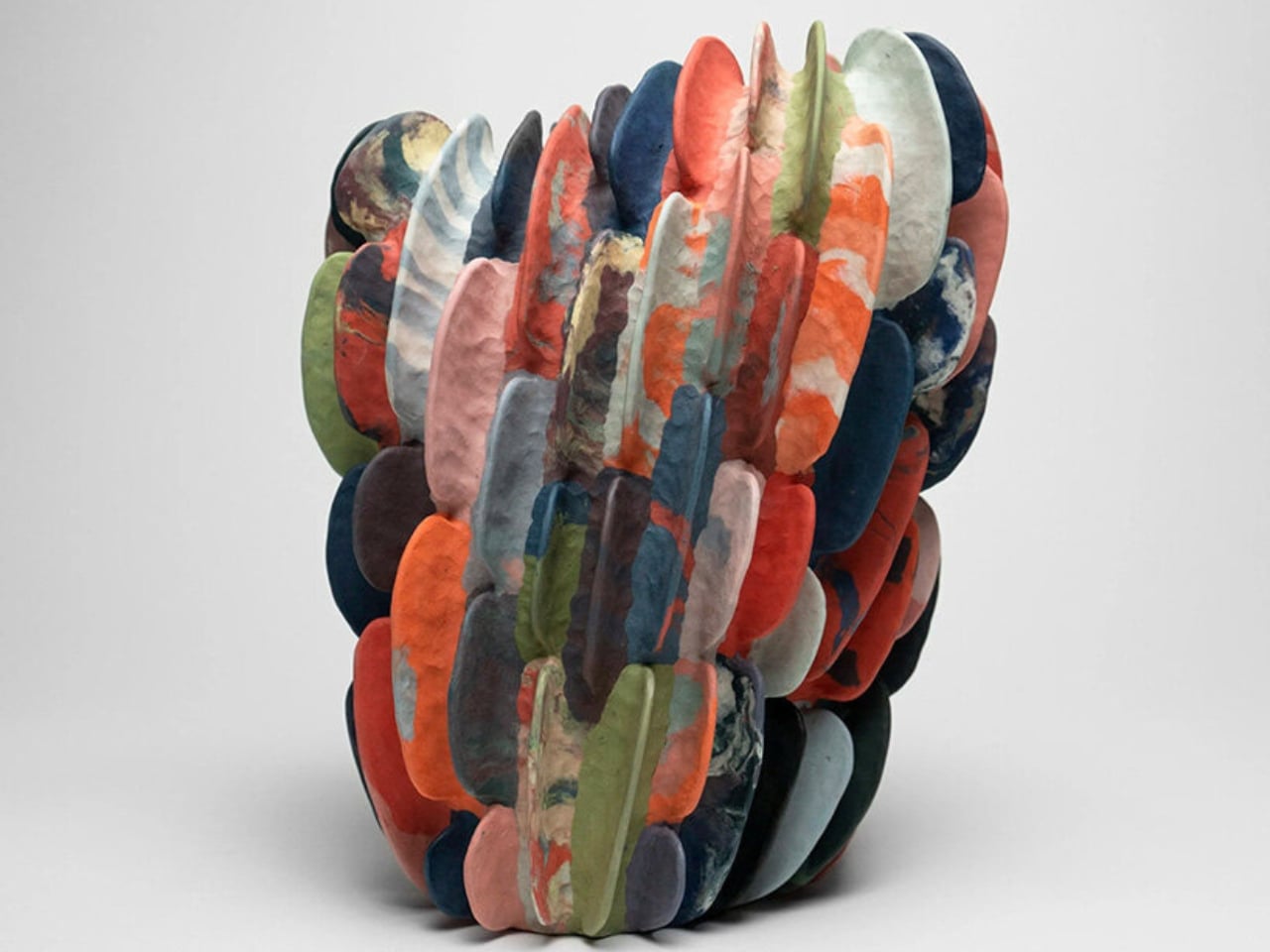
Most ceramic art asks you to admire it from a distance. Janny Baek’s work makes you want to lean in closer and check if it’s breathing. Her upcoming solo exhibition, Life Forms, opens at Joy Machine gallery in Chicago on March 20, running through May 9, 2026, and from everything I’ve seen of it, it might be one of the more visually arresting shows to land this spring. The pieces gather across the gallery space like inhabitants of an ecosystem you’ve never visited but somehow recognize. Some forms open outward like blossoms. Others stretch upward with limbs that suggest wings, or stems, or shells. None of them fully commit to being any one thing, and that’s exactly the point.

What makes Baek’s ceramics so compelling is the feeling that the firing process didn’t quite finish the job. The sculptures look caught mid-transformation, as though another hour in the kiln might have resolved them into something more familiar. Instead, they hold their ambiguity like a posture. That deliberate incompleteness is one of the most interesting creative choices an artist can make, and Baek has built an entire body of work around it.

Designer: Janny Baek

Her path to ceramics is almost as unusual as the work itself. Born in Seoul and raised in Queens, she studied ceramics at the Rhode Island School of Design before taking a turn into animation and toy design as a sculptor. Then she earned a graduate degree in architecture from Harvard, co-founded an architecture practice in Manhattan, and spent years designing high-end residential spaces. When the pandemic hit, she returned to clay, setting up a studio in the back of her Flatiron District architecture office. The ceramics world should be grateful for the timing.

That architectural background isn’t incidental. You can see it in the structural logic of the pieces, which begin with coiled bases and build upward through successive additions of clay, each element branching from the last. The result is less like sculpting and more like construction, or perhaps like watching something grow. Her larger work, Plant Life (2025), stoneware with colored sections rising from white shoots, reads almost like a site plan for a garden on a planet where the plants decided to do their own thing.

The technique she relies on is nerikomi, a traditional Japanese method that involves stacking clay of different colors and slicing through it to reveal the pattern within. But Baek’s application of it feels more contemporary than the technique’s origins might suggest. Color, in her hands, is structural rather than decorative. It moves through the clay like a current, not like paint on a surface. She has described color gradients as “the continuous nature of change,” and a multitude of colors as “potential, abundance, and vitality.” That framing matters. It tells you the work isn’t just pretty, it’s philosophic.

The piece titles reinforce this. Micro-organisms, Glow Sticks, and Outer Galaxies. Prismatic Walking Cloud. 5 Eyes (Dream State Series). Cloudbloom. They read like entries in a field guide to a world that hasn’t been discovered yet, which is probably the most accurate way to describe what Baek is building. Her ceramics operate on what one description of the work calls “dream logic, one that accepts incongruity and dissonance as necessary to play and experimentation.” That’s a generous creative framework, and it shows. The work never feels confused or unresolved. It feels deliberate in its strangeness.

What I find most refreshing about Life Forms is that it doesn’t ask you to bring any specific context to it. You don’t need to know the theory behind nerikomi or have an opinion about contemporary ceramics to stand in front of one of these pieces and feel something. They work on a more basic level, the level of looking at something unfamiliar and recognizing it anyway. Like you’ve seen its kind before, somewhere between a dream and a nature documentary.

The post Janny Baek’s Ceramics Look Like They’re Still Evolving first appeared on Yanko Design.

This Wireless Mouse Splits in Half to Reveal a Hidden Game Controller

Par : JC Torres
17 mars 2026 à 10:07

Most people who game on a PC own two things that do roughly the same job at different times: a mouse for the desk and a gamepad for the couch. They live side by side, occasionally getting in each other’s way, and neither one is going anywhere. Pixelpaw Labs, a hardware startup from Bangalore, India, thinks that arrangement is wasteful and has built something to prove it.

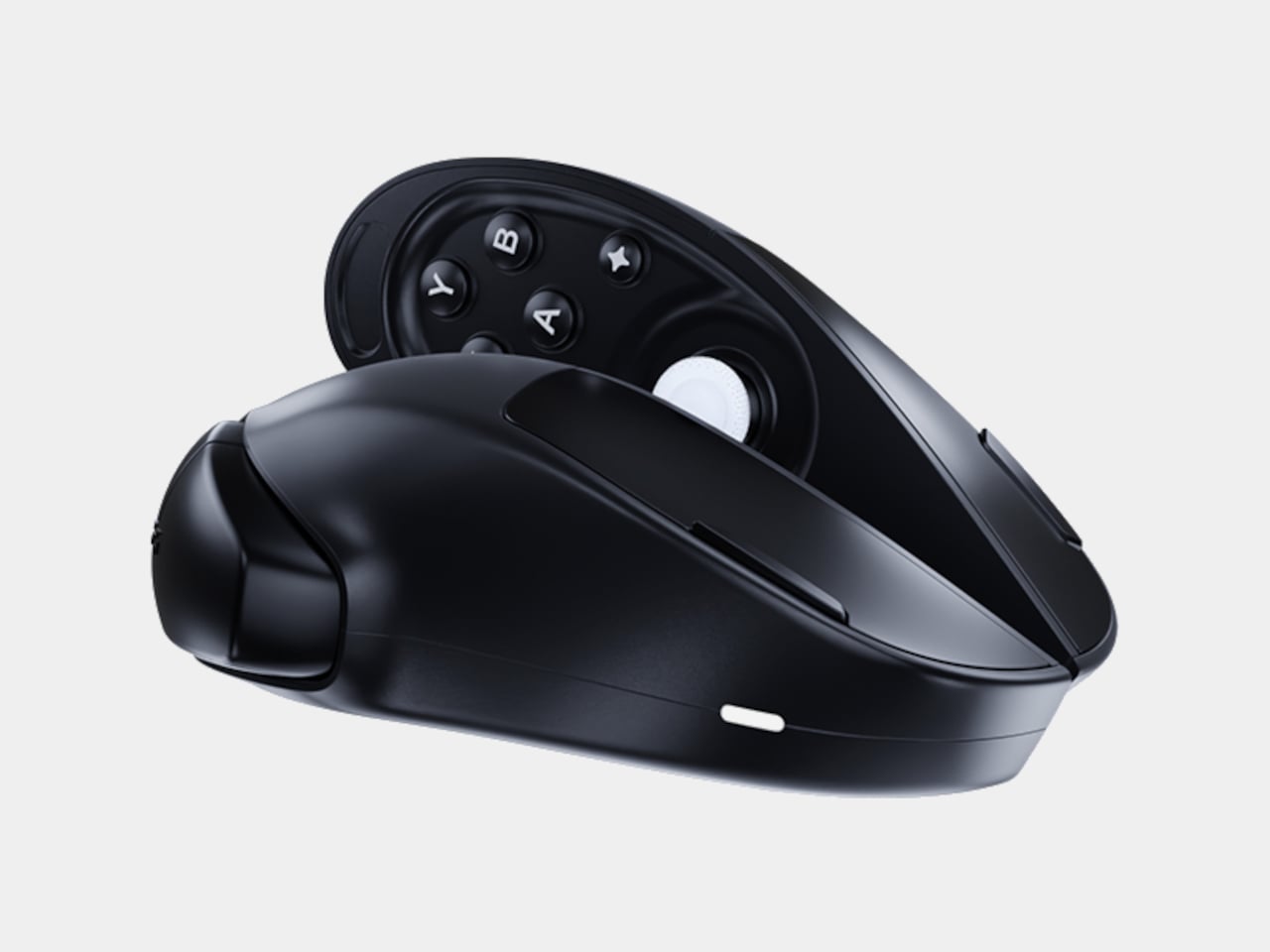
The Phase is a wireless mouse that physically separates down the middle into two independent halves. Snapped together, it sits on a desk and works like a normal mouse. Pull it apart, and each half reveals a joystick, triggers, a D-pad on the left side, and face buttons on the right, a split gamepad that was hiding in plain sight the whole time.

Designer: Pixelpaw Labs

That missing scroll wheel is not an oversight. Fitting a traditional wheel in the center of the body would have made the split mechanism impossible, so Pixelpaw replaced it with a capacitive touch strip along the top of the left button. Flicking a finger across it scrolls through documents and web pages, with a glide feature that lets the momentum coast rather than stop abruptly. It’s a trade-off that works around a real geometric constraint.

As a mouse, the Phase is competitive on paper. A 16,000 DPI optical sensor pairs with a 1,000 Hz polling rate when connected via the included 2.4 GHz USB dongle. Bluetooth LE is available for convenience and multi-device pairing across up to three devices, though the polling rate drops to 125 Hz in that mode, a gap that matters in fast-paced PC games.

Up to 18 customizable buttons are mappable through the Pixelplay companion app, and a Layer button doubles each button’s function capacity without adding physical complexity. Battery life is rated at 72 hours per charge over USB-C, which is more than enough to outlast dedicated gaming sessions on either side of its personality.

The controller halves use mechanical tactile switches, which is more than most mobile gaming clip-ons bother with. Pixelpaw also has an accessory called the Phasegrip, a bracket that holds the two separated halves apart with a smartphone mounted in the center, turning the setup into a handheld console for mobile gaming. The Phase works across PC, Android, iOS, iPadOS, and ChromeOS, so switching between devices doesn’t require swapping hardware.

Everything shown so far is pre-production, and the company has been upfront that the final surface finish will differ. That’s a meaningful caveat for a product whose physical fit and feel will determine whether the concept actually holds up. Whether they’ll be able to deliver this Holy Grail of PC gaming, however, is the real question that can only be answered in time.

The post This Wireless Mouse Splits in Half to Reveal a Hidden Game Controller first appeared on Yanko Design.

Spigen Turned Apple’s Iconic Beige Mouse Into an AirPods Pro 3 Case

Par : JC Torres
17 mars 2026 à 08:45

There’s something quietly odd about the era when Apple products were beige. Not bad, just odd. The Macintosh 128K, the boxy rectangular mouse, the Apple Lisa; they were made from a warm off-white plastic that aged into something stranger, a color that collectors now call “Pantone 453 approximately.” Spigen, a brand that usually channels its energy into clear polycarbonate shells, has decided this particular slice of computing history deserves a second life on your keychain.

The Classic LS AirPods Pro 3 case is the latest piece of Spigen’s retro-Mac collection, which launched in January 2026 with an iPhone 17 case modeled after the Macintosh 128K and Apple Lisa. The AirPods case takes a narrower reference: the original Apple mouse, that flat, single-button input device that became an icon despite being spectacularly simple. It joins a phone strap and a MagFit wallet styled as a floppy disk reader, completing a four-piece set.

Designer: Spigen

The case borrows the mouse’s proportions, its warm stone-colored plastic, and its most tactile feature. Spigen built a “Push to Unlock” locking mechanism into the front, positioned where the mouse button would have been. Press it and the hinged lid releases; snap it shut, and it clicks back into place. It’s a small mechanical gesture, but it makes opening and closing feel deliberate rather than accidental.

That security matters more than it sounds. For anyone who has found a lidless AirPods case rattling loose at the bottom of a bag, the locking mechanism is a genuine practical improvement over standard cases. The AirPods don’t pop out unexpectedly, and the lid doesn’t spring open on its own. An adhesive strip inside connects the lid to the top of the AirPods case, so the whole assembly opens cleanly as one unit.

The shell itself is polycarbonate, reinforced with what Spigen calls Air Cushion Technology, an internal structure designed to absorb impact at the corners and edges. The case wraps the AirPods Pro 3 charging case completely, with a cutout at the bottom for USB-C wired charging and a clear path through the back for wireless charging. Both work without removing the case.

A braided lanyard comes included, threading through a loop on the side. This isn’t just a piece of decoration, as small charging cases have a remarkable talent for disappearing into coat pockets and bags, and a physical tether is a more reliable retrieval system than searching by feel. The Classic LS case retails for $44.99, which places it comfortably in the broader collection alongside the $40 MagFit wallet and well below the $60 iPhone case that started it all.

The post Spigen Turned Apple’s Iconic Beige Mouse Into an AirPods Pro 3 Case first appeared on Yanko Design.

7 EDC Upgrades Every Guy Needs Now That Winter Is Finally Over

17 mars 2026 à 01:45

Winter pockets are forgiving. Thick jackets and layered coats offer deep storage, and the cold discourages the kind of outdoor tinkering that puts your gear to the test. Spring strips all of that away. Lighter clothing means fewer pockets, tighter fits, and a sudden reckoning with whatever you have been carrying for the past four months. The transition is a forced audit, and most people discover their loadout has gotten lazy, bloated, or both.

These seven products approach everyday carry from the direction that matters most once the temperature rises: density of function in the smallest possible footprint. No redundant tools. No objects that exist only to look tactical on a desk. Every item here earns its pocket space by solving a specific problem with engineering that is tight enough to disappear into a spring carry without adding bulk—time to swap out the winter loadout for something sharper.

1. ScytheBlade

The curved blade of a scythe does not seem like an obvious candidate for pocket carry, but the ScytheBlade makes it work through radical miniaturization. This titanium folding knife borrows the Grim Reaper’s iconic profile and compresses it into something closer to a tiger claw, creating a blade shape that looks aggressive because it is. At just 46mm when deployed, the ScytheBlade challenges the assumption that effective cutting tools need generous proportions. The curve concentrates force along its edge in ways that straight blades cannot replicate, and that geometry turns a small blade into something disproportionately capable.

Titanium construction keeps the weight to 8 grams, making it barely noticeable when clipped to a pocket. The material also offers corrosion resistance without requiring the constant oiling and maintenance that carbon steel demands, a real advantage for spring carriers when rain and humidity are part of the daily equation. The engineering here is in the confidence to go small. Most EDC knife makers chase longer blades and heavier locks to project seriousness. The ScytheBlade proves the opposite: that an unconventional blade geometry, executed at a micro scale with the right material, outperforms bulk.

What we like

  • At 8 grams in titanium, it disappears into a pocket and removes the excuse to leave a knife at home.
  • The curved blade concentrates cutting force in a way that straight-edge micro knives cannot match, making it more capable than its 46mm length suggests.

What we dislike

  • The 46mm blade length limits what the knife can realistically handle; anything thicker than a zip tie or packing tape will push its limits.
  • The scythe profile is polarizing, and its aggressive look may draw attention in settings where a discreet blade would be preferable.

2. Arcos Driver

Ratchet screwdrivers work well in open spaces. The problem is that screws rarely live in open space. They sit in recessed housings, tucked behind cables, angled into corners where a straight driver either cannot reach or forces an awkward wrist contortion that strips heads. The Arcos Driver addresses this with a folding titanium body that adjusts to 0, 30, 60, or 90 degrees, allowing the tool to adapt its geometry to match the access angle rather than requiring the user to twist around it.

Inside is a three-mode ratchet system: forward for driving with consistent torque, reverse for clean removal, and a fixed-lock mode for stable, precise control when the screw matters more than speed. Integrated bit storage keeps everything in one unit, which is the kind of detail that separates a tool you actually carry from one that lives in a drawer. The titanium build brings strength without the weight penalty that steel ratchets impose, and the folding mechanism locks securely enough at each angle to feel confident under load. Spring means more outdoor projects, more furniture assembly on balconies, and more repairs that winter made easy to postpone. The Arcos Driver fits all of that into a carry-friendly package.

Click Here to Buy Now: $99 $155 (36% off). Hurry, only 15 days left! Raised over $62,000.

What we like

  • Four distinct folding angles mean access to screws in tight, awkward spaces without the wrist strain that straight drivers cause.
  • Integrated bit storage keeps the tool self-contained, so there is no fumbling through a separate bit case mid-task.

What we dislike

  • Kickstarter-funded tools carry inherent delivery uncertainty, and backers should factor in the risk of timeline delays.
  • The folding mechanism adds complexity that could develop play over time, particularly at the 30-degree position where lateral force is highest.

3. Pockitrod

The tactical pen market is full of cylinders that add one feature (usually a glass breaker) to a writing instrument and call it innovation. The Pockitrod is a different animal. Its 6061-T4 aluminum body is machined with a hex cross-section that doubles as a driver grip, and the tool system inside is genuinely modular: a central driver assembly housed within the handle, a box opener with interchangeable 20CV steel tips, an inkless writing implement, and a magnetic-base LED flashlight that threads on as an extension module.

Etched measurement markings along the body function as a built-in ruler, with the zero-reference aligned to the edge for practical, real-world measuring rather than decorative engraving. The pen form factor is the smartest part of the design. A pen lives in a shirt pocket or a bag without raising questions. Nobody looks twice at it. But when work starts, the hex body locks into a bit the same way a proper driver handle would, and the modular extensions transform a pocket pen into a lighting, cutting, and fastening system. It respects the classic pen silhouette while fundamentally expanding what that silhouette can do.

What we like

  • The hex-profile aluminum body works as a genuine driver grip, not a marketing claim; it locks onto bits with the same positive engagement as a dedicated tool.
  • Modular extensions (LED, box opener, driver) thread onto a single pen body, consolidating multiple pocket tools into one.

What we dislike

  • Modularity means more pieces to keep track of, and losing a single extension reduces the tool’s value proposition.
  • The 6061-T4 aluminum is lighter than steel but also softer, meaning the hex edges will eventually round with heavy driver use.

4. AirTag Carabiner

Losing keys is a winter problem that follows people into spring because nobody upgraded their keychain. This carabiner, made from Duralumin composite alloy (the same material used in aircraft and marine construction), is designed to house an Apple AirTag while clipping onto bags, bikes, umbrellas, or whatever tends to wander. The material choice matters because most AirTag holders are silicone or plastic, which means they degrade, stretch, and eventually drop the tag entirely.

Each unit is individually handcrafted from high-quality metal, and the carabiner is also available in untreated brass and stainless steel. The Duralumin version brings water and altitude resistance suited to actual outdoor conditions, not just controlled indoor environments. Spring carry means more time outside, more chances to leave something on a park bench or a cafe table, and a tracking solution that clips seamlessly onto whatever bag or gear you are carrying makes the transition from indoors to outdoors less risky. The lightweight form hides the fact that the alloy underneath is built to handle far harsher conditions than a keychain typically encounters.

Click Here to Buy Now: $129.00

What we like

  • Duralumin composite alloy provides aircraft-grade durability in a form factor that adds almost no perceptible weight to a bag or keyring.
  • Handcrafted metal construction outlasts silicone and plastic AirTag holders, which tend to stretch and lose grip over months of use.

What we dislike

  • Apple AirTag is not included, so the total cost of entry includes both the carabiner and the tag itself.
  • The tracking functionality is Apple ecosystem only, leaving Android users without a compatible option.

5. Fingertip-sized Rechargeable Flashlight

World’s smallest is a claim that usually comes with an asterisk. This flashlight, built as a DIY experiment by YouTube channel Gadget Industry, skips the asterisk. It sits on the tip of a finger. Inside that resin shell: a lithium-polymer battery, a charging circuit, a touch-based control system, and a white LED. That is a fully rechargeable, functional light source condensed into a form factor that most people would mistake for a button.

The scale alone is the point. In a crowded EDC landscape where flashlights compete on lumens, beam distance, and tactical modes, this micro torch takes the opposite approach. It prioritizes presence over power: a light source so small that it will always be with you, because forgetting it is almost impossible. Spring evenings still get dark, and the gap between leaving work and arriving home often involves poorly lit stairwells, parking garages, or bike paths. A light that lives permanently on a keychain or in a coin pocket fills that gap without adding any detectable weight. It is a reminder that miniaturization itself can be the innovation.

What we like

  • The form factor is so small that it can live permanently on a keychain without adding bulk, which means it is always available.
  • Fully rechargeable with touch controls, so there are no disposable batteries and no physical switches to break.

What we dislike

  • As a DIY build from a YouTube channel, it is not commercially available, which limits accessibility to viewers willing to replicate the project.
  • The tiny lithium-polymer battery means the runtime is limited, and the light output is functional rather than powerful.

6. Titaner Swing Ratchet System

Most ratchets need at least 15 to 30 degrees of swing to engage the next tooth. In tight spaces, that range is the difference between completing a turn and stalling. The Titaner swing ratchet compresses that arc to 4 degrees, which means it can operate in gaps where conventional ratchets physically cannot cycle. Both sides of the ratchet core are functional, with CNC-engraved directional markers (one side locks, the other releases) for intuitive control without trial-and-error guessing.

At 29.8 grams, the system weighs 40% less than traditional ratchets while delivering full torque. The modular design allows different driver heads and bit configurations, so the same core handles multiple fastener types without carrying separate tools. Spring projects (tightening deck furniture, adjusting bike components, assembling outdoor gear) tend to involve screws in confined or partially accessible locations. A ratchet that fits those conditions at under 30 grams is the kind of tool that justifies its pocket space every week rather than sitting idle waiting for a big job. The precision here is not about power. It is about access.

What we like

  • A 4-degree swing arc allows the ratchet to function in spaces so tight that standard ratchets cannot even begin to cycle.
  • At 29.8 grams, it is 40% lighter than traditional ratchets, making it realistic for daily pocket carry rather than toolbox-only storage.

What we dislike

  • Ultra-compact ratchet heads can feel less confident under heavy torque loads compared to full-sized counterparts.

7. Cubik

Knife designers typically rely on springs, flippers, or complex bearing systems to get a blade open. The Cubik discards all of that in favor of gravity. Press the trigger, hold it upside down, and the blade drops into position. Release the trigger, and it locks. This mechanism eliminates the springs that rust, bearings that fail, and maintenance cycles that plague traditional folders. The knife works with physics rather than fighting it, and the satisfying weight of the blade swinging into place feels like the mechanism earned its simplicity.

That simplicity does not mean weakness. The Cubik locks firmly enough to pierce hardwood, which puts it in functional territory that most gravity-deploy designs cannot reach. The tungsten carbide glass breaker integrated into the rear end transforms what could be a gentleman’s folder into a legitimate emergency tool. When most EDC knives chase complexity through additional deployment systems, assisted-open mechanisms, and axis locks, the Cubik goes the other direction. One moving part. One material is doing the heavy lifting. The result is a knife with fewer failure points and a deployment method that never gets old to use.

What we like

  • Spring-free gravity deployment means zero mechanical parts that can rust, jam, or wear out over years of daily use.
  • The integrated tungsten carbide glass breaker elevates the knife from an everyday cutter to a genuine emergency tool.

What we dislike

  • Gravity deployment requires the knife to be held upside down, which is slower than a spring-assisted or flipper-based opening in time-sensitive situations.
  • The legal status of gravity knives varies by jurisdiction, and some regions classify them differently from standard folding knives.

Lighter pockets, sharper choices

The shift from winter to spring is not about adding gear. It is about compressing a function into less space. Thinner jackets, shorter pockets, and more time outdoors demand a loadout that earns its presence through utility rather than just occupying real estate. These seven tools share a design philosophy rooted in that compression: titanium, where weight matters; modularity, where versatility matters; and miniaturization, where pocket space is the constraint.

Spring carry is a constraint worth designing for. The tools that survive the seasonal edit are the ones that do their job without reminding anyone they exist, until the moment they are needed. That is the entire point of everyday carry, and these seven understand it.

The post 7 EDC Upgrades Every Guy Needs Now That Winter Is Finally Over first appeared on Yanko Design.

CIGA Design Just Built the Most Interesting Tourbillon Watch of 2026

Par : Sarang Sheth
17 mars 2026 à 00:30

In Mandarin, the phrase 马上 (mǎ shàng) translates literally as “on horseback,” but its common meaning is “immediately” or “without delay.” It’s a concept of swiftness and forward momentum. For its Year of the Horse timepiece, CIGA Design has built an entire watch around this clever piece of wordplay. The design embodies that feeling of instant progress and unstoppable movement, creating a narrative woven directly into the mechanical and aesthetic choices. It is a watch about the philosophy of action.

The central tourbillon is the engine of this idea, its constant rotation a visual metaphor for momentum that the wearer sees with every glance at the wrist. The dial’s concentric grooved rings radiate outward from this spinning core, amplifying the sense of energy in every direction. A 24K gilded horse at six o’clock connects the concept directly to its zodiac inspiration, rendered small and precise, more like a seal than a decoration. CIGA Design, the first Chinese watchmaker to win the Grand Prix d’Horlogerie de Genève, has a track record of treating mechanics as design language, and this is the clearest expression of that philosophy yet. The cultural reference and the engineering are telling the same story, which is rarer in theme watches than it should be.

Designer: CIGA Design

Putting a tourbillon front and center is a serious power move. Most watchmakers tuck it away at the six o’clock position, but CIGA’s in-house CD-12-SI caliber was clearly designed for the spotlight. The entire visual architecture of the watch is built to serve this mechanism. It runs at a modern 28,800 vibrations per hour, which gives the balance wheel a smooth, fluid sweep. A 38-hour power reserve is perfectly serviceable for a manual-wind piece, meaning you get to have that tactile interaction with it daily. It’s the kind of engineering that invites you to look closer, to appreciate the complexity instead of just accepting that it works.

The case material, Grade 5 titanium, is a choice that speaks volumes. At 45.5mm, this watch could have been a heavy, unwieldy piece of metal in steel, but titanium makes it surprisingly light and comfortable on the wrist. The black DLC coating gives it a tough, scratch-resistant finish that feels both modern and understated. Those concentric grooves on the dial are the most impressive part of the case work. They give the flat black dial a sense of depth and texture that plays with light in interesting ways. It’s a very architectural approach that prevents the watch from feeling boring, which is a real risk with monochrome designs.

You solve the problem of telling time without cluttering the main event with a pair of floating diamonds for hands. It’s a brilliant, minimalist solution. Legibility might take a slight hit in certain lighting, but it’s a worthy trade-off for maintaining an unobstructed view of the tourbillon. The strap is shell cordovan, a fantastic, non-porous leather known for its durability and rich patina over time. Pairing it with a hidden butterfly clasp was the right call, preserving a clean, unbroken line around the wrist. These details show a design team that was thinking about the complete ownership experience, not just the initial wow factor.

The $2,699 price fundamentally challenges the idea that an in-house tourbillon must cost as much as a mid-size sedan. This watch appeals directly to the enthusiast buying the complication itself, not the logo on the dial. The 199-piece production run feels like a calculated appeal to a very specific customer who values the engineering over the emblem. With this move, CIGA methodically builds its credibility on accessible complexity and a design language that is unmistakably its own. They are carving out a space by delivering serious horology without the traditional five-figure barrier to entry.

The post CIGA Design Just Built the Most Interesting Tourbillon Watch of 2026 first appeared on Yanko Design.

❌
❌